Call for Submissions: The Cambridge Researcher

This following call may be relevant to Network members who are postgraduate researchers at Cambridge University, UK.

Write for The Cambridge Researcher!

The Cambridge Researcher is a new blog about postgraduate life in the humanities and social sciences. We are run by a team of Cambridge postgraduate students and aspire to a global interdisciplinary audience. We are currently looking for submissions from current postgraduate students. The blog editors are committed to publishing articles on a broad range of topics by a diverse group of writers over the coming months.

Our website is: www.cambridgeresearcher.com

Submission Guidelines: The editorial team invites blog length submissions of 500-1000 words from post-graduate students in the School of Humanities and Social Sciences. Posts may be about all aspects of post-graduate life: research, life in the city of Cambridge, current events and their impact on students and their research, and anything else that might appeal to the current graduate student community here in Cambridge or around the world. Submissions should be emailed to: thecambridgeresearcher@gmail.com.

Blog Launch:

Come to our official launch on June 10th to celebrate the blog going live. We’re keen to discuss blog proposals and ideas with as many students as possible over refreshments and cupcakes.

Venue: Seminar Room B, 17 Mill Lane

Time: 17.00-19.00

Date: June 10th, 2019

0001

Transitioning to an independent researcher: Reconciling the conceptual conflicts in cross-cultural doctoral supervision

Minghua Wu & Yanjuan Hu (2019): Transitioning to an independent researcher: reconciling the conceptual conflicts in cross-cultural doctoral supervision, Studies in Continuing Education, https://doi.org/10.1080/0158037X.2019.1615423

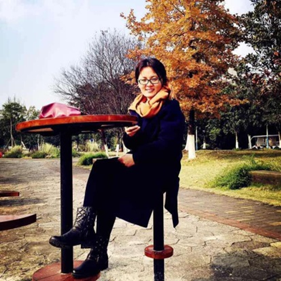
MH Wu

Dr Minghua Wu, Chongqing University, China

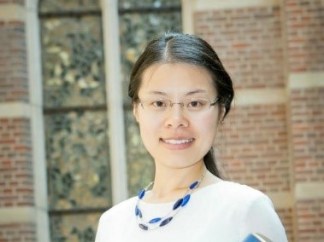
YJ Hu

Dr Yanjuan Hu, Southwest University, China

This recently published article reveals how misunderstandings arose and evolved from mismatched assumptions during the cross-cultural learning process experienced by a successful doctoral candidate. To gain an in-depth understanding of the causes of the often implicit conceptual conflicts between Western supervisors and their Chinese doctoral students, a blend of autoethnography and interactive interview are used to codify, analyze and ultimately further intercultural discourse. We assumed that the conceptual conflicts involved in cross-cultural doctoral research can be reconciled and structured in ways that can assist student development, which in this case is the transformation towards an independent researcher. We reconsidered the possible roles of misunderstandings as catalysts for positive development of independent judgment in three key ways: developing self-confidence in driving my own research; re-conceptualizing ‘critical thinking’; and re-evaluating my own gendered social construction as an independent researcher.

Conceptual conflicts widely exist at different stages of a doctoral research study but are hard to recognize in daily supervisory practices. This study uses the model of turning points to highlight the differences in education and cultural mismatches that may occur in transcultural settings. We also give three examples of such points: supervision instruction, definition of critical thinking, and the social construction of gender values. Our example shows that implicit differences in the expression of these ideas is an area that needs to be more clearly stated for both parties to have a better working relationship.

The first conflict arose from a confusion regarding the expected level of supervisor instruction being provided in the actual supervision meetings. In our case, this conflict was also rooted in Chinese educational background, which was highly structured. Our reflection pointed to a lack of autonomy-related training. The second conflict refers to a mismatched expression of critical thinking, which is both culturally and educationally grounded. In this conflict, I was too quick to doubt myself to lack critical thinking upon hearing this evaluation from my supervisor. In the Chinese context, critiques are not often welcomed from a subordinate, and can be easily frowned upon when people lack the skill to express critique in a respectful, friendly and constructive manner. Whereas our example shows that implicit and embedded critique of authority added to the understanding of critical thinking. The final conflict identified in this study focuses on the restructuring of a socially dependent and conservative gender identity into that of an independent academic researcher. My new, developing identity is continuously constructed through self-evaluation and opinion sharing.

In addition to my self-reflections as discussed above, there were other support mechanisms that helped me solve conflicts in a productive and character-building way. The Integrated Bridging Program (IBP) offered by the University of A help me acclimatize to western academia. I was also fortunate to have a Chinese supervisor to act as a mediator in helping me to overcome and capitalize on conceptual conflict barriers. She was able to clarify my Australian supervisors’ expectation, explain the targets set for me to complete my thesis, and share her experiences of transcultural differences in methodology both in Chinese and English. There were also a number of workshops and resources recommended by both my Australian supervisors and Chinese supervisor to help me develop my English academic writing.


Authors Bio

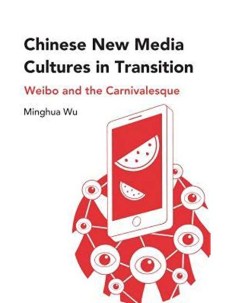
Book coverDr Minghua Wu is an Associated Professor in the School of Journalism and Communication at Chongqing University, China. She has been working at Chongqing University since 2014 after she gained her PhD in the Discipline of Media at the University of Adelaide, Australia. Her doctoral research was “Chinese new media cultures in transition: Weibo and the Carnivalesque” which is published as a book by Peter Lang, ISBN: 978-1-4331-5229-0. DOI: https://doi.org/10.3726/b15312. Her research interests include new media and society, cross-cultural communication and high education innovation. She can be contacted at minghuawu@cqu.edu.cn

Dr. Yanjuan Hu is an associate professor in Higher Education at the Faculty of Education, Southwest University, China. She obtained her PhD in 2014 from Leiden University Graduate School of Teaching, the Netherlands. She worked at as a postdoc researcher (2016-2018) at the department of teacher education, University of Groningen, the Netherlands. Yanjuan has published in international peer-reviewed journals, including Higher Education, Higher Education Research & Development, Innovations in Education and Teaching International, Higher Education Policy, Studies in Continuing Education, Studying Teacher Education. Her research interests include transcultural learning and research supervision, teacher professional development, workplace learning, and research-based teaching. She can be reached at huy@swu.edu.cn

The untold stories of two educationally mobile Mongolian and Tibetan students in China

Xu, C. L., & Yang, M. (2019). Ethnicity, temporality and educational mobilities: Comparing the ethnic identity constructions of Mongolian and Tibetan students in China. British Journal of Sociology of Education, 40(5), 631-646. doi: 10.1080/01425692.2019.1576121
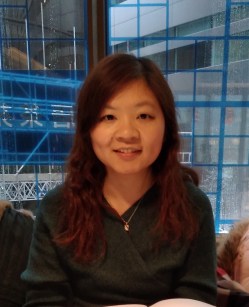
Dr Lingling XU (Cora)

Dr Cora Lingling Xu, Durham University, UK
YANG Miaoyan

Dr Miaoyan Yang, Xiamen University, China

Guoxiang (a pseudonym), a female Mongolian student from China’s Inner Mongolia, has just received a job offer in a US law firm, having completed her undergraduate studies in Hong Kong and is about to finish her Law training in the US. Before leaving Inner Mongolia, Guoxiang went to a Han-language school, feeling like a ‘normal’ person until she started getting bombarded by questions such as ‘do you live in a Mongolian tent?’ and ‘are you good at archery?’ at university.

Dolkar (a pseudonym), a female Tibetan student, moved away from home to study in inland schools (neidi ban, established for ethnic minority students in Han-dominated areas) since age 12. Now, aged 23, she has just resat the Postgraduate Entrance Examination, hoping to get a Master’s degree which will allow her to ‘voice out’ her discontent and ‘fight for the rights’ of her people.

It is widely documented that ethnic minorities in China are severely disadvantaged economically and educationally, when compared with the Han-majority population. However, little is known about the experiences of those ethnic minority students, such as Guoxiang and Dolkar, who have been given opportunities to move across or even outside China for educational purposes. In this article, we tell the stories of Guoxiang (2013-2018) and Dolkar (2011-2018) by tracking their education mobility experiences. We argue that there is dynamic temporal multiplicity in the ethnic identity construction of these two students. This multiplicity of temporality is manifested in three aspects: temporality of ethnic othering; temporality of ethnic identity awakening; and temporality of ‘worldly time’ and ‘ethnic time’. Both ‘worldly time’ and ‘ethnic time’ entail distinctive understandings about these students’ pace and priorities in life. Both students defer their ‘permanent’ ethnic identity to an imagined future. Yet, adopting the gaze of the dominant others, both students subconsciously constructed an essentialist view of their ethnic cultures as fixed and stable, and those of the dominant cultures as alive and fluid.

The data are drawn from two different research projects conducted separately by Cora (2013–2018) and by Miaoyan (2011–2018). In 2013, Guoxiang participated in a longitudinal project in which Cora explored the identity construction of 31 mainland Chinese students who crossed the border to study at a Hong Kong university. Dolkar (a pseudonym) was a key informant in Miaoyan’s research project entitled ‘University as a Site of Ethnic Identity Construction’, which started in March 2011.Both students are from middle-class family backgrounds and have achieved considerable mobilities in their respective journeys. Details can be referred to in the table below.
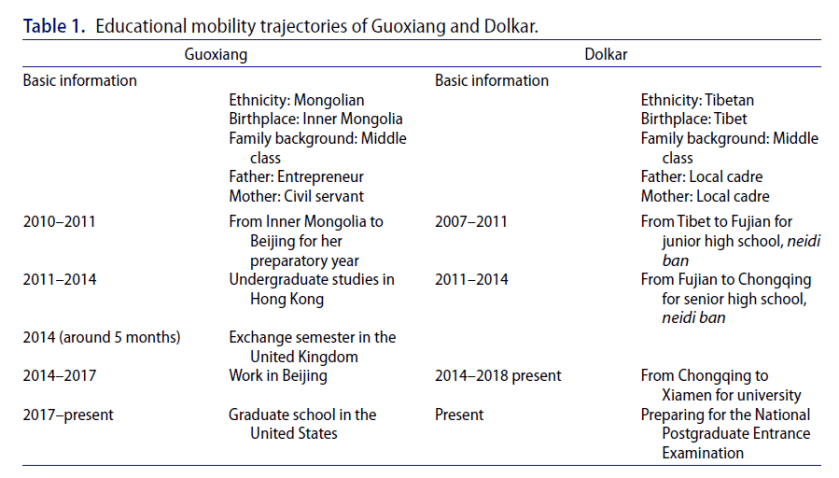
ethnicity table

Using temporality as an analytical construct, this article set out to explore the impact of educational mobilities on the ethnic identity construction of students from two different ethnic groups in China. By juxtaposing in-depth empirical data of a Mongolian student and a Tibetan student from two separate research projects, we presented some intriguing similarities with nuanced differences in their ethnic identity construction by examining the intersections between ethnicity, temporality and mobilities. Three patterns of temporalities are deployed in the students’ temporal processes of ethnic identity construction: temporality of ethnic othering; temporality of ethnic identity awakening; and temporality of ‘worldly time’ and ‘ethnic time’.

The two minority students were both from middle-class family backgrounds and were privileged to access educational opportunities through mobility. Guoxiang experienced cross-border educational mobility by completing her preparatory education in Beijing, her bachelor’s degree at a Hong Kong university, working in Beijing and later pursuing a master’s degree in the United States. Dolkar’s educational mobility started as early as 12 years old. Having been immersed in dominant Han culture for a long time, both students were alienated in various ways as their ‘authenticity’ was challenged by ethnic peers. This effectively subjected them to the peripheries of their respective ethnic communities. Meanwhile, their families’ higher socio-economic status and their familiarity with dominant Han culture have not exempted them from suffering ethnic stereotypes, prejudices and discriminations.In China’s current scheme of ethnic hierarchies, cultures of ethnic minorities are so exoticised,eroticised and historicised that they mainly serve as entertaining subjects in the margins of the dominant group’s private and public life (Gladney 1994; Yang 2017b, 9; Yi 2008, 111). In Hong Kong, the ‘mainlander’ versus ‘Hongkonger’ tensions and the lack of attention paid to ethnic minorities could present an added layer of alienation (Xu 2018).

For a long time, both students had internalised such marginalised and voiceless ethnic statuses while shutting away from any ethnic talk that might further disempower them. Critical incidents at certain stages of their educational mobilities had awakened them to their ethnicities. In Guoxiang’s case, Mumu served as an ethnic role model who empowered her positive ethnic imagination. For Dolkar, the Sociology of Education class on ‘educational equality’ served as a catalyst for ethnic revelation. Witnessing the constant marginalisation and voicelessness of their ethnic groups, they finally felt the urge to ‘voice out’ their discontent and to ‘fight for the rights’ of their ethnic groups, although their strategies were still conditioned by the majority/minority, dominant/dominated, powerful/powerless, central/peripheral and visible/invisible dichotomies. Sensing that ‘ethnicity is a luxury’ at the current paradigm of time thrift, they prioritised their ‘worldly’ pursuits of social status,monetary and materialistic goals, and simultaneously resorted to leaving their respective ethnic explorations for the future. This can be explained by their temporal mode of striving and the redemptive nature of their thinking in relation to their ethnic identity and ethnic cultural heritage.

Concomitantly, we note two schemes of time from Guoxiang’s and Dolkar’s reflective accounts: that of ‘worldly time’ and that of ‘ethnic time’, each of which entails a distinctive set of understandings about pace in life, priorities and importance. For Guoxiang, her ‘worldly time’ was closely linked to a cosmopolitan orientation in which she prioritised engaging with the outside world not only within China but also abroad. For Dolkar, her ‘worldly time’ was intently tied to a national focus that foregrounded time to compete with Han peers within the national ethnic hierarchy to establish and empower herself with a voice. There was thus notable perceived time poverty when it came to ‘ethnic time’, primarily owing to the overwhelming urgency to prioritise other worldly pursuits in order to gain their foothold with a view to getting their voices heard. Consequently, ‘ethnic time’ took a backseat, deferred to the imagined future. Here, we observe the formation of ‘hybridised’ethnic identities which transcend the essentialised ‘old ethnicities’ (Hall 2005) through their various and multiple mobile educational experiences, evoking Hall’s (2003, 235) characterisation of diaspora identities which ‘live with and through, not despite, difference, by hybridity’and are ‘constantly producing and reproducing themselves anew, through transformation and difference’.

While it is not our intent to generalise our findings to all educationally mobile ethnic minority students in China, we argue that these two ‘rhythms of timelines’ (Thompson and Cook 2017, 33) extrapolated from the in-depth and longitudinal accounts of these two students reveal a striking array of structural and social inequalities embedded in educational mobilities and ethnic relations in contemporary China. The dominant group’s consistent stereotypical negative portrayals of and indifference towards ethnic minorities we find in this study have served as a crystallising factor in demarcating the timelines of their search for ethnicity. Although preferential treatment (positive discrimination) has been offered to ethnic minorities to counter this structural inequality, the image of ethnic minorities as ‘preferentially treated’ and ‘less capable’ (Yang 2017b, 239) has re-consolidated their marginalisation in the current unequal ethnic structure, which has the potential to deprive ethnic identities and cultures. Therefore, our findings in this article not only stimulate discussions and debates on ethnicity, temporality and educational mobility, but also contribute to ‘making and implementing policies of social inclusion for migrant and indigenous ethnic minorities’ in China (Li and Heath 2017, 1).

Our reflections concerning Guoxiang’s and Dolkar’s ethnic identities constructions point to fruitful analytical engagement with ‘temporality’ in ethnic terms. First, ‘temporality’ is closely linked to the changing locations and relocations of ethnic minority groups. Second, time can be multi-dimensional and can be designated for inward or outward explorations.Adopting the gaze of the dominant others, Guoxiang and Dolkar subconsciously constructed an essentialist view of their ethnic cultures and conceptualised their ethnic identities as fixed, stable and ‘always there waiting to be retrieved’. In contrast, the dominant cultures are conceptualised as alive and fluid. For both students, critical incidents along their educational mobilities have not only empowered them in ethnic terms, but also awakened them to sense a pronounced distance from their own ethnic cultures. This distance is emotional and primordial. Hence, the entanglement of space and distance also offers useful insights for understanding ‘temporality’, especially if we examine their ethnic identities over an extended period.

Authors Bio

Dr Cora Lingling Xu (PhD, Cambridge, FHEA) is Assistant Professor at Durham University, UK. She is an editorial board member of British Journal of Sociology of Education, Cambridge Journal of Education and International Studies in Sociology of Education. In 2017, Cora founded the Network for Research into Chinese Education Mobilities. Cora has published in international peer-reviewed journals, including British Journal of Sociology of Education, The Sociological Review, International Studies in Sociology of Education, Review of Education, European Educational Research Journal and Journal of Current Chinese Affairs. Her research interests include Bourdieu’s theory of practice, sociology of time, rural-urban inequalities, ethnicity, education mobilities and inequalities and China studies. She can be reached at lingling.xu@durham.ac.uk, and via Twitter @CoraLinglingXu.

Learning to be tibetanDr Miaoyan Yang (PhD, the University of Hong Kong) is an associate professor in the Sociology Department, School of Sociology and Anthropology, Xiamen University. As a researcher of minority education, she has a particular interest in the Tibetan, Uyghur and Mongolian ethnic minority communities, employing them as a showcase of ethnic politics in China with reference to issues such as education, mobility, citizenship, ethnicity, identity and culture. She is author of the book Learning to be Tibetan: the construction of ethnic identity at Minzu University of China (Lexington, 2017) and a number of publications in Citizenship Studies, Journal of Multilingual and Multicultural Development and other journals. She is the Harvard-Yenching Visiting Scholarship recipient for year 2018-2019. She can be contacted at miaoyanyang@163.com.

Job Vacancy: Full Professorship in China Studies at Aarhus University, Denmark

Professor of China Studies in a Global Perspective

The School of Culture and Society, Department of Global Studies, at Aarhus University invites applications for a permanent position as a full professor of China studies in a global perspective with a focus on modern or contemporary China. The position is available to start as soon as possible after 1 January 2020.

The University wishes our staff to reflect the diversity of society and thus welcomes applications from all qualified candidates regardless of personal background.

Position
The professorship is being offered with a view to attracting talented applicants with an extensive and documented track record in innovative and internationally recognised research in the area of China studies, combined with specialist expertise in the humanities or social sciences as well as fluency in Chinese. The successful applicant will be expected to contribute to core activities at the School of Culture and Society and Aarhus University in general, and to strengthen the research activities and output of the Department of Global Studies in particular.

Apart from research, the successful applicant will also be expected to contribute to the following areas: education, talent development and knowledge exchange within modern or contemporary China studies at Aarhus University located within the field of global studies. The professor will be expected to undertake responsibility for and leadership of the academic evolution and profile of China studies at Aarhus University both nationally and internationally.

Research
The successful applicant will also be expected to provide academic leadership in the development of research programmes in the field of China studies, to develop new research projects with internal and external partners, to raise external research funding, and to take part in the daily activities of the department. Moreover, it will be expected that s/he has a strong engagement with interdisciplinary research cooperation within the Department of Global Studies and its global studies research programme, in the School of Culture and Society, at the Faculty of Arts and beyond.

Research activities will be evaluated in relation to actual research time. Thus, we encourage applicants to specify periods of leave without research activities, in order to be able to subtract these periods from the span of the scientific career during the evaluation of scientific productivity.

Education
The successful applicant will be required to teach and supervise in China studies at all levels of the department’s degree programmes (BA, MA and PhD), and will be expected to have extensive teaching experience at university level. Furthermore, s/he will be expected to take a leading role in the teaching and further development of multidisciplinary area studies programmes, especially in a recently launched global and area studies programme and in collaboration with representatives of other existing area study programmes.

Talent development and knowledge exchange
The successful applicant will be expected to be able to identify the development potential of junior researchers, to contribute to mentoring, talent development and supervision of PhD students, and to design and teach PhD courses. Moreover, it will be expected that the successful applicant will engage in knowledge exchange as mentioned in the strategy for the Faculty of Arts, for instance in research cooperation with private companies, government consultancy, cooperation with civil society actors or the public dissemination of knowledge.

Qualifications
Applicants must be able to document

  • An original and relevant academic production at the highest international level
  • Significant scholarly contributions to theoretical and thematic developments within the study of modern or contemporary China.
  • A solid track record in research leadership as well as in international research funding and international research cooperation including service to the profession
  • Fluency in Chinese
  • Experience in teaching, supervision competences as well as an active involvement in the education and study environment
  • Competences with regard to mentoring and a commitment to researcher talent development as well as the development and teaching of PhD courses

Applicants will be asked to present their vision for future developments in this field and in research on China in a global context.

Only submitted publications will be assessed; a list of publications is not sufficient. As a result, applications without submitted publications will not be assessed.

Professional references or recommendations should not be included in applications. Applicants who are selected for a job interview may be asked to state professional references.

Non-Danish-speaking applicants should be aware that the acquisition of sufficient Danish to participate in the daily administrative and academic business of the department within two years of taking up the position is a condition for their employment.

The application must be submitted in English.

For further information about the position and the department, please contact Head of School Bjarke Paarup, tel. +45 8716 2158 (head.cas@au.dk).

For more information about the application, please contact HR Supporter Marianne Birn, e-mail mbb@au.dk.

Global studies at Aarhus University
As an area studies programme, China studies at Aarhus University constitutes an integral part of the Department of Global Studies, which consists of language-based, regional study programmes, comprising China, Japan, India/South Asia, Russia, Brazil, and European and international studies. The department focuses on a broad spectrum of research into and the teaching of history, culture and society – all based on sources in the original/regional language. The approaches used have roots in the humanities as well as the social sciences, and aim to introduce creative teaching methods based firmly on research.

For a more detailed description of the programme and department, please refer to this websitehttp://cas.au.dk/en/about-the-school/departments/global-studies/

The Department of Global Studies belongs to the School of Culture and Society, where the object of research and teaching is the interplay between culture and society in time and space:

•    From the traditional disciplines of the humanities and theology to applied social research
•    From antiquity to the issues facing contemporary societies
•    From familiar Danish cultural forms to other – and very different – life worlds and world views
•    From local questions to global challenges.

Qualification requirements
Applicants should hold a PhD or equivalent academic qualifications.Formalities

If nothing else is noted, applications must be submitted in English. Application deadline is at 11.59 pm Danish time (same as Central European Time) on the deadline day.

All interested candidates are encouraged to apply, regardless of their personal background.
Shortlists may be prepared with the candidates that have been selected for a detailed academic assessment. A committee set up by the head of school is responsible for selecting the most qualified candidates. See this link for further information about shortlisting at the Faculty of Arts: http://medarbejdere.au.dk/fileadmin/user_upload/Proces_for_shortlisting_december_2017.pdf

Aarhus University offers a broad variety of services for international researchers and accompanying families, including relocation service and career counselling to expat partners: http://ias.au.dk/au-relocation-service/. Please find more information about entering and working in Denmark here: http://international.au.dk/research/

Faculty of Arts
The Faculty of Arts is one of four main academic areas at Aarhus University.
The faculty contributes to Aarhus University’s research, talent development, knowledge exchange and degree programmes.
With its 500 academic staff members, 260 PhD students, 10,500 BA and MA students, and 1,500 students following continuing/further education programmes, the faculty constitutes a strong and diverse research and teaching environment.
The Faculty of Arts consists of the School of Communication and Culture, the School of Culture and Society, the Danish School of Education, and the Centre for Teaching Development and Digital Media. Each of these units has strong academic environments and forms the basis for interdisciplinary research and education.
The faculty’s academic environments and degree programmes engage in international collaboration and share the common goal of contributing to the development of knowledge, welfare and culture in interaction with society.

Read more at arts.au.dk/en

CfP: Conservatism and Education–Special Issue of the Jahrbuch für Historische Bildungsforschung 26

Conservatism and Education
Special Issue of the Jahrbuch für Historische Bildungsforschung 26
Editors: Michael Geiss and Sabine Reh

Please email your abstract to the editors (Dr. Michael Geiss, mgeiss@ife.uzh.ch and Prof. Dr. Sabine Reh, sabine.reh@dipf.de) by 30 June 2019. The total length should be approx. 3,000 characters. Invitations to contribute will then be sent to the selected authors by late July. The deadline for papers will be the end of November 2019. The reviewing and revision process will be completed by May 2020. The volume will be published in September 2020.
We also invite you to submit educational historical contributions that are not related to
the focus.
The history of conservative thought appears complex. In a 2004 review of recent studies on the history of conservatism, Jens Hacke stated that “every historian of ideas who tries to fix the content of conservative thought has so far failed”. Even if, like Hacke, one emphasizes “home, family, tradition, and religion” as the institutions that conservative thinkers prefer to deal with, it still seems reasonable to focus more on the ambivalences of conservative thinking, and to rethink the simple dualism of conservative and progressive. In the context of a rising New Right, a sometimes tenacious left and – last but not least – renewed debates on the educational meaning of community and the common good, the difficulties in determining forms, elements and content of conservatism become quite obvious. This is confirmed not least by diagnoses such as those of Thomas Biebricher, who even speaks of a current “exhaustion” of conservatism.
Currently, enduring values are promoted by all political parties. Today’s affirmative use of the term “conservatism” in Europe and abroad should therefore be taken as a starting point for examining the phenomenon and its transformation through the course of history.
We do not assume that a political conservatism must always be accompanied by an educational one and vice versa. Rather, it is necessary to keep in mind the complicated and multi-layered interrelations between political positions, educational ambitions, social practices and self-understanding.
The question of what is worth preserving is at the core of education. After all, education guarantees the transmission of traditions, experiences, attitudes and habits over time and thus ensures the connection of the present with the past – even if the transmission can never, even structurally, be a repetition of the old, but is instead always directed towards the future. Public debates about education and schooling are also always debates about the future of society. In this way, both utopias and conservative interventions are usually accompanied by strong assumptions about the role of education. In research into education we find both progressive and conservative positions being taken in practical thinking and reflection, parenting guides or teacher training.
In the history of education, however, conservative movements and actions have long served to show how new, innovative or progressive approaches have finally prevailed. More recently, the “other school reformers” have also been taken into account. However, the simple distinction between conservative and progressive was hardly questioned here either. Thus, the variations of conservative options in educational contexts have to be discussed in historical research on education.
The special issue focuses on conservative thought and action in education since 1800. The competences needed for political participation were already partly dominating the electoral debates of the 19th century. In disputes over citizenship, political  participation and the extension of voting rights, educational arguments have also been put forward.
Elites old and new were challenged by educational and social reforms after 1800, from social democracy and the labour movement to the women’s campaigning organizations. Even after 1945, conservative schools of thought quickly established themselves in Germany and found strong support in the anti-technology, anti-mass and elitist sections of the educational establishment in the 1950s and early 1960s. Not least, the so-called “neoconservatism”20 that followed the modernizing trends of the 1960s proved to be an international phenomenon, and a reaction to the retreat from empire, increasing labour migration, the second women’s movement, and finally the environmental movement in its various forms, all resulting in new political and ideological constellations. Already in the 1920s, Karl Mannheim was arguing that conservatism had to be understood as a reaction to a perceived danger. He defined conservatism as a style of thinking, as relational and not tied to a certain ideology. It is a characteristic of conservatism that it is in the end not concerned about preserving the status quo, but fights for what is already disappearing. In the interwar period, the romantic concept of corporate statism underwent a peculiar revival in Europe under the conditions of a professionalized society based on the division of labour. The order of the professions not only became a political vanishing point for bourgeois or capitalist forces, it also found enthusiastic supporters among social democrats. The concept of European corporate statism was usually associated with ideas of natural acculturation and integrative vocational education and training.
With this in mind, the special issue will focus on conservative options in the context of increasingly democratic societies. We are particularly interested in contributions that relate conservative approaches in educational thought and action to the social, institutional, colonial and gender-status situations in the 19th and early 20th centuries as well as the decades after the end of the Second World War.
We want the contributions to deal with the difficulties of interpreting the relationship between conservatism and education as mentioned above. The focus is therefore on the relationship between a political conservatism and an educational conservatism in the narrower sense. What does conservatism actually mean in the context of education and upbringing at different times, and how can it be reconstructed? What continuities of political and educational thought and practice can be characterized  is conservative when their content and options have obviously changed over the last century and a half? Is it better to trace the phenomenon of conservatism by reconstructing social milieus and investigating networks than to proceed on the basis of ideas and concepts?
We look forward to receiving contributions
1. on the concept of conservatism in its historical development and its relation to education and educational historiography,
2. on the relationship between political conservatism and conservative thought and action in education,
3. on the relationship between conservative parties and specific educational policy options, and
4. on the continuity of educational milieus which could be described as conservative,
new formations and dissolutions of conservative networks in the educational establishment.

Geographically and historically, the perspective is not limited to Germany between the German empire (Kaiserreich) and the end of the Cold War. Rather, contributions that take into account European, transatlantic and (post-)colonial interdependencies or later German-German developments are especially welcome.

Please email your abstract to the editors by 30 June 2019. The total length should be approx. 3,000 characters. Invitations to contribute will then be sent to the selected authors by late July. The deadline for papers will be the end of November 2019. The reviewing and revision process will be completed by May 2020. The volume will be published in September 2020.
We also invite you to submit educational historical contributions that are not related to
the focus.

Editors:
Dr. Michael Geiss, University of Zurich, mgeiss@ife.uzh.ch
Prof. Dr. Sabine Reh, BBF | Research Library for the History of Education at DIPF,
sabine.reh@dipf.de
For treatises:
Dr. Joachim Scholz, BBF | Research Library for the History of Education at DIPF,
scholz@bbf.dipf.de