Call for Papers: Special Post-Graduate Issue of the Beijing International Review of Education: Demythologizing Higher Education

It has been over fifty years since Ivan Illich (1971) denounced the complicity with which institutionalized higher education (HE) had begun to embody far right consumerist manipulation, ritualization, and mythologization. Illich’s critique was couched within a prescient warning that institutionalized education effected a process of neoliberal commodification, a process concerned primarily with producing a bundle of ‘packaged values’ that would be marketable to ‘consumer-pupils’. In the years since the publication of Illich’s Deschooling Society, scholars within the field of HE have outlined and decried the myriad deleterious effects brought about by the continued neoliberal commodification of the university (Reynolds, 1977; Slaughter and Rhoades, 2000; Whitty, 2002; Davies et al, 2006; Apple, 2011; Ball, 2012; Peters et al, 2012; Burke, 2013; Hall and Stahl, 2015; Connell, 2019). These critiques have undoubtedly served to augment and refine Illich’s initial concern for the neoliberal commodification of HE. However, they have tended to avoid a critical facet of his argument. Namely, a myopic tolerance within the academy of ‘fundamental contradictions between myth and institution’, which he believed resulted in a ‘dull, protracted, expensive and destructive’ institutional process of societal initiation (Illich, 1971, p. 49).


In recent years, critics on the far right have seized upon this stance in order to challenge the continued relevance and utility of the university as a social institution in service to the public good. Rather than representing singularly important Humboltian paragons of free thought, which promote the acquisition of ‘new knowledge’, critics of contemporary HE level the charge that a university education now represents an exorbitant and unnecessary process of liberal indoctrination in primary service to the continuation of the university itself (Hett, 2021).


While globalized isomorphic pressures undoubtedly effect systemic convergence, diversity within both higher education systems (HES) and specific higher education institutions (HEI) s is driven by the uniquely local and national pressures expressed within a given context. Thus, this call for papers represents a renewed effort to ‘demythologize’ the globalized institution of HE, a reflexive, dialectical process wherein scholars are invited to examine the inconsistencies and contradictions between the myth and reality of institutionalized HE. Specifically, by addressing longstanding and recurrent myths surrounding the global institution of he, we hope to engage in what Woodman describes as an ‘out-of-bounds’ process of separating fact from fiction within our ‘socially most prestigious educational institution’ (1978).


Toward this aim, this issue hopes to elicit responses from scholars across China as well as the globe who can speak to the systemic and institutional diversity of contemporary HE. In particular, we welcome contributions from current and recently graduated postgraduate students, as well as more longstanding scholars within the interdisciplinary field of HE. Potential topics of interest include:

The myth of university governance, organization, and management – e.g., how and to what extent have neoliberal educational reforms and policies affected institutional structure and mission, the process of teaching and learning, knowledge production, and student care?
The myth of ideology – e.g., how and to what extent have globalized ideological currents been reflected within departmental guidelines, mission statements, research agendas, teacher selection and training, curriculum design, pedagogy, and classroom management?
The myth of knowledge – e.g., how and to what extent is the process of knowledge production and dissemination either autonomous, defined by societal contribution, or performativity cultures embedded within the institutional or academic context?
The myth of the degree – e.g., how and to what extent does the ritual process of university credentialization convey upon students a mastery of field-specific content, technique, interdisciplinarity, cultivation of informed outlook, and professional retainability?
The myth of the institution – e.g., how and to what extent does the modern university continue to provide benefit to scientific progress, individual advancement, cross-cultural exchange, and overall societal development?

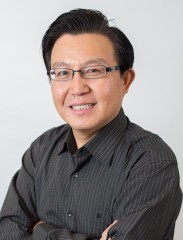
Guest Editor
Dr. Benjamin Green
Assistant Professor,
College of Teacher Education,
Beijing Language & Culture University

Submission Guidelines
If you are interested in contributing a full article (6000–7000 words in length) on a topic which covers the theme of the special issue, please submit (i) your article topic, (ii) an abstract of no more than 250 words, and (iii) five keywords no later than September 1st, 2022 to Dr. Benjamin Green at benbo83@gmail.com.


Publication Timeline
September 1st, 2022 – Deadline for 250-word abstracts
September 15th, 2022 – Authors notified and invited to write full manuscript
March 15th, 2023 – Deadline for full draft manuscripts
May 1st, 2023 – Deadline for reviewer feedback
June 1st, 2023 – Deadline for final submission of revised articles


References
Apple, M. W. (2011). Education and power. Routledge.
Ball, S. J. (2012). Global Education Inc: New policy networks and the neo-liberal imaginary. Routledge.
Burke, P. J. (2013). The right to higher education: Neoliberalism, gender and professional mis/recognitions. International Studies in Sociology of Education, 23(2), 107–126. https://doi.org/10.1080/09620214.2013.790660.
Connell, R. (2019). The Good University: What Universities Actually Do and Why It’s Time for Radical Change. Bloomsbury Publishing.
Davies, B., Gottsche, M., & Bansel, P. (2006). The Rise and Fall of the Neo-Liberal University. European Journal of Education, 41(2), 305–319. http://www.jstor.org/ stable/3700117.
Hall, R., & Stahl, B. (2015). Against commodification: The university, cognitive capitalism and Emergent Technologies. Marx and the Political Economy of the Media, 65–97. https://doi.org/10.1163/9789004291416_005.
Hett, B. C. (2021, November 5). Op-ed: When politicians claim professors like me are the enemy, what are they really attacking? Los Angeles Times. Retrieved April 12, 2022, from https://www.latimes.com/opinion/story/2021-11-05/jd-vance-professors-are- the-enemy-politics.
Illich, I. (1971). Deschooling Society. Harper and Row.
Peters, M. A., Liu, T.-C., & Ondercin, D. J. (2012). The pedagogy of the Open Society: Knowledge and the governance of Higher Education. Sense Publishers.
Reynolds, P. A. (1977). The university in the 1980s: An anachronism? Higher Education, 6(4), 403–415. https://doi.org/10.1007/bf00132526.
Slaughter, S., & Rhoades, G. (2000). The Neo-Liberal University. New Labor Forum, 6, 73–79. http://www.jstor.org/stable/40342886.
Whitty, G. (2002). Making Sense of Education Policy. Paul Chapman Publishing.
Woodman, K. (1978). Demythologizing University Education. Studies: An Irish Quarterly Review, 67, 306–316. http://www.jstor.org/stable/30088136.

Managing editor: Tong Meng

2023 Comparative & International Education Society (CIES) Annual Conference

美国比较与国际教育学会2023年会邀请:

兹定于明年2月14-22日召开美国比较与国际教育学会(CIES)2023年度大会。年会主题是“改进教育以致力一个更加公正的世界”。线上Zoom会期14-15日、线下华盛顿DC会期18-22日、会休16-17日。这将是67年CIES史上会期最长年会,也是首次由华人当选会长担纲筹备。会议形式为全场主旨演讲会、全场辩论会、分场辩论会、并行组会、并行专题会、并行圆桌会、海报会展、书展等等。年会官网(https://cies2023.org)及论文摘要提交系统于6月15日上线,已经开始接受论文摘要,提交截止日期:美东时间8月8日(周一)(过期不候)。特别提示:可以用中文参会(只需同时准备英文版摘要及发言ppt)。会议详情请见官网信息(中文征稿启事链接)。会议热线电邮:cies2023@cies.us。欢迎个人及3-5位组团报名参会。期待明春2月18-22日,相约美国首都华盛顿DC!

Welcome to CIES 2023!

Welcome you all to the CIES 2023 website where you will find related information, submission guidelines and highlights for the 2023 CIES Annual Meeting. The meeting will run between February 14-22, 2023, with a break on February 16-17. We are aiming to provide you with an intellectually stimulating and joyful experience.

CIES 2023 is an on-site meeting, with online sessions. On-site, you will experience a full meeting with powerful keynote speakers, plenary situations designed to renew bonds between CIES attendees, social and cultural events, and of course, the main draw of the meeting, concurrent sessions with cutting-edge research being shared by CIES members. The Online Meeting Hub, similar to last year in the city of Minneapolis, is the only platform that is used to allow all attendees (including both on-site and virtual participants) to enjoy all online concurrent sessions. In addition to that, key events, keynote speeches, and CIES State of the Society are to be live streamed.

We are so excited to be hosting on-site sessions in Washington, D.C., and we will draw from the unique and rich regional culture and history of the U.S. Capital, as well as its pivotal place in the current fight for a more equitable globe. We will keep our underlying commitment that is to give all attendees the best meeting experience as we navigate the new directions we are taking CIES in the post-Pandemic era.

Please come back to our website regularly for latest updates of CIES 2023. After your submission, please log into All Academic (our online submission system), review the draft program, read about our highlights and REGISTER, so that you can familiarize yourself more with how to better enjoy CIES 2023!

Call for Submission

CIES invites proposals that respond to the meeting theme and expand the parameters of knowledge production and educational practice. Visit www.cies.us and www.cies2023.org for the latest updates on submission deadlines and guidelines, session format descriptions, review criteria, and more!

Deadline:

The Online Submission System opens on Wednesday, June 15, 2022, and closes on Monday, August 8, 2022, at 11:59 PM Eastern Daylight Time. No late submissions will be accepted, nor will any exception be made.

Contacts:

  • For inquiries about SIG or Committee-specific themes and calls for submission, please contact related SIG or Committee chair(s), whose contacts can be found by clicking here for SIG chairs and here for Committee chairs.
  • For inquiries about your submission and CIES 2023 Program, please write to the Organizing Committee at cies2023@cies.us with a subject line “Submission” and “Program”, respectively.
  • For all other general inquiries, please contact the CIES Office of the Executive Director at oed@cies.us.

Managing editor: Lisa (Zhiyun) Bian

2022 3rd Association of British Chinese Professors (ABCP) Annual Conference

The 3rd Annual Conference of the Association of British Chinese Professors (ABCP) will be held at the University of Birmingham (1-2 July 2022). The conference is hybrid on Day 1 and online only on Day 2. Click here to see the details.  

Following the common aim and objectives of the conference, all seven tracks have developed some exciting topics. The Sustainability and Ageing Society Track (SAST), in particular, has the following two distinctive features:  

·       Impact showcase: Experts share good practices to build impact cases with an interdisciplinary team (see attached agenda) 

·       Career development in the UK: Career consultants, scholars, and researchers share tips and findings to navigate different academic career stages (after PhD) in the UK  

The conference is free for PhD students to attend. A £20 of the registration fee is required. However, there will be a £26 worth of food package available free of charge for each in-person attendance for Day1. The in-person session registration will be closed by 17th June 2022.

Basic Information

Venue: Lecture Theatre G03, Alan Walters Building, University of Birmingham + Zoom (Online)

Dates: 1 and 2 July 2022 (Friday and Saturday)

Registration

The registration for the Conference is now open. Please choose one of the following links to register your attendance:

Programme (Tentative)

Day 1: 1 July 2022 Friday (hybrid: onsite and virtual participation on Zoom)

10:00-12:30 Opening Ceremony

12:30-13:30 Lunch Break

13:30-16:00 Parallel Technical Tracks

Day 2: 2 July 2022 Saturday (virtual participation on Zoom)

10:00-12:30 ABCP Annual General Meeting (AGM)

Agenda TBC

12:30-13:30 Lunch Break

13:30-17:00 Parallel Technical Tracks

Organisers

Conference Chair:

Professor Hua Zhao (赵华教授) FREng FMCAE, President, ABCP & Vice Provost & Dean of College of Engineering, Design and Physical Sciences, Brunel University London

Organising Committee Chair:

Professor Hongming Xu (徐宏明教授), Vice President (Events and Membership), ABCP & Chair in Energy and Automotive Engineering, University of Birmingham

Organising Committee Members:

  • Professor Daqing Ma (马大青教授) MAE, Executive Vice-President, ABCP & Professor of Anaesthesia, Imperial College London
  • Professor Hongbiao Dong (董洪标教授), Vice-President & General Secretary, ABCP & Professor of Materials Engineering, University of Leicester
  • Professor Qihai Huang (黄起海教授), Vice-President for Finance, ABCP & Head of Management, University of Huddersfield
  • Professor Junwang Tang (唐军旺教授) MAE, Vice-President for Industrial Liaison & Fund Raising, ABCP & Professor of Materials Chemistry and Engineering, University College London (UCL)
  • Professor Huabing Yin (尹华兵教授), Vice-President for EDI (Equality, Diversity and Inclusion), ABCP & Professor of Biomedical Engineering, University of Glasgow
  • Professor Shujun Li (李树钧教授), Vice-President for IT & External Liaison, ABCP & Professor of Cyber Security, University of Kent
  • Professor Yaochu Jin (金耀初教授) MAE, Distinguished Chair and Professor in Computational Intelligence, University of Surrey & Alexander von Humboldt Professor for AI, Bielefeld University, Germany
  • Professor Xiao-Ping Zhang (张小平教授), University of Birmingham
  • Dr Shangfeng Du (杜尚丰博士), Senior Lecturer, University of Birmingham
  • Dr Wen Wang (汪文博士), Associate Professor in HRM, University of Leicester
  • Professor Beining Chen (陈蓓宁教授), University of Sheffield
  • Professor Xin Wang (王欣教授), University of Manchester
  • Dr Mengyi Xu (徐梦艺博士), Cranfield University
  • Professor Huiru (Jane) Zheng (郑慧如教授), Ulster University

Managing editor: Tong Meng

Reimagining Chinese diasporas in a transnational world: toward a new research agenda

Shibao Guo (2022) Reimagining Chinese diasporas in a transnational world: toward a new research agenda, Journal of Ethnic and Migration Studies, 48:4, 847-872, DOI: 10.1080/1369183X.2021.1983958.

Prof. Shibao Guo from the University of Calgary guest edited a special issue for the Journal of Ethnic and Migration Studies – Chinese Diaspora Studies in a Transnational World – which was published in Volume 48, Issue 4, 2022. This special issue examines the changing nature of the Chinese diasporas in a transnational world and its concomitant implications for Chinese diaspora studies internationally. In the research agenda-setting Introduction, Prof. Guo theorizes the new patterns of Chinese diasporas which can be characterized by unprecedented hypermobility, hyperdiversity, and hyperconnectivity. Such characterizations depict the global dispersal of overseas Chinese as one of the most hyperdiverse groups with substantial sub-group differences that distinguish it from most other diasporas. This special issue consists of six empirically-based articles on Chinese diasporas studies, from a variety of disciplinary or interdisciplinary perspectives, by scholars from different parts of the world. Their perspectives have contributed to the existing Chinese diasporas literature and the interdisciplinary fields of ethnic, migration and mobility studies. Here are the links to the special issue:

Journal of Ethnic and Migration Studies: Vol 48, No 4 (tandfonline.com)

Full article: Reimagining Chinese diasporas in a transnational world: toward a new research agenda (tandfonline.com)

Author Bio

Professor Shibao Guo, University of Calgary, Canada

Dr. Shibao Guo is Professor at the Werklund School of Education, University of Calgary. Over the past twenty years as a transnational academic and scholar, Dr. Guo has developed research expertise in the areas of transnational migration, Chinese diasporas studies, ethnic and race relations, and comparative and international education. His research has been funded by a number of organizations, including the Social Sciences and Humanities Research Council of Canada; Immigration, Refugees and Citizenship Canada; Asia Pacific Foundation of Canada; International Organization for Migration; and Education International. Prof. Guo has numerous publications including books, journal articles, and book chapters. His latest books include: Decolonising lifelong learning in the context of transnational migration (Routledge, 2020), Immigration, racial and ethnic studies in 150 years of Canada: Retrospects and prospects (Brill|Sense, 2018). He is former president of Canadian Ethnic Studies Association (CESA) and the Comparative and International Education Society of Canada (CIESC). Currently he is co-editor of Canadian Ethnic Studies and two book series for Brill|Sense Publishers: Transnational Migration and Education and Spotlight on China.

Managing editor: Tong Meng

Mobile educational space and imaginative travellers in-situ: A case study of a UK international branch campus

Research highlighted

Jingran Yu (2022) Mobile educational space and imaginative travellers in-situ: A case study of a UK international branch campus in ChinaSocial & Cultural Geography, DOI: 10.1080/14649365.2022.2055780

An increased awareness has emerged within academia of how international student mobility (ISM) intensifies differentiation within global educational geographies, consolidating the educational power of certain institutions within specific countries, and consequently entrenching and sometimes even creating socio-spatial inequalities (e.g., Brooks & Waters, 2011; Findlay et al., 2012; Waters, 2012). In contrast, transnational education (TNE), ‘in which the learners are located in a country different from the one where the awarding institution is based’ (Council of Europe, 2002), enables students to receive international education in situ. Instead of the corporeal movement of students, in TNE, it is the education provider that is on the move, incorporating various interdependent movements of educational resources, including teaching materials, knowledge, information, and even staff and institutions. Thus, TNE seems to hold great potential for promoting the reconfiguration of educational geographies through its important role in connecting educational institutions and participants across different places and influencing the (re)distribution of educational resources and power across global space (Leung & Waters, 2013). However, compared to ISM, TNE remains under-researched. The few empirical studies that have explored this topic have concluded that its value has been fundamentally compromised owing to the lack of corporeal mobility (e.g., Waters, 2017, 2018).

This paper challenges the predominant representation of TNE students merely in terms of their corporeal immobility and problematizes the neglect of spatiality and materiality of international branch campuses (IBCs) in extant studies. Based on a case study of a UK international branch campus in China, it incorporates interview narratives and ethnographic observations to reveal the students’ experiences and imaginations, and to delineate the unique texture of the spatiality of the campus. It is worth noticing that IBCs in China are required to take the form of ‘Chinese-Foreign Cooperative Universities’, i.e. ‘joint-venture IBCs’ in the expanded definition provided by the Observatory on Borderless Higher Education (Garrett et al., 2016). The power balance between the Chinese and foreign partners has profound influences on the spatiality of the campus. In this case study, this power balance between the Chinese and British partners has resulted in the unique layout of the university campus which is roughly divided into two halves: the Academic Area, controlled by the British partner, and the Living Area, where the Chinese partner is mainly in charge. 

In this paper, I present the case-study IBC as an infrastructure of (im)mobilities, which is both locally embedded and transnationally connected. On the one hand, this paper explores how transnational imaginations are enabled by the immobile materiality of the IBC in three dimensions: the material space, the virtual space, and the relational space. On the other hand, informed by the perceived–conceived–lived conceptual triad (Lefebvre, 1991/2014), this paper investigates Chinese students’ imaginative spaces by looking at how they perceive, experience, and conceive various spaces, on the basis of which they develop a sense of (not) belonging. This is where issues emerge around ‘whose space’ it is when the control over space is challenged. IBC space and its imagination, as intended by the TNE institution, may not always coincide with the ideas of the students and their imaginative space. At times, the two may collide. 

As the students embody transnational imaginations and mobilities in situ, they are transformed into what I perceive as imaginative travellers, who never physically travel abroad but whose being and belonging have been constantly informed and negotiated in relation to their everyday transnational experiences. Travelling between two different spaces, the Academic Area and the Living Area, the national and the transnational setting, has become a daily routine for the students, contributing to their embodiment of transnational mobilities in an imaginative form and giving shape to the transnational imaginative space they conceive. Informed by their own predispositions, students have developed transnational spatial imaginations, according to which they make differentiated judgements about the different styles in the material environment they inhabit and develop a sense of (non)belongingness to different cultures through their spatial experiences. In everyday spatial practice, imagined and actual spaces may sometimes reinforce and sometimes negate each other. Students then develop a sense of ‘our’ and ‘their’ space – a sense of belonging and not belonging – in their perceptions, experiences, and conceptions. This may have coloured their perceptions, leading to a value-laden appreciation of the space in the Academic Area as well as their simultaneous dislike of the space in the Living Area.

The findings have teased out the ways in which transnational imaginations are enabled by immobile materiality of the IBC, and how students consequently construct their imaginative space, revealing the dynamic interrelations between imagination, materiality, and (im)mobility in (transnational) educational spaces. As international student mobility (in the sense of corporeal mobility) has intensified, and sometimes even created socio-spatial inequalities in global educational geographies, it is important for scholars to pay attention to the imaginative mobilities enabled by TNE because ‘imagination is an essentially creative act that facilitates people’s ability to move beyond structural imbalances of power and economic constraints’ (Salazar, 2020, p. 773). Indeed, imaginative mobility may not be a substitute for corporeal mobility, but may instead change the very nature of being co-present. Accordingly, our views on the emplacement of education, as either here (domestic education) or there (international education), also need to expand to include educational spaces that can be both here and there, that is, trans-national. Contributing to the early discussions about IBCs as infrastructures of (im)mobility, what is novel in this paper is that it offers detailed depictions of the imaginative process, in which spatial imagination and imaginative space (re)produce each other, and are complicated by the various sources of power at play. Drawing upon thick ethnographic data, this paper offers a unique case study of a Chinese-Foreign Cooperative University in which the power balance between the British and Chinese partners has profound implications on the uneven spatiality of the campus. It is important to pay attention to the ‘unevenness of imagination flows’ (Lipura & Collins, 2020), which is subject to political economy in the wider sociocultural context, in which the mythological ‘West’ is often considered ‘legitimate’ and imbued with much higher symbolic value than ‘the rest’. Students, whom I call ‘imaginative travellers’, have tended to display a proximity to ‘the West’, which is physically distant and where most of them have never been, in contrast to ‘the Chinese’ where they are actually located but from which they are imaginatively distant. This may reinforce the existing symbolic power of the West in the global stratification of knowledge.

Authors’ Bio

Dr Jingran Yu (余婧然),
Xiamen University, China

Dr. Jingran Yu (余婧然) is an Assistant Professor at the Institute of Education, Xiamen University, China, and an Honorary Research Associate at the School of Environment, Education and Development (SEED), the University of Manchester, the United Kingdom. She received a doctorate degree in Sociology from the University of Manchester, and won the British Educational Research Association (BERA) 2021 Doctoral Thesis Award for her thesis. Her research interests lie at the intersection of sociology, education, and human geography, with a focus on internationalisation of higher education and socio-spatial (im)moblities. She can be contacted at: yujingran@xmu.edu.cn or jingran.yu@manchester.ac.uk.

Managing editor: Lisa(Zhiyun) Bian