Remain, return, or re-migration? The (im)mobility trajectory of mainland Chinese students after completing their education in the UK

Tu, M., & Nehring, D. (2019). Remain, Return, or Re-migrate? The (Im)mobility Trajectory of Mainland Chinese Students after Completing Their Education in the UK. International Migration, 1-15. doi: 10.1111/imig.12589

rpt

Dr Mengwei Tu, East China University of Science and Technology

Daniel Nehring

Dr Daniel Nehring, East China University of Science and Technology

This article examines post-study transnational mobility among Chinese graduates with degrees from British universities, against the backdrop of recent developments in global higher education, in international labour markets and in international migration policy. British universities host the second largest overseas Chinese student population, one third of non-EU students in the UK are from China, and China is the only country showing a significant increase in student numbers between 2012-2017. Recent articles in The Times in May 2019 repeatedly highlight the record-high Chinese students to the UK in the latest statistics and that the on-going China-US trade war is likely to channel more Chinese students away from the US to the UK.

While Chinese international student mobility and participation in overseas higher education have been extensively discussed, much less attention has been devoted to the transnational mobility of Chinese students following the conclusion of their degrees, in the context of their study-to-employment transition. However, with ‘credential inflation’ in China in recent years, the direct short-term benefit of a Western degree on individual’s socioeconomic mobility has undergone doubt and re-interpretation. While capital accumulation and transnational mobility still feature as a main drive behind students’ motivation, their expectations increasingly point to the potential of gaining overseas professional work experience and a wider transnational social network. Such an expectation necessarily prolongs the “study abroad” period. Young graduates are thus exposed to a constantly changing local and transnational socioeconomic environment during a particularly unstable stage of their lives. As a result, Chinese graduates in the 21st Century are faced with a more complex process in terms of capital accumulation and conversion at a transnational level, which in turn shape the outcome of their migration decisions and their socioeconomic status.

How do we understand the relationship between overseas education and transnational mobility (including spatial and social mobility) of these Chinese graduates? Recent data in The Times in 2019 show that non-EU students who stayed to work in the UK after their graduation earn more than their British counterparts in almost every subject. While the UK benefits from the tax paid from these earnings and the much-demanded skills contributed by post-study migrants, its current migration policy does not facilitate, but rather limits, overseas graduates’ employment opportunities. In China, overseas-educated returnees’ have an average salary higher than that of their China-educated peers. Nevertheless, according to a survey conducted by the Center for China & Globalisation, among the Chinese students who had returned and worked in China in 2017, 68.9% expressed great disappointment in their salary, and nearly half of the respondents felt that overseas education did not help their career.  Clearly, in both China and the UK it is difficult to assess the impact of overseas education on graduates’ mobility trajectory.

Our objective is to bring out the changes in graduates’ perception of education, migration and mobility in the context of both micro-level personal life stage development (e.g. significant life event transitions) and macro-level socioeconomic changes in host/home countries (e.g. global redistribution of employment opportunities). On the basis of our observation of various outcomes of study-to-employment transitions, we compare the understandings of mobility between those graduates who remained in the UK and those who returned to China, as well as different understandings of mobility perceived by the same individual at different stages of their study and migration journey.  Finally, we discuss how the fluidity and nuance of subjective perception on mobility shape individuals’ spatial mobility (and immobility) against the static, narrowing migration policy in the UK.

These findings have significant implication for debates surrounding British migration policy. Uncertainty about the future of British education in the context of Brexit, ongoing debates about the inclusion of international students in net migration figures, and growing calls for the government to provide an “expanded post-study work offer for overseas students” highlight significant tensions in British migration policy as to the current and future status of international students. Our article contributes to the resolution of these policy tensions in three ways.

First, British universities frequently use the term “student experience” as a marketing slogan. However, beyond the commercialised language of contemporary higher education, our findings articulate Chinese international students’ perception of “student experience”: the opportunity to study abroad becomes tied to the potential for multiple forms of academic, personal, and professional development. Post-education mobility in the host country is greately valued among the more recent (potential) students. There is an urgent need for immigration policy to recognise the factors that may render Britain a desirable destination for highly-skilled young migrants, particularly given the likely loss of highly-skilled migration from Europe post Brexit.

Second, our study has shown Chinese graduates’ decision-making processes when it comes to remaining in the UK after the conclusion of their studies. Recourse to the British public welfare system was not mentioned at all by our participants. This calls into question the narrative of immigrants’ troubling overreliance on the welfare system that has long informed a trend towards restrictive immigration policies in the UK.

Third, our findings contribute to calling into question the policy package that has sought to turn the UK into a hostile environment for immigrants. This policy package has extended border controls inwards, requiring extensive policing of all migrants’ activities on the part of landlords, health care providers, banks, and other institutions. As has been widely reported, many highly-skilled immigrants find themselves targeted and even singled out for deportation in the context of the hostile environment framework. In contrast, our study highlights how highly-skilled young Chinese people consciously choose to make Britain a home for their professional and personal development, thus contributing in important ways to British society. The hostile environment arguably risks undermining these contributions by destabilising the social position of immigrants such as the women and men who participated in our study.

Authors bio
Mengwei BookDr Mengwei Tu is Lecturer in Sociology at East China University of Science and Technology, Shanghai. Her research is about international migration with a focus on education-related migration from and to China. She explores China’s role as a migrant-sending and migrant-receiving country as well as how individuals navigate education, career and family relations across borders. She is the author of book Education, Migration and Family Relations between China and the UK: The Transnational One-Child Generation (Emerald, 2018) and several articles in international journals such as Children’s Geographies and International Migration. Currently she is leading a project “Students/graduates form Belt-and-Road countries in China: migration network and career trajectory” funded by the National Social Science Fund in China.

Dr Daniel Nehring is Associate Professor of Sociology at East China University of Science and Technology in Shanghai. His research concerns transformations of personal life under conditions of globalisation and rapid social change. In this context, he pursues two lines of research. One is concerned with experiences of transnationalism among the highly mobile highly skilled. In this context, he has conducted research on Chinese-Western transnational families in China and in the UK, and he is currently in the very early stages of a new project on Western academics of migration and career formation in China. Second, his work is concerned with the transnational production, circulation and consumption of psychotherapeutically informed discourses and practices of personal life. He has is a founder and convenor of the international academic network Popular Psychology, Self-Help Culture and the Happiness Industry, and he is currently working on the Handbook of Global Therapeutic Cultures (Routledge, 2020) and a research project on the commodification of mindfulness medication. He is the author of five books, including Therapeutic Worlds (Routledge, 2019) and Transnational Popular Psychology and the Global Self-Help Industry (Palgrave Macmillan, 2016), and his work has been published in international journals such as Consumption Markets & Culture, Modern China, and Sexualities.

Transitioning to an independent researcher: Reconciling the conceptual conflicts in cross-cultural doctoral supervision

Minghua Wu & Yanjuan Hu (2019): Transitioning to an independent researcher: reconciling the conceptual conflicts in cross-cultural doctoral supervision, Studies in Continuing Education, https://doi.org/10.1080/0158037X.2019.1615423

MH Wu

Dr Minghua Wu, Chongqing University, China

YJ Hu

Dr Yanjuan Hu, Southwest University, China

This recently published article reveals how misunderstandings arose and evolved from mismatched assumptions during the cross-cultural learning process experienced by a successful doctoral candidate. To gain an in-depth understanding of the causes of the often implicit conceptual conflicts between Western supervisors and their Chinese doctoral students, a blend of autoethnography and interactive interview are used to codify, analyze and ultimately further intercultural discourse. We assumed that the conceptual conflicts involved in cross-cultural doctoral research can be reconciled and structured in ways that can assist student development, which in this case is the transformation towards an independent researcher. We reconsidered the possible roles of misunderstandings as catalysts for positive development of independent judgment in three key ways: developing self-confidence in driving my own research; re-conceptualizing ‘critical thinking’; and re-evaluating my own gendered social construction as an independent researcher.

Conceptual conflicts widely exist at different stages of a doctoral research study but are hard to recognize in daily supervisory practices. This study uses the model of turning points to highlight the differences in education and cultural mismatches that may occur in transcultural settings. We also give three examples of such points: supervision instruction, definition of critical thinking, and the social construction of gender values. Our example shows that implicit differences in the expression of these ideas is an area that needs to be more clearly stated for both parties to have a better working relationship.

The first conflict arose from a confusion regarding the expected level of supervisor instruction being provided in the actual supervision meetings. In our case, this conflict was also rooted in Chinese educational background, which was highly structured. Our reflection pointed to a lack of autonomy-related training. The second conflict refers to a mismatched expression of critical thinking, which is both culturally and educationally grounded. In this conflict, I was too quick to doubt myself to lack critical thinking upon hearing this evaluation from my supervisor. In the Chinese context, critiques are not often welcomed from a subordinate, and can be easily frowned upon when people lack the skill to express critique in a respectful, friendly and constructive manner. Whereas our example shows that implicit and embedded critique of authority added to the understanding of critical thinking. The final conflict identified in this study focuses on the restructuring of a socially dependent and conservative gender identity into that of an independent academic researcher. My new, developing identity is continuously constructed through self-evaluation and opinion sharing.

In addition to my self-reflections as discussed above, there were other support mechanisms that helped me solve conflicts in a productive and character-building way. The Integrated Bridging Program (IBP) offered by the University of A help me acclimatize to western academia. I was also fortunate to have a Chinese supervisor to act as a mediator in helping me to overcome and capitalize on conceptual conflict barriers. She was able to clarify my Australian supervisors’ expectation, explain the targets set for me to complete my thesis, and share her experiences of transcultural differences in methodology both in Chinese and English. There were also a number of workshops and resources recommended by both my Australian supervisors and Chinese supervisor to help me develop my English academic writing.


Authors Bio

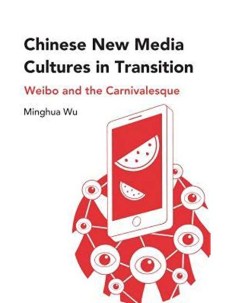
Book coverDr Minghua Wu is an Associated Professor in the School of Journalism and Communication at Chongqing University, China. She has been working at Chongqing University since 2014 after she gained her PhD in the Discipline of Media at the University of Adelaide, Australia. Her doctoral research was “Chinese new media cultures in transition: Weibo and the Carnivalesque” which is published as a book by Peter Lang, ISBN: 978-1-4331-5229-0. DOI: https://doi.org/10.3726/b15312. Her research interests include new media and society, cross-cultural communication and high education innovation. She can be contacted at minghuawu@cqu.edu.cn

Dr. Yanjuan Hu is an associate professor in Higher Education at the Faculty of Education, Southwest University, China. She obtained her PhD in 2014 from Leiden University Graduate School of Teaching, the Netherlands. She worked at as a postdoc researcher (2016-2018) at the department of teacher education, University of Groningen, the Netherlands. Yanjuan has published in international peer-reviewed journals, including Higher Education, Higher Education Research & Development, Innovations in Education and Teaching International, Higher Education Policy, Studies in Continuing Education, Studying Teacher Education. Her research interests include transcultural learning and research supervision, teacher professional development, workplace learning, and research-based teaching. She can be reached at huy@swu.edu.cn

The untold stories of two educationally mobile Mongolian and Tibetan students in China

Xu, C. L., & Yang, M. (2019). Ethnicity, temporality and educational mobilities: Comparing the ethnic identity constructions of Mongolian and Tibetan students in China. British Journal of Sociology of Education, 40(5), 631-646. doi: 10.1080/01425692.2019.1576121

Dr Lingling XU (Cora)

Dr Cora Lingling Xu, Durham University, UK

YANG Miaoyan

Dr Miaoyan Yang, Xiamen University, China

Guoxiang (a pseudonym), a female Mongolian student from China’s Inner Mongolia, has just received a job offer in a US law firm, having completed her undergraduate studies in Hong Kong and is about to finish her Law training in the US. Before leaving Inner Mongolia, Guoxiang went to a Han-language school, feeling like a ‘normal’ person until she started getting bombarded by questions such as ‘do you live in a Mongolian tent?’ and ‘are you good at archery?’ at university.

Dolkar (a pseudonym), a female Tibetan student, moved away from home to study in inland schools (neidi ban, established for ethnic minority students in Han-dominated areas) since age 12. Now, aged 23, she has just resat the Postgraduate Entrance Examination, hoping to get a Master’s degree which will allow her to ‘voice out’ her discontent and ‘fight for the rights’ of her people.

It is widely documented that ethnic minorities in China are severely disadvantaged economically and educationally, when compared with the Han-majority population. However, little is known about the experiences of those ethnic minority students, such as Guoxiang and Dolkar, who have been given opportunities to move across or even outside China for educational purposes. In this article, we tell the stories of Guoxiang (2013-2018) and Dolkar (2011-2018) by tracking their education mobility experiences. We argue that there is dynamic temporal multiplicity in the ethnic identity construction of these two students. This multiplicity of temporality is manifested in three aspects: temporality of ethnic othering; temporality of ethnic identity awakening; and temporality of ‘worldly time’ and ‘ethnic time’. Both ‘worldly time’ and ‘ethnic time’ entail distinctive understandings about these students’ pace and priorities in life. Both students defer their ‘permanent’ ethnic identity to an imagined future. Yet, adopting the gaze of the dominant others, both students subconsciously constructed an essentialist view of their ethnic cultures as fixed and stable, and those of the dominant cultures as alive and fluid.

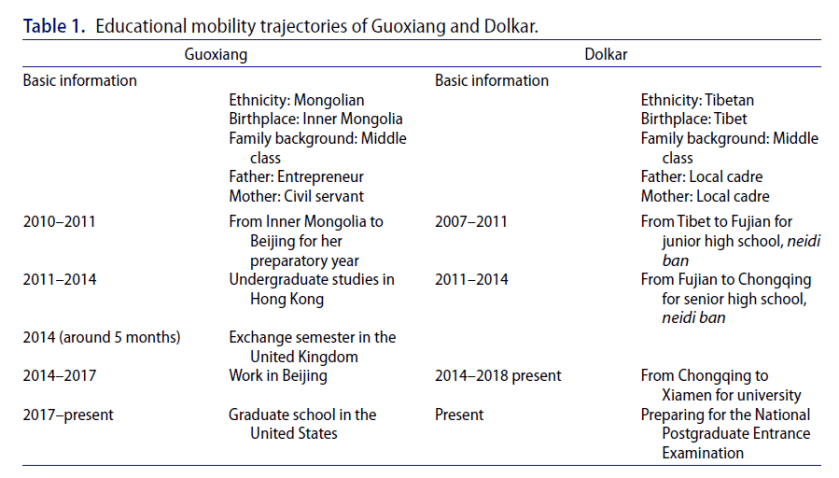
The data are drawn from two different research projects conducted separately by Cora (2013–2018) and by Miaoyan (2011–2018). In 2013, Guoxiang participated in a longitudinal project in which Cora explored the identity construction of 31 mainland Chinese students who crossed the border to study at a Hong Kong university. Dolkar (a pseudonym) was a key informant in Miaoyan’s research project entitled ‘University as a Site of Ethnic Identity Construction’, which started in March 2011.Both students are from middle-class family backgrounds and have achieved considerable mobilities in their respective journeys. Details can be referred to in the table below.

ethnicity table

Using temporality as an analytical construct, this article set out to explore the impact of educational mobilities on the ethnic identity construction of students from two different ethnic groups in China. By juxtaposing in-depth empirical data of a Mongolian student and a Tibetan student from two separate research projects, we presented some intriguing similarities with nuanced differences in their ethnic identity construction by examining the intersections between ethnicity, temporality and mobilities. Three patterns of temporalities are deployed in the students’ temporal processes of ethnic identity construction: temporality of ethnic othering; temporality of ethnic identity awakening; and temporality of ‘worldly time’ and ‘ethnic time’.

The two minority students were both from middle-class family backgrounds and were privileged to access educational opportunities through mobility. Guoxiang experienced cross-border educational mobility by completing her preparatory education in Beijing, her bachelor’s degree at a Hong Kong university, working in Beijing and later pursuing a master’s degree in the United States. Dolkar’s educational mobility started as early as 12 years old. Having been immersed in dominant Han culture for a long time, both students were alienated in various ways as their ‘authenticity’ was challenged by ethnic peers. This effectively subjected them to the peripheries of their respective ethnic communities. Meanwhile, their families’ higher socio-economic status and their familiarity with dominant Han culture have not exempted them from suffering ethnic stereotypes, prejudices and discriminations.In China’s current scheme of ethnic hierarchies, cultures of ethnic minorities are so exoticised,eroticised and historicised that they mainly serve as entertaining subjects in the margins of the dominant group’s private and public life (Gladney 1994; Yang 2017b, 9; Yi 2008, 111). In Hong Kong, the ‘mainlander’ versus ‘Hongkonger’ tensions and the lack of attention paid to ethnic minorities could present an added layer of alienation (Xu 2018).

For a long time, both students had internalised such marginalised and voiceless ethnic statuses while shutting away from any ethnic talk that might further disempower them. Critical incidents at certain stages of their educational mobilities had awakened them to their ethnicities. In Guoxiang’s case, Mumu served as an ethnic role model who empowered her positive ethnic imagination. For Dolkar, the Sociology of Education class on ‘educational equality’ served as a catalyst for ethnic revelation. Witnessing the constant marginalisation and voicelessness of their ethnic groups, they finally felt the urge to ‘voice out’ their discontent and to ‘fight for the rights’ of their ethnic groups, although their strategies were still conditioned by the majority/minority, dominant/dominated, powerful/powerless, central/peripheral and visible/invisible dichotomies. Sensing that ‘ethnicity is a luxury’ at the current paradigm of time thrift, they prioritised their ‘worldly’ pursuits of social status,monetary and materialistic goals, and simultaneously resorted to leaving their respective ethnic explorations for the future. This can be explained by their temporal mode of striving and the redemptive nature of their thinking in relation to their ethnic identity and ethnic cultural heritage.

Concomitantly, we note two schemes of time from Guoxiang’s and Dolkar’s reflective accounts: that of ‘worldly time’ and that of ‘ethnic time’, each of which entails a distinctive set of understandings about pace in life, priorities and importance. For Guoxiang, her ‘worldly time’ was closely linked to a cosmopolitan orientation in which she prioritised engaging with the outside world not only within China but also abroad. For Dolkar, her ‘worldly time’ was intently tied to a national focus that foregrounded time to compete with Han peers within the national ethnic hierarchy to establish and empower herself with a voice. There was thus notable perceived time poverty when it came to ‘ethnic time’, primarily owing to the overwhelming urgency to prioritise other worldly pursuits in order to gain their foothold with a view to getting their voices heard. Consequently, ‘ethnic time’ took a backseat, deferred to the imagined future. Here, we observe the formation of ‘hybridised’ethnic identities which transcend the essentialised ‘old ethnicities’ (Hall 2005) through their various and multiple mobile educational experiences, evoking Hall’s (2003, 235) characterisation of diaspora identities which ‘live with and through, not despite, difference, by hybridity’and are ‘constantly producing and reproducing themselves anew, through transformation and difference’.

While it is not our intent to generalise our findings to all educationally mobile ethnic minority students in China, we argue that these two ‘rhythms of timelines’ (Thompson and Cook 2017, 33) extrapolated from the in-depth and longitudinal accounts of these two students reveal a striking array of structural and social inequalities embedded in educational mobilities and ethnic relations in contemporary China. The dominant group’s consistent stereotypical negative portrayals of and indifference towards ethnic minorities we find in this study have served as a crystallising factor in demarcating the timelines of their search for ethnicity. Although preferential treatment (positive discrimination) has been offered to ethnic minorities to counter this structural inequality, the image of ethnic minorities as ‘preferentially treated’ and ‘less capable’ (Yang 2017b, 239) has re-consolidated their marginalisation in the current unequal ethnic structure, which has the potential to deprive ethnic identities and cultures. Therefore, our findings in this article not only stimulate discussions and debates on ethnicity, temporality and educational mobility, but also contribute to ‘making and implementing policies of social inclusion for migrant and indigenous ethnic minorities’ in China (Li and Heath 2017, 1).

Our reflections concerning Guoxiang’s and Dolkar’s ethnic identities constructions point to fruitful analytical engagement with ‘temporality’ in ethnic terms. First, ‘temporality’ is closely linked to the changing locations and relocations of ethnic minority groups. Second, time can be multi-dimensional and can be designated for inward or outward explorations.Adopting the gaze of the dominant others, Guoxiang and Dolkar subconsciously constructed an essentialist view of their ethnic cultures and conceptualised their ethnic identities as fixed, stable and ‘always there waiting to be retrieved’. In contrast, the dominant cultures are conceptualised as alive and fluid. For both students, critical incidents along their educational mobilities have not only empowered them in ethnic terms, but also awakened them to sense a pronounced distance from their own ethnic cultures. This distance is emotional and primordial. Hence, the entanglement of space and distance also offers useful insights for understanding ‘temporality’, especially if we examine their ethnic identities over an extended period.

Authors Bio

Dr Cora Lingling Xu (PhD, Cambridge, FHEA) is Assistant Professor at Durham University, UK. She is an editorial board member of British Journal of Sociology of Education, Cambridge Journal of Education and International Studies in Sociology of Education. In 2017, Cora founded the Network for Research into Chinese Education Mobilities. Cora has published in international peer-reviewed journals, including British Journal of Sociology of Education, The Sociological Review, International Studies in Sociology of Education, Review of Education, European Educational Research Journal and Journal of Current Chinese Affairs. Her research interests include Bourdieu’s theory of practice, sociology of time, rural-urban inequalities, ethnicity, education mobilities and inequalities and China studies. She can be reached at lingling.xu@durham.ac.uk, and via Twitter @CoraLinglingXu.

Learning to be tibetanDr Miaoyan Yang (PhD, the University of Hong Kong) is an associate professor in the Sociology Department, School of Sociology and Anthropology, Xiamen University. As a researcher of minority education, she has a particular interest in the Tibetan, Uyghur and Mongolian ethnic minority communities, employing them as a showcase of ethnic politics in China with reference to issues such as education, mobility, citizenship, ethnicity, identity and culture. She is author of the book Learning to be Tibetan: the construction of ethnic identity at Minzu University of China (Lexington, 2017) and a number of publications in Citizenship Studies, Journal of Multilingual and Multicultural Development and other journals. She is the Harvard-Yenching Visiting Scholarship recipient for year 2018-2019. She can be contacted at miaoyanyang@163.com.

Underclass and education: An educational truth of the underclass in an Agricultural County in Western China

中文版本

Tao Li

Dr Tao Li, Northeast China Normal University

The impoverished underclass in our society should be given particular attention by scholars and politicians. People’s real living conditions and miscellaneous problems on this hierarchy directly and clearly reveal the truth that, while the Chinese government has achieved huge accomplishments since the reform and opening-up policy, nonetheless, imbalance obviously exists between the rural and the urban, among different regions, different industries as well as different social classes; inequality implicitly exists in the structural and relational landscape of the social and political institutions. Meanwhile, designing and implementing the “Differentiated Compensation” (Cha Yi Bu Chang 差异补偿) policy, which has been politically legitimized by most nations to address the issue of social justice, is still quite formidable and challenging. The underclass population, which is impotent in articulation and highly under-represented, has no control on its own fate, and therefore highly relies on the nation’s conscience. Academic researchers and policymakers being the major agents to help representation of the underclass, their attitudes, either to neglect, to lead, to objectively judge, to sympathize, to understand, or to be considerate or integrated, become a crucial question. Ultimately, it is essential for the above two agents to reveal the underclass group’s true demands for interests, to understand their complex behavioral logic, and to design public policies which could effectively represent and address the underclass problems.

Based on multifactor analysis, the author selected Jie County, an agriculture dominated county in western China as a representative underclass field to conduct longitudinal empirical survey and collect both quantitative and qualitative data. Adopting the perspective of education, the author aims to uncover the educational obstacles and factors hidden on the four dimensions of the underclass, community, family, school, and the whole population as a group, that lead to the vicious circle of issues and dilemmas in the underclass. The main findings of the study are as follows:

First, regarding the underclass community, the author conducted a comprehensive historic review of the evolution of the township schools against the background of the national and societal structural changes as well as educational policy evolution during the 115 years from 1990 to 2014. The review found that the rural schools, regarded as center for education and civilization in the underclass field, experienced aggravated decline due to both external interferences and internal deviations. The phenomenon of massive consolidation of rural schools in modern China is named “bottom-up literacy promotion (Wen Zi Shang Yi 文字上移)” by scholars, an opposite to the historical phenomenon of massive construction of rural schools, known as “top-down literacy universalization (Wen Zi Xia Xiang文字下乡),” has led to educational dilemmas in the underclass. Based on discourse analysis and field observation with various participants on various field sites, the author found that the “Wen Zi Shang Yi” phenomenon is resulted from both external social incentives and internal educational motives. The former include village culture subaltern to the urban culture, the breakdown of the knowledge and power in villages, impotent articulation of self interests of the underclass, educational poverty under the consumption mentality, while the latter include low attraction to rural teachers, lack of staff quota, and excessive administrative control. In order to make a difference to the current dilemma of declining education development in villages due to the “Wen Zi Shang Yi” movement, the author adopts the anti-normative theory of justice and the perspective of social stratification, and puts forth a new strategy of public policy designing framework for the underclass.

Second, as for the underclass families, the author was among the first to conduct an empirical study among the farmer families, the individual farmers, students and parents in a subaltern administrative villages to address the topic of “education utility”, and the research has led to six findings as follows. (a) According to the data of the indicator of “children’s general education status”, families with children who are in schools hold higher recognition of literacy utility than families with children who have already finished education in schools. However, in the survey to the former families, it is found that the higher education stage their children are taking, the lower the recognition of the usefulness of education. While among the latter families, the ones that hold the highest recognition are those who have no children under education or children dropped off at the compulsory education stage. At the same time, those whose children completed high school study take up the highest proportion among families holding the position of education uselessness. (b) In accordance with data regarding ” attachment between farmers and land”, the more dependency on land work revenue in the family income, the higher the families regard education as useless. (c) According to data analysis of the indicator of “fortune and status”, “affluent families” with annual household income between 50,000 and 100,000 yuan hold the highest recognition of education utility. And yet, more families whose annual household income is below 10,000 yuan consider education as useless comparing with other groups. Besides this, from the data of “family structure/status”, it is shown that families with single parent domination hold lower regard for the usefulness of children’s education. (d) In terms of “gender of children”, many more families with girls regard education as useless than those with boys. (e) More male than female farmers show agreement on insignificance of education, while compared with other social groups, more students and their parents consider education useful. (f) Although most individuals think that education is useful in rural families, the number of those who think education is useless is still a considerable proportion. In addition, there is inconsistency between their words and behavior. Therefore, as we can see from all the data-based findings, the mentality of “education is useless” deeply and widely exists in the underclass of the society.

Third, from the perspective of underclass schools, the author puts forward that the underlying secret of the subaltern microscopic reproduction is achieved in the underclass schools by the “anti-school culture” among students and the seats arrangement by teachers based on qualitative studies in Yun Town, Jie County. During the study, a total of 22 eight graders and nine graders are recruited from a nine-year compulsory school as participants. Based on observation and interviews, it is discovered that the anti-school culture represented by these participants consists of despising their teachers, creating a mess in the classroom, expressing protest against the school authorities through language and behavior, organizing multiple types of peers groups (based on brotherhood, mentorship, relative relations, love affair relations etc.) to express group based protest through violence, theft and other misbehavior. To some extent, such anti-school culture is similar to but not the same as the culture created by “Lads” in the industrial towns in the UK and the “Migrant Children” in migrant workers’ children schools in Beijing. Specific characteristics are as follows: (a) compared to Lads’ superiority and the Migrant Children’s inferiority, the teenager participants in Yun Town have an alternative mentality mixed with “losers” and “tyrants” mentality. (b) By comparison to the Lads who have an obvious negative attitude to knowledge and diplomas and the Migrant Children who have a clear “affirmative” goal for diplomas, the teenager participants convey non-uniformity and fuzzy in words and behavior toward their recognition of knowledge and diploma. (c) The Lads apparently have reached a “partial insight” about the truth of the educational structure and system, whereas the Migrant Children are definitely blind of it, and participants in Yun Town also have “partial insight” into education. Furthermore, by researching the seating in the eighth and ninth grades in the school, the study has found the eighth grade has a “center-periphery” seating arrangement in order to “shape role models”, while the ninth grade has the function-based front-back seating arrangement. The seat arrangement forged individual students to build a so called self-identity according to the space based position in the class, which led to different learning experiences, shaped different levels of study groups as well as their corresponding behavior, and even implicitly filtered students to different life and professional tracks after they graduate from schools.

Fourth, regarding the underclass population as a whole group, the author analyzed the deeply rooted educational obstacles for the group in their pursuit of the “Chinese Dream,” which is a newly created concept by the Chinese government highlighting more concerns for the underclass group. To facilitate the analysis, the author classified the underclass group into two sub-groups, the group that stays in villages and the group that leaves the villages. For the former group, the author analyzed the mechanism system from kindergarten education to the job market, and found that there are various educational factors hindering the group to realize the “Chinese Dream”, including, ignorance of early childhood education, injustice of the nearest school placement policy, difficulties in the development of compulsory education in the underclass schools, the structure diversion factors after junior school, the weakening family social and economic status, dualistic labor market segmentation, difficulties in the employment, mobility and integration in urban areas. For the other sub group, the author attempted to understand the challenges from the perspective of the major policy issue of migrant students’ right to participate in national college entrance exam in cities. And it is found that no matter whether the policy is against or supportive to migrant students’ right to the exam, the policy is of little help for the underclass group to achieve their Chinese dream. On the one hand, if the migrant students are still not permitted to participate in the national college entrance exam in cities, the migrant underclass students will be deprived of equal resources in higher education, equal college financial supply, equal chances of national college admission and other institutional resources for them to realize their “Chinese Dream.” On the other hand, even if the policy allows migrant students to participate in the exam, it is likely to bring up the following risks: (a) it would be a misfortune for the underclass in cities and a sacrifice of their previous benefits; (b) the migrant underclass workers cannot really benefit from such kind of policies, on the contrary, they may be faced with a different type of deprivation of resources; (3) the underclass of the society and rural education could be subjected to further decay.

Author Bio

Dr Tao Li, originally from Mianyang, Sichuan Province, is an associate professor at the Northeast China Normal University/China Rural Education Development Research Institute and a PhD supervisor. Prior to his current post, he worked as a postdoctoral fellow at the Institute of Sociology of the Chinese Academy of Social Sciences. In 2019, he was selected as one of the awardees of the “National Youth Talent Support Programme” and served as the executive editor of the China Rural Education Review. He is mainly engaged in research on rural education, social stratification and inequalities, political sociology of knowledge and power, and social science research methods. He has published more than 100 articles in “Hommes & Migrations” (French), “Chinese Social Science” (internal manuscript), “Social Science”, “Exploration and Controversy”, “Humanities Magazine”, “China Administration”, “People’s Daily”, “Guangming Daily” and other publications.  More than 10 articles of his have been reprinted in the full text of “Xinhua Digest” and “Reproduction of People’s University”. He has presided over 5 national social science fund projects, and won 5 awards such as “First Prize of Excellent Achievements in Social Science of Jilin Province” and “First Prize of Outstanding Achievement Award of China Social Science Annual Conference”. He can be contacted by email at lit456@nenu.edu.cn.

Migration premium? The economic returns to youth inter-province migration in post-reform China

Zhao, M., & Hu, Y. (2019). Migration premium? The economic returns to youth inter-province migration in post-reform China. Journal of Youth Studies, 1-19. https://doi.org/10.1080/13676261.2019.1587153

mengyao

Mengyao Zhao, PhD Candidate, Bielefeld University

Yang Hu

Dr Yang Hu, Lecturer in Sociology and Data Science, Lancaster University

Every year, millions of young people migrate away from their home provinces for higher education and employment in China. However, less is known about the extent to which Chinese young people may benefit economically from their migration. Analyzing nationally representative data from the new China College Student Survey, our paper examines the impact of inter-province migration on the starting salaries of Chinese young people after undergraduate studies.

What is “migration premium”?

A growing body of evidence suggests that young people benefit economically from migration (Jewell, & Faggian, 2014; Kazakis, & Faggian, 2017). To explain potential mechanisms underlying the migration premium, the human capital perspective posits that individuals migrate to maximize lifetime utility at different life stages. Further to the human capital perspective, scholars such as Kaufmann, Bergman and Joye (2004) explicitly conceptualized the capacity to be geographically mobile as a form of capital. The authors indicated that, despite possessing similar levels of human capital, migrants enjoy additional economic returns compared with those who stay put. This conceptualization usefully acknowledges the value of migration—not as a means to an end (of gaining human capital), but as an end in itself, above and beyond human capital. Instead of considering individuals’ “capability” to be mobile as a reified capital (cf. Kaufmann, Bergman, & Joye, 2004), Bourdieu (1986) usefully conceptualized capital as a relational construct: the generation of capital is dependent on social practices (e.g. geographical mobility) that “match” one’s dispositions to the specific “field” in which such dispositions are valued (Bourdieu 1986, 241). Therefore, if young people actively mobilize their dispositions and capital (e.g. human, cultural, social, political and symbolic) through migration to find a most suitable place for education and work (Bourdieu, 1986, 241), we would expect such mobilization to entail favorable economic returns.

Hypothesis 1 (migration premium): Youth migration is associated with a positive economic return, net of pre-existing human, social, political and cultural capital.

A tale of two fields: Education versus work migration

Youth migration in post-reform China is governed by a complex interaction between centralist state-control and market forces; and the interaction has followed divergent paths in the higher education sector and the labor market.

Higher education sector. Post-socialist reforms have entailed the devolution of higher education funding from the central government to regional, provincial and municipal authorities (Wang, 2011). Since the ability of local authorities to establish a university has become closely tied to the socioeconomic resources held within their region, 59% of the national key universities—prestigious and well-funded higher education institutions—are located in eastern China. The uneven geographic spread of universities serves as a major driver for many young people to migrate in order to pursue higher education at a prestigious institution (Liu et al., 2017).

Besides, the central government continues to exert tight control over higher education admissions. Most high school graduates are required to take the College Entrance Examination (CEE)—a nationally standardized assessment that forms an integral part of the university admissions system (Wang, 2011). Although students are afforded some freedom to strategize where and what to study, their mobility often represents the result of state allocation or else a compromise between one’s CEE score, desire to attend a prestigious institution, and a preferred and suitable subject area, in response to state intervention.

Graduate labor market. China’s socioeconomic reform has given young people greater freedom than before to navigate their employment in the graduate labor market. In the 1990s, the centralized job assignment system was abolished. Today, young people in China often actively migrate between provinces in order to secure appropriate employment opportunities and maximize their economic returns.

As migration choices are more limited for education than for work and young people have greater freedom to navigate their work migration as opposed to being institutionally channeled to migrate for higher education (Liu et al., 2017), we expect greater economic returns to Chinese young people’s work than education migration.

Hypothesis 2 (context difference): Work migration generates a higher level of migration premium than migration for higher education.

Stratified access to migration premium: Hukou difference

 China’s hukou (household registration) policy has helped shape youth migration. Given the scarcity of higher education and non-agricultural employment opportunities in rural areas, migration is often the only option for rural young people to participate in higher education and non-agricultural work (Wang, 2011). Negative stigmas attached to rural hukou origin are widely documented in the Chinese labor market (Liu et al., 2017). Compared with their urban-origin counterparts, the negative stigmas and labor market discrimination faced by rural-origin young people may limit or offset the economic premium associated with their migration.

Hypothesis 3 (hukou difference): Migration generates a greater economic premium for young people of urban hukou origin than for young people of rural hukou origin.

Analyzing new national data using propensity score matching

We used data from the 2010, 2013 and 2015 China College Student Survey (CCSS) (see https://ccss.applysquare.com/index for more information). The CCSS is a nationally representative cross-sectional survey conducted by the China Data Center at Tsinghua University. Since our focus is on the impact of migration on starting salaries, we limited our analytical sample to students who had received at least one job offer when surveyed. Information such as location and salary of the highest-paying offer was collected. Our final analytical sample contains 5,906 respondents.

Based on three variables on the respondents’ pre-university province, university province, and employment province (i.e. the province of the highest-paying job offer), we devised a five-fold typology to distinguish inter-province education migration and work migration, based on prior studies (Jewell, & Faggian, 2014; Kazakis, & Faggian, 2016). The five groups are: Non-migrant (neither migrated for education nor for work), late migrant (migrated for work but not for education), return migrant (migrated for education and then returned to one’s province of origin for work), college stayer (migrated for education and stayed in the province of university attendance for work), and repeat migrant (migrated for education and then migrated to a third province for work).

We devised six sets of inter-group comparisons to explore the impact of inter-province migration on young people’s starting salary. Furthermore, we adopted the propensity score matching (PSM) method in our analysis (Jewell, & Faggian, 2014). The outcome variable is the (logged) salary of the highest-paying job offer received by a student, measured in the unit of Chinese yuan.

Migration premium and the exacerbation of social inequalities in China

  • Migration premium. The results for the whole sample support Hypothesis 1, that youth migration—for education and for work—is associated with positive economic returns. Our results show that youth migration, particularly for work, generates positive economic returns beyond the accumulation of human, political and cultural capitals, even after controlling for wage disparities across Chinese provinces.
  • Education vs. work migration. The results lend support to Hypothesis 2, that work migration is associated with a higher level of economic return than education migration. In addition to demonstrating the existence of the migration premium at an aggregate level, our findings also shed light on the nuanced ways in which this premium is contingent on the context in which migration takes place (cf. Bourdieu, 1986). Chinese young people enjoy a greater migration premium in the increasingly devolved and privatized graduate labor market than in the higher education sector.
  • Hukou Hypothesis 3, which states that urban-origin young people enjoy a greater migration premium than those of rural origin, is partly supported by the results. Chinese young people of different hukou origins benefitted unequally from the migration premium, which may serve to entrench pre-existing socioeconomic inequalities between rural and urban hukou holders. We found that young people of urban origin enjoy a higher level of economic return to their education migration than their rural-origin counterparts. Differentiated access to the education migration premium for rural-origin and urban-origin young people comes on top of the fact that urban-origin young people enjoy a substantially higher baseline starting salary than those of the same migration status but of rural origin. Thus, far from being a “grand equalizer,” migration for higher education may exacerbate existing socioeconomic disparities and structural inequalities caused by hukou by stratifying the degree to which young people of rural and urban hukou origins can benefit socioeconomically from the process of migration.

References

Bourdieu, P. (1986). “The Forms of Capital.” In Handbook of Theory and Research for the Sociology of Education, edited by John G. Richardson, 241-258. New York: Greenwood.

Jewell, S., & Faggian, A. (2014). Interregional migration ‘Wage Premia’: the case of creative and science and technology graduates in the UK. In Applied Regional Growth and Innovation Models (pp. 197-214). Springer, Berlin, Heidelberg.

Kaufmann, V., Bergman, M. M., & Joye, D. (2004). Motility: mobility as capital. International journal of urban and regional research, 28(4), 745-756.

Kazakis, P., & Faggian, A. (2017). Mobility, education and labor market outcomes for US graduates: Is selectivity important? The Annals of Regional Science, 1-28.

Liu, Y., Shen, J., Xu, W., & Wang, G. (2017). From school to university to work: migration of highly educated youths in China. The Annals of Regional Science 59(3): 651-76.

Wang, L. (2011). Social exclusion and inequality in higher education in China: A capability perspective. International Journal of Educational Development31(3), 277-286.

 Authors’ Bio

Mengyao Zhao is a PhD student at the Faculty of Sociology, Bielefeld University, Germany. Since enrolled in the doctoral program in 2015, she has also worked as a research associate in the research project, “Bright Futures: A Comparative Study of Internal and International Mobility of Chinese Higher Education Students”, which is jointly-funded by the German Research Foundation (DFG), Economic and Social Research Council (UK), and National Science Foundation (China). Her doctoral thesis focuses on “Internal migration and labour market outcomes of college graduates in China”, in which she examines the impact of geographic mobility/migration on sector entry and starting salaries for the new labour market entrants with college degrees in China.

BookDr Yang Hu is a Lecturer in the Department of Sociology at Lancaster University, UK. He is also an early career fellow at the Work Family Researchers Network, USA. He obtained his PhD in Sociology as a Gates Scholar from the University of Cambridge. His research focuses on the sociology of families and intimate relationships, race/ethnicity and migration, and East Asian societies. He is the author of Chinese–British Intermarriage: Disentangling Gender and Ethnicity (Palgrave Macmillan, 2016). He has published in the Journal of Marriage and Family, European Sociological Review, Journal of Sex Research, Demographic Research, Environment and Planning A, Population, Space and Place, Journal of Family Issues, and British Journal of Sociology of Education.