You are invited to participate in our qualitative survey on understanding your remote academic employment during COVID-19 pandemic. In this qualitative survey, you will be asked to complete a qualitative survey that asks questions mainly about your remote teaching experiences. It will take approximately 20-25 minutes to complete the questionnaire.
Your participation in this study is completely voluntary. There are no foreseeable risks associated with this project. However, if you feel uncomfortable answering any questions, you can withdraw from the survey at any point. For more information about the study, please read this document.
Your survey responses will be strictly confidential and data from this research will be reported only in the aggregate. Your information will be coded and will remain confidential. If you have questions at any time about the survey or the procedures, you may contact Dr Jasvir Kaur Nachatar Singh (j.nachatarsingh@latrobe.edu.au)
Thank you very much for your time and support. Please start with the survey by clicking here.
It is our great pleasure to inform you that we are about to publish abook tentatively titled Diversity and Inclusiveness in Chinese as a Second/Foreign Language Education will be published by Routledge. The book will be co-edited by Dr. Yuan Liang and Dr. Zhen Li, The Education University of Hong Kong, and will be published as the 4th volume of the Routledge Series on Chinese Language Education, which is co-edited by Professor Chi-Kin John Lee (The Education University of Hong Kong), Professor Ho-kin Tong (The Education University of Hong Kong), Professor Lening Liu (Columbia University), and Professor Boping Yuan (University of Cambridge).
The purpose of this book is to explore pertinent theories, complex (even inconvenient) realities, and learning practices in and out of schools, as reflected by Chinese as a Second / Foreign Language (CSL/CFL) learners. It is hoped that the student and teacher voices, experiences and insights in each chapter may help all educators better understand and teach all CSL/CFL learners inclusively to maximize their learning and development from diverse backgrounds. A range of essential questions will be addressed: What kinds of learning needs do CSL/CFL learners have? What are the current teaching practices addressing the needs of learners from diverse cultural backgrounds or ethnic minority backgrounds? What are the central inclusive and non-inclusive practices in CSL/CFL teaching? What are the factors that lead to these practices? By addressing these questions through empirical research papers included in this book, this book will increase the awareness of the complexity in diverse forms of inclusiveness that the current CSL/CFL education involves and raise conceptual, empirical, and policy-related concerns and insights. Chapters may focus on various issues of diversity and inclusiveness in CSL/CFL education but not limited to any of the following topics:
· CSL/CFL teachers’ beliefs and ideologies of multicultural teaching
· Teaching both heritage and non-heritage language learners
· Teaching CSL/CFL learners with special needs
· Teaching ethnic minority learners
· Gender and sexuality issues in CSL/CFL education
· Curriculum/textbook design for embracing diversity
· Policies of inclusiveness
Submission Guidelines
Each chapter needs to be situated within the research literature, connect with teaching and learning practices, and flesh out the larger linguistic/sociocultural/theoretical/pedagogical/practical issues that are nested in their local contexts.
Each chapter proposal should include:
1) The title and a 250-word abstract of the proposed chapter
2) 2 to 5 keywords of the proposed chapter
3) Complete author contacts information and professional affiliation
Chapter proposals are due by March 10, 2022. All chapter proposals will be peer reviewed. Accepted chapter proposals should result in a book chapter of approximately 7,000 words (including references and appendixes), due by October 30, 2022. The writing should follow the latest APA style (7th ed.). The target publication time is tentatively set for the summer of 2023.
If you are interested, please submit the title, abstract, and keywords of your proposed chapter via the following link by March 10, 2022:
If you cannot contribute at the moment but are willing to suggest scholars who study related topics, please also indicate their names and contacts via the above link. We are more than happy to invite them.
Contact information
Co-editors of the book:
Yuan Liang, Ph.D. Acting Head of Department Associate Editor-in-Chief of International Journal of Chinese Language Education Department of Chinese Language Studies Faculty of Humanities The Education University of Hong Kong Office Address: B3-1/F-36, The Education University of Hong Kong, 10 Lo Ping Road, Tai Po, New Territories, Hong Kong Tel: 852-29487483 Email: yliang@eduhk.hk Webpage: https://pappl.eduhk.hk/rich/web/person.xhtml?pid=163293&name=LIANG-Yuan
Zhen Li, Ph.D. Assistant Professor Department of Chinese Language Studies Faculty of Humanities The Education University of Hong Kong Office Address: B3-1/F-31, The Education University of Hong Kong, 10 Lo Ping Road, Tai Po, New Territories, Hong Kong Tel: 852-29487180 Email: jzjli@eduhk.hk Webpage: https://pappl.eduhk.hk/rich/web/person.xhtml?pid=223893&name=LI-Zhen,%20Jennie
For any inquiries, please feel free to contact the co-editors Dr. Yuan Liang and Dr. Zhen Li, or the editorial assistant Dr. Ruoxiao Yang, by yangr@eduhk.hk.
Thanks very much for your attention and look forward to your valuable contribution!
Editors, Cathy Xie PING, Fazal RIZVI & Michael A. PETERS
International education has become a major strategic policy priority as China emerges as one of the major global forces shaping the new post-covid landscape in international education at both school and university levels. It is not only the largest source of international students with some 665,000 studying abroad (380K in the US and 164K in Australia alone) but also a major receiving country and increasingly Asian hub for well over 500,000 students, becoming a top destination for students from BRI countries wanting to study abroad (roughly 70%). International education in China is an important part of the plan for national rejuvenation and central both to further opening up of education and to the BRI: it has capacity to further enhance university rankings, encourage international research collaboration, and improve the level of international exchanges and cooperation, contributing to the processes of Chinese educational modernization. The Covid-19 pandemic has temporarily disrupted the flow and exchange of international students, a process exacerbated by US-China geopolitical tensions, at the same time as profiling the need for more ethical and equitable global partnerships for a sustainable new post-pandemic world that aim to strengthen global partnerships, regional networks and digital infrastructures, especially for rural areas. This special issue examines global challenges, sustainable futures and the multiple ways Chinese international education is creating a new pattern of opening up Chinese education to the world.
Possible themes:
Multiple purposes of IE: intercultural, diplomatic, commercial
The international schools movement: leadership and innovation
Technologies of IE
Recruitment of globally mobile students, internationalization of the curriculum & global regimes of accreditation and quality assurance
Student experiences and the provision of institutional support
Franchise and overseas campuses and regional hubs
Knowledge economy and transnational production and application of knowledge through research collaborations
IE, interculturalism and global citizenship education
Shifting geopolitics and IE as soft power
This list is not exhaustive to re-examine international education in contemporary world. We especially welcome articles on international schooling.
Please send an expression of interest to Cathy Xie Ping (cathyping.xie@bnu.edu.cn), Fazal Rizvi (frizvi@unimelb.edu.au) or Michael A. PETERS (mpeters@bnu.edu.cn) with title and abstract (300 words) before the end of Febuary for planned publication this year.
About Beijing International Review of Education (BIRE)
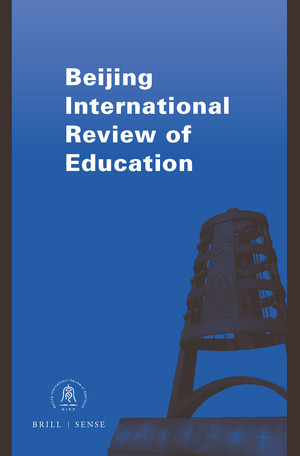
The Beijing International Review of Education is a new start-up journal published by Brill Academic Publishers (https://brill.com/) starting in 2019. The Beijing International Review of Education aims to publish articles that are of interest not only to academics and policy makers but also teachers and members of the public. All articles in this journal will undergo rigorous peer review, based on initial editor screening and double-blind peer review. The journal publishes four issues per year.
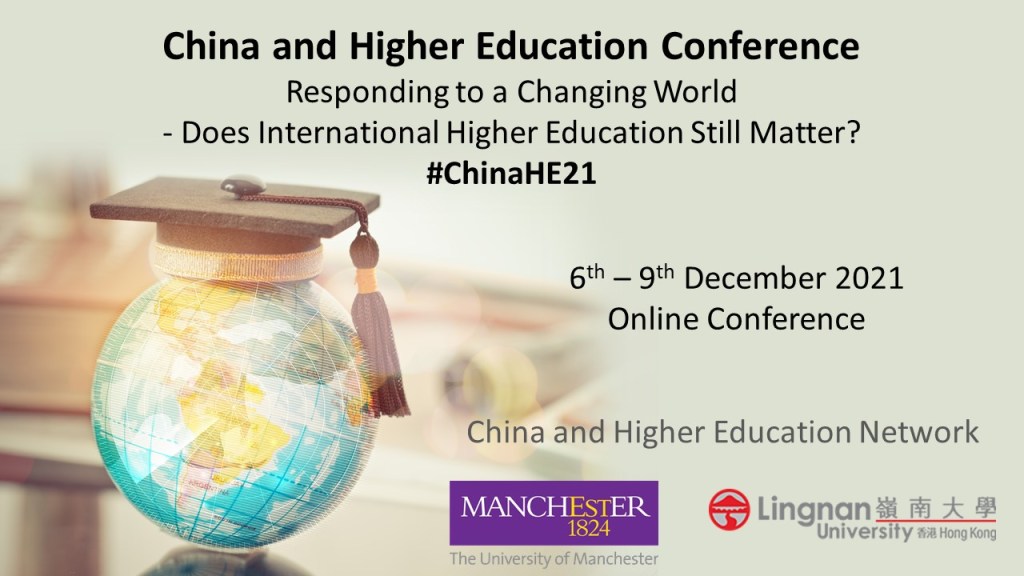
We would like to invite you to the annual “China and Higher Education” conference, which explores international perspectives on issues on Chinese higher education, international students, and international HE policies. This year’s conference theme is: “Responding to a changing world: Does international higher education still matter?”
The conference is free to attend takes place online on 6-9 December 2021.
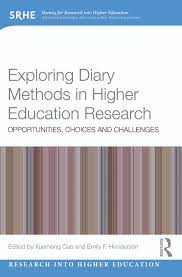
Exploring Diary Methods in Higher Education Research: Opportunities, choices, and challenges significantly contributes to higher education research, especially in using this creative research method to explore salient topics in the global context. Using solicited diary techniques across empirical studies creates a new perspective to learn participants’ perceptions and reflections on their experiences. Besides introducing this intriguing research method, as book editors in this book, Cao and Henderson also include research projects conducted by researchers from various cultural backgrounds. These research projects contribute to the study of marginalised and vulnerable groups in higher education, such as international students, LGBTQ individuals, economically deprived communities, etc. This book helps researchers employ the diary method in education studies, sociology, and other related fields.
This book draws a clear picture about what the diary method is (Part one), why it is crucial and how to design and evaluate diary studies (Part two), the research process and the importance of diaries for researching hidden issues (Part three). In addition to serving as an unsolicited and second-hand resource, the diary can also be developed as first-hand resource. Through working together with participants, solicited diary aims to help researchers comprehend specific research questions that serve research purposes. In this book, different scholars present how solicited diaries are applied as a research method to enter participants’ everyday life, capture life as it is lived, and examine daily rhythms of life or within-person changes over time, particularly in longitudinal studies. Depending on diary method approaches, audio and video diaries can provide unique insights into the body and creative practices.
Part one of this edited volume inspires researchers to use various techniques and approaches in the diary method. Cross-institutional research, audio diaries, photo diary research and potential duration that diary study needs to take are explored. Mittelmeier et al., in chapter 1, state that the diary method is flexible and can be easily moulded across a broad range of mix-method research designs (p.17). The mixed-method approach offers unique insights into participants’ worlds through flexible engagement with multiple facets of participants’ experience (p. 18). While applying this method, it is essential to think about study durations. In chapter 2, Handerson argues that temporality is observed in diary studies; short-term intensive research using the diary method could contribute to understanding participants’ experiences in academia, especially those with caring responsibilities attending higher education conferences (p. 30). Researchers could determine the time-scale of the study to capture ongoing phenomena, or they can impose the time-scale of the study to explore time-bound phenomena, for instance, in higher education or an academic year (p. 31). Indeed, no phenomenon is ‘too short, as long as the phenomenon is suited to diary method and the sampling has been carefully considered in the diary method’ (p. 40). Other than the flexibility of time spent on the diary method, there are different forms while employing diaries as method, such as an audio diary. For instance, a significant advantage of audio diaries is less time-consuming for higher education participants. In chapter 3, Dangeni et al. showed that the audio diary could ‘capture emotions and foster higher retention during data collection, especially in longitudinal studies’ (p. 55). Participants could take photos to keep photo diaries. The diary-based method ‘enhances participant’s opportunities to recognise themselves, be seen and act as epistemic contributors’ (p. 68).
Part two discusses research ethics, participant experience, and considerations in conducting the diary method. While conducting research using solicited diaries, researchers need to be aware of the ethical concerns in higher education research. Participants in higher education fields usually shoulder heavy workloads. Through participant and researcher win-win considerations, researchers’ and participants’ research experience are enhanced to strengthen longitudinal qualitative diary research retention. As a researcher and a senior student in the department, for research with new international Chinese master’s students in the U.K., Cao demonstrates how she, through the diary method, helped participants understand the researcher’s close relation with participants’ experience. In the meantime, she offered academic development and emotional support sessions for participants (Chapter 5).
In Chapter 6, Keenan mentioned that for inclusive diversity in higher education, the diary method in ‘participant-generated photo-elicitation’ could help illustrate the details of usually broadly understood groups rather than details such as LGBTQ (p. 93). Through interviews with photos captured and provided by the participants to present their everyday lives, ‘by its episodic nature’, the diary method allowed ‘a big story to be told in small parts’ (p.93). Furthermore, according to Baker, event-based diaries can capture the process in higher education decision-making and choice through reactivity. ‘Reactivity can potentially overshadow emotion in choice, and decision-making processes can therefore negate the strengths of the diary method, and reduce opportunities for the multifaceted nature of these processes to be captured’ (Chapter 7, p.104). However, there are ethical questions raised. Lawther showed that when researchers need to engage with photos, visual research has ethical challenges ‘in cases where participants choose to take identifiable photographs’ (Chapter 8, p.118). Although there are ethical concerns, with a suitable approach that is sensitive to research needs, visual diary-like methods can be useful in higher education research for approaching sensitive topics (Chapter 8, p.126). This, to a certain extent, helps to broaden research topics in the higher education field.
Part three demonstrates how the diary method could serve as a powerful tool to explore voices from specific groups. Sabharwal et al., in chapter 9, concluded that the diary method helps to study agency and empowerment: for students in socially excluded groups who might experience ‘sexism, racism and prejudice’, the method could reveal the chronic nature of everyday oppressions that they are confronting (p.133). However, there are some issues: (1) data encompassing issues that do not fall into originally anticipated areas, (2) lack of control from the perspective of the researcher, (3) inequity caused by the selectivity of participants’ responses (Watson & Leigh, Chapter 10, p. 145). The various forms of diary methods can support voice from disabled students through modern technologies, such as Seeing AI for visually impaired students (Watson & Leigh, Chapter 10, p. 157). Burford, in chapter 11, introduced perspectives from feminist and queer scholars on affective-political contexts in New Zealand, and there are ‘uneasy feelings’ in research with doctoral students’ experience. However, event-based methods effectively capture affective phenomena (p.164). For international students, solicited diary method could provide researchers with ‘timely and dependable data about participants’ language lives’ (Groves, Chapter 12, p.187). Therefore, by asking participants to record diaries during certain events, their reactions can be documented timely.
Overall, by showing various research approaches that researchers apply diary methods with a wide array of groups, the book generates insightful methodological discussions about using the diary in higher education research. The diary method thus pushes research boundaries through foregrounding the dynamics between researchers and participants. Researchers and students who want to study in-depth voices from participants and are interested in creative research methods could benefit a great deal from this book.

 Network for Research into Chinese Education Mobilities (NRCEM)