
CfP: COMPARE What is an international student represented to be? Critical constructions from across Europe, ethical silences and future opportunities

Guest editors: Dr Aneta Hayes, Dr Sylvie Lomer and Prof Marek Kwiek
The guest editors are delighted to invite paper proposals for a special issue, provisionally titled ‘What is an international student represented to be? Critical constructions from across Europe, ethical silences and future opportunities’. This special issue proposal has been initially accepted by COMPARE: A Journal of Comparative and International Education, and we are now working on the final version of the proposal. We are therefore calling for paper contributions, to be included in the special issue.
There is a wide acknowledgment that the reputational benefit of ‘highly internationalised’ universities (understood mainly, due to the influence of global rankings, as having high numbers of international students) comes at the cost of (mis-) representations of globally mobile learners. In Anglophone countries, international students have been found to be represented as people in educational deficits, economic objects and supplicants of the prestigious education system of the receiving country (e.g. Lomer, 2014; Hayes, 2017, Marginson, 2013). It has also been argued that such representations, evoked due to positions of assumed prestige of the Anglophone countries, have legitimised the logic of intellectual, social and political domination over foreign students in their education systems (e.g. Bilecen, 2013; Tran and Pham, 2015; Yu and Moskal, 2018).
Little is however known about what international students are represented to be in non-Anglophone countries. There is therefore an urgent need to establish what their representations are, especially at a time when more non-Anglophone countries in Europe enter the internationalisation competition (de Wit et al., 2015). We therefore invite paper contributions that will focus on (but are not limited to) the following questions:

a) what are national policy and institutional rationales behind ‘more energetic’ recruitment of international students in non-Anglophone European countries?
c) how may these rationales position and represent international students, and
d) what consequences specific representations of international students might have for their social and education inclusion?
Submissions
1. Abstracts of 250 words and full author details (name, position, institutional affiliations, email and telephone number) should be submitted via email to Aneta Hayes (a.m.hayes@keele.ac.uk) by 5 May 2019.
2. Contributors will be notified about the outcome of their submission by 25th May 2019.
For questions, please contact Aneta (a.m.hayes@keele.ac.uk).
We look forward to receiving your contribution.
Best wishes,
Aneta, Sylvie and Marek

Raising children for the 21st Century – Changing methods and moralities in Chinese primary education

image001

Dr Anni Kajanus

Elite schools in China aim to educate citizens fit for the 21st Century – competitive, competent and creative people with good cooperative skills and an international outlook. The adaptation of new progressive pedagogies that are used in combination with more traditional modes of discipline and learning, vary across institutions. Moreover, the current education system epitomizes the competitive spirit that has come to form a backdrop for everyday moral experiences and aspirations in contemporary China. Children work under high pressure to compete for access to the best educational tracks, which, it is hoped, will lead to socioeconomic mobility. At the same time, imported Euro-American pedagogies that emphasize free expression, self-discovery, creativity and deep learning, have been adapted to varying degrees. Finally, there is an increased emphasis on cooperative skills, sharing and helping others. The explicit teaching of these skills is part of the effort to resolve the “moral panic” of raising generations of selfish, pampered and egotistic only children, that has preoccupied parents and educators since the launching of the one child policy.

The three publications highlighted here explore the patterns of competition and morality that children develop in this transitional context. I have compared two schools in Nanjing, an urban ‘elite school’ that emphasizes competition and explicit moral education, and a semi-rural ‘average school’ that has less explicit instruction in moral values and norms, less emphasis on competition, and more free time for children to cooperate with each other without adult direction. The comparison revealed interesting differences, as well as shared aspects, in the following areas that were reported in the three recently published papers:

  • Cooperative skills. Children from the average school were more skilled in organizing joint activities and resolving conflicts without adult intervention. (Kajanus 2018) In my role as a sports instructor, I introduced a novel ball game in both schools. Two teams played against each other, in a manner that required both competitive motivation and cooperative skills. I found that when given the responsibility to manage the game without adult intervention, the elite school children struggled to enforce rules and to resolve conflicts. In the average school, children enjoyed the competition, but prioritized the smooth running of the game over winning or strictly enforcing rules. They also actively involved team members of varying abilities, thus making the game more engaging and enjoyable to all. I concluded that the overwhelming adult direction and management of the elite school children hinders the development of subtle skills of cooperation.
  • Competitive motivation. I explored children’s competitive motivation in more detail through a formal running experiment, in which children run on their own (non-competitive condition) and against a partner (competitive condition) (Kajanus 2019). The improvement of speed in the pair run is taken as a measure of competitive motivation. Even though children in the two schools were equally competitive, the elite school children’s motivation was more tied to the result of competition, that is, they enjoyed competitions if they won, but were not motivated to compete if they did not do well. At the average school children’s competitive motivation was not tied to winning to same extent. They were also motivated by the excitement and the communal atmosphere, and emphasized the benefits competition has through improving performance even when not winning.
  • Fairness. I collaborated with developmental psychologists Peter Blake, Katherine McAuliffe and Felix Warneken, to test children’s fairness behaviours through an experiment on inequity aversion (Kajanus, et al. 2019). Children played with a partner, making decisions of either accepting or rejecting distributions of sweets that were equal, advantageously unequal (getting more sweets than their partner), or disadvantageously unequal (getting less sweets than their partner). Children in both schools rejected both types of inequality, which was interesting in the light of previous studies that have shown that children in several societies accept advantage, while rejecting disadvantage (Blake, McAuliffe, et al. 2015). A detailed analysis of our findings also supported the conclusion that despite the similar results across the schools, the differences in these learning environments also had an impact on the children. Our findings suggested that at the elite school, children fell back on explicit moral norms learned from adults, while at the average school, their norms of fairness were more internalized through extensive participation in communal activities.

LogoAll three papers are based on research that brings together methods and approaches from social anthropology and developmental psychology. At the time of my ethnographic fieldwork (2014-2015), the children were 8 to 9 years old. I spent 10 months observing the everyday life of one 2nd grade classroom in each school, while living in the two communities and spending time with the children and their families also outside school. I later returned to the schools and the communities for several shorter visits (from 3 weeks to 2 months) to carry out experiments designed to address particular questions that had emerged form the ethnographic fieldwork. Originally an anthropologist by training, I have later also been trained in experimental methods. With my collaborators in the fields of developmental and cognitive psychology, we have shared a motivation to study child development in a culturally grounded way, and recently, this has led to us launching Culture & Ontogeny Research Initiative (CORI). https://sites.lsa.umich.edu/cori/(Facebook: fb.me/CORIteam  Twitter: @CORI_team)

In short, my research interest has been human cooperation, and the competitive and conflict behaviours that revolve around cooperation. Babies are born with basic capacities and motivations to cooperate with others. That is to say, to the relief of many parents, that they do not need to be taught to help others, to share, to make friends, to engage in joint activities, and so on (Tomasello 2009). However, they must learn, with age, the specific rules and patterns that pertain to cooperation and conflict resolution in their community. As children grow up in an environment of particular social norms and cultural values, the development of their cooperative behaviours is shaped by them. For example, while in some societies cooperation is mediated by explicit rules, such as turn-taking, in others, children learn to subtly align their interests and activities with those of others, and explicit conflicts rarely occur (Rogoff 2003).

The study of child development is, to a large extent, a study of Euro-American children, and the so-called cross-cultural study remains at the margin, often still serving the purpose of standing as the comparative ‘other’ to the Western norm. The aim of these three papers has been to provide nuanced within-culture comparisons that reveal some of the complexities of the current socio-moral transformation, and go beyond the simplistic characterizations of the Chinese society, often present in cross-cultural studies of child development and education.

Moreover, they offer a glimpse into how children’s cooperative skills and motivations develop in these diverse school environments. The disparities between Chinese educational institutions are infamous, and social mobility through education is not equally accessible to all. It is possible, however, that the more relaxed atmosphere of the average school, which leaves more room for the development of children’s own cooperative skills and supports a competitive mode that protects from the psychological burden on losing (inevitable at some point), will benefit the children later on in life. It is, of course, also possible, that the more strategic moral code and the zero-sum competitive mode of the children of the elite school, will help them fair better in their educational trajectories and the equally competitive job markets.

References

Blake, P.R., McAuliffe, K., Corbit, J., Callaghan, T.C., Barry, O., Bowie, A., Kleutsch, L., Kramer, K.L., Ross, E., Vongsachang, H., Wrangham, R., and F. Warneken (2015). The ontogeny of fairness in seven societies. Nature, 528(7581), 258-261.

Kajanus, A. 2018. Playing ball – cooperation and competition in two Chinese primary schools, in Cooperation in Chinese Communities. Morality and Practice. (eds.) Stafford, C, Judd, E. R. and E. Bell, London, New York: Bloomsbury Academic. https://www.bloomsbury.com/uk/cooperation-in-chinese-communities-9781350077218/

Kajanus, A. (2019). Mutualistic vs. zero-sum modes of competition – a comparative study of children’s competitive motivations and behaviours in China. Social Anthropology 27(1): 67-83. https://doi.org/10.1111/1469-8676.12578

Kajanus, A.; McAuliffe, K.; Warneken, F. and P. R. Blake. (2019). Children’s fairness in two Chinese Schools: A combined ethnographic and experimental study. Journal of Experimental Child Psychology 177: 282-296. https://doi.org/10.1016/j.jecp.2018.08.012

Rogoff, B. (2003), The Cultural Nature of Human Development. Oxford;: Oxford University Press.

Tomasello, M. (2009), Why We Cooperate. Cambridge, Mass.: MIT Press.


Author bio
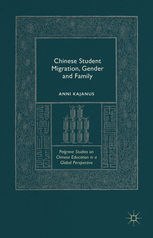
BookAnni Kajanus is an Assistant Professor of Social and Cultural Anthropology at the University of Helsinki. Her research focuses on education, child development, migration, morality and cognition. Anni is the author of the monograph Chinese Student Migration, Gender and Family, which situates the family project of investing in the overseas education of the only child within the wider socio-moral transformation of the Chinese society. Her most recent research brings together methods and approaches from anthropology and psychology to compare the cooperative, competitive and conflict behaviours and motivations of children in different communities. For this project, Anni has carried out ethnographic and experimental research in primary schools in China and the UK.


Revisiting my journey to a critical sociology of Chinese education through Bourdieu’s bequest

Michael Picture

Dr Guanglun Michael Mu 

The transmission and transformation of dispositions and capitals across generations and geographies is an enigmatic problem. Concomitant with this problem are challenges of disparity and diversity, of distinction and discrimination, of parity and partiality, and of prerogatives and pejoratives. In an educational context, these challenges are indeed real and persistent. To take up the challenges, I often have recourse to Bourdieu’s relational, reflexive sociology to ponder over power, politics, and participation in education and socialisation. To realise the full value of the epistemic tools bequeathed by Bourdieu, I employ ‘field analysis’ and ‘participant objectivation’ to sociologise myself. Over the years, I have studied and worked, transnationally, in different sociocultural and geopolitical contexts of China, Canada, and Australia. My dispositions and positions have changed, but one thing remains constant: I am Chinese by birth. Such a biological fact and a cultural heritage, and sometimes a political stance, consciously or unconsciously, come to shape my academic habitus – a habitus that manoeuvres my scholastic and social engagement with Chinese young people struggling to survive and thrive in transborder or/and transcultural contexts. Diasporic Chinese constitute one group of these young people and floating children and left-behind children constitute another. In this essay, I introduce to the reader my books about these young people. I also take advantage of this introduction to revisit my journey to a critical sociology of Chinese education through Bourdieu’s bequest.

Twelve years ago, a Chinese Australian young fellow allowed me a unique opportunity to approach his inside world – a secret, subtle microcosmos that has never ever been touched before: “I am Australian but I look Chinese; I look Chinese but I can’t speak Chinese”. His very predicament prompted me to mull over the tensions around language and identity of Chinese diaspora. Such tensions later became the empirical foundations of my first book (Mu, 2016). Working with over 200 Chinese Australian young people, I grappled with the complex entanglement of their habitus of Chineseness and linguistic dispositions within the immediate fields of family, school, community, and workplace. My affective and academic engagement with Chinese diaspora and Pierre Bourdieu urged me to write another book (Mu & Pang, 2019). This work involves hundreds of Chinese Australian and Chinese Canadian young people and comes to grips with their racialised and gendered body, limitations and liberations around their socialisation and education, as well as their resilience process in the face of structural constraints. The book is a valorous attempt, however polemical and rudimentary, to develop a critical sociology of Chinese diaspora. The intention is to spark questions of cultural, racial, and social identification and affiliation, of lineage and identity, of story and memory, and of participation, representation, and socialisation in multicultural societies challenged by complex and difficult issues of diversity, inclusivity, and citizenship.

Parallel to my work on Chinese diaspora in the global, multicultural contexts is my interest in floating children and left behind children in the internal migration context in China. My first book in this regard (Mu & Hu, 2016) reports on the potholes and distractions within the living and schooling of these children. Yet the book shifts from the deficit model and ‘do-gooder’ approach to a transformative and strength-based perspective that recasts vulnerabilities into opportunities. It invites a recognition of the qualities of left-behind children and floating children, and proposes to reshape the taken-for-granted social structures within dominant institutions that often arbitrarily misrecognise the rural dispositions of these children. This ushers in my development of a sociology of resilience to structural constraints and my recent book on a Bourdieusian analysis of the resilience process of floating children and left-behind children (Mu, 2018). Working across policy documents, ethnographic interviews, and a large-scale quantitative dataset, I propose that resilience is a process of socialisation that reshapes a particular social arena (field) where young people are enculturated into a system of dispositions (habitus) and endowed with a set of resources (capital) required for rebounding from adversities and performing well across multiple domains – physical, psychological, social, and educational.

At the end of the essay, I provide a brief introduction to my edited book “Bourdieu and Chinese Education” (Mu, Dooley, & Luke, 2019). In this volume, a group of scholars in China, Australia, Canada, and the USA dialogue with Bourdieu and raise persistent questions not only about issues of equity, competition, and change in Chinese educational policy and practice, but also about the value, venture, and violence in using established Western intellectual frameworks for analysing Chinese education. The book makes a collective call for a ‘reflexive reappropriation’ of Bourdieu’s sociology in the study of Chinese education. Drawing on this collective wisdom, I conclude the essay with a research agenda that may spark debates on:

  • the attractions and contradictions of using Western social scientific models, frameworks, and worldviews for studying Chinese education;
  • the germinating development of contemporary Chinese habituses in response to academic capitalism and edubusiness;
  • the everyday lived experience, resilience, and conundrum of Chinese students, parents, and educational professionals in the ordinary and extraordinary fields of home, school, and community; and,
  • the status and education of non-Han, ethnic minorities in the context of increasingly visible multicultural politics and growing doxic urgency for social cohesion and nation-state building in rising China.


References

Mu, G. M. (2016). Learning Chinese as a Heritage Language: An Australian perspective. Bristol: Multilingual Matters.

Mu, G. M. (2018). Building resilience of floating children and left-behind children in China: Power, politics, participation, and education. London: Routledge.

Mu, G. M., Dooley, K., & Luke, A. (Eds.). (2019). Bourdieu and Chinese education: Inequality, competition, and change. New York: Routledge.

Mu, G. M., & Hu, Y. (2016). Living with vulnerabilities and opportunities in a migration context: Floating children and left-behind children in China. Rotterdam: Sense.

Mu, G. M., & Pang, B. (2019). Interpreting the Chinese diaspora: Identity, scialisation, and resilience according to Pierre Bourdieu. London & New York: Routledge.


Author Biography

Guanglun Michael Mu is Senior Research Fellow at Queensland University of Technology. His current project on culture, class, and resilience is funded by the Australian Research Council ($418,489.94). Michael draws on theories from sociology of education (e.g., Bourdieu’s reflexive sociology) as well as mixed methods and quantitative approaches (e.g., meta-analysis, factor analysis, path analysis, process analysis, structural equation modelling, and social network analysis) to probe and prod research problems evolving from three areas: negotiating Chineseness in a diasporic context; building resilience in (im)migration and multicultural contexts; and developing teacher professionalism in an inclusive education context. Michael’s publications include five scholarly books and over 40 scholarly papers.

Trends in educational mobility: How does China compare to Europe and the United States?

Gruijters, R. J., Chan, T. W., & Ermisch, J. (2019). Trends in educational mobility: How does China compare to Europe and the United States? Chinese Journal of Sociologyhttps://doi.org/10.1177/2057150X19835145

gruijters_rob

Dr Rob Gruijters  Faculty of Education, University of Cambridge

Summary

Despite an impressive rise in school enrolment rates over the past few decades, there are concerns about growing inequality of educational opportunity in China. In this article, we examine the level and trend of educational mobility in China, and compare them to the situation in Germany, the Netherlands, the UK and the USA. Educational mobility is defined as the association between parents’ and children’s educational attainment. We show that China’s economic boom has been accompanied by a large decline in relative educational mobility chances, as measured by odds ratios. To elaborate, relative rates of educational mobility in China were, by international standards, quite high for those who grew up under state socialism. For the most recent cohorts, however, educational mobility rates have dropped to levels that are comparable to those of European countries, although they are still higher than the US level.

While we observed stable mobility rates in Europe and the USA (e.g. persistent inequality), in the Chinese case, we observe a sustained increase in inequality of education outcomes. In the comparative literature on educational inequality, which now covers most of the industrialised world, such a finding is highly unusual, particularly during periods of robust economic growth and educational expansion (e.g. Blossfeld et al., 2016; Pfeffer, 2008). The reason for this finding should be sought in China’s recent history, that is, the transformation from a relatively egalitarian socialist system (1949–1978) to a highly unequal market system (1978–present). Previous studies confirm that advantaged groups have benefited disproportionately from the educational reforms and expansion that followed the market transition (Deng and Treiman, 1997; Zhou et al., 1998). We show that inequality increases even further for the ‘second market generation’, who came of age during the early 1990s, mirroring broader increases in socioeconomic inequality during this period (Xie and Zhou, 2014).

This finding, which is consistent with other recent research (Wu, 2010; Yeung, 2013), is probably due to a combination of factors. First, market-based educational reforms, such as the introduction of tuition fees for senior high school and college in the 1990s, increased the importance of parental resources for children’s educational success. In addition, increasing economic returns to education strengthened the correlation between parental education and other aspects of social origin (especially income) over time. Second, the decentralisation of educational funding in the 1980s increased regional disparities in the availability and quality of schools. As a result, children from rural and poorer backgrounds tended to leave the education system before they reached the more advanced educational stages. In addition, there has been long-standing discrimination against people with rural hukou. All these factors have led to a situation in which educational expansion at the tertiary level mainly benefits already privileged urban residents (Tam and Jiang, 2015). Any effort to counter the trend of rising educational inequality in China should, therefore, focus on reducing attrition and improving access to quality education in rural and less developed areas.

Bio: Rob Gruijters

I am a University Lecturer affiliated with the Research for Equitable Access and Learning (REAL) Centre at the Faculty of Education, University of Cambridge. Prior to joining Cambridge in September 2018, I worked as a postdoctoral researcher in Oxford and Berlin. I am a sociologist by training and have worked with the German Development Cooperation (GIZ) in Ghana before starting my Phd. My current research engages with the causes and consequences of the ‘global learning crisis’, with a focus on Asia and Sub-Saharan Africa. I am also interested in the effect of China’s market transition on educational and economic inequality.

For more information and publications see:

https://www.educ.cam.ac.uk/people/staff/gruijters/

https://scholar.google.co.uk/citations?user=QGEX1VcAAAAJ&hl=en

Scholarship Opportunity: For residents of mainland China and Hong Kong–Warwick MA Global Education and International Development

There is an exciting opportunity for China and Hong Kong residents to apply for a scholarship to enrol on MA Global Education and International Development in the Centre for Education Studies at the University of Warwick, UK. 

Scholarship applicants should be passionate about education and global issues and we are looking for high quality students who can justify and give evidence for their interest and ambition regarding global education.

The scholarships are worth £10,000 each and the deadline is 1st June 2019 and the entry point for the course is Sept/Oct 2019. The course is 1 year. Scholarship applicants also need to submit an application for the MA course.

Information on the exciting MA course is here.

Information on the scholarships is here.

The application form is here.

What previous Chinese students have said about this MA:

  • “I loved the core module; the module taught me many related theories and the basic background, which was useful for the further study of the global education. The placement module covered many interesting topics and useful skills, and was very good experience for further work.”
  • “The best aspect of MA GEID was the placement. I have improved my communication skills and it was beneficial for me to work with colleagues and managers. I recommend this course because it is not only about learning academic knowledge but also accessing work experience.”


If interested, please contact Dr Emily F. HendersonAssistant Professor of International Education and Development, Centre for Education Studies, University of Warwick