Internationalised School Teachers’ Experiences of Precarity as Part of the Global Middle Class in China: Towards Resilience Capital

Poole, A. (2019). Internationalised School Teachers’ Experiences of Precarity as Part of the Global Middle Class in China: Towards Resilience Capital. The Asia-Pacific Education Researcher.

Watch a presentation video based on this paper.

A read-only version of the paper can be accessed here; An earlier draft of the paper can also be accessed via ResearchGate.

Adam Poole

Dr Adam Poole, University of Nottingham, China

Abstract

The purpose of this study was to explore three International School Teachers’ experiences as part of the Global Middle Class (GMC) in China. This group is worthy of study, as their numbers are increasingly growing, particularly in the Asia-Pacific region. However, little has been written about the negative aspects of sustained global mobility or how individuals, as opposed to families, accrue and deploy cosmopolitan capital for social advantage. In-depth interviewing was employed in order to bring into focus the participants’ experiences of prolonged mobility. In addition to highlighting the precarious aspects of being part of the GMC, the study also identified and illustrated a new form of capital that emerged during data collection and analysis, which was labelled ‘resilience capital’. Resilience capital is produced when teachers take a more positive attitude towards negative or precarious experiences, utilising them in order to develop skills, dispositions and endurance which also can be converted into more traditional economic and cultural forms of capital.

Background to the paper

Google the term ‘international teachers’ or ‘international teachers in international schools’ and you will find a plethora of recruitment websites offering the intrepid educator a chance to broaden their horizons whilst being more than adequately remunerated for their tenacity. You are also bound to see images of smiling expatriate teachers, surrounded by smiling students. For many, this remains the popular image of international school teaching. Whilst it cannot be denied that teaching in international schools is an emotionally, spiritually and, it has to be admitted, materially rewarding experience, the popular discourse of international school teaching as an adventure or a process of discovery belies the many struggles that teachers must negotiate during an international sojourn. These struggles include culture shock, a failure to integrate into the host culture, unfair dismissal due to the largely unregulated nature of international schooling, and short-term contracts, usually 2-3 years in length (Poole, 2019a).

These problematic aspects of teaching in international schools contribute to what could be called international school precarity (a condition of existence without predictability or security, affecting material or psychological welfare) and the emergence of a global educational precariat (Bunnell, 2016). The term precariat was initially proposed by Guy Standing (2011) to denote an emerging class of individuals whose working lives are characterised by a lack of security. The precariat is a class of individuals who, due to the consequences of neo-liberal practices such as market flexibility and de-regulation, find themselves without an ‘anchor of stability’ (Standing, 2011).

Recently, Bunnell (2016) has extended Standing’s thesis beyond the temporary or seasonal worker who typically characterises the precariat by proposing that the growing numbers of teachers who choose to teach internationally are increasingly forming a sub-grouping of the precariat. Bunnell’s paper was one of those ‘light bulb’ moments we all experience from time to time when we stumble upon a paper that just ‘clicks’ with us. It put into words something that I had experienced and felt myself as an International School Teacher (IST) but could never quite put into words. Engaging with the paper led to the writing of a previous effort of mine entitled International Education Teachers’ Experiences as an Educational Precariat in China (2019b) which sought to give credence to the notion of International School Teachers as forming an international educational precariat.

However, between writing, revising and publishing the paper, my thinking on the subject had developed considerably. Rather than being completely structural in nature (something out there in the world), precarity is also jointly co-constructed by individuals’ experiences of it which in turn is mediated by frames of reference that encompass lived experiences, identities, emotions, and explicit and tacit beliefs about teaching, politics and the world. Moreover, the notion of International School Teachers forming a sub-group of the precariat can be critiqued for assuming that all teachers who work in international schools are part of the same group. Given that international schools take on various guises (see chapter 1 in Bunnell, 2019 for an overview of these different types), it follows that teachers’ experiences of precarity are also likely to be different. Based on this, I hypothesised that expatriate teachers in more traditional international schools were likely to experience less precarity than teachers in what I have come to call Chinese Internationalised Schools. In contrast to more traditional international schools which tend to privilege western ways of knowing and teaching (Lai, Li & Gong, 2016), Chinese Internationalised Schools are characterised by a confluence of national and international orientations that are often in tension, thereby engendering precarity. For example, expatriate faculty members in Chinese internationalised schools often face barriers in expressing their knowledge and can feel that their teacher identities are marginalised by institutional structures (Poole, in press).

The final step in the paper’s development came in the discovery of a recent study entitled ‘Anglo-Western international school teachers as global middle class: portraits of three families’ by Tarc, Tarc and Wu (2019). This paper was instrumental in enabling me to overcome some of the limitations in my previous paper. Whereas previously I had focused almost exclusively on the negative aspects of international school teaching, Tarc et al.’s paper made me aware that even though teaching in international schools is fraught with precarity, International School Teachers are nevertheless in an advantageous position to accrue cosmopolitan, cultural and social capital with which to strengthen their position as part of the GMC (or in the case of the some of the participants in my work, to become a part of the Global Middle Class). The GMC construct, therefore, has utility in terms of highlighting the strategic and advantageous aspects of teaching in international school. However, a capitals approach tends to preclude the exploration of the more problematic aspects of working in international schools, which the notion of precarity and the precariat brings into focus. Hence the need to mobilise and synthesise these two constructs in order to capture the complexity and ambivalence of teachers’ lived experiences in international schools.

The paper

This leads to my current paper, Internationalised School Teachers’ Experiences of Precarity as Part of the Global Middle Class in China: Towards Resilience Capital (2019c) which draws upon both GMC and precariat constructs. Because the experience of living and working in international schools is inherently ambivalent and complex, it requires a number of lenses in which to bring into focus the complex relationship between the material advantages of internationally teaching and the positive and negative psychological transformations that occur as a result of an extended sojourn abroad.

The advantages of being an Internationalised School Teacher (such as capital accrual and conversion) are generally consistent with findings on other groups who are part of the GMC. However, the disadvantages of Internationalised School Teachers are somewhat different from other studies on the GMC. In addition to short-term contracts and a lack of employment opportunities in the participants’ home countries in common with studies by Poole (2019) and Bunnell (2016), my findings also shed light on the psychological and emotional side-effects of global mobility. The symbolic capital available to Internationalised School Teachers, as well as its exchange potential, are considerably different to that available in more traditional international schools. This suggests that the GMC is itself stratified, and can be broken down further into sub-classes, corresponding to Bunnell’s (2016) notion of International School Teachers as ‘middling’ actors.

In addition to exploring the positive and negative aspects of working in international schools, the paper also proposes the notion of ‘resilience capital’. This concept emerged during data collection, and was completely unexpected. What I began to notice, or perhaps what the data wanted me to notice, was how despite being mired in precarity, the participants not only remained optimistic, but drew upon their negative experiences in order to develop dispositions, skills and competencies that would make them more employable. Resilience capital unites the notions of cosmopolitan capital and precarity, which, as the findings show, are not simply two sides of the same globally mobile coin, but overlap on the level of lived experience. This is captured in the oxymoronic phrase ‘advantageous exile’, which was part of the paper’s working title. Resilience capital is produced when teachers take a more positive attitude towards negative or precarious experiences, utilising them in order to develop skills, dispositions and endurance which also can be converted into more traditional economic and cultural forms of capital.

Future research

As the findings are currently more suggestive than conclusive due to the limited sample size – three participants from two internationalised schools in Shanghai, future research would need to increase the sample size by researching other groups of international teacher from other international/internationalised schools in China and beyond. Future research would also need to ascertain whether resilience capital is a feature specific to members who cruise on the margins of the GMC or whether it is a more general byproduct of global mobility. Finally, research would also need to develop the notion of resilience capital in more detail by exploring other groups of expatriates in educational and non-educational contexts.

Works cited

Author’s work

Poole, A. (2019a), How Internationalised School Teachers Construct Cross-cultural Identities in an Internationalised School in Shanghai, China, Doctoral thesis, University of Nottingham, UK.

Poole, A. (2019b). International Education Teachers’ Experiences as an Educational Precariat in China. Journal of Research in International Education18(1), 60-76.

Poole, A. (2019c). Internationalised School Teachers’ Experiences of Precarity as Part of the Global Middle Class in China: Towards Resilience Capital. The Asia-Pacific Education Researcher.

Poole, A. (in press). Negotiating Intercultural Spaces and Teacher Identity in an Internationalised School in Shanghai. Intercultural Communication Education.

Related work

Bunnell, T. (2016), Teachers in International Schools: A Global Educational ‘Precariat’?, Globalisation, Societies and Education, Vol. 14 No. 4, pp. 543-559.

Bunnell, T. (2019). International schooling and education in the ‘new era’: Emerging issues. Bingley, England: Emerald.

Lai, C., Li, Z., & Gong, Y. (2016). Teacher Agency and Professional Learning in Cross-cultural Teaching Contexts: Accounts of Chinese Teachers from International Schools in Hong Kong. Teaching and Teacher Education54, 12-21.

Standing, G. (2011). The Precariat: The new Dangerous Class, Bloomsbury Academic, London.

Tarc, P., Tarc, M. A. and Wu, X. (2019), “Anglo-Western International School Teachers as Global Middle Class: Portraits of Three Families”, Discourse: Studies in the Cultural Politics of Education, pp. 1-16.

Author’s bio

Adam Poole (Ed.D, University of Nottingham, China) is a practitioner-researcher currently based in Shanghai, China. He teaches IBDP (International Baccalaureate Diploma Programme) English A and B at an international school in Shanghai, and has just completed and successfully defended his doctoral thesis which was undertaken with the University of Nottingham, Ningbo. Adam has published a number of articles on international education and the funds of knowledge/identity approach in international peer-reviewed journals, including Mind, Culture and Activity, Research Journal of International Education, Culture and Psychology and The Asia-Pacific Education Researcher. His research interests include international teachers’ experiences in international schools, teacher professional identity, and developing the funds of identity concept. Adam can be reached at zx17826@nottingham.edu.cn and via his profile page at Research Gate.
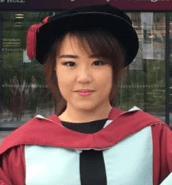
Guanxi and Social Capital, Mianzi and Cultural Capital: Mature students’ experiences in Chinese Adult Higher Education

Guan, S & James, F. (2019) Staying afloat via guanxi: student networks, social capital and inequality in Chinese adult higher education. British Journal of Educational Studies (https://doi.org/10.1080/00071005.2019.1618788)

Guan, S & Ploner, J. (2019)The influence of cultural capital and mianzi (face) on mature students’ orientation towards higher education in China. Compare: A Journal of Comparative and International Education (https://doi.org/10.1080/03057925.2018.1490999)

2019052802415171

Dr Shanshan Guan, East China Normal University

In Guan and James (2019), our study illuminates students’ purposive cultivation of guanxi, or social networks based on continuous exchange of resources, in the context of China’s Adult Higher Education (HE) system. Interviews with 30 students reveal the motivations underpinning their creation of informal ties amongst peers, which they consider to procure beneficial resources for the present and long-term. They deem guanxi with peers to compensate for the isolation they experience. Such experiences, taken in the context of a competitive HE and graduate employment landscape, are then related to social capital. The marriage of the concepts guanxi and social capital is also discussed in light of our analysis.

Social, human, economic, symbolic and cultural forms of capital are regularly paired with HE in the Anglophone literature, though social capital remains the most opaque concept. This, according to Adler and Kwon (2002), is due to the intangibility of its embedded notions such as trust that are not amenable to direct measurement, and the potential quality of social capital in the sense that it is stored in anticipation of reciprocated future exchange of resources. Those deploying social capital in empirical studies (for example, Jensen and Jetten, 2015) attest to its mutability, contending it is not the ‘static property of the individual’ (Field, 2015, p. 16). It remains unclear, however, how its processual elements might be captured empirically. Social capital is a purely analytic construct so unlikely to be referred to directly by research participants. Conversely, the social practice of guanxi would be a term adopted since it is firmly embedded in every day parlance. Our study sheds light upon AHE student interviewees’ purposeful cultivation of guanxi in direct relation to the struggles they articulate at university. The article begins by outlining the political and socio-economic context of Chinese HE and its dual nature. The concepts social capital and guanxi are expounded before research literature connecting them to HE contexts is reviewed. An analysis of interview data follows, elucidating interviewees’ deliberate use of guanxi. The marriage of social capital and guanxi to enhance understanding of inequality in HE is then discussed in light of our qualitative findings.

This study elucidates the self-initiated, processual nature of guanxi in the context of China’s AHE and helps articulate the shortest conceptual bridges between guanxi and social capital. Interview data are limited to students’ perceptions, in terms of their expressed motivations for augmenting guanxi with peers. Therefore, it is not possible to discern the longevity of such ties, or realisation of the benefit students anticipate. Nevertheless, pursuing the relational components, subsumed within social capital distinctively, illuminates how the processes of inaugurating social capital fuse with the norms of a culturally embedded social practice, namely guanxi. Further investigation across national contexts, attuned to both structural and micro-social elements, could confirm social capital’s utility and flexibility as a concept integral to investigating HE inequality internationally.

In Guan and Ploner (2019), we write in the wider context of national growth and investment in higher education in China where more mature students seek to gain access to university education. Considering the far-reaching socioeconomic and political shifts in contemporary China and its higher education sector in particular, this study explores the experience of mature university students in this country and poses the seemingly simple question as to why these students did not pursue higher education when they were school-leavers, but chose to study at a mature age. Drawing on biographical interviews with 20 Chinese mature university students, the paper explores their aspirations, motivations and tribulations behind embarking on higher education. Revisiting Bourdieu’s ideas on ‘inherited’ and ‘acquired’ cultural capital and examining the related Chinese cultural notion of mianzi (‘face’), it is argued that family and social networks are decisive factors in mature students’ orientation towards higher education.

From a theoretical perspective, this small yet revealing study highlights both the strengths and limitations of ‘inherited’ and ‘acquired’ cultural capital as flexible concepts, well-suited and applicable to a wide range of social and cultural settings. However, as it is predominantly applied to Western educational milieus, ‘cultural capital’, in Bourdieusian diction, cannot always do justice to the historical, cultural, political and societal complexities that permeate notions of class, kinship and equality of opportunity in non-Western contexts. To this end, the notion of mianzi or ‘face’ has provided a useful conceptual complement in making sense of mature students’ educational experiences in contemporary China. Whilst considering the pitfalls of cultural universalism when comparing and translating different cultural expressions, future research should not shy away from seemingly unfamiliar philosophical concepts and critical cross-cultural dialogue that may help to shed light on educational inequalities worldwide.

Through biographical interviews with mature students in China, this study has produced some insightful findings as to how these individuals negotiate their access to, and participation in, higher education. Students’ narratives clearly show that they tread a fine line between family expectations, social stigmatisation, educational segregation and their personal aspirations as ‘future selves’. Although the biographical method is not without flaws in terms of generalisability, it has generated valid findings that allow for a close reading of individual motivations whilst highlighting a particular set of experiences shared by a wider group of participants. The limitation of the biographical approach, at least in this study, relates to the limited number of participants in two universities in a major city in East China. However, it is hoped that the rich evidence gathered in this study, will stimulate further research into the hitherto much- overlooked area of AHE in China. For example, future studies could envisage how increasing socioeconomic disparities between east and west, urban and rural affect (adult) higher education in the country today, or further explore the role that gender, ethnicity and, indeed, age play in forging educational and career-related aspirations among mature students.


Author Bio

Dr. Shanshan Guan now is working at East China Normal University as a postdoctoral researcher since October 2018. Her current research focuses on Chinese adult students’ study experience in higher education and how the stratification between adult higher education system and regular higher education generates inequality to adult students in China. She was awarded her PhD degree from University of Hull in August 2018. Her doctoral research focused on mature students’ study experience in higher education in both England and China and investigated how different higher education systems affect mature students’ study experience.

Call for Collaboration: How BRIC countries develop their higher education in recruiting more overseas students

I am Dr. Sunny GUO Xin from the Chinese University of Hong Kong (Shenzhen). My research interest is how BRIC countries develop their higher education in recruiting more overseas students. I am looking for a researcher who has similar interests and would like to write a paper together on this similar topic. This collaborative partner preferably can help to connect with country or school officers that work on policies or strategies on recruiting more overseas students in Brazil, Russia and India. For more information, please email Dr GUO at sunnykwo936@gmail.com.

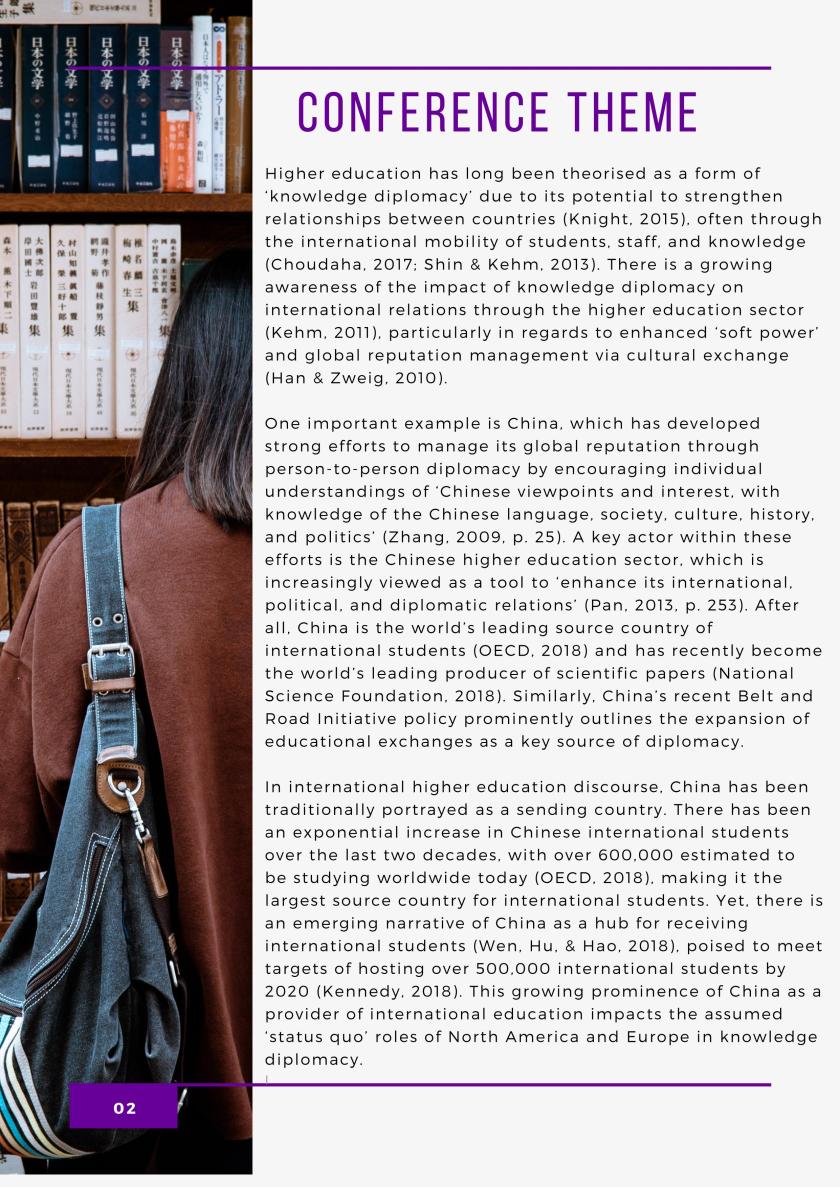
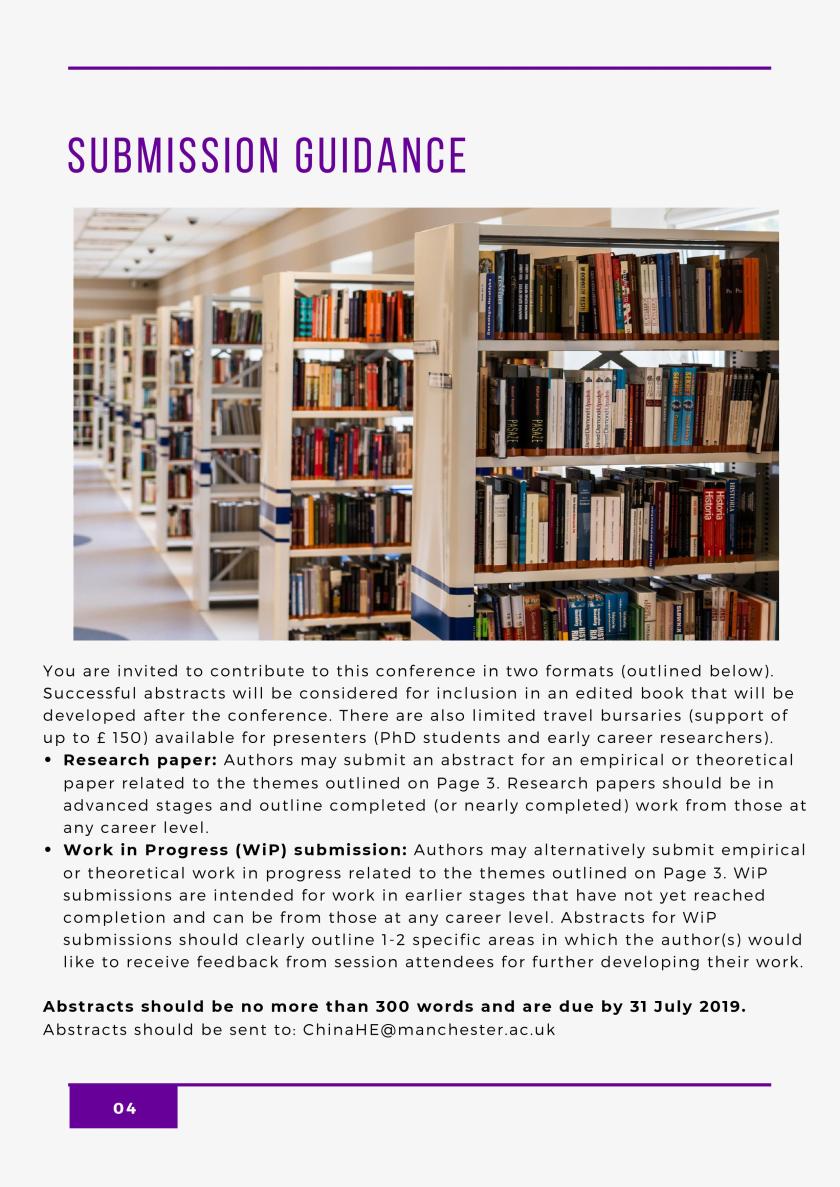
CfP: China and Higher Education: Knowledge diplomacy and the role of higher education in Chinese international relations

Date: 9-10 December 2019

Venue: University of Manchester

Abstract submission deadline: 31 July 2019 to ChinaHE@manchester.ac.uk

The Call for Papers below provides details about the conference theme and guidelines for abstract submissions. Abstracts are due on July 31 toChinaHE@manchester.ac.uk. The conference is free to attend and we can offer a limited number of travel bursaries for speakers who are students or early career researchers (up to £150).

Please register here to attend the conference.

We look forward to seeing some of you there!

Jenna Mittelmeier, Miguel Lim, Heather Cockayne, and Choen Yin Chan

0001

0002

0003

0004

Remain, return, or re-migration? The (im)mobility trajectory of mainland Chinese students after completing their education in the UK

Tu, M., & Nehring, D. (2019). Remain, Return, or Re-migrate? The (Im)mobility Trajectory of Mainland Chinese Students after Completing Their Education in the UK. International Migration, 1-15. doi: 10.1111/imig.12589

rpt

Dr Mengwei Tu, East China University of Science and Technology

Daniel Nehring

Dr Daniel Nehring, East China University of Science and Technology

This article examines post-study transnational mobility among Chinese graduates with degrees from British universities, against the backdrop of recent developments in global higher education, in international labour markets and in international migration policy. British universities host the second largest overseas Chinese student population, one third of non-EU students in the UK are from China, and China is the only country showing a significant increase in student numbers between 2012-2017. Recent articles in The Times in May 2019 repeatedly highlight the record-high Chinese students to the UK in the latest statistics and that the on-going China-US trade war is likely to channel more Chinese students away from the US to the UK.

While Chinese international student mobility and participation in overseas higher education have been extensively discussed, much less attention has been devoted to the transnational mobility of Chinese students following the conclusion of their degrees, in the context of their study-to-employment transition. However, with ‘credential inflation’ in China in recent years, the direct short-term benefit of a Western degree on individual’s socioeconomic mobility has undergone doubt and re-interpretation. While capital accumulation and transnational mobility still feature as a main drive behind students’ motivation, their expectations increasingly point to the potential of gaining overseas professional work experience and a wider transnational social network. Such an expectation necessarily prolongs the “study abroad” period. Young graduates are thus exposed to a constantly changing local and transnational socioeconomic environment during a particularly unstable stage of their lives. As a result, Chinese graduates in the 21st Century are faced with a more complex process in terms of capital accumulation and conversion at a transnational level, which in turn shape the outcome of their migration decisions and their socioeconomic status.

How do we understand the relationship between overseas education and transnational mobility (including spatial and social mobility) of these Chinese graduates? Recent data in The Times in 2019 show that non-EU students who stayed to work in the UK after their graduation earn more than their British counterparts in almost every subject. While the UK benefits from the tax paid from these earnings and the much-demanded skills contributed by post-study migrants, its current migration policy does not facilitate, but rather limits, overseas graduates’ employment opportunities. In China, overseas-educated returnees’ have an average salary higher than that of their China-educated peers. Nevertheless, according to a survey conducted by the Center for China & Globalisation, among the Chinese students who had returned and worked in China in 2017, 68.9% expressed great disappointment in their salary, and nearly half of the respondents felt that overseas education did not help their career.  Clearly, in both China and the UK it is difficult to assess the impact of overseas education on graduates’ mobility trajectory.

Our objective is to bring out the changes in graduates’ perception of education, migration and mobility in the context of both micro-level personal life stage development (e.g. significant life event transitions) and macro-level socioeconomic changes in host/home countries (e.g. global redistribution of employment opportunities). On the basis of our observation of various outcomes of study-to-employment transitions, we compare the understandings of mobility between those graduates who remained in the UK and those who returned to China, as well as different understandings of mobility perceived by the same individual at different stages of their study and migration journey.  Finally, we discuss how the fluidity and nuance of subjective perception on mobility shape individuals’ spatial mobility (and immobility) against the static, narrowing migration policy in the UK.

These findings have significant implication for debates surrounding British migration policy. Uncertainty about the future of British education in the context of Brexit, ongoing debates about the inclusion of international students in net migration figures, and growing calls for the government to provide an “expanded post-study work offer for overseas students” highlight significant tensions in British migration policy as to the current and future status of international students. Our article contributes to the resolution of these policy tensions in three ways.

First, British universities frequently use the term “student experience” as a marketing slogan. However, beyond the commercialised language of contemporary higher education, our findings articulate Chinese international students’ perception of “student experience”: the opportunity to study abroad becomes tied to the potential for multiple forms of academic, personal, and professional development. Post-education mobility in the host country is greately valued among the more recent (potential) students. There is an urgent need for immigration policy to recognise the factors that may render Britain a desirable destination for highly-skilled young migrants, particularly given the likely loss of highly-skilled migration from Europe post Brexit.

Second, our study has shown Chinese graduates’ decision-making processes when it comes to remaining in the UK after the conclusion of their studies. Recourse to the British public welfare system was not mentioned at all by our participants. This calls into question the narrative of immigrants’ troubling overreliance on the welfare system that has long informed a trend towards restrictive immigration policies in the UK.

Third, our findings contribute to calling into question the policy package that has sought to turn the UK into a hostile environment for immigrants. This policy package has extended border controls inwards, requiring extensive policing of all migrants’ activities on the part of landlords, health care providers, banks, and other institutions. As has been widely reported, many highly-skilled immigrants find themselves targeted and even singled out for deportation in the context of the hostile environment framework. In contrast, our study highlights how highly-skilled young Chinese people consciously choose to make Britain a home for their professional and personal development, thus contributing in important ways to British society. The hostile environment arguably risks undermining these contributions by destabilising the social position of immigrants such as the women and men who participated in our study.

Authors bio

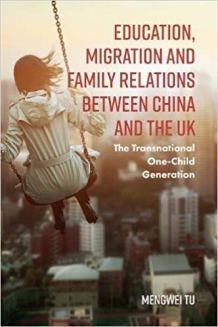
Mengwei BookDr Mengwei Tu is Lecturer in Sociology at East China University of Science and Technology, Shanghai. Her research is about international migration with a focus on education-related migration from and to China. She explores China’s role as a migrant-sending and migrant-receiving country as well as how individuals navigate education, career and family relations across borders. She is the author of book Education, Migration and Family Relations between China and the UK: The Transnational One-Child Generation (Emerald, 2018) and several articles in international journals such as Children’s Geographies and International Migration. Currently she is leading a project “Students/graduates form Belt-and-Road countries in China: migration network and career trajectory” funded by the National Social Science Fund in China.

Dr Daniel Nehring is Associate Professor of Sociology at East China University of Science and Technology in Shanghai. His research concerns transformations of personal life under conditions of globalisation and rapid social change. In this context, he pursues two lines of research. One is concerned with experiences of transnationalism among the highly mobile highly skilled. In this context, he has conducted research on Chinese-Western transnational families in China and in the UK, and he is currently in the very early stages of a new project on Western academics of migration and career formation in China. Second, his work is concerned with the transnational production, circulation and consumption of psychotherapeutically informed discourses and practices of personal life. He has is a founder and convenor of the international academic network Popular Psychology, Self-Help Culture and the Happiness Industry, and he is currently working on the Handbook of Global Therapeutic Cultures (Routledge, 2020) and a research project on the commodification of mindfulness medication. He is the author of five books, including Therapeutic Worlds (Routledge, 2019) and Transnational Popular Psychology and the Global Self-Help Industry (Palgrave Macmillan, 2016), and his work has been published in international journals such as Consumption Markets & Culture, Modern China, and Sexualities.