Call for participation: International Students’ Experiences of UK Universities during Covid-19

Call for participation:

招募研究参与者:

International Students’ Experiences of UK Universities during Covid-19

新冠疫情下英国大学国际留学生线上学习经历调查研究

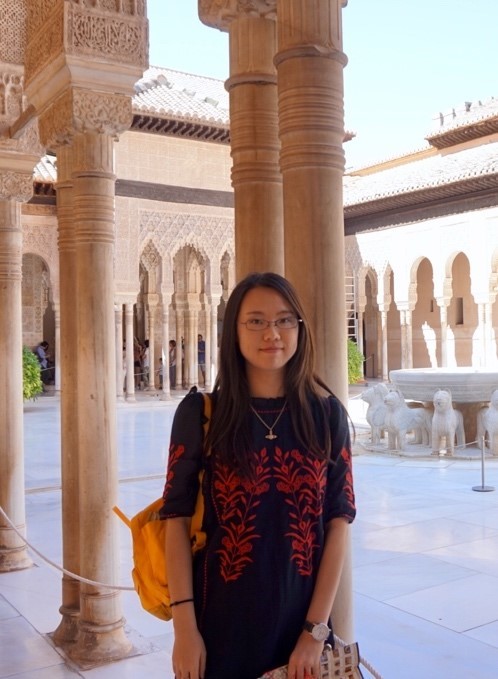
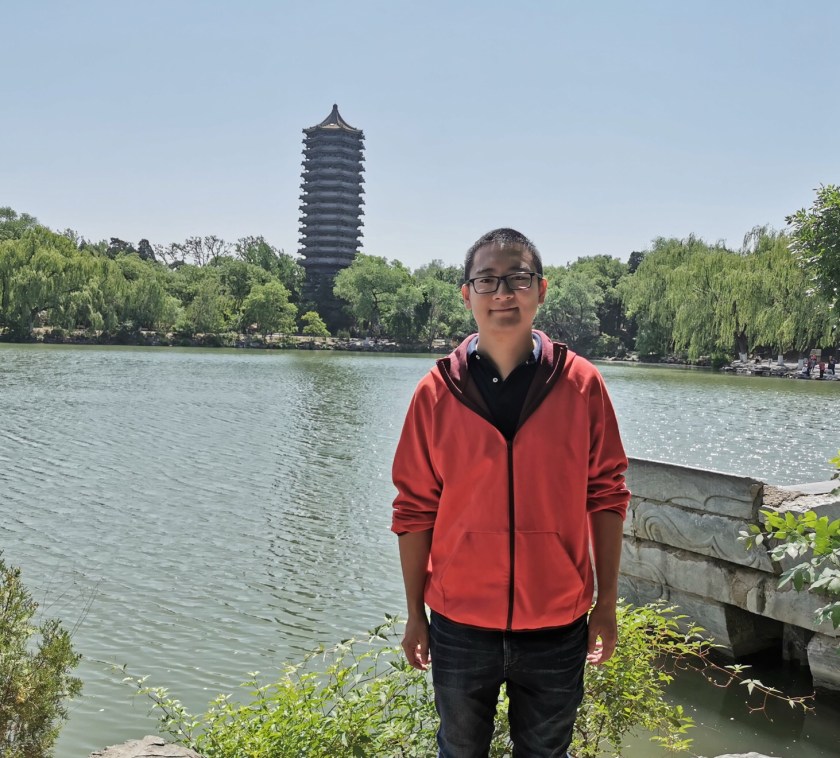
Hello, we are two researchers: Cristina and Huaping. We are currently recruiting 2nd/3rd/4th year non-EU international undergraduate students studying at a UK university to explore their experiences of transitioning studies from on-campus to on-line during Covid-19.

大家好,我们是两位研究者:Cristina 和李华平!我们目前正在招募以下研究参与者:在英国大学留学的本科二、三、四年级的、中国学生及其他非欧盟国家学生。

Photo by cottonbro from Pexels

If you meet the requirements and would like to participate in and/or find out more about the study, please get in touch with us (please see contact details below).

假如你们符合以上条件,并感兴趣参与或者想了解更多有关我们的研究项目的话,请记得联系我们(联系方式请看下面)。

Your participation in the study will be invaluable in that it will allow us to understand how we can better support you in moments like the one we are currently facing.

你们的参与将对我们来说意义非凡,因为你们的参与将会帮助我们了解当前疫情下国际留学生的线上学习现状,并为你们提供更好的支持。

Participation in the study consists of reflective diary entries (2 entries a month for a period of 3 months) about your experiences of university during Covid-19. Prompts will be provided to you to guide your reflection. Upon completion of the diaries, you will be rewarded a £30 voucher in appreciation for your contribution.

参与此研究的第一阶段主要是三个月的反思日记,每月两次,每次记录一点新冠疫情下线上学习经历的感想。请不用担心,我们将会为你们提供一些有助于思考的问题;你也可以用你喜欢的语言写。为答谢你们,每一位参与者在日记反思阶段结束后将获得30镑购物券。

Participants willing to participate further in the project may be invited at a later date to partake in a 1-2-1 interview or focus group. A £10 thank-you voucher for each will be gifted.

参与此研究的第二阶段是:我们将邀请有时间且愿意继续参与此研究的参与者参与一对一的访谈或小组访谈。

If you are interested in participating in our project, please get in touch with us via email:

假如你们感兴趣参与我们的研究,请联系我们:

Cristina Costa: cristina.costa@durham.ac.uk, or

Huaping Li: huaping_li@shnu.edu.cn (请记得名和姓之间的下划线)

Call for Nominations: CIES East Asia SIG Awards

Call for Nominations: CIES East Asia SIG Awards

Nominations are due December 15, 2020

Photo by Oliver Sjöström from Pexels

The CIES East Asia SIG is pleased to announce two new awards that will begin this year – the Best Paper Award and the Best Graduate Student Paper Award. The purpose of these awards is to recognize, support, and advance outstanding research on East Asian education. While authors do not have to be East Asia SIG members at the time of submission, if awarded, they should register as members by the time of the East Asia SIG business meeting of the CIES 2021
Annual Conference, where winners will be recognized.

Please send all submissions and inquiries to: Yoonjeon Kim, Chair East Asia SIG Awards Committee at yoonjeon@berkeley.edu by December 15th, 2020. In the email subject line, please identify the submission/inquiry and the particular award.

Best Paper
Submissions for the 2021 best paper award should be a journal article or contributed chapter published in 2019 or 2020 on any topic related to East Asian education. The paper can be published as “online first” or in print but may be considered for the award only once. A pdf version of the published paper should be accompanied with a short letter (max 2 pages) highlighting the relevance and importance of the paper in relation to East Asian education, broadly defined. Self-submission is welcome.

Best Graduate Student Paper
Submissions for the best graduate student paper can be either a recently published (2019 or 2020) or unpublished (e.g., presented at a conference, under review for publication) paper on any topic related to East Asian education written by a graduate student at the time of submission. The paper can be solo-authored or co-authored as long as the first author is a graduate student at the time of submission. Unpublished papers should not exceed 10,000 words, including the abstract, endnotes, and references. A pdf version of the paper should be accompanied with a short letter (max 2 pages) highlighting the relevance and importance of the paper in relation to East Asian education, broadly defined. Self-submission is welcome. The graduate student winner will receive a $200 stipend to offset travel costs to attend the CIES 2021 Annual Conference.

Jennifer Adams, East Asia SIG Chair

Min Yu, East Asia SIG Vice-Chair

Yoonjeon Kim, East Asia SIG Treasurer/Secretary and Awards Committee Chair

Constructing false consciousness: Vocational college students’ aspirations and agency in China

Research Highlighted:

Geng Wang & Lesley Doyle (2020): Constructing false consciousness: vocational college students’ aspirations and agency in China, Journal of Vocational Education & Training, 1-18. DOI: 10.1080/13636820.2020.1829008

Read about Dr Wang’s other article here.

Dr Geng Wang, Tianjin University, China

ABSTRACT

Individual academic achievement is highly valued in Chinese society, with vocational education students positioned at the bottom of the educational hierarchy and suffering considerable societal prejudice. In this paper we present new findings from the choice-making experiences of students in two vocational education colleges in China, how they are perceived by their teachers, and how, in the context of their negatively-stereotyped status, they perceive themselves. Drawing on the Marxist notion of false consciousness to help understand the agency of these students, we found that almost all perceived themselves as being agentic and having control over their destiny. They felt they only had themselves to blame for the stereotyping to which they were subjected. One student had not adopted this mindset and was critical of the exam system. We argue that the perceived agency of the majority of the students resonates strongly with the neoliberal values which are associated with responsibilisation, and which have been encouraged in China since the 1970s with the beginning of the Reform Era. The evidence from our study also suggests, however, that it is possible for young people, by their own efforts, to move away from the state of false consciousness.

Introduction

In this paper, we focus on vocational education college students. We present new findings from interviews and focus groups with a sample of these students and their teachers and locate the findings within the debate on the concept of ‘youth agency’. The paper seeks theoretical purchase on the ‘agency’ of Chinese VET students through an innovative exploration of the Marxist notion of ‘false consciousness’.

Theoretical framework

Michael Apple, in Ideology and Curriculum, has been examining why Marxist understanding has not been more impactful in Anglo-Western educational investigation (Apple 2019, 135). He argues that the neglect of this scholarly tradition says more about the fear-laden past of society than it does about the merits of the (all too often unexplored) tradition, which indicates it is difficult ‘for there to be acceptance of a position which holds that most social and intellectual categories are themselves valuative in nature and may reflect ideological commitments’ (136). Apple argues that the Marxist tradition illuminates the tendencies for unwarranted and often unconscious domination, alienation and repression within educational institutions and promotes conscious individual and collective emancipatory activity (137). The Marxist tradition also has the potential to connect the students’ perspectives with White and Wyn’s (1998) ‘existing social relations’ (referred to above), and to locate them within a broad political economy approach. We concur with Sukarieh and Tannock (2015) who argue that ‘to understand the significance of youth in global society, it is … necessary to look well beyond youth and young people in and of themselves’ (4). Most significantly, we argue that the concept of false consciousness carries with it the assumption that it is possible for young people to think their way out of their predicament.

Findings

The findings of the study suggest that vocational colleges or programmes were chosen by students as the last resort or ‘leftover option’ in a bid to obtain an educational credential. The students’ lower test scores in the College Entrance Exam (CEE) had automatically limited their capacity to be ‘free choosers’. Nearly all of those in the student sample, and all in the teacher sample regarded the CEE exam as efficient in what they saw as weeding out weak students. To most of the students, ‘it (the exam system) is pretty fair’. The students’ sense of personal failure and inadequacy is echoed by the teachers stereotyping of them as unmotivated students with a habit of ‘slacking off’, or ‘bad seeds’, from which nothing worthwhile can grow, or poor learners who never ‘get’ the textbook. Rather than having an ‘agentic’ feeling, the vocational students felt fatalistic or powerless when they were ‘dropped down’ and had to relegate themselves to vocational colleges or forego the opportunity of going to college at all.

Discussion and Conclusion

We conclude that the young people’s interpretations of their situation – that it is their personal failure in not achieving better test scores (which they associate with ensuring a better life) are evidence of false consciousness, as conceived by Engels (1893) and Marx and Engels (1846). The young people have formed false perceptions of their own agency in the belief that they have the power to control their own achievement level and, through this, that they have freedom of choice to determine their own futures. The current exam system has secured active collusion from these vocational students at the same time as it generates the poor outcomes. The students are under the impression that they only have themselves to blame and they should take responsibility their own misfortune. This perceived sense of ‘agency’ – in the sense we understand here as control of one’s own destiny along with the sense of personal responsibility for making choices – is, we argue, created by false consciousness which helps to sustain the hegemonic control neoliberal economies need to survive. The perspective of Jia, as the only exception who did not accept the unified ‘false’ discourse, offers evidence that young people can have the capability to move away from the state of false consciousness. We conclude that the concept of false consciousness provides the opportunity for a critical turn in understanding agency, which for too long has been used in the drive to find some form of self-driven personal empowerment in young people, even when the evidence for it is thin. False consciousness offers a different theoretical perspective within the educational community, which can, as Apple (2019) explains: ‘contribute to the creation of alternative programmes of research and development that challenge the commonsense assumptions that underpin the field’ (Apple 2019). We suggest that this theoretical perspective could further improve our understanding of youth decision-making outside of VET and in countries other than China.

Author bio:

Dr Geng Wang currently works as a researcher at School of Education, Tianjin University, China. She is also a member of Tianjin Institute for Emerging Engineering Education. She holds a PhD (University of Glasgow) in education. Her research interests revolve around education and work transitions through the lifecourse, particularly in relation to vocational education and training for young people, what influences transitions and their impact on learning and development. She can be contacted via geng.wang0313@hotmail.com.

The micro-politics of cultural change: A Chinese doctoral student’s learning journey at an Australian university

Research Highlighted:

Dai, K., & Hardy, I. (2020). The micro-politics of cultural change: a Chinese doctoral student’s learning journey in Australia. Oxford Review of Education, 1-17. DOI: 10.1080/03054985.2020.1825369

Read about Kun’s other publication here.

Dr Kun Dai, Peking University, China

Abstract

Considerable research has investigated Chinese students’ intercultural insights in different national contexts, where culture is understood as coterminous with nationality/regionality. However, few have explored the more micro-political aspects of Chinese doctoral students’ narrative experiences in national settings, within a more cultural framework. This article seeks to take such an approach through a reflexive narrative account of the first author’s experiences as a Chinese doctoral student in Australia. To do so, we draw upon Bhabha’s notion of “in-between space”, and work by Gill on intercultural adjustment. We show how the first author’s doctoral journey was characterised by a sense of “in-betweenness” at the micro-political level, including in relation to the cultural boundary crossing associated with having to change fields of study and supervisors. This narrative provides a nuanced account of an international student’s experiences and reflects the usefulness of examining the particularity of international doctoral students’ learning experiences at a much more fine-grained level, via a more intercultural lens.

Introduction

Doctoral education is a significant part of the HE system and doctoral students are also one of the major groups contributing substantively to creativity and innovation in knowledge, which productively influences the development of society (Shin, Postiglione, & Ho, 2018). At the same time, when international doctoral students encounter different academic and sociocultural contexts, they experience complex changes to their identity, with attendant changes to their sense of agency as diasporic academics (Lee & Elliot, 2020). As part of this journey, vacillating between the standpoints of being a more independent and dependent learner, as a Doctor of Philosophy (PhD) candidate, can be associated with senses of both empowerment and disempowerment (Goode, 2007). Thus, doctoral students’ learning experiences can be very diverse, so it is necessary to understand the specificity of the circumstances within which these students conduct their research in different educational contexts (Pearson et al., 2011). To contribute to scholarship in this field, we illustrate and analyse the first author’s experiences as an international doctoral student at an Australian university, and how specific micro-political intercultural issues that he faced during his journey influenced his learning through this experience.

Research Method

This study adopts notions of intercultural adjustment, especially Gill’s (2007) analysis of Chinese students’ transformative learning framework. Furthermore, Bhabha’s (1994) concept of in-between space was used to examine the fluidity of the first author’s experiences through a more critical lens. To tell the story of this positioning in various in-between spaces of intercultural adjustment as part of the first author’s doctoral journey, we draw upon a reflexive narrative approach. In this study, we adopted narrative as the method to frame the data analysis. At the same time, we recognise that the first author’s story/ies is/are not simply a product of his “own” understandings of the world, but also the result of the broader conditions within which his story/ies become comprehensible. By adopting these approaches, we were able to critically and reflexively examine his experiences whilst maintaining confidentiality.

Findings

The narrative started with illustrating the first author’s doctoral research journey in a cross-disciplinary context from Digital Media to Education. As he has studied in Australia for about three years, he felt confident in this initial stage even though he changed his focus from digital media to educational technology. After starting his journey, he gradually realized that he might not get proper supervision, and then he worried about his research. However, dramas always happened. His supervisors left the university, and he had no choice but to change supervision teams. Due to the differences between his research focus and the new supervisor’s expertise, while they worked together and attempted to make his study better, his research was still not on the right track. In the third-year assessment, internal panel members still questioned his research. After this assessment, change happened again. Unfortunately, the new supervisor needed to retire due to personal reason and left the university. In this case, he felt so disempowered and lacked the confidence to complete the study. Luckily, he found new supervisors to support him. Although research topics have been changed due to the shift of supervisions teams, he did not give up and finally completed the study. When he reflected his journey, he felt that the doctoral journey is a process of shaping a sense of in-betweenness: shifting between different research fields, topics, and supervision teams.

Discussion

Based on the first author’s ‘zigzag ‘doctoral learning experience, this study reveals that his PhD journey positioned him in an in-between space where he was constantly immersed in a cycle of stress-adaptation-development, and where he established a sense of in-betweenness, characterised by different senses of agency, identity, and belonging. In these arrangements, power was always at play. Various predictable (e.g. change of majors) and unpredictable changes (e.g. changes of advisors) dynamically and constantly positioned him within different power dynamics. The interaction between intercultural adjustment model and the concept of in-between space shed light on this learning transition, particularly in relation to the micro-politics of cultural change that surrounded the forms of cross-disciplinary academic cultural adaptation he had to undertake in his journey. Importantly, they also flag the significant power relations more broadly that infused his whole doctoral journey. His reactions to the changes indicate a resilience towards expected and unexpected adversities as well as the effects of such power relations.

His journey suggests that he was in the stress-adaptation-development trajectory, but in a very different way from how such a trajectory is conceptualised in existing literature. It could not only be adopted in the analysis of more typical nationally/regionally based intercultural learning and adjustment, but also could be used as a lens to theorise and analyse more micro-political processes of learning trajectories. Moreover, his PhD research trajectory indicated he was ultimately able to become a self-determined and active agent (Marginson, 2014) but this process was tortuous with many twists and turns, establishing a complex sense of in-betweenness in response to different expected and unpredictable changes. His experience indicates that he was immersed in a unique in-between space that was created by constant negotiations between colonising and colonised cohorts, complicated relations of power, and various clashes in and between different types of “cultures”, which potentially shape individual hybridity and sense of in-betweenness.

Conclusion
This study revealed that as a result of the first author’s peculiar cross-disciplinary academic cultural adaptation, he became an in-betweener at not just the macro level of culture, but at a micro-political level. In this particular space, he had to navigate twists and turns in different stages of the learning journey which was not a straightforward process of stress-adaptation-development as some other studies have found. In contrast, his journey was a pathway of continuous processes of stress, adapting and development, characterised by a more or less continuous sense of in-betweenness in relation to each of these states. His experiences certainly confirm doctoral learning and research journeys as complicated rather than linear. However, students may engage in multi-faceted and complex journeys, far beyond what might be anticipated.

Authors’ bios:

Dr Kun Dai is a Postdoctoral Research Fellow (Funded by China International Postdoc Exchange Program) at Graduate School of Education, Peking University. His research focuses on transnational higher education, international students mobility, intercultural learning and adjustment, teaching and learning in higher education.

Dr Ian Hardy is an Associate Professor at the School of Education, University of Queensland, Australia. Dr Hardy’s research focuses on educational policy, globalisation, and teacher education.

“Decentring” international student mobility: The case of African student migrants in China

Research Highlighted:

Mulvey, B. (2020). “Decentring” international student mobility: The case of African student migrants in China. Population, Space and Place, n/a(n/a), e2393. doi:10.1002/psp.2393

Listen to an interview with Ben Mulvey; Read the summary of Ben’s interview

Read Ben’s other entries here and here.

Mr Ben Mulvey, Education University of Hong Kong

A higher proportion of African tertiary students are globally mobile than in any other region, with approximately six percent undertaking higher education outside their home country (Kritz, 2015). At the same time, China hosts the second greatest number of African international students of any country, and African students are the second largest regional grouping of international students in China – there were 81,562 students from all 54 African countries studying in China in 2018. The development of China as a major destination country for African students and the growth of outbound international student mobility amongst African students are both emergent phenomena. This partly explains the lack of empirical research on this student flow, and why the bulk of research on international student mobility focuses on major sending countries in East Asia and destinations in the West. The result of the focus on “Rest” to “West” student flows in international student mobility is that existing theory around students’ mobility decisions, largely developed with reference to these student flows, are insufficient to explain some forms of South-South mobility. In this presentation, based on empirical research consisting of 40 interviews conducted with African students in Chinese universities, I analyse the decision-making processes of this group of student migrants, and explore how this new knowledge challenges existing conceptual understandings of the nature of international student mobility (ISM).

An outcome of the article is that it draws attention to under-acknowledged unequal dynamics within the Global South. I seek to situate Africa-China educational migration within the broader context of the globalisation and the global regime of coloniality, incorporating structural power relations into an analysis of student migrants’ decision making. The research aims are as follows: firstly, to understand the logics underpinning African students’ decisions to study abroad in China, and secondly, to explore how these logics may be shaped by structural forces.

In terms of the theoretical approach, this paper is concerned with how ISM is embedded within a global regime of coloniality (e.g. Grosfoguel, 2010; Mignolo, 2013). Whilst there are a number of articles (e.g. Madge et al., 2009; Stein and de Andreotti, 2016; Ploner and Nada, 2019) which examine various facets of ISM through a postcolonial lens, the approach has been developed in a very limited way. I pay particular attention to how global structural inequalities shape student decision-making, answering calls by Kelly and Lusis (2006) and others for an approach to migration studies which incorporates global structures of inequality and power into the analysis, applying an innovative approach to educational migration in the Global South specifically, thus making a theoretical contribution to the ISM literature.

Grosfoguel (2010) describes how peripheral nation-states exist under a regime of global coloniality, as non-core zones continue to exist in conditions of coloniality despite the end of formal colonialism. This is fundamentally because the exploitative global division of labour which developed as a result of colonialism is reproduced in the “postcolonial” capitalist world-system (Wallerstein, 2004). It is obvious that this global regime shapes South-to-North migration patterns, and as such postcolonial approaches to analysing labour migration are well established. For example San Juan (2011) and Eder (2016) describe how low income countries such as the Philippines become reservoirs of cheap labour and Western countries its’ clients, reproducing colonial asymmetrical relationships. Less well developed in the literature however is the notion that firstly, migrations within the Global South, and secondly, migration for educational purposes, entrenched within the same global system, can be viewed through this lens.

I give four main examples of how mobility between Africa and China is mediated by global structural forces, arguing that doing so deepens understanding of the structural drivers of student migration, and of the mechanisms through which international student mobility is related to inequality. African students have a wide variety of rationales for seeking overseas study, usually influenced in some way by China’s structural position within the (post)colonial global political economy, and by China’s reproduction of core-periphery relations in its interactions with Africa. Empirically the article makes a significant contribution to the literature by outlining four cases of student mobility decision-making which differ from those outlined in existing literature. Some are from outside the middle-class, and are able to leverage China’s soft power gambit to go beyond their “field of the possibles”. Others are pawns in China’s political manoeuvring, and are essentially forced into studying overseas by their own government. Most, unsurprisingly, appear to be middle-class. I note however that these students are not necessarily members of the affluent “global” middle class (e.g. Koo, 2016), and are excluded from the “best” educational migration opportunities in the West by the unequal distribution of capital afforded by the global (post)colonial political economy. A minority of students are social elites who are able to leverage social networks in order to take advantage of China’s courting of the political class across Africa. This example again demonstrates how China’s semi-peripheral position is reproduced in its relation with African nations (as peripheries), and in turn how this creates discrepant logics of migration. All of these examples demonstrate how China’s ambiguous political and economic relationship Africa, borne out of its position within the postcolonial world system, serve to create logics of migration that cannot be easily explained using existing frameworks which tend to be quite simplistic in their assumptions about who moves and to what ends.

Author bio

Ben Mulvey is a PhD candidate at the Education University of Hong Kong. Ben’s research focuses on educational migration between Africa and China, and what this student flow reveals about China’s attempts to (re)shape the global “field” of higher education. He can be contacted via the following email address: bmulvey@s.eduhk.hk