Time in migration: temporariness, precarity and temporal labour amongst Chinese scholars returning from the Global North to South

Wang, Bingyu. (2019). Time in migration: temporariness, precarity and temporal labour amongst Chinese scholars returning from the Global North to South. Journal of Ethnic and Migration Studies. DOI: 10.1080/1369183X.2019.1642741

Related article: Wang, Bingyu. (2019). A Temporal Gaze Towards Academic Migration: Everyday Times, Lifetimes and Temporal Strategies amongst Early Career Chinese Academic Returnees. Time and Society. DOI: 10.1177/0961463X19873806

Bingyu Wang

Bingyu Wang, School of Sociology and Anthropology, Sun Yat-sen University

INTRODUCTION TO THE ARTICLE

While facing labour precarity of the increasingly competitive academia-industry, mobile academics encounter another set of challenges brought by the global shift away from permanent migration towards more temporary forms of migration since the 2000s. Yet, the occurrence and impact of ‘temporariness’ in academic migration, especially at the personal and individual level, are not well understood. Drawing on qualitative research with 40 early career Chinese academic returnees, this paper focuses on the state of ‘being temporary’ Chinese academic returnees experience both before and after their return. Their temporary status in host countries undermines their labour market performance and thus cause job insecurities and fragmented career paths, which instils a sense of precariousness and powerlessness into their daily lives. As a result, many of them decided to return, but only to find that they are thrown into another state of temporariness – they end up inhabiting fragile institutional positions or have their lifetime progressions interrupted and suspended while aspiring to establish themselves in academia. Their temporary contracts and/or compulsory return impose a set of emotional burdens on them and thus reshape their subjectivities, causing anxiety, distress and all sorts of temporal precarities.

Despite the state of ‘being temporary’ and related many temporal impediments faced by these academic returnees both before and after the return, exercising individual agency and developing temporal strategies was a clear theme that emerged from their narratives. First, some of them immerse themselves into a positive waiting period and perceives their temporary jobs as a preparation stage for longer-term employment opportunities. Second, in order to mitigate the negative effects caused by their physical departure from the western academic community, some interviewees practise temporary academic mobilities both on a national and an international level. That way, they can avoid academic immobilities and the dangers of being stuck with ‘double absence’. In addition, some returnees absorb hopes and motivations through nurturing alternative career pathways and imagining multiple futures.

In this regard, this article makes the following contributions. First, theoretically, it has contributed to addressing the intensifying spatial emphasis of migration studies whereby the temporal dimensions have been neglected either as an independent research approach or subject of debate. Moreover, it has further demonstrated how macro-level or institutional temporal discourses (e.g. migration policy, visa status, work contract length) can intimately affect the micro-politics of migrant lives and subjectivities, including their individual lifetime progressions, labour market performances and everyday forms of social belonging. In this respect, this article has delved into the question of how the constructions of time articulate with migration temporalities, and thus brought the temporal and emotional dimension of migration to the fore and unpacked how they intersect with each other in shaping migrant lives.

Second, empirically, this article has not only looked at the conventional academic migration pattern moving from the Global South to the Global North but also focused on the return. Meanwhile, the majority of existing literature on ‘time and academia’ has mainly focused on scholars in the West and rather fewer attempts have been made at a cross-country level. Furthermore, by examining the temporal precarity embedded in the lives of academic migrants, this article challenges some of the standard claims around highly skilled mobility as relatively ‘seamless’ or ‘smooth’ and thus contributes to a more comprehensive understanding towards high-status migration.

Third, this article has drawn attention to the growing trend of temporariness and pre- cariousness involved in modern academia, especially in the context of migration. Those mobile scholars under temporary contracts have to familiarise themselves with a life of unstable labour and unpredictable career futures. Critically, the article has not only focused on the temporal precarity academic migrants encounter but also investigated the way they exercise their agentive will. In doing so, the paper shows that, despite positions of vulnerability, mobile academics are not merely victims of their temporal predicament, but rather, find ways to engage in temporal labour, navigating through the uneven temporal terrains they inhabit. Their experiences of both precarity and agency relating to the current academic migration offer insights into understanding how other new forms of temporary migration regimes trans- form mobile individuals’ subjectivities and living realities, and in turn, whether and how some of those ‘precariats’ manage to obtain a greater sense of control of their ‘time’, to pursue positive migration and life outcomes.

AUTHOR BIOGRAPHY

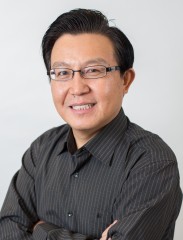
BookBingyu Wang is an Associate Professor at the School of Sociology and Anthropology of Sun Yat-sen University, where she was recruited as a member of the ‘100 Top Talents Program’. Her research areas include migration and mobilities, intercultural encounters, and cosmopolitanism, with an empirical focus on highly-skilled migrants and temporary migrants, and a theoretical focus on emotions, time and the everyday. She has published widely in high-ranked international journals and is the author of New Chinese Migrants in New Zealand: Becoming Cosmopolitan? Roots, Emotions and Everyday Diversity (Routledge, 2019). Currently she is conducting a project on academic mobilities in and out of China supported by ‘National Social Science Fund of China’.  Bingyu is on the editorial board of Journal of Ethnic and Migration Studies.  She can be reached at wangby29@mail.sysu.edu.cn or via her profile page at Research Gate.


Constructing Sustainable International Partnerships in Higher Education: Linking the Strategic and Contingent Through Interpersonal Relationships in the United Kingdom and China

Ma, J., & Montgomery, C. (2019). Constructing Sustainable International Partnerships in Higher Education: Linking the Strategic and Contingent Through Interpersonal Relationships in the United Kingdom and China. Journal of Studies in International Educationhttps://doi.org/10.1177/1028315319865784

Jie Ma

Dr Jie Ma, Xiamen University, China

This paper attempts to highlight interpersonal relationships as the missing link in constituting sustainable international partnerships amid an increasingly strategic landscape of higher education internationalization. Drawing upon 31 semi-structured interviews with different administrative and disciplinary staff in two universities in the UK and China, the paper presents a shared construction of sustainable international partnerships in higher education across both contexts that it is those inter-personal human relationships built upon shared interests and ethical qualities that make partnerships sustainable. The reason that interpersonal relationships are perceived to be a strong basis for interweaving sustainable partnerships is because there is an inherent research interest for individual academics to engage in their disciplinary networks and a built-in mutual understanding, respect and trust within those human relationships. Instead of strategic planning, those human relationships, usually developed after a chance encounter, through contingent activities, such as attending conferences, studying or visiting abroad, are based on shared interests (especially shared research interests) between individual academics. However, because people together with their interpersonal relationships might leave the institution and if that person is the only nexus of the partnership between the universities, then partnerships tend to unravel. In this regard, partnerships built upon interpersonal relationships are embedded enough in the network of individuals but not enough in the institutions. In this sense, instead of individuality, sustainable partnership building is about team playing, which suggests the significance of multiple engagement in the established interpersonal relationships. To make such team playing or multiple engagement happen, the institution has to work hard at building trust, thus regaining belief and engagement from individual academics on the ground. This is where strategic planning should come in, with the aim of embedding interpersonal relationships not just in individual networks but also institutional structures. Hence, an approach to linking the strategic and contingent through interpersonal relationships is thus proposed in order to build sustainable international partnerships in higher education.

However, this research showed that there are subtle differences in how the strategic and contingent is linked through interpersonal relationships between the two institutions in the UK and China. In England, sustainable partnership seems constructed amid the distrust in the institution by participants as a response with frustration, cynicism and doubt about the institutional approach to partnerships driven by income generation, arguing that it is human relationships between ‘people’ that make partnerships sustainable. Thus in the English context partnerships were embedded in the individual networks rather than in the institutional structure, possibly making them more fragile. In China, meanwhile, sustainable partnership appears constructed in the context with a heavy reliance on the particular roles of ‘people’ – ‘senior’ academics – working in either home or partner universities in developing and sustaining interpersonal relationships and thus partnerships. Albeit the differences, this shared understanding of sustainable partnerships across two universities in both countries is argued to go beyond any international and institutional differences between the UK and China, thus creating wider possibilities of constructing sustainable partnerships through interpersonal relationships in the international higher education.

Author Bio

Dr. Jie Ma is a postdoctoral researcher at Xiamen University. She has a PhD in Internationalization of Higher Education and has research interests in the field of comparative education. Her doctoral research was on constructions of sustainable international partnerships in higher education, which includes perspectives from the UK and China. The current research project that she is engaging in is on the traditions and transitions of undergraduate teaching in the UK higher education. She can be contacted via email at irisma0407@163.com.

Wandering at a Crossroad: An Exploration of Gendered Mobility Aspirations in the Study-to-work Transition of Chinese Graduates at Dutch Universities

Yanbo Hao

Yanbo Hao, Utrecht University, the Netherlands 

Abstract

This Master’s thesis (supervised by Dr Maggi Leung) unpacks how gender impacts on mobility aspirations of Chinese international graduates in the Netherlands. The value of a gender lens in immigration study is increasingly highlighted nowadays, but gender analysis is infrequently applied to research on international student mobility. Drawing on Risman’s ‘three-level’ framework of gender analysis (2004) and Findlay and his colleagues’ (2012) argument that the post-study status transition should be understood within the life course, this paper analyses gender intertwining with post-graduation mobility at individual, inter-relational and international level. Through an online survey, semi-structured in-depth interviews followed by the method ‘story completion’ with Chinese international graduates and some parents, the findings underline how gender identities shape the personal goals of mobility, how gender roles in a relationship and international settings confine or facilitate mobility desires and how these gender effects are intersected. This research also stresses how gender-role ideologies are diverse and dynamic in one’s life course. Therefore, beyond taking the transition as a career start, Chinese international students also attach gendered meanings and responsibilities to post-education mobility, considering social roles they are engaging or will engage in. This research conduces to depicting unequal gender patterns in international students’ after-study mobility trajectories.

Findings

Individual factors: Gendered Expectations and Personalities

Individual factors refer to the construction of gender selves and subjectivities that drives students’ mobility trajectories. The survey data show a relatively similar big picture which prioritises career-related factors and takes the least notice to political effects is followed by most respondents regardless of gender. Yet it is still visible that Chinese male and female students hold different gendered selves while making mobility plans. Male students rank averagely higher than female counterparts on career prospects and special national preferential policies usually attracting skilled graduates with economic incentives (Harvey, 2015). By contrast, female graduates assess this mobility decision by more than the quality of career, also the conditions of future residence. They spotlight more, than men, on life-work balance, living comfort, family duties and natural environment.

With the gendered motivations as the first step, the discrepant capabilities of multiple locations and labour markets to satisfy students’ aspirations are thus decisive to the mobility decisions of skilled Chinese graduates. In the Dutch-Chinese context, females remaining in the Netherlands are attracted by more reachable stability of jobs in the Dutch labour market. Male returnees catalyse their return for catching up on ‘guanxi’ (social connections benefiting to task completion) which is importantly needed as professional skills in Chinese working culture. These coupled features indicate that differences in the construction of gender selves usually exert influences through institutional contexts. Sometimes the institutional contexts require the same from both genders. For instance, employees in China generally experience less job stability and the importance of the social network to career development. However, differences in gender selves differentiate how men and women view the opportunities, interference and restrictions of those contexts and then drive Chinese students to different destinations.

Inter-relational Factors: Relationship, Marriage and Childbirth

International students with a background of communal cultures usually face challenges in making individualised decisions. Chinese students, as a typical example, show great concerns about important others in their own mobility choices. This study finds that gender identities mainly exert inter-relational impacts around intimate relationships, marriage and childbirth.

The concept of ‘linked lives’, indicating that couples negotiate the disagreement on moving aspirations and project moving at a household level, is tested on Chinese graduated couples in the Netherlands. By a unanimous scenario, women tend to follow their male partners’ mobile trajectories. Interestingly, the mobility projects of some couples highlight the influence of perceived ‘most appropriate marriage age’ in Chinese conservative perspectives. Marriage, to those couples, is a crucial juncture in the life course, separating life spans of being mobile and settled. In contrast to the stay-or-return decision which is often described as a one-off movement, they determine to return at ‘the best marriage age’ for taking care of parents and creating a period in-between graduation and marriage. In this period, the couples would exploit the benefits from staying overseas to professional growth and meanwhile pave the way for the later settlement in China.

For single graduates, unwanted stresses of marriage and childbirth from parents and peers are sometimes strategically buffered by remaining abroad. Echoing the ‘zone of suspension’ concept proposed by Martin (2018), continuing overseas life can somehow relieve intergenerational tensions on marriage and create a space for graduates to advance career and encourage romantic relationships taking place in a natural pace and process. In this study, both genders confess the geographical distance help escape the head-on clash with external pressures they think unacceptable caused by their Chinese marriage.

International Factors: Contrasts of gender ideologies and practices in China and the Netherlands

Students’ attitudes are always in a transformation because of exposure to foreign settings. The overseas education motivates students to experience western social rules and thoughts, and then compare them to Chinese social and institutional norms. These dissimilarities in national contexts, including contrasts of gender expectations and prejudices, inspire a continuous adjustment of the study-to-work transition. Narratives in this study underline the difficulties of practising gender identities outside of the social ‘norm’ such as being too old to become a good wife or mother and being non-heterosexual. Staying in the Netherlands or moving to another western country where their identities are accepted or appreciated becomes a softer approach to dealing with external pressures, compared to combating against the norms or reluctantly changing themselves. It’s noticeable that gender impacts at three levels usually interact with each other in the formation of students’ plans. For example, messages in international contexts could shape gendered selves; in turn, selves determine from which angles students read and acquire from the contexts.

Gender: A Dynamic Concept

While unravelling how gender-role ideologies tangle with other social and economic domains, such as family, homosexuality and labour markets, this research notices the dynamic nature of gender inlaying in these scopes. Gender changes its meanings across one’s life phase. Expectations, duties and controls of gender are various and usually become more complicated while people are ageing and creating more interactions with individuals and institutions. The concerns shift from personal career aspiration to balancing career and family, from individualised choice to making a choice for (future) family, for instance. Gendered expectations and controls in society are also changing. Even in this research period, public policies targeting feminism in employment and discourses to LGBT acceptance witness some changes which might also somehow alter soon-to-graduate students’ aspirations of mobility. Leung (2014) argues ‘gender respects no boundaries’. What domains graduates accentuate and how gender exerts effects in these domains are changeable across time and space. Elucidating these questions is conducive to understandings of contemporary gender bias and inequality at an international scale.

References

Findlay AM, King R, Smith FM, Geddes A, Skeldon R. (2012). World class? An investigation of globalisation, difference and international student mobility. Transactions of the Institute of British Geographers 37: 118-131

Harvey, W.S., (2015) “Winning the global talent war: A policy perspective”, Journal of Chinese Human Resource Management. 5(1), 62-74.

Leung, W.H.M. (2014). Unsettling the Yin-Yang Harmony: An Analysis of Gender Inequalities in Academic Mobility among Chinese Scholars. Asian and Pacific Migration Journal. 23(2):155-182

Martin, F. (2018). Overseas Study as Zone of Suspension: Chinese Students Re-negotiating Youth, Gender, and Intimacy. Journal of Intercultural Studies, 39(6), 688–703.

Risman, B.J. (2004). Gender as a social structure: Theory wrestling with activism. Gender and Society, 18, 429–450.


Biographical Summary

Yanbo Hao obtained his Research Master’s degree in Urban and Economic Geography at Utrecht University, the Netherlands. He conducted research on urban fragmentation, urban spatial expansion, social housing and rural development in China. Currently, his research interest is centred on inequalities in migration issues, especially education mobility, around which he studied on the gendered patterns of international student mobility and presented one paper at an academic conference on Chinese mobility in Europe. Yanbo could be contacted via haoyanbo1994@gmail.com.


Toward transnational communities of practice: An inquiry into the experiences of transnational academic mobility

Guo, S., & Lei, L. (2019). Toward transnational communities of practice: An inquiry into the experiences of transnational academic mobility. Adult Education Quarterly, 1-18. https://doi.org/10.1177/0741713619867636

Shibao Guo

Professor Shibao Guo, University of Calgary, Canada

Ling Lei 1

Ling Lei, University of Calgary, Canada

Transnational mobility characterized by multiple and circular movement of people and their simultaneous interconnections across transnational borders pose challenges to the conception of a closed boundary of community of practice (CoP). Through a qualitative case study of internationally educated Chinese transnational academics, who maintained academic and professional connections with their host countries of doctoral studies, this article demonstrates the building of transnational CoPs through their sociocultural learning in transnational space. It underscores tensions, negotiation of power relations, identity trans/formation, and potentials for change in transnational social space. It overshadows the significance of physical boundaries in organizing work, learning, and identities. The study highlights conceptualization of transnational communities of practice for understanding the experiences and identities of transnational academics.

This study explores the changing dynamics of Community of Practice (CoP) in transnational space by focusing on experiences of transnational academic mobility and connectivity. The concept of Community of Practice has been used widely by academics and practitioners to explore socio-cultural learning and identity development as a process for people to claim full membership to a community (Lave & Wenger, 1991). The journey from being a newcomer to becoming an expert as “legitimate peripheral participation” provides a way to speak about the relations between newcomers and old-timers, and about activities, identities, artefacts, and communities of knowledge and practice. It accentuates relations and prior experiences in shaping people’s identity formation and transformation through their participation in different communities of their life-worlds (Lave, 2008).

Yet, as multiple and circular movement of people across transnational spaces has become the norm in contemporary societies, the spatiality of CoP is facing new challenges. The geographically local boundary of the conceptualization of community (Wenger, 1998) needs to be re-examined vis-à-vis the new paradigm of transnational mobility. This paper, therefore, explores the changing dynamics of CoP in transnational space through academic migrants’ experiences of transnational mobility and connectivity.

This paper adopts the theoretical framework of transnational social space (Faist, 2000), where those relatively stable social ties or the meso-level network structures that lead to sustained interconnections across borders become the foci of analysis. The multiple affiliations and attachments across borders form a conceptual boundary of one’s social life, irrelevant to the physical boundaries of nation states, and these affiliations and attachments constitute an integral part of the individual’s social life (Levitt & Glick Schiller, 2008; Tsuda, 2012). This study employs a qualitative case study as the research strategy to explore the central research question: How did Chinese transnational academics experience and perceive CoP in their transnational knowledge networks? Twelve internationally educated Chinese researchers currently working as university faculty members in social sciences and humanities in three universities in Beijing were recruited. Data were collected through individual interviews, field observations, and publicly available documents including participants’ academic CVs, and official documents gathered from their institutions’ websites.

Findings of this study demonstrate transnational academics’ work and learning experiences as newcomers and old-timers in different academic CoPs locally in China and transnationally, particularly with their former PhD supervisors and colleagues, as well as the formation of transnational CoPs, and the formation of collective membership, identity, and belonging.

Consistent with Wenger-Trayner and Wenger-Trayner(2015), transnational CoPs are characterized by three indispensable dimensions, including the domain, or shared competence; the community, or relationships of interaction and learning together; and the practice or development of a shared repertoire of resources. In this process, the prevalence of virtual communication technologies has enabled transnational academics to build and maintain transnational connectivity, thus challenging the importance of physical proximity to claiming membership to CoP (Wenger, 1998).

This study directs our attention to how individuals’ significant migration experiences and connections shape their inclinations toward and ability to engage in trans-migration, transnational engagement, and living in diaspora. From the transnational CoP approach, the focus of analysis shifts from local social relations to social relations formed and maintained through self-identification and negotiation in various transnational communities.

The study has important implications for international talent deployment. It demonstrates that talent deployment policies can shift its focus from the physical flow of people to the dynamic flow and creation of knowledge through people’s professional practice. It also sheds light on transnational academics’ multiple cultural identities as not only an ethnic Chinese but also a transnational academic. It is important that host countries’ settlement and adaptation policies allow room for transnational academics to entertain multiple cultural identities and belongings. Finally, this study calls into question the power relations in transnational CoP. It calls for further examination of transnational CoP as not only a space of building democratic collaborative relationships, but also a space for negotiating knowledge democracy.

Author Biographies

Shibao Guo is Professor in the Werklund School of Education at the University of Calgary, Canada. He specializes in citizenship and immigration, Chinese immigrants in Canada, ethnic and race relations, and comparative and international education. His research has been funded by a number of organizations, including the Social Sciences and Humanities Research Council of Canada; Immigration, Refugees and Citizenship Canada; Asia Pacific Foundation of Canada; International Organization for Migration; and Education International. He has over 150 publications including books, journal articles, and book chapters. His latest books include: Immigration, racial and ethnic studies in 150 years of Canada: Retrospects and prospects (Brill|Sense, 2018), Spotlight on China: Chinese education in the globalized world (Sense Publishers, 2016), Spotlight on China: Changes in education under China’s market economy (Sense Publishers, 2016), Work, learning and transnational migration: Opportunities, challenges, and debates (Routledge, 2016), Revisiting multiculturalism in Canada: Theories, policies and debates (Sense Publishers, 2015). He is former president of Canadian Ethnic Studies Association and Comparative and International Education Society of Canada. Currently he serves as co-editor of Canadian Ethnic Studies. He also edits two book series for Brill|Sense Publishers: Spotlight on China (https://brill.com/view/serial/SPOT) and Transnational Migration and Education (https://brill.com/view/serial/TMAE?lang=en).

Ling Lei is a PhD student in Adult Learning at the Werklund School of Education, University of Calgary. She has her previous research background in intercultural studies. Currently, she researches in areas of internationalization of higher education, transnational intellectual mobility, and transformative learning in the context of transnational migration. Her recent publication includes a co-authored journal article, “Transitions and Transformations: Extracts from a Duoethnographic Exploration of Gender Identities in Canada and China.”


References

Faist, T. (2000). The volume and dynamics of international migration and transnational social spaces. Oxford, England: Clarendon Press.

Levitt, P., & Glick Schiller, N. (2008). Conceptualizing simultaneity: A transnational social field perspective on society. In S. Khagram & P. Levitt (Eds.), The transnational studies reader: Intersections and innovations (pp. 284-294). New York, NY: Routledge.

Lave, J. (2008). Epilogue: Situated learning and changing practice. In A. Amin & J. Roberts (Eds.), Community, economic creativity, and organization (pp. 283-296). Oxford, England: Oxford University Press.

Lave, J., & Wenger, E. (1991). Situated learning. Cambridge, England: Cambridge University Press.

Tsuda, T. (2012). Whatever happened to simultaneity? Transnational migration theory and dual engagement in sending and receiving countries. Journal of Ethnic and Migration Studies, 38, 631-649. doi:10.1080/1369183X.2012.659126

Wenger, E. (1998). Communities of practice: Learning, meaning, and identity. Cambridge, England: Cambridge University Press.

Wenger-Trayner, E., & Wenger-Trayner, B. (2015, April 15). Communities of practice: A brief introduction. Retrieved from https://wenger-trayner.com/wp-content/uploads/2015/04/07-Brief-introduction-to-communities-of-practice.pdf

Exploring expectations, experiences and long-term plans of Chinese international students studying in the joint Sino-Russian degree

Sablina, S., Soong, H., & Pechurina, A. (2018). Exploring expectations, experiences and long-term plans of Chinese international students studying in the joint Sino-Russian degree. Higher Education, 76(6), 973-988. doi:10.1007/s10734-018-0256-z

Hannah Soong

Dr Hannah Soong, University of South Australia

Essentially, the paper contributes to a relatively unexplored area on the growing Sino-Russian educational partnerships and the increasing desire of Chinese local students to search for a less exam-oriented education overseas. Using in-depth interviews as the main method of data collection, the paper investigates a group of Chinese students’ experiences and perceptions of their educational experiences during the course of their joint Chinese-Russian educational programme (from 2013-2014) which involves residing in both countries. This paper also offers an example of an innovative methodological approach to researching international students’ experiences: one that is not limited to context of Sino-Foreign university partnerships. The paper has shown that Chinese students value the experiences and opportunities that their international education can provide them. Over time, not only have the Chinese student participants developed confidence to compete in both regional and international labour markets, they have also maintained a heightened ‘robust’ sense of self-identity and a deeper understanding of and respect for one another with local student communities.


Author Bio

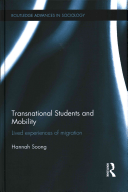
Dr Hannah Soong is a senior lecturer at the University of South Australia. Her research interests lie in the sociological study of the transnational mobility through education. Her key research disciplines include migration and identity studies, social imagination, teacher education and the intersubjectivity of self and society in postmodernity. By using socio-anthropological lenses in her doctoral work, Hannah has developed a conceptual framework to deepen one’s understanding on the meaning of mobility of students who are on the verge of migration through education processes. She is author of ‘Transnational Students and Mobility: Lived Experiences of Migration‘.

content