“From ‘Sea Turtles’ to ‘Grassroots Ambassadors’: The Chinese Politics of Outbound Student Migration.”

Research highlighted

Liu, Jiaqi M. “From ‘Sea Turtles’ to ‘Grassroots Ambassadors’: The Chinese Politics of Outbound Student Migration.” International Migration Review, (November 2021). https://doi.org/10.1177/01979183211046572.

Jiaqi Liu, University of California, San Diego

Global student migration is on the rise. As of 2017, over six-million tertiary students were studying outside their origin countries. International students exert enormous economic impacts, contributing $45 billion to the US economy alone in 2018. On the other side of the migratory channel, China has steadily established itself as the world’s largest source country of student migrants since 1998, when the earliest UNESCO data are available, with the global percentage of Chinese student migrants more than doubling from 7% in 1998 to 17% in 2017.

Given that China is the world’s most populous country, it may not be surprising that China also has the largest number of overseas students. However, the mammoth size of the Chinese student population abroad is not a historical constant. In 1978, when China began promoting large-scale outbound student migration, it had only 860 overseas students. In less than four decades, this number ballooned by 535 times to 460,000 in 2014. Scholars attribute this dramatic growth to a constellation of domestic factors, including the rising Chinese middle class and their conversion of economic capital into cultural capital, China’s competitive domestic education system, the Confucian pursuit of better education, the brokerage of commercial education agents, and pull factors in destination countries.

Nonetheless, the existing literature on international student migration/mobility (ISM) pays scant attention to China’s changing policies toward outbound student migration. Constrained by the prevalent immigration bias in migration studies, scholars tend to focus on host countries’ international education and post-graduation employment policies regarding inbound student migrants, while casting less attention on sending countries. This article, by examining China, the largest origin country of student migrants in the world, illuminates how home countries regulate and strategize about overseas students.

Utilizing three qualitative methods, including a historical policy review, an ethnography in state-organized summer camps for overseas students, and interviews with student migrants and migration officials, I propose two main arguments. First, I argue that the Chinese outbound student migration politics – which I define as the collectivity of the homeland state’s policies, practices, and rhetorics toward overseas students – serves three policy objectives: economic, governmental, and geopolitical. These objectives, however, are not set in stone. Rather, their relative significance ebbs and flows, depending on the sending country’s specific socioeconomic and political conditions. As I show, following decades of prioritizing the economic and governmental impacts of student returnees (haigui, or colloquially “sea turtles”) in boosting the domestic economy and maintaining political stability, the Chinese state now gives growing weight to student migrants’ geopolitical value as “grassroots ambassadors” (minjian dashi) in expanding China’s global influence and enhancing national image abroad. This geopolitical reorientation has become particularly salient under the Xi Jinping leadership, as China adopts more assertive soft power strategies in pursuit of global supremacy.

Drawing on ethnographic and interview data, my second argument suggests that the geopolitics-focused reorientation of China’s OSM policy may not be well received among student migrants nor fully implemented by migration officials at the grassroots or local level. Whereas Chinese students faced surging espionage accusations across the world in recent years, I refrain from taking for granted the close political ties between the Chinese state and overseas students, as depicted in rhetorical flourish by the Western media and Chinese national strategies. Instead, I examine the on-the-ground disjuncture between the central Chinese state, student migrants, and frontline bureaucrats. Based on grounded empirical research, I shed new light on the OSM politics as a contentious field where state ambitions crosscut individual desires and where national grand plans are confronted with flexible local improvisation.

In particular, I conducted participant observation in three state-run, voluntary retreats for overseas students in an emigrant hometown in southeast China. Following my interviews with migration officials, I was invited by these trips’ organizers to participate in three such events. In the end, I carried out over 100 hours of participant observation in these trips over July and August 2019. The summer trips provided an ideal lens to closely examine the quotidian operation of outbound student migration policies, as well as the deep-running tensions between national grand plans, local bureaucratic improvisation, and student migrants’ own desires.

My tripartite model of outbound student migration politics – economic, governmental, and geopolitical – strives to facilitate scholarly dialogue between ISM and diaspora studies. While the burgeoning mobility paradigm emphasizes neoliberalism’s crucial role in promoting the transition from international education to labor immigration in destination countries, this article pushes China to center stage and examines the homeland state’s changing, yet-unabating, interests in regulating and positioning overseas students in both national policies and local implementation.

Author Bio

Jiaqi M. Liu is a PhD candidate at the University of California, San Diego, studying the political sociology of international migration.  Building on multidisciplinary training and professional experiences in sociology, international politics, and law, Jiaqi adopts mixed qualitative methods to explore the crossroads between international migration, diaspora politics, citizenship laws, and transborder governance. His articles have appeared at International Migration Review and Journal of Ethnic and Migration Studies and won the 2020 Aristide Zolberg Distinguished Student Scholar Award from the American Sociological Association.
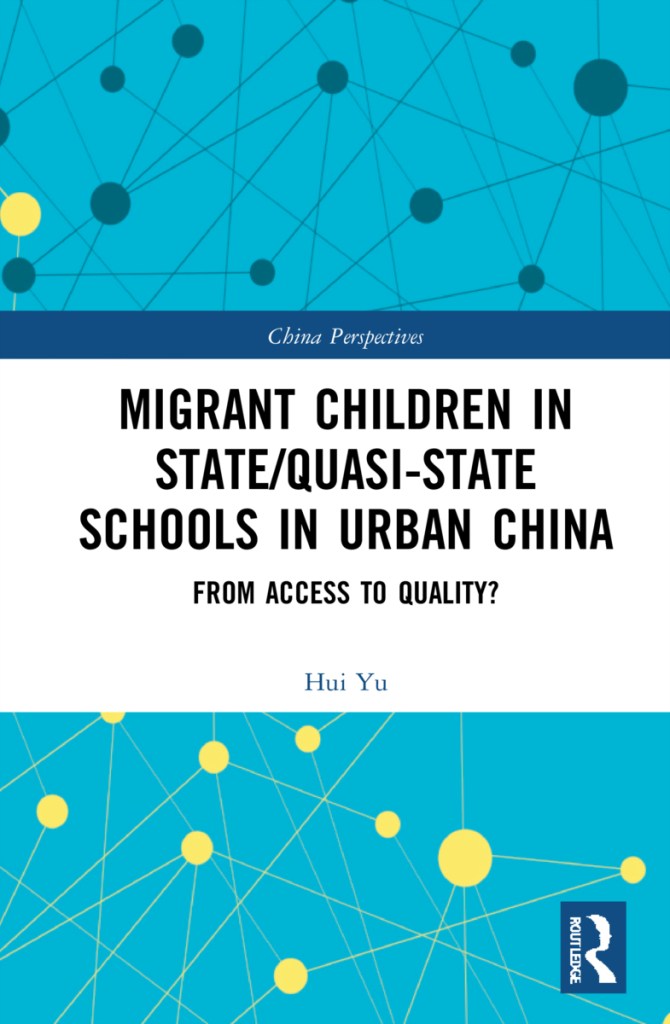
Migrant Children in State/Quasi-state Schools in Urban China: From Access to Quality?

Research Highlighted

Yu, H. (2021) Migrant Children in State/Quasi-state Schools in Urban China: From Access to Quality? London: Routledge. DOI: 10.4324/9781003220596

Abstract

In China, over fourteen million children of compulsory education age are involved in the rural-to-urban migration. Over the past two decades the national and local governments have achieved great progresses in enrolling eighty percent of migrant children in state schools. This situation brings a new question regarding the quality of education: does enrolling in a state school mean that the migrant children can now enjoy equal educational resources and expect to have outcomes equal to the local children? Rooted in rich qualitative data from five Chinese metropolitan cities, this book highlights the changing landscape of urban state school sector under the pressure of recruiting a tremendous number of migrant children and examines the quality of education from different angles. It identifies the demographic changes in many state schools of becoming ‘migrant majority’ and the institutional reformation of ‘interim quasi-state’ schools under a low cost and inferior schooling approach. It also digs into the ‘black box’ of cultural reproduction in school and family processes, revealing both a gloomy side of many migrant children’s academic underachievement as a result of troubled home-school relations and a bright side that social inclusion of migrant children in state school promotes their adaptation to the urban life. The book concludes that migrant children’s experiences in state (and quasi-state) school turn them into a generation of ‘new urban working-class’. This book will be of interest to scholars, students, practitioners and policymakers to better address educational equality for migrants and other marginalised groups.

In China, internal migrants account for the main part of the migrant population. During the last three decades of urbanisation, millions of rural labourers have left their hometowns to work in urban areas. In 2019, there were 135 million rural-to-urban migrant labourers nationally (National Bureau of Statistics 2020) with 14.27 million migrant children of compulsory education age studying in schools (Ministry of Education 2020). In recent years, around 80% of migrant children are enrolled in state schools nationwide. For those migrant children who have enrolled in local state schools, many of them have achieved progresses in their social inclusion and academic performance, yet they still face challenges in terms of equal educational outcome if compared with their local counterparts. This book aims to examine the new question regarding the quality of education that migrant children receive in the urban schooling field: does enrolling in a state school mean that the migrant children can now enjoy equal educational resources and expect to have outcomes equal to the local children?

Putting the overall research question into the specific context of five Chinese metropolitan cities, namely, Beijing, Shanghai, Guangzhou, Shenzhen and Foshan, the empirical analysis in this book focuses on the kinds of schooling experiences that migrant children have after they have enrolled in state (or quasi-state) schools. As global metropolises, the five cities can present acute examples of common problems related to migrant children’s education in metropolitan areas in China. In addition, since Beijing, Shanghai and the Pearl River Delta region have different histories and differ in terms of socio-cultural, economic and political contexts, they can provide a useful contrast. The total number of participants in the five cities is 126, including: 16 government officers, 25 school leaders (including 19 headteachers, one chairman of the board of directors and 5 department heads), 20 teachers, 34 migrant parents, 17 migrant children, 8 local parents and 6 local children.

To describe each of the eight chapters in more detail:

Chapter 1 presents the research background and context by introducing the issue of Chinese internal migrant children’s schooling. Chapter 2 tries to conceptualise quality of education in a context of migration. It conceptulises three dimensions of educational quality in a context of migration and education, including accessibility, equivalence, responsiveness.

Chapter 3 focuses on the quality of education in state school, specifically the migrant majority state school, which is currently the predominant mainstream schooling channel for migrant children. It concludes with an identification of a ‘sandglass dilemma’ which restrains the improvement of educational quality of migrant majority state schools for migrant children. In Chapters 4&5, the focus shifts to the quality of education in another main schooling channel for migrant children, which is conceptulised an ‘interim quasi-state school system’. Chapter 4 elaborates the formation of three main types of quasi-state schools, including government-purchased private school, government-controlled private school, and senior secondary state school recruiting migrant children in junior secondary stage, respectively. Chapter 5 further examines three characteristics of the ‘interim quasi-state school system’, including belongingness to the state sector, offering quasi-state education, and interim nature. The whole system is treated as an emergency mechanism for solving the migrant children’s schooling problem, rather than as regular schools offering high quality education. While realising the children’s right to education, this system does not guarantee them a “good” education.

Chapters 6 examines the role of parental involvement in shaping the academic performance of migrant children in school. It examines how the intersection of rural origin, migration status and working-class identities shapes the parents’ habitus and their exertion of capital in the urban education field. Chapter 7 examines social inclusion of migrant children in urban schools. It further identifies three aspects of migrant children’s urbanized habitus and gain of cultural capital in the urban field of cultural reproduction, including their manner of speaking, ways of behaving, self-presentation, and their appreciation of extra-curricular hobbies. Empirical findings identify a well-integrated relationship between migrant and local children, which contributes to the production of a generation of ‘new urban citizens’, yet in the meantime reproduces the migrant families’ class status as low-skilled labourers.

Chapter 8 presents the concluding thoughts of this thesis. It highlights the changing landscape of urban state school sector under the pressure of recruiting a tremendous number of migrant children and examines the quality of education from different angles. It identifies the demographic changes in many state schools of becoming ‘migrant majority’ and the institutional reformation of ‘interim quasi-state’ schools under a low cost and inferior schooling approach. It also digs into the ‘black box’ of cultural reproduction in school and family processes, revealing both a gloomy side of many migrant children’s academic underachievement as a result of troubled home-school relations and a bright side that social inclusion of migrant children in state school promotes their adaptation to the urban life. The book concludes that migrant children’s experiences in state (and quasi-state) school turn them into a generation of ‘new urban working-class’.

Author Bio

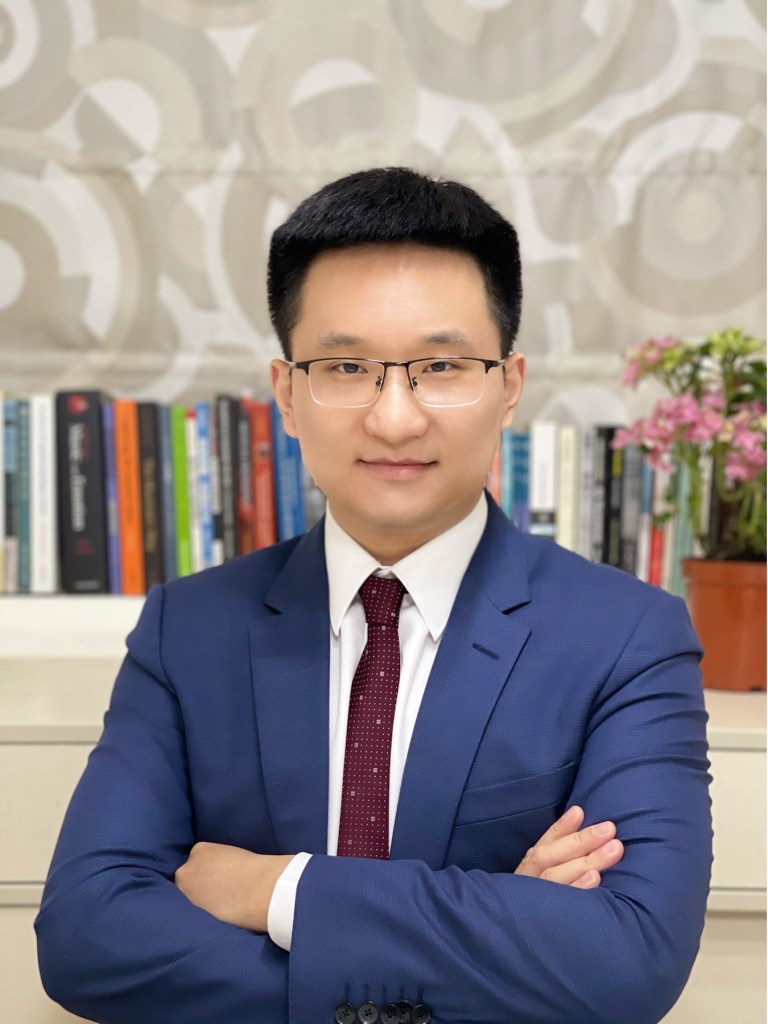
Dr Hui Yu, South China Normal University, China

Hui Yu (PhD, IOE) is Associate Professor (tenured) in the School of Education at South China Normal University, China. As a Bourdieu-informed sociologist, Dr Yu’s particular research interests include sociology of education with a focus on policy processes and social class equalities in China. His ongoing research projects focus on education of rural-to-urban migrant children and parental involvement in urban China, adopting Bourdieusian theoretical resources.

Email: hui.yu@m.scnu.edu.cn 

ORCiD: orcid.org/0000-0002-9651-502X

The Foreign Bully, the Guest, and the Low-income Knowledge Worker: Performing Multiple Versions of Whiteness in China

Research highlighted:

Lan, S. (2021). The foreign bully, the guest, and the low-income knowledge worker: Performing multiple versions of whiteness in China. Journal of Ethnic and Migration Studies.

Dr Shanshan Lan, University of Amsterdam

With the rise of China as the world’s second largest economy, more and more white Westerners are moving to China to pursue better job or business opportunities. In addition to the so-called transnational elites, there is an increasing number of middle-stratum white migrants who work as English teachers, self-initiated entrepreneurs, locally hired staff in transnational companies, lecturers in Chinese universities, and artists or creative workers in China’s media and cultural sectors. Unlike the transnational elites who usually have limited social interactions with local Chinese (Yeo and Willis 2005), this new group often depends on professional and social networks with local Chinese to consolidate their business or career opportunities. Scholars have noted the decline of social privileges associated with white skin in many Asian societies (P.C. Lan 2011; Lundström 2014; Maher and Lafferty 2014). The diversification of the white population in China matches the expansion of job markets for “foreigners” from coastal areas to smaller cities in the interior of the country. Due to the recent tightening in immigration controls and the rising tides of popular nationalism in Chinese society, the lived experiences of non-managerial and non-elite white migrants are increasingly marked by considerable tensions between privileges and precariousness (Farrer 2019; S. Lan 2021; Lehmann 2014; Leonard 2019; Stanley 2013).  However, little has been written on how different groups of white migrants make sense of and try to cope with this daily experience of precariousness.

       This paper focuses on two research questions: What are the opportunities and challenges faced by white migrants in different fields of employment and different geographical locations under the evolving nature of multiple Chinese gazes? How do various groups of white migrants engage with, negotiate, or resist the Chinese gazes through quotidian racialized performances? Existing literature on international migrants in China mainly focuses on black Africans in Guangzhou (S. Lan 2017; Bodomo 2012; Haugen 2012). The relative absence of whites in migration studies literature points to the racialization of “migrant” as a category reserved mainly for non-white people (Lundström 2017). This research denaturalizes whiteness as an invisible norm by rethinking it in a context of international labor migration and cross-cultural interaction. The paper attends to social stratification within the white population in China by moving beyond the binary between transnational corporate elites, who are often considered as privileged migrants (Camenisch and Suter 2019; Farrer 2019), and foreign English teachers, who are stigmatized as occupying a lower status within the expatriate community (Leonard 2019; Stanley 2013). Instead, it focuses on a group of middling migrants (Lehman 2014), namely self-initiated migrants who are neither recruited by transnational companies nor by talent schemes of Chinese universities, nor by commercialized brokers (as is the case of many foreign English teachers). I argue that although these white migrants have little control of the multiple and contradictory ways that they are racialized in Chinese society, they still demonstrate a certain degree of agency in manipulating the Chinese gazes for their benefit through strategic performances of different versions of whiteness. In this vein, the paper highlights the situational nature of whiteness, which is mediated by nationality, gender, class, Chinese language skills, and length of stay in China.

Author Bio

Shanshan Lan is Associate Professor in the Department of Anthropology at the University of Amsterdam and a member of the Moving Matters research group. She received her Ph. D. in Cultural Anthropology from the University of Illinois, Urbana-Champaign. She had worked as a Mellon Postdoctoral Fellow at Northwestern University and Connecticut College in the United States. Before joining the University of Amsterdam, she was a Research Assistant Professor in the David Lam Institute for East-West Studies, Hong Kong Baptist University. Lan is the Principal Investigator of the ERC project “The reconfiguration of whiteness in China: Privileges, precariousness, and racialized performances” (CHINAWHITE, 2019-2024). Funded by the European Research Council, this project examines how the western notion of whiteness is dis-assembled and re-assembled in the new historical context of China’s rise as a global superpower.

Seventy years of Chinese language education in New Zealand: A transdisciplinary overview

Research Highlighted:

Wang, D. (2021). Seventy years of Chinese language education in New Zealand: A transdisciplinary overview. In Y. Zhang & X. Gao (Eds.), Frontiers in the teaching and learning of Chinese as a second language (pp. 170-184). London: Routledge. https://doi.org/10.4324/9781003169895-11 (Please feel free to contact the author for a published version of this publication).

Dr Danping Wang, University of Auckland

Research highlights

This research output is supported by the Marsden Fund of the Royal Society of New Zealand. It is part of a large-scale project that aims to map out the past and present of Chinese language education in New Zealand. Due to its geographical isolation and its small population, New Zealand can be easily neglected or misunderstood compared to other English-speaking countries. It is apparent that the case of New Zealand has been a missing puzzle on the knowledge map of research on Chinese language education in Anglophone countries (Wang, 2020b). This article is the first to present transdisciplinary insights into Chinese language teaching and learning in New Zealand.

This chapter adopts the transdisciplinary framework in understanding and analysing the multifaceted nature of Chinese language education in an increasingly diverse and multilingual New Zealand. The transdisciplinary framework recognises language teaching and learning as a highly complex process that involves a variety of macro-, meso-, and micro-level factors that have the power to influence the rise and fall of a language in a country (Douglas Fir Group, 2016). It emphasises the importance of exploring language education from multiple levels of forces beyond the micro-level focus on cognitive and linguistic development (e.g., phonetic, lexical, grammatical, character reading and writing). Therefore, this study shifts the attention to a more macro level (e.g., demographic, economic, political, and cultural) and a meso level of language learning (e.g., formal, and informal education organisations such as schools, universities, and community schools).

Chinese language education in New Zealand has gone through a history of 70 years as of 2020. In terms of the time frame, Chinese teaching in New Zealand started in the same year as it did in China. In October 1950, the earliest Chinese lesson was published by a local Chinese magazine with a specific goal for New Zealand Chinese children to maintain their Chinese literacy skills and cultural roots (Stanbridge, 1990). This marks the beginning of the education of Chinese as a heritage language in New Zealand. Within mainstream society, the most prominent and earliest Chinese language programme appeared in a formal educational establishment in 1966. In this year, the University of Auckland formed a teaching team and began to provide Chinese language courses for university students for the first time in history. These students were purely European descendants curious to explore the mysterious Chinese language and culture.

Demographic shifts. Population censuses are by far the most common source of data to provide reliable evidence of the size, growth, and characteristics of language-defined population groups (Siegel, 2018). First, the People’s Republic of China has become the second-largest foreign birthplace for New Zealand people (2.9%), following England (4.5%). It is evident that New Zealand has an increasingly large group of Mandarin speakers, and the trend will continue to grow (Spoonley, 2020). Second, the Chinese language (Mandarin, Cantonese, and other Chinese varieties combined) has become one of the most commonly spoken languages in New Zealand.

Eco-political backgrounds. Eco-political backgrounds are important macro-level factors in understanding the complexity and vulnerability of Chinese language education in Western countries. In the New Zealand context, as Kennedy (2016) noted, Chinese “has experienced different trends in popularity, often partly depending on the country’s political and economic ties with New Zealand at the time”. New Zealand is the first developed country that signed the comprehensive Free Trade Agreement with China in 2008. As part of the Free Trade Agreement, New Zealand and Chinese Education Ministries put forward a Mandarin Language Assistants (MLA) Programme. It is worth noting that the stable and comparatively positive political and diplomatic relationships between New Zealand and China have provided a relatively favourable environment for the development of Chinese language education. In contrast, many other Western countries have witnessed drastic measures taken in closing numerous Confucius Institutes and a concerning trend towards politicising Chinese language teaching and learning (see, e.g., Weinmann, Neilson & Slavich, 2020).

Chinese as a heritage language. Chinese immigrants were one of the earliest and the largest non-European immigrant groups but were “never considered to be real New Zealanders” by the European settlers (Ip, 2009, p. 1). Chinese have suffered legislative discrimination and systemic racism for about a century in New Zealand, similar to what they experienced in other Anglophone countries. Despite the long history of Chinese settlement in New Zealand since the mid-19th century, Chinese language teaching practices only took place in the 1950s. Nevertheless, Chinese communities have shown fluctuating interest in preserving Chinese heritage, and the passion for Chinese learning gradually faded over the years. The views that associated Mandarin with communism remain relevant today both inside and outside the Chinese community (Clark, 2020). The political image of Mandarin could have influenced people’s interest in learning Chinese in a subtle but sophisticated way.

Chinese as an additional language. Mandarin Chinese was first introduced to New Zealand secondary schools in the 1980s and officially entered the New Zealand curriculum in 1995, although there were only a limited number of schools offering Chinese to students at that time. Today, compared to other Anglophone countries (see, e.g., Zhang, 2009), the overall development of Chinese language education in New Zealand is smaller in its total number of enrolments, but proportionally speaking, it is relatively larger. In 2017, there were 8.8% of total school students in New Zealand studying Chinese as a subject in all types of schools (Year 1 – 13). As a proportion of the population, more New Zealand students were studying the Chinese language than in Australia (4.7% in 2016) and the U.S. (2.13% in 2014-15) combined. However, the passion for Chinese learning “has cooled off on university campuses” (Wang, 2020a). The causes of the decline in language learning are complex, and the phenomenon is not unique to New Zealand. The calamitous decline of language learning has become a crisis faced by all Anglophone countries

(Lanvers, Thompson & East, 2021).

References

Clark, P. (2020). Time for a reality check on Chinese interference. https:// www.nzherald.co.nz/nz/paul-clark-time-for-a-reality-check-on-chinese-interference/DCLUAMEN36ZPQ3HFHFDU3JF2QQ/

Douglas Fir Group. (2016). A transdisciplinary framework for SLA in a multilingual world. The Modern Language Journal, 100(S1), 19–47.

Ip, M. (2009). The Dragon and the Taniwha: Māori and Chinese in New Zealand. Auckland University Press.Kennedy, J. (2016). An exploration of when and how New Zealand secondary school teachers introduce Chinese characters to beginners. The New Zealand Language Teachers, 42, 8–20.

Lanvers, U., Thompson, A., & East, M. (Eds.). (2021). Language learning in Anglophone countries: Challenges, practices, ways forward. Palgrave Macmillan.

Spoonley, P. (2020). The new New Zealand: Facing demographic disruption. Massey University Press.

Stanbridge, J. (1990). An early attempt at preserving Chinese literacy in New Zealand: An analysis of the Chinese lessons in the New Zealand Chinese Growers Monthly Journal [Unpublished MA dissertation]. The University of Auckland.

Wang, D. (2020a). Studying Chinese language in higher education: The translanguaging reality through learners’ eyes. System. 10.1016/j.system.2020.102394

Wang, D. 王丹萍. (2020b). 新西兰汉语教育发展与研究. 国际汉语教育史研究, 2, 205–217. [Research and development of Chinese language education in New Zealand. International education history of Chinese language. Commercial Press.]

Weinmann, M., Neilsen, R., & Slavich, S. (2020). Politicisation of teaching Chinese language in Australian classrooms today. https://www.aare.edu.au/blog/?p=7595

Zhang, X. 张西平. (2009). 新西兰的汉语教育. 世界汉语教育史, 432–440. [Chinese language education in New Zealand. In History of Chinese language education. Commercial Press.]

Acknowledgment

This publication was supported by the Marsden Fund Council from New Zealand Government funding, managed by Royal Society Te Apārangi. The project number is UOA1925.

Author Bio

Danping Wang  is Senior Lecturer and Major Specialisation Leader of Chinese at the University of Auckland, New Zealand. She received the Teaching Excellence Award in 2014 and the Early Career Research Excellence Award in 2020. Since 2020, Danping has been invited by the New Zealand Ministry of Education to review the national qualifications for senior secondary school students. She is currently leading a Marsden Fund project supported by the Royal Society of New Zealand to explore new theoretical directions for Chinese language education through the decolonial lens in the New Zealand context. Her research focuses on translanguaging, plurilingualism, and Chinese language education. Email: danping.wang@auckland.ac.nz

Disenchantment revisited: school life in Northwest China

Research Highlighted:

Tong, L. & Zhou, Y. (2021). Disenchantment revisited: school life in Northwest China. Discourse: Studies in the Cultural Politics of Education, DOI: 10.1080/01596306.2021.2006149

Typically understood through a universal-statist framework, modern schooling in contemporary China often contributes to the disenchantment of rural, migrant, and ethnic students. High dropout rates, lack of educational infrastructure, low household socioeconomic status (SES), poor academic attainment, and passive withdrawal inside classrooms are common among these groups. Constructed under the modernization framework, schooling is often treated as an instrument for linear social progress. It is anchored on the contested triumphalism that literacy and numeracy pave the foundation of human capital formation and economic development. Yet, for the many of those mentioned above, such an ideology remains disconnected from their daily lives. In many cases, it contradicts their epistemic practices and beliefs altogether.

Previous studies have tended to treat disenchantment as a fixed state, despite the presence of constant changes. Using an ethnographic approach, we focused more on the flow of these students’ daily lives. The questions that perplexed us and remain critically underexplored are: What eventually became of the disenchanted youth? Is disenchantment a state of mind, a period of status, or an enduring character? Are those disenchanted students always disappointed with their school lives?

Based on year-long ethnographic research in a Tibetan-serving secondary school in Northwest China, we provide additional insights on these questions. We combined participant observation with interviews in daily field activities. We examined a school relocation project for a Tibetan-serving community. This school relocation project aims to recruit Tibetan children from underdeveloped regions to receive better secondary education in urban and modern settings. It resembles many issues embodied by contemporary Chinese ethnic schooling: most students are from pastoral herdsman families, they have a low level of parental involvement in a boarding environment, and they have a low level of academic performance.

Findings

Our research question stems from an empirical puzzle. It was apparent from our observations that the students were not interested in the academically oriented classes. They admitted that they struggled with learning. They did very poorly on standardized tests. In other words, these Tibetan students are clearly maladjusted to the most salient educational ethos of today’s China: academic-oriented learning. This predicament can be explained on two levels. At the practical level, modern academic learning implies incremental effort, which requires the learner to consolidate prior knowledge and practice regularly. However, these elements are absent at the elementary level for the students we met. Few of them developed any real academic foundation due to the harsh living environment, low household SES, poor educational resources, low parental involvement, etc. Moreover, students were met with additional challenges at the cultural level after the relocation. Language barriers, culturally irrelevant curriculum, and epistemic dissonances disengage them from academic pursuits.

However, spending time in this school also made us realize that the classroom experience should be contextualized within the school’s larger social setting. We agreed with Abbott (2016) that change is the norm in social life. When viewing disenchantment from a processual point of view, it is natural to seek how the disenchantment plays out in social space and social time. To understand the changing nature of schooling, we use the ecological/processual approach. In this approach, schooling, like any social structure, is viewed as being in constant flux. We argue that to treat disenchantment as a fixed state ignores the space-temporal quality of human action. The school’s social process is multiple and momentary in nature and often undermines the seemingly linear educational programming. Under the seemingly rigid school setting emerge social spaces that expand beyond academic lessons, which constantly make and remake social actors. We argue that such moments of making and remaking show the personal agency of the students. We illustrate this point using two instances, that is, blackboard newspaper and physical/artistic activities.

Although we observed passive withdrawal inside the classroom, the scene outside of it was quite different. We observe students engaging in social moments with focus, passion, and enjoyment. Those disenchanted students did—consciously or unconsciously—explore other channels to create a new social space. They appropriated school tasks such as putting up routine blackboard newspapers. They also took advantage of the officially designated ‘free time’ to engage in sports and artistic activities. In those spaces, students continue to interact among themselves and with teachers, where withdrawal and marginalization happen alongside negotiation, appropriation, and participation. While disenchantment anchors the classroom experience of many, it interpenetrates and enmeshes with other aspects of student lives and is interwoven over time. By considering this complex interplay of disenchantment we upend the notion of disenchantment as a singular state.

Conclusion

In our case, students spent three to six years in a relocated community with peers and teachers, where disenchantment, be it at the initial or later stage of studying, often was evident. But at the same time, disenchantment intersected with other aspects of social life. The students we observed quickly shifted their attention and energy toward more appealing subjects. They slipped in content that speaks to their religious and ethnic beliefs despite knowing that their expression of religiosity and ethnic identity is not officially encouraged. Simply put, the schooling experience extends beyond academic learning and involves a significant amount of leisure time, sports, and extracurricular activities.

In several cases, they were stereotyped, challenged, or disciplined. But more often than not, they were sympathized with, acquiesced to, and even encouraged in some instances by teachers and administrators. It is in this sense that this study provides new insights into the studies of disenchanted youth. Globally, previous studies tend to view academic schools as places rife with tension, especially for ethnic students. However, we argue that some school space is actually porous and elastic. Beyond the seeming rigidity of time arrangement and of classroom and behavioral norms, there also existed spaces that were relatively free or spontaneous.

Therefore, by studying the conditioning forces that surrounded disenchanted students, we seek to provide new insights into educational policy research, as well as connect with the literature of social process. Beyond the Chinese setting, this study also provides a lesson to educators who work with minority youth in many developing countries. Today, rural/ethnic students in many countries do face a similar dilemma. Their schooling experiences deserve researchers’ further attention.

Authors’ Bio

Liqin Tong, University of Macau

Liqin Tong (Corresponding Author) is currently a Ph.D. candidate at the University of Macau’s Faculty of Education. Her research interests focus on sociology of education, anthropology of education, and culturally relevant pedagogy. She can be contacted via email: yb87104@connect.um.edu.mo.

Dr Yisu Zhou, University of Macau

Yisu Zhou is an associate professor at the University of Macau’s Faculty of Education. He obtained his doctoral degree from Michigan State University’s College of Education. Yisu’s doctoral work is about the teaching profession (out-of-field teachers) using a large-scale survey from OECD. Yisu’s research interests in education policy span across various topics, including educational finance, teacher education, sociology and economics of education. He has published in American Journal of Education, Journal of Contemporary China, Asia-Pacific Education Researcher, Journal of School Health, Sociological Methods and Research, Social Science Computer Review, etc. He is currently serving on the editorial board of Multicultural Education Review.