第五集(新冠疫情专题):专访曹雪萌

采访录音 English Summary

大家好,我是曹雪萌,非常高兴能够参与到这次播客活动当中,感谢Cora的邀请。我来自英国华威大学教育学院。我目前处在博士学习的最后阶段,我在等待我的毕业答辩。

我的主要研究方向是高等教育流动,我的博士论文探讨的是中国留学生的就业力管理,就是employability management,我关注的人群是授课式硕士生,社会科学相关课程的学生,这个研究简单来说就是探究中国留学生在留学生活中如何培养自己的就业能力,不仅仅是学习过程之中,也包括了他们在国外的日常生活当中一些与就业力相关的经历。这个研究是一个长期性(longitudinal), 质性研究,主要的理论依据是capabilities approach。我采用的研究方法是日记-访谈(diary-interview)法,具体来说就是我的参与者以日记的形式记录他们与就业力培养相关的经历和感受,然后在采访中跟我进一步探讨和深化他们日记中所记录的信息。

我的经历- 流动- 新挑战

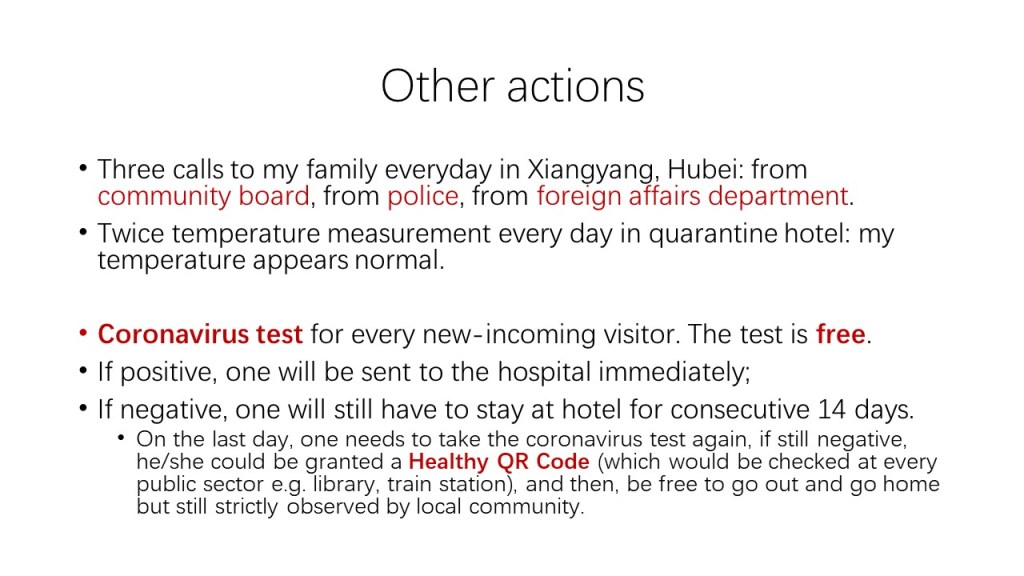
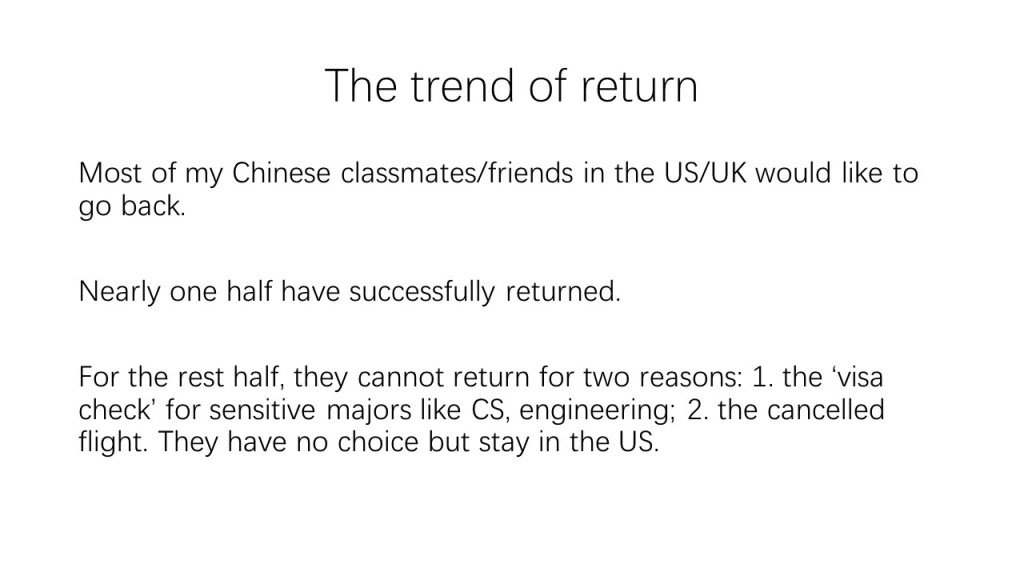
因为我自己是研究教育流动的,所以我想从学生流动这个角度来跟大家分享一下我对这次疫情的看法。首先我先跟大家聊聊我自己的经历,因为这次疫情对于我的生活影响其实是很大的。我是在去年年底提交了我的毕业论文,所以过年期间我回国了。我大概是在1月中旬回到国内的,回国后一周,中国的疫情开始正式爆发,所以我几乎整个假期都是在国内家中隔离的。我原本的计划是在2.1回英国,准备我的毕业答辩,但是由于国内当时的疫情非常严重,导致了整个航空系统的紊乱,所以我原本的机票被取消了,而且当时临时重新买票非常困难,我是经历了四次退改签,才最终确定了回英国的行程。在这期间,我的导师一直在跟我联系,一方面是担心我在国内的安全,一方面也是担心行程不顺会耽误我的答辩。最终我是在2月8号经过了40多个小时的行程才回到英国。回到英国之后,当时英国的疫情还不是很严重,但是本着对别人也对自己负责的态度,我进行了14天的自我隔离。等我的隔离结束之后不久,英国的疫情就开始变得越来越严重,我也几乎没有怎么出门。所以可以说我的整个2020年到现在,几乎都在隔离。

目前,我们学校的情况是大家都在在家办公(work from home),这个对我的影响也是挺大的。最直接的一个影响是,我的毕业答辩没有办法面对面地进行,改成了online,其实这对我来说挺遗憾的,因为毕竟是自己做了三年的一个研究,是很希望和答辩老师有一个面对面的交流的。同时,这种云答辩也会给我带来一些挑战,毕竟这种形式也是之前没有经历过的。

另外一个类似的情况就是,我原本4月份要开始我的一个fellowship的工作,但是目前已知的所有相关的活动都推迟或者是改成线上(online)进行,这个也在一定程度上影响了我对于一个新角色新环境的适应。

再有就是长时间的隔离对我的学习工作的方式是个很大的挑战,因为我本身不是一个很喜欢自己在家工作的人,我更喜欢有一个比较正式(formal)的工作环境,可以跟同学、同事经常交流,但是因为疫情的原因,没有办法出门,而我又有很多要完成的工作,所以我几乎是用这三个月把自己硬生生地培养成了一个在家也可以比较自律比较高效工作的人。总体上而言,这是疫情带给我自己的一些影响,与此同时,我也看到了疫情带个各个学习阶段的留学生的困难。

对于不同学习阶段中国留学生的影响

对即将来求学的中国留学生而言,他们的就学申请和语言考试等都受到了影响;而对于本科生和年纪更小的留学生来说,他们或许会经历更多的恐慌, 包括是否能够安排到寝室,或者有寄宿家庭在疫情期间适当地接收照看。至于硕士生阶段的同学,他们本来就只有一年的学习时间,这次疫情会让他们的当面授课时长(contact hours)再度压缩。而对于博士生,有的田野工作会受阻,而刚刚博士毕业的同学则会担忧他们是否能参与对他们有重大人生意义的毕业典礼。

不是疫情带来的新问题,是长期矛盾的凸显和尖锐化

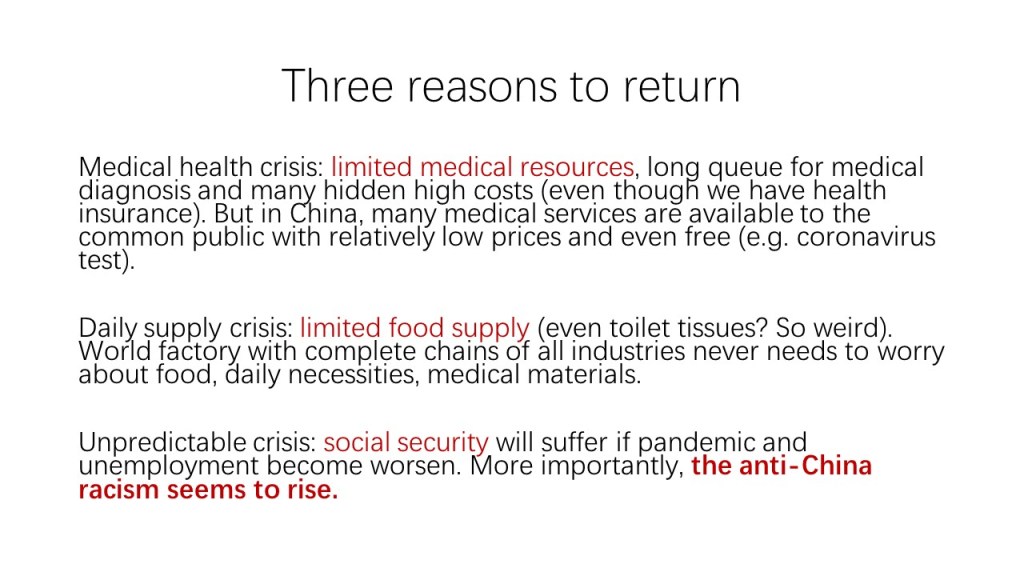
细想这次的疫情带来的影响,我觉得很多的问题并不是新出现的,反而是长期存在的矛盾在此次疫情中得到凸显和尖锐化。比如疫情中很多课程转为线上教学,这个需要学生具有高度的独立学习的能力,这个和中国留学生经常为人诟病的所谓的缺乏独立学习的能力相互呼应。又比如,疫情需要我们接受居家隔离,导致中国留学生与当地学生、其他国家留学生进行社交和跨文化沟通的机会减少,但是,在疫情前能经常主动进行这些文化社交活动的中国留学生又有多少呢?还有关于留学生的精神健康,以及对华人的种族歧视,这些在疫情中凸显的问题其实在疫情之前也一直存在。另外,这次留学生回国避疫的举动也遭受不少国内舆论非议,这个其实也与部分国人对留学生一直存在的偏见有关。

精神健康(Mental health)和 研究者的研究伦理(ethical issues for researchers

其实在整个疫情期间,无论是在国内还是国外,我的心理状态还是比较平稳的。在国内的时候,我所在的城市疫情控制得很好,没有让我觉得非常恐慌,想要尽早回到英国也是因为要准备别也答辩,而不是为了“逃离疫区”。回到英国之后,由于我住的地方是一个校外的独立的工作室(studio),所以我也没有一些和其他人公用(share)公共空间所带来的不便或是隐忧。包括我的家人朋友,虽然他们都更加频繁地对我表示关切,但是大家都还比较冷静理智,也比较相信我能应对好自己的生活。

然而,一个发生在我身上比较有趣的现象是,随着疫情的发展,我看到了它对于留学生的海外生活,国际学生的流动,高校对于留学生的支持等一系列问题的影响,这些都跟我的研究领域非常相关,进而引发了我想要做一个跟疫情下的教育流动(education mobility)相关的研究。所以我近一个月的时间都在持续关注各个社交媒体上留学生发布的评论(posts),视频( vlog)等等,后来几乎所有我的社交平台都笼罩在疫情相关的各种内容之中。在这个过程当中我自己的mental health受到了比较大的冲击。因为长时间地接触这些比较负面(negative)的信息,看到自己的同胞经历很多生活上、心理上的困境,甚至遭到歧视(abuse),还有一天我接到了我一个朋友被感染的消息,心里真的很难受。所以我现在也在调整我自己,怎么样去找到一个平衡,能一方面持续关注疫情的发展,留学生的动态,另一方面也解放自己,让自己能保持一个比较好的心理状态。
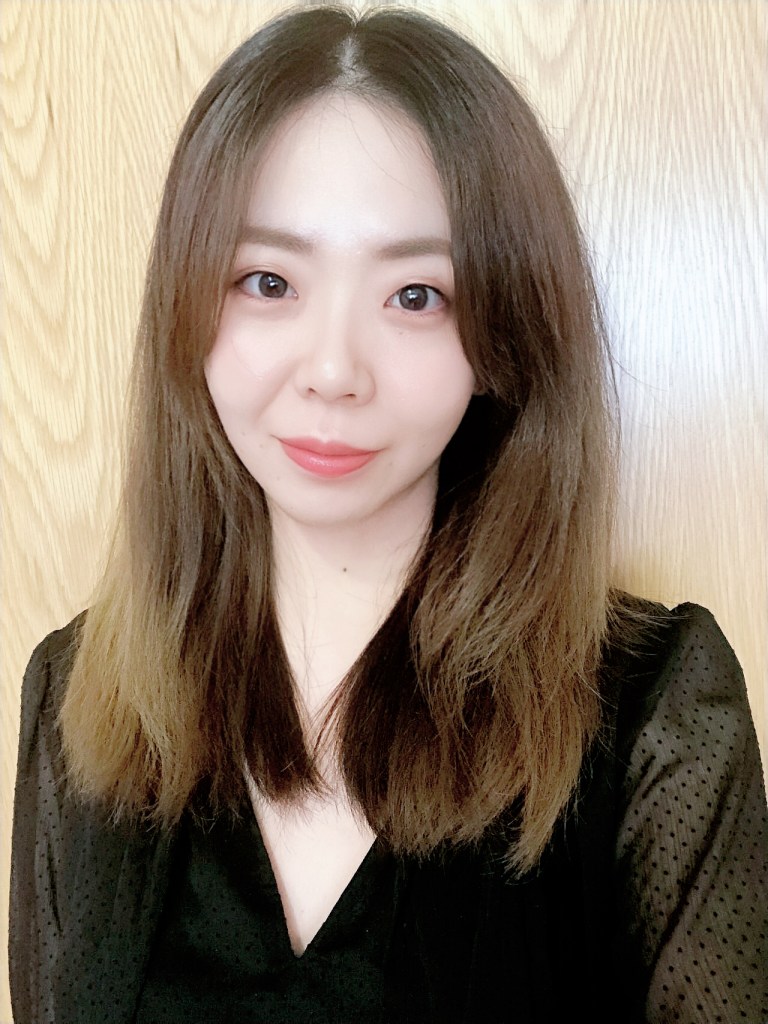
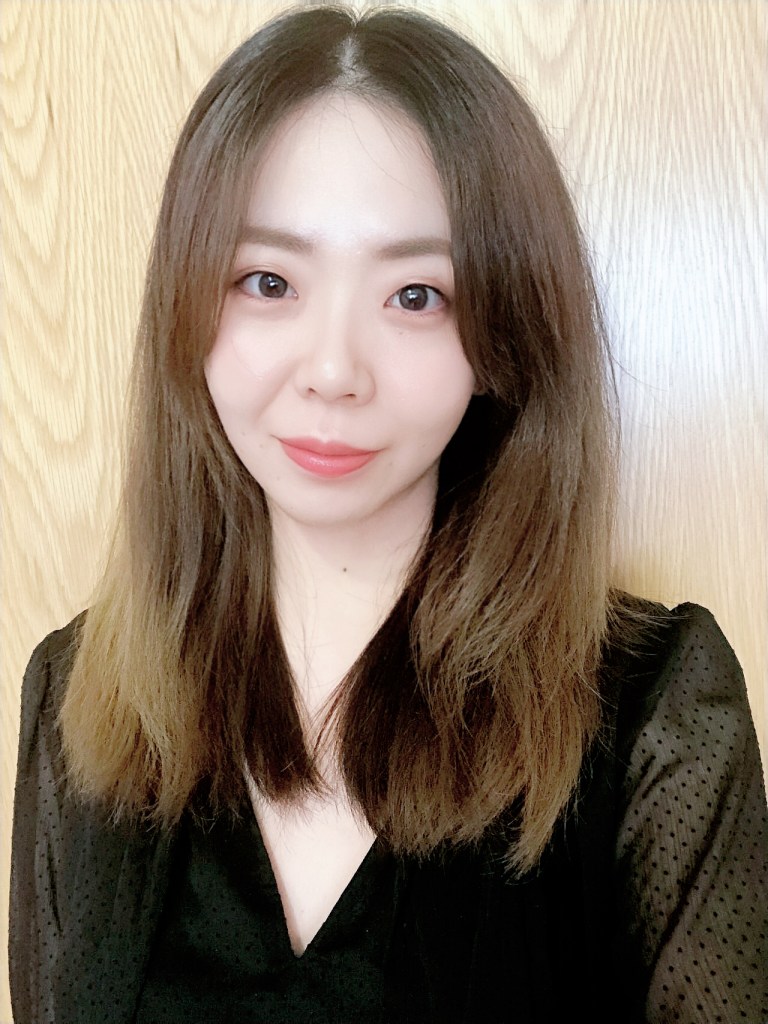
嘉宾:曹雪萌

我认为这个现象涉及到一个研究伦理的问题。往常我们谈到社会科学研究中的伦理问题的时候,比较多关注于怎么保护我们的参与者,但是我目前的一个经历让我在思考在做研究的过程中,研究者的健康(wellbeing)是不是也是一个值得关注的问题,尤其当我们也身处于我们所研究的社会现象当中,我们有很多共情的时候,我们无法把自己抽离出我们的研究环境的时候,我们该怎么样维护自己的心理健康。我认为做研究的过程中研究者的状态对于其之后怎样理解和阐释研究结果也有很大的影响。我知道现在有很多研究者都致力于从自己的领域和角度去理解和研究疫情所带来的社会问题,所以我在这里希望不管是留学生,还是海外的学者,都能保护好自己,身体心理都能够健康,希望大家一切顺利。

嘉宾简介

曹雪萌是英国华威大学教育研究中心的博士生。她也是华威大学进阶研究所的研究员。她的博士研究聚焦中国留学生就业力管理,采用能力理论(capabilities approach)和日记-访谈法。雪萌协同主持华威大学的学术流动和非流动网络,并且是该网络博客主编。同时,她还协同主编关于用日记作为高等教育研究方法的书籍。她的研究兴趣包括高等教育,毕业生就业,学术流动与非流动,中外合作办学,教育国际化和话文化教育。
Episode 5: Xuemeng Cao–Life as an international student amid COVID 19

Guest: Ms Xuemeng Cao

Audio Podcast of Episode 5 (in Putonghua)

中文总结

In this episode, we speak with Ms Xuemeng Cao, a PhD student at Warwick University (UK). Xuemeng discussed how she had spent the first few months of 2020 in quarantine and self-isolation due to COVID 19, first in her hometown when she spent her Chinese New Year holiday after submitting her PhD thesis, then in the UK when she came back to the UK to prepare for her PhD viva. To her, COVID 19 has pushed her to substantially re-adjust her work patterns, i.e. from being used to working in a formal setting within the university to working completely at home. COVID 19 has also impacted on her PhD viva arrangement, which has to be carried out online. This has posed a notable challenge on her part as this is not something that she was prepared for. Additionally, she regrets that she is now deprived of the opportunity to interact face to face with her examiners, on her PhD thesis for which she spent around three years of her time. Moreover, she revealed that COVID 19 has also disrupted the induction of her new position at the university.

Xuemeng has also made some poignant observations on how this COVID 19 pandemic has impacted on Chinese international students of all ages and study levels, from those younger ones who study in boarding schools in the UK, to undergraduates, to one-year Master’s level students, to PhD students and recent graduates. While the former two groups experienced a great degree of uncertainty and anxiety due to accommodation constraints and reduced flights, the latter groups may also be concerned about the value for money of their respective courses and/or the opportunity to attend their one-in-a-life-time graduation ceremonies.

Xuemeng also suggested that many of the issues highlighted in this pandemic (e.g. independent learning capability, cross-cultural engagement, mental health management, racism and xenophobia in destination countries) regarding Chinese international students are not new. Instead, these are issues that have had a deep root in practices of international education for a long time. She reckoned that this COVID 19 pandemic could be a juncture when such issues could be addressed.

As to how these issues can be addressed, Xuemeng confessed that this needs much broader consideration and concerted efforts. However, on an individual level, as an international student or a would-be international student, it is perhaps worthwhile considering whether one is necessarily suitable for studying abroad. She specifically highlighted, based on her research experience, how it is critical for would-be international students to realise that studying abroad also entails ‘living’ abroad, which can pose a host of challenges that they may not be aware of or may not be cut out for.

Xuemeng reflected that this COVID 19 has brought her new insights into her future research directions. For instance, over the past month, she has been exploring the experience sharing of Chinese international students on various social media platforms. However, such experience had sometimes led to negative emotional experiences on her part as a researcher. This makes her ponder over the ethical dimension of protecting the wellbeing of researchers in such contexts where the researcher is also an insider who can have strong emotional resonance with the researched.

We are grateful for Xuemeng’s sharing and we wish her all the best in her upcoming PhD viva and her new position.

Guest Bio

Xuemeng Cao is a PhD researcher at the Centre for Education Studies, the University of Warwick. She is also an early career fellow at the Institute of Advanced Study, the University of Warwick. Her PhD research focuses on the employability management of Chinese international students, adopting the capabilities approach and diary-interview methodology. Xuemeng is also a co-convenor and the blog editor for Academic Mobilities and Immobilities Network (AMIN) at Warwick. She is co-editor of the book Exploring Diary Methods in Higher Education Research: Opportunities, Choices and Challenges (London; New York, NY: Routledge). Her research interests include higher education, graduate employability, academic (im)mobilities, sino-foreign cooperation in education, internationalization/cross-cultural studies in education.

Jenny — Life as an international scholar amid COVID 19

Audio Podcast for Episode 4 中文总结

In this episode, we speak with Jenny (a pseudonym), an assistant professor in a country in Central Asia. In January 2020, she was about to conclude her maternity leave in Hungary, where her husband’s family is based. This unique life trajectory has enabled Jenny to share her observations on the contrasting and evolving beliefs, behaviour and coping strategies of peoples across national borders amid the COVID 19 global pandemic.

In January 2020, while in Budapest, Jenny was deeply concerned about her family and friends as the COVID 19 outbreak in China was getting more serious. However, she reflected that experiences of the 2003 SARS pandemic had left the people of China a heightened sense of alert, which was manifested in their strict and willing compliance with public hygienic protocols during pandemics. For instance, people adhered strictly to practices such as wearing masks, washing hands regularly, avoiding visiting public spaces, disinfecting public spaces. In comparison, she observed that in Hungary, during that period, people went about their lives in a ‘business as usual’ mode, while the mainstream media paid little attention to an outbreak that was taking place in a faraway place like China. As soon as she returned to work in late January to Central Asia, she noted that the people began to wear masks and disposable gloves in public, displaying a heightened sense of self-protection. The local government had also taken measures to reduce or stop international flights with the COVID 19 outbreak hotspots, such as China. She suggested that such strict measures might have to do with a few reasons. First, the country shares a long border with China with a large number of cross-border traders, which can facilitate easy spread of the outbreak. Second, the local government and public were concerned about its health system’s capacity in handling a pandemic as such.

Regarding impacts of the COVID 19 global pandemic on her life, Jenny revealed that she only recently finished her 9 months-long maternity leave, during which she had little academic involvement other than reviewing for some journals. She was therefore ambitious about getting back to her academic research once she returned to work, by getting childcare support from a local nanny. However, only two weeks after she returned to work, the COVID 19 outbreak had hit her city. She had to begin working from home as the university had moved its entire operation to online modes. Meanwhile, her university community had come to an agreement to stop having nannies and cleaners visit families on campus to stop further spread of the virus, while continuing to pay for their services. This means that Jenny now has to work a double ‘shift’ of taking care of her new-born baby and her academic duties. This has been a challenging task, leaving her feeling utterly exhausted, both physically and mentally. She confessed that her original plans had been disrupted significantly and she is now still getting used to these current arrangements. Meanwhile, due the COVID 19 outbreak, she felt further estranged from her families in China and in Hungary, which made her feel powerless.

As for her academic activities, she suggested that all her international conferences have been cancelled. As for conferences that were scheduled to take place in the second half of 2020, she has decided not to apply for them as the outbreak situation is still rather uncertain. Now she mainly relied on online technologies and social media to communicate with her academic colleagues. She is able to adapt to such communication modes, although she would have preferred the human touch provided by face to face communication.

This COVID 19 outbreak has made Jenny develop new research directions, especially in relation to the roles of online education amid global pandemics. In addition, she is intrigued by the implications on international higher education, no matter the economic impacts on higher education institutions, or the lived experiences of international students, especially the Chinese international students.

As a Chinese scholar working overseas, Jenny has felt hints of anti-China sentiments in her daily conversations with colleagues and friends, as well in mainstream media depiction. This has made her feel uncomfortable. And yet, she suggested that such issues cannot be easily clarified/debated in a short conversation. Therefore, she had begun to ponder over future actions if similar pandemics strike and protective mechanisms that are in place. Reflecting on her recent experiences, she has identified two major protective mechanisms. The first is the Chinese Embassy in her place of work. She has paid close attention to the daily updates of the Chinese Embassy in regard to how the Chinese government may take measures to protect its overseas citizens. The second protective mechanism is her employer.

Photo by Irene Strong on Unsplash

This pandemic has also made Jenny reflect on the different values of the ‘East’ and the ‘West’. She reflected that in the beginning, it seemed that western individuals placed much more emphasis on individual freedom and rejected measures such as self-isolation and social distancing. However, as the virus further spread globally, more nuanced and diversified discussion and debates have emerged. For her personally, she has felt that this pandemic has reminded her resoundingly how closely we are connected with each other, and an individual has to shoulder great responsibility for protecting not only themselves, but also the health and welfare of the entire community, through adhering to public health protocols.

Episode 3: Lilia – Life as an international student amid COVID 19

Photo Credit: Lilia (Pseudonym)

Episode 3 Podcast in English

Lilia(化名)是英格兰东北地区一所高校二年级的博士研究生。她向中国教育流动网络指出今年初,当中国新冠肺炎疫情开始变严重时,作为一个从中国来的学生,她有时候走在英国街上,或者去超市时会感觉当地人似乎有意避开她。这个让她有些失望,毕竟她曾经觉得英国是比较包容的国家,对不同种族应该都会持友善态度。但是后来她自己做出心态上的调整和适应,而且她从二月开始就已经不去大超市购物,而她平时和英国邻居,同事相处时更多的是感受到他们的友善,这个和一般媒体上报道的西方社会呈现的针对亚洲面孔种族歧视行为有所不同。

Lilia本来打算2020年3月-5月期间回中国调研进行田野工作,但是新冠肺炎疫情让她的计划全部泡汤,这个使她措手不及,十分沮丧。她就读的大学也建议她不要回国。现在她在考虑把田野工作所需要的访谈改为线上访谈,只是她原来筹划进行田野纪录片的拍摄剪辑工作似乎已经无法进行了。另外, 由于博士生期间比较少机会上课(如方法论和理论课),Lilia十分珍惜她们大学提供的70小时的博士生训练课程,她觉得这是绝好的时机让她接触来自不同背景的老师,学习新鲜的研究方法和理论心得。此次新冠肺炎疫情让大学被迫取消此类课程,或者转为线上教学,让Lilia有点失望。她原来报名参加的学术会议,工作坊等也统统取消,让Lilia失去很多与同行切磋,与同辈交流的机会。 应该说,对于正在就读博士2年纪的Lilia来说,此次新冠疫情对于她的学术论文进度有所影响。

总体而言,这次新冠疫情对于Lilia的情感方面也诸多考验,从一开始非常担心在中国父母家人的安危,到现在父母对自己的担忧,以及对与博士研究计划的打乱。不过,她也有办法排解。她说她每天继续保持读书写作的工作状态,也更多地和家人朋友视讯沟通,这个是她处理新冠疫情对自己情绪和工作的挑战的方法。

中国教育流动研究网络十分感谢Lilia同学的分享。我们祝她和家人身体健康,也希望她用非凡的创造力来成功完成她的博士研究。