
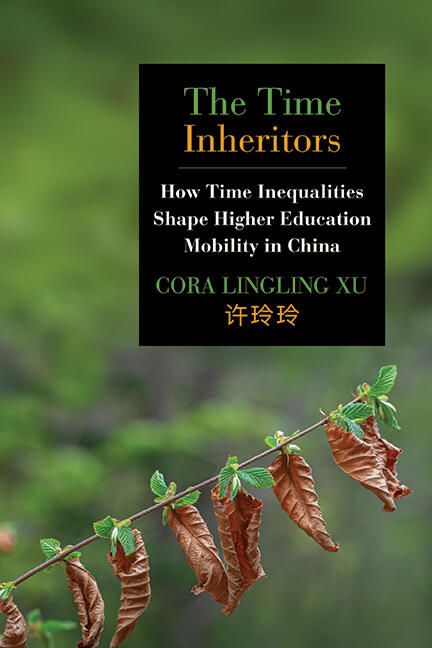
‘The Time Inheritors: How Time Inequalities Shape Higher Education Mobility in China’ by Cora Lingling Xu

We are delighted to share the publication of a new book by our director Dr Cora Lingling Xu. Read this profile (in Chinese) with People Magazine 《人物》杂志 and blog post to learn about the personal stories behind this book.

Please find an abstract of ‘The Time Inheritors‘ and critical reviews below.

If you wish to order this book, you can use SNWS25 to get 30% off when you order from the SUNY Press website.

To learn more about the book talks and interviews visit this page. Listen to the New Books Network’s interview with Cora. 听’时差In-Betweenness’与Cora的对话小宇宙链接). Check out this page for frequently asked questions (e.g. what you should do if you wish to write a book review) about this book. Share your stories of ‘time inheritance’. If you wish to contact Cora about arranging book talks and interviews, complete this contact form.

Abstract

Can a student inherit time? What difference does time make to their educational journeys and outcomes? The Time Inheritors draws on nearly a decade of field research with more than one hundred youth in China to argue that intergenerational transfers of privilege or deprivation are manifested in and through time. Comparing experiences of rural-to-urban, cross-border, and transnational education, Cora Lingling Xu shows how inequalities in time inheritance help drive deeply unequal mobility. With its unique focus on time, nuanced comparative analysis, and sensitive ethnographic engagement, The Time Inheritors opens new avenues for understanding the social mechanisms shaping the future of China and the world.

Critical reviews

“Xu’s conceptually sophisticated monograph reveals how intersectional inequalities are constructed, experienced, and transmitted temporally, with special reference to education. Through the vivid stories of students in mainland China and Hong Kong, and Chinese international students, Xu brings to life different individuals’ ‘time inheritances,’ demonstrating the exciting possibilities time offers as a lens for innovative thinking about inequality. A must-read for sociologists and anthropologists of education, China, and time.” — Rachel Murphy, author of The Children of China’s Great Migration

“Innovative and ambitious, The Time Inheritors proposes a time-centric framework that brings together analyses of social structure, history, individual behavior, and affect. We often feel we are fighting for time. But, as Cora Xu argues in this important study of Chinese students, the scarcity of time is not a given or universal. Different experiences of time result in part from the varying amounts of time we inherit from the previous generation. Time inheritance is therefore critical to the reproduction of social inequality.” — Biao Xiang, coauthor of Self as Method: Thinking through China and the World

“Cora Lingling Xu offers a groundbreaking analysis of educational inequality and social mobility in contemporary China. Xu centers the voices of marginalized students throughout, providing poignant insights into their lived experiences of rural poverty, urban precarity, and educational alienation. At the same time, Xu’s comparative scope reveals how even seemingly privileged groups can be constrained by the temporal logics of social reproduction. The Time Inheritors is a must-read for scholars, educators, and policymakers concerned with educational equity and social justice. Xu’s lucid prose and engaging case studies make the book accessible to a wide audience while her cutting-edge theoretical framework and methodological rigor set a new standard for research on education and inequality.” — Chris R. Glass, coeditor of Critical Perspectives on Equity and Social Mobility in Study Abroad: Interrogating Issues of Unequal Access and Outcomes

“By centering the temporal dimension of who is advantaged or disadvantaged, how, why, and with what consequences, The Time Inheritors takes a unique and powerful approach. Not only does the book contribute theoretically and empirically to our understanding of class inequalities but it also resonates deeply. The inclusion of Chinese translations and characters will give Chinese readers a rich, nuanced cultural appreciation of her findings.” — Dan Cui, author of Identity and Belonging among Chinese Canadian Youth: Racialized Habitus in School, Family, and Media

“An extremely well-written, theoretically informed, and compelling volume that represents a major contribution to the study of education, migration, and social inequality in China and beyond. The Time Inheritors proposes a bold and innovative framework—that of time inheritance—to open the black box of social inequality’s temporal dimension. Whereas the relatively privileged classes inherit temporal wealth and strategies that enable them to bank and save time, facilitating their mobility, the time poor lack this inheritance, forcing them into a vicious cycle of wasting time and paying back temporal debts. Drawing from a rich palette of vivid and intimate longitudinal case studies, The Time Inheritors unpacks the complex intersections between familial, national, and global time inequalities.” — Zachary M. Howlett, author of Meritocracy and Its Discontents: Anxiety and the National College Entrance Exam in China

Release Dates

Hardcover: 1st April 2025

Paperback: 1st October 2025
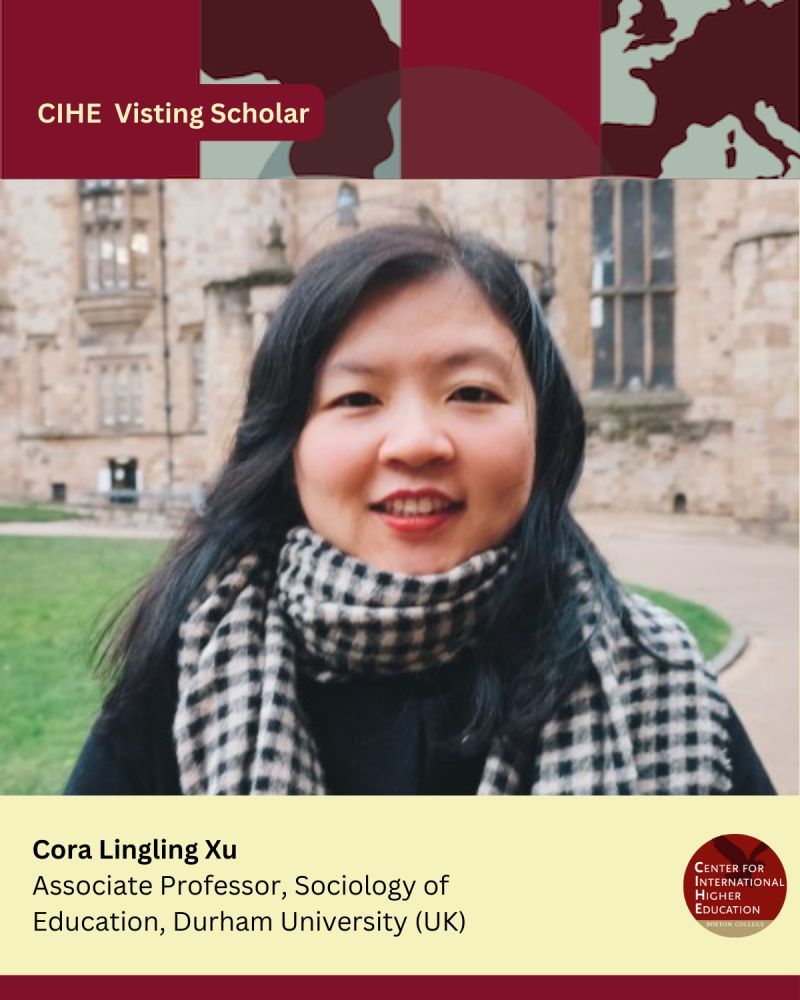
Call for Papers-Special Issue/Section: Between Inclusion and Exclusion in Migrant Education

This special issue draws the attention to the realities of educating migrant children within different school systems around the world, focusing on the interplay of inclusionary and exclusionary practices, as well as the many in-between positions and the situational differences and processes that have emerged in education settings. Across diverse contexts, the positions and experiences of migrant students reveal a complex landscape shaped by national policies, local initiatives and practices, and institutional pressures. Schools often struggle to balance the value placed on multilingualism and cultural diversity up against the practical challenges of everyday life. In many cases, migrant children’s diverse cultural and linguistic assets are overshadowed by their perceived deficits, such as a lack of proficiency in the host country’s language. This disconnect highlights a broader issue where educational policies and practices may unintentionally further exclusion rather than inclusion.

Centralized educational frameworks and local adaptations and practices both play crucial roles in shaping migrant students’ experiences. While some systems and actors strive to tailor support to individual needs, others may default to standardized approaches that render irrelevant the diversity of student backgrounds. As a result, the extent of inclusionary practices can differ significantly based on local discretion and institutional priorities. Additionally, the readiness and competence of

educators to engage with migrant students, particularly those with refugee backgrounds, impact educational integration. Any gaps between formal training and real-world experiences of teachers underscore the need for better professional development and support structures.

The proposed special issue aims to shed light on these dynamics, offering insights into how actors in educational systems can better navigate the tension between inclusion and exclusion, and ultimately improve the educational experiences of migrant children.

We invite scholars from diverse disciplinary backgrounds to contribute papers that pertain to the scope described above. As we already have a core of articles from Europe, we are especially interested in attracting authors writing about settings in other parts of the world. We welcome empirical, policy and theoretical contributions. The final papers should not exceed 8000 words including abstract and references.

In spring/early summer 2025, we plan to hold a one or two day workshop with selected Authors to enable and benefit from collegial feedback on the proposed papers, which by the time of the workshop would be strong drafts, to be submitted as final versions around July/August 2025. The workshop will be held in-person in Poznań (Poland) and on-line, to allow wider participation. The workshop organizers will cover the cost of accommodation and meals, but we will ask participants to cover their travel costs. Please send us the working title of your paper along with an abstract of 250- 300 words by Friday, 28 of February 2025, to Katarzyna Byłów, PhD: katarzyna.bylow@amu.edu.pl.

Guest editors:

Katarzyna Byłów
Center for Migration Studies (CeBaM)
Adam Mickiewicz University in Poznań, Poland e-mail: katarzyna.bylow@amu.edu.pl

Marie Louise Seeberg
Department for Childhood, Family and Child Welfare research NOVA, Oslo Metropolitan University (OsloMet)

Managing Editor: Tong Meng

Call for Papers: Online Seminar “Chinese Educational Mobilities in Europe and Beyond”

Organizers: Sofia Gaspar (CIES-Iscte, Portugal), Fanni Beck (CEU, Hungary)
Date: 3rd February 2023 (Friday) 
Format: Online

Abstract: International student migration has been of scholarly interest for decades. However, most attention has been given to tertiary education, and educational mobility in the pre-university stage (between 5 and 16 years) has been neglected, despite its importance. Primary and secondary educational mobilities differ qualitatively from international student migration in two important regards: first, in these cases, it is (more obviously) the parent, who makes the decision to migrate, decides where to migrate and until when. And secondly, in the vast majority of cases at least one parent accompanies the child on the migratory journey, coupling the educational rationale with other concerns like his or her own employment and or investment opportunities. In the past decade, educational migration of middle-class Chinese families is becoming increasingly visible in Europe, an emerging destination following other more established educational locations in Asia (Singapore and Hong Kong), and the Anglophone world (US, UK, Canada, Australia). This results in important educational, social, economic, and political ramifications in sending and receiving states facilitating and facilitated by policies and mobility regimes across countries. Recent research has highlighted that motivations to move for primary and secondary education are related to a better quality of lifestyle, an escape from pollution and the rat-race of Chinese mega cities, and the desire for a less competitive and less commodified educational and social environment for children as well as for freedom.

The Seminar “Chinese Educational Mobilities in Europe and Beyond”, on the scope of WG5 Chinese migration of CHERN Cost Action, intends to explore and analyse this topic, with the contribution of several scholars who have been dedicated to understanding this phenomenon. As such, we invite scholars to send their proposal on one of the following topics (but not limited to):

I. China

– Chinese educational system and the desire for overseas education
– Preparing for overseas studies in China: transnational educational industry at home

– “Happy education”: defining childhood happiness, successful childhood, and the articulation of their reconciliation

II. Comparative analysis of educational destinations: motivations, regimes, and integration

– Socio-historical dynamics of Chinese educational migration to Europe and beyond – New trends in Chinese educational migration to Europe and beyond

– Comparative analysis of educational migration destinations across countries and continents

– Migration agencies and education migration to Europe and beyond
– Complexity of educational mobility regimes between China and Europe

III. Family

– Chinese families’ motivations to move abroad

– The role of migrant parents in children’s education

– Types of family arrangements in educational migration

– Educational integration of Chinese students and their parents in European schools

– Negotiating “childhood happiness” and success in the migratory environment, anticipating the future

***

Proposals should be sent until 20th November 2022 to the organizers (Sofia Gaspar, sofia.gaspar@iscte-iul.pt and Fanni Beck, Beck_Fanni@phd.ceu.edu ), and they need to include a title, abstract (250 words), and 4 keywords.

The papers will be included as part of a Special Issue to be published on a leading English peer-reviewed a journal.

Managing editor: Lisa (Zhiyun Bian)

The Foreign Bully, the Guest, and the Low-income Knowledge Worker: Performing Multiple Versions of Whiteness in China

Research highlighted:

Lan, S. (2021). The foreign bully, the guest, and the low-income knowledge worker: Performing multiple versions of whiteness in China. Journal of Ethnic and Migration Studies.

Dr Shanshan Lan, University of Amsterdam

With the rise of China as the world’s second largest economy, more and more white Westerners are moving to China to pursue better job or business opportunities. In addition to the so-called transnational elites, there is an increasing number of middle-stratum white migrants who work as English teachers, self-initiated entrepreneurs, locally hired staff in transnational companies, lecturers in Chinese universities, and artists or creative workers in China’s media and cultural sectors. Unlike the transnational elites who usually have limited social interactions with local Chinese (Yeo and Willis 2005), this new group often depends on professional and social networks with local Chinese to consolidate their business or career opportunities. Scholars have noted the decline of social privileges associated with white skin in many Asian societies (P.C. Lan 2011; Lundström 2014; Maher and Lafferty 2014). The diversification of the white population in China matches the expansion of job markets for “foreigners” from coastal areas to smaller cities in the interior of the country. Due to the recent tightening in immigration controls and the rising tides of popular nationalism in Chinese society, the lived experiences of non-managerial and non-elite white migrants are increasingly marked by considerable tensions between privileges and precariousness (Farrer 2019; S. Lan 2021; Lehmann 2014; Leonard 2019; Stanley 2013).  However, little has been written on how different groups of white migrants make sense of and try to cope with this daily experience of precariousness.

       This paper focuses on two research questions: What are the opportunities and challenges faced by white migrants in different fields of employment and different geographical locations under the evolving nature of multiple Chinese gazes? How do various groups of white migrants engage with, negotiate, or resist the Chinese gazes through quotidian racialized performances? Existing literature on international migrants in China mainly focuses on black Africans in Guangzhou (S. Lan 2017; Bodomo 2012; Haugen 2012). The relative absence of whites in migration studies literature points to the racialization of “migrant” as a category reserved mainly for non-white people (Lundström 2017). This research denaturalizes whiteness as an invisible norm by rethinking it in a context of international labor migration and cross-cultural interaction. The paper attends to social stratification within the white population in China by moving beyond the binary between transnational corporate elites, who are often considered as privileged migrants (Camenisch and Suter 2019; Farrer 2019), and foreign English teachers, who are stigmatized as occupying a lower status within the expatriate community (Leonard 2019; Stanley 2013). Instead, it focuses on a group of middling migrants (Lehman 2014), namely self-initiated migrants who are neither recruited by transnational companies nor by talent schemes of Chinese universities, nor by commercialized brokers (as is the case of many foreign English teachers). I argue that although these white migrants have little control of the multiple and contradictory ways that they are racialized in Chinese society, they still demonstrate a certain degree of agency in manipulating the Chinese gazes for their benefit through strategic performances of different versions of whiteness. In this vein, the paper highlights the situational nature of whiteness, which is mediated by nationality, gender, class, Chinese language skills, and length of stay in China.

Author Bio

Shanshan Lan is Associate Professor in the Department of Anthropology at the University of Amsterdam and a member of the Moving Matters research group. She received her Ph. D. in Cultural Anthropology from the University of Illinois, Urbana-Champaign. She had worked as a Mellon Postdoctoral Fellow at Northwestern University and Connecticut College in the United States. Before joining the University of Amsterdam, she was a Research Assistant Professor in the David Lam Institute for East-West Studies, Hong Kong Baptist University. Lan is the Principal Investigator of the ERC project “The reconfiguration of whiteness in China: Privileges, precariousness, and racialized performances” (CHINAWHITE, 2019-2024). Funded by the European Research Council, this project examines how the western notion of whiteness is dis-assembled and re-assembled in the new historical context of China’s rise as a global superpower.