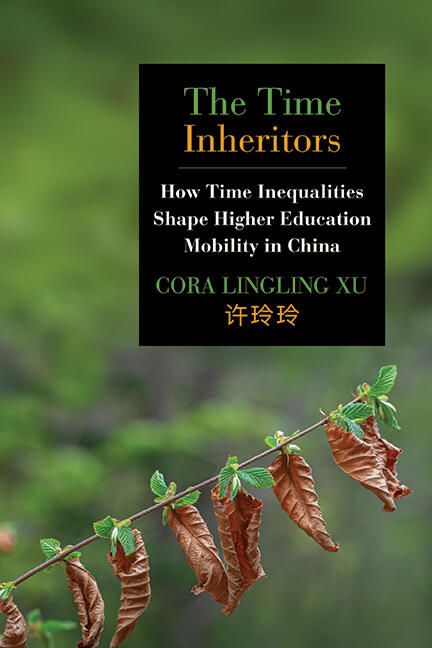
‘The Time Inheritors: How Time Inequalities Shape Higher Education Mobility in China’ by Cora Lingling Xu

We are delighted to share the publication of a new book by our director Dr Cora Lingling Xu. Read this profile (in Chinese) with People Magazine 《人物》杂志 and blog post to learn about the personal stories behind this book.

Please find an abstract of ‘The Time Inheritors‘ and critical reviews below.

If you wish to order this book, you can use SNWS25 to get 30% off when you order from the SUNY Press website.

To learn more about the book talks and interviews visit this page. Listen to the New Books Network’s interview with Cora. 听’时差In-Betweenness’与Cora的对话小宇宙链接). Check out this page for frequently asked questions (e.g. what you should do if you wish to write a book review) about this book. Share your stories of ‘time inheritance’. If you wish to contact Cora about arranging book talks and interviews, complete this contact form.

Abstract

Can a student inherit time? What difference does time make to their educational journeys and outcomes? The Time Inheritors draws on nearly a decade of field research with more than one hundred youth in China to argue that intergenerational transfers of privilege or deprivation are manifested in and through time. Comparing experiences of rural-to-urban, cross-border, and transnational education, Cora Lingling Xu shows how inequalities in time inheritance help drive deeply unequal mobility. With its unique focus on time, nuanced comparative analysis, and sensitive ethnographic engagement, The Time Inheritors opens new avenues for understanding the social mechanisms shaping the future of China and the world.

Critical reviews

“Xu’s conceptually sophisticated monograph reveals how intersectional inequalities are constructed, experienced, and transmitted temporally, with special reference to education. Through the vivid stories of students in mainland China and Hong Kong, and Chinese international students, Xu brings to life different individuals’ ‘time inheritances,’ demonstrating the exciting possibilities time offers as a lens for innovative thinking about inequality. A must-read for sociologists and anthropologists of education, China, and time.” — Rachel Murphy, author of The Children of China’s Great Migration

“Innovative and ambitious, The Time Inheritors proposes a time-centric framework that brings together analyses of social structure, history, individual behavior, and affect. We often feel we are fighting for time. But, as Cora Xu argues in this important study of Chinese students, the scarcity of time is not a given or universal. Different experiences of time result in part from the varying amounts of time we inherit from the previous generation. Time inheritance is therefore critical to the reproduction of social inequality.” — Biao Xiang, coauthor of Self as Method: Thinking through China and the World

“Cora Lingling Xu offers a groundbreaking analysis of educational inequality and social mobility in contemporary China. Xu centers the voices of marginalized students throughout, providing poignant insights into their lived experiences of rural poverty, urban precarity, and educational alienation. At the same time, Xu’s comparative scope reveals how even seemingly privileged groups can be constrained by the temporal logics of social reproduction. The Time Inheritors is a must-read for scholars, educators, and policymakers concerned with educational equity and social justice. Xu’s lucid prose and engaging case studies make the book accessible to a wide audience while her cutting-edge theoretical framework and methodological rigor set a new standard for research on education and inequality.” — Chris R. Glass, coeditor of Critical Perspectives on Equity and Social Mobility in Study Abroad: Interrogating Issues of Unequal Access and Outcomes

“By centering the temporal dimension of who is advantaged or disadvantaged, how, why, and with what consequences, The Time Inheritors takes a unique and powerful approach. Not only does the book contribute theoretically and empirically to our understanding of class inequalities but it also resonates deeply. The inclusion of Chinese translations and characters will give Chinese readers a rich, nuanced cultural appreciation of her findings.” — Dan Cui, author of Identity and Belonging among Chinese Canadian Youth: Racialized Habitus in School, Family, and Media

“An extremely well-written, theoretically informed, and compelling volume that represents a major contribution to the study of education, migration, and social inequality in China and beyond. The Time Inheritors proposes a bold and innovative framework—that of time inheritance—to open the black box of social inequality’s temporal dimension. Whereas the relatively privileged classes inherit temporal wealth and strategies that enable them to bank and save time, facilitating their mobility, the time poor lack this inheritance, forcing them into a vicious cycle of wasting time and paying back temporal debts. Drawing from a rich palette of vivid and intimate longitudinal case studies, The Time Inheritors unpacks the complex intersections between familial, national, and global time inequalities.” — Zachary M. Howlett, author of Meritocracy and Its Discontents: Anxiety and the National College Entrance Exam in China

Release Dates

Hardcover: 1st April 2025

Paperback: 1st October 2025
Call for abstracts – Fostering short-term international student mobility: perspectives on regional and national schemes across the world

Edited by Rachel Brooks (University of Oxford) and
Johanna Waters (University College London)

We welcome abstracts for an edited collection on national and regional schemes intended to foster short-term international mobility for higher education students. There are now many schemes that enable students to move abroad for part of their (higher) degree programme – to study, work and/or volunteer. Examples include Mobility+ (Taiwan); KMove (Korea); Mevlana (Turkey); New Colombo Plan (Australia); Erasmus+ (Europe); Turing Scheme (UK); Taith (Wales); Global Undergraduate Study Abroad Programme (US); Semester
Abroad Programme (India); and NordPlus (Nordic countries). Nevertheless, to date, the literature in this area has tended to focus on single schemes only, and those that are run from countries in the Global North. In our edited collection, we hope to bring studies from a wide variety of national and regional contexts into dialogue, highlighting points of connection and divergence, and showing how they relate to broader debates within the fields of education, sociology,
geography, social policy and youth studies (for example, about class (re)production, youth mobilities, education systems and social change, knowledge economies, cosmopolitanism, transnational networks and different aspects of globalisation).

Abstracts are welcome on any theme including, but not confined to, the following:

  • The aims and objectives of the scheme(s), and how these are situated within wider national/regional contexts
  • Responses to the scheme(s) from higher education institutions and other relevant social actors
  • The characteristics of participating students (and particularly social identity markers) and the implications of these
  • The experiences of participating students
  • The impact of the scheme(s) on, e.g., students’ identity formation, academic performance, employment outcomes

Contributions can be theoretical or empirical, and we have no preference for any particular methodology. However, all abstracts should make clear the evidence base and theoretical framework(s) upon which the proposed chapter will draw, and the main arguments that will be advanced. We do not necessarily expect contributions to focus on more than one scheme (although they could); we anticipate using the book’s introduction and conclusion to make the comparisons and connections. Please submit your abstract of around 500 words to Rachel Brooks by 30 November 2024 (rachel.brooks@education.ox.ac.uk). We will confirm by early January 2025 whether we will be including your abstract in our proposal. Our intention is then to submit the proposal to an appropriate publisher (e.g. Routledge or Policy Press) by early February. If we secure a contract, we are likely to need full chapter drafts (of around 8000 words) by October 2025.

Managing Editor: Tong Meng

What Has COVID-19 Taught Us: Advancing Chinese International Student-Related Research, Policies, and Practices Through Critical Race Perspectives

Research Highlighted: 

Yu, J. (2023b). What Has COVID-19 Taught Us: Advancing Chinese International Student-Related Research, Policies, and Practices Through Critical Race Perspectives. Teachers College Record, 125(6), 110-118. https://doi.org/10.1177/01614681231190165

“I’m not excited about ‘going back to normal,’ because normal was the place where all the failures were for the kids I’m concerned about.” ― Gloria Ladson-Billings (December 20, 2020)

As we are ramping up to the return of in-person events in the post-pandemic environment, Gloria Ladson-Billings, a critical race theory scholar, reminds us that the COVID-19 pandemic should be a transformative opportunity that forces us to break with the past and imagine the world anew. For the field of international higher education, this call is right on time. Due to the unprecedented pandemic, international activities, especially cross-border student mobility, have been disproportionately impacted (Mok et al., 2021; Yu, 2021a). As the largest international student group in U.S. higher education, Chinese students have been made particularly vulnerable due to the resurgence of anti-Asian racism and U.S.-China geopolitical tensions. There is therefore a pressing need to make sense of Chinese international students’ perspectives and experiences around U.S. higher education—and in doing so, to highlight the ever-present educational inequalities rooted in academic capitalism, global unevenness, and institutional racism.

This article builds on the results of a critical qualitative research project investigating Chinese international students’ agency, decision-making, and perceptions of race, racism, and power (Yu, 2021a, 2021b, 2022a, 2022b, 2023a, Under Review abc). Drawing from interdisciplinary studies of international education, Asian American studies, sociology, and migration studies, this research project brings critical race perspectives to understanding Chinese students’ transnational mobilities and practices. It aims to unveil global hierarchies and racial inequalities in the field of international education in order to help advance future research and open new paths to practice.

Ideas for Critical Research

The COVID-19 pandemic has taught us that the neoliberal model of international education is falling apart (De Wit, 2020). There is a renewed interest in and urgency for educators, scholars, and practitioners to rethink the field of international higher education through a critical race lens. In considering the theoretical implications of this fact for research, ethical and political dimensions should be centrally incorporated to ponder the issues of rights, responsibility, justice, and equity within international higher education. In recent years, more and more scholars have reset the research agenda and have started to critically reflect on international student mobility (Stein, 2017; Yang, 2020) and academic knowledge production (Kubota, 2020; Shi-xu, 2014); however, theoretically sophisticated critical research on international students’ lived experiences with racism and racialization is still urgently needed. In response to this theoretical challenge, I put forward an innovative framework, Global Asian Critical Race Theory or GlobalAsianCrit (Yu, Under Reviewa), as a contribution that combines the key tenets in Asian Critical Race Theory (Iftikar & Museus, 2018) and Global Critical Race Theory (Christian, 2019). In this creative framework that I proposed, I incorporated both a racial/ethnic and a critical global view into CRT to help understand how global white supremacy has shaped the racial realities of Asian individuals and how racial oppression works differently in different geographical contexts.

Ideas for Equity-Driven Policies

The COVID-19 pandemic and the related rise of anti-Asian racism have also revealed that international students of color are excluded from equity and social justice discourses in U.S. higher education. Thus, institutional policies should start by including disaggregated data on international students’ racial, ethnic, and national identities, which enables colleges and universities to acknowledge the heterogeneity within the highly reductive federal category of “nonresident alien” and to understand the diverse nature of these students’ learning experiences. Disaggregating the data and exploring the heterogeneity within this diverse group of students will be helpful for policymakers, institutional leaders, faculty, staff, and administrators to identify the specific needs of these international students and to support their sustained success and development in the U.S.

In addition, despite the fact that diversity and inclusion are continuously advocated in U.S. higher education, international students have been largely absent from debates and discussions of anti-Blackness and anti-Asian sentiment, due to their status as foreign students and temporary residence. Given this history of exclusion and ethnic discrimination, institutional policies should include global perspectives to uphold principles of educational equality and social justice for international students.

Ideas for Inclusive Practices

Finally, I propose three practical strategies for appropriately supporting Chinese international students. First, open discussions of race, racism, and power need to be included in institutions’ orientation sessions for international students. My research (Yu, 2022a) demonstrates that there is a great discrepancy in Chinese students’ understanding of race and racism before and after their migration to the U.S. It is necessary to equip international students with basic racial knowledge, such as how to identify racist comments and where to seek institutional help when discrimination and racial stereotyping occur. Administrators and practitioners can provide much-needed space for open conversations and transparent communications around racialized incidents on campus. Moreover, providing general education courses on the sociohistorical background of race, racism, and free speech in the U.S. can help international students better understand the complex racial reality of U.S. institutions and the wider society.

Secondly, administrators and staff should use an asset-based approach to designing services and workshops for international students on campus. While various activities are designed for international students to quickly adapt to U.S. campus culture, most available programs tend to be based on a deficit mindset of Chinese students or rooted in racialized logic. The asset-based practices that I recommend are intentional ways of acknowledging and leveraging the strengths of international students, including their everyday experiences, knowledge, and cultural practices to serve as resources for teaching and learning. Domestic students should not be excluded from these events and activities, for critical cultural awareness and cross-cultural communicative skills are essential qualities for all students to work with people from linguistically and culturally diverse backgrounds in future various professional situations.

Thirdly, colleges and universities should structurally facilitate international students’ engagement with domestic students and wider local communities. My research (Yu, 2022b) shows that Chinese students may express prejudicial attitudes toward other people of color, especially African Americans. More interracial contact can help both international and domestic students disrupt their stereotypes about one another. Hence, this form of support for international students can foster their sense of belonging or cohesiveness in a specific campus organization or activity. U.S. institutions should take shared responsibility to reinvest some of the income generated by international student tuition toward creating and supporting inclusive student clubs and extracurricular activities.

Conclusion

It is clear that Chinese international students are “raced” in the U.S., so instead of demanding that students conform to the oppressive social norms and meet the academic expectations of the (white) host learning environment, social justice efforts should be made to interrupt hegemonic thinking and complicate notions of race and racism by looking beyond the limited understanding of these concepts within U.S. borders. As Gloria Ladson-Billings reminded us, the COVID-19 pandemic can be a portal, a gateway to imagine a new world for K-12 schools as well as international higher education. 

References:

Christian, M. (2019). A global critical race and racism framework: Racial entanglements and deep and malleable whiteness. Sociology of Race and Ethnicity, 5(2), 169–185.

De Wit, H (2020). Internationalization of higher education: The need for a more ethical and qualitative approach. Journal of International Students 10(1), i–iv.

Iftikar, J. S., & Museus, S. D. (2018). On the utility of Asian critical (AsianCrit) theory in the field of education. International Journal of Qualitative Studies in Education, 31(10), 935-949.

Mok, K. H., Xiong, W., Ke, G., & Cheung, J. O. W. (2021). Impact of COVID-19 pandemic on international higher education and student mobility: Students perspectives from mainland China and Hong Kong. International Journal of Education Research, 105, 101718.

Stein, S. (2017). Internationalization for an uncertain future: Tensions, paradoxes, and possibilities. Review of Higher Education, 41(1), 3–32.

Yang, P. (2020). Toward a framework for (re)thinking the ethics and politics of international student mobility. Journal of Studies in International Education, 24(5), 518–534.

Yu, J. (2021a). Lost in lockdown? The impact of COVID-19 on Chinese international student mobility in the US. Journal of International Students, 11(S2), 1-18.

Yu, J. (2021b). Caught in the middle? Chinese international students’ self-formation amid politics and pandemic. International Journal of Chinese Education, 10(3), 1-15.

Yu, J. (2022a). The racial learning of Chinese international students in the US context: A transnational perspective. Race, Ethnicity and Education. Advance Online Publication https:// doi.org/10.1080/13613324.2022.2106878

Yu, J. (2022b). “I don’t think it can solve any problems”: Chinese international students’ perceptions of racial justice movements during COVID-19. Journal of Diversity in Higher Education. Advance Online Publication https://doi.org/10.1037/dhe0000457

Yu, J. (2023a). Understanding Chinese international students in the U.S. in times of the COVID-19 crisis: From a Chinese discourse studies perspective. Journal of Multicultural Discourses. Advance Online Publication https://doi.org/10.1080/17447143.2023.2214538

Yu, J. (Under Reviewa). Exploring Chinese international students’ experiences in times of crisis through Global Asian Critical Race Theory.

Yu, J. (Under Reviewb). “Asians are at the bottom of the society”: Chinese international students’ perspectives on Asian Americans in the U.S. racial hierarchy.

Yu, J. (Under Reviewc). #YouAreWelcomeHere? The two faces of American higher education toward Chinese international students.

Authors’ Bio 

Jing Yu PhD, is an Assistant Professor of International Higher Education in the Department of Educational Leadership and Policy Analysis and a Faculty Affiliate in Asian American Studies at University of Wisconsin-Madison. Her research interests include international student mobility, intersections of race, class, and nationality, and international dimensions of equity, diversity, inclusion, and belonging. Her recent project on Chinese international students’ everyday racism and mental health issues has been successfully funded by the Spencer Foundation’s small research grants. She is on the editorial board of the Journal of Diversity of Higher Education, Journal of College Student Development (Research in Briefs), and Journal of Student Affairs Research and Practice.

Managing Editor: Xin Fan

Transitions across multi-worlds: Experiences of Chinese international doctoral students in STEM fields

Yang, Y., & MacCallum, J. (2022). Transitions across multi-worlds: Experiences of Chinese international doctoral students in STEM fields. Journal of Studies in International Education, 26(5), 535–552. https://doi.org/10.1177/10283153211016266 

Introduction 

Every year Chinese international doctoral students (CIDS) in science, technology, engineering, and mathematics (STEM) make transitions across different worlds in ways that supports achievement in their host community.  

This article reports findings from a longitudinal study investigating holistic experiences of the contemporary generation of STEM CIDS in Australia. Endeavor to reveal both heterogeneity and commonality, this study examined their diverse and challenging experiences to identify factors that facilitate or constrain their successful completion of a PhD abroad. 

The Three-Dimensional Multi-World Conceptual Framework 

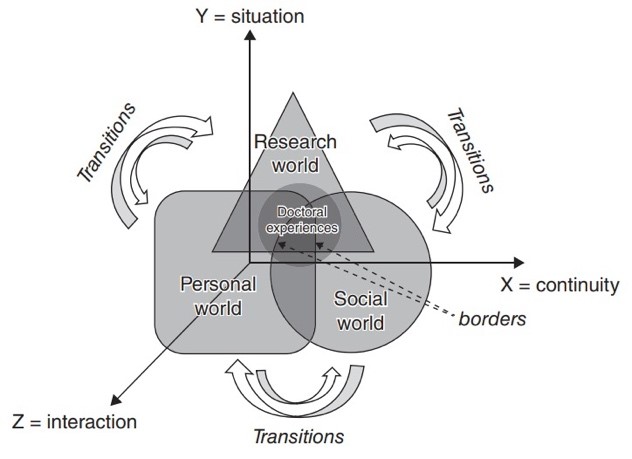
For this study, we developed a conceptual framework to accommodate the features of complexity and to allow a holistic understanding of the nature of doing a PhD abroad. In this framework (Figure 1), first we formed a three-dimensional space to accommodate student experiences. Along the three axles are Continuity, Interaction, and Situation. International doctoral students’ experiences were conceptualized as developmental over time, taking things from the past and modifying the quality of the future; interactive, assigning equal rights to both objective and internal conditions in interactions; and situated within the disciplinary, working, and living contexts. 

Figure 1. The three-dimensional multi-world conceptual framework 

Within this space we established the students’ multi-world model, including students’ research, personal, and social worlds. The three worlds are interconnected and interplay to co-construct study abroad experiences. Between the worlds, there are overlapping areas as experiential interfaces for transitions across each world to occur and lines in-between as borders that may constrain students’ transitions.  

The Project 

The CIDS Study is a narrative inquiry that involved a 4-year longitudinal study to understand Chinese STEM PhD students’ situated, continuous, and interactive experiences. We adopted narrative as a research approach because it incorporates a range of methodological stances and is agentive in demonstrating how individuals attempt to navigate their life, which suited the purpose of the study.  

There were 38 CIDS participants from STEM fields at eight universities in five states of Australia. All participants were interviewed individually or in focus groups, with 17 followed up for a second interview roughly nine months after the first interview and eight followed up for a third interview. Most of these students had completed their PhD by the conclusion of data collection. 

Congruence/Difference and Transitions Across the Worlds 

The six categories of congruence or difference, and corresponding transitions identified through data analysis were used to structure the findings, though we combined the last two categories to highlight the final complications resulting in a doctoral withdrawal. 

Congruent Worlds and Smooth Transitions 

In this pattern (n=9), students reported their supervisory team and other social relationships as congruent based on the match of key expectations, values, and beliefs across their multi-worlds. The borders between their multi-worlds were almost imperceivable so that they could make transitions with ease. These students were generally satisfied with their study abroad experience by achieving academic success and enjoying social life while doing the PhD abroad. However, experiencing congruence and smoothness did not mean these students had not experienced difficulties, stress, highs, and lows in the PhD; rather, it meant immense bilateral or multilateral investment of time, effort, care, and patience in facilitating transitions, particularly at certain critical turning points, to enable students’ achievement and development. 

Different Worlds and Smooth Transitions 

In this second pattern (n=8), regardless of some critical differences in motivations, expectations, values, and beliefs between students’ multi-worlds, they reported easy transitions across and over time. The differences that created borders between the worlds were distinctive based on individual situations. Nevertheless, it was the empathy to accommodate differences and the respect to the existence of differences from the agents of their multi-worlds that enabled their smooth transitions. 

Congruent Worlds and Border Crossings Managed 

In this pattern (n=9), motivations, expectations, values, beliefs, and actions appeared mostly congruent between an individual’s multi-worlds, but this congruence was created with strong evidence of the performance of personal agency, strategies, skills, and initiatives in managing transitions across perceivable borders. Different from the first pattern that congruence was achieved with smooth transitions or the second pattern that difference remained, students of this third group, facilitated with strong and timely supervisory and peer support, managed to create a shared time and space between their multi-worlds. This sustained them through vicissitudes, sometimes crucial moments, in their PhD abroad. 

Different Worlds and Border Crossings Managed 

In this category (n=9), motivations, expectations, values, beliefs, and actions between students’ research, personal, and social worlds had critical differences, which had profound impact and led to conflicting ideas, attitudes, and behaviors that constrained students’ PhD progress. However, in general, the conflicts were able to be put under control, and the transitions were managed to achieve the PhD. Students of this group were agentic to act, persistent to achieve, resilient and strategic in expanding their small research context to a broader scope. 

Different Worlds and Border Crossings Difficult or Resisted 

In both categories (n=2 and n=1), there were some critical differences in motivations, expectations, values, beliefs, and actions across students’ multi-worlds. Differences led to conflicting ideas, attitudes, and behaviors. While some conflicts remained unsolved, diminished motivations, together with poor rapport and escalated complications constrained transitions and limited students’ achievement. In the fifth category, students adapted to the differences and completed the PhD, but negative emotions and limited output, resulted in both leaving the research world. In the sixth category, the student resisted adapting and dropped out of the PhD program. 

Discussion and conclusion 

Drawing on the three-dimensional multi-world framework, this study found that achieving a PhD abroad was challenging for each participant, but it was the way they experienced the transitions across their multi-worlds that created vast differences in their experiences. The six patterns demonstrated a range of experiences, shedding light on how in some cases STEM CIDS achieved their best outcomes and how in some other cases misunderstandings, frustrations, and severe conflicts occurred. 

Besides persistence, resilience, and resources, agency to communicate, termed agentic communication, along with listening in negotiations between students and their supervisors, was key in supporting or undermining the PhD over time. This study highlights the effectiveness of agentic communication in making or breaking the rapport, trust, and respect in the most significant relationship in an individual’s multi-worlds during the PhD abroad. 

This study revealed that culture might too easily become the scapegoat when we interpret miscommunication or under-communication situations. When doing a PhD abroad, the focus of these students was on achieving the degree and establishing their professional identity, rather than social or cultural integration with the host community. The conflicts or factors that constrained students’ transitions across multi-worlds were often related to their doctoral research rather than culture-related issues per se. When the communication about scientific research went smoothly, positive transitions ensued, or the reverse. 

Given this study identified six patterns of PhD abroad experiences, further research could investigate how different experiences influence students’ post-PhD life and career trajectories and how these students contribute to the society, home, host, or elsewhere in the world, in return for their education received abroad. 

Other works related to this project: 

Yang, Y., & MacCallum, J. (2023). Chinese Students and the Experience of International Doctoral Study in STEM: Using a Multi-World Model to Understand Challenges and Success. Routledge. https://doi.org/10.4324/9781003258841 

Yang, Y., & MacCallum, J. (2022). A three-dimensional multi-world framework for examining cross-cultural experiences of international doctoral students. Studies in Continuing Education, 44(3), 493-509 doi:10.1080/0158037X.2021.1890569 

Yang, Y., Volet, S., & Mansfield, C. (2018). Motivations and influences in Chinese international doctoral students’ decision for STEM study abroad. Educational Studies, 44(3), 264-278. doi:10.1080/03055698.2017.1347498 

Authors’ Bio 

Yibo Yang, Associate Professor, PhD, Deputy Dean for the International Organizations and Global Governance, School of International Studies, Harbin Institute of Technology, China. Her current research interests focus on internationalisation in higher education, international organizations, research methodologies, and academic writing.  

Judith MacCallum, Professor Emerita, PhD, College of Health and Education, Murdoch University, Australia. Her research and teaching interests focus on social interaction for learning and development, with emphasis on motivation, mentoring and professional learning.   

Managing Editor: Xin Fan

Mobility Repertoires: How Chinese Overseas Students Overcame Pandemic-Induced Immobility

Liu, Jiaqi M., and Rui Jie Peng. 2023. “Mobility Repertoires: How Chinese Overseas Students Overcame Pandemic-Induced Immobility.” International Migration Review, Online First. https://doi.org/10.1177/01979183231170835.

The COVID-19 pandemic brought the world to a near standstill. The burgeoning field of immobility studies provides a fitting framework to account for this mode of involuntary immobility caused by diminished migration capabilities. But we found that immobility studies often focus on a given (im)mobility status, paying insufficient attention to how people traverse different (im)mobility categories. Moreover, the empirical scope of immobility studies is often confined within sending societies, overlooking migrants who have finished initial emigration but face dwindling capabilities of staying in host countries or returning to their home countries. In this recently published article at International Migration Review, we adopt the immobility lens to systematically analyze how international student mobility (ISM) may be compromised or restored.

Under the influence of the “mobilities paradigm”, ISM studies tend to highlight elements of flux and fluidity that stimulate mobility in global education, including the commercialization of Western universities, the diffusion of neoliberal labor policies, and the brokerage by commercial intermediaries. Yet this mobility-focused ISM literature risks losing sight of international students’ recurrent conditions of immobility, whether desired or involuntary. In this article, we address this deep-seated “mobility bias” in the ISM literature by examining how Chinese students in the United States became immobile during the COVID-19 pandemic and how they utilized varied repertoires to retrieve mobility.

This article pushes pushes ISM studies beyond the prevailing “mobilities paradigm” and refocuses on structural constraints that shape student immobility, especially the oft-neglected role of homeland state policies. ISM policies, as we show, are not only characterized by neoliberalism and de-regulation but can also exert far-reaching immobilizing impacts on international students and guard nation-states’ membership and sovereignty boundaries.

Methods

We conducted a case study of Chinese students in the United States during the COVID-19 pandemic. First, we examine migration policies and public discourses in both China and the United States to highlight the immobilizing mechanisms that shaped student migrants’ perceptions of diminished mobility. Specifically, we extracted and examined over thirty pandemic-related policies and public statements made between January 2020 and May 2022 from eight Chinese and US government agencies, including the Civil Aviation Administration of China, the Chinese Embassy in the United States, the US State Department, and the White House.

Second, we conducted semi-structured interviews between January and February 2022 to further analyze how Chinese students abroad made sense of and responded to mobility transitions. Interviewees were Chinese overseas students who pursued bachelor’s, master’s, or Ph.D. degrees during 2020-2021 in seven public and private universities across the United States. We combined purposive sampling and snowball sampling to recruit in total 20 interviewees distributed relatively evenly across gender, degree levels, and fields of study, and socio-economic statuses.

In data analysis, we used abductive coding methods and developed three levels of codes, including sources of immobility, students’ experiences, and their specific feelings and actions. We found that interviewees tried to overcome immobility by returning to China or staying put in the United States.

Findings

Our findings are twofold. First, during the pandemic, China imposed restrictive travel policies, while the public discourses unfavorably generalized returning overseas students as ungrateful, spoiled, and even contaminated. These dynamics made it extremely difficult for Chinese overseas students to return. Furthermore, US travel and visa policies, especially those targeted at Chinese students suspected of the so-called “espionage activities”, also elevated uncertainties regarding reentering and staying in the United States. The political crossfire amid Sino-US tension, coupled with rising sinophobic violence in the United States, also made Chinese overseas students feel unwelcome in the host society and heightened their immobility restrictions. They experience the dilemma of being unable to return to the homeland and simultaneously stranded in a hostile host society, which pushed this previously highly mobile population into immobility.

Second, drawing on in-depth interviews, we discover that Chinese overseas students deployed four sets of tools – online crowdsourcing, virtual intermediary, temporal adaptation, and institutional cushioning – to reclaim mobility.  They deployed the first two mobility repertoires to navigate China’s opaque, burdensome return procedures by leveraging online social media to crowdsource knowledge and expand social networks to achieve a successful return. The latter two mobility repertoires focused on making cognitive adaptations for career and life plans and using university resources to transform immobility into active staying aimed at gaining legal status to transition into the US labor market and society and achieving long-term mobility in the host society. We thus proposed the concept of “mobility repertoires” to capture student migrants’ agential power in navigating unfavorable (im)mobility shifts and carving out new mobility tactics by mobilizing a plethora of resources, techniques, instruments, and infrastructures.

Author’s bio

Rui Jie Peng, Assistant Professor of Sociology at Lafayette College

Rui Jie Peng is an Assistant Professor of Sociology at Lafayette College, Pennsylvania. Her research interests include migration, labor, gender, race and ethnicity, and political and transnational sociology. Rui Jie’s current book project is an ethnography of the understudied ethnic Qiang women and their labor practices in a migrant-sending community in Sichuan Province, China. This work offers a new perspective on how China’s pursuit of modernization and global competitiveness capitalizes on ethnic women’s gendered labor in marginalized communities, creates and reinforces gendered and ethnicized differences, and entrenches precarity for ethnic migrants in urban labor markets.

Jiaqi Liu, Ph.D. candidate at the University of California San Diego

Jiaqi Liu is an incoming Assistant Professor of Sociology at Singapore Management University and Postdoctoral Associate at Princeton University. His research lies at the intersection of political sociology, international migration, law, human rights, digital technologies, and Global China. With a focus on China and Chinese diasporas, Liu examines how global migration reshapes the state’s political power over its territory and population. His work has received five Best Article Awards or Honorable Mentions from the American Sociological Association sections on International Migration (twice), Political Sociology, and Human Rights. Liu also holds a Juris Doctor degree from the University of Arizona and Master of International Affairs degree from Sciences Po Paris.

Managing Editor: Tong Meng