Gao, H. (2023). Transnational Habitus as a Configuration of Dispositions: Chinese International Students Navigating Online Information. Literacy Research: Theory, Method, and Practice, 23813377231176259.
Introduction
This article is developed from a broader qualitative research project examining the online information-seeking experiences of Chinese international students in the United States. In today’s media-saturated society, the importance of online information literacy has increased exponentially. However, there is a dearth of research on the information literacy practices of international students. International students heavily rely on online information to navigate their studies and life as they adapt to new sociocultural, linguistic, and educational contexts in a foreign country (Click et al., 2017; Sin, 2015). Furthermore, they encounter a new information ecosystem that spans continents, cultures, and languages and must learn to navigate it (Chang et al., 2020). Therefore, it is crucial to explore the impact of the broad, bilateral, varied, and imbalanced social networks’ linkage with multiple nation-states and identities on how they navigate online information in the host country.
This study investigates the online information literacy practices of Chinese international students enrolled in higher education institutions in the United States. Currently, international students from China account for 35% of all international students in the United States (IIE, 2022). They are non-native English speakers and come from an online information environment that differs from the open internet in the United States (Freedom House, 2022). This research focuses on graduate-level students because Chinese graduate students generally possess more established Chinese worldviews, values, and habits of mind compared to their undergraduate counterparts (Wang & Freed, 2021). The study aims to understand the impact of transnationalism on these students’ information-seeking habits when searching for various online information.
Theoretical Framework
This study adopts a transnationalism framework, which refers to the complex process by which individuals maintain multiple social networks and connections to both their home and host communities (Levitt, 2009; Levitt & Schiller, 2004). Carlson and Schneickert (2021) theorized transnational habitus as a configuration of dispositions, suggesting that transnationalism may impact the habitual configuration of dispositions differently. This implies that there may be disparities between dispositions to believe and dispositions to act, creating a gap between beliefs and the actual possibilities of action. Furthermore, some dispositions may be more transnationalized than others. These ideas provide a valuable perspective for analyzing the information-seeking habits of international students, which can manifest in various forms, occur to different degrees, and are often subject to contestation, despite frequently being uniform and unidirectional in purpose.
Methods
This study employed purposeful sampling techniques (Merriam & Tisdell, 2016) to select six Chinese graduate students from a large public university in the Southeastern United States. Phenomenological interviewing (Seidman, 2006) was utilized, conducting a three-interview series with each participant. Each interview lasted approximately 90 minutes and employed an open-ended approach. Participants were also requested to maintain information-seeking diaries following their second interview. They recorded one online search incident per week for a consecutive four-week period. Additionally, a 90-minute focus group discussion was facilitated to further explore ideas and issues that may not have emerged in the individual interviews. Concurrent with data collection, an ongoing analysis of the participants’ online information seeking was conducted. Following the collection of all data, open and axial coding techniques (Merriam & Tisdell, 2016) were applied to the interviews to identify recurring patterns. These patterns were later corroborated, extended, or problematized with the data from the diaries and focus group.
Findings
The findings of the study shed light on the complex, dynamic, and adaptable online literacy practices of Chinese international students. It also demonstrates that the transnational habitus of students in information seeking is not a fixed construct, but rather emerges as a configuration of dispositions. Within this configuration, distinctions and gaps exist between dispositions to believe (beliefs or perceptions about information) and dispositions to act (actual actions in information seeking). Three forms of dualistic dispositions have been identified: Chinese international students’ transnational dispositions are strengthened in their academic information seeking, divided in their search for everyday life information, and activated in their consumption of news.
Strengthened Dispositions in Academic Information Seeking
During their studies in an English-dominated U.S. institution, participants embraced transnational information literacy practices by utilizing academic information from both U.S. and Chinese online environments. They demonstrated a flexible ability to navigate linguistic and digital information boundaries, leveraging the strengths of both information repositories to achieve their learning goals. Participants engaged in translanguaging (García & Li, 2014) by seamlessly alternating between named languages and even strategically creating bilingual keywords to optimize their search results. Furthermore, their transnational dispositions towards academic information seeking encompassed both dispositions to believe and dispositions to act. In reinforcing their existing dispositions to believe, they regarded academic information found on English language online platforms as more professional, authentic, credible, and rigorous. Moreover, their dispositions to act were strengthened as they readily accessed and more frequently utilized U.S.-based information for academic purposes.
Divided Dispositions in Everyday Information Seeking
While cultivating dispositions to believe in the authenticity of U.S. online information and a desire to assimilate into this dominant knowledge system, the participants’ dispositions to act did not always align with their belief in everyday information seeking. Instead, they frequently continued to rely on community-based information sources found on Chinese social media platforms. The Chinese international students demonstrated dispositions of belief, a cosmopolitan outlook, and transnational identifications, to use U.S. social media. Nonetheless, they exhibited limited dispositions to act, primarily relying on community-based platforms for obtaining identity-related information. These practices highlight the significance of authenticity characterized by relatability and similarity. Moreover, they suggest that students do not necessarily need to fully assimilate into another information culture in order to effectively navigate transnational contexts.
Activated Dispositions in Transnational News Consumption
Despite studying in the United States, all students in this study maintained their consumption of online news from Chinese media sources, considering them sufficient for staying informed about events in China and worldwide. However, their transnational dispositions to believe, which were nurtured both before and after studying abroad, allowed for the emergence of transnational dispositions to act in news consumption when desired. The students’ less transnationalized dispositions to act toward news consumption were influenced not only by their individual dispositions but also by external factors within the Western media environment. Some students expressed their reluctance to engage with Western news reports that portrayed China critically or had strong anti-China sentiments, especially when such portrayals contradicted their personal experiences or the information received from their families in China. Nevertheless, given suitable circumstances, students’ dispositions to act in transnational news consumption can be activated, as their belief in the importance of open-mindedness continues to shape their attitudes, values, and perspectives.
Discussion and conclusion
This study makes a significant contribution to the field of information literacy by adopting a transnational lens to investigate the online information literacy practices of Chinese international students in U.S. higher education institutions. By challenging assumptions that international students readily assimilate into the host country’s online resources or develop a singular transnational habitus, this study offers a more nuanced understanding of their diverse information needs and practices. The findings suggest that information literacy education that recognizes and utilizes students’ linguistic and transnational resources can be highly relevant to their experiences and beneficial to their academic success abroad. Additionally, by acknowledging and appreciating international students’ transnational mindsets and multilingual literacies as valuable assets, U.S. academic institutions can promote diversity, inclusion, and intercultural understanding, ultimately contributing to the development of globally minded individuals who are well-equipped to navigate today’s interconnected information landscape.
References
Carlson, S., & Schneickert, C. (2021). Habitus in the context of transnationalization: From ‘transnational habitus’ to a configuration of dispositions and fields. The Sociological Review, 00380261211021778. https://doi.org/https://doi.org/10.1177/00380261211021778
Chang, S., Gomes, C., & McKay, D. (2020). The digital information ecology of international students: Understanding the complexity of communication. In S. Chang & C. Gomes (Eds.), Digital Experiences of International Students: Challenging Assumptions and Rethinking Engagement (pp. 3-24). Routledge. https://doi.org/https://doi.org/10.4324/9780429276088
Click, A. B., Wiley, C. W., & Houlihan, M. (2017). The internationalization of the academic library: a systematic review of 25 years of literature on international students. College & Research Libraries, 78(3), 328. https://doi.org/https://doi.org/10.5860/crl.78.3.328
Freedom House. (2022). Freedom on the Net. https://freedomhouse.org/country/china/freedom-world/2022
García, O., & Li, W. (2014). Language, bilingualism and education. In Translanguaging: Language, bilingualism and education (pp. 46-62). Palgrave Macmillan.
IIE. (2022). International students. https://opendoorsdata.org/annual-release/international-students/
Levitt, P. (2009). Roots and Routes: Understanding the Lives of the Second Generation Transnationally. Journal of Ethnic and Migration Studies, 35(7), 1225-1242. https://doi.org/10.1080/13691830903006309
Levitt, P., & Schiller, N. G. (2004). Conceptualizing Simultaneity: A Transnational Social Field Perspective on Society. The international Migration Review, 38(3), 1002-1039. https://doi.org/10.1111/j.1747-7379.2004.tb00227.x
Merriam, S., & Tisdell, E. (2016). Qualitative research: A guide to design and implementation (Fourth). John Wiley & Sons.
Seidman, I. (2006). Interviewing as qualitative research: A guide for researchers in education and the social sciences. Teachers College Press.
Sin, S.-C. J. (2015). Demographic differences in international students’ information source uses and everyday information seeking challenges. The Journal of Academic Librarianship, 41(4), 466-474. https://doi.org/https://doi.org/10.1016/j.acalib.2015.04.003
Wang, X., & Freed, R. (2021). A Bourdieusian Analysis of the Sociocultural Capital of Chinese International Graduate Students in the United States. Journal of International Students, 11(1), 41-59. https://doi.org/10.32674/jis.v11i1.952
Author Bio
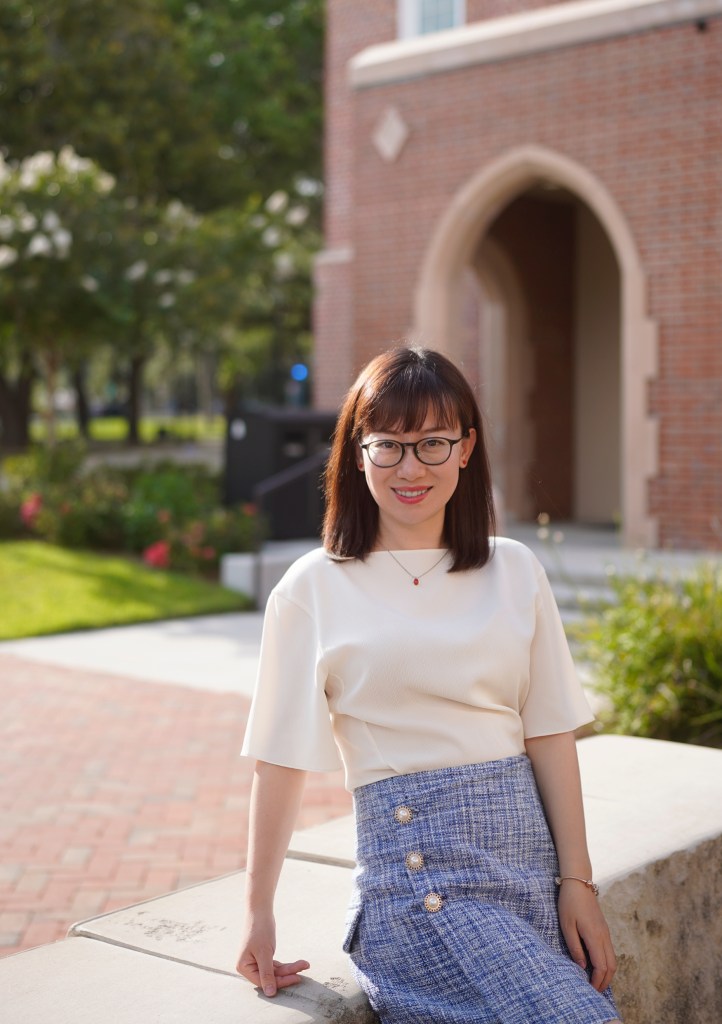
Huan Gao is an Assistant Professor in Education at the University of Memphis, USA. Her research focuses on the intersection of digital and information literacies, transnational migration, and multilingual education. Currently, Huan’s work delves into the impact of transnationalism on Chinese international students’ online information-seeking practices. Her research has been recognized with the Student Outstanding Research Award at the Literacy Research Association and she has been honored with the National Council of Teachers of English Geneva Smitherman Cultural Diversity Grant. Huan holds a Ph.D. degree from the University of Florida and a master’s degree from the Hong Kong Polytechnic University.
Managing Editor: Tong Meng

 Network for Research into Chinese Education Mobilities (NRCEM)