What Value is There in UK Transnational Education? Contextualising Individual Understandings of Educational Worth and Possibilities in Malaysia and Hong Kong

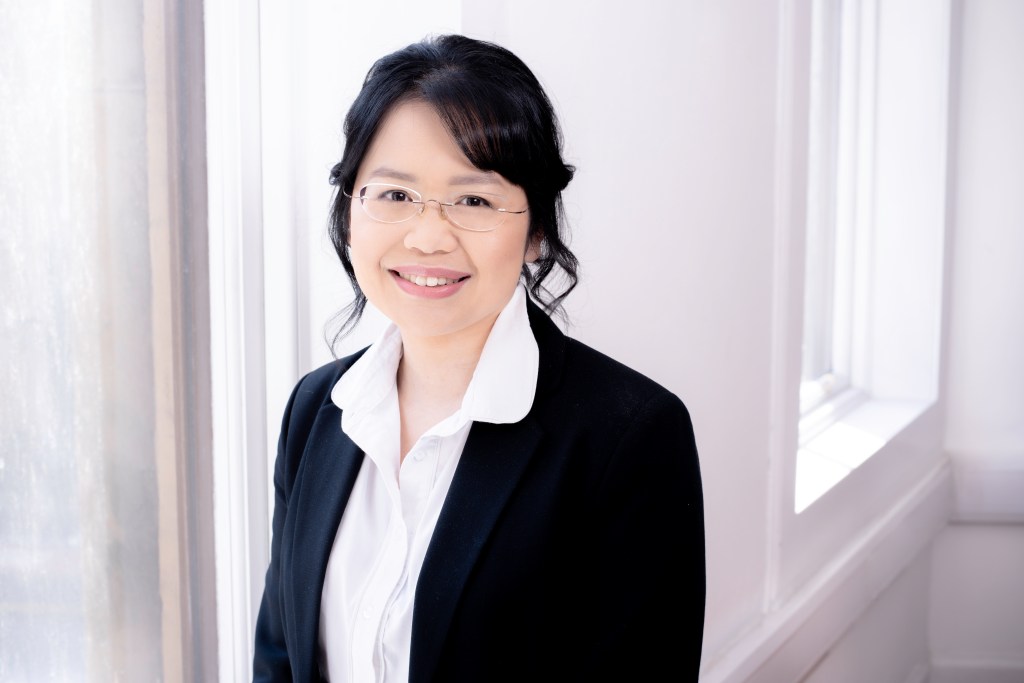
Dr I Lin Sin, Independent Scholar

Research Highlighted:

Sin, I.L., Leung, M.W.H., & Waters, J. (2019) Degrees of value: Comparing the contextual complexities of UK transnational education in Malaysia and Hong Kong. Compare: A Journal of Comparative and International Education, 49(1), 132-148. https://doi.org/10.1080/03057925.2017.1390663

The rapid expansion of transnational education over the last two decades has seen an unprecedented growth of predominantly Western foreign universities delivering education in Asia. The United Kingdom (UK), the leading exporter of transnational education (TNE), has more tertiary-level international students pursuing a UK qualification overseas than within the UK, one in two of whom is based in Asia (Wake, 2019). The value of transnational education to these students (and graduates) is often overlooked. It is overshadowed by UK and wider literature which give more focus to the macro-economic value of TNE (see O’Mahony, 2014) and related marketing, development, management and delivery issues (e.g. Wilkins & Huisman 2019; Cai & Hall, 2016; Healey, 2016). Together with Maggi Leung and Johanna Waters, I set out to highlight the value of TNE to international students and graduates, particularly in Malaysia and Hong Kong where we had conducted our separate research exploring their lived experiences (e.g. Sin, 2013; Waters & Leung, 2012).

The idea for our paper came about after an e-mail exchange when we noticed notable similarities in our research findings. At that time, I had completed a study exploring the link between cultural capital, obtained through various modes of UK education, and the social mobility of middle-class Malaysians. Waters and Leung had comparable data from their project on UK TNE programmes in Hong Kong. The similarities between Malaysia and Hong Kong as transnational education contexts were and are still striking.

The UK dominates the provision of TNE in both former British colonies which aspire to be regional education hubs. Malaysia and Hong Kong rely heavily on transnational education to meet high demand for tertiary places which local public universities could not adequately meet. They are among the largest TNE markets for the UK, Malaysia (72485 TNE students in 2017/18) traditionally being the leading market (although recently surpassed by China) and Hong Kong (25675 TNE students in 2017/18) being in the top 7 (Wake 2019). UK TNE programmes are commonly marketed as cost effective for students who could not study wholly overseas but still seek a UK education and its associated benefits such as a competitive employability advantage and an international outlook. The programmes are promoted as similar to those offered at the parent or partner university in the UK in terms such as course content, academic standards and qualification awarded. However, we recognised from our own observations and findings that the transnational education landscape is far more complex and differentiated than what educational marketing discourses depict. The fact that UK transnational programmes are delivered in different institutional and host contexts with varying resources and opportunities suggested to us that there were finer contextual differences in TNE experiences waiting to be uncovered. This motivated our comparative inquiry.  

We sought to compare and contrast the value of transnational education as perceived by students and graduates in Malaysia and Hong Kong. Our central argument is that the transnational education landscape is uneven and examining contextual specificities is important to delayer the complexities and nuances of value ascribed to TNE at the everyday level.

We combined our data and thematically analysed findings from qualitative semi-structured interviews with 21 UK TNE students and graduates in Malaysia, and 70 students and graduates in Hong Kong. It has to be pointed out that our research scope stretches the usual boundaries of Chinese education mobilities. Firstly, our participants were non- or less-mobile students whose tertiary education were enabled by the cross-border mobility of UK programmes. Secondly, a few Malaysian participants were non-Chinese but generally exhibited characteristics that are typically linked to the Malaysian Chinese ethic of high aspirations, ambition and investment in education (Joseph 2014). Importantly, our comparative research sheds light on some of the finer-grained commonalities and variations in predominantly ethnic Chinese experiences of educational (im)mobilities across two traditional UK TNE contexts.

Our key contribution is contextualising traditional social closure theories to account for how transnational education has diversified and shifted individual understandings of the value of higher education. Drawing but departing from traditional positional and cultural capital approaches to higher education (Hirsch, 1976; Bourdieu, 1984), we showed that a higher and relatively exclusive higher education in the form of a UK TNE was generally a positional good as it improved economic and status opportunities for our participants relative to comparable others. However, this came at varying degrees of success as our participants noted the relative limitations of different TNE modes, programmes (e.g. overseas branch campus, franchised, twinning or distance learning programmes, etc.) and study providers. Our findings showed that TNE programmes in overseas branch campuses and well-established local partner institutions in Malaysia held greater positional value than those offered in smaller local institutions in both host contexts (typically franchised programmes from lower ranked, revenue-maximising UK institutions). Reasons for this include the wider availability of recognised full-degree programmes, more direct contact with UK staff, a more internationally diverse student community, the option of overseas study exchange and credit transfer, and better campuses, facilities and social activities that would enhance desired cultural and social capital (knowledge, skills, dispositions and networks).

Another key contribution of our paper is highlighting the under-researched value of transnational education as an intrinsic and personal good.  These aspects of value involve less pecuniary and positional considerations such as personal development and transformation, and the fulfilment of place-specific personal interests, obligations and commitments. As a whole, we offered more visibility and voice to diverse transnational students and graduates as they meet differentiated opportunities and barriers in transnational education and attach finer gradations and types of value to their education.

The paper has important implications for policy and practice. We called for greater quality assurance and a more socially responsible marketing and delivery of transnational education which are attuned to context specificities and the various positional, intrinsic and personal needs of students and graduates. The urgent task at hand is to address varying gaps between marketing rhetoric and educational reality across what is presently a highly inequitable transnational education landscape.  

References

Bourdieu, P. (1984). Distinction: A social critique of the judgement of taste. Harvard University Press.

Cai, L., & Hall, C. (2016). Motivations, expectations, and experiences of expatriate academic staff on an international branch campus in China. Journal of Studies in International Education20(3), 207–222. https://doi.org/10.1177/1028315315623055

Healey, N. M. (2016). The challenges of leading an international branch campus: The “lived experience” of in-country senior managers. Journal of Studies in International Education20(1), 61–78. https://doi.org/10.1177/1028315315602928

Hirsch, F. (1976). The social limits to growth. Harvard University Press.

Joseph, C. (2014). Growing up female in multi-ethnic Malaysia. Routledge. https://doi.org/10.4324/9781315759081

O’Mohany, J. (2014). Enhancing student learning and teacher development in transnational education. The Higher Education Academy. https://www.advance-he.ac.uk/knowledge-hub/enhancing-student-learning-and-teacher-development-transnational-education

Sin, I.L. (2013). Cultural capital and distinction: aspirations of the ‘other’ foreign student, British Journal of Sociology of Education, 34 (5-6), 848-867. https://doi.org/10.1080/01425692.2013.816030

Wake, D. (2019). The scale of UK higher education transnational education 2017-18. Universities UK. https://www.universitiesuk.ac.uk/policy-and-analysis/reports/Pages/The-Scale-of-UK-Higher-Education-Transnational-Education-2017-18.aspx

Waters, J., and Leung, M. W. H. (2012) Young people and the reproduction of disadvantage through transnational higher education in Hong Kong. Sociological Research Online 17 (3), 6. https://doi.org/10.5153/sro.2499

Wilkins, S., & Huisman, J. (2019). Institution strategy in transnational higher education: Late entrants in mature markets – the case of international branch campuses in the United Arab Emirates. Studies in Higher Education. https://doi.org/10.1080/03075079.2019.1649386

Author biography

Dr. I Lin Sin is an independent scholar based in Glasgow. Her research primarily intersects higher education, social mobility and international migration, with a focus on privilege, inequality and disadvantage in transnational contexts. Her current research involves a collaborative project on the mobilities, positionalities and subjectivities of academic and teacher expatriates in Malaysia. She is also a UX researcher, applying her research skills in innovative ways to build a bridge between social science research and user experience design. She holds a PhD in Sociology from the University of Edinburgh.

E-mail: sinilin@gmail.com

Who bypasses the Great Firewall in China?

Chong Zhang, Department of sociology, Durham University

Zhang, C. (2020). Who bypasses the Great Firewall in China?. First Monday25(4). Retrieved from https://firstmonday.org/ojs/index.php/fm/article/view/10256

Abstract:

The blockage of foreign Web sites, which is often called the “Great Firewall (GFW)”, serves an important part of the Internet censorship in mainland China. This study investigated the inequality of bypassing the GFW in mainland China, and the possible difference in some “capital-enhancing” uses of the Internet (using the Internet for work, learning and political expression) between GFW-bypassing netizens and those still suffer from strict Internet censorship. This study used data from the China Family Panel Studies (CFPS). Although there is no direct measurement of netizens’ GFW bypassing, a variable measuring the ownership of Facebook accounts was used as a proxy of the status of GFW bypassing. Firstly, the results of bivariate analyses and multiple correspondence analysis (MCA) suggest that mainland Chinese netizens who can bypass Internet censorship and access blocked foreign Web sites are more socio-economically better off (higher social class, well-educated and urban residing) and younger. Moreover, the results of ordinary least squares (OLS) regression and logistic regression models tell that in general bypassing the GFW is related to more activeness in using the Internet for learning and political expression. After controlling socio-economic and demographic characteristics, GFW bypassing is no longer found to be related to online learning, but is still related to an expression of political views online.

Keywords: the Great Firewall, Internet censorship, China, digital divide, capital-enhancing, inequality

Background

The “Great Firewall (GFW)” is a metaphorical term describing Internet censorship by blocking foreign Web sites in mainland China (Barmé and Ye, 1997). According to some Chinese policy-makers, the GFW was mainly built for national security, since free-flowing uncensored information from foreign Web sites might pose a threat to ideological control (Zhang, 2006). But the “wall” might not be equally effective for all Internet users in mainland China. By using virtual private networks (VPN) and other tools, some mainland Chinese netizens manage to bypass the GFW and access a wide range of information resources (e.g., Yang and Liu, 2014). However, few studies have focused on the social implication of bypassing the GFW. The gap between netizens on either side of the GFW is a new form of digital divide in mainland China.

For more than two decades, there have been numerous studies on the digital divide. The focus has widened from analyzing differences in Internet access (e.g., NTIA, 1995) to differences in digital skills (e.g., Hargittai and Walejko, 2008; van Deursen and van Dijk, 2010), online activities (e.g., Zillien and Hargittai, 2009; Blank and Groselj, 2015) and even outcomes (e.g., van Deursen and Helsper, 2015). Inspired by “knowledge gap theory” (Tichenor, et al., 1970), DiMaggio and Hargittai (2002) proposed a focus on the gap of the “capital-enhancing” use of the Internet (e.g., using the Internet for career, education or political participation). Capital-enhancing uses of the Internet may be related to improvements and opportunities in life, however, but those capital-enhancing usages were tied to socio-economically advantaged populations (e.g., Hargittai and Hinnant, 2008; Helsper and Galacz, 2009). Therefore, capital-enhancing uses may likely broaden existing social inequalities. In a context of Internet censorship in China, GFW bypassing may grant some netizens more diverse information resources. Therefore, GFW bypassing activities should be considered as a kind of capital enhancing use of the Internet in the context of mainland China. It is crucial to broaden our understandings of the possible gaps induced by bypassing Internet censorship, examining the effects after GFW bypassing.

Research questions

This study investigates a possible digital divide related to GFW bypassing. This study firstly investigated whether GFW-bypassing netizens are socio-economically advantaged populations among all mainland Chinese netizens. In addition, this study also investigated whether GFW-bypassing netizens were more engaged in other kinds of “capital-enhancing” uses of the Internet, specifically using the Internet for work, learning and political expression.

Methods

This analysis used data from the survey dataset China Family Panel Studies (CFPS). Given the difficulty of securing direct information about netizens’ GFW bypassing activities due to its political sensitivity, and the fact that facebook.com, one of the most popular social networking sites in the world, is banned in mainland China, the available variable Facebook account (whether or not having a Facebook account) from the dataset is used as a proxy for GFW bypassing. For the first research question, bivariate analyses and multiple correspondence analysis (MCA) were conducted. To answer the second question, ordinary least squares (OLS) regression and logistic regression models were run.

Socio-economic divide in bypassing the GFW

Using Facebook account ownership as a proxy, this study found evidence on the relationship between socio-economic characteristics of mainland Chinese Internet users and a likelihood of bypassing the GFW. GFW bypassers were more likely to be young, belong to a higher social class, well-educated and urban living. These findings are consistent with literature on socio-economic digital divides, especially those focusing on capital-enhancing uses of the Internet (e.g., Hargittai and Hinnant, 2008; Helsper and Galacz, 2009). Even though Internet access is related to socio-economic level, more socio-economic advantaged users were linked to more advanced ways of using the Internet that could possibly help their lives (Hargittai and Hinnant, 2008; Helsper and Galacz, 2009). Well-educated and higher social class urban residents were more likely to bypass Internet censorship, and therefore have the potential to enjoy the benefits of more diverse information resources. In comparison, information resources to which the less advantaged populations could access might be relatively limited, because they were less likely to bypass Internet censorship and therefore more subject to the power of the state related to information access.

Bypassing the GFW and other “capital-enhancing” uses of the internet

GFW bypassing provides access to more diverse information resources, but whether people could really benefit more also depends on what individuals really do after having access to more diverse resources. For example, Taneja and Wu (2014) found that even being given full access to all Web sites, Chinese Web users were still more keen on browsing Web sites based on cultural proximity. This study further investigated the link between bypassing the GFW and other kinds of capital-enhancing uses of the Internet. There is a general association between GFW bypassing and using the Internet for learning and political expression online. The evidence on the link between GFW bypassing and using the Internet for learning was somewhat weak. Also, rather than concluding a direct relation between the GFW bypassing and online learning, it is more reasonable to say that the appearance of the “bypassing-learning” association was because both of them were associated with socio-economically advantaged netizens, as suggested by the findings of this study.

However, expressing political views online was found to have nothing to do with socio-economic backgrounds, but solely GFW bypassing itself. In addition, the association between bypassing the GFW and expressing political views online was found to be strong, as bypassers were at least 10 times more likely than their counterparts to express political views online. This might be related to strict Internet censorship in China not permitting negative comments on the political establishment. So bypassing the GFW might be a necessary condition for the expression of critical political opinions online, regardless of socioeconomic background.

Author Biography

Chong Zhang is a PhD researcher in the department of sociology, Durham University. His researcher interests include: social inequality and mobility, education and lifelong learning, digital studies, Marxism and neo-Marxism. His PhD researches the role of digital learning in mitigating unequal occupational mobilities between rural and urban background workers in China’s urban labour market. Chong can be contacted via email: chong.zhang@durham.ac.uk

Reference

Geremie R. Barme and Sang Ye, 1997. “The great firewall of China,” Wired, at https://www.wired.com/1997/06/china-3/, accessed 22 March 2020.

Grant Blank and Darja Groselj, 2015. “Examining Internet use through a Weberian lens,” International Journal of Communication, volume 9, pp. 2,863–2,783, and at https://ijoc.org/index.php/ijoc/article/view/3114/1453, accessed 1 May 2019.

Eszter Hargittai and Amanda Hinnant, 2008. “Digital inequality: Differences in young adults’ use of the Internet,” Communication Research, volume 35, number 5, pp. 602–621.
doi: https://doi.org/10.1177/0093650208321782, accessed 1 May 2019.

Eszter Hargittai and Gina Walejko, 2008. “The participation divide: Content creation and sharing in the digital age,” Information, Community & Society, volume 11, number 2, pp. 239–256.
doi: https://doi.org/10.1080/13691180801946150, accessed 1 May 2019.

Ellen J. Helsper and Anna Galacz, 2009. “Understanding the links between social and digital exclusion in Europe,” In: Gustavo Cardoso, Angus Cheong and Jeffrey Cole (editors). World wide Internet: Changing societies, economies and cultures. Macau: University of Macau Press, pp. 146–178.

Harsh Taneja and Angela Xiao Wu, 2014. “Does the Great Firewall really isolate the Chinese? Integrating access blockage with cultural factors to explain Web user behavior,” Information Society, volume 30, number 5, pp. 297–309.
doi: https://doi.org/10.1080/01972243.2014.944728, accessed 1 May 2019.

Phillip J. Tichenor, George A. Donohue and Clarice N. Olien, 1970. “Mass media flow and differential growth in knowledge,” Public Opinion Quarterly, volume 34, number 2, pp. 159–170.
doi: https://doi.org/10.1086/267786, accessed 1 May 2019.

Alexander van Deursen and Jan van Dijk, 2010. “Internet skills and the digital divide,” New Media & Society, volume 13, number 6, pp. 893–911.
doi: https://doi.org/10.1177/1461444810386774, accessed 1 May 2019.

Alexander J.A.M. van Deursen and Ellen J. Helsper, 2015. “The third-level digital divide: Who benefits most from being online?” Communication and Information Technologies Annual, volume 10, pp. 29–52.
doi: https://doi.org/10.1108/S2050-206020150000010002, accessed 1 May 2019.

Qinghua Yang and Yu Liu, 2014. “What’s on the other side of the great firewall? Chinese Web users’ motivations for bypassing the Internet censorship,” Computers in Human Behavior, volume 37, pp. 249–257.
doi: https://doi.org/10.1016/j.chb.2014.04.054, accessed 22 March 2020.

Nicole Zillien and Eszter Hargittai, 2009. “Digital distinction: Statusspecific types of Internet usage,” Social Science Quarterly, volume 90, number 2, pp. 274–291.
doi: https://doi.org/10.1111/j.1540-6237.2009.00617.x, accessed 1 May 2019.

Lena L. Zhang, 2006. “Behind the ‘Great Firewall’: Decoding China’s Internet media policies from the inside,” Convergence, volume 12, number 3, pp. 271–291.
doi: https://doi.org/10.1177/1354856506067201, accessed 1 May 2019.

Jenny — Life as an international scholar amid COVID 19 中文总结

Photo by Irene Strong on Unsplash

访问Jenny博士

访谈录音

English Summary

本集的嘉宾Jenny博士在中亚一所大学任助理教授,硕博均毕业于英国。她经历过2003年的非典。今年二月刚放完产假的她本来雄心勃勃计划着尽快回复到她繁忙的研究和教学生活,不料两个星期过后新冠疫情汹涌来袭,她就职的大学全面停止面对面教学,而她居住的大学社区谢绝外人进入,所以连保姆也不可以来帮忙。如此一来,她既要在家办公,又要同时照顾初生的婴儿,相当于从事两份全职工作。与此同时,Jenny在国内和欧洲的亲人由于疫情的关系无法帮助她,让她感觉更加孤立。

此次疫情让她反思自己作为海外华人学者的身份。Jenny笑称新冠疫情中中国打上半场的仗,其他国家打下半场,而海外华人似乎全场被打。身居海外,她发现有时在聊天,或者媒体以及社交媒体上都会遭遇反华情绪,这个让她觉得有点不舒服, 同时又觉得这不是一两句话可以解释得了的。这样的困境让她思考以后要是有同类危机时能有什么保障机制。目前而言,她觉得中国大使馆以及她的雇主是两个主要的保障机制。她说,如果有东西方二元论的话,这次疫情让她反思东西方的不同价值观。她说一开始西方国家似乎更集中在以个人自由为名义来反对强制隔离和家居隔离,随着疫情的全球扩散,这种讨论才变得更为多元。Jenny感觉这次疫情给大家上了很大的一节课,尤其是在这种全球化环境下我们除了要对自己负责,我们的所作所为还会直接对我们的社区有影响,所以也要为社区负责。

第五集(新冠疫情专题):专访曹雪萌

采访录音 English Summary

大家好,我是曹雪萌,非常高兴能够参与到这次播客活动当中,感谢Cora的邀请。我来自英国华威大学教育学院。我目前处在博士学习的最后阶段,我在等待我的毕业答辩。

我的主要研究方向是高等教育流动,我的博士论文探讨的是中国留学生的就业力管理,就是employability management,我关注的人群是授课式硕士生,社会科学相关课程的学生,这个研究简单来说就是探究中国留学生在留学生活中如何培养自己的就业能力,不仅仅是学习过程之中,也包括了他们在国外的日常生活当中一些与就业力相关的经历。这个研究是一个长期性(longitudinal), 质性研究,主要的理论依据是capabilities approach。我采用的研究方法是日记-访谈(diary-interview)法,具体来说就是我的参与者以日记的形式记录他们与就业力培养相关的经历和感受,然后在采访中跟我进一步探讨和深化他们日记中所记录的信息。

我的经历- 流动- 新挑战

因为我自己是研究教育流动的,所以我想从学生流动这个角度来跟大家分享一下我对这次疫情的看法。首先我先跟大家聊聊我自己的经历,因为这次疫情对于我的生活影响其实是很大的。我是在去年年底提交了我的毕业论文,所以过年期间我回国了。我大概是在1月中旬回到国内的,回国后一周,中国的疫情开始正式爆发,所以我几乎整个假期都是在国内家中隔离的。我原本的计划是在2.1回英国,准备我的毕业答辩,但是由于国内当时的疫情非常严重,导致了整个航空系统的紊乱,所以我原本的机票被取消了,而且当时临时重新买票非常困难,我是经历了四次退改签,才最终确定了回英国的行程。在这期间,我的导师一直在跟我联系,一方面是担心我在国内的安全,一方面也是担心行程不顺会耽误我的答辩。最终我是在2月8号经过了40多个小时的行程才回到英国。回到英国之后,当时英国的疫情还不是很严重,但是本着对别人也对自己负责的态度,我进行了14天的自我隔离。等我的隔离结束之后不久,英国的疫情就开始变得越来越严重,我也几乎没有怎么出门。所以可以说我的整个2020年到现在,几乎都在隔离。

目前,我们学校的情况是大家都在在家办公(work from home),这个对我的影响也是挺大的。最直接的一个影响是,我的毕业答辩没有办法面对面地进行,改成了online,其实这对我来说挺遗憾的,因为毕竟是自己做了三年的一个研究,是很希望和答辩老师有一个面对面的交流的。同时,这种云答辩也会给我带来一些挑战,毕竟这种形式也是之前没有经历过的。

另外一个类似的情况就是,我原本4月份要开始我的一个fellowship的工作,但是目前已知的所有相关的活动都推迟或者是改成线上(online)进行,这个也在一定程度上影响了我对于一个新角色新环境的适应。

再有就是长时间的隔离对我的学习工作的方式是个很大的挑战,因为我本身不是一个很喜欢自己在家工作的人,我更喜欢有一个比较正式(formal)的工作环境,可以跟同学、同事经常交流,但是因为疫情的原因,没有办法出门,而我又有很多要完成的工作,所以我几乎是用这三个月把自己硬生生地培养成了一个在家也可以比较自律比较高效工作的人。总体上而言,这是疫情带给我自己的一些影响,与此同时,我也看到了疫情带个各个学习阶段的留学生的困难。

对于不同学习阶段中国留学生的影响

对即将来求学的中国留学生而言,他们的就学申请和语言考试等都受到了影响;而对于本科生和年纪更小的留学生来说,他们或许会经历更多的恐慌, 包括是否能够安排到寝室,或者有寄宿家庭在疫情期间适当地接收照看。至于硕士生阶段的同学,他们本来就只有一年的学习时间,这次疫情会让他们的当面授课时长(contact hours)再度压缩。而对于博士生,有的田野工作会受阻,而刚刚博士毕业的同学则会担忧他们是否能参与对他们有重大人生意义的毕业典礼。

不是疫情带来的新问题,是长期矛盾的凸显和尖锐化

细想这次的疫情带来的影响,我觉得很多的问题并不是新出现的,反而是长期存在的矛盾在此次疫情中得到凸显和尖锐化。比如疫情中很多课程转为线上教学,这个需要学生具有高度的独立学习的能力,这个和中国留学生经常为人诟病的所谓的缺乏独立学习的能力相互呼应。又比如,疫情需要我们接受居家隔离,导致中国留学生与当地学生、其他国家留学生进行社交和跨文化沟通的机会减少,但是,在疫情前能经常主动进行这些文化社交活动的中国留学生又有多少呢?还有关于留学生的精神健康,以及对华人的种族歧视,这些在疫情中凸显的问题其实在疫情之前也一直存在。另外,这次留学生回国避疫的举动也遭受不少国内舆论非议,这个其实也与部分国人对留学生一直存在的偏见有关。

精神健康(Mental health)和 研究者的研究伦理(ethical issues for researchers

其实在整个疫情期间,无论是在国内还是国外,我的心理状态还是比较平稳的。在国内的时候,我所在的城市疫情控制得很好,没有让我觉得非常恐慌,想要尽早回到英国也是因为要准备别也答辩,而不是为了“逃离疫区”。回到英国之后,由于我住的地方是一个校外的独立的工作室(studio),所以我也没有一些和其他人公用(share)公共空间所带来的不便或是隐忧。包括我的家人朋友,虽然他们都更加频繁地对我表示关切,但是大家都还比较冷静理智,也比较相信我能应对好自己的生活。

然而,一个发生在我身上比较有趣的现象是,随着疫情的发展,我看到了它对于留学生的海外生活,国际学生的流动,高校对于留学生的支持等一系列问题的影响,这些都跟我的研究领域非常相关,进而引发了我想要做一个跟疫情下的教育流动(education mobility)相关的研究。所以我近一个月的时间都在持续关注各个社交媒体上留学生发布的评论(posts),视频( vlog)等等,后来几乎所有我的社交平台都笼罩在疫情相关的各种内容之中。在这个过程当中我自己的mental health受到了比较大的冲击。因为长时间地接触这些比较负面(negative)的信息,看到自己的同胞经历很多生活上、心理上的困境,甚至遭到歧视(abuse),还有一天我接到了我一个朋友被感染的消息,心里真的很难受。所以我现在也在调整我自己,怎么样去找到一个平衡,能一方面持续关注疫情的发展,留学生的动态,另一方面也解放自己,让自己能保持一个比较好的心理状态。

嘉宾:曹雪萌

我认为这个现象涉及到一个研究伦理的问题。往常我们谈到社会科学研究中的伦理问题的时候,比较多关注于怎么保护我们的参与者,但是我目前的一个经历让我在思考在做研究的过程中,研究者的健康(wellbeing)是不是也是一个值得关注的问题,尤其当我们也身处于我们所研究的社会现象当中,我们有很多共情的时候,我们无法把自己抽离出我们的研究环境的时候,我们该怎么样维护自己的心理健康。我认为做研究的过程中研究者的状态对于其之后怎样理解和阐释研究结果也有很大的影响。我知道现在有很多研究者都致力于从自己的领域和角度去理解和研究疫情所带来的社会问题,所以我在这里希望不管是留学生,还是海外的学者,都能保护好自己,身体心理都能够健康,希望大家一切顺利。

嘉宾简介

曹雪萌是英国华威大学教育研究中心的博士生。她也是华威大学进阶研究所的研究员。她的博士研究聚焦中国留学生就业力管理,采用能力理论(capabilities approach)和日记-访谈法。雪萌协同主持华威大学的学术流动和非流动网络,并且是该网络博客主编。同时,她还协同主编关于用日记作为高等教育研究方法的书籍。她的研究兴趣包括高等教育,毕业生就业,学术流动与非流动,中外合作办学,教育国际化和话文化教育。

Episode 5: Xuemeng Cao–Life as an international student amid COVID 19

Guest: Ms Xuemeng Cao

Audio Podcast of Episode 5 (in Putonghua)

中文总结

In this episode, we speak with Ms Xuemeng Cao, a PhD student at Warwick University (UK). Xuemeng discussed how she had spent the first few months of 2020 in quarantine and self-isolation due to COVID 19, first in her hometown when she spent her Chinese New Year holiday after submitting her PhD thesis, then in the UK when she came back to the UK to prepare for her PhD viva. To her, COVID 19 has pushed her to substantially re-adjust her work patterns, i.e. from being used to working in a formal setting within the university to working completely at home. COVID 19 has also impacted on her PhD viva arrangement, which has to be carried out online. This has posed a notable challenge on her part as this is not something that she was prepared for. Additionally, she regrets that she is now deprived of the opportunity to interact face to face with her examiners, on her PhD thesis for which she spent around three years of her time. Moreover, she revealed that COVID 19 has also disrupted the induction of her new position at the university.

Xuemeng has also made some poignant observations on how this COVID 19 pandemic has impacted on Chinese international students of all ages and study levels, from those younger ones who study in boarding schools in the UK, to undergraduates, to one-year Master’s level students, to PhD students and recent graduates. While the former two groups experienced a great degree of uncertainty and anxiety due to accommodation constraints and reduced flights, the latter groups may also be concerned about the value for money of their respective courses and/or the opportunity to attend their one-in-a-life-time graduation ceremonies.

Xuemeng also suggested that many of the issues highlighted in this pandemic (e.g. independent learning capability, cross-cultural engagement, mental health management, racism and xenophobia in destination countries) regarding Chinese international students are not new. Instead, these are issues that have had a deep root in practices of international education for a long time. She reckoned that this COVID 19 pandemic could be a juncture when such issues could be addressed.

As to how these issues can be addressed, Xuemeng confessed that this needs much broader consideration and concerted efforts. However, on an individual level, as an international student or a would-be international student, it is perhaps worthwhile considering whether one is necessarily suitable for studying abroad. She specifically highlighted, based on her research experience, how it is critical for would-be international students to realise that studying abroad also entails ‘living’ abroad, which can pose a host of challenges that they may not be aware of or may not be cut out for.

Xuemeng reflected that this COVID 19 has brought her new insights into her future research directions. For instance, over the past month, she has been exploring the experience sharing of Chinese international students on various social media platforms. However, such experience had sometimes led to negative emotional experiences on her part as a researcher. This makes her ponder over the ethical dimension of protecting the wellbeing of researchers in such contexts where the researcher is also an insider who can have strong emotional resonance with the researched.

We are grateful for Xuemeng’s sharing and we wish her all the best in her upcoming PhD viva and her new position.

Guest Bio

Xuemeng Cao is a PhD researcher at the Centre for Education Studies, the University of Warwick. She is also an early career fellow at the Institute of Advanced Study, the University of Warwick. Her PhD research focuses on the employability management of Chinese international students, adopting the capabilities approach and diary-interview methodology. Xuemeng is also a co-convenor and the blog editor for Academic Mobilities and Immobilities Network (AMIN) at Warwick. She is co-editor of the book Exploring Diary Methods in Higher Education Research: Opportunities, Choices and Challenges (London; New York, NY: Routledge). Her research interests include higher education, graduate employability, academic (im)mobilities, sino-foreign cooperation in education, internationalization/cross-cultural studies in education.