“I think it would be easier for Chinese ethnic minorities to find themselves as a minority if they go abroad”: Chinese Minzu individuals’ identity and the study abroad experience

Research Highlighted

Sude, Yuan, M., Chen, N., & Dervin, F. (2020). “I think it would be easier for Chinese ethnic minorities to find themselves as a minority if they go abroad”: Chinese Minzu individuals’ identity and the study abroad experience. International Journal of Educational Research, 102. doi: https://doi.org/10.1016/j.ijer.2020.101584

This paper is the result of cooperation between scholars from Europe and Mainland China who specialize in intercultural and minority (Minzu) education and who wish to contribute to research on the Chinese international student beyond the usual monolithic mass of undifferentiated individuals. Through our discussions of research on the Chinese international student, we discovered that one particular aspect had been entirely ignored: Mainland China’s Minzu groups (often referred to as ‘ethnic minorities’ in English), which represent around 120 million individuals. These ‘ethnic minorities’ speak at least 130 different languages. In none of the studies on Chinese international students abroad that we consulted did the authors concentrate on the Minzu identity of the students and on the potential influence it might have on the topic they were researching. The Chinese international student always appears to be an undifferentiated monolith, although his/her ethnicity might go beyond the majority Han; he/she might have a first language other than Putonghua (Chinese Mandarin); he/she might have a specific religion/worldview. In this paper we use the case of students and former students from Minzu University of China (MUC) in Beijing. This interdisciplinary university is designated for Chinese Minzus and has students from all the 56 official Minzus of China. Like all universities around the world, MUC sends students abroad every year for exchange. To our knowledge, no previous study has been published on the international mobility of these students. Since MUC is a hyper-diverse university, representing a China microcosm, where students from all parts of China live and study together, we are interested in the way MUC students reflect on identity and interculturality issues after their stays abroad.

Our paper thus calls for taking into account students’ many and varied Chinese ethnic identities in the description of the study abroad experience. Based on interviews with 13 members of different ethnic minorities from Minzu University of China, who spent time abroad as part of their studies, we analyse the way they express and construct different aspects of their identity while reminiscing about their time abroad. The study is based on a poststructuralist approach to identity and interculturality abroad. A form of dialogical discourse analysis is used to examine the respondents’ identity.

What our study shows is that the phenomena related to identity as reported by the participants are not as straightforward as one could imagine. Different Minzus can have different experiences of self and other in another country, depending on the country itself, their relation to it, the languages they can speak (mother tongues other than Putonghua included). Our study confirms that encounters, confrontations with and differentiations from the people the students met abroad make them realize, negate but also reinforce certain aspects of their identity as ‘special’ Chinese. While for some students, study abroad comforted and reinforced this identity, for others it left them indifferent or it allowed them to reinforce their Chinese identity.

The importance of our study lays in the fact that we show that the figure of ‘the Chinese international student’ is a figure that needs to be questioned and revised. It is important for both Chinese and Western scholars to diversify their take on this figure and to take into account the internal diversity of the Chinese Nation in their analyses. We thus suggest that the following aspects become part of bread and butter of research on the Chinese international student in order to make research on study abroad fairer and less generalizing, beyond methodological nationalism:

– Ethnicity

– Identification with Han-ness

– Language

– Experience within China (mobility)

– Religion/worldview.

Although our study has focused mostly on aspects of culture, ethnicity and race, it was clear in some of the excerpts that other facets of identity such as gender, religion and social class also have an influence on identity construction in relation to study abroad. This aspect needs to be explored further in a future study. These could help individualise analyses of study abroad experiences and to broaden analytical frameworks. Work on diversity from the Chinese context is a good example that can be used as an inspiration to examine people from other contexts (‘The American student’, the ‘European student’, etc.). It is only through diversification and fine-grained analyses of the experiences of educational movers that educators, researchers and decision-makers alike could make the study abroad experience more fruitful in terms of interculturality and identity construction.

The authors have also published the followings (which work as companions to this article):

Sude, Yuan, M. & F. Dervin (2020). An Introduction to Ethnic Minority Education in China: Policies and Practices. London: Springer.

Yuan, M., Sude, Wang, T., Zhang, W., Chen, N., Simpson, A. & F. Dervin (2020). Chinese Minzu education in higher education: An inspiration for ‘Western’ diversity education?, British Journal of Educational Studies, DOI: 10.1080/00071005.2020.1712323
Image

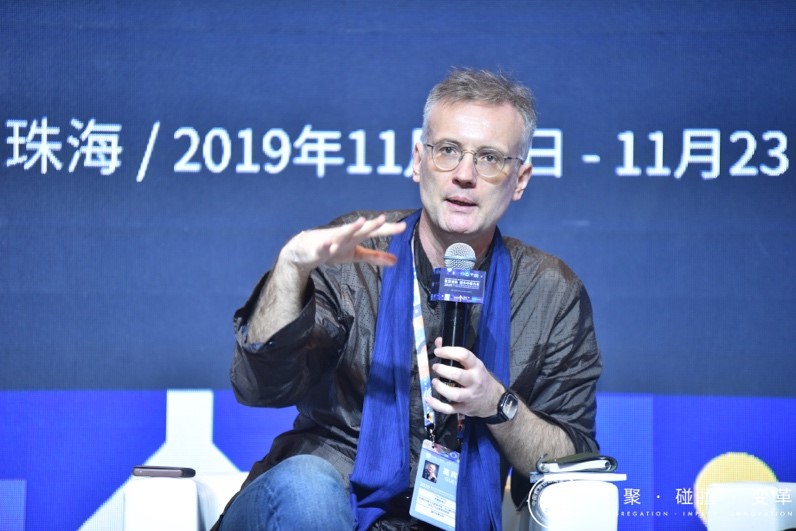
Fred Dervin is Professor of Multicultural Education at the University of Helsinki (Finland) and hold honorary and visiting positions around the world. Prof. Dervin specializes in intercultural education, the sociology of multiculturalism and student and academic mobility. Dervin is one of the most influential scholars and critical voices on intercultural communication education in Europe. More information: https://orcid.org/0000-0001-9371-2717
Image

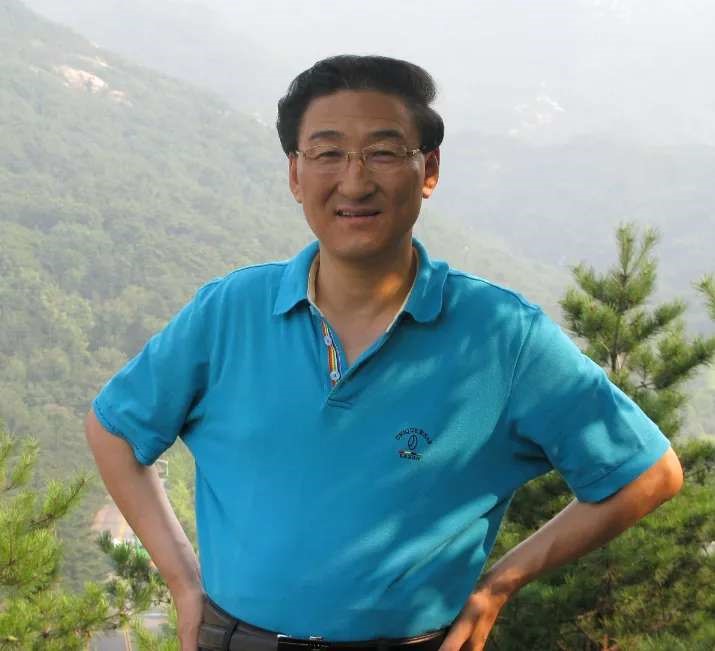
Sude is a Professor at the School of Education, Minzu University of China. He is one of the most influential scholars in the field of Minzu education.

Image

Mei Yuan is an Associate Professor at the School of Education, Minzu University of China. She specializes in Minzu and intercultural education.

Image

Ning Chen is a Lecturer at Tianjin Academy of Fine Arts (China) and a visiting scholar at the University of Helsinki (Finland). His research interests include Minzu education and well-being in higher education. More information: https://orcid.org/0000-0001-6958-2182

Conceptualizing the discourse of student mobility between “periphery” and “semi-periphery”: the case of Africa and China

Mr Ben Mulvey, Education University of Hong Kong

Watch a presentation video of this paper

Listen to an interview with Ben Mulvey

Read the summary of Ben’s interview

Research Highlighted:

Mulvey, B. (2020). Conceptualizing the discourse of student mobility between “periphery” and “semi-periphery”: the case of Africa and China. Higher Education. doi:10.1007/s10734-020-00549-8

The aim of this article is to supplement current understandings of international student mobility to China. China hosted nearly half a million international students in 2018 (MOE, 2019). African students constitute the second largest regional group – 81,562 studied in China in 2018. The growth of China as a destination for international students is a relatively recent phenomenon, and as such, a large part of research on international student mobility examines the phenomenon of students moving from East Asia to Anglophone Western nations. Some of this literature has adopted a postcolonial lens to understand the nature of this form of migration. However, less attention has been paid to other student flows, including students moving from sub-Saharan Africa to East Asia, and as a result, the explanatory power of existing postcolonial approaches to international student mobility is limited, given that the literature tends to adopt a binary of “Western” and “non-Western”.

The starting point for the analysis is the premise that globalised higher education is inherently unequal. For example, Altbach (2007) makes the distinction between powerful university systems in the global core, such as the USA, and those in the periphery. He argues that centre-periphery relations between university systems resemble neo-colonial domination. One outcome of this article was to extend and adapt Altbach’s arguments by drawing on the concept of semi-peripheral (post)coloniality (e.g. Ginelli, 2018) to analyse how structural forces shape the nature of educational mobility between the periphery and semi-periphery, and to refine current postcolonial theorising around student mobilities in the light of non-Western destination countries such as China. I argue in the article that this concept, combining insights from world system theory with postcolonial theory, adds nuance to current postcolonial conceptualisations of student mobility, and also aids in understanding China’s position, which defined by both subordination (by the global core) and superiority (over the periphery).

Postcolonial theory is somewhat limited in terms of its ability to explain China’s position, in that it tends to reproduce a dichotomy of centre and periphery, or of West and non-West. As such, the concept of semi-peripheral (post)coloniality is put forward as a means of explaining how this ambivalence manifests in student mobility discourse. Ginelli (2018) outlines that the concept expresses how the long-term ideological and structural positions (positions within the world-system) can lead to the (re)production of colonial relations and colonial discourse. Countries within the semi-periphery are relatively well connected to the global centre but in some ways remain subjugated to it. They normally do not have colonies, but are perceived to have civilizational superiority over the global periphery. These countries have a strong urge to “develop”, “catch-up” with and imitate the global core, and share the same sense of responsibility for the modernisation of the periphery (Ginelli, 2018).

The analysis provides an overview of the global context within which the strategies of globally mobile African students are embedded, and argues that this structural context results in asymmetrical patterns of knowledge exchange, drawing on a core-periphery model of university systems. I argue that ambivalent position of China in relation to Africa, of solidarity and also of civilizational superiority, is expressed in recent discourse around higher education scholarships. There are two examples of where this kind of discourse occurs. The first is in the presentation of international students as recipients of ‘charity’ in the form of scholarships mirrors the historical relationship between the core and periphery, rather than challenging it. Non-western students are at times framed as recipients of development aid, which is benevolently granted by Western countries, so that peripheral countries can “catch-up” on the linear and universal path of “progress”  (Stein and Andreotti, 2016). Therefore, China’s higher education scholarships to African students, presented as ‘win-win’ and on equal terms actually further the asymmetric internationalization of higher education which Ivancheva (2019) argues is an example of semi-peripheral (post)colonialism (Ginelli, 2018). Ginelli explains the ambiguous position of the semi-peripheral world in relation to the postcolonial periphery, arguing that instead of challenging eurocentrism, Eastern European countries, through unequal exchanges, actually embraced this eurocentrism and undermined their own anti-imperialist position.

The second example comes from the “soft power” rationale which underpins China’s recruitment of African international students, and reproduces colonial discourse in a number of ways. This rationale seems to imply that knowledge should be largely flow in only one direction. That is to say, the student should learn about the host’s culture, and take this knowledge back to their respective home country, rather than the student being a source of knowledge for the host. In the case of China, as with student mobility between the West and other regions, discourse implies that the flow of knowledge is one-way: the implication is that international students have nothing to offer their hosts. Moreover, soft power as a rationale for international student recruitment has its roots in colonialism – as Lomer (2017, p. 590) notes, students from Britain’s colonies were given scholarships with the assumption that higher education was a means to “guide the thoughts” of colonial subjects. This logic appears to be mirrored in the assertion that African students in China should be future leaders. In addition to this, implicit in the rationale is an assumption that students will naturally develop positive attitudes towards their host country and its social and political conditions (Lomer, 2017). This appears to be true of China’s attempts to be true of China’s rationale for recruiting international students: That students would return home and choose to “spread China’s voice” is taken for granted – implying that exposure to China through study abroad would be enough to cause students to firstly develop positive opinions towards China and secondly, choose to act on this positive disposition after graduation. As Tian and Lowe (2018) state with regard assumptions contained within China’s public diplomacy efforts “it would be cultural arrogance to assume that ‘success’ is assured simply as a consequence of exposure to Chinese society and culture” (2018, pp. 242-243).

References

Altbach, P. G. (2007). Globalization and the University: Realities in an Unequal World. In J. J. F. Forest & P. G. Altbach (Eds.), International Handbook of Higher Education (pp. 121–139). Springer Netherlands.

Ginelli, Z. (2018, May). Hungarian Experts in Nkrumah’s Ghana. Mezosfera.Org. Retrieved from http://mezosfera.org/hungarian-experts-in-nkrumahs-ghana/

Ivancheva, M. (2019). Paternalistic internationalism and (de)colonial practices of Cold War higher education exchange: Bulgaria’s connections with Cuba and Angola. Journal of Labor and Society, 22(4), 733–748.

Lomer, S. (2017). Soft power as a policy rationale for international education in the UK: A critical analysis. Higher Education, 74(4), 581–598.

Ministry of Education (MOE) (2019). 2018来华统计 [Concise Statistics on International Students Studying in China in 2018]. 教育部国际合作与交流司 [Department of International Exchange and Cooperation of the Ministry of Education].

Stein, S., & de Andreotti, V. O. (2016). Cash, competition, or charity: International students and the global imaginary. Higher Education, 72(2), 225–239.

Tian, M., & Lowe, J. (2018). International Student Recruitment as an Exercise in Soft Power: A Case Study of Undergraduate Medical Students at a Chinese University. In F. Dervin, X. Du, & A. Härkönen (Eds.), International Students in China (pp. 221–248). Springer International Publishing.

Author bio

Ben Mulvey is a PhD candidate at the Education University of Hong Kong and visiting research student at University College London Department of Geography. Ben’s research focuses on sub-Saharan African students in China, and what this student flow can reveal about China’s attempts to (re)shape the global “field” of higher education. He can be contacted via the following email address: bmulvey@s.eduhk.hk

Emotions and migration aspirations: western scholars in China and the navigation of aspirational possibilities

Dr Bingyu Wang, Sun Yat-sen University, China

Research Highlighted

Wang, Bingyu, and Jingfu Chen. 2020. “Emotions and migration aspirations: western scholars in China and the navigation of aspirational possibilities.” Journal of Ethnic and Migration Studies. Advanced On-line publication. DOI: 10.1080/1369183X.2020.1764841

INTRODUCTION TO THE ARTICLE

Drawing on qualitative research with western scholars working at Sino-foreign universities (SFUs), this paper highlights the emerging academic mobility trend moving from the Global North to South. With a theoretical focus on ‘emotions in migration’, the paper first asks how these foreign scholars’ migration aspirations towards China are initiated and nurtured before the move. Second, it explores after the move, how they emotionally encounter China in everyday life and perform agency, i.e. exercising specific ‘emotional labour’ to reframe their lived experiences and migration aspirations. Third, it examines how their capacity of materialising migration aspirations can be facilitated and constrained by a set of structural factors at the macro, meso and micro level, and how their migration aspirations towards the future are reconfigured accordingly.

Taking western scholars in China as a case study, this article has not only focused on the emotional dynamics and precarities involved in the process of mobile individuals generating and materialising migration aspirations, but also delved into how their agentive efforts are performed in relation to their biographies and structural conditions. On the one hand, this research shows that migration aspirations are subject to constant trans- formations, disruptions or discontinuities. That is to say, migration itself, as an inherently risky venture, is regularly interrupted by reality checks that bring into question the potentials of aspirations as individuals undertake and experience mobilities in the world. Yet, on the other hand, we argue that mobile individuals who live under emotional vulnerabilities, are capable of conducting emotional labour and navigating through their aspirational possibilities to secure more pleasant life and career futures. Critically, this research views migration aspirations as temporary, contingent and inherently emotional, emphasising the ways mobile individuals draw on different discursive frameworks from the past, present and future to narrate and navigate their aspirational landscape across diverse migratory experiences.

In this regard, this article makes several important contributions to advancing scholarly understandings of migration. First of all, theoretically, the article has built on the insights of literature on migration aspirations and emotions in migration to explore the quotidian and lived experiences of mobile scholars at an individual level, thus transcending beyond the conventional political economy and human capital framework that dominates academic migration studies. More importantly, by paying more specific attention to the emotional dimension of migration aspirations, this article has elaborated how aspirations are imaginative and mutable during migration, demonstrating that they must be examined as constantly generated, exercised and reconfigured across time by emotional encounters, emotional labour (agency) and structural forces. Hence, this article has introduced an emotionally-sensitive approach for mapping (academic) migrants’ reported aspirations in light of the interdependence between the memories of the past, the emotional encounters with present opportunity structures and the subjective yet agentive constructions of the future, thus extending the literature on migration aspirations and academic migration.

Second, empirically, the literature on academic migration has shown major interest in those academic mobilities from the Global South to North. Specifically, in the China context, the majority of the existing studies have been done regarding Chinese academic returnees (Wang 2019, 2020) and Chinese knowledge diaspora (Leung 2015; Yang and Welch 2010) while rather few attempts have been made to study those foreign scholars who move into China. In this respect, this article serves as an empirical extension and reflects the newly-emerged North-to-South academic migration trend. Moreover, academic migrants, especially those western ones moving to the Global South are traditionally seen as elite mobile individuals possessing high human and mobility capital, particularly in the ‘global academy where Western forms and outlets dominate knowledge production and research outputs’ (Wang 2020, 182). In the contrary, this article perceives these mobile scholars as middling transnationals who are positioned with an ambiguous status within international mobility hierarchies, thus providing in-depth reading towards the supposedly glorious moving process of the highly-skilled migrants in general.

Essentially, this article contributes to the rise of the renewed interest in the analytical promise of aspirations (Wang and Collins 2020), better unpacking ‘the forces and frictions’ (Carling and Collins 2018) through which migration is initiated, enacted and reconfigured. By acknowledging the irrational, imaginative and temporally-discursive nature of aspirations, we also respond to the growing scholarly attention to emotions, time/temporalities and futures happening in migration studies. Apart from the emotional and the temporal, future research can be done to address the infrastructural, to ask how individuals’ migration aspirations are embedded within, facilitated and constrained by those ‘taken-for-granted’ migration infra- structures (the institutional, the physical and the technological) and those seemingly mundane yet essential ones at the everyday level (including intermediaries of different kinds such as friends, colleagues and bilingual children). Besides, there has been ‘a mobility bias’ in migration research, we thus call for a need to focus on the ‘drivers’ behind the immobility aspirations amongst those who are ‘staying’ either voluntarily or involuntarily.

Related research on ‘time and migration aspirations’ can be seen at Wang and Collins (2020) Temporally distributed aspirations: New Chinese Migrants to New Zealand and the Figuring of Migration Futures.  Sociology.

References

Carling, J., and F. Collins. 2018. “Aspiration, Desire and Drivers of Migration.” Journal of Ethnic and Migration Studies 44 (6): 909–926.

Leung, M. W. 2017. “Social Mobility Via Academic Mobility: Reconfigurations in Class and Gender Identities among Asian Scholars in the Global North.” Journal of Ethnic and Migration Studies 43 (16): 2704–2719.

Wang, Bingyu. 2019. “Time in Migration: Temporariness and Temporal Labour Amongst Early Career Chinese Academic Returnees.” Journal of Ethnic and Migration Studies. Advance online publication. doi:10.1080/1369183X.2019.1642741.


Wang, Bingyu. 2020. “A Temporal Gaze towards Academic Migration: Everyday Times, Lifetimes and Temporal Strategies Amongst Early Career Chinese Academic Returnees.” Time and Society 29 (1): 166–186.


Wang, Bingyu, and Francis Collins. 2020. “Temporally Distributed Aspirations: New Chinese Migrants to New Zealand and the Figuring of Migration Futures.” Sociology. Advance online publication. doi:10.1177/0038038519895750.


Yang, R., and A. Welch. 2010. “Globalisation, Transnational Academic Mobility and the Chinese Knowledge Diaspora: an Australian Case Study.” Discourse: Studies in the Cultural Politics of Education 31 (5): 593–607.


AUTHOR BIOGRAPHY

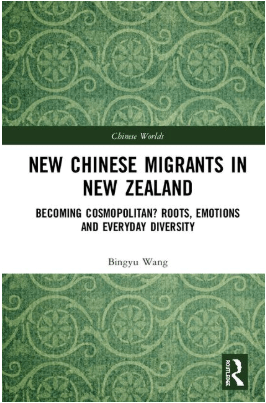
Bingyu Wang is an Associate Professor at the School of Sociology and Anthropology of Sun Yat-sen University, where she was recruited as a member of the ‘100 Top Talents Program’. Her research areas include migration and mobilities, intercultural encounters, and cosmopolitanism, with an empirical focus on highly-skilled migrants and temporary migrants, and a theoretical focus on emotions, time and the everyday. She has published widely in high-ranked international journals and is the author of New Chinese Migrants in New Zealand: Becoming Cosmopolitan? Roots, Emotions and Everyday Diversity (Routledge, 2019). She is currently conducting research projects concerning Global North-South academic mobilities, specifically on returning Chinese scholars, Chinese knowledge diaspora and foreign scholars in China. Bingyu is on the editorial board of Journal of Ethnic and Migration Studies.  She can be reached at wangby29@mail.sysu.edu.cn or via her profile page at Research Gate.

Call for Survey Participants: Chinese higher education governance during the COVID-19 crisis 新冠肺炎期间高等教育管理的政策分析和学生视角

My name is Leigh Lawrence, and I am a PhD student in the Faculty of Education at the University of Cambridge, St John’s College. I am currently working with a classmate to conduct research on Chinese higher education governance during the COVID-19 crisis. We are seeking survey participation from Chinese students enrolled in Chinese universities (at any grade level). We are aiming for diverse participation from students all around China; participation is completely anonymous, no personal information is requested, and participants can contact me any time with questions as to how this data will be used. There are 20 questions and the average response time is 4 minutes. We are aiming for a very tight timeline to get this survey out, so any help in sharing will be greatly appreciated!

Here is the link to the survey:

https://www.wenjuan.com/s/c/yhVIdrNCQgR_uzsfaOzkjw==/

亲爱的同学:
       你好!我叫罗葳,目前是英国剑桥大学教育学院的博士生。我研究的课题是:新冠肺炎期间高等教育管理的政策分析和学生视角:基于混合方法的研究。我需要就学生对新冠肺炎期间高等教育管理的看法收集一些问卷,希望你能在百忙之中花几分钟填写这份问卷。问卷所有的内容都是保密的,所有收集的数据都将保密并安全存储,参与者遵循匿名和自愿的原则,因此请你放心真写。所收集的信息只用于学术研究。如你有任何问题,请随时与我联系(lsl30@cam.ac.uk)。完成并交出该问卷即表示你同意参与。谢谢你的帮助!**此问卷只针对中国籍大学生**

Privileged Daughters? Gendered Mobility among Highly Educated Chinese Female Migrants in the UK

Social Inclusion Volume 8, Issue 2, Pages 68–76

About the article:

Over the past two decades, the number of women from China’s one-child generation studying in the West has surpassed that of their male counterparts. In 2014, when the data-collection for this article took place, women comprised 51 percent of Chinese students in the United States, 55 percent in Canada, and 63 percent in the UK. Famous for its higher education sector, the UK has long been a popular destination for Chinese students, especially for those who want to do a Master’s degree.

Statistics from China’s Ministry of Education showed that in 2018 more than 90 percent of the country’s international students had private resource to fund their study. International students typically rely on middle-class parents for the cost their education and maintenance overseas. Among families that have only one child, there is little evidence to suggest that parents pay attention to their child’s gender when funding their education overseas. The one-child generation daughters born to middle-class Chinese parents enjoy the privilege of concentrated family resources and the opportunity for education overseas.

While we celebrate greater educational mobility for the one-child generation girls from China, we cannot assume that these “privileged daughters” will, therefore, enjoy the same social mobility after the completion of their education. The article focuses on the “privileged daughters” who have studied in the UK for a postgraduate degree and remained overseas as professionals. The British government established very selective work visa policies for foreign graduates, and this article’s cohort has demonstrated the motivation and capacity of successfully securing a place in a competitive British employment market. However, in this relatively “elite” group we discovered various forms of immobility influenced by the traditional Chinese patrilineal gender values passed on to the overseas daughters through their parents.

To elaborate this point, we use three cases of post-student female migrants who are of different ages and at different life stages, we situate their socioeconomic mobility in the context of intergenerational relationships and transnational social space. Dahong is single, Beiyao is just married and has a new-born baby, and Meilin has been married for more than ten years and has a school-age son. Their different life stages reveal the continuities and changes of the significant social factors that shape their life decisions. Each life stage from before, during and after their overseas education, illustrates the shifting gender expectation they experienced, particularly the parental influence throughout the whole process.

Dahong wants to become an entrepreneur, but her “traditionally-minded” father does not believe a “businesswoman” sounds “descent” in marriage market. Dahong has also given herself a “deadline” to get married and have children before she turns 35. Although appearing to be resistant to her father’s opinion, Dahong does not fundamentally challenge the socially expected female life course of marriage and motherhood.

Beiyao holds a PhD and respected job, her life path carries her mother’s dreams and hope to prove to others that it is not a misfortune to give birth to a daughter. Beiyao’s mother experienced gender discrimination herself because of failing to produce a son. This could be interpreted as a coping strategy to regain both the family and individual woman’s dignity in a society that continuously values sons over daughters.

Meilin is the oldest of the three women and had experienced greater conflict between career, marriage and motherhood. Her initial success in education and employment was largely the result of the support from her mother, who later also advised Meilin to compromise her career for her marriage and not become a “stigmatised divorcee”. 

Drawing on further interview data from the same project we argue that, although the “privileged daughters” have achieved geographical mobility and upward social mobility, through education and a career in a Western country, their life choices remain heavily influenced by their parents in China. Such findings highlight the transnationally transferred gendered burden among the relatively “elite” cohort, thus revealing a more nuanced gendered interpretation of transnational socioeconomic mobility.

It is important to note that we do not simply assume China and the UK as the “traditional” and the “modern”, rather, we would like to point out the contrast between pre-graduate educational upward mobility and post-graduate gendered (im)mobility. For these highly educated female migrants in the UK, gendered mobility has two dimensions: on the one hand the intergenerational continuity of gender norms; on the other hand, the ways in which individuals navigate gender expectations in transnational social space. Although the “privileged daughters” have achieved geographical mobility and upward social mobility through educational success and a professional career in a Western country, they are still being “pulled back” by their parents who are “left behind” in China.

Authors’ Bio

Dr Mengwei Tu, East China University of Science and Technology

Mengwei Tu (PhD) is a Lecturer in Sociology at East China University of Science and Technology in Shanghai. She holds a PhD in Sociology from the University of Kent (2016). Her research focuses on global movement of highly educated migrants, including both migrants from China and migrants to China. Her book Education, Migration and Family Relations between China and the UK (Emerald, 2018) took an intergenerational angle in understanding the human complexity behind overseas education and migration.

Dr Kailing Xie, University of Warwick

Kailing Xie (PhD) is Teaching Fellow at the Politics and International Studies, University of Warwick. Her work explores the role of gender in contemporary Chinese governance. Her publications include a monograph Embodying Middle Class Gender Aspirations: Perspectives from China’s Privileged Young Women and the journal article “Premarital Abortion, What is the Harm? The Responsibilisation of Women’s Pregnancy among China’s ‘Privileged’ Daughters” that was awarded the 2017 Early Career Researcher Prize by the British Association for Chinese Studies.