Hysteresis Effects and Emotional Suffering: Chinese Rural Students’ First Encounters With the Urban University

Research Highlighted:

Chen, J. (2020). Hysteresis Effects and Emotional Suffering: Chinese Rural Students’ First Encounters With the Urban UniversitySociological Research Online. doi.org/10.1177/1360780420949884

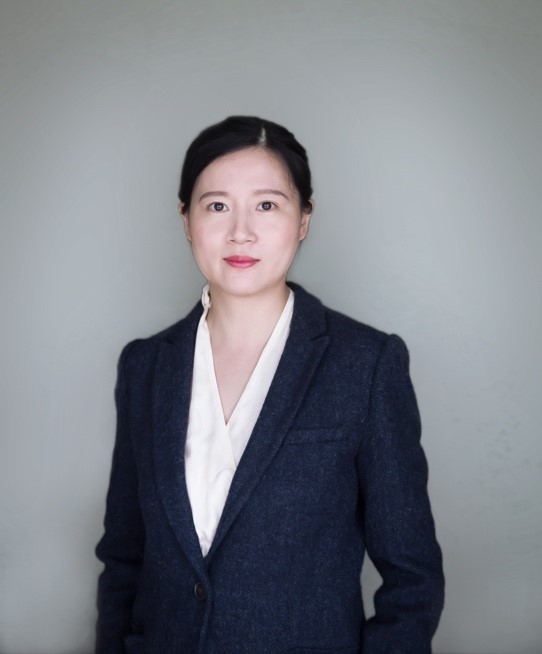
Ms Jiexiu Chen, Institute of Education, University College London

Abstract

In the Chinese context of a stratified higher education system and significant urban-rural inequality, rural students are generally facing with constrained possibilities for social mobility through higher education. Despite these structural constraints, some exceptional rural students, like all the participants in this research, manage to get themselves enrolled in the urban university. Drawing on participants’ subjective narratives about their first encounters in the urban university, I argue that the rural students in this research were confronted with two levels of habitus-field disjunctures, respectively the rural-urban disjuncture and academic disjuncture. Then through examining participants’ narratives about their hysteresis effects and emotional suffering, I suggest the sense of feeling lost and inferior reveals how various types of domination in the external structure of the field of the urban university play a part in affecting rural students’ inner emotional worlds.

Background

The role higher education plays in processes of social mobility is a central concern for researchers and policy makers around the world. This is especially true in China, where the country’s social, economic, and political environment has gone through significant changes since the Reform and Opening-Up policy in 1978. Though higher education expansion has been widely considered a useful tool for moderating social stratification (Haveman and Smeeding, 2006), some researchers have shown that the expansion of higher education has actually intensified and reinforced educational inequality in some developing countries (Buchmann and Hannum, 2001). In the UK context, higher education expansion have been found to widen rather than bridge participation gaps (Boliver, 2011). In China, scholars have found that the rapid massification of higher education systems has failed to reduce educational inequity (Luo et al., 2018). According to a study, rural students accounted for 11% of the total student body at an elite university located in Beijing in 2009, while the population registered as rural residents accounted for 52% at that time (Lu et al., 2016). Thus, for rural students who are the first in their family, or even the first in their village, to enrol in an urban university, their journeys to the university include a series of massive changes and successive challenges.

In terms of the socio-economic constraints caused by the hukou system, there are several associated factors shaping the disadvantaged situation many rural students find themselves in when considering their educational trajectories. First, rural students’ parents tend to have much lower educational levels compared with their urban peers. According to Wu’s (2013) research based on an analysis of the Chinese General Social Survey in 2008, since the restoration of the CEE in 1978, the impact of a father’s education level has increasingly affected the college attainment of his children. Second, limited educational resources are allocated to rural areas. Schools providing basic education in urban cities are generally much better equipped with teachers and facilities than the rural schools (Liu, 2008). Third, rural students’ hukou status and financial difficulties restrict their opportunities to attend urban high schools, where the education is considered to be of a higher quality (Tsang, 2002). Therefore, in key national universities, the number of rural students is shrinking, while more rural students are enrolled in provincial or local institutions with a lower academic reputation and quality of provision.

Theoretical framework and methodology

This research mainly adopts Bourdieu’s conceptual tools in the analysis. Habitus, as Bourdieu argued, is ‘a product of social conditionings’ (Bourdieu, 1990 p. 116). As a compilation of collective and individual trajectories, when habitus encounters an unfamiliar field, individuals are supposed to experience ambivalences when having to deal with moments of misdisalignment (Reay, 2004). After migrating from rural villages to the urban city, the participants in this research all entered a novel field, different from their previous environments. Thus, along with the change and the mismatch between their past habitus and current field, varying degrees of habitus-field disjuncture emerged, and further led to hysteresis effects and suffering in the rural students’ university lives. As Hardy suggested, Bourdieu’s conceptual tools can be usefully applied to understand ‘change’, which in this research refers to rural students’ transition from rural schooling to urban higher education (Hardy, 2014).

In the China context, Xu (2017) examined Chinese mainland students’ with rich economic and cultural capitals encountered with differential capital valuations in an elite Hong Kong university, and uncovered how habitus-field disjuncture revealed itself in a transborder context. Xie and Reay’s (2019) longitudinal research on academically successful rural students at four Chinese elite universities revealed ‘habitus transformation’ and ‘habitus hysteresis’ derived from the ‘compartmentalized fit’ between the students’ previous habitus and the exclusive field of top universities (p.2).

Drawing upon Bourdieu’s conceptual tools, I delve into the following two major themes in this paper. First, I focus specifically on rural students’ subjective perceptions of their mobility trajectories to investigate what kinds of habitus-field disjuncture (if any) they had encountered when entering an urban university. Second, through the theoretical lens of hysteresis effects and emotional suffering, I examine participants’ narratives about their sense of feeling lost and inferior, and explore how various types of domination in the external structure of the field of the urban university play a part in affecting rural students’ inner emotional worlds.

This research reports part of the findings of my Ph.D. project on rural students’ social mobility trajectories in China. In 2018, I conducted life history interviews in several cities such as Beijing, Shanghai, and Ji’nan in China. I recruited 40 university students who graduated in the 1980s, 1990s, 2000s, and 2010s, and who were now working in cities, to participate in this research. All of the participants were born and brought up in rural areas (including villages, parishes, and towns), and they had graduated from public universities and been awarded at least bachelor’s degrees.

Findings and discussions

Drawing upon Bourdieu’s conceptual tools of habitus and field, this research focused on rural students’ subjective social mobility experiences from rural villages to urban universities, and explored how habitus-field disjuncture, hysteresis effects, and symbolic violence are lived and manifested in the China context. Instead of regarding mobility across urban and rural fields as a straightforward transition of social group, this research took a step further to dig into the complexity and hierarchy embedded in rural students’ mobility process. In the process of entering a novel field, rural students experience habitus-field disjuncture at two levels: urban-rural disjuncture, which refers to the metropolitan and cultural (geographical) distance between rural students’ origin and destination, and academic disjuncture, which is marked by the changes in the rules of the game between rural schooling and urban higher education. The two levels of habitus-field disjuncture led many participants to various experiences of hysteresis effects and emotional suffering, such as a widely-mentioned sense of inferiority when living at an urban university.

The rural students’ emotional suffering discussed in this research resonates with research on working-class students conducted in the Western context, in which the hidden injuries and struggles related to social mobility have been broadly reported. As discussed above, rural students’ first encounters with a metropolitan context shares certain similarities with immigrants’ culture shock when entering a foreign country. The lack of metropolitan knowledge and culturally and geographically distant mobility creates a strong sense of alienation and inability. Moreover, I found the encounters of hysteresis effects and emotional suffering were widely reported by participants across all the cohort groups, which demonstrates how dominant and lasting the urban-rural inequality has been during the past decades.

This research contributes to the application of Bourdieu’s conceptual tools in a non-Western context. The existing literature on Chinese rural students generally has adopted the notion of working-class habitus to understand rural students’ experiences, and has diluted the uniqueness of the Chinese rural context where those students originally generated their habitus. Through unpacking the multilevel of habitus-field disjunctures, this paper strives to present the complexity and hierarchies embedded in the urban-rural inequality in China and the distinctive features of China’s social and cultural milieu. Thus, I suggest Bourdieu’s concepts should be carefully approached with recognition of the significant differences between urban-rural disparities in China and class inequality in the Western context and mindful reflections should be conducted to challenge the long-existing Western and/or urban analytical perspectives in the study of Chinese rural students.

Author Biography

Jiexiu Chen is a PhD candidate at the Institute of Education, University College London, UK. Her research interests include social mobility, cross-cultural adaptation, and education policy. She has an emerging journal article and book publication on Chinese rural students’ social mobility through higher education and international staff’s experiences in Chinese universities. She can be contacted via the following email address: jiexiu.chen.16@ucl.ac.uk.


Open rank posts in sociology, anthropology, social policy etc in Southwestern University of Finance and Economics in China

西南财经大学社会发展研究院招聘启事

西南财经大学位于四川省成都市,是教育部直属并且进入国家“双一流”建设的全国重点财经大学。经过近百年的建设和发展,学校秉承“经世济民,孜孜以求”的精神,形成了以经济学和管理学学科为主体,金融学科为重点,多学科协调发展,经、管、法、文、理、工相结合的学科特色。目前,我校有全日制在校生22000余人。
   
社会发展研究院于2018年获得社会学博士一级学科授权点,现有社会学和人口学两个方向博士点,社会学、人口学、经济社会学、应用社会学和民俗学等五个科学学位硕士点和社会工作专业学位硕士点。研究院目前正处于快速发展的阶段,诚挚欢迎相关专业的优秀教师和优秀博士加盟。
   
一、招聘对象及条件在国内外知名大学获得社会学、人口学、社会工作、经济社会学、社会福利、社会政策、民俗学、人类学、心理学等相关专业博士学位的在职教师(教授、副教授、助理教授和讲师)和应届毕业生。
   
二、招聘岗位:教学、科研岗位
   
三、工作待遇对聘任的国内、外在职教师或博士毕业生,学校实行聘用合同制和年薪制,提供具有竞争力的薪酬福利。学校为聘用者提供住房补贴并购买社会保险。具体工作待遇请向西南财经大学组织人事部或社会发展研究院咨询。
   
四、应聘方法应聘者请登陆西南财经大学组织人事部网址:http://rcpt.swufe.edu.cn/User_reg/Default.aspx查阅详细要求和政策规定,填写《西南财经大学接收(引进)教学人员登记表》,并提供身份证、学历(学位)证书、职称证书,以及学术论文、著作、获奖情况等相关证明材料。即将毕业的应届博士生可面试通过后提供正式毕业证书,海外博士生可提供临时毕业证明。
   
五、联系方式:
   
(一) 组织人事部
 
  址:中国 四川 成都温江柳台大道555
    
  编: 611130                
    
联系人: 缪芳              
    
  话:(02887092298 
    
  真:(02887092247 
    E_mail
 szk@swufe.edu.cn
 
(二)社会发展研究院
    
地址:成都温江柳台大道555号通博楼A513
    
  编: 611130                 
    
联系人: 徐源          
    
  话:(028870922257
    
  机:15680888628  
    E_mail
 xuyuan@swufe.edu.cn
                                            

Constructing International School Teacher Identity from Lived Experience: A Fresh Conceptual Framework

Research Highlighted:

Poole, A. (2020). Constructing International School Teacher Identity from Lived Experience: A Fresh Conceptual Framework. Journal of Research in International Education. https://journals.sagepub.com/doi/10.1177/1475240920954044

Dr Adam Poole, Beijing Foreign Studies University

Abstract

This research note offers background information to my recent paper (Poole, 2020) published in the Journal of Research in International Education. The paper argues for the need to move beyond distilling international school teachers’ experiences into a teacher type or teacher typologies, and instead to take teachers’ lived experiences as an end in themselves. Lived experience is characterised by a certain kind of ambivalence, messiness, and complexity that typologies are unable to capture.

In attempting to better convey what I mean by international school teachers’ lived experiences, I make an analogy to The Beatles. Whilst it may seem somewhat irrelevant at first, I ask the reader to indulge me. The connection will become apparent soon enough.

As a teenager, I was obsessed with the Beatles. I knew their music inside and out. My ear became so familiar with their sound that I could name any of their songs within the first few beats. However, when the Beatles released a collection of outtakes and rarities as part of their Anthology series, it felt like I was listening to them again for the first time. I was struck at how clear the initial performances were. Often, the first take would consist of drums, guitar and bass. When listened to in this form, the music was vibrant. It had a warm resonant room sound to it, as if you were in the room whilst it was being played. It was rough. You could hear the mistakes. The fingers fumbling for the chords. A guide vocal leaking into the drum microphones. Takes breaking down. False starts. It was honest. However, once the recordings had been over-dubbed, mistakes corrected, that room sound was gone. It no longer felt as if you were in the room with the band. It did not feel honest. Suddenly, those recordings that my ear had grown so accustomed to felt like imitations.

The above analogy helps to convey what I am trying to do in my research in relation to teachers’ experiences in Chinese Internationalised Schools. I am listening for the resonant room sound of their lived experiences.

The International School arena was once considered to be somewhat anomalous (Pearce, 2013) and something of a well-kept secret. Traditional International Schools, or Type A schools (Hayden & Thompson, 2013), were designed for the children of a global trans-national elite, who required schooling that would enable them to enter a university in their home countries. However, in the last ten years or so, a new type of international school has emerged. Rather than catering to the children of transnational elites, these new schools, referred to as Type C non-traditional schools (Hayden & Thompson, 2013), are frequented by indigenous middle-class families. Within China, these Type C schools have been referred to as ‘Chinese bilingual schools’, or, as I like to call them, ‘Chinese Internationalised Schools.’ Chinese Internationalised Schools typically follow the Chinese National Curriculum until grade 9, with students transitioning to some type of international curriculum (such as International General Certificate of Secondary Educations, Advanced Levels or the International Baccalaureate Diploma Programme) for the remainder of their high school years.

Along with this shift from traditional to non-traditional international schooling, we can also see the emergence of a new type of international school teacher. Typically, teachers in Type A schools will be licensed practitioners back in their home countries and/or have experience of teaching. Whilst this type of teacher can be found in Type C schools, the vast majority (at least in Chinese Internationalised Schools) are not career teachers. Rather, they are what Bailey and Cooker (2019) call ‘Accidental Teachers’. These teachers may not necessarily be qualified teachers, yet they still find employment in Chinese Internationalised Schools, if not always for their professional capital, then certainly for their ‘ethnic capital’, that is, their embodiment and performance of ‘western whiteness.’

I was an Accidental teacher. I did not set out to be a teacher, but by happenstance, I became one. Before my recent transition to the academic arena, I spent ten years teaching in Chinese Internationalised Schools. To return to the analogy of the ‘room sound’, I was in the room with the teachers. I saw the mistakes. It was live, raw and often raucous. In a colleague’s words, teaching was ‘messy business.’ However, as part of my studies and subsequent research, I found that the work I was reading on international school teachers just did not have that same resonance. That immediacy and messiness was absent. I felt this absence most keenly in studies that presented teachers in terms of types or typologies.

I was reading about ‘the Maverick’ (Hardman, 2001), a global traveller or someone seeking to escape from national constraints and other issues in their home country. It is likely that we all know a teacher who fits this description. I was reading about ‘Type A’ , ‘Type B’ and ‘Type C’ teachers (Bailey & Cooker, 2019). Type A teachers see their job as supporting travel and mobility. Type B teachers see their jobs in ideological terms. Type C teachers view their primary attachment as being to the locale in which the international school is situated. I was reading about the ‘adventurer’ (Rey et al., 2020), young teachers who, to escape the debts they had accrued in their home countries, often due to university fees, flee to teach overseas.

However, I was not reading about me or my colleagues. I was not reading about teachers in Chinese Internationalised Schools. Here were we, complex, dynamic and evolving human beings, reduced to a letter or a type. Where did all the experience go? It was like the label or letter was some kind of cookie cutter, trimming away the superfluity of lived experience.

To return to the analogy of The Beatles and their recordings, I could not hear the resonant room sound of our lived experiences in the literature. This absence was partly due to the novelty of Chinese Internationalised Schools, but also due to a paucity of work that critically engages with the International School Teacher experience (Bailey, 2015). These typologies could be thought of as a form of quantizing or auto-tuning that renders the contradiction and messiness of the lived into processed experience. The Accidental teacher (Bailey & Cooker, 2019) label comes close to capturing our experiences, but is not sufficiently nuanced to capture the heterogeneity within our group.

All of this points to the need for researchers to not only listen to the voices of teachers, but also to capture the resonance of their lived experiences. This is what I attempted to do with my recent paper, and what I am planning to develop in an upcoming book, provisionally entitled International Teacher Identities: Examining Internationalised Schooling in Shanghai. If I can retain the energy and vibrancy of teachers’ lived experiences in a form where theory helps to capture rather than smother the resonant room sound of lived experience, then I will have finally produced something that speaks to both teachers and researchers.   

References

Bailey, L. and Cooker, L. (2019). Exploring teacher identity in international schools: Key concepts for research. Journal of Research in International Education, 18(20), 125-141.

Hardman, J. (2001). Improving recruitment and retention of quality overseas teacher. In S. Blandford, & M. Shaw (Eds.), Managing international schools (pp. 123-135). London: Routledge Falmer.

Hayden, M., & Thompson J. J. (2013). International Schools: Antecedents, current issues and metaphors for the future, in R. Pearce (Ed.), International education and schools: Moving beyond the first 40 years (pp. 3-23). London: Bloomsbury.

Pearce, R. (2013). International Education and Schools: Moving Beyond the First 40 Years. London: Bloomsbury.

Poole, A. (2020). Constructing international school teacher identity from lived experience: A fresh conceptual framework. Journal of Research in International Education. https://doi.org/10.1177/1475240920954044

Rey, J. Bolay, M. & Gez, Y. N. (2020). Precarious privilege: personal debt, lifestyle aspirations and mobility among international school teachers. Globalisation, Societies and Education, 1-13. doi.org/10.1080/14767724.2020.1732193

Author’s bio

Adam is Director of Research in the Institute of Impact Studies in Beijing Foreign Studies University (BFSU). Along with his colleagues in the institute, Adam is currently developing a project to establish the pedagogical needs of teachers and stakeholders in BFSU International. His research interests include international teachers’ experiences in international schools, teacher professional identity, and developing the funds of identity concept. He is currently writing a book, which explores teachers lived experiences in Chinese Internationalised Schools in more depth. Adam can be reached at tyger106@hotmail.com and via his profile page at Research Gate. His ORCID identification is orcid.org/0000-0001-5948-0705.

How do women academics fulfil KPIs in an age of Two-Child Policy in China?

Research Highlighted

Li, B., & Shen, Y. (2020). Publication or pregnancy? Employment contracts and childbearing of women academics in China. Studies in higher education, 1-13. doi:10.1080/03075079.2020.1817888

The ‘publish or perish’ system has been widespread in the global higher education sector to incentivize academic performance. How the system affects academics in non-western countries has received scant attention. In recent years, more and more Chinese universities start to introduce a tenure track system in which the employees sign a fixed term contract with interim and end of term reviews. After the review, the employees would either be promoted to tenure positions or lose their jobs. The term of contracts would usually be 4-6 years. The Key Performance Indicators (KPIs) include numbers of publications and successful grant applications.

In our recent article “Publication or pregnancy? Employment contracts and childbearing of women academics in China”, we used a mix-method approach to understand the relationships between contract types, work pressure, childbearing intentions and individual coping strategies. The quantitative analyses show the relationships between these factors, and the qualitative results provide in-depth understanding on how women academics acted in response to the changing evaluation and contracting practices.

Our research compared the differential impact of fix-term and permanent contracts on women academics. We examined their perceived work pressure and the childbearing decisions of women academics in China. The survey data were collected in 2019 through an online survey of 453 women academics working in universities across China. The research establishes a significant correlation between the types of contracts and the reproductive practices of women academics of childbearing age. In order to obtain more detailed information on the underlying consequences of the new system and the respondents’ coping strategies, interviews were conducted with women academics across different stages of their career.

We found that 70% of the respondents considered that fixed term contracts increased the pressure to write and publish. 82% experienced psychological pressure and worried about contract renewal. People working under fixed term contract felt more stressed than those who did not sign the contract. What is more, it had increased the anticipated pressure for those who were about to sign a fixed term contract. Women academics and PhDs have adapted their reproductive behaviour in response to the greater work pressure. The data shows that there is a significant difference in the timing of childbearing between women who had signed a fixed term contract and those who had not. Nearly 70% of the respondents who had ever signed fixed-term contacts had deliberately moved forward or delayed their childbearing, a much higher rate than those who had not signed fixed-term contracts (37%). However, their adaptation cannot solve all the problems they have to face and could cause vulnerability and inequality. More and more PhD students give birth before they graduate. Universities and supervisors, however, are slow to meet their childcare needs. Employers are reported to prefer women PhDs who have already had children upon recruitment.

The findings also show that the new system adopted in China offers higher risk contracts with higher pay than the old-fashioned permanent contract. Some respondents recognise the benefit of the new system. However, because employers do not necessarily take into account women’s reproductive needs, the incentives come at the costs of high pressure and staff anxiety.

The findings confirm widespread influences of a managerialist approach to stimulate research outputs in academia. Against the background of the new family planning policy and the growing favour of managerialism in China, our paper sheds new light on the impact of the introduction of a competitive employment system on employees’ work and life balance and the interaction between employment status, reproductive behaviour and mental stress.

We provide several suggestions to policy makers and university management. It is worth noting that the fixed-term system is new in most universities in China. Universities may have been overly excited about the magic power of ‘publish or perish’ contracts to stimulate research outputs and failed to notice that in other countries that have adopted the system, there are supportive arrangements for women. The fact that some respondents reported that some universities had introduced additional policies to improve the situation shows that university management can have the goodwill to improve. In addition to learning from international best practices, universities planning to introduce the probation-tenure system could learn from other universities in China that have made adjustments to support women. In addition, the state as a regulator of universities may consider establishing guidelines to minimize the difficulties that women academics have to face as the evaluation practices change. Supporting both employers and families simultaneously would be more effective than supporting one side alone.

Authors’ biography

Professor Bingqin Li, University of New South Wales

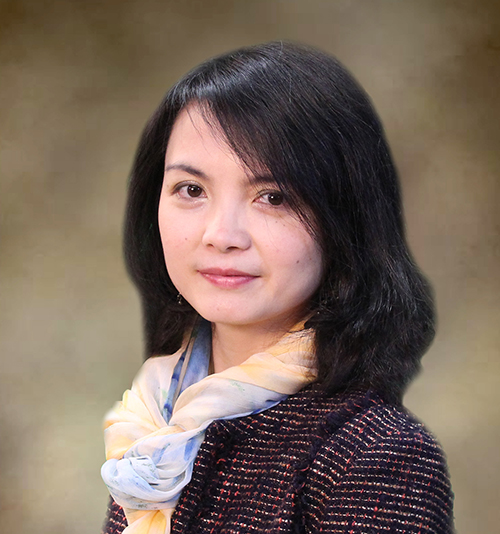
Dr Bingqin Li is SHARP (special hire) Professor and the Director of the Chinese Social Policy Stream at Social Policy Research Centre (SPRC) at University of New South Wales in Sydney. She received her PhD in Social Policy from LSE UK. Before moving to UNSW, she worked at LSE and Australian National University. Her research is on social inequality, urbanisation and local governance in China. Her current projects include local government social service delivery, disability employment and digital economy, aging, urban and community development.  Google Scholar UNSW official page

Dr Yang Shen, Shanghai Jiaotong University

Dr Yang Shen is an associate professor at the School of International and Public Affairs at Shanghai Jiao Tong University. She did her PhD in Gender Studies at the London School of Economics. Her current research projects include women’s fertility practices, housing and intimacy and online dating in China. Her academic articles have appeared in Journal of Family Issues, China Quarterly, Habitat International, Policy Studies, among others. Her book monograph ‘Beyond tears and laughter: gender, migration and the service sector in China’ has been published by Palgrave in 2019.

Relevant publications by the authors

Shen, Y. & Li, B (2020) Policy coordination in the talent war to achieve economic upgrading: the case of four Chinese cities, Policy Studies. Online first.

Shen, Y. & Jiang, L. (2020). Labour Market Outcomes of Professional Women with Two Children After the One-Child Policy in China, Journal of Social Issues. Early view.

Shen, Y. & Jiang, L. (2020). Reproductive choices of highly educated employed women with two children under the universal two-child policy, Journal of Family Issues, 41(5): 611-635.

Confucian revival and the hybrid educational narratives in contemporary China: A critical rethinking of scale in globalisation and education

Research Highlighted:

Wu, Jinting. (2019). Confucian revival and the hybrid educational narratives in contemporary China: A critical rethinking of scale in globalisation and education. Globalisation, Societies and Education, 17(4), 474-488.

Dr Jinting Wu, University at Buffalo, The State University of New York

Today China witnesses a renaissance of classical studies and Confucian Academies across the nation. With an estimated 10 million children attending Confucian kindergartens, classes, and schools, cultural heritage has increasingly become a new marker of social distinction. Meanwhile, Confucian tradition is often associated with excessive testing, competition, and academic burdens that continue to hinder China’s educational innovation. In this paper, I attempt to examine such hybrid educational narratives to understand the idiosyncratic features of Chinese educational globalisation. This paper also problematises the dominant hierarchical conception of scale in comparative education research and rethinks globalisation as a comingling and friction of multiple imagined communities.

Throughout China’s dynastic and modern history, the shifting narratives of Confucian doctrine have always corresponded with China’s changing educational paradigms. The first period occurred in the late Qing dynasty when the Ti-Yong debates upheld Chinese classical learning as the essence (Ti) and denigrated Western learning as mere utility (Yong). The second period occurred in the May Fourth Movement in 1919 when intellectual elites radically rejected traditional values and promoted the Western utilitarian approach to education, resulting in an overall suppression of Confucianism and classical texts in the educational system (Pepper 2000, 61). The third major change took place during the communist rule when China adopted the Soviet model to educate citizens as both ideologically correct and technically savvy (you hong you zhuan), leading to the branding of Confucian teaching as feudalist and antirevolutionary. The fourth major change was at the turn of the twenty-first century when the structural subordination of students to teachers and test-based curricula in state schools have been identified as setbacks to Chinese educational competitiveness. Curriculum reformers turned to the Anglo-American child-centred pedagogies as a critique of Confucian rote learning and inscription of social hierarchy. While Confucian pedagogical practices are challenged, curiously, today’s China also witnesses the ‘rehabilitation’ of the ancient sage and the all-out search for classical wisdom, a cultural and educational movement involving people from diverse backgrounds and facilitated by mass media, the market, the state, and the academia.

The newest wave of Confucian revival coincides with the tightening of the state grip in post-reform China. The state becomes a tireless champion of ancient classics in its strive for modernity, which can be seen in a number of public commentaries made by President Xi Jinping, deploring the de-Sinicisation of school curricula and promoting Confucian legacy as the ‘cultural gene of the Chinese nation.’ While the current Confucian revival is aptly seen as a form of state governing and social control, ordinary people also actively appropriate Confucian teachings to orient themselves in China’s dizzying socioeconomimc dislocation. 

A media studies professor, Yu Dan offered popular interpretation of The Analects (lunyu) in China Central Television’s popular program Lecture Room (baijia jiangtan), and enjoyed immense popularity among ordinary Chinese citizens who are hungry for existential guidance to navigate the whirlpool of socioeconomic changes. Additionally, scholars also aid the Confucian revival movement by offering national studies classes (guoxueban) to business entrepreneurs in leading universities. These classes appeal to businesspersons who seem to aspire for a model of the ‘Confucian enterpreneur’ (ru shang) by translating their material wealth into ‘cultured’ social distinction (Wu and Wenning 2016, 563). Meanwhile, there are many Confucian academies and classics chanting programs that appeal to parents who are disillusioned with the exam-centred educational system and look to alternatives in the hope to provide a more human, nurturing learning environment. While Western progressive educational philosophies are widely sought after by urban parents, on the other hand, the learning of traditional Chinese culture and values has also undergone a boom in recent decades (Pang 2014). A growing number of middle-class children attended private Confucian academies alongside mainstream schools, which, occupying a growing market niche and often charging substantial fees, teach the young recruits proper filial behaviours, a balanced and healthy living style, and cultural literacy through activities such as calligraphy, martial arts, tea ceremony, and chanting classics (Yu 2016). Classical learing in Confucian academies offers one of the latest educational models through which parents explore alternative pathways to cultivate high suzhi of the child, defined as cosmopolitan, mobile, creative, and knowledgeable in the global neoliberal economy.

The revival of Confucianism presents a cultural-educational lens to understand Chinese nationalism and globalisation. As China continues to grow economically and looks inward to take stock of its own cultural heritage, Confucian teachings re-entered to parry the Western cultural influence. The concept of guoxue re (the craze of national studies) captures a distinct form of nationalism in today’s China. It is hybrid moment of cultivating world citizens with Chinese hearts, and can be interpreted as a collective form of cultural intimacy, described by Herzfeld (1997) as the larger concerns of the nation-state intertwining with the everyday desires of its citizens to form a curious space comprehensible only with an insider’s sensitivity. The popular vision of foreign superiority and Chinese backwardness has been retooled by an orientation towards a greater understanding of China’s cultural distinctiveness and the dual needs for Sinicisation and globalisation.

Based on the case of the Confucian revival, I offer a critical perspective to rethink the concept of scale and the global-national-local distinction in comparative education research. Much energy in comparative studies of education has been devoted to spatialising the differences, making the global-local binary ever more durable. Classrooms and schools are often considered as the local, state policies and bureaucracy as the national, and international travelling discourse as the global. Yet, the utility of scale is increasingly called into question. Scholars in human and cultural geography have had sustained theoretical reflection on the concept of scale, positing that scale is less of a physical domain than an interplay of different regimes of value, and the ways in which certain values become hegemonic. Indeed, scalar logic reinforces a hierarchy of knowledge production, where some forms of knowledge are taken as paradigms, and other forms of knowledge as contained in local particularity. A flexible understanding of scale as flat ontology, on the other hand, attempts to denaturalise the material effects of assigning the global more causual force and regarding others as merely derivative (Marston, Jones, and Woodward 2005).

Confucian revival is not merely a national (or nationalistic) phenomenon; it is simultaneously deeply localised – in shaping parental strategies at childrearing – and global in reach, speaking to the worldwide interest in Confucian Heritage Culture associated with Chinese students’ academic achievement and China’s economic and political ascendency. Confucian revival is a site of multiple imagined communities – of the nation-state, students and families, self-searching populace, global China watchers, and much more. It is simultaneously a local, national, and global phenomenon which renders the scalar logic unproductive. Hence, in the field of comparative education, scale needs not to be seen as a ‘matter of fact’, but a ‘matter of concern’. This paper urges us to move beyond seeing scales as physical entities to seeing them as assemblages and frictions of imagined communities, discourses, values, and meanings.

Jinting Wu, 2019

References:

Herzfeld, M. 1997. Cultural Intimacy: Social Poetics in the Nation-State. New York, NY: Routledge.

Marston, S. A., J. P. Jones, III, and K. Woodward. 2005. “Human Geography Without Scale.” Transactions of the Institute of British Geographers 30 (4): 416–432.

Pang, Qin. 2014. “‘The Two Lines Control Model’ in China’s State and Society Relations: Central State’s Management of Confucian Revival in the New Century.” International Journal of China Studies 5 (3): 627–655.

Pepper, S. 2000. Radicalism and Education Reform in Twentieth-Century China: The Search for an Ideal Development Model. Cambridge: Cambridge University Press.

Wu, J., and M. Wenning. 2016. “The Postsecular Turn in Education: Lessons from the Mindfulness Movement and the Revival of Confucian Academies.” Studies in Philosophy and Education 35: 551–571.

Yu, Hua. 2016. “Between the National and the International: Ethnography of Language Ideologies in a Middle-Class Community in China.” The Asia-Pacific Education Researcher 25 (5): 703–711.

Author Bio

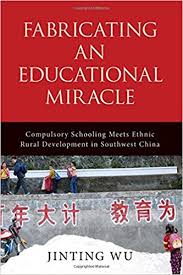
Book cover

Dr Jinting Wu is Assistant Professor of Educational Culture, Policy and Society. She is an educational anthropologist with an interest in philosophy and cultural studies. Her research often deploys ethnographic field methods to critically investigate relationships among schooling, society, and culture; it also examines educational policy shifts both as lived experiences and as reflecting the larger spheres of cultural ideation, social (re)production, nation building and globalization. Recent projects have involved study of rural minority education, child disabilities and special education, immigrant youth and families, and educational meritocracy on the global stage. Prior to joining the GSE faculty, she worked as Assistant Professor at the University of Macau (SAR, China) and was a postdoctoral fellow of educational sciences at the University of Luxembourg. Jinting is author of Fabricating an Educational Miracle (SUNY Press, 2017 AERA Division B Outstanding Book Recognition Award; The Society of Professors of Education Outstanding Book Award).