Dr Xing Xu, Sichuan International Studies University
Background and Research Questions
In China, there has been a rampant folklore about the female PhD, paralleling the female PhD with male and female as a third gender. Whether a third gender discourse was media manipulation or a social epidemic, the current literature on Chinese female PhDs is predominantly developed from an etic perspective. Little is known about how this cohort conceptualises themselves from an emic perspective as they internalise the identity of “female PhD” via their mundane doctoral education practices. Offering a platform for Chinese female PhDs to voice their perceptions is a significant step towards disclosing more pertinent nuances. Using Australia as the research site, this study aimed to investigate the interaction between identity and international academic mobility, with a focus on unpacking two research questions: 1. To what extent is the concept of third gender represented in Chinese female PhDs’ border- crossing doctoral education experiences? 2. How do Chinese female PhDs navigate their identity construction as an in-betweener traversing different sociocultural spaces?
Theoretical Framework and Research Methods
Given the salience of agency in one’s approaches to identity construction and study in an international education context (Inouye and McAlpine 2017; Phan et al. 2019), agency was chosen as the theoretical lens through which this study addressed the above questions. Also, the concept of in-betweenness (Bhabha 1994; Dai et al. 2018) was utilised, which was suitable for analysing how the participants mobilised agency to construct a transformed identity in physical and psychological transactions at and across the boundaries between their home and host cultural spaces. This study utilised a qualitative methodology of semi-structured interview that offers the flexibility to promote the participants’ fruitful reflection (Mill 2001). Depending on the participants’ availability and preference, either face-to-face (4 out of 10) or telephone (6 out of 10) interviews were conducted. Each interview lasted approximately 90 min. In this time, interviewees were encouraged to share their experiences regarding their preparedness prior to the overseas sojourn and their engagement in learning and social activities while studying in Australia. Further, as this study was a gender-based inquiry, they were also required to interpret their lived experiences from a female PhD student’s perspective.
Findings
By and large, this study reveals that the participants’ representation of their identity takes issue with their home cultural discourse, which stigmatises this cohort as a sexless third gender, objects to a deficit discourse that problematises international students as others, and challenges a broader gender discourse among societies which tends to highlight female doctoral students’ structural constraints (e.g. Haynes et al. 2012; Juniper et al. 2012) instead of their personal agency. With positive self-positioning, the participants employed three forms of “agency in mobility”, namely, agency as struggle and resistance, needs-response agency, and agency for becoming, to construct a transformative identity that was materialised through agentic endeavours and myriad structures within the in-between space. This study illuminates two dualities in the findings. The first duality points to the fact that the participants’ enactment of agency must accommodate structural factors in both home space and host spaces. On one hand, the participants’ agency as struggle and resistance was noticeably manifested prior to their mobility, in subverting the restrictive discourse held by their parents and relatives regarding the female PhD in their home context. On the other hand, their needs-response agency and agency for becoming were noteworthy during their stay in the host context. They presented themselves as proactive agents who capitalised on resources to meet professional, culture learning and emotional needs in the alien context. As well, they invested their efforts in the international education trajectory to transform their identity which features flexibility, inclusivity and liberality. The second duality relates to the reciprocity between agency and the in-between space in shaping the students’ identity. Whereas enactment of agency is entangled with the students’ assessment, imagination and manipulation of the in-between space, their agentic outcomes keep transforming the grand structure of that space, a consequence of which influences their agency.
As one of the first studies investigating the agency of international Chinese female PhDs, this study makes theoretical and empirical contributions documented above. It however has several limitations which hopefully can be addressed in future research. One of them is that it can hardly imply any generalisability or representativity of the cohort of international Chinese female PhDs given its small size. Also, the participants feature a great extent of homogeneity in terms of their socioeconomic level and marital status, which may hinder diverse findings from emerging. In order to tackle this, future research may consider investigating a bigger sample size with more heterogeneity. Further, this study only concentrated on an exploration of students’ interpretations at the time point when their sojourn was underway. Future studies may gain further insights by looking into their narrative after repatriating to China upon graduation. Does Chinese female PhDs’ enactment of agency change as they re-enter the home space? What impact does the international mobility have on their meaning-making and practices of agency upon repatriation? These are questions left to be examined.
Author Bio
Dr Xing Xu obtained her PhD from the University of Newcastle, Australia, and is Lecturer at Sichuan International Studies University. Her research interests include internationalization of higher education, doctoral students’ evaluation of educational experience, academic mobility, identity construction of doctoral students, and qualitative inquiry. Her publications have appeared in Higher Education Research and Development, The Australian Educational Researcher, Reflective Practice, etc. Her recent co-authored book The Eastern Train on the Western Track: An Australian Case of Chinese Doctoral Students’ Adaptation was published by Springer in 2020. She can be contacted via email: xing.xu@uon.edu.au.
Geng Wang (2021) ‘Stupid and lazy’ youths? Meritocratic discourse and perceptions of popular stereotyping of VET students in China, Discourse: Studies in the Cultural Politics of Education, DOI: 10.1080/01596306.2020.1868977
Since the start of the Reform Era in 1978, vocational education and training (VET) in China has been seen as inferior to academic routes and positioned at the bottom of the educational hierarchy. VET students are stereotyped as being ‘stupid and lazy’ and suffer considerable prejudice in Chinese society. Drawing on Foucault’s disciplinary power and Ball’s idea of performativity, this paper analyses how academically focused, exam-driven societal attitudes, as a form of meritocratic discourse, impact on these students and on how they perceive their stereotyped position within the Reform Era educational system. The findings reveal that these students have internalised the ideology of meritocracy, coming to see themselves as inferior and inadequate compared to their academic counterparts. Turning ‘the gaze’ upon themselves, they examine whether they ‘add up’ and assume responsibility for their own ‘failures’. VET students are trained to be the new kind of youthful subject required to sustain the Reform Era China’s engagement with neoliberal governance.
Introduction
Based on the lived experiences of Chinese vocational college students, this article focuses on the academically focused, exam-driven societal attitudes and sentiments that have permeated so many areas of these young people’s lives. Drawing on Foucault’s (1977) concept of disciplinary power and Stephen Ball’s (2000, 2003, 2012) idea of performativity, this study analyses how such societal attitudes, as a form of meritocratic discourse, impact on vocational students and on how they perceive their position within the Reform Era educational system.
Theoretical framework
In his early work, Discipline and Punish (1977), Foucault suggests that disciplinary power is a form of ‘power-knowledge’ that observes, monitors, shapes, and controls the behaviour of individuals within institutions and society. The technique of examination is particularly powerful as ‘it is a normalizing gaze, a surveillance that makes it possible to qualify, to classify and to punish’, and ‘it establishes over individuals a visibility through which one differentiates them and judges them’ (1977, p. 184). Within a Foucauldian framework, Ball theorised his ideas about the performance of students, teachers, and schools into the notion of ‘performativity’ (2000, 2003, 2012). For Ball, performativity is a technology, a culture, and a mode of regulation – or a system of ‘terror’, in Lyotard’s words – that employs judgments, comparisons, and displays as means of control, attrition, and change (Ball, 2000; 2003). The performances (of individual subjects or organisations) serve as measures of productivity or output, or as displays of ‘quality’, or as ‘moments’ of promotion or inspection. They stand for, encapsulate, or represent the worth, quality, or value of an individual or organisation within a field of judgement (Ball, 2000). Operating in the neoliberal market of performances, the individual is made into an enterprise, a self-maximising productive unit committed to the ‘headlong pursuit of relevance as defined by the market’ (Falk, 1999, p. 25).
Foucault’s concept of disciplinary power, especially his understanding of using examination as a technique (1977, p. 184), provides a conceptual lens to help us understand how individual young subjects are formed in the Reform Era and how the exam culture constructs the ‘docile and capable’ bodies required by neoliberalism (Foucault, 1977, p. 294). Moreover, Ball’s idea of performativity is an important complement to the Foucauldian perspective for this paper, as it looks at the ways in which lists, grades, and rankings work to change the meaning of educational practice within a neoliberal context (Ball, 2013). Ball extended the Foucauldian concepts to consider how performativity as a key mechanism of neoliberal government uses comparisons, judgments, and self-management (Ball, 2013, p. 163). The next section discusses the methods employed for this study.
Findings
Vignettes of several students’ life stories regarding their family expectations and secondary school learning experiences are presented. These vignettes are representative of the stories told by the participants in the study. The findings also demonstrate how the students perceived the exam system and their stereotyped positions.
Discussion and Conclusion
This study reveals the lived experiences of these students when pushed to achieve academic excellence in their previous schooling experiences, their perceptions of the exam system, and their interpretations of their disadvantaged situations. Growing up in an environment where the meritocratic discourse permeated so many areas of their lives, these students had internalised the ideology of meritocracy and consequently the stereotypes against them, seeing themselves as inferior and inadequate in relation to their academic counterparts. Foucault’s concept of disciplinary power and Ball’s idea of performativity have provided useful tools for making sense of vocational students’ lived experiences and opinions in the Chinese Reform Era.
In their research, Gong and Dobinson (2019, p. 339) found both socialist and neoliberal rhetoric at play in the Chinese young people’s narratives they investigated. They supported the view that ‘the existence of a neoliberal discourse in Chinese education does not mean a neoliberal subjectification in the Chinese people’ (Gong & Dobinson, 2019). However, the findings of this paper demonstrate that the Reform Era has produced a neoliberal legacy – vocational students who are stereotyped as self-deserving failures and assigned to the bottom tier of the educational system. Through the discourse of meritocracy, these young people turn ‘the gaze’ upon themselves to see if they ‘add up’, and take responsibility for their own ‘failures’. They are trained to be ‘bodies that are docile and capable’ (Foucault, 1977, p. 294), producing a new kind of youthful subject who can act in their own self-interest in order to sustain the Chinese Reform Era’s engagement with neoliberal governance. However, the perspectives of these students also offer evidence that young people have the potential to move beyond being mere ‘objects and instruments’ for the exercise of disciplinary power.
Author bio:
Dr Geng Wang currently works as a researcher at School of Education, Tianjin University, China. She is also a member of Tianjin Institute for Emerging Engineering Education. She holds a PhD (University of Glasgow) in education. Her research interests revolve around education and work transitions through the lifecourse, particularly in relation to vocational education and training for young people, what influences transitions and their impact on learning and development. She can be contacted via geng.wang0313@hotmail.com.
Liang, Y., Dai, K., & Matthews, K. E. (2020). Students as Partners: A New Ethos for the Transformation of Teacher and Student Identities in Chinese Higher Education, International Journal of Chinese Education, 9(2), 131-150. doi: https://doi.org/10.1163/22125868-12340124
In this theoretical discussion paper, in the context of internationalisation, we contribute a novel perspective for Chinese higher education (HE) sectors by considering the possibility of adopting Students as Partners (SaP hereafter) as an initiative to support the transformation of teacher and student identities within Chinese HE, and advocate further adaptation in Chinese pedagogical practices. This paper starts with an introduction on SaP, followed by a discussion about the concept of identity in teaching and learning. Then, based on the survey results on the expectations of Chinese university students and academics in different periods, critical discussion on the trend of identity changes of student and teacher in Chinese universities is undertaken. This leads to further understanding the intersections between the three bodies of literature (SaP, identity, Chinese HE). Finally, a discussion about the possibility of conducting SaP practices in the context of Chinese HE is critically presented.
The growing body of SaP in teaching and learning
The concept of teachers engaging with SaP focuses attention on the pedagogical relationships between learners and teachers (Healey, Flint, & Harrington, 2014; Matthews, Dwyer, Hines, & Turner, 2018). In practice, pedagogical partnerships between students and teachers unfolds as ‘a collaborative, reciprocal process through which all participants have the opportunity to contribute equally, although not necessarily in the same ways, to curricular or pedagogical conceptualisation, decision making, implementation, investigation, or analysis’ (Cook-Sather, Bovill, & Felten, 2014, pp. 6–7). In partnership, certain values are enacted between students and teachers that define the relationships such that SaP is a values-based practice (Matthews et al., 2018). Healey et al. (2014, pp. 14–15) named the values that underpin this relationship as ‘trust, plurality, responsibility, authenticity, honesty, inclusively, reciprocity, and empowerment’, emphasising that students and academic staff benefit from it together. For Cook-Sather et al. (2014), the values of mutual respect, reciprocity, and shared responsibility for learning and teaching were central to SaP. SaP stretches the traditional boundaries of the curriculum where any space on campus becomes a pedagogical space where students and staff can learn together (Dwyer, 2018). Analysis of theoretical frames in research on SaP found that the constructs of power and identity underpinned partnership practices as relational praxis that calls into question taken-for-granted assumptions about the role of the teachers and the students in ways that illuminate power dynamics and relational identities by giving permission to learners and teachers to reshape them (Matthews et al., 2019a). For the sake of sustainability and enriching SaP as a global scholarship, partnership is discussed as a ‘complex cultural-linguistic construct’, emphasising that cultural backgrounds will affect how people interpret SaP (Green, 2019; Cook-Sather et al., 2018).
Identity in teaching and learning
The concept of identity is about how individuals and society answer the question ‘Who are you?’ (Vignoles, Schwartz, & Luyckx, 2011). In this broad notion, ‘people identify their “selves” not only with their individual physical and psychological characteristics, but also with significant others, groups or social categories, material objects, and places’ (Vignoles, 2017, p. 2). Therefore, the identity of a person is shaped by the influence of personal internal factors and the external environment. At the same time, identity also influences the response of the individual to future expectations (Simon, 2004), which plays a vital role in personal development. As co-existing individuals in universities, the identity of students and teachers can be affected by external social and cultural environments and the perception of differences between different individuals. Such an ongoing and changing process will further link to their academic performance and future development (Lounsbury, Huffstetler, Leong, & Gibson, 2005).
A discussion about identity changes in the progress of Chinese higher education
According to the exploration of Cortazzi and Jin (1996), Tam, Heng, and Jiang (2009), Jia (2011) and Kim and Olson (2016), it is evident that there is a general shift in the identities of learners and teachers toward more egalitarian teaching and learning environments. This is a move toward more participatory and relational pedagogies that value the contributions of students in the learning and teaching process. As reform policies continue in the context of internationalisation, we expect that more Chinese university students and teachers will have a new understanding of their identities through the expansion of their horizons and experiences in the global HE context.
Identity perception in pedagogical partnership
In the context of SaP, Cook-Sather (2015, p. 2) defined the notion of identity as ‘how individuals define and experience themselves and are defined by others—how an individual/personal sense of sociocultural location and character intersects with how that individual is constructed in many different ways within any given culture and society’. Therefore, identity in partnership is about how teachers and students treat themselves as teacher, student, and partners, and how they perceive each other (Matthews et al., 2019b). As one of the important factors of pedagogical partnership, Cook-Sather (2015) pointed out that the identities of students and teachers influence and are influenced by partnership. In partnership, it requires teachers to recognise the value of students in the process of forming their identities. In this way, both students and teachers could gain valuable experiences in a mutual and reciprocal way (Bovill, 2019a). The shift of student and teacher identities reflected by SaP scholars resonates with the marked changing trend in Chinese HE over the past two decades. We posit that SaP is a more developed form of this trend while acknowledging that Chinese HE comprises a large, diverse and complex array of institutions where western pedagogies have to be adapted with criticality.
Adapting to the new era of Chinese higher education
The current ethos of partnership is framed within a western-centric, Judaeo-Christian value system and rooted in student engagement (Healey et al., 2014), student voice (Cook-Sather, 2018) and the response to the commitments on democracy (Bovill et al., 2013), and these practices, not without challenges, have proven impactful in western-centric universities. What values should guide the partnership ethos in China? This is a line of conceptual and empirical research we are currently conducting that draws on the voice of Chinese students and academics at Chinese universities and theorisations of Confucian values intersecting with values espoused in western-centric SaP literature (Liang & Matthews, 2020). The recent research (Liang & Matthews, 2020) has strongly shown, with the establishment of more Sino-foreign universities and the continuous broadening of horizons, SaP practices are growing in Chinese universities. Through a program of research into SaP in Chinese HE, we are exploring this belief and further investigating how student-teacher relational identities are being constructed and disrupted through educational reform efforts. This is also a line of research where many more scholars are welcomed and encouraged to explore and investigate.
Conclusion
This article critically discussed the concepts of identity in the Chinese HE con- text by connecting with the western idea, SaP, attempting to provide a possible way for further identity change of the participants in Chinese HE. Based on the comparison of survey results over a decade spanning the century, the perception changes of teachers and students on their identities in Chinese universities indicate a trend of inclusive and respectful teacher-student relationships and more mutually beneficial teacher-student interactions in teaching and learning—resonates with the relational identity reflected by SaP. Meanwhile, the cultural-depended characteristic of SaP and the gradual opening of national policies and initiatives as the scaffold of each other, providing a positive environment.
Authors’ Bio
Mr Yifei Liang is a doctoral student at School of Education, University of Queensland. His research focuses on students as partners (SaP), student engagement, learner-teacher relationship and higher education pedagogy in the context of Chinese higher education. His scoping review of SaP in Asian countries has appeared in Higher Education Research & Development. He can be contacted via y.liang@uq.net.au.
Dr Kun Dai is a postdoc research fellow (funded by China International Postdoc Program) at the Graduate School of Education, Peking University. His research focuses on teaching and learning in higher education, doctoral education, transnational higher education, and intercultural learning and adjustment. Dr Dai is an associate editor of Journal of International Students. His articles have appeared in several peer-reviewed journals, including Compare, Assessment & Evaluation in Higher Education, International Journal of Intercultural Relations, and Oxford Review of Education. He can be contacted via kdai@pku.edu.cn.
Dr Kelly E. Matthews is an associate professor at the Institute of Teaching and Learning Innovation, University of Queensland. Her research interest includes students as partners in higher education, curriculum design in higher education, and university teaching and learning. Dr Matthews is an Australian Learning & Teaching Fellow and she also serves as Inaugural Co-editor, International Journal for Students as Partners (IJSaP). Dr Matthews can be contacted via k.matthews1@uq.edu.au.
Tackling rural-urban inequalities through ed mobilities: a lecture video by Dr Cora Lingling Xu (Durham University, UK). This is based on her article published in Policy Reviews in Higher Education.
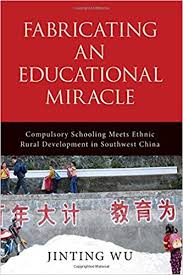
The NRCEM was privileged to speak with award-winning author Dr Jinting Wu about her fascinating research on rural ethnic education (as encapsulated in her book ‘Fabricating an education miracle’, SUNY Press) and disability education in China. Jinting also helpfully shared tips on how to transform a PhD dissertation into a monograph with a University Press. She additionally revealed her fascinating and important work as a meditation practitioner and trainer.
To listen to the episode in full, click here. To read introductions to Jinting’s articles, click here, and here.
Dr Jinting Wu, University at Buffalo, The State University of New York
Cora: Can you briefly introduce yourself? (Institution, position, research interests)
Jinting: Thank you so much for your kind invitation to produce this podcast for our network members. My name is Jinting Wu. I am an assistant professor of Educational Culture, Policy and Society at the Graduate School of Education, State University of New York at Buffalo. Prior to joining SUNY Buffalo, I worked as Assistant Professor at the University of Macau and was a postdoctoral fellow of educational sciences at the University of Luxembourg.
I am an anthropologist and comparative education researcher. My research interests coalesce around the production and amelioration of educational inequality in varied contexts and institutions. To date, I have pursued three main lines of research: rural minority education (originating in my dissertation), immigrant youth and families (postdoctoral study), and child disability and special education (current research). These research streams are synergistically linked to the broader concern of educational inequality as lived, negotiated, and often intersected with class, gender, racial/ethnic, biopolitical, and citizenship regimes. In addition to ethnographic projects, I also have strong interests in philosophy and cultural studies, as these fields shed light on the politics of knowledge production, push us beyond the Western analytical traditions to draw on Eastern, Indigenous, Global South epistemic frameworks to think about what kinds of interpretive possibilities are there for understanding social realities differently.
Jinting: Certainly. The book and the field reflection article draw from the same body of work, so I will talk about them together first. I want to start with a note of my biography, because I believe every research has a biographical note behind. I grew up in a homogenous small town in southeast China’s Fujian Province and have always had a fascination for lifeworlds different from my own. My undergraduate studies in English language and literature cultivated my affection towards storytelling as a way to understand other people’s life. In graduate school, I discovered anthropology which allowed me to continue exploring different ways of seeing and living, and to develop a culturally sensitive lens to understand educational issues. And the fact that anthropology is a discipline in which scientific writing and artistic creativity are equally important made my transition from the humanities to social sciences a seamless one.
As they say, research projects often come about with a great deal of serendipity. My first project, which ultimately led to the book you referred to in your question, emerged from a summer volunteer opportunity that took me to a part of China, that could not have been more different from my East Coast Han majority middle-class upbringing. There, I saw striking poverty and alarming dropout rates among rural minority youth, against the backdrop of the state promotion of ethnic tourism and rural development. All of this came together and made me ponder for the first time why these children were not in school despite the ever escalating educational competition in China, and despite the belief in education’s role in development and social mobility. These questions became my constant companions, took me back to Guizhou in subsequent summers, and culminated in my dissertation study, which draws upon 16 months of multi-sited ethnography, oral history, and archival research in two villages in Southwest China. This research was sort of my rite of passage to becoming an anthropologist, what people call the “slow cooking of social sciences,” which involves painstaking long-term fieldwork, living with the local communities and learning the local language both literally and symbolically, and capturing the particularity of local life in relation to dynamics and forces that transcend the local boundaries. As Clifford Geertz used to say, as anthropologists, we study in the village; we don’t simply study the village. The kinds of issues we study are really transcending the boundaries of the local community and have larger relevance. In a nutshell, this book is an attempt to unpack how education is increasingly penetrated by development programs, audit culture, tourism, and labor migration to produce unintended consequences. I take a close look at the paradox of consequences when compulsory education policy not only fails to reverse the high attrition rates but also becomes part of the problem it is charged to address.
So this is the book in the nutshell. The field reflection article recently published in Anthropology & Education Quarterly, is a retrospective attempt to unpack the black box of ethnographic fieldwork – we often talk about the research product and not about the research process – and think about ethics and methodologies through the metaphor of moral laboratory. I draw from two episodes in my fieldwork, one in which I was taken as a “spy” and almost expelled from the field as a consequence, and one in which I was accompanied by my parents for brief intervals, to talk about the kind of political, social, and cultural negotiations I had to undertake in my fieldwork. These two episodes are used as a heuristic device to illustrate fieldwork encounters and ethics as a form of moral laboratory –as you know, natural scientists work in physical laboratories where they manipulate the environment and do control and experiment and find the results, and social scientists also engage in a sort of moral laboratories – where assumptions are tested, boundaries are negotiated, and relations are made and remade. So in a sense, we are not just giving an account of “what happened” but also have to make sense of the local social world through recasting our own selves in its midst. We are transformed through the process of fieldwork.
The spy episode happened about three months after I arrived in one of the villages where I already established rather good rapport with the local community. The Public Security Bureau approached my informants because they were suspicious of my intention as I had stayed for several months and was affiliated with an American university. The fact I did not have a job and could hang around and talk to people all day long with the support of overseas funding was incomprehensible at best, and questionable at worst, for village bureaucrats. That I was there during a time when village schools were caught in a whirlpool of tourism transformation process and when local villagers were in constant conflicts with bureaucrats and commercial developers made my presence even more unwelcome. I was staying with a teacher’s family at that time; and they were very concerned about whether my presence would make their life difficult. In order not to jeopardize the rapport and lose my access altogether, I decided to take a temporary exist from the field site, and spent four interim months in my other fieldsite, to let the situation settle and wait for the optimal time to return. There my parents visited me on two separate occasions, and serendipitously opening up a new world to my everyday routine, changing my role from a researcher to a daughter. My father and my mother came on two separate occasions. My father, a very sociable person, was making friends in no time and invited to have drinks with local men, and my mother’s interest in embroidery and handicraft created informal opportunities to interact with women. My mother’s presence created an opportunity for me to talk to the local women, and my father’s presence created an opportunity for me to talk to the local men. Most importantly, my being accompanied by parents made it easier for the locals to locate me in their social category of kinship, and subsequently allowed me to be seen as less “foreign.” These two episodes complemented each other and allowed me to transform from a researcher who only asked people questions to an object of gaze by the informants themselves. Ethics and relationships in the field cannot be codified in a set of rules and guidelines that you learn before going to do the fieldwork. The Institutional Review Board (IRB) is not sufficient in helping us navigate these fieldwork dynamics. The fact it is a moral laboratory means it has to be always negotiated at any given moment in the field. I had great fun writing this piece, which I did not get to write about in the book. I hope that it will be helpful for students who are new to the ethnographic method and learning how to negotiate political, social, and cultural dynamics.
Cora: I know I’m certainly going to introduce this piece to my students who are preparing to enter into the field. It will be incredibly helpful to them. It’s really fascinating to learn how the sense of serendipity brought you to the fieldsite and then opened up access to identity makers that positioned you differently in the fiedsite. Also fascinating is how the mother-daughter relationship allowed you to interrogate how each of you were and are positioned in the broader social political history of China, the third piece we are going to talk about today.
Jinting: The chapter about my mother was part of an edited volume on childhood and schooling in (post)socialist societies edited by Iveta Silova and other colleagues. The chapter is a very personal piece of writing to me, because I had always wanted to write a family memoir of some sort to document the experiences of three generations of women in my family. My maternal grandma was born in the early 1920s. At that time, women did not receive education at all. She, a rare case, not only received a good education (“good” in the standard of those days), but also became the first and only woman judge in my little town. My grandma’s story was quite incredible. And then here goes my mother’s story, you read in the chapter. So all these years I had always wanted to write a family memoir of some sort. Then this opportunity came, and I decided to write about my mother first. In a sense, this chapter had been in the making for a long time. This chapter is a tribute to my mother, who came of age during China’s turbulent decade of the Cultural Revolution, but who did not interpret it the same way as we would see in the conventional academic literature. My mother fused her personal interpretation, and even a bit of optimism and hope, in narrating her stories during the cultural revolution. This was fascinating to me, because as our education in the West often tells us, this is a dark period of oppression and totalitarianism. So my conversation with my mother really opened up a new angle of vision to enter this period of China’s history.
My mother’s youth and adulthood have been intertwined with state’s political agendas, such as the Red Guards’ Movement, the “Down to the Countryside” campaign, revolutionary dances and dramas, and various other forms of class struggles. It was fascinating to capture all of these in the small space of a chapter to think about what education means in a political state of exception. Obviously education was dramatically suspended, and my mother did not go on to pursue a college degree despite being a very smart student. Her education became political socialization. To this day, she still lives the legacy of those years, such as teaching the revolutionary dances. In a way, this is not just my mother’s story. It is a story of the party-state and its youth.
My mother’s journey sheds light on the fraught relations between party-state and its youth, between education and political socialization, between public values and authoritarian limits that continue to be part of the lived realities in contemporary China.
Through memories, oral history, personal memorabilia and biographic accounts, my mother’s story intertwined with my interpretation. I was trying to highlight the state’s shifting power, as mediated by continual assertation of political authority alongside people’s creative agency. I wanted to emphasize creativity and agency even in the narration of a dark time. Over the years I have heard my mother talk about her youth, but 2016-17 was the first time I made appointments with her and talked on the phone to get some details straightened out. A lot of my friends who are not in academia asked me to share this piece, because they have met my mother and wanted to read about her. So this kind of writing has a unique reach to the audience.
Cora: Certainly. Through this type of work I feel I can relate to the author and the time they lived through much better. I was personally very drawn to this piece, probably because my own parents (I think they are a few years younger than your mother) went through their private school during the Cultural Revolution. A lot of the scenarios you described were also experienced by my parents. For their entire generation, they have such an unprecedented memory. What I like about this piece is exactly as you suggested. While outsiders and political commentators may think of this as a dark age, the actors who actually lived through it may have experienced it as something quite different. This also depends on their backgrounds. I have an uncle, my father’s elder brother, who was at that time really suffering a lot because he was one of the elder children and there was not enough food. But my father, who is younger, did not have to go through that because the family prioritized the younger sibling’s needs. These very individual experiences cannot be replaced or brushed away. Every story needs to have an outlet to be represented.
Jinting: That’s so true. There is not just one Cultural Revolution. There are many, seen from unique personal experiences and interpretations. My mother always talks about how her classmates who were not selected to go to Beijing were resentful. So their memories of that period were not the same. During their class reunion fifty years later, people sat around the table, careful not to broach the topic. They were very sensitive and avoided this topic. I think I wrote about this a bit in the chapter. The avoided the topic of going to Beijing and meeting chairman Mao and living through the Cultural Revolution. It’s such an elephant in the room – depending on which part you touch you tell a different story. So they simply avoided it. But it is very educational for the younger generations. This piece is a small attempt to preserve the personal in the political.
Cora: That’s a good way to put it. You have already mentioned your motivation in conducting these researches. While writing your book, book chapter and article, were there any interesting anecdotes that you can share?
Jinting: Of course. Long-term fieldwork always produces ample anecdotes. I have already talked about the two episodes so I won’t repeat. One anecdote I think is worth mentioning is my efforts to learn the local language, the Miao and the Dong.
In my fieldwork, I made intentional efforts to learn my participants’ language because it allowed me to establish rapport and gain an in-depth cultural knowledge. One of my mentors said that you only hire a translator when you actually understand the language. It’s paradoxical. Precisely because you understand the language, that’s when you can tell whether the translator is telling you the truth or not. Joke aside, anthropologists take language learning seriously. What I did was I carried a notebook with me wherever I went, jotting down words and phrases in Miao and Dong, marking their pronunciations with a mixture of Mandarin, my hometown dialect, and English according to the phonetic features I heard.
The locals were amused by my efforts and at times asked me “What is the use of learning our language? We want our kids to learn your language and English.” But people gradually started to see me not just as a normal tourist or a researcher who came and stayed over a weekend and left with a bunch of recordings and who never returned. They saw me as this interesting person who came to live with us and tried to learn our language. In the Dong village, the entire village shared the last name Lu. locals jokingly asked me to change my last name to Lu, as I was now living in the Dong village of the Lu’s. In the Miao village, my efforts gained me a Miao name by which villagers gradually came to remember me. My Miao name was given by some middle school teachers, who chose this name because it refers to a type of vegetable commonly used in making pickled fish soup, a local specialty dish to welcome special guests. In the village, females are commonly named after natural objects that are important for an agrarian livelihood. The naming was a sign of recognition and strengthening of our bond over time.
I also carried an atlas of Guizhou, a booklet of regional maps. Whoever I met, I would take it out and ask them to tell me where they were from. They were mostly from Guizhou and they would flip the pages and told me where exactly on the map they were from. So the atlas was a device for me to invite conversation and approach people in a more organic way, because people were interested in travels. In retrospect, they also asked me where I was from. We traded stories about travels and families. I often got asked, “what is the peasants’ life like in the United States?” People were very interested in the life of their counterparts in a different part of the world.
Cora: Fascinating. This practice of naming as a sign they had accepted you. Also interesting is that you were named after a vegetable, something very tangible and maybe of symbolic meaning to them, because it’s a special dish. I recently read an article about the sociology of naming in the context of Chinese international students in the U.S. choosing multiple names. This scholarship is quite fascinating to me. Now that I heard your anecdote, it strikes a chord for me again.
Jinting: We can talk about your name, Cora.
Cora: I chose Cora Lingling Xu as my publication name. It’s very strategic because in China if there are not millions there are hundreds and thousands of Lingling Xu. If I publish as Lingling Xu, it will be difficult to distinguish myself. But also I took on this name Cora when I went to Hong Kong for my undergraduate study. It was not my choice actually. I remember my first day when I went to the university, there was a white male English language lecturer who gave us a task. The task was to choose an Anglophone name. I thought okay I could do it later. But then he gave me a dictionary and pointed to the last few pages of English names and asked me to choose one. So it was like a dictation that I had to do that. At that time I felt quite uncomfortable. Being a very young student, I did not know the implication. So I chose this name. You probably know, it is quite common for people in Hong Kong and Macau to have Anglophone names. So this name stuck with me. Now it’s become part of me. When I reflect how this name came into being and became part of me, it was actually quite a brutal process.
Jinting: It was forced upon you by a White Anglophone teacher. I think it is quite fitting for Hong Kong’s colonial context. I have a similar story. When I went to Shanghai for my undergraduate studies, we had a foreign teacher who had trouble pronouncing Chinese names. So everyone had to choose an English name. I had no idea and chose Jenny at that time. The name never stuck with me. I went to the U.S. for graduate school. People asked me: “what’s your name?” I thought maybe they preferred to call me by the English name. But they insisted, “No, what is your real name?” So it’s interesting sometimes the name stays with you and sometimes it doesn’t.
Cora: Indeed. Many of our members are interested in the publication process of your book/book chapter/article. Today we specifically talked about your book. Can you share some of your experiences of getting this book published?
Jinting: Sure I can speak a little bit about the book publication. In fact, I recently gave a Professional Development Brownbag workshop to our students on how to turn one’s dissertations into books. In my field, anthropology, book publishing is a standard practice after one finishes her/his PhD, especially if one chooses to work in academia. But your dissertation and your book manuscript are not the same thing. They are two different creatures. Why, because very few publishers are interested in publishing a revised dissertation. In fact, they encourage you to scratch the very word “dissertation” from the manuscript. They want to publish an original, engaging piece of work, which may or may not have originated from your doctoral research. So your job is to take the dissertation as a foundation but move way beyond that in various ways which I will briefly talk about.
The main purpose of a dissertation is to show a narrow audience, your dissertation committee, how you’ve grasped a body of literature, how much you know. On the other hand, the main purpose of a book is about joining or creating a conversation with a larger audience. Nowadays publishers are very concerned about marketing: how much your book is going to sell and who it’s going to sell to. So if you write in a jargon-filled way, so called constipated writing, the publishers won’t give you positive reviews. So this may sound harsh: but parts of your dissertation will be completely thrown away and rewritten from scratch. This happened to me. I had to go back to my original four hundred pages of fieldnotes, and dug out stories and anecdotes that did not go into your dissertation. So when you decide to publish your dissertation in a book, the first job is to come to term with the fact that you are going to completely reshape that manuscript. There is no way you can maintain that technical format of intro, lit review, methods, data, discussion and conclusion. You will break that apart and regenerate a more integrated format that consists of a number of meaningfully provocative titles. One of the advice I received is to never use the words “introduction and conclusion” in the table of content. Why waste the space when you can say something more than introduction and conclusion? You also want to transform a jargon-filled form of writing to an engaging voice your reader can actually enjoy.
First things first: what you need is a book proposal. But even before that, you want to draft an email to a potential publisher’s acquisition editor first to introduce your topic and express your interest in publishing with them. The email needs to be very brief, a few lines, because the editors have no time to read lengthy emails. Just a few lines and they will get back to you if they are interested. But before you approach an editor, you must do your homework, studying the press to see whether it actually publishes scholarship in your field. If the press published in your field 20 years ago and dropped that focus in their current list, you may save your efforts not to contact them. Make sure the press is actively publishing works in your field. If that’s the case, you want to make it clear in your initial email to the editor, that you see a strong fit to their current list, and you see how your work will bring a new dimension to their current list. So initial short email, then wait for the response. If they respond, “That’s very interesting. I’d like to see a book proposal.” Sometimes they will ask a few more questions, then they will decide whether they want to see the proposal. At that point you send in the proposal.
About the proposal: each press has its own recipe. You need to go to their website and take out that recipe because they have different components. There is the component of the prospectus, a couple of paragraphs capturing what the book is about. And then chapter titles, intended audience, marketing, course adoption, competing titles (who else have already published in your topic and how do you see yourself competing with or complimenting their existing work). You want to craft a really good proposal according to that recipe. Just remember that acquisition editors receive 200-300 book proposals each year and they can probably publish only 20-30. You want to be well positioned when you send in your proposal.
Once you send in the proposal, there are a number of scenarios. One is that they are really interested and will send the proposal out for review. One is a flat rejection. Don’t get discouraged because it is not the end of the world. Lots of us have had lots of rejections. It’s common, if it is your first book, to have rejections before you hit a press that is really interested in taking on your work. So if it is a rejection, then learn from the process (if they give you feedback then pick up the feedback), and move on to a different press. If it’s a positive review saying that we are sending this proposal out, then you have your fingers crossed. Remember at this stage, they are not reading the full manuscript yet; it’s only a proposal. Once the reviews come back, if they are positive, the press will want you to address, point by point, how you are going to tackle the criticism raised by the reviewers. You will write a detailed letter in a very constructive and appreciative manner. Even for points you do not see worthwhile to revise, you want to appreciate the reviewers’ time and insight and tell them why you don’t think it is necessary to revise. Your letter will be taken back to the press’s board of directors. After their deliberation, they will tell you whether they want to grant you a contract or not.
If they give you the contract, you have the green light to go ahead and complete and submit the manuscript. Sometimes you have more work to do before they grant you the contract. Once you have the contract, then the revision process starts. As I mentioned before, the revision is very important. My suggestion is to ask a senior colleague who has gone through the process before, ask them to read your chapter and advise you on how to shape it in a way that is both sophisticated and pleasant to read. Be consistent with the efforts and don’t delay the revision process. A major work like a book requires steady, consistent work, rather than binge writing. In my case, I had to go back to my original data. One of the comments after I sent in my full manuscript was that it was too theoretical, which was indeed the case. My earlier dissertation writing was a little constipated. Again, it has to do with the committee’s requirement. They wanted me to hone in on the theoretical part, and the stories were falling on the sideway. So I had to go back to find more anecdotes. It was a really helpful comment that shaped the book in a significant way. Then you send the full manuscript back. Sometimes they will send it out for review, but most of the time, they just do an in-house review. In my case, the revision was accepted as is. And finally my acquisition editor handed it over to the production team. Then the rest of it took place, designing the cover, making an index, copyediting, and so on. They will tell you a final release day of the book. After that, the book takes on a life of its own.
The good thing about publishing with an academic press is that it will work with you after the publication. You mentioned the book award. As an author, you do the homework and tell the marketing team which societies you would like to send the book to compete for a certain award. You can also request copies to be sent to journals for book reviews.
Whether you eventually turn your dissertation into a book or not, the future of academic writing is not about satisfying narrow academic committees but about speaking to the broad interests and expectation of the general readers. I highly recommend William Germano’s seminal work From Dissertation to Book for those who are interested in publishing their revised dissertation in a book.
Cora: that’s so helpful. You did say that you had to revisit your writing because your original dissertation was too theoretical and you had to make it more vivid and include more storytelling. How do you strike a balance: on the one hand you want it to be sophisticated and on the other hand you want it to be easy to read?
Jinting: I remember when I was in graduate school, I took a class called Ethnographic Writing from my mentor Kirin Narayan. One week all we did was to each take a piece of dense writing to class and deconstruct it. Rephrase it, paraphrase it so that the ideas remain but the passage reads very differently. How do you strike a balance? I think as graduate students we tried so hard to impress. We tended to use big words. But the more you publish and write and think, actually, writing is a reflection of your personality, a reflection of the whole of the scholar as a human being. When I read a piece of writing, I like to use it as a device to connect with the author, what kind of voice is there. I’d encourage people to start working on their voice, because everyone’s voice is different and unique. Cora you are already a seasoned writer and have your voice. For students in graduate school, the real impressive stuff, from my perspective, is not when you try to show off vocabularies, but is the idea behind, the fluidity that you are able to demonstrate, the ability to express a sophisticated idea in a way that makes people want to read more. The only way to do that is by imitation, by going to the writing that really connects with you at a deeper level. Read and imitate it. I was fortunate because my background in English and anthropology emphasizes storytelling and I got a lot of exposure to narratives, stories, creative non-fictions. Whenever my writing is stuck, I go to the good books, sometimes this means a novel, to get the creative juice going.
Cora: That’s interesting to know we all need to recharge. For you the source of inspiration is creative writing. That’s really good to know. I was planning to ask you what your next steps for the research project are. From your introduction, it seems that you are working on a whole new field. Is disability education your new focus for the moment?
Jinting: As I mentioned before, my intellectual biography is made with a great deal of serendipity. The new project also came about through a serendipitous opportunity. In 2012 when I was wrapping up my PhD, I went to an AERA pre-conference seminar. There I met a group of scholars and was invited to participate in a comparative study on the global convergence of special and vocational education, which was an entirely new territory for me at that time. It’s a global comparative study, and I became the China person to work on the project. Then I moved to Luxembourg and then to Macau. Macau’s location at the edge of mainland China gave me an advantage to do fieldwork for this project. The comparative study has over the years culminated in a jointly authored book titled “The Global Convergence of Vocational and Special Education” published in 2017 by Routledge.
Through this research, I visited special education schools across the country and learned so much. My entire understanding of special education opened up. I decided to do an independent research on this topic, which focuses on the rising number of children with special needs who are being funneled into China’s segregated special schools and grow up with stigma, mediocre schooling, and bleak employment prospects. Children with disabilities are by and large judged unfit in mainstream schools focused on producing high-performing test-takers. Where do these children go then? Although China embraces disability inclusion, intriguingly, structural segregation continues to exist and gain ever-stronger state support in recent decades. Moving my attention from the rural area to the urban area, my current project takes place in two special schools in Guangzhou Municipality. Chinese policymakers consider special schools a necessary evil to help China transition to a fully inclusive model. This research, in a nutshell, examines the unique experiences, dilemmas, and creativity of actors who daily inhabit these segregated spaces, and the ways they understand segregation and negotiate stigma for a better future for the children.
Cora: Really important work. I’m no expert in this field, but it seems that there are not a lot of work done in this area.
Jinting: There are some works done by Chinese scholars which are very valuable. Very few English publications and very few qualitative longitudinal research. The intersection of disability and segregation is a fascinating domain. For me, it is not about pointing fingers at Chinese practice of segregation as a policy failure. The goal is to understand how people interpret the space. My initial interpretation is that it is both a space of marginality and a space of potentiality. Lots of parents are very appreciative of such a space. I want to bridge the Western model of inclusion and the Chinese model of segregated inclusion, so to speak, to see what we can learn from both sides.
Cora: Over the years I had to give lectures on special education comparing the U.K. and the Chinese cases. I was really struggling to find writing about the Chinese situation, whereas there’s plenty of writing about the UK. Based on my very limited understanding of special education, even in the U.K., the model of inclusion is not uncontested. Apparently, there are many different ways of inclusion and inclusion itself can engender a host of issues. We are talking about resources. If you don’t have necessary equipment, teaching staff, capacity, inclusion can be a disaster.
So I really enjoyed our conversation today. Is there anything else you want to share with us today?
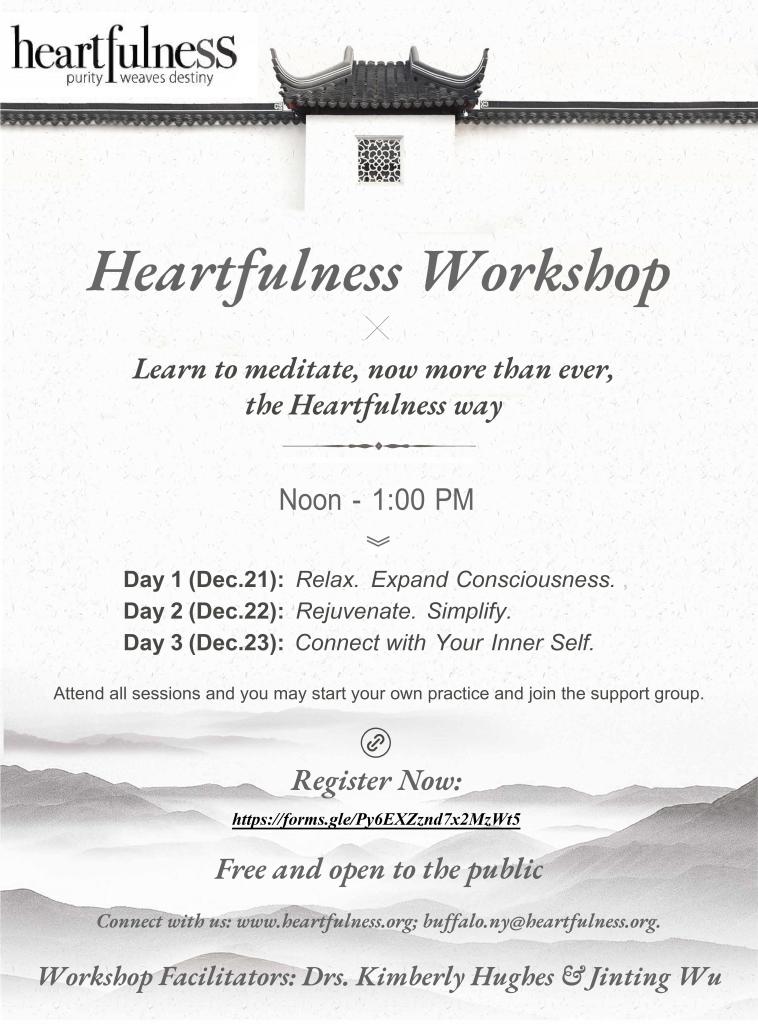
Jinting: I’ve talked a lot. There’s always more to say. I want to say a few words about what I do outside academia if that’s okay. We have so many facets to our identity; we are not just scholars. Besides my academic persona, I’m a mother of a young child and also, very importantly, I’m a meditation practitioner and trainer. These two roles are very important because they sustain what I do. I work with community members to provide support for their meditation practices. The system of meditation we practice is called Heartfulness, which is entirely free. Every semester, end of the semester, I host relaxation and meditation workshops to help students release stress during their final weeks. Going back to the idea that scholarship is deeply human, all aspects of the human experience will come through your scholarship. Meditation has helped me so much. I wouldn’t have accomplished half of what I’ve accomplished if I did not have the skill. As much as being a mother teaches me the gift of love and reminds me that scholarship needs to bring up the better side of the humanity, meditation does the same to me. Those in the audience, I’m sure we all have the non-academic side of the experience to complement what we do on the professional front. We are all searching for meaning in some ways; scholarship is one way, family responsibility and spiritual practices may be other ways.
Cora: That’s so true. A lot of times, early career scholars tend to think your scholarly identity is the only identity. You tend to place a lot of emphasis on that and you get a lot more fragile and vulnerable. What you’ve shared is so important for us to understand you are also embedded in the community and family, besides being a scholar. It resonates with what we said earlier that all researchers need to constantly recharge and get sources of inspiration. I have to say your students are very lucky. I wish I were one of your students so that I can enjoy the relaxation workshop that you host.
Jinting: We are actually doing a remote workshop. I will share with you the flyer.




 Network for Research into Chinese Education Mobilities (NRCEM)