
Why students leave Chinese elite universities for doctoral studies abroad: Institutional habitus, career script and college graduates’ decision to study abroad

Research Highlighted:

Li, L., Shen, W., & Xie, A. (2021). Why students leave Chinese elite universities for doctoral studies abroad: Institutional habitus, career script and college graduates’ decision to study abroad. International Journal of Educational Development, 84, https://doi.org/10.1016/j.ijedudev.2021.102408

Despite the rise of China’s elite universities in global rankings, the number of Chinese students going abroad to pursue doctorate degrees is still large. In order to understand the reasons behind, we launched a major project since 2018 and have conducted interviews with more than 100 participants in several China’s elite universities. This article reports a part of the findings.

China is forging ahead in its goal to achieve a world-class higher education system and to move from the periphery to the centre of the global knowledge network (Altbach, 2009). To this end, the Chinese government has exerted much effort over the past two decades in reversing its long-term brain drain into a brain gain (Lee, 2013). However, although the world rankings of Chinese universities are improving, the proportion of students in elite universities who choose to study abroad has not dropped significantly. For example, the proportion of C9 league universities undergraduates going abroad for postgraduate studies kept relatively stable, between 22.56% and 25.88% from 2013 to 2019 (Shen et al,2021).

Previous studies suggest a series of pull–push factors at the systematic and individual levels affecting the motivation and outbound mobility of Chinese students. The factors at the institutional level, however, were rarely examined. The changing landscape of Chinese higher education has seldomly been considered either. In this study, we reported the findings of the qualitative interviews with 31 graduates from the chemistry department of Peking University between April and December 2018. The department has been ranked as the best one in its field in China and the 14th best chemistry department in the 2018 QS World University Subject Rankings. Among the 31 graduates we interviewed, 12 students chose to study abroad while the rest 19 students chose to stay in China for their doctorate. We aim to understand those institutional factors behind their decisions to study abroad or not. The concepts of institutional habitus and career scripts provide with us theoretical insights.

Our data suggests that in our case university, there is an institutional habitus because of the dynamic between policy and individuals. The decision to study abroad is not only motivated by the will of students but is also greatly shaped by the institutional habitus of ‘going abroad is excellent’. Furthermore, going abroad has become part of the career script of our interviewees as a result of translating government policies into universities’ entry criteria for new faculty members. At the cognitive level, oversea degrees and working experiences are considered to be relevant to more original work and an extension of research breath. At the community level, it was perceived to be helpful in improving English writing skills, publishing on top international journals, achieving an extensive academic social network. At the organizational level, it was understood a symbolic capital to getting into elite universities which usually prioritize returnees with oversea degree and substantial working experience in top university abroad. If a chemistry student wants to be a faculty member of a research university, then s/he must act in accordance with the career scripts by going abroad. Overseas degrees are still a hard currency in the academic labor market.

This study contributes to the literature in several ways. Firstly, the main body of literature highlights students’ motivations for going abroad as a rational choice to maximise their returns upon returning. We offer a sociological analysis by examining the influence of culture on the decisions of students through institutional habitus. Students may be economical, but their decisions are heavily shaped by the institutional habitus of their universities. Secondly, although previous studies have focused on system-level factors as gaps in teaching and research quality and salary for faculty between peripheral countries and central countries, or individual-level factors as economic pursuit of returns, this study focuses on institutional-level factors and underscores the importance of cross-unit analysis by highlighting the role of institutions in translating system-level policies into student preferences. National policies have conferred a special symbolic and political capital to returnees and subsequently to overseas students in general (Xiang & Shen, 2009), thereby forming the institutional habitus ‘excellent students should go abroad’. As a result, many students decide to study abroad even before they have developed a good understanding of the domestic and international academic labor market.

The phenomenon of “the study-abroad fever of Chinese students” has attracted the attention of many scholars (Zha, 2015), but at the same time, in recent years, the emergence of anti-globalization trends and the deterioration of China’s international relations have also raised concerns that “the numbers of Chinese students going abroad to several of the key receiving countries will slow or even decline”(Altbach, 2019). The COVID-19 pandemic has made it more difficult for Chinese students to go abroad and has an impact on the decision-making of some Chinese students to go abroad. It daunts students’ confidence in international traveling. The rising anti-Asian sentiment and increasing political tensions with China may also cause more tightened visa regulations for students from China where is the largest sending area of international students. This article provides a convincing theoretical explanation from the perspectives of institutional habitus and career script for the mobility choice of college graduates from elite Chinese universities in the past 20 years. In the short term, the habitus of going abroad does not seem to change, but how the epidemic, international competition, and the further improvement of the status of Chinese universities will affect students’ choice of going abroad remains to be seen and studied.

References:

Altbach P G (2009). Peripheries and centers: research universities in developing countries. Asia Pacific Education Review, 10(1):15-27.

Altbach, P. G. (2019). The coming ‘China crisis’ in global higher education. https://www.universityworldnews.

com/post.php?story=20190403104242366. Accessed 6 July 2020

Lee, C. S. (2013). China’s Leap Forward from ‘Brain Drain’to ‘Brain Gain’: Its International Student Recruitment Strategy and the Decision-Making Process of Foreign Students. Contemporary Chinese Studies, 14(2), 321-361.

Xiang B, Shen W (2009). International student migration and social stratification in China. International Journal of Educational Development, 29(5): 513-522

Shen Wenqin, Xie Xinyi, Guo Errong (2021). The changing trend of the academic labor market and the challenge of doctoral education in China. Under review

Zha, Qiang (2015). Study Abroad Fever among Chinese Students. International Higher Education, (69), 15-17.

Researchers’ Bio

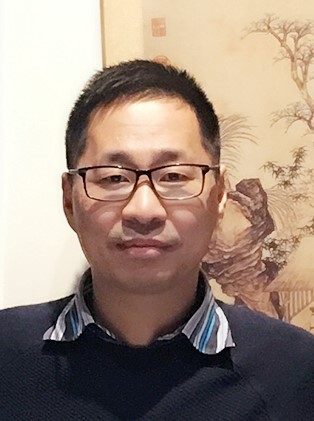
Wenqin Shen (Corresponding Author) is an Associate Professor of Higher Education at Peking University. He mainly studies the higher education system from the perspectives of history and science studies (Sociology of Science, Philosophy of Science, etc). He authored and co-authored publications focused on transnational history of idea and practice of liberal Education (China, the UK and the US), international academic mobility (especially the mobility of doctoral students and postdocs) and doctoral career trajectories. He can be contacted via email: shenwenqin@pku.edu.cn

Liping Li (First author) is a lecturer at Capital Normal University and a doctoral student at the School of Education of Peking University. Her main research fields are teacher education, international mobility of university students, and doctoral career trajectories.

Dr. Ailei Xie is Associate Professor and Director of the Bay Area Education Policy Institute for Social Development at Guangzhou University. His main area of research is on social mobility and higher education, and parenting style and anxiety in China.

Call for Dictionary Entries: ‘Dictionary of Mobility and Borders’

It is the dictionary on Mobility and Borders, edited by Tommaso Visone and Caterina Di Fazio and possibly published by Columbia University Press. Please find more information here.

If you are interested in writing one or few entries for the dictionary, please indicate which terms you would like to author/co-author in this preliminary term list.

Asia Pacific Education Review – Special Issue CfP–‘Asia as Method: Toward Ontologies and Epistemologies of Difference’

Asia Pacific Education Review – Special Issue Call for Papers
Asia as Method: Toward Ontologies and Epistemologies of Difference


Special Issue Editor

Kevin Kester, Seoul National University (kkester@snu.ac.kr)

Educational researchers have long sought insights for domestic education by drawing on lessons learned from abroad. The home context is normalized within these traditions as the centre from which the other is understood. But rarely has the field examined the ontological changes of educators themselves working abroad, and the implications this holds for challenging and transforming accepted theoretical and pedagogical norms of the field.

As long-term international work provides insights that transcend simple travel abroad or traditional ethnography, this Special Issue explores how university educators working abroad in the long-term experience ontological and epistemological transformations. A longer period of employment and life abroad provides unique insights as the educator goes through personal ontological and epistemological transformations via ‘border thinking’ that informs his/her analysis (T. Kim, 2014; Rappleye & Komatsu, 2017).

Theorizing the borders, Gloria Anzaldua (1987) writes, “the borderlands are physically present wherever two or more cultures edge each other, where people of different races occupy the same territory, where the lower, middle and upper classes touch” (preface). She goes on to illustrate with the US-Mexico border as an example, “The US-Mexico border es una herida abierta [an open wound] where the Third World grates against the first and bleeds” (p. 3). Educators working in international contexts encounter these ontological and epistemological borders daily and are brought to grapple with the role of Otherness in their scholarly practices. Mignolo and Tlostanova (2006) write, “Border thinking is the epistemology of the exteriority; that is of the outside created from the inside” (p. 206).

At the same time, the Western gaze in recent years has been critiqued as the hegemonic lens through which education is theorized (Silova et al., 2020; Zhang et al., 2015), and scholars in East Asia (and elsewhere) have called on Asian and non-Asian educators alike to think beyond Western-centricity and beyond domination-oriented thinking (Chen, 2010; B.Y. Kim, 2002; Takayama et al., 2018). These scholars argue against Western-centricity and against the adoption and adaptation of Western (as well as domestic exclusionary) concepts as mechanisms of control by scholars and the political elite (T. Kim, 2016; Vickers, 2020).

In reference to the East Asian context bringing West and East together, Chen (2010) states, “The Taoist concept of taiji, as a structural totality in place prior to the existence of yin and yang, has to be analyzed on two levels. On the higher level, the unity of yin and yang is complementary and indeed encompasses a totality. But on the lower level, yang is higher than yin, and the former governs and encompasses the latter” (p. 264). Chen’s double critique here of Western-centric practices and domestic hierarchies – e.g., caste, class, and gender – is especially visible for those educators who working long-term abroad encounter the constraints and affordances of difference.

This Special Issue, then, asks: How are educators’ theoretical and pedagogical practices informed by migration across contexts? What sorts of ontological and epistemological transformations might educators experience during long-term periods abroad? How might these transformations initiate decolonial moves in regard to educational pedagogy, policy and practice?


This Special Issue explores these questions within and beyond the context of Asia drawing on the unique insights of diverse educators. Importantly, beyond examining Asia as a defined territory or entity that is distinct from the West, this Special Issue looks toward the ways that Asia, the West, and the Global South co-exist within each other. Drawing on Kuan-Hsing Chen’s (2010) Asia as Method and Gloria Anzaldua’s (1987) Borderlands, the issue seeks to re-center Asia within educational discourse, not as an object of analysis but as an agential subject. To deeply access issues of ontological and epistemological transformation, this issue welcomes a diverse range of methodologies, such as reflexive and contemplative inquiry, autoethnography, qualitative empirical research, conceptual/philosophical methods, and other approaches.


We invite manuscripts that deal with these questions from diverse authors. All papers should be written as reflections on ontological and epistemological changes that scholars of/in Asia experience by embracing and/or working in other cultural contexts. Brief manuscript proposals (500 words) are due by October 1, 2021, and should be submitted to Kevin Kester at kkester@snu.ac.kr.
Please reach out to the Special Issue editor with any questions or comments.


The following timeline is expected:

October 1, 2021: Submission of abstracts.

October 22: Invitation to submit full manuscript.

March 11, 2022: Submission of full manuscript.

April 15: Completion of first round reviews.

May 13: Submission of revised manuscripts.

June 10: Completion of second round reviews.

July 8: Submission of final manuscript.

July 29: Notification of final acceptance.

August 26, 2022: Proposed publication date.


Instructions for Submission

Please send proposals to Kevin Kester at kkester@snu.ac.kr by October 1, 2021. Proposals will be reviewed by the editorial team and authors of successful abstracts will be contacted by October 22.


Full manuscripts (6000-8000 words excluding references) are due by March 11, 2022, to be submitted through the journal’s regular portal on its homepage. Please indicate in the submission that the paper is being submitted as a part of the Special Issue. Further details are available on the APER website: https://www.springer.com/journal/12564.

References

Anzaldua, G. (1987). Borderlands/La Frontera: The New Mestiza. Aunt Lute Books.
Chen, K.-H. (2010). Asia as Method. Duke University Press.
Kim, B.-Y. (2002). Korean Education Viewed from a Post-colonial Perspective. Humanities Research 5: 149-176.
Kim, T. (2014). The Intellect, Mobility and Epistemic Positioning in Doing Comparisons and Comparative Education. Comparative Education 50: 58-72.
Kim, T. (2016). Internationalisation and Development in East Asian Higher Education: An Introduction. Comparative Education, 52, 1-7.
Mignolo, W., & Tlostanova, M. (2006). Theorizing from the Borders: Shifting to Geo- and Body Politics of Knowledge. European Journal of Social Theory 9: 205-221.
Rappleye, J., & Komatsu, H. (2017). How to Make Lesson Study Work in America and Worldwide: A Japanese Perspective on the Onto-Cultural Basis of (Teacher) Education. Research in Comparative and International Education 12: 398-430.
Silova, I., Rappleye, J., & Auld, E. (2020). Beyond the Western Horizon: Rethinking Education, Values and Policy Transfer. In G. Fan & T. Popkewitz (Eds.), Handbook of Education Policy Studies (pp. 3-29). Springer.
Takayama, K., Sriprakash, A., & Connell, R.W. (2018). Toward a Postcolonial Comparative and International Education. Comparative Education Review 61: S1-S24.
Vickers, E. (2020). Critiquing Coloniality, ‘Epistemic Violence’ and Western Hegemony in Comparative Education – The Dangers of Ahistoricism and Positionality. Comparative Education, 56, 165-189.
Zhang, H., Chan, P.W.K., & Kenway, J. (2015). Asia as Method in Education Studies: A Defiant Research Imagination. Routledge.You have access to our articles

Academics’ View on Chinese Students’ Academic Transition into Undergraduate Studies in Britain

Dr Dongsheng Xu, Beijing Sport University, China

Xu D., Roddy E. (2019) ‘We All Need Cultural Awareness and Cultural Affinity’: The Academics’ View on Chinese Students’ Academic Transition into Undergraduate Studies in Britain. In: Carter J., Rosen C. (Eds) Transnational Higher Education in Computing Courses. Springer. Cham.  https://doi.org/10.1007/978-3-030-28251-6_7

Despite the growing trend in more Chinese students coming to the UK for studies, they still face considerable problems and difficulties in adapting to their academic studies within a different learning environment, due to the cultural and pedagogical differences they may confront. From the academics’ perspectives, this research explores the issues that impact the academic transition of Chinese students taking undergraduate studies in Britain, in order to improve the teaching and learning practice within British Higher Education. It provides a practical framework that incorporates the influential factors and practical suggestions around the Chinese students’ academic transition in relation to the cultural and pedagogical differences. It is contended that the cultural awareness should be initiated and the cultural affinity should be nurtured among the Chinese students, academic staff, and university management authorities, to improve the teaching and learning experience within the British Higher Education context. After all, every university wants each of its students to succeed and maximise the value of their experiences within university campus.

Author Bio

Dr. Dongsheng Xu is a lecturer in Hainan International College, Beijing Sport University, China. He received his PhD in business and management from the University of Salford, UK in 2020. Before that, He was a business development practitioner in Sino-British higher education sector for more than 10 years as the chief representative for a British university in China. His research interests include transnational education management, intercultural studies and acculturation, management communication, business technical innovation and risk management, etc. He can be contacted via d.xu1@edu.salford.ac.uk

Virtue Signaling: Problematizing Creative Labor Within Knowledge Socialism

Dr Benjamin Green, Beijing Normal University, China

Research Highlighted:

Green, B. (2021). Virtue Signaling: Problematizing Creative Labor Within Knowledge Socialism. Postdigital Science and Education. https://doi.org/10.1007/s42438-021-00231-x

Beginning in 2018, Beijing Normal University (BNU) Distinguished Professor Michael Peters began a collaborative project that would see a decades-in-the-making theory of cognitive political economy – knowledge socialism – transformed into a philosophy of praxis based on commons-based peer-production (CBPP), collective intelligence, and creative labor. My research identifies and problematizes the virtue signaling of creative academic labor within knowledge socialism as a critical flaw which may serve to further proletarianize and exploit upstart scholars enlisted within this experimental process of teaching, writing, and publishing. Moreover, this research outlines a class of prosocial academic entrepreneur within China higher education (HE) whose commitment to the collective common good is measured by their ability to ensure a professional livelihood. Knowledge socialism represents an attempt by various scholars in the field of philosophy of education to foment a radically open political economy of non-rivalrous knowledge production/consumption that counters the neoliberal paradigm of knowledge capitalism. Specifically, knowledge socialism, as a ‘radically-open’ political economy of knowledge, entails the desire to engender within the scientific community a form of collegiality, which in the vein of Ivan Illich, unlocks the emancipatory potential of collective human thought for the public good. From a Marxist standpoint, the concept of knowledge cultures was developed to represent inclusive communities of inquiry whose creative academic labor constitutes the engine which drives knowledge socialism. Through co(labor)ative writing, editing, and publishing efforts, knowledge socialism aims to foreground knowledge within a sociality which challenges the problematic norms, values and practices of the ‘lone individual scholar’ and the institutions under which it was created. While this theory has been utilized in the past to create co-authored edited volumes, open access research articles, as well as open access online forums and journals, this was the first time that this theory would be tested within a HE classroom setting, consisting wholly of graduate students rather than well-established journal editors, and professors in the field of philosophy of education.

Thus, began the experiment of knowledge socialism at BNU’s Faculty of Education, wherein over the course of several years, the pedagogy of knowledge socialism was developed alongside more practical productive facets towards an alternative political economy of unfettered knowledge. Specifically, throughout this experiment at BNU, several well-met research articles have been published within the auspices of knowledge socialism. For example:

Peters, M. A., Hollings, S., Zhang, M., Quainoo, E. A., Wang, H., Huang, Y., … Green, B. (2021). The changing map of international student mobility. ACCESS: Contemporary Issues in Education, 41(1), 7–28. https://doi.org/10.46786/ac21.7444

Peters, M. A., Oladele, O. M., Green, B., Samilo, A., Lv, H., Amina, L., … Tesar, M. (2020). Education in and for the Belt and Road Initiative. Educational Philosophy and Theory, 52(10), 1040–1063. https://doi.org/10.1080/00131857.2020.1718828   

Peters, M. A., Wang, H., Ogunniran, M. O., Huang, Y., Green, B., Chunga, J. O., … Hayes, S. (2020). China’s Internationalized Higher Education During Covid-19: Collective Student Autoethnography. Postdigital Science and Education, 1–21. https://doi.org/10.1007/s42438-020-00128-1

It is important to note that these articles were guided by Professor Michael Peters, but overwhelmingly drafted, written, and edited by graduate students (both international and Chinese) from the Faculty of Education. To be sure, the publication of these articles showed quite clearly the positive productive capacity of knowledge socialism. Moreover, these articles provided rich insights into topics like the Belt and Road Initiative (BRI), HE Internationalization, student mobility, and pandemic education. However, while this collaborative process brought invaluable insights to both those involved as well as readers interested in the aforementioned topics, questions began to arise as to whether knowledge socialism (in its present form) might represent a viable alternative to knowledge capitalism.

With this in mind, my research article outlines several core productive elements of knowledge socialism as required to create a ‘commons’ which contributes to both the public good and the livelihood of commoners. These elements are creative labor, collective intelligence, and commons-based-peer-production (CBPP). Much of the research concerning collective intelligence and CBPP emphasizes the inherent virtuous character of those volunteering their creative labor to collaborative projects. Specifically, many scholars cite Wikipedia as a model of CBPP based in the virtuous volunteerism of cognitive laborers. It is clear why such a model of collective knowledge production might be used to theorize a way out of our contemporary ‘tragedy of the knowledge commons’, wherein knowledge is produced, extracted, and commodified by publishing regimes within institutionalized HE. However, throughout the course of my research it became clear that rather than developing a substantive method of valuation for the creative academic laboring of those contributing to these research projects, knowledge socialism was promoting a form of ‘virtue signaling’ which expected and relied on voluntary, de-valorized ‘virtuous’ labor contributions to the commons. In this way, rather than acknowledge the increasing precarity of contemporary scholars within the academy, knowledge socialism was positioning these students within a mythical, carefree academic class. As a lead on many of these projects, I fielded message after message from students worried about their academic futures, outlining their desire to contribute, while struggling with the idea that their collective efforts would fall outside of the first, second, or third author metrics required to graduate. Throughout the entire process, from enlistment in the project to final publication, these students were overwhelmingly concerned about order of authorship for the purpose of grant funding, faculty positions, scholarships and graduation. Thusly, it became increasingly clear that those who contributed to these research projects represented a class of ‘prosocial academic entrepreneur’ who wished to contribute to the common good while also securing their livelihood in the process. This point also provides further credence to the understanding that students of HE in China, while inhabiting what Rui Yang describes as a Confucian political climate geared towards collective societal development, also inhabit the same performativity requirements of neoliberal institutionalized HE. As a result of this research, those wishing to enlist the creative academic labor of students within China HE, must understand the performativity requirements and inherent precarity of these scholars as they seek to promote an economy of knowledge that both valorizes and supports those laboring towards a revolutionary transition to knowledge socialism.

Researcher Bio

Dr. Benjamin Green is a recent graduate (June 2021) of Beijing Normal University, Faculty of Education, and current Zhi-Xing US-China Leadership Fellow. His recent works have focused on China HE, US-China relations, global governance, digital nationalism, critical cosmopolitanism, and Chinese Internationalism as a contested project of alternative modernity. He can be contacted via email: benbo83@gmail.com, Weixin: benbo83.