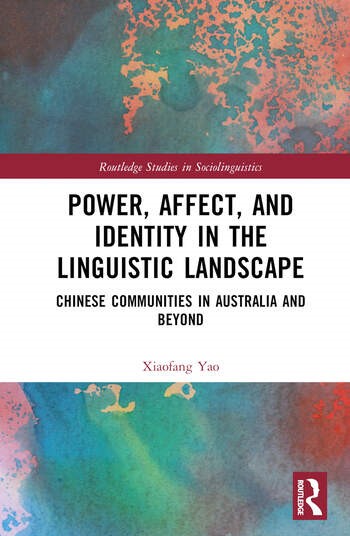
Power, Affect, and Identity in the Linguistic Landscape: Chinese Communities in Australia and Beyond

Research Highlighted: 
Yao, X. (2024). Power, Affect, and Identity in the Linguistic Landscape: Chinese Communities in Australia and Beyond (1st ed.). Routledge. https://doi.org/10.4324/9781003320593  
Introduction: 

Uncovering the complexity of linguistic diversity and semiotic creativity, this book examines the issues of power, affect, and identity in both physical and digital linguistic landscapes. 

Based on fieldwork with various Chinese communities in Australia, the book offers unique insights into the uses of languages, semiotic resources, and material objects in public spaces, and discusses the motives and ideologies that underline these linguistic and semiotic practices. Each chapter frames the sociolinguistic issue emerging from the linguistic landscape under investigation and shows readers how the personal trajectories of individuals, the availability of semiotic resources, and the historicity of spaces collectively shape the meanings of publicly displayed language items in offline and online spaces. Supported by a wealth of interviews, media, and archival data, the book not only advances readers’ understanding of how linguistic landscape is structured by various historical, political, and sociocultural factors, but also enables them to reimagine the linguistic landscape through the lens of emerging digital methods. 

Ideal Audience: This book is an ideal resource for researchers, advanced undergraduates, and graduate students of applied linguistics and sociolinguistics who are interested in the latest advances in linguistic landscape research within virtual and material contexts. 

Chapter Highlights: 

1. Situating Power, Affect, and Identity in the Linguistic Landscape: This introductory chapter sets the stage by explaining the concept of the linguistic landscape and the latest theoretical developments in the field. It focuses on three key sociolinguistic constructs—power, affect, and identity—and explores how a linguistic landscape approach, with its distinctive visual, spatial, and material lens, can offer new insights into these issues. The chapter also provides a brief overview of Chinese communities in Australia to establish the social, cultural, historical, and political contexts for the case studies presented in the book. 

2. Theoretical perspectives on the linguistic landscape: Geosemiotics, sociolinguistics of globalisation, and metrolingualism: Linguistic landscape studies often draw on theoretical perspectives and methodological approaches from various disciplines. This chapter addresses the challenge of framing, scoping, and operationalizing a linguistic landscape study by redefining the field’s ever-expanding scope. It reviews seminal works by scholars such as Ron Scollon, Suzie Wong Scollon, Jan Blommaert, and Alastair Pennycook to provide a robust theoretical framework. This framework integrates geosemiotics, the sociolinguistics of globalization, and metrolingualism, emphasizing the importance of material objects and the materiality of language in constructing meaning. The chapter underscores the posthumanist approach in uncovering critical issues related to language, culture, and society. 

3. Affect in the linguistic landscape: Conviviality and nostalgia in urban and rural ethnic restaurants: This chapter delves into the emerging field of visceral linguistic landscapes, which investigates the evocative potential of space and how linguistic landscapes can regulate human emotions. It presents a case study of two Chinese restaurants—one in a rural area and the other in an urban setting—to explore how material objects in these spaces evoke feelings of nostalgia and conviviality. By examining elements such as paintings, menus, emblems, and decorations, the chapter reveals how spaces are social and historical constructs that reflect the memories of Chinese migrants and their connections to an imagined community. It also shows how these spaces are agentive, shaping and curating affective experiences. 

4. Power in the linguistic landscape: Tourism and commodification as revitalisation of cultural heritage: Power dynamics are a central theme in linguistic landscape research, often studied through the lenses of language policy and ideologies. This chapter goes further by exploring the agency of language, space, and material conditions in shaping, confronting, and resisting power. It examines the interactions between local authorities and the Chinese community in a diasporic context, focusing on the commodification of language and the revitalization of cultural heritage. Through narrated stories, semiotic artifacts, and cultural rituals, the chapter uncovers the tensions between ethnic identity pride and the commercial interests of ethnic tourism, highlighting the motivations and attitudes of stakeholders in the linguistic landscape. 

5. Identity in the linguistic landscape: Metrolingualism at the online-offline nexus: The rise of social media has prompted linguistic landscape researchers to consider digital spaces alongside physical environments. This chapter adapts the theory of metrolingualism to analyse how the Chinese diaspora constructs identity on platforms like WeChat. It examines the linguistic and semiotic resources used for self-presentation and identity performances, revealing the ideologies and aspirations behind these practices. The study highlights how hybrid identities challenge traditional notions of ethnicity and showcase the fluidity of identity in the online-offline nexus, where social conventions from offline spaces influence online interactions. 

6. Artificial Intelligence (AI) in the linguistic landscape: An agenda for critical digital literacy: Artificial intelligence is transforming the broader field of applied linguistics, including linguistic landscape research. This chapter explores the potential of AI tools, such as ChatGPT, in conducting linguistic landscape studies. It reviews current computational approaches and discusses the levels of critical digital literacy required for researchers in an AI-driven future. By experimenting with AI models, the chapter illustrates how AI can serve as both a tool and a collaborator, assisting with literature reviews and qualitative coding of photographic data. It emphasizes the need for linguistic landscape researchers to understand and critically engage with AI technologies to enhance their work. 

7. Transcending boundaries in the linguistic landscape: Towards collaborative, participatory, and empowering research: This concluding chapter synthesizes insights to develop frameworks for understanding power, affect, and identity in the linguistic landscape. It emphasizes transcending boundaries between communities, spaces, and languages, challenging the notion of ethnic enclaves, and recognizing community fluidity. The chapter advocates for research with a stronger temporal and spatial focus, examining interactions between physical and digital linguistic landscapes. It calls for collaborative, participatory, and empowering research approaches to ensure community goals, values, and voices are incorporated, highlighting the importance of community engagement and the transformative potential of inclusive research methodologies. 

Author bio 
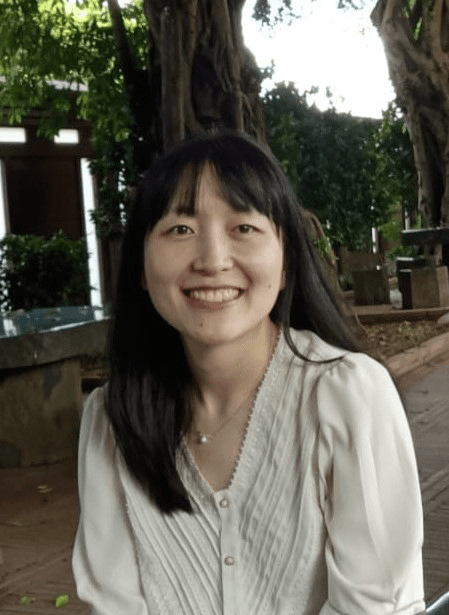
Xiaofang Yao, The University of Hong Kong 

Xiaofang Yao is Assistant Professor in the School of Chinese, The University of Hong Kong. Her research areas include linguistic landscapes, multilingualism, social semiotics, and sociolinguistics. She is particularly interested in the intersection of language, culture, and space as they relate to the Chinese diaspora and ethnic minorities. Her current projects explore the representation of Chinese languages and semiotics in diasporic contexts, as well as the negotiation between standard language norms and creative or transgressive language practices among ethnic minority communities in Hong Kong and Southwest China. 

Managing Editor: Xin Fan

Queering the Asian Diaspora: East and Southeast Asian Sexuality, Identity and Cultural Politics


Bao H (2024) Queering the Asian Diaspora: East and Southeast Asian Sexuality, Identity and Cultural Politics. SAGE Publications.

The COVID pandemic has exacerbated global geopolitical tensions and exposed Sinophobia and anti-Asian racism. Meanwhile, a nascent Asian diasporic consciousness has been emerging worldwide, celebrating Asian identity and cultural heritage. In the space between anti-Asian racism and Asian Pride, queer people’s voices have been largely missing.

This book draws on a range of contemporary case studies including art, fashion, performance, film, and political activism. It articulates an intersectional cultural politics that is anti-nationalist, anti-racist, decolonial, feminist and queer.

It is part of the Social Science for Social Justice series: where academics, journalists, and activists of colour respond to pressing social issues.

Managing Editor: Tong Meng

Concerted Cultivation from Afar:  Wealthy Chinese Families and Their Children at Swiss International Boarding Schools 

Research Highlighted:
Fei, M. (2024). Concerted cultivation from afar: Wealthy Chinese families and their children at Swiss international boarding schools. Swiss Journal of Sociology, 50(2), 193–208. https://doi.org/10.26034/cm.sjs.2024.6036 

This study examines a rarely explored education and parenting practice among a hard-to-reach population from China––namely, the early study abroad of Chinese children at Swiss international boarding schools (SIBSs) and the “concerted cultivation from afar” practiced by their affluent families. Existing literature primarily focuses on the parenting practices of the middle and working class, often defining class in broad strokes (Sherman, 2017). Additionally, study abroad literature in the case of China typically characterizes it as a middle-class phenomenon, collapsing more economically privileged families into the “middle” category (e.g., Zhou et al., 2019; Wang, 2020). The study expands the scope of existing research on both studying abroad and parenting by highlighting the practices of a highly privileged population. 

Theoretical Framework 

The study adopts Ma and Wright’s (2021) “outsourced concerted cultivation” as its guiding theoretical framework, a new framework built upon Lareau’s (2003) original discussions on concerted cultivation within the context of Chinese parents sending their children abroad for education. While Ma and Wright (2021) focus on how “new rich” Chinese families outsource concerted cultivation to international high schools and educational consultants in China, this study discusses how affluent Chinese families do so with SIBSs while still practicing concerted cultivation from afar. 

Methods 

Seven participants who 1) self-identified as Chinese and 2) had children who were studying or had studied at SIBSs within the past five years were recruited in my social network and through snowballing. While I did not specify any gender preference when recruiting participants, all participants happened to be mothers. I identified the participants as “wealthy” as they could fund their children’s SIBS tuition without financial aid from the schools, which cost from around 70,000 CHF to 150,000 CHF per year. Semi-structured interviews in Mandarin Chinese conducted mostly online in late 2021 due to the COVID-19 pandemic were the primary data collection method. They lasted between 40 and 166 minutes, with a median of 63 minutes.  

At the time of the study, all participants lived in top-tier Chinese cities except for one, who had accompanied her child to Switzerland for one and a half years. Five participants had two children; two had one child. Only one participant sent both her children to SIBSs. The age at which the children started school at a SIBS ranged from 7–15, and they had spent 1.5–5 years at SIBSs at the time of the study. 

Findings 

I identified two main themes from the interviews, which answer the question of how wealthy Chinese families cultivate their children through schooling at SIBSs. The participants were confident that their children would inherit their social class advantages and continue their lifestyles. Therefore, while they valued their children’s education, they did not demonstrate class anxiety and disagreed with the competitive parenting practices that are prevalent among the middle class in China. Their decision to send their children to SIBSs demonstrated what Irwin and Elley (2011) call concerted cultivation in the present, placing value on diverse cultural pursuits and socio-emotional development at school. 

At the same time, participants in this study strived to make up for a lack of direct parental support entailed by the ESA practice. At the very beginning of their children’s ESA journey, they made on-site visits with their children to make informed school choices. After their children enrolled at a SIBS, they traveled to Switzerland frequently, closely monitored their children’s well-being, kept regular contact with the school, and intervened in institutional settings when necessary. Therefore, while it seemed like the participants had outsourced concerted cultivation (Ma & Wright, 2021) to the SIBSs, they still practiced it from afar, made possible by their economic resources, time, and cultural dispositions in some cases. 

Implications 

This study has the following implications. First, it adds to the literature on parenting practices of the wealthy, an area to which existing research pays little attention. Relatedly, the study confirms the finding of Irwin and Elley (2011) and Maxwell and Aggleton (2013) that class anxiety is not necessarily the main drive for concerted cultivation. Additionally, the study foregrounds economic resources in the practice of concerted cultivation, as suggested by Ma and Wright (2021). It also highlights the importance of cultural knowledge, which enabled the participants to be more engaged in their children’s schooling than the parents in Ma and Wright (2021). 

Note: This article is part of the Swiss Journal of Sociology’s special issue titled “Switzerland as a Site of Capital Accumulation: The Case of International Education,” edited by Lillie and Delval (2024). This issue explores how and why foreign families and individuals, as well as local institutions, capitalize on the Swiss private schools’ market. Click here to read more. 

References 

Irwin, S., & Elley, S. (2011). Concerted cultivation? Parenting values, education and class diversity. Sociology, 45(3), 480–495. https://doi.org/10.1177/0038038511399618  

Lareau, A. (2003). Unequal childhoods: Class, race, and family life. University of California Press. 

Lillie, K., & Delval, A. S. (2024). Switzerland as a site of capital accumulation: The case of international education. Swiss Journal of Sociology, 50(2), 127–142. https://doi.org/10.26034/cm.sjs.2024.6033 

Ma, Y., & Wright, E. (2021). Outsourced concerted cultivation: International schooling and educational consulting in China. International Studies in Sociology of Education, 32(3), 799–821. https://doi.org/10.1080/09620214.2021.1878565  

Maxwell, C., & Aggleton, P. (2013). Becoming accomplished: Concerted cultivation among privately educated young women. Pedagogy, Culture & Society, 21(1), 75–93. https://doi.org/10.1080/14681366.2013.764032  

Sherman, R. (2017). Conflicted cultivation: Parenting, privilege, and moral worth in wealthy New York families. American Journal of Cultural Sociology, 5(1), 1–33. https://doi.org/10.1057/s41290-016-0011-3 

Wang, X. (2020). Capital, habitus, and education in contemporary China: Understanding motivations of middle-class families in pursuing studying abroad in the United States. Educational Philosophy and Theory, 52(12), 1314–1328. https://doi.org/10.1080/00131857.2020.1767074 

Zhou, X., Li, J., & Jordan, L. P. (2019). Parental intent for children to study abroad: The role of educational aspiration and children’s characteristics. Cambridge Journal of Education, 49(6), 789–807. https://doi.org/10.1080/0305764X.2019.1590526 

Author bio

Mianmian Fei is a Ph.D. Candidate in Higher Education and Student Affairs at The Ohio State University’s College of Education and Human Ecology in the United States and a Research Associate at the QualLab qualitative research center. Before her Ph.D. studies, she earned a Master’s in Anthropology and Sociology as a Hans Wilsdorf Scholar at the Geneva Graduate Institute in Switzerland and worked for the Science Consulate of Switzerland in Shanghai and the UNESCO International Bureau of Education. Her research interests include international and comparative higher education, qualitative methodology, and the sociological aspects of education. Email: fei.132@buckeyemail.osu.edu

Managing Editor: Xin Fan

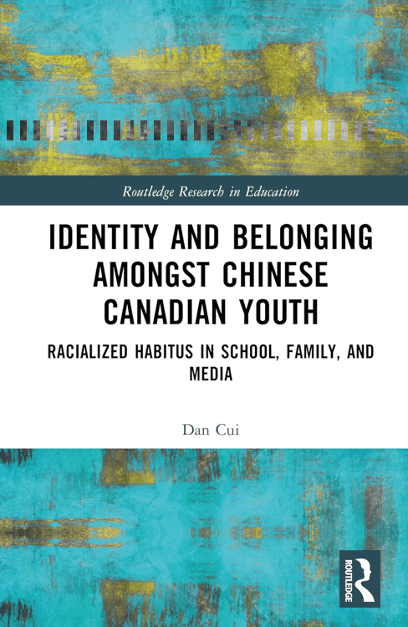
Identity and Belonging among Chinese Canadian Youth 

Research Highlighted:


Cui, D. (2024) Identity and belonging among Chinese Canadian youth: Racialized habitus in school, family and media. Routledge. DOI: 10.4324/9781003054023

Introduction:

This book examines how Chinese immigrant youth navigates their identities as racialized minorities within school, family, and through their interactions with Canadian mainstream media. Drawing on rich interview data, the author unveils how contemporary forms of racism, multiculturalism, immigration, and transnationalism shape the identity construction and sense of belonging among second-generation Chinese immigrant youth in Canada. This book offers a systematic analysis of how these youth and young adults negotiate their lived experiences and perceptions of race, ethnicity and class.

By uniquely extending Bourdieu’s concept of habitus to race and ethnicity, the author traces the impact of racism and “model minority” discourses not only to their systemic and institutional roots but also to their internalization in individual thoughts, behaviors, and identities.

This book will appeal to academics and researchers examining racial inequality and Asian diasporas in Western societies, as well as those seeking new insights into contemporary schooling, media studies, and immigrant family dynamics, with a focus on multicultural education, the sociology of education, and critical theories of race and ethnicity.

Author bio

Dan Cui, Brock University

Dan Cui is an Associate Professor in the Department of Child and Youth Studies at Brock University, Canada. Her research interests include sociology of education, immigration, integration and transnationalism, international and comparative education, social justice and equity studies, Chinese/Asian diasporas, and qualitative research methods. She previously held a SSHRC Postdoctoral Fellowship at the University of California Berkeley. Her work has been widely published across disciplines, appearing in the British Journal of Sociology of Education, Journal of International Migration and Integration, Journal of Youth Studies, and etc.

Managing Editor: Tong Meng

Call for abstracts – Fostering short-term international student mobility: perspectives on regional and national schemes across the world

Edited by Rachel Brooks (University of Oxford) and
Johanna Waters (University College London)

We welcome abstracts for an edited collection on national and regional schemes intended to foster short-term international mobility for higher education students. There are now many schemes that enable students to move abroad for part of their (higher) degree programme – to study, work and/or volunteer. Examples include Mobility+ (Taiwan); KMove (Korea); Mevlana (Turkey); New Colombo Plan (Australia); Erasmus+ (Europe); Turing Scheme (UK); Taith (Wales); Global Undergraduate Study Abroad Programme (US); Semester
Abroad Programme (India); and NordPlus (Nordic countries). Nevertheless, to date, the literature in this area has tended to focus on single schemes only, and those that are run from countries in the Global North. In our edited collection, we hope to bring studies from a wide variety of national and regional contexts into dialogue, highlighting points of connection and divergence, and showing how they relate to broader debates within the fields of education, sociology,
geography, social policy and youth studies (for example, about class (re)production, youth mobilities, education systems and social change, knowledge economies, cosmopolitanism, transnational networks and different aspects of globalisation).

Abstracts are welcome on any theme including, but not confined to, the following:

  • The aims and objectives of the scheme(s), and how these are situated within wider national/regional contexts
  • Responses to the scheme(s) from higher education institutions and other relevant social actors
  • The characteristics of participating students (and particularly social identity markers) and the implications of these
  • The experiences of participating students
  • The impact of the scheme(s) on, e.g., students’ identity formation, academic performance, employment outcomes

Contributions can be theoretical or empirical, and we have no preference for any particular methodology. However, all abstracts should make clear the evidence base and theoretical framework(s) upon which the proposed chapter will draw, and the main arguments that will be advanced. We do not necessarily expect contributions to focus on more than one scheme (although they could); we anticipate using the book’s introduction and conclusion to make the comparisons and connections. Please submit your abstract of around 500 words to Rachel Brooks by 30 November 2024 (rachel.brooks@education.ox.ac.uk). We will confirm by early January 2025 whether we will be including your abstract in our proposal. Our intention is then to submit the proposal to an appropriate publisher (e.g. Routledge or Policy Press) by early February. If we secure a contract, we are likely to need full chapter drafts (of around 8000 words) by October 2025.

Managing Editor: Tong Meng