Rural-urban gap and career preparation trajectories in a Chinese elite university

Research Highlighted:

Chen, L., & Tian, F. F. (2021). Rural-urban gap and career preparation trajectories in a Chinese elite university. International Studies in Sociology of Education, 1-26. https://doi.org/10.1080/09620214.2021.1948893

Given the college expansion in China, increasing numbers of scholars have paid attention to the variations in college experience. A growing number of studies have shown that the urban-rural gap is still pervasive in both entry to and exit from the Chinese higher education system. Rural students were marginalized, felt inferior, and experienced a huge emotional burden trying to fit into the university culture (Tian & Chen, 2018, 2020; Li, 2013, 2015; Liao & Wong, 2019).

Informed by Bourdieu’s two classic concepts––habitus and field, we conceptualized inequality in the college experience as a distinction between habitus fits and misfits. Students with college-educated parents tend to have a habitus that fits with college culture, which gives them a sense of being entitled to participate in both academic and extracurricular activities (Armstrong & Hamilton, 2013; Stuber, 2012) and to seek advice and help from professors and mentors (Jack, 2016). By contrast, less privileged––and for purposes of this study often rural––students may be trapped as habitus misfits in college culture. As a result, they feel confused and inferior, and have less of a sense of belonging (Lehmann, 2007; Li, 2013, 2015; Reay, 2005; Reay et al., 2009).

According to Bourdieu, when individuals encounter an unfamiliar field, their habitus can transform but such transformation can be cirsumscribed by past experience (Bourdieu & Passeron, 1977). Yet some recent efforts at hybridizing habitus and reflexivity have stressed a larger role for reflexive deliberation in habitus transformation (Adams, 2006; Elder-Vass, 2007). For young adults, one critical aspect of reflexivity is future expectations. How young adults think about the future and design plans to achieve it is an important part of reflexivity in shaping habitus transformation. Therefore, we theorized career preparation in college as a reconciliation between thinking about future, which is reflexive but at the same time bounded by habitus, and the blueprint of a ‘bright future’ that students seek in college.

In this article, we compare how rural and urban students prepared for their career in 4 years of undergraduate study at a top-ranking public university (WU) in China. This study conducted longitudinal in-depth interviews with 32 students majoring in social sciences from 2014 to 2018.

Elite universities often have a popular career preparation trajectory, which consists of steps to be achieved over 4 years. At WU, such path exists as well. While the path provides a promising blueprint for students from various family backgrounds, students approach it differently. We identify four career preparation trajectories––implementing, following, transforming, and downgrading––in relation to students’ various perceptions and experiences.

The four career preparation trajectories illustrate dynamic experiences among students at WU over 4 years. With their parents’ help, students on the implementing trajectory appraised their capabilities and resources before college so that they implemented their career plans right after matriculation. They continued to strategically solidify their prowess in academic performance and noncognitive skills through various activities on and outside campus. With these cumulative advantages, their career preparation was well ahead of that of their peers. Students on the following trajectory were inspired by the path ideal and tried to develop plans that aligned with the path. However, they seldom contemplated life beyond the path but were more attracted by the immediate results of following the path, which helped them maintain their status as rural/county exceptions. Students on the transforming trajectory critically appraised their resources and realistically chose pragmatic skills to fit their own future expectations. Their understandings of their future careers evolved along with their resources and understandings of the future, from an ideal process to tangible goals that fit their means. Students with less privileged family backgrounds showed creative and diverse reactions to the evolving habitus (Li, 2013; Reay et al., 2009). Although students in the downgrading trajectory realized that the less competitive milestones of the path were less attractive to future employers, they continued to stick to the path because they did not know how to prepare for a future career otherwise due to limited capabilities and resources.

Drawing on Bourdieu’s notion of habitus (Bourdieu & Wacquant, 1992), the career preparation trajectories of these 32 students fell along a spectrum with habitus fit and misfit at two ends. The implementing trajectory leans toward the habitus-fit end and the downgrading trajectory is, unfortunately, prone to the habitus-misfit end. The following and transforming trajectories show a status swinging between habitus fit and misfit, which we conceptualize as a habitus fluid-fit, as ‘habitus reshaping is an evolving process with continuous adaptation and position-takings’ (Li, 2013, p. 841). For students on these two trajectories, habitus fits may alternate with habitus misfits given their resources, the reflexivity of their career plan, and their experiences with career preparation. As such, these students’ habitus fitting presents versatility and flexibility, echoing their evolving reflexivity and habitus transformation in the elite university.

This study sheds light on the dynamic and yet uncertain habitus transformation and career preparation in the elite universities in China. Career preparation oftentimes is not a prearranged activity for college students, especially for students from underprivileged family backgrounds (Savickas, 2005). During the career preparation process, the usual discussions, distinctively comparing habitus fit and misfit (e.g. Lehmann, 2007; Li, 2013) or habitus transformation and habitus hysteresis (e.g. A. Xie & Reay, 2020) may not be able to capture the dynamic, evolving nature of students’ own reflexivity. As their understanding of career and reflexivity unfold during the process, students are able to be directed with useful information as well as exercise sufficient autonomy to decide their own career path. As such, students’ career preparation trajectories can vary and show habitus fluid-fit. Also, although rural students in this study show similar vulnerabilities in existing studies (e.g. Cheng & Kang, 2019; Li, 2013; Liao, 2016; A. Xie & Reay, 2020), some of them are able to exercise the power of ‘looking ahead’ and of reflexivity in order to generate opportunities and successes (Reay et al., 2009). Therefore, this study sheds light on understanding nuanced career preparation processes in elite universities in China and the nuanced mechanism that shapes inequality in Chinese higher education.

References

Adams, M. (2006). Hybridizing habitus and reflexivity: Towards an understanding of contemporary identity? Sociology, 40(3), 511–528. https://doi.org/10.1177/003803850663672

Armstrong, E. A., & Hamilton, L. T. (2013). Paying for the party: How college maintains inequality. Harvard University Press.

Bourdieu, P. (1986). The forms of capital. In J. G. Robinson (Ed.), Handbook of theory and research for the sociology of education. (pp. 241–258). Greenwood Press.

Bourdieu, P., & Passeron, J.-C. (1977). Reproduction in education, society and culture. Beverley Hills, CA: Sage.

Bourdieu, P., & Wacquant, L. J. D. (1992). An invitation to reflexive sociology. University of Chicago Press.

Cheng, M., & Kang, Y. (2019). Rural youths admitted to elite universities: “Empathy” and destiny. Chinese Education & Society, 52(5–6), 363–377. https://doi.org/10.1080/10611932.2019.1693813

Elder-Vass, D. (2007). Reconciling Archer and Bourdieu in an emergentist theory of action. Sociological Theory, 25(4), 325–346. https://doi.org/10.1111/j.1467-9558.2007.00312.x

Jack, A. A. (2016). (No) Harm in asking: Class, acquired cultural capital, and academic engagement at an elite university. Sociology of Education, 89(1), 1–19. https://doi.org/10.1177/0038040715614913

Lehmann, W. (2007). “I just didn’t feel like I fit in”: The role of habitus in university dropout decisions. Canadian Journal of Higher Education, 37(2), 89–110. https://doi.org/10.47678/cjhe.v37i2.542

Li, H. (2013). Rural students’ experiences in a Chinese elite university: Capital, habitus and practices. British Journal of Sociology of Education, 34(5–6), 829–847. https://doi.org/10.1080/01425692.2013.821940

Li, H. (2015). Moving to the city: Educational trajectories of rural Chinese students in an elite university. In C. Costa & M. Murphy (Eds.), Bourdieu, habitus and social research: The art of application (pp. 126–147). Palgrave Macmillan.

Liao, Q. (2016). Learning experiences of rural students in elite universities: Reflections on the theory of production [In Chinese]. Journal of Higher Education, 37(11), 77–84. http://www.cnki.com.cn/Article/CJFDTotal-HIGH201611014.htm

Liao, Q., & Wong, Y. L. (2019). An emotional journey: Pursuing a bachelor’s degree for rural students in four elite universities in Shanghai, PRC. Cambridge Journal of Education, 49(6), 711–725. https://doi.org/10.1080/0305764X.2019.1592114

Reay, D. (2005). Beyond consciousness? The psychic landscape of social class. Sociology, 39(5), 911–928. https://doi.org/10.1177/0038038505058372

Reay, D., Crozier, G., & Clayton, J. (2009). “Fitting in” or “standing out”: Working-class students in UK higher education. British Educational Research Journal, 36(1), 107–124. https://doi.org/10.1080/01411920902878925

Savickas, M. L. (2005). The theory and practice of career construction. In S. D. Brown & R. W. Lent (Eds.), Career development and counseling: Putting theory and research to work. (pp. 42–70). John Wiley & Sons.

Stuber, J. M. (2012). Inside the college gates: How class and culture matter in higher education. Lexington Books.

Tian, F. F. & Chen, L. (2020). Higher education and career prospects in China. Springer.

Tian, F. F. & Chen, L. (2018). Unequal at the college door: Career construction among freshmen at an elite Chinese university. International Journal of Sociology and Social Policy, 38, 1041–1056. https://doi.org/10.1108/IJSSP-03-2018-0050

Xie, A., & Reay, D. (2020). Successful rural students in China’s elite universities: Habitus transformation and inevitable hidden injuries. Higher Education, 80(1), 21–36. https://doi.org/10.1007/s10734-019-00462-9

Authors’ Bio

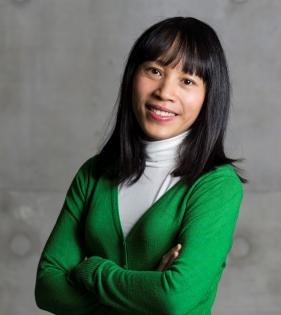
Dr Lin Chen, Fudan University, China

Dr. Chen (Ph.D., UCLA) is an Associate Professor in the Department of Social Work at Fudan University. She joined the department in June 2014 and was promoted to Associate Professor in December 2017. Her research focuses on: identity, gerontology, community, and qualitative research methods. Her monograph “Evolving Eldercare in Contemporary China: Two Generations, One Decision” was published by Palgrave Macmillan in 2016. She co-authored and published “Community Eldercare Ecology in China” and “Higher Education and Career Prospects in China”, published by Palgrave Macmillan in 2020.

Dr Felicia F. Tian, Fudan University, China

Dr Felicia F. Tian is an Associate Professor of Sociology at Fudan University. Her research focuses on transition to adulthood, marriage and family, social capital, and social network analysis. She co-authored with Dr. Lin Chen in a book “Higher Education and Career Prospects in China”, published by Palgrave Macmillan in 2020. She can be contacted via email: ftian@fudan.edu.cn.

Chinese International Doctoral Students’ Navigation of a Disrupted Study Trajectory During COVID-19

Research Highlighted:

Xu, X, Tran, L. (2021): A qualitative investigation into Chinese international doctoral students’ navigation of a disrupted study trajectory during COVID-19. Journal of Studies in International Education. doi:10.1177/10283153211042092

Despite the growing scholarship on the ramifications of the COVID-19 pandemic on higher education, there remains a scarcity of a nuanced probe into how international doctoral students perceive their navigation of an overseas study journey that has been holistically disrupted. It is not yet clear whether and how this cohort enacts agency during this navigation. Bearing these gaps in mind, this study recruited a group of international Chinese doctoral students (ICDS) to share their emic perceptions, aiming to unpack two research questions: 1. How has the COVID-19 pandemic impacted the PhD study trajectory that is embedded within a complex system of person−environment factors? 2. How have the ICDS coped with these impacts?

To facilitate data analysis, this study brought together two theories—bioecological systems theory and needs−response agency. The first theory is suitable for probing into how the COVID-19 breakout as a global risk has a ripple effect on a doctoral student’s study trajectory that is constructed within a constellation of persons, settings, relations and objects, all of which are subject to change due to the pandemic. The second theory is of particular relevance to investigate how international students perceive and respond to situated needs arising out of the unprecedented context. Combining these two branches of theoretical underpinnings into the conceptual framework, this study teased out a full picture of international doctoral students’ navigation of a disrupted study trajectory at the interface of person−environment factors.

To facilitate a deep investigation, this study employed a qualitative methodology. The recruitment was circulated with a purposive snowballing strategy to target ICDS who were either overseas or in China when the interview was conducted between late September 2020 and February 2021. While snowball sampling is helpful in allowing the researchers to access potential participants who meet the eligibility criteria through the nomination of people, it might not ensure a good representativeness of the sample. To mitigate this limitation, we tried purposefully to attend to the issue of diversity in the sample. To overcome physical constraints, online one-on-one semi-structured interview was conducted, each lasting approximately 30−60 min. During this time, the students were encouraged to share their lived experiences around open-ended questions about how they navigated a disrupted PhD trajectory since the outbreak of the pandemic. All transcripts were transported into NVivo 12 for a thematic analysis informed by the data and the theoretical underpinnings adopted by the study.

The findings revealed that the impacts of the pandemic penetrate into diverse layers of subsystems within which their doctoral study is nested. COVID-19 has impacted profoundly on the microsystem where the innermost circle of interactions happened between the ICDS and their immediate surroundings. The impact was most saliently embodied in the change of doctoral supervision and family relations. Beyond the microsystem, the mesosystem that constitutes the interconnections of situations, events and relations within the ICDS’ immediate surroundings was also affected by COVID-19. The pandemic has disabled many formal and informal networking functions which used to be a key to cohesion of the research community and PhD student’ academic socialization. A massive and abrupt relocation of networking to virtual space was identified less engaging and attractive. The study also manifested that the exosystem incorporating policy-designing and decision making processes which although were executed at the institution/faculty level and did not involve the ICDS directly have yet had tremendous impacts on their doctoral study. These processes were mainly orientated toward crisis management, about which the ICDS’ perceptions varied. Finally, COVID-19 has intensified existing sociopolitical conflicts, distorting belief and value systems in relation to international Chinese students, which enclosed this cohort in a macrosystem less favorable than it was before the outbreak of the pandemic. Enmeshed in a changing bioecological system, the participants as autonomous and active agents explored and mobilized resources to mitigate the damage, sparing no efforts to restore the stability of the bioecological system. Bearing in mind structural adjustments in response to the risk, they enacted needs−response agency to deal with the specific demands rising from a gloomy context that however garnered latent force for empowering personal growth. Making full use of domestic and overseas, on-site and online resources, they practiced virtual internationalization at home, thus preserving immobile mobility.

In light of the findings, some practical implications were proposed for related stakeholders in the bioecological system to generate conditions and support for students to harness possibilities for growth amidst and beyond the health crisis. To begin with, in the spirit of empathy and professionalism, supervisors should sensitize themselves to extra difficulties faced by students, and make pedagogical adaptations to cater for students’ needs. As well, it is contingent upon host universities to protect students’ wellbeing, and provide more coherent and systemic support in order that students can better tap into the potential of online programs and activities, many of which are made readily available and free access during COVID-19. Further, more investment in educational technology should be enhanced to boost research connectivity so that the potential of virtual exchange can be harnessed to provide an inclusive approach for intercultural learning (Jørgensen, Mason, Pedersen, & Harrison, 2020). Third, at the macrosystem level, some governments and social media should stop spreading hostile sentiments and practices that Chinese and other international students have been unjustifiably suffering. On top of that, as the core navigator of a doctoral journey, international students themselves need to take advantage of the benefits of transnational mobilities of research, ideas, knowledge and networks through various online channels. Given possibilities are high that the fallout may continue for a relatively lengthy period for international students, it requires concerted efforts from concerned parties to address these challenges and transform them into generative forces where possible.

Read about Xing’s research on enactment of agency of female Chinese doctoral researchers in Australia here.

Authors’ Bio

Dr Xing Xu, Sichuan International Studies University, China

Dr Xing Xu is a lecturer at Sichuan International Studies University, China. Her research interests include internationalization of higher education, doctoral students’ evaluation of educational experience, academic mobility, identity construction of doctoral students, and qualitative inquiry. She can be contacted via email: xing.xu@uon.edu.au.

Professor Ly Thi Tran, Deakin University, Australia

Dr Ly Thi Tran is a professor in Deakin University, Australia, and an Australian Research Council Future Fellow. Her work focuses on the internationalization of education, international student mobility, the New Colombo Plan, and teacher professional learning in international education. She can be contacted via email: ly.tran@deakin.edu.au.

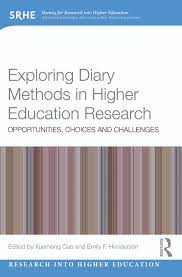
Book Review: Exploring Diary Methods in Higher Education Research: Opportunities, Choices and Challenges

By Yan Chen, Durham University

Edited by Xuemeng Cao and Emily Henderson

Exploring Diary Methods in Higher Education Research: Opportunities, choices, and challenges significantly contributes to higher education research, especially in using this creative research method to explore salient topics in the global context. Using solicited diary techniques across empirical studies creates a new perspective to learn participants’ perceptions and reflections on their experiences. Besides introducing this intriguing research method, as book editors in this book, Cao and Henderson also include research projects conducted by researchers from various cultural backgrounds. These research projects contribute to the study of marginalised and vulnerable groups in higher education, such as international students, LGBTQ individuals, economically deprived communities, etc. This book helps researchers employ the diary method in education studies, sociology, and other related fields.

This book draws a clear picture about what the diary method is (Part one), why it is crucial and how to design and evaluate diary studies (Part two), the research process and the importance of diaries for researching hidden issues (Part three). In addition to serving as an unsolicited and second-hand resource, the diary can also be developed as first-hand resource.  Through working together with participants, solicited diary aims to help researchers comprehend specific research questions that serve research purposes. In this book, different scholars present how solicited diaries are applied as a research method to enter participants’ everyday life, capture life as it is lived, and examine daily rhythms of life or within-person changes over time, particularly in longitudinal studies. Depending on diary method approaches, audio and video diaries can provide unique insights into the body and creative practices. 

Part one of this edited volume inspires researchers to use various techniques and approaches in the diary method. Cross-institutional research, audio diaries, photo diary research and potential duration that diary study needs to take are explored. Mittelmeier et al., in chapter 1, state that the diary method is flexible and can be easily moulded across a broad range of mix-method research designs (p.17). The mixed-method approach offers unique insights into participants’ worlds through flexible engagement with multiple facets of participants’ experience (p. 18). While applying this method, it is essential to think about study durations. In chapter 2, Handerson argues that temporality is observed in diary studies; short-term intensive research using the diary method could contribute to understanding participants’ experiences in academia, especially those with caring responsibilities attending higher education conferences (p. 30). Researchers could determine the time-scale of the study to capture ongoing phenomena, or they can impose the time-scale of the study to explore time-bound phenomena, for instance, in higher education or an academic year (p. 31). Indeed, no phenomenon is ‘too short, as long as the phenomenon is suited to diary method and the sampling has been carefully considered in the diary method’ (p. 40). Other than the flexibility of time spent on the diary method, there are different forms while employing diaries as method, such as an audio diary. For instance, a significant advantage of audio diaries is less time-consuming for higher education participants. In chapter 3, Dangeni et al. showed that the audio diary could ‘capture emotions and foster higher retention during data collection, especially in longitudinal studies’ (p. 55). Participants could take photos to keep photo diaries. The diary-based method ‘enhances participant’s opportunities to recognise themselves, be seen and act as epistemic contributors’ (p. 68). 

Part two discusses research ethics, participant experience, and considerations in conducting the diary method. While conducting research using solicited diaries, researchers need to be aware of the ethical concerns in higher education research. Participants in higher education fields usually shoulder heavy workloads. Through participant and researcher win-win considerations, researchers’ and participants’ research experience are enhanced to strengthen longitudinal qualitative diary research retention. As a researcher and a senior student in the department, for research with new international Chinese master’s students in the U.K., Cao demonstrates how she, through the diary method, helped participants understand the researcher’s close relation with participants’ experience. In the meantime, she offered academic development and emotional support sessions for participants (Chapter 5).  

In Chapter 6, Keenan mentioned that for inclusive diversity in higher education, the diary method in ‘participant-generated photo-elicitation’ could help illustrate the details of usually broadly understood groups rather than details such as LGBTQ (p. 93). Through interviews with photos captured and provided by the participants to present their everyday lives, ‘by its episodic nature’, the diary method allowed ‘a big story to be told in small parts’ (p.93). Furthermore, according to Baker, event-based diaries can capture the process in higher education decision-making and choice through reactivity. ‘Reactivity can potentially overshadow emotion in choice, and decision-making processes can therefore negate the strengths of the diary method, and reduce opportunities for the multifaceted nature of these processes to be captured’ (Chapter 7, p.104). However, there are ethical questions raised. Lawther showed that when researchers need to engage with photos, visual research has ethical challenges ‘in cases where participants choose to take identifiable photographs’ (Chapter 8, p.118). Although there are ethical concerns, with a suitable approach that is sensitive to research needs, visual diary-like methods can be useful in higher education research for approaching sensitive topics (Chapter 8, p.126). This, to a certain extent, helps to broaden research topics in the higher education field. 

Part three demonstrates how the diary method could serve as a powerful tool to explore voices from specific groups. Sabharwal et al., in chapter 9, concluded that the diary method helps to study agency and empowerment: for students in socially excluded groups who might experience ‘sexism, racism and prejudice’, the method could reveal the chronic nature of everyday oppressions that they are confronting (p.133). However, there are some issues: (1) data encompassing issues that do not fall into originally anticipated areas, (2) lack of control from the perspective of the researcher, (3) inequity caused by the selectivity of participants’ responses (Watson & Leigh, Chapter 10, p. 145). The various forms of diary methods can support voice from disabled students through modern technologies, such as Seeing AI for visually impaired students (Watson & Leigh, Chapter 10, p. 157). Burford, in chapter 11, introduced perspectives from feminist and queer scholars on affective-political contexts in New Zealand, and there are ‘uneasy feelings’ in research with doctoral students’ experience. However, event-based methods effectively capture affective phenomena (p.164). For international students, solicited diary method could provide researchers with ‘timely and dependable data about participants’ language lives’ (Groves, Chapter 12, p.187). Therefore, by asking participants to record diaries during certain events, their reactions can be documented timely. 

Overall, by showing various research approaches that researchers apply diary methods with a wide array of groups, the book generates insightful methodological discussions about using the diary in higher education research. The diary method thus pushes research boundaries through foregrounding the dynamics between researchers and participants. Researchers and students who want to study in-depth voices from participants and are interested in creative research methods could benefit a great deal from this book.

Reference:

Cao, X., & Henderson, E.F. (2021). Exploring Diary Methods in Higher Education Research: Opportunities, Choices and Challenges (1st ed.). Routledge. https://doi.org/10.4324/9780429326318

Lost in Lockdown: The Impact of COVID-19 on Chinese International Student Mobility in the US

Research Highlighted:

Yu, J. (2021). Lost in lockdown? The impact of COVID-19 on Chinese international student mobility in the USJournal of International Students11(S2). https://doi.org/10.32674/jis.v11iS2.3575

Jing Yu, University of California Santa Barbara, USA

This article is a part of a broader critical qualitative research project investigating Chinese international students’ decision-making, agency, and racial learning during the COVID-19 crisis. International student mobility has received substantial attention in the past two decades (Altbach & Knight, 2007; Altbach, Reisberg, & Rumbley, 2009). Due to the uneven and hierarchical global context, the United States has been the world’s number one “Educational Hub” (Knight, 2011), leading the internationalization of higher education in multiple forms, the top priority of which lies in international student recruitment and enrollment. However, the outbreak of the COVID-19 pandemic has thoroughly disrupted the traditional mobility experience—a situation that has broader implications for the demographic landscape of US higher education. Therefore, it is urgent to explore what factors and experiences affect Chinese students’ decision-making and how these factors potentially shape the flows that transform the demographic landscape of US higher education.

The social imaginary (e.g., Taylor, 2004; Rizvi & Lingard, 2010) exerts a significant impact on the unipolar model of the US as the most popular educational destination in the international arena. Related to ideology, the concept of the social imaginary is tied to power and dominance, representing “a common way of thinking that is shared by a group of people and guides everyday practice” (Kubota, 2016, p. 348). The United States, a nation that offers “world-class” higher education, attracts the highest proportion of international students, and dominates the international higher education market. However, the year 2020 seems to have shaken the traditional social imaginary—fetishism of American higher education in spite of its deep ideological embeddedness in people’s shared thinking. Combined with the pandemic, US-China rivalry and anti-Asian racism also significantly impact the trends of Chinese student mobility.

To capture the complexity of students’ views on their overseas decisions, I adopted one-on-one in-depth online interviews as the primary method for data collection. I specifically focused on full fee-paying Chinese undergraduate students’ perspectives on their future educational decision-making, with an aim to explore the impact of COVID-19 on Chinese ISM. This study is guided by two research questions: 1) How have COVID-19 and pandemic-related Sinophobia affected Chinese undergraduates’ perspectives on study-abroad decisions in the US? 2) What destinations will these students consider when pursuing graduate study abroad? Altogether, I recruited 21 undergraduates enrolled at a US research university in the University of California system. Based on my qualitative data analysis, three major factors that may prevent Chinese students and families from choosing the US as the destination for their graduate study in the post-pandemic world: disillusionment regarding their original romanticized views of the US, psychological stress brought by uncertain US policies, and parental concerns about students’ health and well-being.

For many Chinese students and their parents, the US has always been the most attractive country to earn a well-respected degree, meet a diverse range of people, and enhance career prospects. This perception is unconsciously driven by their social imaginary of US higher education. As Stein and Andreotti (2016) argue, the social imaginary both constructs Western higher education as a desirable product and, at the same time, underlies the racist reception by the host campus and country. Deeply embedded in people’s common understanding, the social imaginary of the US is formed through images, stories, and videos via popular media. However, this idealized image is gradually undermined 1) through Chinese students’ firsthand observations of the US, 2) through Chinese people’s collective skepticism about the market value of US degrees, and 3) through persistent Sinophobia in the US context.

The second factor that influences Chinese students and families in decisions about study abroad is uncertain US-China relations and related unpredictable visa policies. After a series of xenophobic policies targeting Chinese graduate students were implemented, the Chinese undergraduate students I interviewed suffered tremendous psychological stress. Particularly when Trump signed a presidential proclamation on July 6, 2020, requiring all international students on F1 visas whose university curricula were entirely online to leave the country or face deportation. Trump wanted to utilize international students as political leverage for the purpose of threatening US colleges and universities to reopen during the pandemic. In response, Chinese students were extremely frustrated and alarmed. The impact of political unrest and abrupt policy change on students’ mental health concerns is also a factor that influences their future overseas study plans.

Parental concerns are the third factor in study-abroad decision-making and one that is often overlooked by researchers. In fact, parents should be seen as the hidden protagonists who enable and sustain cross-border higher education. It is Chinese parents who communicate with educational brokers to select countries, schools, and majors for their children (Lan, 2018), who financially and emotionally support their children to study abroad in the US (Fong, 2011; Ma, 2020), who facilitate the new model of international student mobility for the educational purposes rather than the earlier immigration model (Zhang-Wu, 2018). The outbreak of the COVID-19 pandemic has made the role of Chinese parents even more salient and crucial.

Owing to the COVID-19-induced problems discussed above, Chinese international students are becoming increasingly aware of alternative countries and regions to pursue their graduate study. Singapore and Hong Kong were repeatedly mentioned as potential alternative study-abroad destinations due to their effective handling of the virus as well as shared cultural practices. While COVID-19 seems to open up new preferences for destinations in the Asia-Pacific region, Chinese student mobility is still largely facilitated by neoliberal ideology, as evidenced both by my findings and Mok et al.’s study (2021). Hence, it can be argued that COVID-19 has a profound impact on the direction of Chinese international student mobility from the traditional East-to-West mode to the East Asia-oriented mode; however, this disruption has not changed the neoliberal nature of international education. To avoid repeating regional asymmetries and inequalities, lessons need to be learned from internationalization, and early interventions need to be made if additional persuasive evidence confirms this trend of regionalization.

In summary, in this article, I explore ideological, structural, and individual factors that are likely to discourage Chinese undergraduate students from pursuing their graduate study in the US. Ideologically, disillusionment with the US compels Chinese students to be critical of their previous fetishism of US higher education and credentials. Structurally, US-China relations and visa regulations will likely affect students’ preferred destination. Individually, parental views stand out as a critical factor in shaping the future of Chinese international student mobility. Another key finding is that Singapore and Hong Kong are becoming the emerging destination options for Chinese undergraduate students seeking to pursue graduate studies. Finally, this article looks beyond the immediate impact of the pandemic on Chinese student mobility. While it is impossible to predict the future with precision, this study shows that COVID-19 will almost certainly have a long-lasting, negative impact on Chinese international student mobility to US higher education institutions.

References:

Altbach, P. G., & Knight, J. (2007). The internationalization of higher education: Motivations and realities. Journal of Studies in International Education, 11(3–4), 290–305.

Altbach, P. G., Reisberg, L., & Rumbley, L. E. (2009). Trends in global higher education: Tracking an academic revolution. Paris: World Conference on Higher Education.

Fong, V. L. (2011). Paradise redefined: Transnational Chinese students and the quest for flexible citizenship in the developed world. Stanford, CA: Stanford University Press.

Knight, J. (2011). Higher education in turmoil. The Netherlands: Brill.

Kubota, R. (2016). The social imaginary of study abroad: Complexities and contradictions. Language Learning Journal, 44(3), 347–357.

Lan, S. (2018). State-mediated brokerage system in China’s self-funded study abroad market. International Migration, 57(3), 266-279.

Ma, Y. (2020). Ambitious and anxious: How Chinese college students succeed and struggle in American higher education. New York: Columbia University Press.

Mok. K. H., Xiong W., Ke, G., & Cheung J. O. W. (2021). Impact of COVID-19 pandemic on international higher education and student mobility: Students perspectives from mainland China and Hong Kong. International Journal of Education Research, 105, 101718.

Rizvi, F., & Lingard, R. (2010). Globalizing education policy. London: Routledge.

Stein, S., & de Andreotti, V. O. (2016). Cash, competition, or charity: International students and the global imaginary. Higher Education, 72(2), 225–239.

Taylor, C. (2004). Modern social imaginaries. Durham, NC: Duke University Press.

Zhang-Wu, Q. (2018). Chinese international students’ experiences in American higher education institutes: A critical review of the literature. Journal of International Students, 8(2), 1173–1197.

Author Bio

JING YU is a PhD candidate in Gevirtz Graduate School of Education at University of California Santa Barbara. She received M.A. in Teaching and Learning from the Ohio State University in 2015. Her research interests focus on international education, multicultural discourses as well as lived experiences of Chinese international students in the context of American higher education. She can be contacted via email: jing02@ucsb.edu and Twitter @yujing6633

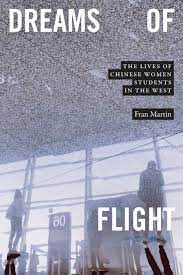
Dreams of Flight: The Lives of Chinese Women Students in the West

Fran Martin (2022) Dreams of Flight: The Lives of Chinese Women Students in the West. Durham and London: Duke University Press

by A/P Fran Martin, University of Melbourne

My Dad once said to me […]: do you want to stay in Chengdu forever? Or do you want to have your own dream? He said, if you stay in Chengdu, then after you graduate you’ll work here, and find someone to marry, and that will be your life. And then he said: do you have a dream? If you have a dream, then you should follow it: go off and realise your dream yourself. […] Actually, he said all that very casually, but at the time, I did take notice. I thought about that question a bit. And then I said: I don’t want to spend my whole life there. I don’t want to be like ordinary girls and just pass my life in a very ordinary way, so I thought: I want to go out, I want to take a look around, take a look at this world [laughs]. […] Yes, I really wanted to see what this world is like, so I started to consider going abroad for study.

Suyin, 2015, author’s translation

Suyin, then 22, told me this story a couple of months after she arrived in Melbourne, in response to a question from me about what had motivated her to study abroad. Her narrative is striking for the way it links together the concepts of personal dream, familial support, transnational mobility, and gendered expectation. Suyin describes a mobile dream, supported by her father and fuelled by the hope that study abroad would not only broaden her horizons beyond the city where she had lived since birth, but also re-script the standard female life course that seemed inevitable if she stayed put.

I interviewed Suyin as part of an ethnographic research project I undertook between 2015 and 2020, which saw me follow a core group of fifty Chinese women born around the 1990s on their overseas study journeys in Australia. The project tracked participants from pre-departure in China, where I interviewed them along with their parents; through several years of study at universities in Melbourne, Sydney and Canberra; and finally on to their postgraduate working lives in Australia, China, and beyond. The project aimed to shed light on these students’ extra-curricular lifeworlds in Australia: their subjective and emotional experiences of how it feels to study and live abroad at this time in their lives. Dreams of Flight, due to be published early next year, is the result of this study. It examines these women’s motivations for studying overseas and traces their embodied and emotional experiences of Australian cities, social media worlds, work in low-skilled and professional jobs, romantic relationships, religion, Chinese patriotism, and changed self-understanding after study abroad. The book illustrates how emerging forms of gender, class, and mobility fundamentally transform the basis of identity for a whole generation of Chinese women.

Dreams of Flight’s core claim is that understandings and practices of gender are inseparably entangled with middle-class Chinese students’ experiences of educational mobility. A key focus is how young Chinese women negotiate competing pressures on their gendered identity while studying abroad. On one hand, unmarried middle-class women in China’s single child generations are encouraged by their parents and the wider middle-class public culture to develop themselves as professional human capital through international education, moulding themselves into independent, cosmopolitan, career-oriented individuals. On the other, strong neotraditionalist state, social and familial pressures of the post-Mao era push them back toward marriage and family by age thirty. Dreams of Flight asks how time studying abroad affects young women’s negotiation of the contradiction between these competing models of identity.

The chapters demonstrate that, broadly speaking, the experience of transnational educational mobility tended to decrease their identification with neotraditionalist femininity while correspondingly increasing their attachment to mobile enterprising selfhood. Some were initially motivated to study abroad partly by their emerging critique of social pressures pushing women in their twenties toward marriage and family, and their negotiations with sexuality and intimate relationships during their years in Australia involved elaborating alternative understandings of gendered time that directly contested key aspects of normative femininity in China. Finally, participants concurred, after graduation, that their experiences of overseas education had opened up a gulf between the gender neotraditionalism that they saw as constricting the lives of female peers who remained in China, and their own developing understandings of themselves as more independent, self-focused, ambitious, consumerist, career driven, reflexive, and mobility oriented. Even those who rejected or felt disqualified from the upward-striving dream of enterprising selfhood found that overseas study had strengthened their disidentification with neotraditional femininity and their mobile aspirations.

As well as exploring the gendered social life of the Chinese student diaspora, Dreams of Flight also considers some broader, associated questions. How does the Chinese educational exodus reflect China’s economic rise and the attendant in-process transformations in the world order? Within this new order, what will it mean to think of oneself, many of my research participants do, as a global citizen and simultaneously a patriotic Chinese one? How do the massive and ever-growing numbers of mainland Chinese students studying abroad impact on the societies overseas where they live and study? How will Chinese students living in multicultural Western cities be interpellated, construct themselves, and interpret others around them in relation to discourses of ethnicity and race? Around the book’s central theme of the entanglement of gender with educational mobility are woven considerations of concomitant questions concerning the lives of China’s new middle classes, students’ negotiations of the ideals of cosmopolitan selfhood and global citizenship alongside loyalties to the Chinese state, and the ways in which China’s intensifying transnational reach through educational mobilities reconfigures aspects of urban social life, including the workings of race (and racism), in the Western cities where these young people study.

What emerges most forcefully from the book is a vision of a new generation of Chinese middle-class women: women for whom multiplied potentials for mobility—their capacity for dreams of flight—is at the very core of what it means to live.

Author Bio

A/P Fran Martin, University of Melbourne

Associate Professor Fran Martin is Reader in Cultural Studies at the University of Melbourne, Australia. Fran’s best known research focuses on television, film, literature and other forms of cultural production in contemporary transnational China (The People’s Republic of China, Taiwan, and Hong Kong), with a specialization in transnational flows and representations and cultures of gender and sexuality. She is currently working on a 5-year ARC Future Fellowship project that uses longitudinal ethnography to research the social and subjective experiences of young women from China studying and living in Australia (http://www.mobileselves.org). Fran received both her BA (hons) and her PhD from Melbourne University.

Fran is fluent in Mandarin, having begun learning the language in primary school in Australia. She later spent two years studying Chinese language and literature at Beijing Second Foreign Languages Institute and East China Normal University (1989 – 1991). She then spent a further two years researching in Taiwan, including at National Taiwan Central University’s Center for the Study of Sexualities. Prior to joining Cultural Studies at the University of Melbourne, Fran lectured in the Cinema Studies program at La Trobe University (2000-2003).