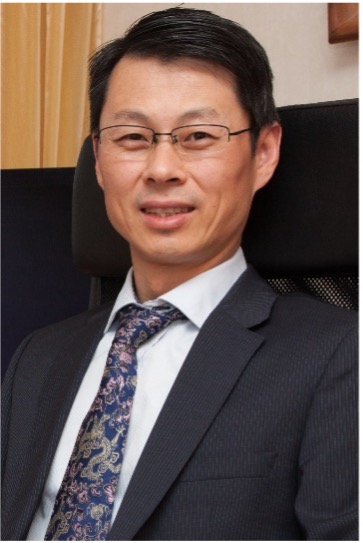
Migration theory: perspectives on time and temporalities

Course Description

​This course explores the diverse roles of time in migration processes, as a key vantage point on migration theory. It thus reflects the so-called temporal turn in migration studies. The content of the course deliberately spans diverse approaches to the study of time, from quantitative analyses of time series to ethnographic research on experiential temporalities. This broad scope fosters theoretical sensitivity and versatility. Key concepts in the course include linear time, historical time, biographical time, past, present, future, time-space, flows, trajectories, moments, rhythms, cycles, tempos, trends, synchronicity, conjuncture, disjuncture, hope, waiting, life course, and generation. The course connects these concepts to to mobility and immobility, migration processes, transnationalism, and the impacts of emigration and immigration. It combines a theoretical focus on time and temporalities with attention to the ways in which temporal dimensions are reflected in key approaches to migration theory. The lecturers draw upon their own migration research experience, across themes, contexts and methods. The expected outcome is for participants to develop their analytical awareness and dexterity in engaging with the temporal dimensions of migration. 

Course Details

Lecturers:

Jørgen Carling is Research Professor at the Peace Research Institute Oslo (PRIO) and co-director of the PRIO Migration Centre. His research covers global migration, immobility and transnationalism, seeking to explain how migration arises, and how it affects societies, families and individuals. He holds a PhD in Human Geography and combines ethnographic and statistical methods, often in mixed-methods research designs. He currently leads MIGNEX, a large 10-country project on migration and development, as well as the ERC-funded project Future Migration as Present Fact (FUMI).

Marta Bivand Erdal is Research Professor at the Peace Research Institute Oslo (PRIO) and co-director of the PRIO Migration Centre. She is a Human Geographer and has conducted research in South Asia (mainly Pakistan), Norway and Poland. Her research is mainly based on qualitative methods, using semi-structured interviews and focus groups, focusing on innovative approaches to sampling and data collection in migration research. Her current projects include the ERC-funded Migration Rhythms in Trajectories of Upward Social Mobility in Asia.

Deadlines:

​Application deadline: 18 April 2022.

We aim to process applications within the a week after the deadline.

Requirements:

​1) Commitment to taking part in the entire course, including the online day (20 June) and the on-site days (27-28 June).

2) Preparation of discussion points. Admitted participants will be asked to prepare discussion points that relate to assigned readings.

3) Active participation in class discussions: The course will be run as a seminar, where debate and discussion are the norm. 

Optional: To earn course certificate that stipulates it to 5 ECTS credits, students must submit an essay that is marked as “pass”.

Admission:

The course is free of charge, but students will have to cover their own travel and accommodation costs. Readings may include books that participants are required to borrow or purchase.

PhD students will normally be prioritized.

Application Form

managing editor: Tong Meng

Call for Abstracts: the Bourdieu, Work and Inequalities International Conference

Bourdieu, Work and Inequalities
16-18 November 2022 | Paris

The Bourdieu, Work and Inequalities international conference will be held 16-18 November 2022 at the Conservatoire National des Arts et Metiers (CNAM), in Paris. We are currently considering how to make this a hybrid event.

The event will gather researchers from all around the world who draw into the work of Pierre Bourdieu to understand how inequalities are made, maintained, or resisted in the workplace and the labour market. To find out more, you can now read the call for abstracts (PDF version can be found here).

The deadline to submit an abstract is the 15th April 2022 at 23.59 (UK time). More details on the submission process and the expected format can be found here. We are looking forward to reading your work!

Questions about the conference should be sent to bourdieuworkconference@gmail.com. You can also find us on Twitter

IMPORTANT DATES

  • Abstract Submission Deadline: 15th April 2022
  • Abstract Decisions to be sent out: July 2022
  • Early bird registration deadline: to be confirmed
  • Regular registration deadline: to be confirmed

managing editor: Zhiyun Bian

The Experience of European Researchers in China: A Comparative Capital Perspective

Research highlighted

Braun Střelcová, A., Cai, Y., & Shen, W. (2022). The Experience of European Researchers in China: A Comparative Capital Advantage Perspective. Journal of the Knowledge Economy. doi:10.1007/s13132-022-00982-3

The experience of European researchers in China: A comparative capital perspective

This paper examines the emerging trend of international academic migration from Europe to mainland China, by focusing on the experience of European researchers working in Chinese universities and research institutes. China has become a global power not only economically and politically, but also in higher education and research. The Chinese government (at national, regional or institutional level) has long attracted Chinese talents abroad back to China, but in recent years, it has also created incentives for foreigners to contribute to China’s development of science, technology, and innovation. Although research on this group of migrants is emerging, relatively little attention has been paid on the individual experiences of foreigners who pursue an academic career in China. This paper therefore aims at investigating the motivations, job satisfactions and career prospects of a particular group of international academic migrants, namely Europeans. Specifically, we ask three research questions: What are their motivations? What are their experience? And finally, what are their future prospects? In constructing our analytical framework, we draw on Bourdieu’s theory of practice, namely his four forms of capital (economic, social, cultural and symbolic) as applied to the academic labour market as a global field which we supplement with a push-pull model. The core rationale of our analytical framework is that academic migrants’ decisions on migrating to and remaining in a country are driven by their perceived comparative capital advantage. Such capital is divided into four forms: Economic (e.g., funding, salary, equipment), social (e.g., membership in research teams, consortia, associations, and other networks), cultural (e.g., language skills and other embodied skills, education, cross-cultural competences, as well as research-related artefacts such as research data) and symbolic (e.g., publication, funding track record and reputation in the community). The data comes from 28 semi-structured interviews conducted in 2017-2018, mainly in Beijing and Shanghai both in person and online, with 14 social scientists and humanities scholars (SSH) and 14 researchers in engineering and natural sciences (ENS).

Motivations

Looking at our interviewees’ motivation through lens of our four categories – economic, social, cultural and symbolic capital –we see that they have professional and personal motives. Notably, ENS researchers expected gaining economic capital through access to job opportunities and research funding, difficult to find in other parts of the world. Some Chinese universities offer good working conditions, support to their international staff, or dual career offers for researchers-couples. In addition, some ENS researchers stressed their desire to grow contacts within rapidly improving Chinese science. Many researchers were motivated by their personal connections, research partners, former supervisors, students, and colleagues. Other people got an offer based on existing inter-institutional cooperation in their previous job. In contrast, SSH researchers’ motivation was more tightly related to the region-specific data, archival work, fieldwork or materials only available inside the country. Many SSH researchers had an early experience of travelling or studying in China which ignited their passion. What’s more, Chinese universities and research institutes were actively pursuing the recruitment of foreign researchers due to their track record. Therefore, the researchers’ previous experience, degrees, and international networks were all symbolic assets. In conclusion, the expected capital advantage differed from SSH and ENS researchers. ENS migrated to China with less cultural knowledge about China, pursuing specific scientific agendas. SSH researchers’ move was motivated by China itself and country-specific data.

Experience working in Chinese academia

After arrival, once they mastered the basics about local environment, their job satisfaction tended to be high, and most people were relatively satisfied in a new, dynamic Chinese environment. Notably, there were three kinds of people. Firstly, around one third of interviewees were people whose reality exceeded expectations. These were all senior ENS researchers. They reported being happy about the research freedom they had, having access to funding, facilities, and overall great institutional support. Not being fluent in Chinese, they significantly relied on administration, colleagues, assistants, and students, which lowered their administrative burden. Almost a half of the participants were those whose reality met expectation. These researchers were satisfied about the support they got, and frequently drew on their previous experience with Chinese institutions. Although they could understand the local system quite well, they still perceived the environment as opaque and chaotic. And finally, six people belonged in the third group of people, those who were not satisfied. These were all social scientists, and most of them junior scholars. They complained about low salaries and unsatisfactory funding. They felt isolated in Chinese academia, and disadvantaged in getting new social and cultural capital. They thought the local research culture was too challenging to adapt to. As a result, they couldn’t use their existing capital, or gain new capital.

Career prospects

After some time, researchers felt that they reached a limit with regards to gaining new capital. They realised they were losing their comparative advantage for several reasons. Namely, ENS researchers thought that larger pots of funding were hard to get due to (overt or tacit) funders’ nationality requirements. They saw a glass ceiling to a foreigner’s promotion ladder in Chinese academia. In contrast, SSH researchers complained about few funding opportunities, difficulties when accessing fieldwork, research infrastructure, and administrative support. In terms of social capital, researchers suffered from a slow loss of international visibility because their Chinese institutions did not allow them leave China for longer business trips, or research stays abroad. Most European researchers, especially all in ENS fields, couldn’t publish or submit applications in Chinese, and they relied on assistants as their go-betweeners vis-a-vis administration.

Furthermore, professional isolation was an additional point of concern. The European researchers were, frequently perceived as short-term “guests” rather than long-term colleagues. Last but not least, mainly SSH researchers (as well as a few natural scientists) mentioned that the political control over universities increased. The SSH researchers voiced a concern about shrinking academic freedom and ideological control. For ENS, additional problems arose when ordering material from abroad or exchanging data with their partners abroad, which could be a barrier in building up international collaborative projects. With limited potential for growth in terms professional power in China, they feared the loss of global visibility. In the end, they started looking for opportunities elsewhere, or predicted other foreign employees would leave China. We found out that some factors could not be explained by our analytical framework – many issues related to the wider social and cultural environment, high costs of living, expensive healthcare, insurance, and expenses for children’s education. Fundamentally, their visas, work and residency permits were tied to their employer’s goodwill and required regular, lengthy renewals.

Conclusion

Migrant academics as global knowledge workers are essential facilitators of international research cooperation. In our article, we looked at the motivations, experience and career prospects of Europeans in Chinese academia. We found out that their careers in Chinese academia gave them the opportunity to get economic, social, cultural and symbolic capitals, and hence increased their competitiveness globally. Yet, the job satisfaction of most people tended to decline after some years in China, due to reasons which went beyond the professional realm. Our research was conducted before the COVID-19 pandemic, which has, together with the changing global geopolitical situation, affected international academic migration. Since early 2020, limitations on entry to China continue, and the flight restrictions were further aggravated by the Russia-Ukraine war. Therefore, this topic will remain to be relevant in the future, and we invite further research on this topic.

中文摘要

由于中国科学技术的迅猛发展,近年来有越来越多的西方学者到中国工作。 但是,对这一新生现象的研究却很少。我们的研究通过访谈28 名在中国工作的欧洲学者,分析了他们到中国大学工作的动机、满意度和职业前景等。为此,我们将布迪厄的资本理论与“推拉模型“结合,构建了一个比较资本优势的分析框架。 我们的研究发现中最有政策启示作用的是,中国大学对自然科学和工程学的欧洲学者最有吸引力,但是这些学者对工作的满意度往往会随着时间的推移而降低,最终可能会选择返回西方学术界工作。

Authors’ Bio

Andrea Braun Střelcová, Max Planck Institute

Andrea Braun Střelcová is a fellow at the “China in the Global System of Science” research group at the Max Planck Institute for the History of Science in Berlin, and PhD student at the Higher Education Group, Faculty of Management and Business, Tampere University in Finland. Email: astrelcova@mpiwg-berlin.mpg.de

Dr Yuzhuo Cai, Tampere University

Dr Yuzhuo Cai a Senior Lecturer and Adjunct Professor at the Higher Education Group, Faculty of Management and Business, Tampere University, Co-Director of the Sino-Finnish Education Research Centre jointly coordinated by Tampere University and Beijing Normal University, and Editor-in-Chief of the Triple Helix journal. Email: yuzhuo.cai@tuni.fi

Prof Wei Shen, Deakin University

Prof Wei Shen is the Associate Pro Vice-Chancellor (International Relations) at Deakin University in Melbourne, Australia. He is the holder of the Jean Monnet Chair in EU – China relations awarded by the European Commission at ESSCA School of Management in Angers, France. He is the Editor-in-Chief of Asia-Europe Journal and Vice-Chair of Europe-Asia Center in Brussels, Belgium. Email: wei.shen@deakin.edu.au

managing editor: Tong Meng

Call for Papers: Asia Re-Connecting? Crisis, Intimacy and Critique

2022 East Asian Anthropological Association (EAAA) Annual Meeting
National Chengchi University, Taipei, Taiwan
October 15-17, 2022

The COVID-19 pandemic has transformed the world since its spread in 2020, disconnecting families, societies, economies, as well as anthropologists from their fieldsites. East Asia, where this crisis first emerged, is also the region which has weathered the crisis most successfully, although not without controversy. In 2022, in the context of new border regimes, new forms of (distanced) intimacy, and precarious supply chains, people are finding new ways to (re)-connect with each other.  Anthropologists in East Asia and across the world find there is no simple “returning to normal” fieldwork, but search for new ways of making and sustaining connections. This Call for Papers invites anthropologists and related scholars to deliberate on the impact of the COVID-19 pandemic and its ongoing impact and other emerging challenges that are crucial to our concern in East Asia.

How can anthropology illuminate the many ways people are seeking to reconnect and re-establish intimacies with others in a new context? More importantly, how might an “ethnographic sensibility” help us understand the different and sometimes contradictory ways people reconnect their worlds and establish new futures? A lingering and seemingly never-ending crisis not only challenges people’s lives and governance, it also generates a space for reflecting on humanistic concerns, and yearning either for pasts imagined to have been less precarious, or for imagined futures which might be realized. Defining the stakes of the crisis, rebuilding intimacies and making critiques look very differently depending on whether one is a laborer, investor, student, migrant, farmer, health worker, fisherman, activist, ritual specialist, politician, male, female, straight, queer, or transgendered (to only name a few).

We invite submissions from anthropologists from East Asia working in East Asia on a broad range of topics related to crisis, intimacy, and critique in reconnecting Asia. Recommended topics include the following:

1) Anthropocene in East Asia: The biopolitics of epidemics and medicine; climate change; human-animal and human-plant relations; landscapes; environmentalism; debates on sustainable development; the anthropology of food; food sovereignty and activism; the manufacturing of the senses; health and quality of life; alternative forms of life.

2) Social and Political Movements: Propaganda and political discourse; the struggles and strategies of indigenous peoples, recognition, social justice; migrant labor; anti-imperialism; populism; nationalism and patriotism; race and ethnicity; the politics of liberalism and illiberalism.

3) Intimacy, Hope and Anxiety: Affect; the end of intimacy; connectivity; political intimacy; spiritual belonging; religious revivalism; global health and education; community sustainability; psychological well-being; happiness and suffering; care and caring; burn out; communicability, stigma and xenophobia; active ageing; quality of life.

4) Digital Technology and Network Society: Digital ethnography, surveillance capitalism; net armies and “fake news”; technocracy and pandemic control; border and entry control; artificial intelligence; big data and censorship; incarceration; the metaverse and the future of social media; infrastructure; equality and inequality.

5) Global East Asia: Suspended globalization; regrouping; reopening; democracy; vaccine equity and hesitancy; socialism; capitalism; neoliberalism; disrupted supply chains; the inflation crisis; mobility and migration; cultural heritage and cultural revivalism; transnational movements for and against race, gender and LGBTQ+ equality.

Please fill in the online Submission Form (preferred); or download the submission form, fill in it, and send it back to taipeimeeting@gmail.com. The deadline for submission is May 31, 2022.

Individual Papers:

Online submission or download form

Proposed Panel:

Online submission or download form

The registration fee is US$50 (non-student) or US$20 (student), which includes receptions and meals during the conference (October 15-16). Participants need to pay for their own travel and lodging. We are reserving rooms at two guesthouses/hotels and participants can choose the types of room and register with the hotels at their convenience. The availability of reserved rooms will be first come, first served. Participants can also arrange their own lodging. Further information on conference registration, lodging, and the optional post-conference tour will be delivered in two months after the submission deadline.

Due to the lingering uncertainty of the COVID-19 pandemic, we list a 4-step application procedure and dates below for your attention:

Step 1: Submit Individual Paper or Proposed Panel by May 31, 2022.

Step 2: Receive Acceptance Notification and related information by July 31, 2022.

Step 3: Submit Post-conference Tour Form by August 31, 2022.

Step 4: Pay registration fee in order to keep presentation in the conference program by September 15, 2022.

We look forward to your submission for joining the 2022 EAAA in Taipei this October!

managing editor: Zhiyun Bian

5th Neuchâtel Graduate Conference of Migration and Mobility Studies 2022

University of Neuchâtel, 7 – 8 July 2022 

Aim and Scope 

The Neuchâtel Graduate Conference (NGC) is an international graduate conference organized by the nccr – on the move, the Swiss National Center of Competence in Research (NCCR) for migration and mobility studies. It provides a stimulating environment in which doctoral and postdoctoral researchers from different universities and research institutions can xchange ideas, establish networks, attend targeted training, and initiate collaborative research. 

The 5th edition will take place from 7 to 8 July 2022 as a hybrid event, with the physical event at the University of Neuchâtel and the possibility to attend the conference also remotely via Webex. It will gather around 50 researchers in the fields of migration and mobility. 

Call for Papers: Tensions in Migration and Mobility 

The topic of this year will be “Tensions in Migration and Mobility”. Deeply embedded in broader global economic, social, political and technological transformations, patterns of human movement are affected by tensions operating in a myriad of ways and at multiple scales. The notions that international migration disrupts a world organized in mutually exclusive nation-states, or that transnational practices of migrants clash with political ideas about “integration” or citizenship, are well entrenched in both theoretical and normative debates. The governance of migration and mobility has also become a key site of contradictions between political discourses and “policies on paper,” or between policies on paper and their implementation, which are partly reflecting tensions in public attitudes over the attributions of rights and access to services for diverse categories of mobile people. Moreover, the field of Migration and Mobility studies itself is affected by tensions between different epistemologies, disciplines, methods, as scholars are increasingly re-arranging their core categories. With this in mind, we wish to encourage junior researchers to explore past, contemporary or future tensions regarding the regulation and the experience of human movement. We are inviting you to provide scientifically grounded analysis on how political, economic, technological, and social change may enter in tension with evolving practices of migration and mobility. We welcome papers addressing this overarching topic from all related disciplines in migration and mobility studies, such as demography, economics, geography, law, political science, sociology, and other relevant fields. 

Conference Format and Working Groups

As we intend to make room for in-depth discussions and facilitate the finalization of articles for publication in international journals, participants will be invited to remain within the same working group over the two days of the conference. Six closed groups with a maximum of eight carefully selected participants will be discussing precisely defined topics. Researchers from the nccr – on the move and senior scholars from our International Advisory Board (IAB) will guide the discussions and provide expertise. 

Falling under the same overarching theme of “Tensions in Migration and Mobility”, the groups will be divided into the following topics:

1) Policy and Governance Tensions in the Fields of Migration and Mobility 

The increase of cross-border mobility has placed the subjects of migration and governance in the focus of public discourse and policymaking. Numerous actors ranging from government actors, bureaucrats, to local non- governmental organizations have played a role in shaping the policymaking process, either directly or indirectly. The goal of this working group is to examine policy versus application/implementation within migration regimes. This can include either: (i) governance tensions between administrative or political bodies and/or (ii) tensions between or within various migration policies (i.e. free movement, border security, discrimination toward “protected groups”, naturalization and integration, etc.). The main questions to be raised and discussed will be: Where are the main points of contention in migration policy? What are the main tensions within the policymaking process and implementation? What impact do “street-level bureaucrats” have with their “discretionary power” or how it is used? The organizers of this interdisciplinary panel invite contributions from different disciplines/fields (i.e. political science, sociology, psychology, public policy, etc.) to explore different aspects of “policy & governance tensions” in the fields of migration and mobility. 

2) Understanding Citizenship under Tension 

Rights and opportunities associated with passports are unevenly distributed among countries in the world. These global inequalities impact not only values but also the meaning and uses of citizenship, which sometimes create tensions (for instance the membership of a specific nation-state). An example among others would be the particular public health situation that we face currently; it emphasizes the central role of citizenship to access some rights and opportunities. Indeed, at some point during the COVID-19 pandemic, some states decided to close their borders and to only admit citizens or permanent residents. While migration and mobility restrictions have existed for a very long time, this example underlines the link between citizenship and opportunities for migration and mobility. The various questions that will be addressed by the working group are the following: How has citizenship, as a concept or as a legal status, evolved over time and across countries? How do individuals cope with inequalities in citizenship values? How and when is citizenship related to migration and mobility? How do individuals cope with restrictions related to their residency status or the passport they hold? The organizers of this interdisciplinary working group invite quantitative and qualitative contributions from different disciplines (i.e. political science, sociology, demography, law, etc.) to reflect on these and related issues. 

3) Tensions Developed in a Transnational Social World 

In the early 1990s, the transnational lens was introduced as a new framework to study migration-related phenomena. Since then, this conceptual framework has found its usefulness and relevance in a wide variety of subjects, as it allows scholars to study social processes and phenomena transcending nation-state boundaries. In doing so, new political, institutional as well as societal tensions were disclosed. This working group creates space for the discussion of such tensions by asking among others the following questions: How do national institutions and governments cope with the transnationalization of the social world? Which challenges arise in the organization of political action and societal change that go beyond territorial and political boundaries of the nation-state? Which difficulties do transnationally mobile people encounter? How do people create and define their identity in a transnational social world? How do family members spread across different countries support each other? The organizers of this working group invite qualitative and quantitative scholars from the social sciences to reflect on these and related questions. 

4) Between Access and Exclusion: Tensions in Attitudes and Preferences in the Attribution of Rights to Migrants 

With many people (still) on the move, people’s attitudes on questions such as who should get what, when, and under which circumstances remain pertinent subjects of study. If anything, the current pandemic has highlighted tensions between attributing more rights to migrants or restricting their access. Who should be allowed to rely on the state for economic support? Under which circumstances should migrants be allowed to participate politically in their country of residence? What does it mean to be fully “integrated” or “part of us”? How does public opinion on such issues compare over time or across space? This working group aims to address these and related questions. We accept papers that investigate public opinion in the migration/mobility context, with a special focus on the attributions of rights and access to services to migrants. The objective is to improve our understanding of what mechanisms and motivations lie behind people’s preferences/attitudes/opinions in this context. 

5) Tensions in Refugees’ and Migrants’ Integration 

As recent studies show, migration policy is characterized not so much by its growing restrictiveness but rather by its increasing focus on migrants’ selection. This tendency is complemented with pragmatic integration policies highly focused on employment, designed to promote the factors leading to labor market access such as learning the host country’s language, or rapidly integrating vocational training. This policy orientation is clearly observed in the case of refugee integration, where the proliferation of temporary forms of protection has created increasing pressures to fulfill integration requirements such as getting a job and learning the host country language in order to escape the uncertainty associated with precarious legal statuses. Against this background, we aim at deepening the discussion on the interactions and tensions between migration policy, integration policy and economic policy on the one hand, and the lived experiences of migrants and refugees on the other hand. This could include the following questions: How do migration, integration and economic policies interact? How do economic actors shape migration and integration policies? How do these three policies shape migrants’ and refugees’ experiences of integration? To what extent the interaction between these various policies takes into considerations migrants’ and refugees’ aspirations and future plans? The organizers of this working group invite qualitative and quantitative scholars to share their work on these and related questions. 

6) Rising Tensions in the Anthropocene: the Strained Relations between Mobility and Global Warming 

While environmental factors have historically had a significant impact on human movement, the rapidly evolving consequences of human-induced climate change have raised major concerns and new tensions about the relationship between environment and mobility. On the one hand, the consequences of global warming are likely to affect population distribution and contribute to increasing levels of mobility as some regions of the world will become uninhabitable. On the other hand, the high mobility of persons and goods through the massive use of transportation systems remains one of the largest contributors to greenhouse gas emissions. Against this contrasted background, this panel investigates the complex relationship between mobility and global warming by asking, among others, the following questions: Where, when, and how does climate change alter existing human mobility patterns? How is global warming in turn shaped by the scope and the speed of our current mobilities? What type of policies are developed to address the challenges linked to the impacts of climate change on mobility and the other way around? Should the opportunities to move be enhanced or reduced in order to counteract the detrimental effects of global warming? The organizers of this panel welcome papers addressing these and other relevant questions from all related disciplines in migration and mobility studies, be it from theoretical, empirical, or normative perspectives. 

Best Paper Award 

The Neuchâtel Graduate Conference of Migration and Mobility Studies offers a prize of CHF 500 for the best paper to be submitted and presented at the conference. 

Submission Procedure 

The deadline for submission is 31 March 2022 

Paper proposals should include the working group title you wish to propose, an abstract (max. 250 words), a list of up to five keywords, the name and affiliation of the presenter. Co-authored papers and papers at different stages of advancement are welcome. 

Paper proposals must be submitted via this form by Thursday, 31 March 2022. Applicants will be informed by 20 April 2022. For any questions, please contact Robin Stünzi, Education and Careers Officer, by email at: robin.stunzi@unine.ch

There is no participation fee. To encourage participation from all universities, the nccr – on the move will provide funding opportunities up to CHF 400. Funding for the Neuchâtel Graduate Conference of Migration and Mobility Studies is specifically designed for international graduate students traveling from far or without mobility funding. Please contact Robin Stünzi, the Scientific Officer, to check your eligibility and apply for funding.