
Chinese students at UK universities: transnational education mobilities as a stepping-stone to adulthood 

Research highlighted

Wang, Zhe. (2022). Chinese students at UK universities: transnational education mobilities as a stepping-stone to adulthood. Population, Space and Place. doi: https://doi.org/10.1002/psp.2571

As the largest group of transnational students studying in the UK, Chinese students have drawn great research attention. Most scholarship analyses transnational Chinese students’ migration either as ‘strategic plans’ to secure employment opportunities and future economic gains, (for example, to gain university credentials and embodied competencies), or as non-strategic distinctive experiences for ‘positional advantage’ (Gu & Schweisfurth, 2015; Ma & Pan, 2015; Xiang & Shen, 2009; Zong & Lu, 2017; Zweig & Yang, 2014). Existing scholarly accounts further stress the political, social and cultural aspects of students’ migration by illustrating how it involves postcolonial discourses (Beech, 2014; Fong, 2011), government policies (Wang, 2021), middle-class habitus (Zhang & Xu, 2020), and Chinese family culture (Tu, 2018a, 2019). This study contributes to existing scholarship by attending to the adulthood transitions of transnational Chinese students studying in UK universities. Drawing on in-depth interviews with 43 transnational Chinese graduates from UK universities, I found that participants regarded their transnational education migration as a stepping-stone to adulthood. 

Recent scholarship draws increasing research attention to the adulthood transitions experienced by students in migration(Robertson, Harris, & Baldassar, 2018). Investigating student migration through a lifecourse perspective, scholars illustrate how mobile youth experience their educational migration as ‘a rite of passage’ to adulthood (Harris, Baldassar, & Robertson, 2020, p. 9). As argued by Madge, Raghuram, & Noxolo (2015, p. 685), ‘student mobility for international study should not simply be thought of as a movement occurring at a discrete point in time, but as an ongoing process inherent to ever-changing mobile lives’. When students move across different locations to study, they experience separation from old social relations and unification with new ones. For example, disconnecting from familial social and cultural contexts and integrating into new social relations are processes that bring about situated experiences of taking adventures, overcoming uncertainties, experimenting, finding oneself, and then becoming an independent adult (Michail & Christou, 2016; O’Reilly, 2006). Moreover, researchers critically point out how this normative understanding of mobile transitions is socially structured by youth’s class positions, governments’ migration policies, and discourses such as cosmopolitanism and individualism (Holdsworth, 2009; Kim, 2013; Thomson & Taylor, 2005; Tse & Waters, 2013). Focusing on the social construction of mobile transitions, researchers thus elaborate on the complexities and unevenness of transnational students’ life transitions (Cairns, 2014; Collins & Shubin, 2017; Martin, 2018). But to date, far too little literature has situated the discussion of Chinese students’ transnational mobilities in their lifecourse. Although Xu (2021) explores the transnational Chinese students’ life events, her article mainly focuses on the interplay between students’ (im)mobilities and their study-to-work transitions. This paper advances existing literature by investigating how transnational Chinese students reflect on their studying experiences at UK universities through a lifecourse transition perspective. 

Framed within the paradigm of mobilities, the findings illustrate how transnational Chinese students interpret their UK study experience as a stepping-stone to adulthood and how their transitions to adulthood are culturally and socially structured. For Chinese students, UK universities are more than a place to study: they are the sites of the creation of social webs where young people rehearse the roles and responsibilities of adulthood in everyday social interactions. Moreover,this paper exemplifies the importance of a cultural lens in the analysis of mobile transitions to adulthood (Arnett, 2007; Jeffrey & McDowell, 2004; Nelson et al., 2013; Punch, 2002; Stockdale, MacLeod, & Philip, 2013). Noticing that Chinese students construct their adulthood in ‘interdependencies, mutual support, and responsibility for others’ instead of ‘separation, self-reliance, and responsibility for the self’, a conventional transition model for western mobile youth, I explain how transnational Chinese students’ transitions to adulthood are structured by collectivism and group-oriented values (Holdsworth, 2009, p. 1861). Finally, this paper stresses the complexities of Chinese youth’s transitions to adulthood by showing how transnational Chinese students’ social class influences their transitions to adulthood.

To conclude, this paper illustrates how transnational education mobilities transform social networks, in which transnational Chinese students rehearse their role as an adult in everyday social interactions, and how the intersection of Confucian collectivism and students’ class background influences their experiences and understandings of transitions to adulthood. Therefore, this article advances existing scholarship on transnational Chinese students by proposing a lifecourse perspective and exemplifies the complexities of mobile youth’s lifecourse transitions by emphasising the cultural and social construction of transnational Chinese students’ adulthood.

Authors’ Bio
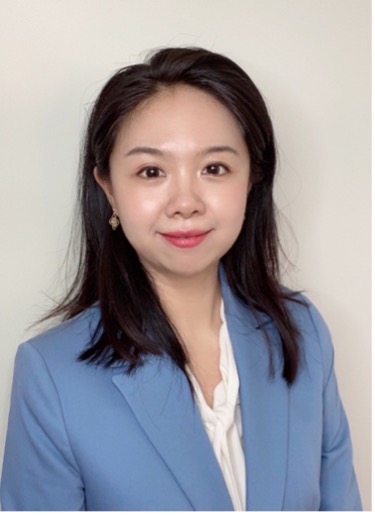
Dr. Zhe Wang
University of Oxford

Dr. Zhe Wang is a postdoc researcher working in the Department of Education, University of Oxford. She holds a PhD from the School of Geography and the Environment, University of Oxford. She has an interdisciplinary research background, and conducts both qualitative and quantitative research and ethnographic fieldwork. She can be contacted at zhe.wang@education.ox.ac.uk and she tweets @ZheWang_maggie. Her research interests can be described as:

  • International higher education and student (im)mobilities
  • International higher education and world development
  • Transnational education space
  • International Chinese students
  • Citizenship, urban inclusiveness and social reproduction in China

Managed editor: Zhiyun Bian
Subjectivity as the site of struggle: students’ perspectives toward Sino-foreign cooperation universities in the era of discursive conflicts

Research highlighted

Han, X. (2022). Subjectivity as the Site of Struggle: Students’ Perspectives toward Sino-Foreign Cooperation Universities in the Era of Discursive Conflicts. Higher Education. DOI: 10.1007/s10734-022-00840-w

Subjectivity as the site of struggle: students’ perspectives toward sino-foreign cooperation universities in the era of discursive conflicts

As an effective solution both to education surplus in developed countries and the lack of high-quality educational resources in developing ones, the number of international branch campuses (IBCs) has gained rapid growth worldwide. During this process scholars remain suspicious about curriculum design and delivery, faculty and student recruitment, and the suitableness of the imported teaching content to the host country. Wilkins et al. (2012) go further to emphasize not only the efectiveness of teaching and learning, but students’ (subjective) perspective should be taken into account for IBCs’ further development.

However, the traditional analysis of students’ experience is inclined toward the pre-social conception of individuals, locating investigation in a value-free vacuum. When zooming in on international education, it concentrates on students’ other-directed adjustment/acculturation and focuses on the differences among dominant discourses. From the perspective of critical theorists, such efforts have placed agency and constraints into two extremes of continuum rather than examining their interpenetration, the dangers alerted by both Bourdieu and Foucault, as freeing agency from power relationships. The “already formed” view of the person (Olssen et  al., 2004) sidesteps the issue on how people’s subjectivities have been infiltrated and occupied by modern power during its changes from “explicitly overt forms or ‘oppression’” to “more covert forms…imbu[ing] with individuals’ own desires and active participation in the regulation and development of their selves” (Webb, 2011, p. 738). Based on existing critical studies of how neoliberalism realizes governance at a distance by subjectivity production and how individuals resist such politically imposed discourse, this article furthers the study of students’ self-formation and the resulted subjective evaluation toward their enrolled institutions in the era of discursive conflicts. Specifically, it adopts Foucault’s concept of ethics to empirically explore the permanent agonism in the subjectivity constitution of students who are situated between neoliberalism and authoritarianism in Chinese Sino-foreign cooperation universities (SFCUs) and the danger of their sense of lost.

The data reported were collected from in-depth interviews with sophomores and juniors in three selected SFCUs. The analysis was directed by Foucault’s ideas of power, discourse, subject/subjectivity, and critique. Special attention was paid to critique about the normalized neoliberal and authoritarian values prevailed in their enrolled institutions.

Specifically, neoliberal ideas have successfully penetrated individuals minds, demonstrated by the great faith of all the interviewees in the academic standards of the cooperation universities. Students believe SFCUs as the fair sites to “to utilize their powers of consumer choice and control” (Vincent, 1994, p. 263) and the world-class educational resources/good service they received worth the relatively high tuition fees charged. However, while neoliberalism discourse has obviously occupied the dominant position in SFCUs, China’s effort to shape authoritarian subjects has also been rewarded as the interviewees express their desire for clear instruction and direction from authority.

This study highlights the “equivocal nature” of the subject as representing “one of the best aides in coming to terms with the specifcity of power” (Foucault, 1997b, p. 212).Subjectivity is a site where power enacts and resisted/refused; it is ever-developing, instead of being “primarily or always identical to itself” (Foucault, 1997a, p. 290). THNE facilitates this process by providing students the accesses to various discourses (sometimes in conflict). While such developments change subjects’ perception/evaluation towards certain events/environment/experience, it also represents rethinking of the “critical ontology of ourselves”; students become suspicious about the “truth” and always feel “lost” as he submits himself “to ‘an experience…in which what one is oneself is, precisely, in doubt’” (Burchell, 1996, p. 30).

To conclude, Foucault’s observation that “human beings are made subjects” (1982, p. 208) cautions the danger of either taking neoliberal criteria/values for granted to explore international/transnational education experience or focusing on cultural aspects as constraints for students to respond to. From the prism of Foucault, individuals’ values, perceptions, and self-knowledge are “linked to the ways in which [they] are governed” (Dean, 1999, p. 14), simultaneously by others and by themselves: their evaluation/satisfaction is subjectively shaped by (various and conficting) discourse(s) which confne(s) “what will be known” (Mills, 2003, p. 70) and what counts as natural/true. As Foucault further alerts, “nowadays, the struggle…against the submission of subjectivity–is becoming more and more important, even though the struggles against forms of domination and exploitation have not disappeared. Quite the contrary” (1982, p. 213).

Authors’ Bio

Dr. Xiao HAN
Tianjin University

Dr Xiao HAN earned her B.A. (Economics) from Jilin University and Ph.D (Education) from the Education University of Hong Kong. She worked for two years as a postdoctoral fellow at Lingnan University and then took the position of Beiyang associate professor at the School of Education, Tianjin University. Her research is trans-disciplinary-based, focusing on critical policy analysis, international/transnational higher education, and Foucault/Bourdieu studies. Her works have been published in international journals such as Journal of Education Policy, Higher Education, and Policy and Society. Email: hanxiao0309@hotmail.com

Managing editor: Lisa(Zhiyun) Bian

Call for Papers: Diversity and Epistemological Plurality: Thinking interculturality ‘otherwise’

The 22nd Annual Conference of the International Association for Languages and Intercultural Communication (IALIC) will take place at the Institute of Education of University of Lisbon, Portugal, from 7th to 9th September 2022.

Under the theme “Diversity and Epistemological Plurality: Thinking interculturality ‘otherwise’”, we hope the conference may become a forum for the sharing of thought-provoking perspectives and research around the topics of diversity and interculturality.

We are pleased to announce that the Call for Papers is now open and we invite you to submit your abstracts until 10th May 2022.Inquiries can be sent to the Organising Committee: ialic.conference.2022@gmail.com.

You may find detailed information about the Call for Papers and other topics on the event’s website: http://ialic2022.ie.ulisboa.pt

We are aware of the tight set of deadlines, but we are counting on your proposal submissions to assemble a very exciting and exquisite conference programme.

For now, two very relevant keynote speakers are confirmed: Professor Boaventura de Sousa Santos (Portugal) and Dr. Giuliana Ferri (United Kingdom).

We would be very glad to welcome you in Lisbon, and we are looking forward to receiving your abstract submissions!

Managing editor: Lisa (Zhiyun) Bian

Call for Contributions: Educating Anthropologists for/in the Contemporary World  

Call for Contributions on Teaching Anthropology in China

It has long been suggested that sociocultural anthropology needs to adapt its research methodologies (e.g., Marcus 1998) and adjust its analytical concepts to the current sociopolitical conditions of an altered global situation (e.g., Collier and Ong 2005, Pink and Salazar 2017). Teaching is one of the critical areas where anthropology reproduces itself and where any changes in the discipline should register. We contend, however, that educational practices have not received the scholarly attention they deserve. Despite the fact that most university positions require a considerable amount of teaching, we are evaluated primarily through our publication record, and our teaching achievements become secondary. In teaching, anthropology shifts from a disciplinary practice to the substantive content of pedagogic practice. The depth and engagement with pedagogic issues have not been up to pace with reflections on our methodological and theoretical practice. The recent pandemic has intensified the urgency of these discussions and brought new challenges, dilemmas, and opportunities in teaching and learning anthropology. This global challenge has been met locally in various ways, but primarily by turning to online solutions. 

We stress the need to rethink our educational strategies. How do we as educators respond to the challenges and changes? How do we engage our students in the society that surrounds them? How do we cherish ‘the view from afar’ in our teaching when most of our students do fieldwork ‘at home’? How do we incorporate online platforms and remote pedagogic practices in a discipline that is so grounded in direct interpersonal contact? What is being lost in the shift from personal to e-teaching, e-supervision, and e-evaluation? 

This edited volume on teaching and learning anthropology wishes to explore, compare, and discuss different forms of anthropological engagement and reflect on how anthropological education has been changing over the past 30 years and particularly by the challenges posed by the recent pandemic. We wish to take stock of the current situation, promote a space for sharing, and reflect on how this situation affects the teaching and learning of anthropology in different contexts and levels. We invite papers investigating how anthropology teachers across Europe (and beyond) have tried to engage their students and make anthropology relevant to the contemporary world. We call for contributions that are based on experiences, theoretically embedded, and analytical.

Please send an abstract of 500 words (+ 10 references), framing your argument and specifying your ideas and related literature.

Provide, also, the following information:

  • Author full name(s), 
  • Institutional affiliation(s), 
  • E-mail address(es), 
  • Short biographical note (100-150 words) for each author

Lorenzo Cañás Bottos: canas.bottos@ntnu.no

Jakob Krause-Jensen: jakj@edu.au.dk

Ioannis Manos: imanos@uom.edu.gr

Note: For whom might be interested to contribute, it would be great to have a quick note of interest asap (please email Shuhua shuhua.chen@ntnu.no) before submitting the abstract by the end of this month, 30 April 2022. And also please feel free to contact shuhua.chen@ntnu.no for further details. 

managing editor: Tong Meng

Call for Conference Papers: “China English” or “Chinglish”? Implications for World Englishes in students’ academic writing

University of Manchester, Harwood Room, Barnes Wallis Building
June 14th 2022, 09:00 – 18:00
Free to register

The conference will explore the ways in which grammar and vocabulary as used in overseas students’ writing differ from what is otherwise expected: standard British English. The implication of the idea of World Englishes is that systematic and predictable uses of English by specific groups of language users, while different from standard English, are not errors. This leads to a potential dilemma for both students and lecturers, seen in the questions below, which also serve as potential themes for conference papers (conference papers are not limited to the themes and topics below):

• How can we distinguish between grammatical errors and innovations?

• If the latter, should such grammatical (and lexical) differences be accepted (however defined), or should they be considered ‘wrong’?

• Is difference a ‘deficit’ in any way considering the requirement for standard English against the reality of thousands of foreign students who may indeed have their own variety of English(es) (e.g. Indian English, Ghanaian English, etc.)?

• Are there ways in which students can “teach the teachers” regarding their varieties of English, notably as part of Education programmes, thus allowing for a linguistic – and cultural – exchange?

• Given the conference title, what are the linguistic features – lexis and grammar – that indeed distinguish a recognised variety of English – from random errors?

• What are the political implications for standard inner-circle Englishes? This could involve relevant theory such as linguistic hegemony, symbolic violence, cultural reproduction, linguistic capital.

• How might we approach linguistic codification given the absence of ‘traditional’ means of such for non-inner circle Englishes, especially expanding circle Englishes? For example, the Oxford English Dictionary doesn’t necessarily have a great deal of lexis for expanding circle Englishes, though this is slowly changing.

• Taking a lexicographic approach, what are the key issues regarding online codification, given the proliferation of World Englishes within web- based dictionaries, part of the Fourth Industrial Revolution?

We welcome empirical, conceptual, or methodological papers. We would also accept topics for proposed workshops. Please submit your abstracts no later than April 19th 2022. The abstracts should be no more than 250 words, excluding references. Please send abstracts to the following email addresses:

alex.baratta@manchester.ac.uk and paul.v.smith@manchester.ac.uk

Also, in your email, please confirm if you plan to attend the conference in person or would prefer to present your paper, if accepted, online. Details regarding online presentations will be sent out to individuals whose papers have been accepted.

The conference will involve paper presentations and workshops. Presentations will last for 30 minutes – 20 minutes for the talk with up to ten minutes for Q & A. As for workshops, we anticipate up to one hour being available.

The conference will involve three tea/coffee breaks, and a buffet lunch will be provided. If you have any dietary requirements, please inform us by email when you submit your abstract.