JOB OPPORTUNITIES@BJUT 丨 APPLICATION 2025 NOW OPEN

Abstract:application 2025 now open

Openings for Candidates from Hong Kong, Macao, Taiwan and Overseas

· Find Your Career

Working at the Beijing University of Technology, from the beautiful campus to remarkable research labs and cultural facilities, you find daily opportunities to live to your fullest. Whether you are already part of our community or just getting to know us for the first time, we invite you to join us and make a fundamental difference.

· About BJUT

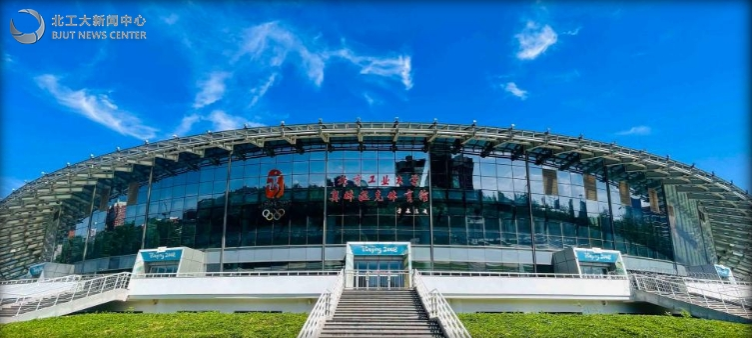
In 1960, BJUT was established in the southeast industrial area of Beijing, bearing the mission of providing the capital with engineering talents to build new high-level, high-precision and advanced industrial system. Today, BJUT has developed into a high-level multi-disciplinary research university providing science, engineering, economics, management, literature, law, art and education programs, with engineering as a core focus. Included into the National “211 Project” in 1996, BJUT was listed as one of China’s 95 universities to build world-class disciplines in 2017.Currently, BJUT has over 3,200 faculty and staff, including over 110 international faculty members from more than thirty countries or regions who teach English, Japanese, major courses, conduct research, and supervise postgraduate students.

As a place of learning, discovery, expression and innovation, BJUT benefits from a diverse faculty and staff who create a welcoming environment and opportunities for all students to grow, learn and succeed.

· Aim at a Rewarding Career at BJUT?

We are ready to welcome you. At BJUT, you can produce a meaningful impact on students, faculty, researchers, other staff, the local community, and even the world. You also have the chance to realize your personal goals, build strong relationships, be recognized for your work, and enjoy the unique value only the BJUT employment experience can offer.

· At BJUT, You Can…

Keep Exploring

Explore the possibilities of a BJUT education as you map out your college journey.

Keep Learning

Seize extraordinary freedom of opportunity—to explore, communicate, and challenge yourself.

Keep Discovering

Discover the countless ways that creativity and diversity bloom on the BJUT campus.

· Ready for BJUT Faculty & Staff from Hong Kong, Macao, Taiwan and Overseas Recruitment 2025?

The recruitment for the fall semester of 2025 is now launched!

· Types of ApplicationNew Employee Application

Hired applicants will start working at BJUT from the 2025 fall semester, a total of 17 positions.

· Posts & Requirements

1. Teaching Positions: they are required to deliver language courses for students.

2. Teaching & Research Positions:they are required to deliver courses for students, join the scientific research group of second-level institutions, jointly apply for and undertake scientific research projects with teachers of BJUT, and cultivate graduate students. The unit of the first author for scientific research achievements shall be the Beijing University of Technology during the contract period.

· Job Qualifications

The applicants should meet the following requirements:

1. Be under the age of 60 with a good health condition and no criminal record;

2. Shall abide by the relevant laws and regulations of the People’s Republic of China;

3. Be responsible and work a full-time job during the contract period.

For more information about posts & requirements, please find attached file—the Job Openings for Candidates from Hong Kong, Macao, Taiwan and Overseas 2025.

· Procedures

1. Application: the qualified applicants should apply to secondary-level institutions. The institutions shall assist the applicants with the preparation of documents.

2. Examination: all applications should be examined and ranked by secondary-level institutions, which should be approved by the leadership of secondary-level institutions and then submitted to International Office, Office of Hong Kong, Macao and Taiwan Affairs.

3. Assessment: all documents submitted by the secondary-level institution will be reviewed by the university-level meeting.

4. Announcement: the result of review will be announced on BJUT internal website.

5. Entry Procedures: Those who are approved and have signed the contract need to register in the Human Resource Office and then initiate the procedure officially. The secondary-level institutions shall assist the employees in completing the relevant procedure such as work visa application, accommodation, teaching arrangements and daily issues.

· Documents Submission For new applicants, please submit Application Form for International Faculty Recruitment or Application Form for Hong Kong, Macao and Taiwan Faculty Recruitment and supporting documents as follows:

1) Curriculum vitae

2) Highest degree and diploma certificate

3) Personal information page of passport or Mainland Travel Permit

4) Working experience letter

· Deadline and Contact Information

1. Deadline: Please consult the secondary-level institutions, respectively, for the specific deadline since each of them will have their own employment arrangements. The deadline for secondary-level institutions submitting applications to International Office is 18th April 2025.

2. Submission: Please submit all documents to the secretary of international affairs of the secondary-level institutions as required.

3. Contact: please find attached file.

If you are the one who takes responsibility for your actions and challenges yourselves in a new culture — We want you! If you are ready to share your passion for education — We want you! If you believe you can contribute to the betterment of BJUT and beyond— We want you!

Please make your application as soon as possible. For more details, please visit the campus website at https://english.bjut.edu.cn/.
Appendix:

Ⅰ. Job Openings for Candidates from Hong Kong, Macao, Taiwan and Overseas 2025

Ⅱ. Application Form for International Faculty Recruitment (for new applications)

Ⅲ. Application Form for Hong Kong, Macao and Taiwan Recruitment (for new applications)

International Office

Office of Hong Kong, Macao and Taiwan Affairs

Human Resources Office

Beijing University of Technology
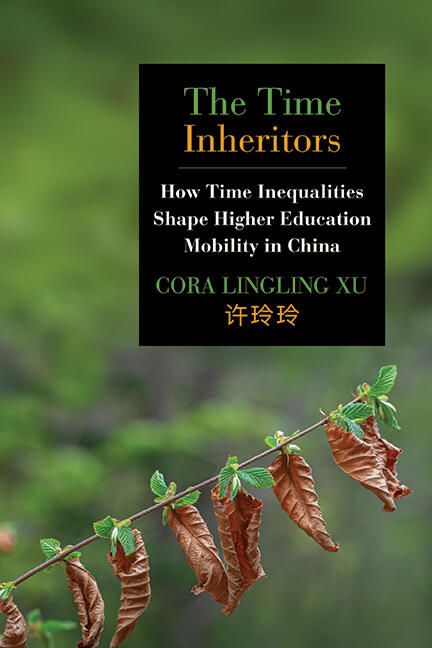
‘The Time Inheritors: How Time Inequalities Shape Higher Education Mobility in China’ by Cora Lingling Xu

We are delighted to share the publication of a new book by our director Dr Cora Lingling Xu. Read this profile (in Chinese) with People Magazine 《人物》杂志 and blog post to learn about the personal stories behind this book.

Please find an abstract of ‘The Time Inheritors‘ and critical reviews below.

If you wish to order this book, you can use SNWS25 to get 30% off when you order from the SUNY Press website.

To learn more about the book talks and interviews visit this page. Listen to the New Books Network’s interview with Cora. 听’时差In-Betweenness’与Cora的对话小宇宙链接). Check out this page for frequently asked questions (e.g. what you should do if you wish to write a book review) about this book. Share your stories of ‘time inheritance’. If you wish to contact Cora about arranging book talks and interviews, complete this contact form.

Abstract

Can a student inherit time? What difference does time make to their educational journeys and outcomes? The Time Inheritors draws on nearly a decade of field research with more than one hundred youth in China to argue that intergenerational transfers of privilege or deprivation are manifested in and through time. Comparing experiences of rural-to-urban, cross-border, and transnational education, Cora Lingling Xu shows how inequalities in time inheritance help drive deeply unequal mobility. With its unique focus on time, nuanced comparative analysis, and sensitive ethnographic engagement, The Time Inheritors opens new avenues for understanding the social mechanisms shaping the future of China and the world.

Critical reviews

“Xu’s conceptually sophisticated monograph reveals how intersectional inequalities are constructed, experienced, and transmitted temporally, with special reference to education. Through the vivid stories of students in mainland China and Hong Kong, and Chinese international students, Xu brings to life different individuals’ ‘time inheritances,’ demonstrating the exciting possibilities time offers as a lens for innovative thinking about inequality. A must-read for sociologists and anthropologists of education, China, and time.” — Rachel Murphy, author of The Children of China’s Great Migration

“Innovative and ambitious, The Time Inheritors proposes a time-centric framework that brings together analyses of social structure, history, individual behavior, and affect. We often feel we are fighting for time. But, as Cora Xu argues in this important study of Chinese students, the scarcity of time is not a given or universal. Different experiences of time result in part from the varying amounts of time we inherit from the previous generation. Time inheritance is therefore critical to the reproduction of social inequality.” — Biao Xiang, coauthor of Self as Method: Thinking through China and the World

“Cora Lingling Xu offers a groundbreaking analysis of educational inequality and social mobility in contemporary China. Xu centers the voices of marginalized students throughout, providing poignant insights into their lived experiences of rural poverty, urban precarity, and educational alienation. At the same time, Xu’s comparative scope reveals how even seemingly privileged groups can be constrained by the temporal logics of social reproduction. The Time Inheritors is a must-read for scholars, educators, and policymakers concerned with educational equity and social justice. Xu’s lucid prose and engaging case studies make the book accessible to a wide audience while her cutting-edge theoretical framework and methodological rigor set a new standard for research on education and inequality.” — Chris R. Glass, coeditor of Critical Perspectives on Equity and Social Mobility in Study Abroad: Interrogating Issues of Unequal Access and Outcomes

“By centering the temporal dimension of who is advantaged or disadvantaged, how, why, and with what consequences, The Time Inheritors takes a unique and powerful approach. Not only does the book contribute theoretically and empirically to our understanding of class inequalities but it also resonates deeply. The inclusion of Chinese translations and characters will give Chinese readers a rich, nuanced cultural appreciation of her findings.” — Dan Cui, author of Identity and Belonging among Chinese Canadian Youth: Racialized Habitus in School, Family, and Media

“An extremely well-written, theoretically informed, and compelling volume that represents a major contribution to the study of education, migration, and social inequality in China and beyond. The Time Inheritors proposes a bold and innovative framework—that of time inheritance—to open the black box of social inequality’s temporal dimension. Whereas the relatively privileged classes inherit temporal wealth and strategies that enable them to bank and save time, facilitating their mobility, the time poor lack this inheritance, forcing them into a vicious cycle of wasting time and paying back temporal debts. Drawing from a rich palette of vivid and intimate longitudinal case studies, The Time Inheritors unpacks the complex intersections between familial, national, and global time inequalities.” — Zachary M. Howlett, author of Meritocracy and Its Discontents: Anxiety and the National College Entrance Exam in China

Release Dates

Hardcover: 1st April 2025

Paperback: 1st October 2025

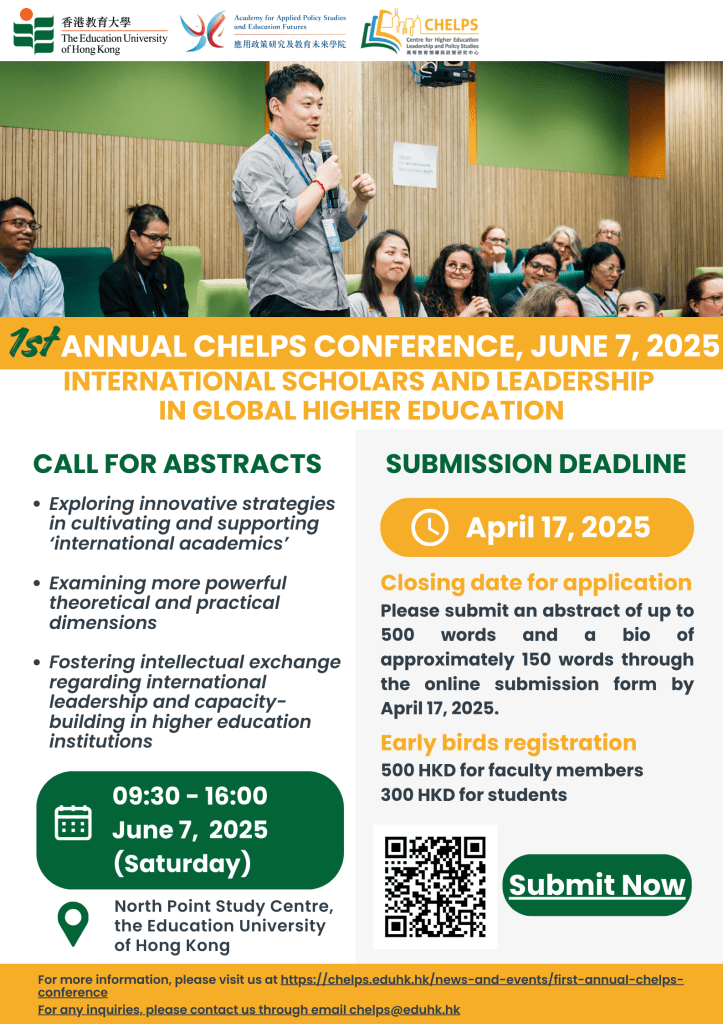
Call for Abstract: 1st Annual CHELPS Conference

Centre for Higher Education Leadership and Policy Studies (CHELPS) are pleased to invite you to submit an abstract for the upcoming 1st Annual CHELPS Conference at North Point Study Centre of the Education University of Hong Kong on 7 June, 2025. This year, our theme is “International Scholars and Leadership in Global Higher Education”, and we welcome submissions from students, researchers, practitioners, and professionals at different stages of their career who are interested in international mobility, collaborations, and intellectual leadership within a globalised context. 

We welcome abstracts addressing issues of internationalisation, international leadership, international collaboration, and global higher education. Submissions should not exceed 500 words for an abstract and 150 words for a brief bio, and must be submitted by 17 April 2025. For more information, please refer to our website: https://chelps.eduhk.hk/news-and-events/first-annual-chelps-conference

To submit your abstract, please visit: https://eduhk.au1.qualtrics.com/jfe/form/SV_1SyOkxKQ9io69sW 

Managing Editor: Tong Meng

Participant Information Sheet/Information about the research

Title of Study: 

Understanding the challenges and opportunities for internationally mobile academic staff seeking recognition of their teaching experience in UK higher education. 

We are inviting you to take part in a research study. Before you decide, it is important that you know why we are doing the study and what is involved. Please read the following information carefully. 

What is the purpose of the study? 

The purpose of this study is to find out about the experiences of international academic staff who are teaching in UK higher education. Specifically, the study seeks to understand the challenges and opportunities for international staff who are seeking recognition of their teaching practice, for example, through Advance HE Fellowship schemes. 

The outputs of the research will contribute to improving how universities recognise and develop the pedagogic practice of internationally mobile staff. 

The study is being conducted at the University of Lincoln. It is open to academic staff at any other UK HE institution. 

Am I eligible to take part? 

You are eligible to take part in the study if you: 

  • Consider yourself to be international staff or an academic of migrant background 
  • Currently work in UK HE in a teaching or learning support role 
  • Have tried to gain recognition of your teaching practice via the Advance HE Fellowship scheme in the past five years (D1, D2, D3 or D4, successfully or unsuccessfully, whether through an internal institutional scheme or direct to Advance HE) or via another route (e.g. Teaching Excellence Award, National Teaching Fellow, Collaborative Award for Teaching Excellence). 

You will not be able to take part in the study if you: 

  • Are employed by the University of Lincoln 

Do I have to take part? 

Participation is completely voluntary. You should only take part if you want to and choosing not to take part will not disadvantage you in anyway. 

What will I be asked to do? 

You will be asked to participate in a single interview of between 30 minutes to 1 hour in length. The interviewer will ask about your experiences of teaching/learning support in UK HE, and specifically your experience of gaining formal recognition of your teaching/learning support practice. As part of the interview, you will also be asked to share personal data, including your contact details, gender, age, nationality, job title and employer. Before taking part, you will be asked to complete a consent form. 

Will I be paid expenses for taking part? 

You will not be paid to participate in the study. 

What are the possible benefits / risks of taking part?  

It is hoped that this project will draw attention to the needs and priorities of international staff who teach in UK universities, to inform practice and policy in this area. All participants will be offered a written summary of the research at the end of the project. It is not anticipated that participating in the study will cause any harm or discomfort. 

Will anyone know I have taken part? 

The University of Lincoln (UoL) is the sponsor for this study based in the United Kingdom. We will be using information from you in order to undertake this study and will act as the data controller for this study. This means that we are responsible for looking after your information and using it properly. 

The research team will keep your name and contact details confidential and secure. The research team will use this information as needed, to contact you about the research study, and make sure that relevant information about the study is recorded for your care, and to oversee the quality of the study.  

Certain individuals from UoL may look at your research records to check the accuracy of the research study. The people who analyse the information will not be able to identify you and will not be able to find out your name or contact details. 

The interview will be confidential unless you reveal that you or someone you know is at serious risk of harm. We will talk about it with you so that we can work out together how best to handle this. 

You will not be identified in any report or publication arising from this research. 

Where will my data be stored? 

The data obtained from the study will be stored securely on the university OneDrive in password protected files. Only the researcher will have access to it. The data from this study may be put in an Open Access repository for other researchers to use in future research. If so, responses will be anonymised and any personal data (e.g. contact details) will be removed.  

What will happen if I don’t want to carry on with the study?  

You are free to withdraw at any point from this study, without having to give a reason, by contacting Dr Nicola Chanamuto: nchanamuto@lincoln.ac.uk.  

If you choose to withdraw from this study, we will not retain the information you have given thus far, except when such data has already been included in aggregated analyses at the time of your withdrawal. 

What will happen to the results of the research study? 

The results of the research may be published, shared at external conferences and presented at internal meetings. If you wish, you will be sent a copy of any research outputs produced. You can confirm this at the time of your interview. 

Who is organising and funding the research? 

This research is being organised by Dr Nicola Chanamuto at the University of Lincoln. 

Who has reviewed the study? 

All research conducted by the University of Lincoln is looked at by an independent group of people, called a Research Ethics Committee, to protect your rights, dignity and wellbeing. This study has been reviewed and given favourable opinion by a University of Lincoln Research Ethics Committee [UoL2024_20252]. 

What if there is a problem? 

It is very unlikely that this study would cause you any harm. If you have a concern or a complaint about any aspect of this study, you should ask to speak to the researcher who will do their best to answer your questions. Contact details are given at the end of this information sheet.  

If you remain unhappy and wish to complain formally, you can make a formal complaint through the University complaints procedure or by contacting ethics@lincoln.ac.uk.  

Further information and contact details 

Contact details 

Dr Nicola Chanamuto 

Lincoln Academy of Learning and Teaching (LALT) 

University of Lincoln 

nchanamuto@lincoln.ac.uk  

Information compliance 

The University of Lincoln is the lead organisation for this study and will be the data controller for this study. This means that we are responsible for looking after your information and using it properly.  

The university’s Research Participant Privacy Notice (https://ethics.lincoln.ac.uk/research-privacy-notice/) explains how we will be using information from you in order to undertake this study.  

If you feel that we have let you down in relation to your information rights then please contact the Information Compliance Team by email on compliance@lincoln.ac.uk or by post at Information Compliance, Secretariat, University of Lincoln, Brayford Pool, Lincoln, LN6 7TS. 

You can also make complaints directly to the Information Commissioner’s Office (ICO). The ICO is the independent authority upholding information rights for the UK. Their website is ico.org.uk and their telephone helpline number is 0303 123 1113. 

Call for Papers-Special Issue/Section: Between Inclusion and Exclusion in Migrant Education

This special issue draws the attention to the realities of educating migrant children within different school systems around the world, focusing on the interplay of inclusionary and exclusionary practices, as well as the many in-between positions and the situational differences and processes that have emerged in education settings. Across diverse contexts, the positions and experiences of migrant students reveal a complex landscape shaped by national policies, local initiatives and practices, and institutional pressures. Schools often struggle to balance the value placed on multilingualism and cultural diversity up against the practical challenges of everyday life. In many cases, migrant children’s diverse cultural and linguistic assets are overshadowed by their perceived deficits, such as a lack of proficiency in the host country’s language. This disconnect highlights a broader issue where educational policies and practices may unintentionally further exclusion rather than inclusion.

Centralized educational frameworks and local adaptations and practices both play crucial roles in shaping migrant students’ experiences. While some systems and actors strive to tailor support to individual needs, others may default to standardized approaches that render irrelevant the diversity of student backgrounds. As a result, the extent of inclusionary practices can differ significantly based on local discretion and institutional priorities. Additionally, the readiness and competence of

educators to engage with migrant students, particularly those with refugee backgrounds, impact educational integration. Any gaps between formal training and real-world experiences of teachers underscore the need for better professional development and support structures.

The proposed special issue aims to shed light on these dynamics, offering insights into how actors in educational systems can better navigate the tension between inclusion and exclusion, and ultimately improve the educational experiences of migrant children.

We invite scholars from diverse disciplinary backgrounds to contribute papers that pertain to the scope described above. As we already have a core of articles from Europe, we are especially interested in attracting authors writing about settings in other parts of the world. We welcome empirical, policy and theoretical contributions. The final papers should not exceed 8000 words including abstract and references.

In spring/early summer 2025, we plan to hold a one or two day workshop with selected Authors to enable and benefit from collegial feedback on the proposed papers, which by the time of the workshop would be strong drafts, to be submitted as final versions around July/August 2025. The workshop will be held in-person in Poznań (Poland) and on-line, to allow wider participation. The workshop organizers will cover the cost of accommodation and meals, but we will ask participants to cover their travel costs. Please send us the working title of your paper along with an abstract of 250- 300 words by Friday, 28 of February 2025, to Katarzyna Byłów, PhD: katarzyna.bylow@amu.edu.pl.

Guest editors:

Katarzyna Byłów
Center for Migration Studies (CeBaM)
Adam Mickiewicz University in Poznań, Poland e-mail: katarzyna.bylow@amu.edu.pl

Marie Louise Seeberg
Department for Childhood, Family and Child Welfare research NOVA, Oslo Metropolitan University (OsloMet)

Managing Editor: Tong Meng