Dealing with Journal Rejections as an Early-Career Researcher

This post was originally published at the FERSA blog.

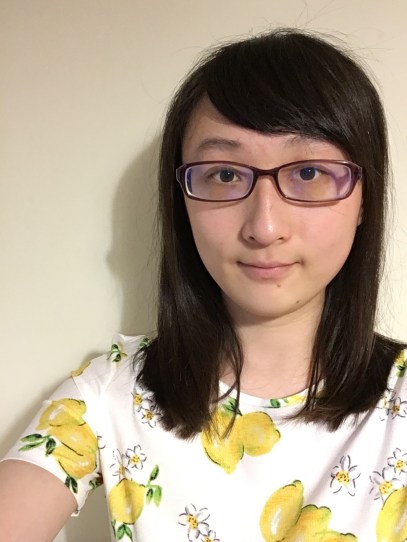
By: Dr Cora Lingling Xu, PhD Cambridge, Keele University

Note: This blog entry is adapted from Cora’s presentation at the ‘BERA-BAICE Writing for Publication Workshop’ held on 2 March 2018 at King’s College London.

Among the many encouraging positive comments I received at the BERA-BAICE Writing for Publication Workshop, a persistent message conveyed by other early career researchers was this: it was important for them to learn about not only my successful publication experience, but also my vulnerability in the face of rejections. Given space constraints, in this post I will focus solely on how I dealt with rejections. For other sharing of my publication experiences, please refer to this post and my upcoming posts on the BERA blog and BERA Research Intelligence.

Over and above all, I want to demonstrate that, IT IS POSSIBLE TO PUBLISH, for somebody like me, who is not particularly gifted in writing, who does not know many grand English words, who does not speak English as a first language and whose article manuscripts kept getting rejected.

It is…possible

Cora
Cora Lingling Xu

It is possible to publish, although one has to undergo quite a lot of hardships. The biggest one of which is probably rejections. In my own experience, during my PhD years (2012-2016), I had been rejected three times over two different articles. My articles were rejected by Sociology, The China Quarterly and The Journal of Contemporary China. During the first year of my post-PhD period (2016-2017), I was rejected once—this time it was a co-authored paper for which I am the lead author, by Race, Ethnicity and Education.

Despite these discouraging rejections, there is still consolation that it is possible to publish. During my PhD, I had three articles published, respectively in the British Journal of Sociology of Education, Journal of Current Chinese Affairs, and European Educational Research Journal. During my first post-PhD year (2016-2017), I had one article published by The Sociological Review and one accepted for publication in the International Studies in Sociology of Education.

Rejections

Working towards reviewers’ comments with a prospect of getting it accepted is a hard process, but at least it is hopeful and encouraging. How about when you get rejections? When my articles got rejected, I was of course very sad. After some recovery time (usually a week or two), I started to plan the way forward. Today I want to share with you two such examples of rejections and the subsequent publications.

The first is my article published in The Sociological Review. It was submitted to Sociology in July 2016 and rejected in October 2016. Despite the rejection, the reviewers’ feedback was extremely helpful. Then I did not have time to work on it until the following year as I was settling into my new lectureship job at Keele University. I did some follow up research between December 2016 and January 2017, and almost completely rewrote the paper and submitted it to The Sociological Review in May 2017. This time all the three reviewers were very positive about the article, so there were only some minor revisions and it was accepted on 22 August. The initial rejection was very disheartening. But I do appreciate the editor at Sociology’s encouraging words and the reviewers’ feedback. What I have learned from this process is that I should not take the rejection personally, but to benefit from the reviewers’ feedback and make it work for my next publication.

However, the next example I am going to share with you is somewhat different—in that no reviewers’ feedback was provided. This is my article that has been accepted for publication in International Studies in Sociology of Education, to be published in mid-2018.  This one was initially submitted to The China Quarterly on 19 Aug 2016 and was rejected on 2 Sept 2016. It was a desk rejection. The editors explained that they had received a few articles on similar topics and were not interested in such articles any more. Although disheartened, I quickly revised the format and sent it to The Journal of Contemporary China on 17 September, which was then rejected on 29 September 2016. This time it was desk rejection again and no feedback was provided whatsoever.  Because there was no reviewers’ feedback, there was little way to go about it. I then conducted a follow-up phase of the study and collected further data. Meanwhile, I sent the rejected article to another critical friend who came back with a heap of helpful suggestions. Then I substantially revised the paper by drawing on new data and theoretical tools and submitted this to the International Studies in Sociology of Education.

This time there were three rounds of reviewers’ feedback and revisions. It took a lot of patience and one lesson that I learned was ‘Haste makes waste’. In the second round of revision, I hurried to provide a revision within three days, only to receive further revision requests that were mainly stemmed from my hasty changes made. This is also to do with the fact that English is not my first language. In the third round of revision, I took time to deliberate on my expressions and invited native English speakers to comment on my changes. The article was eventually accepted in December 2017. What I have learned in this process is that when there is no feedback it is quite important to be critical of your own work, but never give up or abandon your ideas altogether.

cora-2
Cora presenting at BERA-BAICE Writing for Publication Workshop. Photo credit: Yuwei Xu

Non-native English writers

Throughout my publication trajectory thus far, I have been battling with the challenges of being a non-native English writer. Well, the good news is that academic English is nobody’s native tongue. It is a completely new set of convention and linguistic practices that everybody has to consciously acquire. Still, not being a native English speaker does not help. This is of course spoken with the knowledge that at university I was an English major student and I in fact taught English as a second language at secondary schools in Hong Kong. In other words, my English proficiency is not too bad to begin with. However, my social background means that I did not grow up in a household full of books and I had not read extensively. As a result, it has never been my strong suit to use big, intelligent and elegant words in my writing. Instead, I have found personally that clarity is key. Making my texts easily understandable not only allows the editors and reviewers to engage with my work, but it also forces me to confront with my ideas in a straightforward manner. If an idea cannot be expressed in plain and simple language, then perhaps it is not well formulated enough. Of course, striving for clarity is not easy. This is where peer feedback has been instrumental. For every manuscript that I send for peer reviews, I ensure that I get critical feedback from at least two or three peer authors. Over these years, I have cultivated a group of critical friends with whom I share my writing and get feedback from. Of course, I strive as much as possible to reciprocate such favours. As I am a second language speaker, I also always ensure that before I submit a manuscript, I get professional proofreading services. This seems to work quite well. Lastly, it always helps to believe that I can. I keep telling myself that ‘I can do it’ every day and every time I face a difficult task or a harsh remark.

As early career academics we are operating within an increasingly challenging environment. Performance indicators and managerial measurements can so readily creep in our everyday work and subconsciousness in harmful ways. Rejections, therefore, can be detrimental if not handled properly. The purpose of this post therefore, is to show that although rejections are BAD, if you adapt and persist, IT IS STILL POSSIBLE TO PUBLISH, even if English is not your native tongue!

Author Bio

Dr Cora Lingling Xu (PhD, Cambridge, FHEA) is Assistant Professor at Durham University, UK. She is an editorial board member of British Journal of Sociology of Education, Cambridge Journal of Education and International Studies in Sociology of Education. In 2017, Cora founded the Network for Research into Chinese Education Mobilities. Cora has published in international peer-reviewed journals, including British Journal of Sociology of Education, The Sociological Review, International Studies in Sociology of Education, Review of Education, European Educational Research Journal and Journal of Current Chinese Affairs. Her research interests include Bourdieu’s theory of practice, sociology of time, rural-urban inequalities, ethnicity, education mobilities and inequalities and China studies. She can be reached at lingling.xu@durham.ac.uk, and via Twitter @CoraLinglingXu. Download her publications here.

中文摘要-Church Participation as Intercultural Encounter in the Experiences of Chinese International Students in the UK

随着国际学生的不断增加,学生流动方面的研究主要集中于跨文化教育以及社会融入。本研究探索了在英中国留学生(非基督徒)参与教堂文化活动的社会现象。该研究采用多种研究方法,包括:问卷,半结构式深入访谈,参与观察以及文献分析,深入分析了基督教堂与中国留学生互动交流的原因,目的,以及影响。该研究还探索了西方基督教文化和中国学生的宗教文化背景,揭露了英国基督教堂对中国学生战略性传教活动以及拓展中国基督教市场的愿景。研究分析指出,国际学生与当地环境的社会联结以及互动平台的性质对学生跨文化适应以及个人成长发挥重要影响。 除了解释学生参与教堂活动背后的动态机制,该研究认为,大量中国学生涌入英国校园(特别是商学院)限制了学生多元文化交流。从某种意义上来说,教堂的一系列针对中国学生的文化活动提供了更多(相较于大学校园)的社会融入与垮文化参与的机会,大学需采取措施在多元文化的校园环境下推动切实有效的跨文化融合与交流。

Author Guidelines for Research Highlights Reports

Interested in publishing your research in our Research Highlights section? Here are a few guidelines.

The editorial team

Dr Cora Lingling Xu (Durham University, UK) Editor-in-Chief

Miss Tong Meng (Durham University, UK) Assistant Editor

Ms Xin Fan (Durham University, UK) Assistant Editor

Bingxin Cao (Florida International University, USA) Assistant Editor

Submission policy

Both emerging and established researchers working the field of Chinese education mobilities are welcome to make a submission. The editor will occasionally consider guests post from other members of the public.

The editorial team invites submissions of around 800-1,200 words on latest research publications and projects in any area of Chinese education mobilities. Proposals and outlines for possible reports are particularly welcome; the role of the editorial team is to provide support and feedback for ideas in any stage of development.

Articles should be well informed, accessible and written in a natural tone.  Submissions must use inclusive and non-derogatory language and may not contain profane, obscene, rude, or illegal material. Authors are responsible for ensuring their work does not violate intellectual property rights. Promotions of goods, services, or financial appeals will not be considered.

Other forms of media such as photos, drawings, or videos are also welcome. In such cases, the editor may recommend including written descriptions or explanations to increase accessibility of the content.

Contributing to the Research Highlights section

Those wishing to submit a report to the Network should contact the editor at chineseedmobilities@outlook.com with a proposal or a completed article. Complete submissions should be about 800 – 1,200 words long and should be sent in Microsoft Word format, with your name in document name. Documents should follow basic APA formatting (i.e. Times New Roman typeface, size 12, 1.5 spacing). A picture of the author, institutional and/or research profile links should be included. Author’s short bios of no more than 100 words should be attached too. Links to other sources such as reports, research, resources, news, academic groups may be included.

Following submission, the editorial team aims to provide prompt feedback and revisions, usually within a fortnight. Authors then have the opportunity to make revisions before agreeing on a final version with an editor.

The editors will keep the author informed about the estimated date of publication. After publication, the author may make additional minor changes if warranted. Unless otherwise noted, articles remain sole copyright of their respective author(s).

中文摘要 Compromise and complicity in international student mobility: the ethnographic case of Indian medical students at a Chinese university

摘要

目前关于国际学生流动的学术文献通常透过社会学家布迪厄的理论视角,将流动阐释为社会优势阶层通过资本转化从而达到优势再生的一种手段。这个分析视角既是基于对学生流动的一种理性化阐释,同时也强化了这种理性阐释的主流地位。然而,若将视线转移至当前亚洲区域内的非”精英”学生流动趋势,主流分析视角所不能解释的一些教育相关的社会行为逻辑则被凸显了出来,从而成为推动国际学生流动理论的契机。本文对家境并非优越的印度学生在中国某高校攻读英文授课临床医学的案例进行观察。通过民族志方法,本文描述并分析此案例中不同角色 ——个人、机构、制度——是如何在社会劣势与资源不足的情况下,通过“妥协”与“共识”两种行为逻辑来尽可能实现他们各自的个人以及机构目的。


Yang, P. (2018). Compromise and complicity in international student mobility: the ethnographic case of Indian medical students at a Chinese university. Discourse: Studies in the Cultural Politics of Education.  http://www.tandfonline.com/doi/full/10.1080/01596306.2018.1435600

A longitudinal study of Chinese postgraduate taught students’ experience in the UK: how Chinese students have changed during the transition process?

Jie Zhang copy

Jie Zhang

University of Glasgow

Abstract

UK, as one of the most desired destinations for studying abroad, has attracted a large number of international students. Chinese international students are the largest group of all international students in the UK and China is the only country that presents a significant increase in student numbers. Chinese international students have made important financial, academic and cultural contributions to the UK. Given the large number of Chinese international students and their potential contributions, it is crucial to enhance their experiences and strengthen benefits for both Chinese international students and host countries. Compared with undergraduate and PhD students, postgraduate taught students in the UK are usually enrolled in one-year programmes, which may face more challenges and gain more benefits from their experiences in the UK. The aim of this research is to explore Chinese international postgraduate taught students’ transitional experiences and, in particular, the role of their social networks on such experiences in the UK. This two-phase longitudinal study conducted semi-structured interviews across the whole academic year. The photo-elicitation technique and social network diagrams were used as innovative methods to facilitate in-depth interviews. Interpretative Phenomenological Analysis (IPA) was employed as an inductive data analysis approach. Emergent findings include how students have changed when facing challenges on academic study, live away from families, and loneliness and homesickness, how they have changed their understandings of critical thinking, and how they deal with relationship with Chinese and non-Chinese, which is all beneficial for enhancement of their confidence, independence and maturity.


摘要

英国作为最受欢迎的留学目的地之一,吸引了大批国际学生。中国留学生是英国留学生中人数最多的,而且中国是唯一一个在英国大幅增加留学人数的国家。中国留学生为英国做出了重要的财政,学术和文化贡献。鉴于中国留学生数量众多,潜在贡献巨大,提高中国留学生在英国的体验和促进双方的利益至关重要。与本科生和博士生相比,英国的研究生课程只有一年的时间,这可能会让他们从在英国的经历中,面临更多的挑战,学到更多的东西。本研究的目的是探讨中国国际研究生的经历与体验和他们的社交关系在英国的经历与体验中发挥的作用。这项研究采取了半结构化访谈,用于以学年为单位的两期纵向追踪研究。使用照片启发技术和社交网络图作为创新方法来促进深入访谈。解释性现象学分析(IPA)被用作归纳数据分析方法。目前出现的成果包括:学生在应对学习、远离家庭,孤独与思乡之情的挑战时是如何改变的,他们对批判性思维的理解有何不同,他们是如何处理与中国人和非中国人的关系的,这些对中国学生提高信心,独立意识和成熟度都大有裨益。


UK has been the second most popular destination for international students. Chinese international students are the dominant group, accounting for one fifth of the total number of international students in the UK (HESA, 2017). Chinese international students have made contributions such as making investment in economy by tuition fees and living costs, and bringing new ways of thinking and culture to enhance competition and diversity in the UK. Compared with undergraduate and PhD counterparts, Chinese international students at Master’s level may have different experience due to the nature of short-term Master’s programmes in the UK. Yet, there are limited studies focusing on this student cohort. This research aims to explore Chinese international postgraduate taught (PgT) students’ transitional experiences and the role of their social networks in the UK. More specifically, research questions are:

  • how Chinese international postgraduate taught (PgT) students adapt to a new academic and social culture during the transition process, and
  • how their social networks influence their transitional experiences in the UK.


A qualitative research method utilising photo-elicitation interviews was employed as part of a longitudinal study. Semi-structured interviews were conducted in two phases: at the beginning of and near the end of the study programme. The employed photo-elicitation technique facilitates participants to reflect on their phenomenological experiences by providing more specific and in-depth accounts (Denzin and Lincoln, 2012). In this study, participants were asked to provide photographs based on given topics, which was followed by individual semi-structured interviews with maximum of an hour each. Additionally, social network diagrams were helpful to prompt students’ reflection and detailed description of networks and their relationships with different networks (Golden, 1992). In this research, participants were asked to draw different sizes of circles to represent how they value their current social networks. I have completed data collection with totally 35 participants for both phases, all interviews were audio-recorded and transcribed and I am currently doing data analysis. The Interpretative Phenomenological Approach (IPA) was undertaken using NVivo software to identify superordinate and subordinate themes.


As the literature indicates, Chinese international students could face some academic, social and life challenges when studying in the UK. From this study, Chinese postgraduate taught students also face academic challenges, including doing presentations, writing assignments and taking exams. It is noted that at the beginning of the study programme, Chinese students tend to seek help from Chinese classmates when having doubts rather than lecturers and tutors, and they prefer asking questions after the class rather than raising hands up in class. But interestingly, my research shows that some Chinese students turn not to ask questions with Chinese classmates, but directly seek help from lecturers and tutors, and have the courage and feel natural to ask questions in class near the end of the study programme.


Apart from the finding of challenge on academic study, living away from families is regarded as another challenge for Chinese international students. For Chinese students who live abroad for the first time, cooking and having a good relationship with roommates could be difficult. Chinese students reported that they didn’t have much cooking experience when they were in China and they find cooking as an unexpected challenge living in the UK. Additionally, some Chinese students talked about issues with their roommates, for example, some roommates make kitchen dirty and they would not like to clean it even after pointing out the problem. When near the end of the study programme, some Chinese students mentioned they have greatly improved their cooking skills and have a better relationship with their roommates.


Moreover, loneliness and homesickness are common challenges that Chinese international students would face. In my research, the reasons Chinese students frequently mention are that Chinese students spend too much time in study and have less time with friends, and some Chinese students live alone. Chinese students feel anxious and stressful when facing loneliness and homesickness from the beginning of the study programme, but it clearly shows that they have changed to a more positive attitude to cope with loneliness and homesickness. Some Chinese students realise that they should take the initiative to build friendship, develop some hobbies and even learn to enjoy loneliness and homesickness.


In addition, critical thinking has always been argued as a big challenge for international students, especially for Asian international students. In my study, it is not necessarily the case. Some students showed their clear understanding of critical thinking. Possible reason could be that they have studied in the UK or Europe before and some lecturers encouraged them to think critically in their undergraduate’s study in China. For students who never know critical thinking, as in study, some Chinese are not familiar with critical thinking from the beginning of the study programme, but they have gained a clearer understanding of what critical thinking means and how to use critical thinking in study and life.


Besides, Chinese students generally have good relationship with Chinese and they provide mutual help on academic study, life troubles and emotional support. It is argued that Chinese students face challenges such as language barrier, cultural differences, shyness when in interaction with non-Chinese. Although most Chinese students reported that there have difficulties in making friends with non-Chinese, there are some students having good friendships with non-Chinese through church, group work and social activities and have gained great encouragement and support from them. Some Chinese students also mentioned that they feel very nervous and shy to talk to non-Chinese from the beginning, but they have gradually improved their confidence and feel natural when interacting with non-Chinese.


This research addresses the gap in the literature on Chinese postgraduate taught (PgT) students’ experience and the role of social networks during the transition process in the UK. Chinese students have largely improved their confidence, independence and maturity by facing challenges during the year. Apart from presented emergent findings, further results are on the way to see a bigger picture of Chinese international students’ experience in the UK. As a large and growing number of Chinese international students, it is significant to see possibly changed and unchanged experience in more depth. This research is likely to contribute to theoretical and practical understanding that could facilitate Chinese international postgraduate taught (PgT) students’ successful completion and enjoy their transition process in the UK. It is also the hope that this research as well as other research on Chinese education mobility could make contributions to a more comprehensive picture overall.


Author Bio

Jie Zhang is a doctoral researcher from School of Education, University of Glasgow. Her research interests include international students, higher education, transitional experience, social networks and creative methods. Her current research focuses on Chinese international students in the UK and she uses creative methods such as the photo-elicitation technique and social network diagrams to facilitate research. Prior to taking her doctoral studies, she holds a master’s degree from Human Resources Management, University of Sheffield. All comments and suggestions are very welcomed. Please contact her by J.ZHANG.3@research.gla.ac.uk