
Please kindly fill in this survey: https://www.wjx.cn/m/67083760.aspx?from=singlemessage. It is a project funded by the Ministry of Education, People’s Republic of China. Thanks a lot.
Category: Uncategorized
底层社会与教育——一个中国西部农业县的底层教育真相
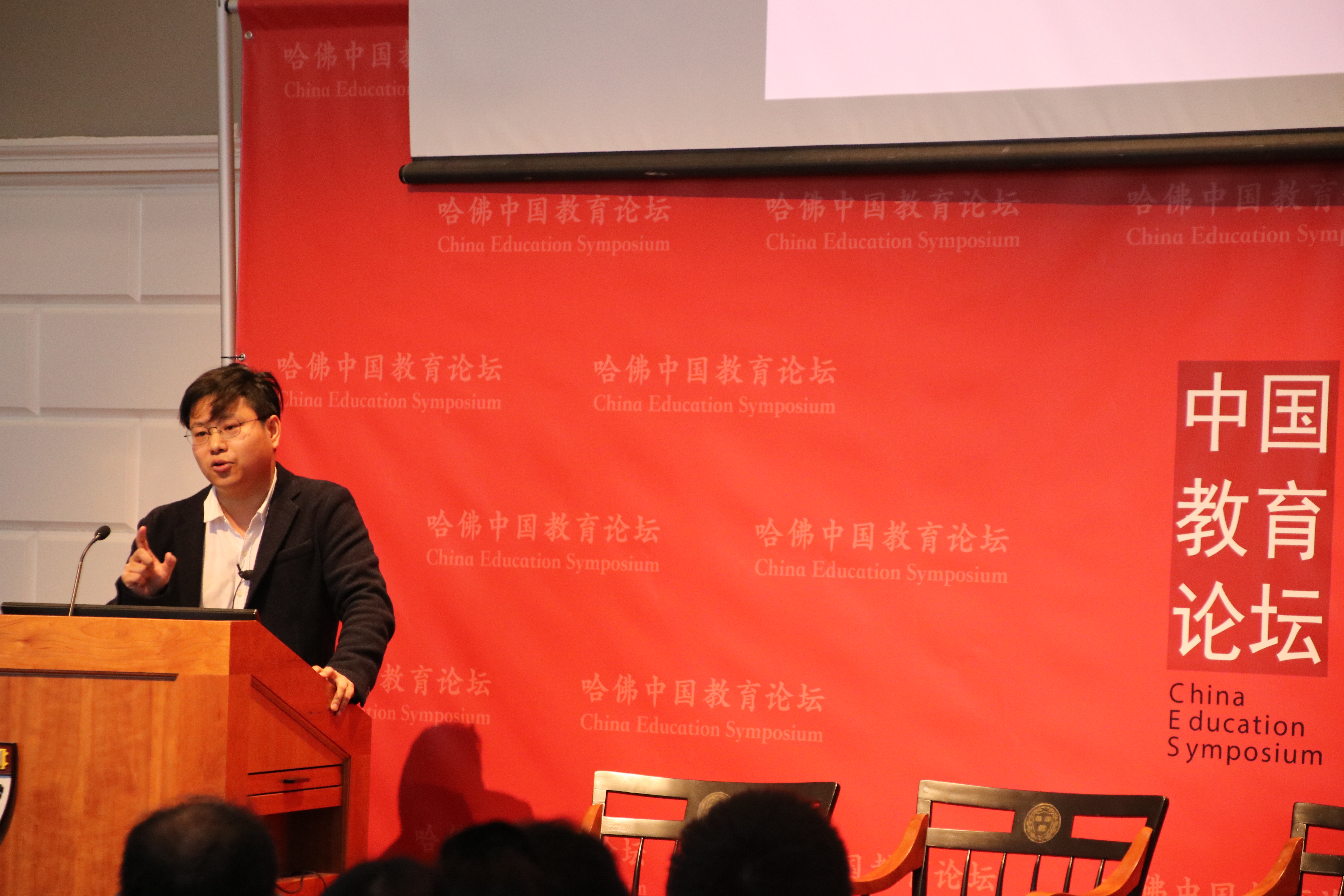
李涛博士,中国东北师范大学
底层社会是一个值得学界和政界高度关注的重点公共空间,发生在这个空间中的人和事用清晰而阵痛的事实真相提醒我们:一方面,在中国改革开放取得丰硕成果的当下,发展仍然具有城乡、区域、行业、群体等深层意义上的非均衡性,制度和权利依旧具有内在结构与外在关系状态上的非平等性;另一方面,现代国家在实质公正意义上具有政治合法性现实依据的“差异补偿”性公共政策设计与实践还相当任重道远。生活在底层社会中因发声“无力”、“无效”、“无能”而无法掌控自身阶层命运的底层群体往往考验着一个国家和社会的良心,学术研究者和政策设计者究竟是用“冷性暴力”的漠视态度、“他者代言”的精英姿态、“越位臆断”的书斋方式,还是用“暖性亲切”的同情态度、“主体理解”的底层姿态、“在场发言”的田野方式,去揭示底层群体内在分化的真实利益诉求、理解底层群体外在复杂的行动逻辑、设计与底层群体深切相关的公共政策,这实质上是对一个国家和社会良心考验的第一步。
本研究深入到由“农业县域”、“ 西部村落”、“贫弱家庭”、“基层乡校”等多维因素组成的中国西部农业县(四川省芥县)这一微观田野现场,从“底层社区”、“底层家庭”、“底层学校”、“底层群体”四个维度出发,解蔽隐匿在底层社会内部通过各种教育阻滞因素(宏观制度、中观环境、微观文化)如何共谋了底层再生产从而导致底层内生循环的深层真相与发生困局,具体而言:
第一,从“底层社区”这一维度出发,深入挖掘芥县从1900年到2014年共115年间在中国宏观社会结构演进和教育公共政策变迁下县内乡校百年变更的复杂历史,发现作为底层空间“教化”和“文明”中心的农村学校从外部“植入”到向外部大规模“剥离”进而加剧农村教育衰败的现象,从而提出农村学校被大规模从底层村落中剥离出来是一个不同于“文字下乡”的“文字上移”过程,通过多主体、多场域的田野观察和话语分析,发现“文字上移”这一新生学术命题的内在发生逻辑是由村落社会的变迁性因素(附属于城市而缺乏独立公共性精神的村落文化、村落内知识权力制衡的支点崩溃、农民群体阶层分化而底层诉求困难、消费主义盛行导致选择性的教育致贫)和教育内生性因素(农村教师职业吸引力欠缺、教育局人员编制短缺”与“事权增加”)所共同导致的,要改善这种因“文字上移”而致使底层社区获得文字困难的现局,引入反规范性正义理论下基于社会分层视角的底层公共政策创新思路设计或许是一个使“文字留村”得以实现的可能性尝试。
第二,从“底层家庭”这一维度出发,首次尝试性对一个完整底层行政村落“农户家庭”、“农户个体”以及辖区内“乡校学生和家长”有关“读书效用性”问题展开量化实证调查,发现如下结论:其一,按“子女接受教育状况”分层标准来看,子女正在接受各阶段教育的农户家庭对读书有用性的认同度总体高于子女已经接受完各阶段教育的农户家庭,但是在正接受各阶段教育的农户家庭中,子女接受教育阶段越高,农户家庭对教育有用性的认同度占比越低,而在子女已完成各阶段教育的农户家庭中,对读书有用性认同度最高的反而是无子女或子女在义务教育段即辍学的农户家庭,子女正在接受义务教育阶段学习的农户家庭认为读书有用的组内占比最高,子女仅完成高中教育阶段学习的农户家庭认为读书无用的组内占比最高;其二,按“农户与土地结合关系状况”分层标准来看,家庭收入结构中越依附于土地收益的农户阶层,其认为读书无用的组内占比越高;其三,按“财富拥有关系状况”分层标准来看,家庭年收入处于5-10万之间的“村庄富裕阶层家庭”对读书的有用性认同度最高,而家庭年收入处于1万以下的村庄贫困阶层家庭认为读书无用的比例最高;按“家庭结构类型”分层标准来看,权力和活动中心越趋向于单一性的家庭类型,其对于读书无用性的组内占比认同度越低;其四,按“子女性别因素”分层标准来看,女性子女家庭读书无用论的认同较之男性子女家庭更甚;其五,男性农民比女性农民更认同读书无用,学生和家长较之其他社会群体对读书有用性的认同度更高;其六,尽管在农户家庭、农户个体中大多数认为读书有用,但读书无用论仍占有相当比例,且存在话语表达与行为逻辑的不一致性,从而证明“读书无用论”确实在底层社会中真实广泛发生。
第三,从“底层学校”这一维度出发,通过对作为“学生”的云乡少年们“反学校文化”的生产和作为“教师”、“学校管理者”的班主任、科任老师“编座”的空间政治艺术两个方面研究展开,发现底层学校内部实现底层再生产的微观秘密。其一,对云乡九年一贯制学校八年级和九年级22名少年深入的微观质性研究发现,乡间少年们通过“瞧不起作为‘知识代言者’的农村老师”、“在课堂中制造各种混乱对学习表达抗拒”、“在日常规定性作息中对规定性的时间权威表达抗争”、“在摄像头下采取剧场表演对敞视化的空间权威表达抗争”、“组建多类型的同辈群体(兄弟帮、师徒制、亲戚制、情侣制等)采取“计划式”违规范式对关系权威表达抗争”、“以找乐子、暴力与偷窃等方式摆脱无聊和寻找刺激”等方式
作者简介
李涛,1985年11月生,四川绵阳人,中国东北师范大学教育学部/中国农村教育发展研究院副教授,博士生导师。中国社会科学院社会学研究所博士后,东北师范大学中国农村教育发展研究院博士,2019年入选中国国家“万人计划青年拔尖人才”,任《中国农村教育评论》执行主编。现主要从事农村教育、社会分层与不平等、知识与权力的政治社会学、社会科学方法等研究。在“Hommes & Migrations”(法)、《中国社会科学》(内部文稿)、《社会科学》《探索与争鸣》《人文杂志》《中国行政管理》《人民日报》《光明日报》等刊发文100余篇,被《新华文摘》《人大复印资料》等全文转载10余篇,所撰专报获得党和国家领导人重要批示。主持国家社会科学基金项目等5项, 获“吉林省社会科学优秀成果一等奖”、“中国社会学年会优秀成果奖一等奖”等奖励5项。联系邮箱:lit456@nenu.edu.cn。
CfP: Experiences and Mobility of Overseas Chinese students and scholars in Chinese Education and Society journal
CALL FOR PAPERS
Chinese Education and Society
Special Issue 2019
Experiences and Mobility of Overseas Chinese students and scholars
Guest editors:
Dian Liu, Associate Professor, Faculty of Social Sciences, University of Stavanger, Norway
Ming Cheng, Professor, Faculty of Education, Edge Hill University, UK
The past decades have witnessed an unprecedented deepening of internationalization in higher education (Altbach et al., 2019), leading to growing academic mobility in terms of overseas’ university participation, as well as staff and student exchange across cultures. China is a case in point. In 2016, 544,500 Chinese students studied aboard. About 30% were doing undergraduate study, and 35.51% were enrolled in post-graduate study. Additionally, there is a rising portion of overseas students returning to China after graduation. Others choose to stay abroad and look for jobs (Science Net, 2017).
The purpose of this special issue of Chinese Education and Society is to better understand the timely experience and mobility of the overseas Chinese students and scholars responding to emerging new patterns of mobility. Topics include but are not restricted to:
- China’s role as an education provider for mobile students and scholars
- Brain drain, brain gain and brain circulation of the overseas Chinese
- The individual mobility trajectory of Chinese students
- Job search and employability of Chinese graduates
- Identity and integration of the overseas Chinese
- Regional or national facilities in promoting mobility of students and scholars
Chinese Education and Society is published by Taylor & Francis. https://www.tandfonline.com/toc/mced20/current.
Please send your proposed paper title and abstract within 250 words to the issue editors: Dr Dian Liu at dian.liu@uis.no , and Professor Ming Cheng at chengm@edgehill.ac.uk , by the date July 31, 2019. The abstract contains aim of the study, research methods, main arguments and a summary of findings. Acceptance of abstracts will be made by August 30, 2019, and a full manuscript between 4,000-6,000 words will be invited to be submitted by December 31, 2019, including full text, reference list and appendices (if applicable). All the submissions will be subject to double-blind peer review. We thank your contribution to the special issue!
References
Altbach, P. G., et al. (2019). Trends in global higher education: Tracking an academic revolution. Brill.
Science Net. (2017, 1 March). Ministry of Education Releases 2016 Statistics for Outgoing and Incoming Education in China, ScienceNet.cn. Retrieved from http://news.sciencenet.cn/htmlnews/2017/3/369188.shtm
CfP: Conference on Vocational Education in China, 7-9 June 2019 in Xuzhou, Jiangsu Province
The following conference might be of interest to Network members interested in vocational education and education mobilities.
关于举办“新时代职业教育改革与发展”暨
第六届职业教育新思维博士论坛的通知
各位职业教育同行:
中国人民共和国成立70周年来,我国职业教育取得了举世瞩目的成就,建立了世界最大规模的职业教育体系。但面临新时代新的形势,职业教育还有很多新的使命和任务。为进一步贯彻十九大报告“完善职业教育和培训体系”和全国教育大会“构建德智体美劳全面培养的教育体系”的会议精神,深入探讨《国家职业教育改革实施方案》相关议题,推动新时代职业教育理论与实践创新,第六届职业教育新思维博士论坛将于2019年6月7-9日在江苏徐州举行。为更好地做好各项筹备工作,现将会议有关事项通知如下:
一、会议主题:新时代职业教育改革与发展
二、主要议题
(一)类型教育担当与职业教育特色发展
新时代对职业教育提出了新要求,职业教育要勇于担当类型教育,培养新时代需要的高素质技术技能人才。建国70年来,职业教育作为一种类型的教育之成长经历了怎样的风雨历程?时至如今,从效仿普通教育中脱壳而出,职业教育作为名副其实的类型教育,应如何在处理与普通教育交叉融通的关系中凸显自身的特色?国际上,作为类型的职业教育模式,有哪些值得效仿的经验?彰显职业教育特色的职业教育国家制度框架如何建构?
(二)职业教育发展与人民美好生活需要
70年的历史沉淀,成就了全世界最大规模的职业教育体系。然而,在新的时代职业教育发展的不平衡不充分与人民日益增长的美好生活需要之间的矛盾如何破?职业教育如何在服务经济发展与满足个人需要之间张弛有度?职业教育如何在德智体美劳全面培养方面铸就新时代的大国工匠?1+X证书制度如何在满足学生可持续发展的基础上成就多元需求?“双师型”教师队伍培养如何满足学生技能成长需要?技术技能型人才的待遇水平如何得以切实提高?
(三)劳动教育的时代内涵与普职教育对话
劳动教育与职业教育有着天然的联系。习近平同志在全国教育大会中重新阐释了劳动教育的时代价值。在新的时期,劳动教育的内涵是什么?劳动教育在德智体美劳全面培养的教育体系中处于怎样的地位?在搭建普职教育融通中,劳动教育起到怎样的纽带作用?以此为基础,职业教育在中小学综合实践活动、劳动技术、通用技术等课程模块中如何发挥应有的价值?职业教育又如何在促进学生职业体验、渗透职业启蒙教育中发挥其天然的优势?
(四)现代职业教育治理与体制机制改革
为满足新时代经济结构调整和产业升级的需要,现代职业教育与培训体系必须通过各项改革与治理走向不断完善。职业教育国家制度框架如何在体现本土特色中实现与国际接轨?职业教育国家教学相关标准的制定如何走向规范化?职业教育“双师型”教师培养培训体系如何规范?职业院校从企业聘用全职教师是否可行?如何推进职业教育国家“学分银行”制度建设?应建立怎么的职业教育办学质量国家督导机制?职业教育工作联席会议如何在多部门协调中解决职业教育发展中的重大现实问题?
三、会议议程
| 时间 | 主题 | 具体安排 | |
| 6.7 | 下午 | 报到 | |
| 6.8 | 上午 | 主题论坛 | 共4-5位发言人
每位发言人主旨发言15分钟,最后集体讨论20分钟 |
| 下午 | 主题论坛 | 共4-5位发言人
每位发言人主旨发言15分钟,最后集体讨论20分钟 |
|
| 6.9 | 上午 | 自由讨论 | 共10位发言人
每位发言人主旨发言5分钟,最后集体讨论30分钟 |
| 下午 | 离会 | ||
四、会议主办、承办与协办单位
主办单位:职业教育新思维
承办单位:江苏师范大学教育科学学院(教师教育学院)
协办单位:江苏理工学院
华东师范大学长三角职业教育发展研究院
浙江工业大学教育科学与技术学院
五、论文提交
为便于交流学习,请各位学者围绕会议主题从历史、比较和理论等不同维度撰写论文,大会特别鼓励具有交叉学科背景、对职业教育有深入研究的博士提交论文并参会。为便于会务组做好准备工作,请与会代表于2019年5月10日前将论文摘要和会议回执发至会议专用邮箱:xiaohan.zhang@jsnu.edu.cn。大会将从提交的论文摘要中择优选取,确定主旨发言人。另由于接待能力有限,本次大会规模将控制在80人左右,参与人员将根据回执顺序和论文质量确定。
六、会议费用
本次论坛由承办方全力资助,与会者无需缴纳会务费,但住宿费、交通费需自理。如需回单位报销相关费用,承办方可提供正式邀请函。单间:360元/晚;标间:425元/晚。由于单间数量有限,大会鼓励参会人员拼房住宿。
七、会议报到地点
江苏省徐州市铜山新区华山路8号 宝信君澜度假酒店
八、会务组联系方式
联系人:陈 鹏 15952119504
张晓寒 18752125635
王 辉 19851603818
E-mail:xiaohan.zhang@jsnu.edu.cn
为方便会议接待,会务组特建立微信群“第六届职业教育新思维博士论坛”,欢迎参会者入群了解会议相关信息。
会 议 回执
| 姓名 | 性别 | 学位 | ||||||||||
| 职务 | 职称 | 电话 | ||||||||||
| 单位名称 | ||||||||||||
| 通讯地址 | 邮编 | |||||||||||
| 预计抵达日期 | 返程日期 | |||||||||||
| 是否住宿 | 单、标间 | |||||||||||
| 提交论文题目 | ||||||||||||
Revisiting China’s Africa policies and educational promises: Towards a global convergence of development in the post-2015 era?
Tingting Yuan (2019): Revisiting China’s Africa policies and educational
promises: towards a global convergence of development in the post-2015 era?, Globalisation, Societies and Education, DOI: 10.1080/14767724.2019.1595534

Dr Tingting Yuan, Bath Spa University
Comparing China’s 2006 (Policy 1) and 2015 (Policy 2) Africa policies, this recently published article reveals how China’s political discourse has become more confident, practical, and depoliticised. In particular, this paper shows how education is allocated, promised, and embedded in China’s ‘shared’ agenda, which is centred on development co-operation and mutual learning.
The first part of this paper looks at the changing discourse of China’s African policies. It is found that, first, Policy 2 has a more determined and confident discourse. It highlights the role of China in the current global political economy such as ‘the world’s second largest economy’ and ‘an active player in the current international system that has helped build it and contributed to it’, which was not emphasised in Policy 1. Policy 2 also provides a clearer argument regarding the need to sustain such a relationship and a plan for how to do so in the future. Moreover, Policy 2 underscores the common pursuit of development to realise both the ‘Chinese dream’ and ‘African dream’, thus creating a ‘shared future’. Second, China plays the role of the ‘actor’ rather than ‘declarer’ in Policy 2. The policy provides more details on co-operation plans, particularly ‘economic and trade co-operation’, ‘development co-operation’, and ‘cultural and people-to-people co-operation’. In contrast, Policy 1 did not have a section on ‘development co-operation’. Policy 2 made far more promises regarding ‘development’. These promises are more technical, practical, and achievable than those only briefly outlined in Policy 1. From the foreign aid perspective, Policy 2 represents a more ‘professional’ attempt to create an effective policy, one with reduced political and ideological rhetoric. Although it has yet to follow the example of Western donors in terms of aid delivery and evaluation, China has switched to a more action-based approach to demonstrate its strengthened commitment to international development since Policy 1.
Based on this comparison, the paper continues to reveal a key feature of the current African policy and related Forum on China-African cooperation (FOCAC) action plans – development based on mutual learning. Knowledge, skills, and experience sharing are highlighted in China’s promise. Defined as a key factor in Human Resource Development (HRD), education inevitably plays a key role here. This greatly exceeds formal education. Despite being specifically stated in the sub-section on ‘cooperation in education and HRD’ in Policy 2, educational activities like experience exchange activities conducted by ‘academic institutions’ and ‘joint research centres’ in science and technology also appear in the other sub-sections. In terms of the educational co-operation approaches stated in the policies, there is a growing emphasis on tertiary education and vocational training. This includes an increasing number of Chinese government scholarships and the provision of training in the form of seminars and workshops. This also involves enhanced university co-operation including the involvement of the top ranked universities in China and Africa. Despite all of these progresses in education in terms of increased quantity as well as emphasised quality improvement, what may be distinctive in China’s educational promise? The paper argues that, it is not the allocation of education in development or social development discourse that is distinctive, but the rationale of embedding education and training as an essential aspect of two-way but independent development. Moreover, it is not China’s approach of providing ‘education’ that is distinctive, but the ‘experience’ shared through educational activities. Not simply an area of co-operation in China’s Africa policy, education is embedded in many places in China’s experience sharing agenda.
The last part of the paper reflects on China’s current position in the global political economy. It tries to answer the question asked in the beginning of the paper: is the rise of China is conforming to the dominant trends in international development today? It is argued that the revealed features represent China’s harmonised position in international development rather than a clear convergence. These features did not change the nature of China’s distinctiveness, which is partly rooted in its unique history. While China may show some similarity to the patterns or approaches of the West in terms of its aid discourse and practice, it does not show a similar position in terms of influencing or persuading others in the process of national and global development.
This paper concludes by highlighting two main points. First, China is trying to consolidate its position and be more active through an updated version of policy discourse that represents both the (a) current international agenda on development and poverty reduction; and (b) its own understanding on the foundation of international development—that is, the ‘shared’ past, present ,and future. This brings a wide range of educational activities to an essential place in order to achieve development through ‘learning from one another’. Second, China has a special position on education. However, while devoting increasing effort to educational aid and co-operation, it is not shaping education policies globally but focus is on self-enhancement and exchanging its ‘indigenous solution’ to economic development via education.
Neither the Washington Consensus which promotes a globalised neoliberalism, nor the Beijing consensus which is based on a pragmatic and flexible ‘Chinese socialist economy’, is globally accepted today. If convergence is defined as agreement on one specific model of development, then there remains no convergence in this matter. However, it can be concluded that, using a convergent approach and technique, China brings its experience and logic of development to the current international agenda at a time when the country’s distinctiveness is becoming increasingly recognised. It is thus important to recognise that every nation state can historicise and position itself in a unique way; a convergent model may not be as essential as a convergent attitude towards incorporating diverse voices and solutions in the realm of international development.
Author Bio
Dr Tingting Yuan is a Senior Lecturer in International Education at Bath Spa University. She was a lecturer at Liverpool Hope University from 2012 to 2016 after she gained her Ph.D. in the Graduate School of Education at the University of Bristol. Her doctoral research was on ‘Chinese educational aid to Africa’ which included a series of fieldwork undertaken in Tanzania and China. Her broader research interests include public goods and education, globalisation and education, international aid of education, China-Africa cooperation, and other educational issues related to the global political economy.
 Network for Research into Chinese Education Mobilities (NRCEM)