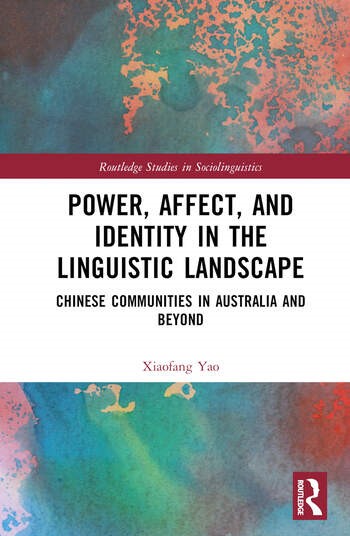
Power, Affect, and Identity in the Linguistic Landscape: Chinese Communities in Australia and Beyond

Research Highlighted: 
Yao, X. (2024). Power, Affect, and Identity in the Linguistic Landscape: Chinese Communities in Australia and Beyond (1st ed.). Routledge. https://doi.org/10.4324/9781003320593  
Introduction: 

Uncovering the complexity of linguistic diversity and semiotic creativity, this book examines the issues of power, affect, and identity in both physical and digital linguistic landscapes. 

Based on fieldwork with various Chinese communities in Australia, the book offers unique insights into the uses of languages, semiotic resources, and material objects in public spaces, and discusses the motives and ideologies that underline these linguistic and semiotic practices. Each chapter frames the sociolinguistic issue emerging from the linguistic landscape under investigation and shows readers how the personal trajectories of individuals, the availability of semiotic resources, and the historicity of spaces collectively shape the meanings of publicly displayed language items in offline and online spaces. Supported by a wealth of interviews, media, and archival data, the book not only advances readers’ understanding of how linguistic landscape is structured by various historical, political, and sociocultural factors, but also enables them to reimagine the linguistic landscape through the lens of emerging digital methods. 

Ideal Audience: This book is an ideal resource for researchers, advanced undergraduates, and graduate students of applied linguistics and sociolinguistics who are interested in the latest advances in linguistic landscape research within virtual and material contexts. 

Chapter Highlights: 

1. Situating Power, Affect, and Identity in the Linguistic Landscape: This introductory chapter sets the stage by explaining the concept of the linguistic landscape and the latest theoretical developments in the field. It focuses on three key sociolinguistic constructs—power, affect, and identity—and explores how a linguistic landscape approach, with its distinctive visual, spatial, and material lens, can offer new insights into these issues. The chapter also provides a brief overview of Chinese communities in Australia to establish the social, cultural, historical, and political contexts for the case studies presented in the book. 

2. Theoretical perspectives on the linguistic landscape: Geosemiotics, sociolinguistics of globalisation, and metrolingualism: Linguistic landscape studies often draw on theoretical perspectives and methodological approaches from various disciplines. This chapter addresses the challenge of framing, scoping, and operationalizing a linguistic landscape study by redefining the field’s ever-expanding scope. It reviews seminal works by scholars such as Ron Scollon, Suzie Wong Scollon, Jan Blommaert, and Alastair Pennycook to provide a robust theoretical framework. This framework integrates geosemiotics, the sociolinguistics of globalization, and metrolingualism, emphasizing the importance of material objects and the materiality of language in constructing meaning. The chapter underscores the posthumanist approach in uncovering critical issues related to language, culture, and society. 

3. Affect in the linguistic landscape: Conviviality and nostalgia in urban and rural ethnic restaurants: This chapter delves into the emerging field of visceral linguistic landscapes, which investigates the evocative potential of space and how linguistic landscapes can regulate human emotions. It presents a case study of two Chinese restaurants—one in a rural area and the other in an urban setting—to explore how material objects in these spaces evoke feelings of nostalgia and conviviality. By examining elements such as paintings, menus, emblems, and decorations, the chapter reveals how spaces are social and historical constructs that reflect the memories of Chinese migrants and their connections to an imagined community. It also shows how these spaces are agentive, shaping and curating affective experiences. 

4. Power in the linguistic landscape: Tourism and commodification as revitalisation of cultural heritage: Power dynamics are a central theme in linguistic landscape research, often studied through the lenses of language policy and ideologies. This chapter goes further by exploring the agency of language, space, and material conditions in shaping, confronting, and resisting power. It examines the interactions between local authorities and the Chinese community in a diasporic context, focusing on the commodification of language and the revitalization of cultural heritage. Through narrated stories, semiotic artifacts, and cultural rituals, the chapter uncovers the tensions between ethnic identity pride and the commercial interests of ethnic tourism, highlighting the motivations and attitudes of stakeholders in the linguistic landscape. 

5. Identity in the linguistic landscape: Metrolingualism at the online-offline nexus: The rise of social media has prompted linguistic landscape researchers to consider digital spaces alongside physical environments. This chapter adapts the theory of metrolingualism to analyse how the Chinese diaspora constructs identity on platforms like WeChat. It examines the linguistic and semiotic resources used for self-presentation and identity performances, revealing the ideologies and aspirations behind these practices. The study highlights how hybrid identities challenge traditional notions of ethnicity and showcase the fluidity of identity in the online-offline nexus, where social conventions from offline spaces influence online interactions. 

6. Artificial Intelligence (AI) in the linguistic landscape: An agenda for critical digital literacy: Artificial intelligence is transforming the broader field of applied linguistics, including linguistic landscape research. This chapter explores the potential of AI tools, such as ChatGPT, in conducting linguistic landscape studies. It reviews current computational approaches and discusses the levels of critical digital literacy required for researchers in an AI-driven future. By experimenting with AI models, the chapter illustrates how AI can serve as both a tool and a collaborator, assisting with literature reviews and qualitative coding of photographic data. It emphasizes the need for linguistic landscape researchers to understand and critically engage with AI technologies to enhance their work. 

7. Transcending boundaries in the linguistic landscape: Towards collaborative, participatory, and empowering research: This concluding chapter synthesizes insights to develop frameworks for understanding power, affect, and identity in the linguistic landscape. It emphasizes transcending boundaries between communities, spaces, and languages, challenging the notion of ethnic enclaves, and recognizing community fluidity. The chapter advocates for research with a stronger temporal and spatial focus, examining interactions between physical and digital linguistic landscapes. It calls for collaborative, participatory, and empowering research approaches to ensure community goals, values, and voices are incorporated, highlighting the importance of community engagement and the transformative potential of inclusive research methodologies. 

Author bio 
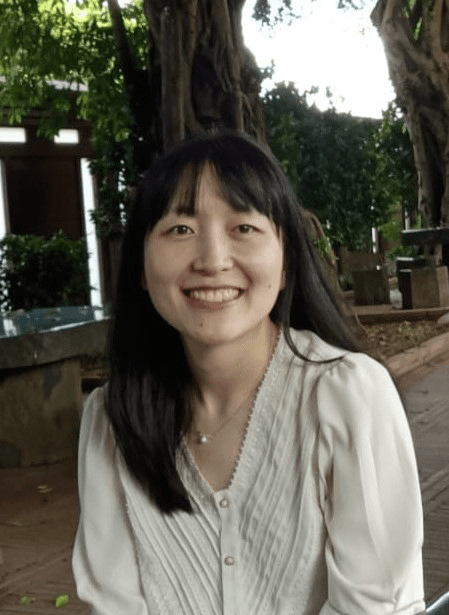
Xiaofang Yao, The University of Hong Kong 

Xiaofang Yao is Assistant Professor in the School of Chinese, The University of Hong Kong. Her research areas include linguistic landscapes, multilingualism, social semiotics, and sociolinguistics. She is particularly interested in the intersection of language, culture, and space as they relate to the Chinese diaspora and ethnic minorities. Her current projects explore the representation of Chinese languages and semiotics in diasporic contexts, as well as the negotiation between standard language norms and creative or transgressive language practices among ethnic minority communities in Hong Kong and Southwest China. 

Managing Editor: Xin Fan
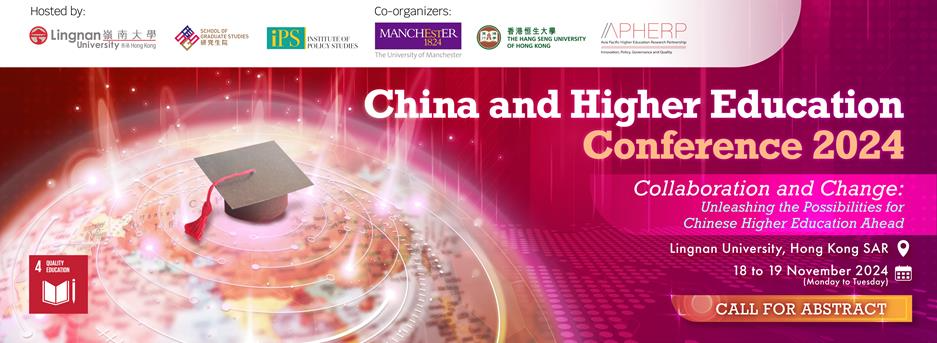
[Call for Abstracts] China and Higher Education Conference 2024|Lingnan University and University of Manchester

Dear Professors and Friends,

Greetings from Lingnan University! We are honored to extend this invitation to your faculty and postgraduate students to contribute and attend the China and Higher Education Conference 2024 (ChinaHE) from 18 to 19 November 2024 (Monday to Tuesday). The conference theme is Collaboration and Change: Unleashing the Possibilities for Chinese Higher Education Ahead.

Keynote Speakers:

With the above theme, the following key questions will be discussed at the conference include, but are not limited to: 

1.          How are collaborations between Chinese and international HEIs reshaping academic research, pedagogy, and students’ learning experiences?

2.          How are emerging technologies and digital platforms facilitating collaboration and knowledge sharing among HEIs, and what are the implications for academic research, teaching, and learning?

3.          What strategies are effective in promoting interdisciplinary collaboration within Chinese HEIs, and how can interdisciplinary approaches address complex societal challenges?

4.          How are collaborations between Chinese HEIs and government agencies driving policy reform, regulatory changes, and institutional autonomy within the higher education sector?

5.          What roles does industry-academia collaboration play in fostering innovation, entrepreneurship, and workforce development within Chinese higher education?

6.          How can collaborative partnerships between Chinese HEIs and non-profit organizations or civil society groups contribute to social equity, community engagement, and sustainable development goals?

7.          What opportunities and challenges arise from international collaboration initiatives, such as the Belt and Road Initiative, in shaping the globalization of Chinese HEIs?

8.          As under-studied stakeholders, what are the roles of international students and professional staff in Chinese HEIs in building national and inter-national collaborations?

9.          What are the roles of educational leaders in promoting collaboration among Chinese and international HEIs to thrive on the changes while addressing the deep-seated educational issues? 

Call for Abstract We invite you to submit your scholarly abstracts and present your latest research at Lingnan University to an international audience.
Submit Now: Click Here [lingnan.asia.qualtrics.com]
Due date: 15 September 2024 at 23:59 HKT (GMT+8)

We also encourage you to share this conference within your professional network to enhance our collective impact.

For further information, kindly visit the webpage provided here [ln.edu.hk]. If you have any inquiries, please feel free to contact the Conference Organizing Committee at ChinaHE@LN.edu.hk .

Managing Editor: Tong Meng

JRC: Recruitment of grantholder, trainees, graduate trainees & auxiliary contract staff

ESRA is the recruitment portal for the Joint Research Centre of the European Commission. Our mission is to provide independent, evidence-based science and knowledge, supporting EU policies to positively impact society.

As a multinational and multicultural research centre, we collaborate with partners worldwide and there are many opportunities to join our diverse workforce to work with some of the top scientists in the EU, no matter where you are in your career. More information on our research activities can be accessed here.

We have opportunities in both scientific and administrative domains and the recruitment process starts here with your application. Most of the vacancies published on this recruiter portal are for scientists/researchers of different domains who wish to join the JRC on a temporary contract (in Commission jargon: Auxiliary Contract Staff Function Group IV). In addition to the specific vacancies published here, the JRC also has an ongoing call for Research Fellows. We have also many vacancies in technical/administrative profiles.

Apart from temporary contract, the JRC also welcomes more researchers who are at other stages of their career. You may also join the JRC as Scientific TraineesBluebook Trainees (not in this portal), GrantholdersSeconded National Experts and under the Collaborative Doctoral Partnership programme.

Does higher education expansion close the rural-urban gap in college enrolment in China? New evidence from a cross-provincial assessment

Research highlighted

Zhao, K. (2023). Does higher education expansion close the rural-urban gap in college enrolment in China? New evidence from a cross-provincial assessment.Compare: A Journal of Comparative and International Education, 53(5), 802-819. 

The expansion of higher education on a global scale has led to the development of High Participation Systems, prompting researchers to examine the equity implications of increased opportunities for higher education (Breen et al. 2009; Wu et al., 2020). Their primary query is whether educational expansion has decreased the inequality in educational opportunities. This paper seeks to investigate this question in the context of Chinese higher education. 

China has undergone a rapid expansion of higher education, a trend that is consistent with global patterns. However, the country’s higher education expansion has unique characteristics that may cause variations in the impacts on access to higher education. Firstly, unlike many other countries, the expansion of college enrolment in China is more driven by the supply side than the demand side, with state policies playing a central role in the expansion (Marginson 2016; Wu et al., 2020). Secondly, China’s higher education enrolment has increased rapidly within a short period, and its scale and speed are unprecedented (Wu et al., 2020). Thirdly, the supply of higher education varies greatly across provinces due to the decentralisation reform in educational administration and finance since the 1980s, coupled with rising inter-provincial economic disparities (Hannum & Wang 2006; Zhang & Kanbur 2005). 

Furthermore, compared to western countries, structural factors, such as hukou status and province of residence, play a more significant role in educational stratification in China than family background (Lyu et al., 2019). Against this backdrop, this study adopts a cross-provincial assessment approach and uses representative data from five provinces of China Family Panel Studies (CFPS) to explore the relationship between higher education expansion and rural-urban inequality in college enrolment. 

The findings of this study reveal that despite the expansion policy, the rural-urban gap in college enrolment remained in all five provinces (Liaoning, Shanghai, Henan, Guangdong, and Gansu). The size of this gap varied significantly across the provinces, with Shanghai having the smallest gap, while Gansu had the largest. These results underscore the importance of including provinces in research on educational inequalities in Chinese higher education. For instance, in the post-expansion cohort (1981–1986), rural hukou holders in Shanghai had higher predicted probabilities than urban hukou holders in many other provinces. 

Furthermore, this study highlights the increasing disparities in college enrolment among students from different provinces. The decentralisation reforms since the 1980s have led to the provincial government playing a more significant role in higher education administration and finance (Li, 2017). Consequently, economically developed provinces, such as Guangdong and Shanghai, are better equipped to build new institutions and increase enrolment, leading to growing differences in the supply of higher education across provinces. Given the provincial quota system that largely favours local students, this study finds that residents in Shanghai and Guangdong benefit more from the expansion than those in Liaoning and Henan, contributing to the increasing inter-provincial disparities in college enrolment. 

The results of this study confirm the relevance of the Maximally Maintained Inequality (MMI) approach in the Chinese context to some extent. Before the expansion policy, the participation rate of higher education in China was very low (Yeung, 2013), which was far from the saturation point predicted by MMI. Therefore, it was not expected that there would be a decrease in inequality along with the expansion. However, it is worth noting that the past two decades have witnessed a continuing expansion in higher education enrolment, and the gross tertiary education rate in China reached about 54.4% in 2020, a point that might be close to or even surpass the saturation point. Moreover, in response to the growing rural-urban inequality in access to college, the central government has launched admission programs specifically targeting high-achieving students in poor rural areas (Niu, 2017). Given all these changes that have occurred after 2003, future research can use more recent data to capture the latest status of inequality of opportunity in higher education. 

References: 

Breen, R., R. Luijkx, W. Müller, and R. Pollak. 2009. “Nonpersistent Inequality in Educational Attainment: Evidence from Eight European Countries.” American Journal of Sociology 114 (5): 1475–1521. doi:10.1086/595951. 

Hannum, E., and M. Wang. 2006. “Geography and Educational Inequality in China.” China Economic Review 17 (3): 253–265. doi:10.1016/j.chieco.2006.04.003. 

Li, T. 2017. “Financial Decentralization and Geographical Stratification of Access to Higher Education in China: The Case of Shanghai.” Chinese Sociological Review 49 (3): 212–238. doi:10.1080/21620555.2016.1271701. 

Lyu, M., W. Li, and Y. Xie. 2019. “The Influences of Family Background and Structural Factors on Children’s Academic Performances: A Cross-country Comparative Study.” Chinese Journal of Sociology 5 (2): 173–192. doi:10.1177/2057150X19837908. 

Marginson, S. 2016. “High Participation Systems of Higher Education.” The Journal of Higher Education 87 (2): 243–271. doi:10.1353/jhe.2016.0007. 

Niu, X. 2017. “Early Academic Performance of Rural Students under Special Admission Policies: Evidence from an Elite University.” Fudan Education Forum 15(4): 52–61. [In Chinese.] 

Wu, L., K. Yan, and Y. Zhang. 2020. “Higher Education Expansion and Inequality in Educational Opportunities in China.” Higher Education 80 (3): 549–570. doi:10.1007/s10734-020-00498-2. 

Yeung, W.-J. J. 2013. “Higher Education Expansion and Social Stratification in China.” Chinese Sociological Review 45 (4): 54–80. doi:10.2753/CSA2162-0555450403. 

Zhang, X., and R. Kanbur. 2005. “Spatial Inequality in Education and Health Care in China.” China Economic Review 16 (2): 189–204. doi:10.1016/j.chieco.2005.02.002. 

Authors’ Bio

Dr. Kai Zhao,
Lingnan University

Dr. Kai Zhao is a research assistant professor at the School of Graduate Studies of Lingnan University, Hong Kong. He earned his Ph.D. in Higher Education and Student Affairs from the Ohio State University. Before joining Lingnan, he worked as research faculty at Centre for Postsecondary Success within Florida State University. Dr. Zhao’s research interests broadly focus higher education policy and internationalisation of higher education.  

Managing editor: Xin Fan

Governing through ambiguity in the normalizing society: The lesson from Chinese transnational higher education regulation

Research highlighted

Han, X. (2023). Governing through ambiguity in the normalizing society: The lesson from Chinese transnational higher education regulation.  Journal of Education Policy, Online First. DOI: https://doi.org/10.1080/02680939.2023.2210094

The traditional technocratic model in policy analysis features in three dimensions: first, it takes language as the transparent vehicle to facilitate communications between writers and various readers; second, it follows the problem-solving route, considering policy documents as the political responses empirically based upon factual data to existing social problems; third, it considers the participants as disinterested individuals immunizing from the policy impact. Following this empiricist-idealist view of language, scholars are expected to provide neutral data/information for policy-makers to develop/revise solutions to the pre-identified problems, seek authorial intentions hidden behind the policy texts, and proffer interpretations which could generate commensurable meaning among readers. In other words, it equalizes language to a static set of perfect signifiers about the externally constituted world of things, and by so doing sidesteps the contingencies, intricacies, and indeterminacies of policies.

The progress in socio-linguistics directs scholars’ attention to the discourse property of language, and also, policy documents. Discourse, especially for Foucault-inspired critical policy analysts, does more than designate things: it delimits what can be said and thought; it constitutes, produces, and creates, rather than enumerating and describing subjects, objects, and places; it sets the norms to fabricate individuals into the social order, elicits their self-governance as an act of free will, and thus yields human beings into made subjects.

While existing critical studies on making politics visible are cornucopian in demonstrating how power penetrates into every aspect of social life, to institute disciplinary technologies and thus conduct individuals’ conduct, Foucault’s own slide from the terminal stage of discourse—the linguistic elements, may whittle the theory’s potency in explaining the reality, especially when referring to policy research in the broader social science fields including public administration, politics and international relations: if policy discourse functions to convey norms in shaping desirable subjects, its expression should be as precise as possible to be followed. Why could policymakers endure and even encourage equivocalness in policy texts instead of trying to reduce it?

Empirically based upon China’s regulation over transnational higher education (TNHE),  this article draws interdisciplinary prism to highlight the persistent existence of ambiguity in policy documents and its impact on the enacting process. For instance, in authoritarian China, linguistic ambiguity could demonstrate its positive effects: within the context of severe discursive conflict, the equivocal expressions not only mask the incompatible norms setting but also leave negotiation room for creative policy enactment. Specifically, Chinese national policies about TNHE embodies the “curious hybrid of command and market”: on one hand, the introduction of neoliberalism permits the penetration of market logic into the previously state-controlled domain of education when China decides to modernize itself by internationalizing its higher education (HE) system. As a vital and integral part of HE internationalization, TNHE thus gains permission (and encouragement) to develop within Chinese territory; on the other hand, although TNHE itself instantiates the imposition of neoliberal discourse, the authoritarian concern of China to take “the total administration of life”, and its ideological reliance on socialism for moral legitimacy prevent its full embrace of market logic. To ensure the state’s interference into every social aspect, the local officials are  expected to simultaneously facilitate and prevent the penetration of market forces into the TNHE.

It is within this context that clarification in policy documents is considered “managerially sound” but “politically irrational”. The deliberate adoption of ambiguous expressions could not only help to convince readers but also leave negotiating room for policy practitioners to achieve contradictory ends. This is the “positive effect of ambiguity” highlighted by Matland (1995, 158). For example, to mask the market -based inequality in China’s socialist society, the national policies adopt rather ambiguous expressions in regulating the tuition fee setting, which is required to consider the affordability of the students” and to achieve the balance between the charges in public and private universities. So while the tuition fee is calculated and decided by the universities, it must gain approval from local governments before coming into effect.

However, the criteria is riddled with ambiguity, clarifying neither the authoritarian/socialist nor neoliberal norm: the difficulty (or more precisely, impossibility) of quantifying the “affordability” of potential students; the fuzzy measurement of “balancing between public and private universities”—especially when considering what the Deputy Director from Y Provincial Government frankly states: “TNHE in China is legally regulated by the Non-state (private) Education Promotion Law, so it is unclear how to balance the charge…”; and the obscuring gauge in calculating the cultivating cost of students, “there is no simple criteria in deciding the faculty salaries in TNHE (compared with Chinese public universities)…most of the time they have to make a better offer (based on the qualification and the faculty’s former pay level) for introducing talents” (2017). These ambiguous statements, on the other hand, permit flexibility for local officials when enacting national policies. As he continues to say candidly: “The tuition fee set by the TNHE (especially Sino-foreign cooperation universities) is relatively autonomous, and we always permit their application for the charge”. Such support and permission are based on the local officials’ understanding of market logic, as he explains: “They are running the TNHE in the market… students have a lot of choices—studying physically abroad, applying to other programs/colleges/universities, or enrolling in other Chinese universities…the setting of charge has already been monitored and modified by the market” (2019).

When the imposition of law in population regulation has been gradually replaced by its calculated practice of directing categories of social agents, the individuals are seemingly permitted to act “freely and proactively”. However, the Chinese local officials’ creativity and innovation in flexibly enacting national policies have never been “in a position of exteriority to power”, but ending up enforcing and intensifying the existing power relations—the authoritarian control in China as they boost the development of TNHE and thus prove the “rightness” of China’s political control. This strategic and invisible operation of power deserves scholarly attention for how it objectifies and subjectifies human beings.

Authors’ Bio

Dr. Xiao Han,
Tianjin University

Dr Xiao HAN earned her B.A. (Economics) from Jilin University and Ph.D (Education) from the Education University of Hong Kong. She worked for two years as a postdoctoral fellow at Lingnan University and then took the position of Beiyang associate professor at the School of Education, Tianjin University. She will take the position of assistant professor at the Department of International Education, Education University of Hong Kong soon. Her research is trans-disciplinary-based, focusing on critical policy analysis, international/transnational higher education, and Foucault/Bourdieu studies. Her works have been published in international journals such as Journal of Education Policy, Higher Education, and Policy and Society. She can be contacted at: hanxiao0309@hotmail.com.

Managing editor: Xin Fan