The Reconstruction of the Cosmopolitan Imaginary: Chinese International Students during the COVID-19 Pandemic

Liu, Q. T., & Chung, A. Y. (2023). The Reconstruction of the Cosmopolitan Imaginary: Chinese International Students during the COVID‐19 Pandemic 1. Sociological Inquiry.

Although viewed as belonging to both Asian and Asian American communities, Chinese international students’ experience of discrimination in the U.S. during the pandemic is distinct from those of both long-term immigrants and native-born Asian Americans. The traditional scholarship on Asian/American racial citizenship does not fully explain the intersectional interplay of race and nationality on their sense of non-citizen “Otherness” between nations and the impact on their worldview. We want to highlight that the societal reception to specific immigrant groups has been influenced by not only the social standing of the group within the host nation but also by the geopolitical positioning of their sending nation to the host nation within the world order (Le Espiritu, 2003; Ong, 1999).

Studies on transborder migrants and western-born Asian return migrants suggest that resident citizens in their ancestral nation may also question the national loyalties, sexualities, opportunism, and even class-privileged positionality of nonresident migrants in the diaspora (Chung et al., 2021; Wang, 2016). During the global pandemic, transborder migrants have occupied this growing liminal space between countries in a manner that further distances them not only culturally but also, socially and politically from the worldview of resident citizens in both countries.

In the meantime, the scholarship on cosmopolitanism provides an analytical entryway for understanding the post-colonial features of the western global imaginary today, but they leave open the question of how cosmopolitanism can also be used as a way to reclaim a sense of identity and belonging for diasporic migrants who traverse the borders of developed and developing nations. Our article explores the possibility of a critical cosmopolitan imaginary among international students apart from its colonialist or Western imperialist roots (Mignolo, 2000) and instead, as a reclamation of the nationally liminal aspirations and identities of Asian international students throughout the processes of transnational mobility (Martin, 2021).

Methods

The data for this article come from 16 semi-structured interviews that were collected by phone, remote conferencing, and in-person meetings from spring 2020 through spring 2021 at a university in upstate New York. All the interviews were conducted in their native language–Mandarin. Given the changing disease control policy in China, the political transition from the Trump administration to Biden administration, and the shifting geopolitical dynamics between the two global powers, we later conducted six follow-up interviews in November 2020, January 2021, and May 2022 to track new developments and validate our main findings. The time period for this study is critical in understanding how the cosmopolitan identities and viewpoints of Chinese international students have evolved in response to unusual mobility restrictions and rising ethnonational rhetoric in both U.S. and China. Our interviews generally ranged from 30 minutes to 2 hours in length and we used the grounded theory approach to conduct data analysis.

Findings

The study explains how international students navigate their increasing racially and nationally liminal status between nations and national categories of belonging, particularly during times of crisis. First, the worldview of Chinese international students in the U.S. is conditioned by pre-migration cultural frameworks and geopolitical positioning within the global order–in this case, growing tensions between China and the U.S. that have the potential to create disjunctures between their understanding of race and the dynamics of racial formations in America. This historical disconnect explains some of the contradictions scholars have observed in the solidarity of foreign-born Chinese against anti-Asian hate yet indifference or opposition to affirmative action, Black Lives Matter, and President Trump–all of which were hotly debated during this period (Linthicum, 2016; Poon & Wong, 2019). Our findings suggest that being caught within a “liminal” space makes it challenging for transborder migrants to make sound connections or establish broad solidarity with other Asians, Asian Americans, or other BIPOLC (Black, Indigenous, and People of Color) groups. All of this points to the urgent need for greater, not lesser, education on the multiple and interconnected histories of subjugated groups around the world. Future research may explore to what extent other white international students–such as Russians who themselves come from a country that currently has tense relations with the U.S.—fear backlash to the same degree as non-white immigrants.

Second, because of their nation-less status as diasporic migrants during this period, Chinese students unexpectedly encountered significant pushback from their home government and even hostility and resentment from many fellow citizens–all of which exacerbated their insecure positionality as in-between citizens. Consequently, Chinese international students interpreted and responded to hardening racial and national borders during COVID-19 from the perspective of both displaced racial minorities and transborder migrants. Recent events in China–particularly President Xi’s increasing authoritarian control over the country–may further distance Chinese transborder migrants abroad from their resident compatriots back home (Huang, 2022; Ni, 2022), even as their disconnect from the racial politics of America contributes to their further national liminalization. Future research may explore to what degree this increasing sense of dislocation may explain the conservative ideological bent of Chinese diasporic communities from local communities in the host countries as noted by other pundits (Jiang, 2021; Liu, 2005).

Third, the current body of scholarship suggests that the younger generation of Chinese– whether at home or abroad–are instilled with a strong sense of nationalist loyalty (Wong, 2022), and other studies (Fan et al., 2020) do indicate that discrimination increases Chinese overseas students’ support for authoritarian rule back home. But we find that a broadly sweeping discourse of hyper-nationalism or alternatively, Western colonialist approach to cosmopolitanism oversimplifies their complicated and individualized relationships with their country (Martin, 2021; Wong, 2022) and how it may be taking shape within a post-national global context. Increasing exclusion and dislocation from both US and China have pushed students into a position that both straddles and transcends this nationally and racially liminal space between both countries. As a strategy to overcome this disadvantage, our participants have reappropriated and renegotiated their “cosmopolitan imaginary” in ways that have further alienated them from the official nationalist rhetoric of both countries but resisted “the will to control and homogenize” under the dictates of Western colonialism and modernization (Mignolo, 2000). In the process, they have reclaimed an ideal stripped of its colonialist connotations and used it to reassert their rights and privileges as transborder migrants. If these national divides persist, the question remains which countries will ultimately benefit from the incorporation of highly skilled migrants through greater social acceptance, flexible citizenship policies, and competitive work opportunities.

Overall, our study argues for a more critical approach to international education that does not merely reproduce the nationalist frameworks of the Global North or South nor overlooks the hegemonic effects of post-colonial legacies and global inequalities in shaping migrant experiences. This task will require greater scholarly and public attention to the wide range of transborder migrants and refugees who have been trapped in between competing nations, parties, and ideologies in the post-COVID era.

References

Chung, A. Y., Jo, H., Lee, J. W., & Yang, F. (2021). COVID-19 and the political framing of China, nationalism, and borders in the US and South Korean news media. Sociological Perspectives64(5), 747-764.

Fan, Y., Pan, J., Shao, Z., & Xu, Y. (2020). How Discrimination Increases Chinese Overseas Students’ Support for Authoritarian Rule. 21st Century China Center Research Paper, (2020-05).

Huang, K. (2022). ‘Runology:’ How to ‘Run Away’ from China. Council on Foreign Relations, June, 1.

Jiang, S. (2021). The call of the homeland: Transnational education and the rising nationalism among Chinese overseas students. Comparative Education Review65(1), 34-55.

Le Espiritu, Y. (2003). Home bound: Filipino American lives across cultures, communities, and countries. Univ of California Press.

Linthicum, K. (2016). Meet the Chinese American immigrants who are supporting Donald Trump. Los Angeles Times, May27.

Liu, H. (2005). New migrants and the revival of overseas Chinese nationalism. Journal of Contemporary China14(43), 291-316.

Martin, F. (2021). Dreams of flight: the lives of Chinese women students in the West. Duke University Press.

Mignolo, W. (2000). The many faces of cosmo-polis: Border thinking and critical cosmopolitanism. Public culture12(3), 721-748.

Ni, V. (2022). ‘Run Philosophy’: The Chinese Citizens Seeking to Leave amid Covid Uncertainty. The Guardian, July, 20.

Ong, A. (1999). Flexible citizenship: The cultural logics of transnationality. Duke University Press.

Poon, O., & Wong, J. (2019). The generational divide on affirmative action. Inside Higher Ed: Admissions Insider.

Wang, L. K. (2016). The Benefits of in-betweenness: return migration of second-generation Chinese American professionals to China. Journal of Ethnic and Migration Studies42(12), 1941-1958.

Wong, B. (2022). The Complex Nationalism of China’s Gen-Z. The Diplomat, June, 19.

Author bio
Qing Tingting Liu, University at Albany

Qing Tingting Liu (tliu20@albany.edu) is a Ph.D. candidate in the Sociology Department at SUNY Albany. She has been serving for AAAS Social Science Caucus Council as a Social Media Coordinator for more than 2 years https://sites.google.com/view/aaas-socsci/home. She is also affiliated with the University of Melbourne – Asian Cultural Research Hub (ACRH) https://arts.unimelb.edu.au/school-of-culture-and-communication/our-research/groups-and-resource-centre/asian-cultural-research-hub-acrh/our-members. Her research interests include migration, globalization, race and ethnicity, intersectionality and youth culture. Her dissertation project is about Chinese Working Holiday Makers in Australia, aiming to explore how temporal liminality affects their identity as Chinese diaspora living in Western society. For the detail of her profile, please see https://www.linkedin.com/in/qing-tingting-liu-251bb6181/ .

Angie Y. Chung, University at Albany

Angie Y. Chung is Professor of Sociology at the University at Albany, a 2021-2022 U.S. Fulbright Scholar, and former Visiting Professor at Yonsei and Korea University. She is author of Saving Face: The Emotional Costs of the Asian Immigrant Family Myth and Legacies of Struggle: Conflict and Cooperation in Korean American Politics. She is currently writing a book manuscript titled Immigrant Growth Machines: Urban Growth Politics in Koreatown and Monterey Park based on research funded by the National Science Foundation. She has published in numerous journals on race/ ethnicity, immigration, gender and family, ethnic politics, international education, and media.

Managing Editor: Tong Meng
Transitions across multi-worlds: Experiences of Chinese international doctoral students in STEM fields

Yang, Y., & MacCallum, J. (2022). Transitions across multi-worlds: Experiences of Chinese international doctoral students in STEM fields. Journal of Studies in International Education, 26(5), 535–552. https://doi.org/10.1177/10283153211016266 

Introduction 

Every year Chinese international doctoral students (CIDS) in science, technology, engineering, and mathematics (STEM) make transitions across different worlds in ways that supports achievement in their host community.  

This article reports findings from a longitudinal study investigating holistic experiences of the contemporary generation of STEM CIDS in Australia. Endeavor to reveal both heterogeneity and commonality, this study examined their diverse and challenging experiences to identify factors that facilitate or constrain their successful completion of a PhD abroad. 

The Three-Dimensional Multi-World Conceptual Framework 

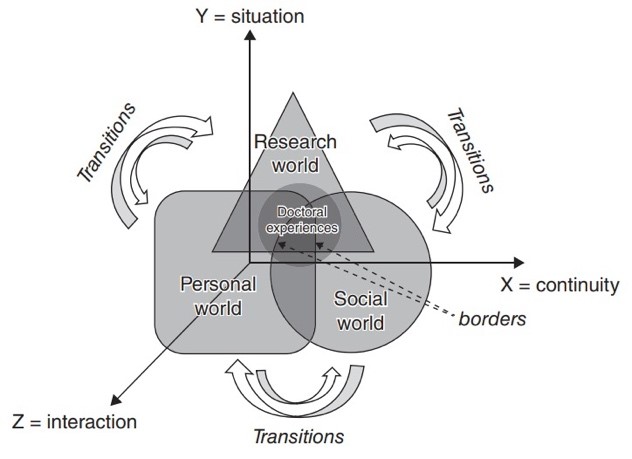
For this study, we developed a conceptual framework to accommodate the features of complexity and to allow a holistic understanding of the nature of doing a PhD abroad. In this framework (Figure 1), first we formed a three-dimensional space to accommodate student experiences. Along the three axles are Continuity, Interaction, and Situation. International doctoral students’ experiences were conceptualized as developmental over time, taking things from the past and modifying the quality of the future; interactive, assigning equal rights to both objective and internal conditions in interactions; and situated within the disciplinary, working, and living contexts. 

Figure 1. The three-dimensional multi-world conceptual framework 

Within this space we established the students’ multi-world model, including students’ research, personal, and social worlds. The three worlds are interconnected and interplay to co-construct study abroad experiences. Between the worlds, there are overlapping areas as experiential interfaces for transitions across each world to occur and lines in-between as borders that may constrain students’ transitions.  

The Project 

The CIDS Study is a narrative inquiry that involved a 4-year longitudinal study to understand Chinese STEM PhD students’ situated, continuous, and interactive experiences. We adopted narrative as a research approach because it incorporates a range of methodological stances and is agentive in demonstrating how individuals attempt to navigate their life, which suited the purpose of the study.  

There were 38 CIDS participants from STEM fields at eight universities in five states of Australia. All participants were interviewed individually or in focus groups, with 17 followed up for a second interview roughly nine months after the first interview and eight followed up for a third interview. Most of these students had completed their PhD by the conclusion of data collection. 

Congruence/Difference and Transitions Across the Worlds 

The six categories of congruence or difference, and corresponding transitions identified through data analysis were used to structure the findings, though we combined the last two categories to highlight the final complications resulting in a doctoral withdrawal. 

Congruent Worlds and Smooth Transitions 

In this pattern (n=9), students reported their supervisory team and other social relationships as congruent based on the match of key expectations, values, and beliefs across their multi-worlds. The borders between their multi-worlds were almost imperceivable so that they could make transitions with ease. These students were generally satisfied with their study abroad experience by achieving academic success and enjoying social life while doing the PhD abroad. However, experiencing congruence and smoothness did not mean these students had not experienced difficulties, stress, highs, and lows in the PhD; rather, it meant immense bilateral or multilateral investment of time, effort, care, and patience in facilitating transitions, particularly at certain critical turning points, to enable students’ achievement and development. 

Different Worlds and Smooth Transitions 

In this second pattern (n=8), regardless of some critical differences in motivations, expectations, values, and beliefs between students’ multi-worlds, they reported easy transitions across and over time. The differences that created borders between the worlds were distinctive based on individual situations. Nevertheless, it was the empathy to accommodate differences and the respect to the existence of differences from the agents of their multi-worlds that enabled their smooth transitions. 

Congruent Worlds and Border Crossings Managed 

In this pattern (n=9), motivations, expectations, values, beliefs, and actions appeared mostly congruent between an individual’s multi-worlds, but this congruence was created with strong evidence of the performance of personal agency, strategies, skills, and initiatives in managing transitions across perceivable borders. Different from the first pattern that congruence was achieved with smooth transitions or the second pattern that difference remained, students of this third group, facilitated with strong and timely supervisory and peer support, managed to create a shared time and space between their multi-worlds. This sustained them through vicissitudes, sometimes crucial moments, in their PhD abroad. 

Different Worlds and Border Crossings Managed 

In this category (n=9), motivations, expectations, values, beliefs, and actions between students’ research, personal, and social worlds had critical differences, which had profound impact and led to conflicting ideas, attitudes, and behaviors that constrained students’ PhD progress. However, in general, the conflicts were able to be put under control, and the transitions were managed to achieve the PhD. Students of this group were agentic to act, persistent to achieve, resilient and strategic in expanding their small research context to a broader scope. 

Different Worlds and Border Crossings Difficult or Resisted 

In both categories (n=2 and n=1), there were some critical differences in motivations, expectations, values, beliefs, and actions across students’ multi-worlds. Differences led to conflicting ideas, attitudes, and behaviors. While some conflicts remained unsolved, diminished motivations, together with poor rapport and escalated complications constrained transitions and limited students’ achievement. In the fifth category, students adapted to the differences and completed the PhD, but negative emotions and limited output, resulted in both leaving the research world. In the sixth category, the student resisted adapting and dropped out of the PhD program. 

Discussion and conclusion 

Drawing on the three-dimensional multi-world framework, this study found that achieving a PhD abroad was challenging for each participant, but it was the way they experienced the transitions across their multi-worlds that created vast differences in their experiences. The six patterns demonstrated a range of experiences, shedding light on how in some cases STEM CIDS achieved their best outcomes and how in some other cases misunderstandings, frustrations, and severe conflicts occurred. 

Besides persistence, resilience, and resources, agency to communicate, termed agentic communication, along with listening in negotiations between students and their supervisors, was key in supporting or undermining the PhD over time. This study highlights the effectiveness of agentic communication in making or breaking the rapport, trust, and respect in the most significant relationship in an individual’s multi-worlds during the PhD abroad. 

This study revealed that culture might too easily become the scapegoat when we interpret miscommunication or under-communication situations. When doing a PhD abroad, the focus of these students was on achieving the degree and establishing their professional identity, rather than social or cultural integration with the host community. The conflicts or factors that constrained students’ transitions across multi-worlds were often related to their doctoral research rather than culture-related issues per se. When the communication about scientific research went smoothly, positive transitions ensued, or the reverse. 

Given this study identified six patterns of PhD abroad experiences, further research could investigate how different experiences influence students’ post-PhD life and career trajectories and how these students contribute to the society, home, host, or elsewhere in the world, in return for their education received abroad. 

Other works related to this project: 

Yang, Y., & MacCallum, J. (2023). Chinese Students and the Experience of International Doctoral Study in STEM: Using a Multi-World Model to Understand Challenges and Success. Routledge. https://doi.org/10.4324/9781003258841 

Yang, Y., & MacCallum, J. (2022). A three-dimensional multi-world framework for examining cross-cultural experiences of international doctoral students. Studies in Continuing Education, 44(3), 493-509 doi:10.1080/0158037X.2021.1890569 

Yang, Y., Volet, S., & Mansfield, C. (2018). Motivations and influences in Chinese international doctoral students’ decision for STEM study abroad. Educational Studies, 44(3), 264-278. doi:10.1080/03055698.2017.1347498 

Authors’ Bio 

Yibo Yang, Associate Professor, PhD, Deputy Dean for the International Organizations and Global Governance, School of International Studies, Harbin Institute of Technology, China. Her current research interests focus on internationalisation in higher education, international organizations, research methodologies, and academic writing.  

Judith MacCallum, Professor Emerita, PhD, College of Health and Education, Murdoch University, Australia. Her research and teaching interests focus on social interaction for learning and development, with emphasis on motivation, mentoring and professional learning.   

Managing Editor: Xin Fan

Master’s programmes at Sino-foreign cooperative universities in China: An analysis of the neoliberal practices

Lai, M., & Jung, J. (2023). Master’s programmes at Sino‐foreign cooperative universities in China: An analysis of the neoliberal practices. Higher Education Quarterly.

With pressing need for advanced knowledge and professional skills in the evolving labour market, Chinese government has recognised the importance of extending international education to the postgraduate level and educating high-calibre talents (Mok & Han, 2016). Such realisation and conviction to change the landscape manifest in nation’s educational policy and endeavours of diverse cross-border collaborative partnerships (e.g., Ministry of Education, 2013), among which Sino-foreign cooperation is an important carrier. By 2022, the Ministry of Education has approved over 220 such institutions and programmes at the postgraduate level held by different universities; the new establishment is expected every year (CFCRS, 2022). Observing the Sino-foreign cooperative education can reveal the variability among universities and how far they approach the internationalisation of higher education as claimed.
Unlike undergraduate education, largely dominated by national discourses, master’s education has greater flexibility in responding to the internationalisation (Shimauchi & Kim, 2020). In terms of Sino-foreign cooperation at the postgraduate level, most of analysis focused on the overall status quo in this field or different practical models at regular Chinese universities (e.g., Miao & Yang, 2016; Qiu, 2018), rarely capturing master’s education in the specific context of Sino-foreign cooperative universities (SFCUs). It is worth noticing the peculiarities of SFCUs, which are recognised as independent ‘international university in China’ as opposed to fragmented practices of internationalisation (Hu & Willis, 2016). In light of the gap, this study devoted particular attention to master’s education at SFCUs, to explore their operational characteristics as well as universities’ understanding of the concept of internationalisation in the programme implementation. Thus, the following research questions are raised: First, what are the current state and characteristics of implementing master’s programmes at SFCUs? Second, how does transnational partnership negotiate and navigate cross-border contexts in internationalising master’s programmes at SFCUs?

This study adopts a postcolonial perspective on neoliberal approaches to the internationalisation of higher education, particularly drawing on the concepts of mimicry and resistance (Bhabha, 1994). Mimicry, commonly used to describe paradoxical state in the coloniser control and colonised compliance, provides the theoretical lens to interpret transnational partnership as practiced in the internationalisation (Ashcroft et al., 2000). In postcolonial studies, the resistance emerges in multiple forms, but for the purpose of investigating neoliberal higher education, this study draws from the model that Jeffress (2008) calls the ‘resistance as subversion’. Such resistance assumes people simultaneously affirm emulation and reshape the structure and the ways determined by neoliberal logic. The ambivalent nature of mimicry creates a ‘in-between space’ that transcends binary oppositions, where subversive resistance occurs in the meeting of various cultures. SFCUs, featured with providing cross-system and cross-cultural education, are considered as representatives of such unique space (Yu, 2021). These universities mimic their foreign partner’s educational model and offer similar master’s programmes, however, the embedded contexts are ostensibly different across countries. The negotiation with the local context on educational management and operation leads to different practices. On this view, the scrutiny of master’s programmes at SFCUs contributes to examining mimicry and resistance, by extension, applying postcolonial theories into the context of transnational partnerships.
We conducted a qualitative analysis of publicly accessible documents produced by 133 master’s programmes at nine SFCUs. The data were primarily collected from the universities’ official websites and media channels, with additional policy-related documents pertaining to master’s programmes collected from government websites. Examining the current status and practices of master’s programmes at nine SFCUs, the findings show the diversified development of disciplines and heterogeneity across nine universities. The analysis of master’s programme coverage also reflects the common issue in the development. There is an uneven distribution of coursework-based (105) and research-oriented (28) programmes. The research type degree, as the initial embodiment of master’ education, are less emphasised at SFCUs.


Further, the findings illustrate how these programmes entangle with neoliberal ideas through transnational partnership. The commercial focus dominates the position in operating master’s education at SFCUs for more successful competition over mutuality (De Wit & Merkx, 2022). We discovered some SFCUs explicitly introduced market logic and advertised corresponding arrangements as the advantages. For example, time efficiency (i.e., short length of schooling) is stressed in the official programme guidelines. The international image of these programmes and the foreign educational resources are often mentioned as a marketing tool to differentiate themselves from local competitors. Master’s programmes have been equated with professional credentials rather than for the academic development. Most curriculums are structured around workforce development, incorporating practical training, technical skills, and occupational certificates into course content to meet students’ needs in terms of career advancement and employability (Afdal, 2017; Gallagher, 2016).
In addition, the ambivalent desire between following Western practices and resisting them is evident in internationalising higher education system at SFCUs. On the one hand, the regulations governing the importation of well-developed programmes in transnational partnerships require host institutions to adopt their home universities’ curriculum to ensure adequate subject knowledge and fluent operations, posing a challenge to localising global standards in the educational practices. SFCUs, on the other hand, essentially in the role of integrating educational models of two institutions, exercise their agency to adapt teaching content to the local context to resist the potential neocolonial harms from mimicry. Our findings indicate that some SFCUs resist foreign educational models in terms of programme structure, course design and university administration. They tend to maintain the national discourses while introducing foreign knowledge and perspectives.


This study makes implication for seeking the balance between home and host institutions is necessary for mutuality in the partnership involvement (Mwangi, 2017). In addition to introducing world-leading disciplinary content and expertise, local elements and culture should be embedded into the curriculum and instruction. As Lo (2014) proposed, the slogan ‘think globally and act locally’ must be operationalised if the host institution aims to be truly international. Shifting our understanding of internationalisation from a western paradigm to a real global collaboration becomes a key concern for future development. Though this document analysis introduces the design and pattern of master’s programmes, it is likely that actual practices and contents are slightly different from the elaborations in the documents. Considering the limitation, a follow-up interview and field observation are essential to understand actual programme implementation in the further research.

References:
Afdal, H. W. (2017). Research-based and profession-oriented as prominent knowledge discourses in curriculum restructuring of professional programs. Higher Education, 74(3), 401–418.
Ashcroft, B., Griffiths, G., & Tiffin, H. (2000). Post-colonial studies: The key concepts. Abingdon: Routledge.
Bhabha, H. (1994). The Location of Culture. New York: Routledge.
CFCRS. (2022). Shuoshi ji Yishang Zhongwai Hezuo Banxue Iigou yu Xiangmu [List of Master’s Degree or above at Chinese-foreign Cooperative Institutions and Programs]. https://www.crs.jsj.edu.cn/aproval/orglists/1
De Wit, H., & Merkx, G. (2022). The history of the internationalization of higher education. In D. Deardorff, H. de Wit, B. Leask, & H. Charles (Eds.), Handbook on International Higher Education (2nd ed.) (pp. 23-52). Sterling, Virginia: Stylus Publishing, LLC.
Gallagher, S. R. (2016). The Future of University Credentials: New Developments at the Intersection of Higher Education and Hiring. Harvard Education Press.
Hu, M., & Willis, L. -D. (2016). Towards a common transnational education framework: peculiarities in China matter. Higher Education Policy, 30(2), 245–261.
Jeffress, D. (2008). Postcolonial resistance: Culture, liberation and transformation. Toronto: University of Toronto Press.
Lo, W. Y. W. (2014). Think global, think local: The changing landscape of higher education and the role of quality assurance in Singapore. Policy and Society, 33(3), 263-273.
Miao, H., & Yang, Y. (2016). Yanjiusheng jiaoyu zhongwai hezuo banxue de xianzhuang fenxi yu fazhan lujing. Yanjiusheng jiaoyu yanjiu [Journal of Graduate Education], 3, 7-11+35.
Ministry of Education (2013). Shenhua yanjiusheng jiaoyu gaige de yijian [Opinions on deepening the reform of postgraduate education] http://www.moe.gov.cn/srcsite/A22/s7065/201304/t20130419_154118.html?from=groupmessage&isappinstalled=0
Mok, K. H., & Han, X. (2016). The rise of transnational higher education and changing educational governance in China. International Journal of Comparative Education and Development, 18(1), 19–39.
Mwangi, C. A. G. (2017). Partner positioning: Examining international higher education partnerships through a mutuality lens. The Review of Higher Education, 41(1), 33-60.
Qiu, P. F. (2018). Kuaguo shuoshi shuangxuewei xiangmu yu lianhe xuewei xiangmu de moshi tezheng ji shishi jianyi [Patterns, features of and implementation proposals for transnational postgraduate double degree and joint degree programs]. Yanjiusheng jiaoyu yanjiu [Journal of Graduate Education], 1, 49-54.
Shimauchi, S., & Kim, Y. (2020). The influence of internationalization policy on master’s education in Japan: A comparison of “super global” and mass-market universities. Higher Education Policy, 33, 689-709.
Yu, J. (2021). Consuming UK Transnational Higher Education in China: A Bourdieusian Approach to Chinese Students’ Perceptions and Experiences. Sociological Research Online, 26(1), 222–239. https://doi.org/10.1177/1360780420957040

Authors Bio

Mei Lai, the University of Hong Kong

Mei Lai is a PhD candidate in the Faculty of Education, the University of Hong Kong. She received M.A. in International Educational development from Teachers College, Columbia University in 2018. Her research interests are internationalization of higher education, transnational higher education, identity development and career orientation of students at Sino-foreign cooperative universities. Her recent publications appear in journals such as Higher Education and Higher Education Quarterly. She can be reached at email: laim@connect.hku.hk

Jisun Jung, the University of Hong Kong

Jisun Jung is an Assistant Professor in the Faculty of Education at the University of Hong Kong since September, 2015. She received a Ph.D. from Seoul National University, Korea, in 2011, and she was a postdoctoral fellow at the University of Hong Kong. She has been involved in the international comparative project ‘The Changing Academic Profession’ since 2009. Her current research focuses on academic profession, doctoral education, employment and postgraduate studies and higher education research in Asia. She is the co-editor of two journal special issues, ‘Higher Education Research in East Asia: Regional and National Evolution and Path-Dependencies’ in Higher Education Policy and ‘Graduate Employment and Higher Education in East Asia’ in International Journal of Chinese Education, and also a co-editor of the two books ‘The Changing Academic Profession in Hong Kong’ published by Springer in 2018 and ‘Researching in Higher Education in Asia’ by Springer in 2019. She is currently co-editor of Higher Education Research & Development.

Managing Editor: Tong Meng

Transnational Habitus as a Configuration of Dispositions: Chinese International Students Navigating Online Information

Gao, H. (2023). Transnational Habitus as a Configuration of Dispositions: Chinese International Students Navigating Online Information. Literacy Research: Theory, Method, and Practice, 23813377231176259.

Introduction

This article is developed from a broader qualitative research project examining the online information-seeking experiences of Chinese international students in the United States. In today’s media-saturated society, the importance of online information literacy has increased exponentially. However, there is a dearth of research on the information literacy practices of international students. International students heavily rely on online information to navigate their studies and life as they adapt to new sociocultural, linguistic, and educational contexts in a foreign country (Click et al., 2017; Sin, 2015). Furthermore, they encounter a new information ecosystem that spans continents, cultures, and languages and must learn to navigate it (Chang et al., 2020). Therefore, it is crucial to explore the impact of the broad, bilateral, varied, and imbalanced social networks’ linkage with multiple nation-states and identities on how they navigate online information in the host country.

This study investigates the online information literacy practices of Chinese international students enrolled in higher education institutions in the United States. Currently, international students from China account for 35% of all international students in the United States (IIE, 2022). They are non-native English speakers and come from an online information environment that differs from the open internet in the United States (Freedom House, 2022). This research focuses on graduate-level students because Chinese graduate students generally possess more established Chinese worldviews, values, and habits of mind compared to their undergraduate counterparts (Wang & Freed, 2021). The study aims to understand the impact of transnationalism on these students’ information-seeking habits when searching for various online information.

Theoretical Framework

This study adopts a transnationalism framework, which refers to the complex process by which individuals maintain multiple social networks and connections to both their home and host communities (Levitt, 2009; Levitt & Schiller, 2004). Carlson and Schneickert (2021) theorized transnational habitus as a configuration of dispositions, suggesting that transnationalism may impact the habitual configuration of dispositions differently. This implies that there may be disparities between dispositions to believe and dispositions to act, creating a gap between beliefs and the actual possibilities of action. Furthermore, some dispositions may be more transnationalized than others. These ideas provide a valuable perspective for analyzing the information-seeking habits of international students, which can manifest in various forms, occur to different degrees, and are often subject to contestation, despite frequently being uniform and unidirectional in purpose.

Methods

This study employed purposeful sampling techniques (Merriam & Tisdell, 2016) to select six Chinese graduate students from a large public university in the Southeastern United States. Phenomenological interviewing (Seidman, 2006) was utilized, conducting a three-interview series with each participant. Each interview lasted approximately 90 minutes and employed an open-ended approach. Participants were also requested to maintain information-seeking diaries following their second interview. They recorded one online search incident per week for a consecutive four-week period. Additionally, a 90-minute focus group discussion was facilitated to further explore ideas and issues that may not have emerged in the individual interviews. Concurrent with data collection, an ongoing analysis of the participants’ online information seeking was conducted. Following the collection of all data, open and axial coding techniques (Merriam & Tisdell, 2016) were applied to the interviews to identify recurring patterns. These patterns were later corroborated, extended, or problematized with the data from the diaries and focus group.

Findings

The findings of the study shed light on the complex, dynamic, and adaptable online literacy practices of Chinese international students. It also demonstrates that the transnational habitus of students in information seeking is not a fixed construct, but rather emerges as a configuration of dispositions. Within this configuration, distinctions and gaps exist between dispositions to believe (beliefs or perceptions about information) and dispositions to act (actual actions in information seeking). Three forms of dualistic dispositions have been identified: Chinese international students’ transnational dispositions are strengthened in their academic information seeking, divided in their search for everyday life information, and activated in their consumption of news.

Strengthened Dispositions in Academic Information Seeking

During their studies in an English-dominated U.S. institution, participants embraced transnational information literacy practices by utilizing academic information from both U.S. and Chinese online environments. They demonstrated a flexible ability to navigate linguistic and digital information boundaries, leveraging the strengths of both information repositories to achieve their learning goals. Participants engaged in translanguaging (García & Li, 2014) by seamlessly alternating between named languages and even strategically creating bilingual keywords to optimize their search results. Furthermore, their transnational dispositions towards academic information seeking encompassed both dispositions to believe and dispositions to act. In reinforcing their existing dispositions to believe, they regarded academic information found on English language online platforms as more professional, authentic, credible, and rigorous. Moreover, their dispositions to act were strengthened as they readily accessed and more frequently utilized U.S.-based information for academic purposes.

Divided Dispositions in Everyday Information Seeking

While cultivating dispositions to believe in the authenticity of U.S. online information and a desire to assimilate into this dominant knowledge system, the participants’ dispositions to act did not always align with their belief in everyday information seeking. Instead, they frequently continued to rely on community-based information sources found on Chinese social media platforms. The Chinese international students demonstrated dispositions of belief, a cosmopolitan outlook, and transnational identifications, to use U.S. social media. Nonetheless, they exhibited limited dispositions to act, primarily relying on community-based platforms for obtaining identity-related information. These practices highlight the significance of authenticity characterized by relatability and similarity. Moreover, they suggest that students do not necessarily need to fully assimilate into another information culture in order to effectively navigate transnational contexts.

Activated Dispositions in Transnational News Consumption

Despite studying in the United States, all students in this study maintained their consumption of online news from Chinese media sources, considering them sufficient for staying informed about events in China and worldwide. However, their transnational dispositions to believe, which were nurtured both before and after studying abroad, allowed for the emergence of transnational dispositions to act in news consumption when desired. The students’ less transnationalized dispositions to act toward news consumption were influenced not only by their individual dispositions but also by external factors within the Western media environment. Some students expressed their reluctance to engage with Western news reports that portrayed China critically or had strong anti-China sentiments, especially when such portrayals contradicted their personal experiences or the information received from their families in China. Nevertheless, given suitable circumstances, students’ dispositions to act in transnational news consumption can be activated, as their belief in the importance of open-mindedness continues to shape their attitudes, values, and perspectives.

Discussion and conclusion

This study makes a significant contribution to the field of information literacy by adopting a transnational lens to investigate the online information literacy practices of Chinese international students in U.S. higher education institutions. By challenging assumptions that international students readily assimilate into the host country’s online resources or develop a singular transnational habitus, this study offers a more nuanced understanding of their diverse information needs and practices. The findings suggest that information literacy education that recognizes and utilizes students’ linguistic and transnational resources can be highly relevant to their experiences and beneficial to their academic success abroad. Additionally, by acknowledging and appreciating international students’ transnational mindsets and multilingual literacies as valuable assets, U.S. academic institutions can promote diversity, inclusion, and intercultural understanding, ultimately contributing to the development of globally minded individuals who are well-equipped to navigate today’s interconnected information landscape.

References

Carlson, S., & Schneickert, C. (2021). Habitus in the context of transnationalization: From ‘transnational habitus’ to a configuration of dispositions and fields. The Sociological Review, 00380261211021778. https://doi.org/https://doi.org/10.1177/00380261211021778

Chang, S., Gomes, C., & McKay, D. (2020). The digital information ecology of international students: Understanding the complexity of communication. In S. Chang & C. Gomes (Eds.), Digital Experiences of International Students: Challenging Assumptions and Rethinking Engagement (pp. 3-24). Routledge. https://doi.org/https://doi.org/10.4324/9780429276088

Click, A. B., Wiley, C. W., & Houlihan, M. (2017). The internationalization of the academic library: a systematic review of 25 years of literature on international students. College & Research Libraries, 78(3), 328. https://doi.org/https://doi.org/10.5860/crl.78.3.328

Freedom House. (2022). Freedom on the Net. https://freedomhouse.org/country/china/freedom-world/2022

García, O., & Li, W. (2014). Language, bilingualism and education. In Translanguaging: Language, bilingualism and education (pp. 46-62). Palgrave Macmillan.

IIE. (2022). International students. https://opendoorsdata.org/annual-release/international-students/

Levitt, P. (2009). Roots and Routes: Understanding the Lives of the Second Generation Transnationally. Journal of Ethnic and Migration Studies, 35(7), 1225-1242. https://doi.org/10.1080/13691830903006309

Levitt, P., & Schiller, N. G. (2004). Conceptualizing Simultaneity: A Transnational Social Field Perspective on Society. The international Migration Review, 38(3), 1002-1039. https://doi.org/10.1111/j.1747-7379.2004.tb00227.x

Merriam, S., & Tisdell, E. (2016). Qualitative research: A guide to design and implementation (Fourth). John Wiley & Sons.

Seidman, I. (2006). Interviewing as qualitative research: A guide for researchers in education and the social sciences. Teachers College Press.

Sin, S.-C. J. (2015). Demographic differences in international students’ information source uses and everyday information seeking challenges. The Journal of Academic Librarianship, 41(4), 466-474. https://doi.org/https://doi.org/10.1016/j.acalib.2015.04.003

Wang, X., & Freed, R. (2021). A Bourdieusian Analysis of the Sociocultural Capital of Chinese International Graduate Students in the United States. Journal of International Students, 11(1), 41-59. https://doi.org/10.32674/jis.v11i1.952

Author Bio 

Huan Gao, University of Memphis

Huan Gao is an Assistant Professor in Education at the University of Memphis, USA. Her research focuses on the intersection of digital and information literacies, transnational migration, and multilingual education. Currently, Huan’s work delves into the impact of transnationalism on Chinese international students’ online information-seeking practices. Her research has been recognized with the Student Outstanding Research Award at the Literacy Research Association and she has been honored with the National Council of Teachers of English Geneva Smitherman Cultural Diversity Grant. Huan holds a Ph.D. degree from the University of Florida and a master’s degree from the Hong Kong Polytechnic University.

Managing Editor: Tong Meng

Understanding Education Agent Engagement in China

Research highlighted

Dr Pii-Tuulia Nikula (Eastern Institute of Technology)

Education agents play a significant role in facilitating outbound student mobility from China. A new book Student Recruitment Agents in International Higher Education: A Multi-Stakeholder Perspective on Challenges and Best Practices explores the education agent phenomenon. It discusses the many complexities of agent engagement across the globe. The book features 19 chapters of which five are investigating the Chinese context. These contributions offer valuable insights into the views of students and parents as well as evidence of the impact of agents, evaluation of the Chinese regulative landscape and the role of agent key bodies that operate in China.

Two of the chapters in the Student Views section present primary data on Chinese students’ views and experiences. Ying Yang, Jenna Mittelmeier and Miguel Antonio Lim in their chapter “Giving Voices to Chinese International Students using Interpretative Phenomenological Analysis” explore the lived experiences of Chinese postgraduate students when applying to study in the UK, highlighting the value that agents can provide when students navigate the university selection and application processes. The chapter by Yi Leaf Zhang, Meng Xiao and Linda Serra Hagedorn, “Pursuing Higher Education Dreams in the US” presents data from Chinese undergraduate students and their parents when considering opportunities in the United States. They emphasise the critical role that parents play in the selection of an agent/agency. Both chapters discuss the benefits of agent engagement, but also identify various issues, such as student expectations not being met, limited transparency or agents trying to steer students to specific study opportunities. Hence, these chapters improve our understanding of students’ experiences and how agents can both provide and destruct value.

In the Agents’ Value Propositions and Impact section the chapter by Meng Xiao and Linda Serra Hagedorn “Agents and Test Preparation” sheds light into the inner workings of a large education agency offering English language tutoring services in China. A number of education agencies provide a wide array of service of which most focus is usually placed on the counselling and application processes. The chapter adds to this knowledge by offering insights into the organisation of language tutoring services by education agencies. It also presents data to demonstrate the impact of the language tutoring service offered by comparing participants’ English language test scores pre- and post-participation.

In the Government and Regulator Perspectives and Country Studies section two chapters explore the Chinese context. First, Siyan Feng in his chapter “Regulation, Deregulation, and Self-Regulation” evaluates the history and status quo of agent regulation in China. Feng’s chapter discusses the emergence of the special permit system regulating education agencies in 1998, and how it over time became dysfunctional and was discontinued. Feng discusses the new mechanisms of self-regulation and argues that to improve regulation in this area, key stakeholders, such as Chinese policymakers, should improve their knowledge of agents and how they operate. Second, Jon Santangelo in “Client-Agent Dispute Cases” discusses the role of Beijing Overseas Study Service Association (BOSSA) as a professional association of education agencies in China. This chapter provides case study various examples of complaints received from students who have been unsatisfied with their contracted agents’ services and BOSSA’s recommendations. The chapter prompts all students and their families to conduct their own due diligence. It is also recommended that both parties have a clear understanding of their responsibilities and accountabilities.

These chapters allow readers to improve their understanding of the work and impact of agents, how students and parents perceive the value provided by agents, and the past and current status quo of regulation in the Chinese context. Those interested in advancing their knowledge of agents will also benefit from reading chapters discussing other country contexts, including how higher education institutions (HEI) in various countries engage and work with agents. HEI perspectives and practices are critical to understand how HEI contracted agents operating in China are governed, incentivised and managed by their institutional partners. The views of HEI/agent management are equally valuable considering the ambitions of China to become a key destination for international students.

Student Recruitment Agents in International Higher Education: A Multi-Stakeholder Perspective on Challenges and Best Practices discusses a number of benefits and challenges associated with agent engagement. It provides theoretical perspectives and practical applications allowing readers to develop their understanding of the key conceptual issues and emerging trends, such as as the difficulties in defining ‘agents’ and the increasing reliance of mega-aggregators. Hence, the book contributes to a better understanding of wider agent related questions. It provides a good overview of the Chinese education agent context alongside a number of other recent publications (e.g., Yang et al., 2022;  Zhang, 2023). However, further research is needed to explore critical, but under-explored stakeholder views, such as those of policymakers, agent associations and universities/higher education institutions in China.

References

Nikula, P-T., Raimo, V. & West, E. (2023). Student Recruitment Agents in International Higher Education: A Multi-Stakeholder Perspective on Challenges and Best Practices. Routledge. https://www.routledge.com/Student-Recruitment-Agents-in-International-Higher-Education-A-Multi-Stakeholder/Nikula-Raimo-West/p/book/9781032136059#

Yang, Y., Lomer, S., Lim, M. A., & Mittelmeier, J. (2022). A study of Chinese students’ application to UK universities in uncertain times: from the perspective of education agents. Journal of International Students, 12(3), 565-586. https://doi.org/10.32674/jis.v12i3.3777

Zhang, C. (2023). The Legitimacy of Chinese Educational Recruitment Agencies (CERAs): Landscape evolution, policy environment, operating models, identities. Doctoral dissertation. UCL (University College London).

Author’s Bio

Dr Pii-Tuulia Nikula, Eastern Institute of Technology

Dr Pii-Tuulia Nikula is a Principal Academic at Eastern Institute of Technology/Te Pūkenga in New Zealand. Pii-Tuulia’s research covers international education, higher education and organisational sustainability. One of her areas of expertise is education agents. Pii-Tuulia’s articles on education agent management and governance have been published in leading international education and higher education journals. Pii-Tuulia holds editorial roles in Journal of International Students, Higher Education Research & Development, and Higher Education Quarterly. She holds a PhD in Politics and International Relations from the University of Auckland and Master in Social Sciences from the University of Helsinki.

https://www.researchgate.net/profile/Pii-Tuulia-Nikula

Managing Editor: Tong Meng