‘Uneven consequences’ of international English-medium-instruction programmes in China: A critical epistemological perspective

Song, Y. (2019). ‘Uneven consequences’ of international English-medium-instruction programmes in China: A critical epistemological perspective. Journal of Multilingual and Multicultural Development. doi: 10.1080/01434632.2019.1694525

This study examines international and Chinese students’ epistemic practices in mixed English-Medium-Instruction (EMI) Master’s degree programmes in a top-rate comprehensive university in Shanghai, China. The in-depth student/instructor interviews and ethnographic classroom observation converge to reveal that the EMI curriculum constructs an implicit hegemonic hierarchy among students based on their pre-enrolment possessions of linguistic capital of English and cultural capital concerning Americanized academic norms and discipline-specific knowledge. Given the implicit hegemony, it is also argued that students have developed varied degrees of awareness towards and resorted to strategies of inter-referencing and cultural syncretism in order to negotiate diverse epistemic frames of reference with regards (1) English as an academic lingua franca, (2) the epistemic domination of the Global North, and (3) reimagining China and modernity. Practical and conceptual implications on IHE are proposed based on the analysis.

In recent years, the rapid growth of higher education in Asia diversified the directions of international student mobility. While intra-Asia student mobility remains the main source of international students in Asian universities, the international student composition remains multi-continental, multi-national as well as diverse in individual educational/life trajectories (Song, 2019; Xu & Montgomery, 2018). According to the 2018 statistics of the Institute for International Education, Chinese universities have received 489,200 international students in 2018, ranking the top destination for international students in Asia and the third in the world (IIE, 2018). Chinese higher education systems and international curricula, though subject to substantial influences from the American university models, have specific agenda and rationales to (1) serve the national diplomacy of cultivating talents friendly to China and (2) enhance the international ranking of Chinese universities in order to complete the mission of building world-class universities (Jiani, 2017; Ma & Zhao, 2018). In response to the emergence of East Asia in the global IHE context, the very notion of internationalization also needs to be understood in accordance with the changing ecology (Huang & Marginson, 2018).

As a major strategy to attract international students, English-as-the-medium-of-instruction (EMI) programmes have been increasingly launched by universities in non-Anglophone countries, particularly in Asia (Kuroda, 2014). Research on international EMI programmes in Asia has provided an indispensable lens to understand internationalization (Bedenlier, Kondakci, & Zawacki-Richter, 2018). Current EMI studies in Asia have focused on the English language ideologies inbuilt in the national and institutional policies as well as being held by students enrolled in the EMI programmes (Zhang 2018), quality control over the instructors’ English language proficiency and curriculum design/enactment as measured against students’ expectations (Botha, 2016; Gu & Lee, 2018), and international students’ intercultural experiences and/or cultural adaptation (An & Chiang, 2015; Li, 2015).

Though the dominance of English as the academic lingua franca has been critiqued as linguistic imperialism in relevant literature (Pennycook, 2017; Phillipson, 1992), the impact of global knowledge politics on EMI practices has generally fallen out of the scope of investigation. Hence it remains largely unknown about the dynamics of epistemic exchanges in between agents at multiple dimensions of IHE, particularly in Asian contexts, as structured within the uneven geopolitics of knowledge production. Among critical works on knowledge politics, Chen’s (2010) Asia as Method has drawn critical attention to the political unconscious and intellectual desire to adopt the imagined and reimagined “West” as the exclusive epistemic framework that guides knowledge production in Asia. Epistemic frameworks here refer to structures of knowledge and conceptual schemas that are mobilized to categorize, characterize and valorize social practices as situated within specific politico-economic contexts (Chen 2010, p. 217). Informed by Chen’s (2010) Asia as Method, the present study develops a critical epistemological perspective so as to investigate how various types of power relations centering on various epistemic frameworks co-shape international and Chinese students’ experiences in international EMI programmes in China.

Students have used varied epistemic frameworks to navigate the semi-Americanized academic norms of the EMI programmes under study. Those variations gave way to an implicit hierarchy among students based on their pre-enrolment possessions of linguistic capital of English and cultural capital concerning Americanized academic norms and discipline-specific knowledge. This finding echoes the previous critique on the uncritical adoption of American EMI model as neo-colonial hegemony in Asian and African contexts (Kim, 2012; Leask, 2015). It also suggests that EMI shall not be understood as a sole matter of medium of instruction but rather a whole process of English academic socialization situated within the global-scale neoliberal competition for symbolic and cultural capitals being afforded by English-mediated, Anglophone/Euro-centric knowledge indispensable for students to enhance transnational mobility (Gu & Lee, 2018; Hayes, 2019).

Nevertheless, the implicit hierarchy does not identify with the “double-country oppression” as proposed in Hayes’ (2019) study. While the disciplinary knowledge system in the EMI curricula is grounded predominantly on that produced in the Global North, it has not been taken as the exclusively privileged knowledge in the EMI curricula. The classroom practices, especially the student group discussions and peer sharing sessions, helped to create a space for inter-referencing not only in between a diversity of epistemic perspectives and frameworks within the course subjects but also in between the individual-specific experiential knowledge. Voicing opportunities have been appreciated and even contrasted to their absence in Anglophone universities, which can also be attributed to the students’ critical awareness and desire for both global and local relevance of knowledge rather than blindly reproducing the uneven geopolitics of knowledge (Naidoo, 2016). These classroom practices also helped reject and/or disrupt frequently assumed homogeneity of the international student body and unquestioned dichotomy between the local and international students in definition of ‘internationalization’ as being critiqued in existing literature (Jones, 2017). The EMI classrooms hence have the potentiality to serve as “generative spaces where alternative relationships between knowing and being can emerge and intervene in our lived realities” (Ahenakew, Andreotti, Cooper, & Hireme, 2014, p. 218). Pedagogically, it would also benefit students if critical literacy could be included in the curriculum design and used to guide classroom practices, particularly critical meta-analysis of the historical development of varied discipline-specific perspectives as well as the strengths and constraints of each theoretical traditions and methods (Stein, Andreotti & Suša, 2019; Stein, 2017).

More importantly, the present study supports that conducting critical IHE studies in non-Anglophone and non-Western-European contexts help modify and expand the conceptualization of ‘internationalization’ (Bedenlier, Kondakci & Zawacki-Richter, 2018). The significance resides not much in the diversification of research contexts as in the lived experiences and related self-reflection afforded by varied historical-spatial manifestations of modernity in the era of globalization (Mignolo, 2011). Instead of assuming the naturalized acceptance of the modernity in the singular among international students, a nuanced analysis of students’ lived experience shows that media consumption practices and interpersonal interactions outside the classroom play important roles in shaping students’ understanding of the diversity of modernity in connection with their experiences and knowledge prior to joining the EMI programmes in China, particularly for those students from other Asian and Latin American countries.

Sharing the critical IHE agenda to de-depoliticize and historicize internationalization (Buckner & Stein, 2019), the present study suggests that internationalization needs to be understood as a multi-dimensional dynamic network co-shaped by national, institutional and individual agents within specific socio-historical spaces of globalization, where the individual students’ historical bodies and ongoing lived experiences in and out of the classroom are also actively engaged in shaping ‘alternative’ internationalization. Even though the international, national and institutional policies play significant roles in shaping EMI programmes worldwide while being substantially structured by the unequal geopolitics of knowledge production, the dynamics of interpersonal epistemic exchanges provide dialogic spaces for students and instructors to take bottom-up initiatives to empower previously unacknowledged ‘voices’ and to break away from the centre-periphery structure that hinders advancement of social imaginaries about modernity in the plural.

Author Bio

YANG SONG is currently an assistant professor at the Department of English Language and Literature, Fudan University, Shanghai. Her research focuses on English as a medium of instruction in the context of internationalization of higher education in China, students’ identity formation in relation to their lived experiences of interculturality, multilingual linguistic landscapes in urban China, and digital literacies involved in the teaching and learning of online journalism. Her publications appear in international peer-reviewed journals, such as Journalism, English Today, Multilingua, and Journal of Multilingual and Multicultural Development. Email: songyang@fudan.edu.cn.

Mainland Chinese Students in Hong Kong: Opportunities and Struggles

Dr. Yinni Peng, Hong Kong Baptist University, Hong Kong, China

Research highlighted

Peng, Yinni. (2019). From migrant student to migrant employee: Three models of the school-to-work transition of mainland Chinese in Hong Kong. Population, Space and Place, DOI: 10.1002/psp.2283 (online first).

Peng, Yinni. (2016). Student migration and polymedia: Mainland Chinese students’ communication media use in Hong Kong. Journal of Ethnic and Migration Studies, 42(14), 2395-2412.

The internationalization and commodification of higher education in developed societies has caused mass migration of students who leave their home societies to pursue a tertiary (or higher) degree in another country or society (Samers, 2010). The number of international students increased from 1.3 million in 1990 to 5.3 million in 2017 (OECD, 2010; Migration Data Portal, 2019). Student migration has become an important topic in both migration and education research. Rich studies (e.g., Robertson, 2013; Samers, 2010; Waters, 2008) have examined the causes of student migration, the channels of or obstacles to student migration, and its effects on both source and host societies. My research interest in mainland Chinese students in Hong Kong is partly shaped by my general interest in migration and partly from my personal experiences of being a former migrant student and a current migrant worker in Hong Kong.

China, as the largest source country of migrant students, has sent a total number of 5.86 million students to study abroad between 1978 and 2018 (Ministry of Education of the People’s Republic of China, 2019). To most mainland Chinese students, Hong Kong is a special destination as it is both domestic and external. As a Chinese society and part of the same country, Hong Kong may be a less challenging destination for mainland Chinese students than North America and Europe, due to the relatively shorter geographic distance and assumed fewer cultural discrepancies. As a regional educational hub in Asia, Hong Kong has a good higher education system, which attracts many mainland Chinese students. However, the colonial history and the “one country, two systems” framework of Hong Kong make it “external” to mainland Chinese (Li and Bray, 2007). Mainland Chinese students are not only required to apply for a student visa to study in Hong Kong, but also encounter challenges and problems in their migration process and post-migration study, which are mainly caused by the differences in economic, political, educational and cultural systems between Hong Kong and mainland China. Since 2012, an anti-mainlander atmosphere has emerged in Hong Kong and become intensified recently (Peng, 2016, 2019; Xu, 2015). Hostility, overt discrimination, and even violence against mainland Chinese have been observed in Hong Kong in recent years. All of these make Hong Kong a destination full of opportunities and conflicts.

Drawing on qualitative data collected between 2014 and 2017, my research on mainland Chinese students in Hong Kong focuses on two issues: communication media use of mainland Chinese students in their study and lives in Hong Kong and their school-to-work transition in Hong Kong. These issues reflect different stages and aspects of their migratory journey in Hong Kong. My article on communication media use of mainland Chinese students examines how they navigate the polymedia to maintain their emotional bonding with family members and friends in their hometowns, and simultaneously adapt to their new study and lives in Hong Kong. My research indicates that the mediated communication is both empowering and disempowering to mainland Chinese students. Their intensive communication with family members and friends in their hometowns offers them emotional support, yet also creates a virtual surveillance on them. While their mediated communication with their local classmates offers useful knowledge and practical help, it also makes them experiencing digital boundaries and exclusion from the locals. By analyzing mainland Chinese students’ mediated communication with different groups, my research highlights the complicated dynamics and consequences of media use in the lives of migrant students.   

My latest publication explores the school-to-work transition of mainland Chinese students after they complete their studies in Hong Kong. Adopting the processual perspective of both migration and youth transition, I explore how mainland Chinese students look for jobs in Hong Kong, develop their career, and make plans for their future migration or settlement. The flexibility and diversity of their school-to-work transition in Hong Kong is demonstrated in three models: proactive, challenging, and accommodative transition. In proactive transition, the students actively look for job opportunities and carefully plan their career development in Hong Kong. They value their work experiences and expect all-round development through working in Hong Kong. However, they define Hong Kong as a stepping stone for their career development or future migration. In challenging transition, the students report more frustration, failures, and struggles in their transition process. Some of them describe their transition as a trial-and-error process while others report that they are forced to grow up in this process. In accommodative transition, the students define their school-to-work as a process of taking one step and looking around before taking another step. They reconcile themselves to the opportunities and uncertainties in the transition process and usually take a happy-go-lucky attitude toward their future. These findings reveal the nuances in their work experiences and career development in Hong Kong, future plans, and subjective feelings and interpretations of the transition process. The research enriches academic discussions of the multiplicity and processual nature of school-to-work transition of students in a migratory context. As student migration and transition is still ongoing, more research is needed to further explore the characteristics, processes and consequences.

References:

Li, M., & Bray, M. (2007). Cross‐border flows of students for higher education: Push–pull factors and motivations of mainland Chinese students in Hong Kong and Macau. Higher Education, 53, 791–818.

Migration Data Portal. (2019). International students. Accessed January 9, 2020. https://migrationdataportal.org/themes/international-students.

Ministry of Education of the People’s Republic of China. (2019). The statistics of migrant students in 2018 (in Chinese). Accessed January 9, 2020. http://www.moe.gov.cn/jyb_xwfb/gzdt_gzdt/s5987/201903/t20190327_375704.html.

OECD. (2010). Education at a Glance 2010: OECD Indicators. OECD Publishing. Accessed November 8, 2013, doi:10.1787/eag-2010-en.

Robertson, S. (2013). Transnational Student-Migrants and the State: The Education-Migration Nexus. New York: Palgrave Macmillan.

Samers, M. (2010). Migration. New York: Routledge.

Waters, J.L. (2008). Education, Migration, and Cultural Capital in the Chinese Diaspora: Transnational Students between Hong Kong and Canada. New York: Cambria Press.

Xu, C. (2015). When the Hong Kong dream meets the anti-mainlandisation discourse: Mainland Chinese students in Hong Kong. Journal of Current Chinese Affairs, 44, 15-47.

Author Biography

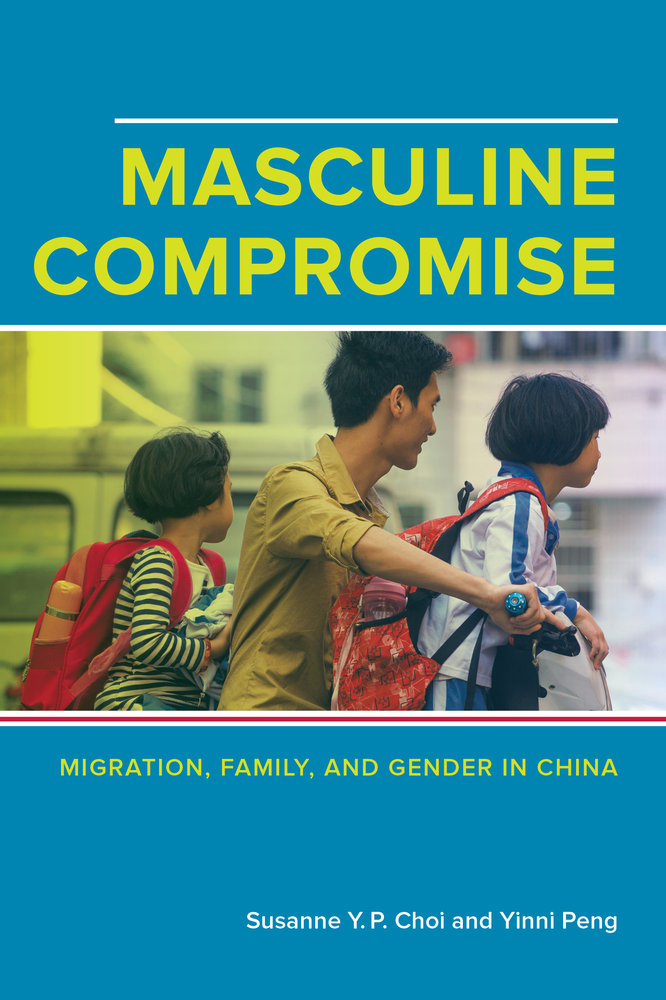
Dr. Yinni Peng is Associate Professor of Sociology at Hong Kong Baptist University. She is generally interested in gender, family, migration, and social media. She recently focuses on urban parenting in China and migrant students from mainland China. She is the coauthor of the book Masculine Compromise: Migration, Family and Gender in China (University of California Press, 2016), which is the winner of the 2018 Best Book granted by RC 31 Sociology of Migration, International Sociology Association. Her work also appears in academic journals, such as Gender & Society, Sex Roles, Human Relations, The China Quarterly, Journal of Ethnic and Migration Studies, Journal of Contemporary China, Population, Space and Place, and Journal of Family Issues. She served as an editorial board member of Gender & Society between 2017 and 2019. From 2019, she is serving as an editorial board member of Journal of Ethnic and Migration Studies.

Re-thinking International Students’ Voice in South-South Cooperation in Higher Education: An International Development Perspective 关于发展中国家留学生在华学习体验的反思:国际发展的视角

Dr Tingting Yuan 袁婷婷
Bath Spa University, UK

ABSTRACT: This article provides an initial reflection based on a recent qualitative study on China’s higher education and scholarship provision to international students from developing countries. The empirical data collected from focus groups reveal two emerging aspects of students’ overall experience: those of equality and sustainability. These two features fundamentally reflect China’s distinctiveness in its higher education provision in South-South Cooperation and its status in contemporary global political economy.
摘要:文章从国际发展视角对一项近期进行的质性研究进行了阶段性的反思。该研究对获得中国奖学金的发展中国家在华留学生进行了访谈。初步研究结果将在华留学这个高等教育范畴内的实践和中国在南南合作中所做的贡献联系起来。本文旨在揭示留学生体验的两点鲜明特征,即在华留学的“平等性”和“可持续性”。而这两点特征也在根本上体现了中国提供的高等教育的特殊性和中国在当前国际政治经济中的角色和地位。

Yuan, T. (2020). Re-thinking International Students’ Voice in South-South Cooperation in Higher Education 关于发展中国家留学生在华学习体验的反思. Journal of International Students, 10(S (1)), 94-98.

This article is part of a special issue on ‘International students in China‘.

自1949年中华人民共和国建立以来,中国与其他发展中国家一直有着教育交流。21世纪以来的中非“战略性双赢关系”以及近年来的“一带一路”倡议,更带动了发展中国家来华留学生人数的迅速增长(Kirby & Van der Wende, 2018; Yuan, 2011)。本文基于最近一项实地调研对中国的南南高等教育合作1进行了一些反思。该调研项目对发展中国家的在华留学生进行了小组访谈(focus group)。该调研已经结束数据收集工作,详细的调研结果将在今后的学术论文中进一步阐明。
这次调研的访谈对象是10组来自26个发展中国家2的40名在华留学生。每一组(3-5人)的访谈时间在1小时左右。留学生们分别在中国5个城市的7所大学攻读本科、硕士或者博士学位;其学习都由中国政府或大学提供奖学金资助。访谈在于了解学生们在华留学和生活的综合体验(overall experience),包括三个方面:他们申请就读以及接受奖学金的过程,他们的求学经历和体验(尤其是对于学习环境、教学质量和师生关系的评估),他们的学习动机以及未来深造或就业计划。通过学生们的讨论、回答可以看出,他们在中国留学的体验,具有“平等性”和“可持续性”这两个鲜明的特征。
首先,这个“平等性”不同于社会心理层面注重个体跨文化认知的认同感(Li, 2015),也不同于单纯的个体平等,即个体对权利和自由的平等追求,它指的是学生在中国的高等院校学习生活的感受比较自信和自如,没有感到自己的国籍和肤色带来的差别和压力。如果把一个国家的学生看作一个群体的话,群体之间没有明显的阶层感(hierarchy)。这与学生们对国家地理和政治经济属性和地位以及国际关系的认知息息相关。来自发展中国家的学生既没有像来自西方发达国家的留学生那样更多的是抱有对汉语言文学和文化的热爱,也没有像在西方求学的发展中国家学生那样认为西方发达国家的文化和教育是更先进的,从而在认识上屈居于西方文化,并常有种族歧视的情况发生。这次调研访谈的学生大多来自亚洲和非洲,他们认为在中国的大学学习和在中国的城市生活,除了语言上有可能的障碍之外,没有其他的明显不适。基本上所有学生都表达了与中国的老师和学生交流互助的积极感受;尤其在中国二线城市求学的留学生,更加表达了当地人民对他们的好感和热情。很多留学生都表达了希望继续留在中国(尤其是亚洲学生)深造和就业的意愿(在设想可以选择去西方国家的情况下)——既不会远离家乡,也拥有令他们比较舒适的社会环境。学生们尤其是博士生认为,以综合体验来说,他们在华学习的整体满意度比较高,基本上所有的学生都给予了“满意”或“很满意”的答复。
究其原因,这些留学生群体和个体来华的过程本身就是与中国的国际关系紧密联系的。在全球化时代,社会多元,个体的社会身份受到国家地位及其国际关系的影响。教育在经济全球化的进程中,与知识经济和发展息息相关;而以现代化理论为基础的西方主流发展理论,基本上都是建立在低收入国家通过实现工业化追赶上高收入国家,建立“现代社会”这个模式上(Berger, 2003)。因此,西方发达国家的教育形式和方法,往往成为民族国家教育发展借鉴的对象。这一点不仅体现在当今势头不减的西方留学热潮中(经济全球化之下的教育市场化促成了对于发达国家教育的“热卖”),也体现在西方国家长期开展的国际教育援 助中(国际发展的大目标——减贫的本质实际上是实现发达国家定义的“发展”,包括教育发展;而援助则成为一剂“药方”)(Dale, 1982; Robertson et al., 2007)。
同样是奖学金的授予,在西方国家留学更多的是在教育“援助”和后殖民的框架下进行,在中国却是在“合作”和“交流”的框架下进行的。细看联合国可持续发展的教育目标,明确提出了高等教育奖学金的供给,而衡量这项具体目标的指标仍然仅仅是“官方发展援助”(ODA,经合组织下的30个援助委员会盟国)提供的奖学金数量(United Nations, 2018)。这里包含着明确的西方属性的援助意义,即高等教育发展目标的达成,基本上是通过由传统援助国即援助委员会国家对发展中国家的援助实现的。而中国和这些发展中国家的历史与西方发达国家的历史是不同的,虽然中国政府也发表了援助白皮书(Ministry of Commerce of People’s Republic of China, 2014),但是这个援助不是建立在评估和干预,而是建立在双赢的基础上的。发展中国家的学生,不是来自于被贴上“低收入”或“欠发达”标签的地区,他们也没有把前往中国学习当作对固化的“先进文化”的追求,而是更务实地基于对于中国发展的认可和对中国奖学金提供的学习和生活条件的肯定。因此,获得奖学金学习本身不仅仅是一个教育问题,也是学生群体对另一种发展模式的认知。这便联系到下文谈论的“可持续性”。
所谓“可持续性”,指的是留学生的体验不仅仅局限在大学校园这个范围内,也不仅仅局限在经典和既成的理论知识上,他们的留学体验在其社会化进程中将是可持续发展的,更是主观能动的。留学生来到中国学习所获得的知识,或多或少包含了中国在过去几十年发展中的经验和教训。譬如在教育领域,教师教育成为一个热点,这对于教师匮乏,教师教育亟待发展的许多非洲国家来说,无疑是令他们深感兴趣的方面。于是,这种对中国,尤其是对中国特色社会主义经济制度下的发展经验的学习成为中国大学知识构建的一个特殊的组成部分(Yuan, 2019),并且这种经验不是静止的——它不“完美”,有缺陷,仍然在发展之中(King, 2013)。于是,同样作为发展中国家,视高等教育为发展的一部分,这样的“共同发展”“分享发展”,不论是在教学内容上还是政策话语上,都给留学生提供了一种在社会的运行、改革和前进中学习的能动意识,从而在某种程度上提高了他们学习的主体性和对社会改造的积极性。也因此,“可持续性”不仅体现在特殊的知识成分上,也体现在大学学习和将来深造、就业的连接上。被访谈的留学生们,不管是将来回到自己的祖国还是留在中国继续发展,均有比较清晰的学习动机和目标,把他们在中国的学习和今后的工作生活紧密联系起来。
此次调研的另一个发现是,中国高等教育的内容,也不仅仅只是建立在“中国经验”和中国文化的基础上。这是留学生“可持续性”体验的第三个方面,即高等教育内容方式方法的国际化与本土化的结合。把这个结果和另一项早前的研究结果(Yuan, 2013)相比较可以发现,留学生对学习的方式和难度有了更良好的体验,他们的学习不再只是留学生的学习,而是与中国学生在同样的环境里竞争和交流。从微观层面来看,在课堂模式上现在的教学方式很大程度上区别于以往的大课堂讲授式的教学方式;研究生和博士生尤其在小组讨论和小班学习中受益。有些汉语程度比较高的留学生,还专门选择能够与更多中国学生一起学习的课程,通过与中国学生交流加深对知识的理解。可以看出,中国高校借鉴了一些西方国家的课程设置和课程教学经验,并将之融入现有的高等教育体制里。如前所述,这种在“发展中”摸索前进的高等教育模式,恰恰为留学生带来了一种特 殊的体验;而高校如何平衡“国际化”(尤其是教育市场化带来的教育同质性)和发展中国特色的高等教育,可能会极大地影响这些留学生的留学体验。
当然,这些留学生的体验也和他们个人的家庭背景,在他们祖国的社会阶层、经济状况有关系。他们是不是已经具备一定的社会经济基础,尤其是在职后出国留学的人员,是不是已经掌握了一定的人力资本和社会资本,从而促成了他们较为积极的在华体验和身份认同?虽然访谈尽可能的争取不同年龄段和工作学习程度与背景的学生们,但是对于一个个体的社会性和社会身份的形成还很难作深刻的考察。最后值得反思的是,南南高等教育合作应当不仅仅停留在共同发展的层面,还应当致力于教育公正和社会平等与流动,让高等教育在共同发展的框架下给更多、更大范围的学生提供良好的体验。

作者简介(Author biography)
袁婷婷博士,英国巴斯泉大学国际教育高级讲师,研究兴趣包括全球化、国际教育资助、中非合作、高等教育教育政策,以及其他与当代全球政治经济相关的教育事务。电子邮箱:t.yuan@bathspa.ac.uk
Dr. Tingting Yuan is a Senior Lecturer in International Education at Bath Spa University. Her research interests include globalisation, international aid of education, China-Africa cooperation, higher education policy and other educational issues in relation to the contemporary global political economy. Email: t.yuan@bathspa.ac.uk

Enduring hardships in global knowledge asymmetries: a national scenario of China’s English-language academic journals in the humanities and social sciences

This research finds that the English-language journals from China have been confronted with four major challenges: English language hurdles, unfavorable position in research evaluation systems, unfamiliarity with standards of international academic writing and publishing, and tensions between international ambition and local commitment.

– Mengyang Li, University of Hong Kong

Li, M., & Yang, R. (2019). Enduring hardships in global knowledge asymmetries: a national scenario of China’s English-language academic journals in the humanities and social sciences. Higher Education. http://doi.org/10.1007/s10734-019-00476-3

China’s achievements in higher education during the past few decades are marked by rapidly rising ‘hard’ disciplines (science, technology, and medicine) and much less visible ‘soft’ disciplines (humanities and social sciences, abbreviated as HSS). Against such a backdrop, the government has recently stressed the significance of improving the international influence of China’s HSS. Developing English-language academic journals is one of China’s proactive initiatives for its HSS to go global. As a relatively recent development, these journals have rarely been researched empirically. Based on interviews with 32 journal editors and on a thorough review of related policy documents at various levels conducted during 2017-2018, this article delineates an overall picture of HSS English-language academic journals in Mainland China, and explores their efforts and predicaments in bringing China’s HSS research to the world under a context of global knowledge asymmetries.

By 2018, China had 66 HSS English-language academic journals, primarily hosted by universities, the Chinese Academy of Social Sciences(CASS) and the Chinese Academy of Sciences (CAS), and publishers. Political rationales have been the strongest push for these journals to emerge. While the earliest, the Chinese Journal of Applied Linguistics, was established in 1978, most of the journals were launched in recent one or two decades. They were directly or indirectly resulted from top-down HSS ‘going-out’ policy aiming at global status and soft power enhancement. Despite being influenced by the policy discourses, according to the interviewees, the journals enjoy a considerable extent of freedom in operation.

On the whole, the journals are still at their preliminary stage of development. In comparison with a total over 2000 HSS Chinese-language journals (CNKI 2017), the number of HSS English-language journals is dwarfed. The 66 journals cover different subject areas, mostly in economics, finance, business and management (17), followed by eight in law, four in education, and three in history. 47 (71%) journals cooperate with international publishers. Currently Taylor & Francis Group, Brill, and Springer are the three major international partners for the journals. By far, the international impact of these journals is generally very limited. Only six are indexed by the So­cial Sciences Citation Index (SSCI) and none by the Arts & Humanities Citation Index (A&HCI). 27 (41%) are indexed in Scopus, the largest international citation database of peer-reviewed journals. In 2018, three journals were ranked in Q1 in their respective areas in Scimago Journal Rank based on Scopus data, while 11 were ranked in Q2, three in Q3, and 10 in Q4.

Despite their limited international visibility, HSS English-language journals in China provide a platform for bringing China’s research to the world. The interviewed editors have shown a clear awareness of Euro-American hegemony in global knowledge production, pointing out a lack of understanding of the global south and misunderstandings about China and China studies. The journals therefore aim to be a platform for reciprocal communication and multiple perspectives in HSS research. They encourage theoretical discussions on Chinese, Asian, or non-Western issues, reforms, history, traditions… from various especially local perspectives, and explore their possibilities in contributing to theory building. Besides, the few journals that have achieved relatively higher global impact have demonstrated possibilities in strategic dependence on international resources to enhance visibility, such as Chinese Journal of International Politics. While spending substantial efforts in inviting top international scholars to join their editorial boards, and as readers, authors and reviewers, the journal works hard to balance domestic and foreign papers at the same time so as to facilitate dialogue between Chinese and international scholars.

Four major themes emerged from the data regarding challenges of journal development: English language hurdles, unfavorable position in research evaluation systems, unfamiliarity with standards of international academic writing and publishing, and tensions between international ambition and local commitment. First, most editors report English as a major obstacle for their journals. At their initial stages of development, most of the journals can receive few submissions from foreign scholars and Chinese diaspora. Thus they need depend largely on domestic researchers. Considering the unsatisfactory English proficiency of many domestic researchers, journals have to either compromise language quality of the articles they publish or rely on translation of articles that have already been published in Chinese journals and submissions in Chinese. Yet qualified translators and copy editors are lacking, and the language ability of many editors is also a problem.

Second, the journals are hindered by their unfavorable positions in research evaluation systems. As rankings and league tables have become parts of the global governance of higher education, China’s HSS research evaluation system is increasingly shaped by SSCI and A&HCI. Since the overwhelming majority of the HSS English-language journals are not indexed, it has been very difficult for them to attract international and domestic submissions. Third, many domestic Chinese researchers and some editors themselves are not familiar with standards of international academic writing and publishing. For example, among the 27 interviewed journals, about 12 journals only publish original articles while other journals rely on translated articles at varying degrees; even fewer journals (about 8) have achieved double-blind peer review. For journals cooperating with international publishers, financial pressure caused by the high cost of the partnership might restrict a sustainable development of them.

Lastly, the journals are struggling to strike a balance between international ambition and local commitment. To deal with Euro-American hegemony and bring indigenous Chinese research to the world, journals need to publish more locally-oriented research. However, hoping to be better recognized international­ly, most journals in the social sciences set entry into SSCI as their current strategic goal. The intention to have a larger international readership and authorship is desperate. Even SSCI or A&HCI are not regarded as a major target in the humanities, the journals also orient to the ‘golden standards’ set by Western practices to enhance their international recognition. Moreover, editors confirm the lingering difficulties in the dialogue between Chinese and Western scholarship. As an editor in philosophy expressed, “We’ve translated and published articles written by leading Chinese schol­ars, but they have almost zero download, much lower than those written by younger Chinese diaspora members.” This reflects the global position of China’s HSS research. Issues such as catch-up mentality, over-pragmatism, academic nationalism, and lack of original theoretical contributions have exerted a combined impact on HSS research in China, lead­ing to a limited contribution to the dialogue with interna­tional scholars.

To conclude, this study shows that HSS English-language journals in China attempt to challenge yet are conditioned at the same time by the imbalanced international knowledge structure. Theories of center-periphery structure (Altbach, 1987; 1998) and academic dependency (Alatas 2003; 2006) are still powerful in explaining disadvantages of HSS development in non-Western societies. However, China’s HSS English-language journals provide us with a telling case to observe how to develop self-consciously counter-Eurocentric and counter-hegemonic HSS (Alatas 2006). It takes time to see their effectiveness in empowering Chinese HSS researchers to become global.

Author Biography

Mengyang Li is a PhD candidate in Faculty of Education at the University of Hong Kong. Her research interests are in international academic relations, internationalization of the humanities and social sciences, and China’s global engagement in higher education. Her doctoral research examines Mainland China’s English-language academic journals in the humanities and social sciences. This paper is based on part of the doctoral thesis. She can be contacted via email: u3003515@connect.hku.hk

Self-abandonment or seeking an alternative way out: understanding Chinese rural migrant children’s resistance to schooling

Dr Jiaxin Chen,
Lingnan University, Hong Kong / East China Normal University

Chen, J. (2019). Self-abandonment or seeking an alternative way out: understanding Chinese rural migrant children’s resistance to schooling. British Journal of Sociology of Education, 1-16. doi:10.1080/01425692.2019.1691504

Because of the rapid urbanization, industrialization, and significant economic success in urban areas, unprecedented numbers of rural people have flocked to cities seeking work, creating an extensive urban manual labor force (Chan and Pun 2010; Shi 2010; Wang 1998). By 2016, the total population of rural migrant workers in China had reached 281.71 million (National Bureau of Statistics of China 2017). Yet, because of the hukou (household registration 户口) system, these rural migrants are deemed ‘non-local’ or ‘rural residents’ in urban areas, effectively excluding them from the urban welfare system, including public education for their children.

In 2010, there were an estimated 35.81 million migrant children (aged 17 or younger) in China (All-China Women’s Federation 2013). Researchers have found migrant children are more likely to fail in their schooling, and to be tracked into vocational schools or directly into the manual labor market (Li 2015; Ling 2015; Song, Zeng, and Zhang 2017). Previous studies have mainly blamed China’s hukou system for the difficulties rural migrant children (RMC) facing in accessing urban schooling and their being forced to attend private migrant schools (Chen and Feng 2013; Kwong 2011; Lai et al. 2014; Li and Placier 2015). Some researchers have recently argued that migrant children also play an active role in reproducing their migrant parents’ low social-economic status, through resisting schooling (Xiong 2015; Zhou 2011). However, few studies have examined the complexity of migrant children’s resistance, especially the complex meanings embedded in resistant behaviors, which are essential for understanding student agency (Giroux 1983; Lanas and Corbett 2011). This article bridges this research gap.

This study examined the diverse forms of RMC’s school resistance in their interactions with the school system and with surrounding social inequalities in urban society. Qualitative investigations were conducted in two primary schools in the Sun District (pseudonym) of Beijing. Three patterns of RMC’s school behavior emerged from the analysis of interview data and observations: conformist learner, education abandoner, and nascent transformative resister.

Most, if not all, RMC under study had strong expectations of bettering their and their families’ futures through individual efforts. A conformist learner is someone for whom pursuing education is the preferred means of achieving this desired betterment. Xi, for example, a sixth-grade male student, clearly expressed high educational expectations in his interview, saying ‘studying well can help me enter a key point middle school, then a key point high school, then a first- class university’ and eventually a Master’s program. He believed a high-level educational credential would command a high salary in the labor market, meaning a bright future for him.

Although RMC in general believed in the significance of education, many did not feel they were capable of achieving educational success and so were less inclined to pursue it. Some became education abandoners, dismissing education as irrelevant to their future betterment. Upon education abandonment, they began searching for alternative opportunities to advance their future social positions. For instance, Miao knew going to university could help him ‘become a boss [and help him to] walk my way out of peasant life and towards the city life’, but he felt that he had little possibility of succeeding in school education. Thus, his best option, he felt, was to ‘work as a worker at first, [to] earn and save some money. Then open my own company, [and] become the boss myself ’. However, these migrant children perceived their entering the world of manual labor as a strategic move towards the pursuit of a higher social position, such as becoming ‘the boss’, with no intention of doing low-paying, low-ranked manual working jobs henceforth.

Many RMC in this study had already shown their awareness of social inequalities. Indeed, it was hard for them not to, as inequality was a daily experience in their lives. Conformist learners, therefore, chose to study hard for a university degree so that they could find better jobs, earn a higher salary, and improve the living conditions of the whole family. Education abandoners, by contrast, gave up pursuing academic success and decided to enter the labor market as long-game players. Both were searching for opportunities for self-improvement to the best of their ability but lacked a social justice agenda.

Yet, a small group of migrant children were found to present the potential of developing transformational resistance, for example Student Le. Le’s aim of pursuing a position at the Education Bureau was not merely to improve his living conditions. Instead, it was one step towards a further agenda of changing the education policy for RMC, so that other RMC need not face the same unequal school access as he does. Nevertheless, the reason for considering them as only nascent resisters is that they still seem confused about who or what is to blame for social inequalities and how to act.

As Kipnis (2001a) has argued, Chinese society has traditionally featured a widely held and strong belief in schooling for upward social mobility. While teachers also kept emphasizing the significance of academic pursuit, RMC successfully internalized the ideology of meritocracy. Therefore, most migrant children in this study were initially conformist learners. The change process from conformist learners to education abandoners reflects the ongoing decrease in migrant children’s self-efficacy in achieving academic success throughout their education. This can be attributed to the school’s promotion of educational pursuit always going hand-in-hand with a highlight on students’ alleged responsibility for their academic failure.

Besides, the potential of RMC in developing transformative resistance was based on their personal experience and awareness of the social inequality caused by both an oppressive employment relationship and rural-urban differentiation in the broader society. Nevertheless, the vulnerable pursuit of social justice among nascent resisters indicates the difficulty of transferring children’s initial awareness into critical reflection. While teacher-student discussions about social oppressions rural migrants facing in urban society could benefit students’ development of transformative resistance, this is challenged by school’s dominant ideology of meritocracy and a teaching agenda that legitimizes social inequality.

This study suggests that migrant children’s school resistance should not be considered as a developed group culture, stemming from their migrant family culture in contradiction with mainstream culture in the schooling. Rather, migrant children’s school resistance reflects their perceptions of social realities, which are still open to change while the children are interacting with the school system. Therefore, the analysis of Chinese RMC’s educational failure should go beyond children’s self-defeating resistance to mainstream schooling.

Author Biography

Jiaxin Chen is Research Assistant Professor in School of Graduate Studies at Lingnan University, Hong Kong (beginning March 2020). She received her PhD from the University of Hong Kong, and worked as a postdoctoral researcher at the East China Normal University, Shanghai, China. Her research interests include education inequality and mobility with a strong focus on disadvantaged children, migration, citizenship education and academic mobility. She can be contacted via the following email address: jxchen881116@163.com