Conceptualizing the discourse of student mobility between “periphery” and “semi-periphery”: the case of Africa and China

Mr Ben Mulvey, Education University of Hong Kong

Watch a presentation video of this paper

Listen to an interview with Ben Mulvey

Read the summary of Ben’s interview

Research Highlighted:

Mulvey, B. (2020). Conceptualizing the discourse of student mobility between “periphery” and “semi-periphery”: the case of Africa and China. Higher Education. doi:10.1007/s10734-020-00549-8

The aim of this article is to supplement current understandings of international student mobility to China. China hosted nearly half a million international students in 2018 (MOE, 2019). African students constitute the second largest regional group – 81,562 studied in China in 2018. The growth of China as a destination for international students is a relatively recent phenomenon, and as such, a large part of research on international student mobility examines the phenomenon of students moving from East Asia to Anglophone Western nations. Some of this literature has adopted a postcolonial lens to understand the nature of this form of migration. However, less attention has been paid to other student flows, including students moving from sub-Saharan Africa to East Asia, and as a result, the explanatory power of existing postcolonial approaches to international student mobility is limited, given that the literature tends to adopt a binary of “Western” and “non-Western”.

The starting point for the analysis is the premise that globalised higher education is inherently unequal. For example, Altbach (2007) makes the distinction between powerful university systems in the global core, such as the USA, and those in the periphery. He argues that centre-periphery relations between university systems resemble neo-colonial domination. One outcome of this article was to extend and adapt Altbach’s arguments by drawing on the concept of semi-peripheral (post)coloniality (e.g. Ginelli, 2018) to analyse how structural forces shape the nature of educational mobility between the periphery and semi-periphery, and to refine current postcolonial theorising around student mobilities in the light of non-Western destination countries such as China. I argue in the article that this concept, combining insights from world system theory with postcolonial theory, adds nuance to current postcolonial conceptualisations of student mobility, and also aids in understanding China’s position, which defined by both subordination (by the global core) and superiority (over the periphery).

Postcolonial theory is somewhat limited in terms of its ability to explain China’s position, in that it tends to reproduce a dichotomy of centre and periphery, or of West and non-West. As such, the concept of semi-peripheral (post)coloniality is put forward as a means of explaining how this ambivalence manifests in student mobility discourse. Ginelli (2018) outlines that the concept expresses how the long-term ideological and structural positions (positions within the world-system) can lead to the (re)production of colonial relations and colonial discourse. Countries within the semi-periphery are relatively well connected to the global centre but in some ways remain subjugated to it. They normally do not have colonies, but are perceived to have civilizational superiority over the global periphery. These countries have a strong urge to “develop”, “catch-up” with and imitate the global core, and share the same sense of responsibility for the modernisation of the periphery (Ginelli, 2018).

The analysis provides an overview of the global context within which the strategies of globally mobile African students are embedded, and argues that this structural context results in asymmetrical patterns of knowledge exchange, drawing on a core-periphery model of university systems. I argue that ambivalent position of China in relation to Africa, of solidarity and also of civilizational superiority, is expressed in recent discourse around higher education scholarships. There are two examples of where this kind of discourse occurs. The first is in the presentation of international students as recipients of ‘charity’ in the form of scholarships mirrors the historical relationship between the core and periphery, rather than challenging it. Non-western students are at times framed as recipients of development aid, which is benevolently granted by Western countries, so that peripheral countries can “catch-up” on the linear and universal path of “progress”  (Stein and Andreotti, 2016). Therefore, China’s higher education scholarships to African students, presented as ‘win-win’ and on equal terms actually further the asymmetric internationalization of higher education which Ivancheva (2019) argues is an example of semi-peripheral (post)colonialism (Ginelli, 2018). Ginelli explains the ambiguous position of the semi-peripheral world in relation to the postcolonial periphery, arguing that instead of challenging eurocentrism, Eastern European countries, through unequal exchanges, actually embraced this eurocentrism and undermined their own anti-imperialist position.

The second example comes from the “soft power” rationale which underpins China’s recruitment of African international students, and reproduces colonial discourse in a number of ways. This rationale seems to imply that knowledge should be largely flow in only one direction. That is to say, the student should learn about the host’s culture, and take this knowledge back to their respective home country, rather than the student being a source of knowledge for the host. In the case of China, as with student mobility between the West and other regions, discourse implies that the flow of knowledge is one-way: the implication is that international students have nothing to offer their hosts. Moreover, soft power as a rationale for international student recruitment has its roots in colonialism – as Lomer (2017, p. 590) notes, students from Britain’s colonies were given scholarships with the assumption that higher education was a means to “guide the thoughts” of colonial subjects. This logic appears to be mirrored in the assertion that African students in China should be future leaders. In addition to this, implicit in the rationale is an assumption that students will naturally develop positive attitudes towards their host country and its social and political conditions (Lomer, 2017). This appears to be true of China’s attempts to be true of China’s rationale for recruiting international students: That students would return home and choose to “spread China’s voice” is taken for granted – implying that exposure to China through study abroad would be enough to cause students to firstly develop positive opinions towards China and secondly, choose to act on this positive disposition after graduation. As Tian and Lowe (2018) state with regard assumptions contained within China’s public diplomacy efforts “it would be cultural arrogance to assume that ‘success’ is assured simply as a consequence of exposure to Chinese society and culture” (2018, pp. 242-243).

References

Altbach, P. G. (2007). Globalization and the University: Realities in an Unequal World. In J. J. F. Forest & P. G. Altbach (Eds.), International Handbook of Higher Education (pp. 121–139). Springer Netherlands.

Ginelli, Z. (2018, May). Hungarian Experts in Nkrumah’s Ghana. Mezosfera.Org. Retrieved from http://mezosfera.org/hungarian-experts-in-nkrumahs-ghana/

Ivancheva, M. (2019). Paternalistic internationalism and (de)colonial practices of Cold War higher education exchange: Bulgaria’s connections with Cuba and Angola. Journal of Labor and Society, 22(4), 733–748.

Lomer, S. (2017). Soft power as a policy rationale for international education in the UK: A critical analysis. Higher Education, 74(4), 581–598.

Ministry of Education (MOE) (2019). 2018来华统计 [Concise Statistics on International Students Studying in China in 2018]. 教育部国际合作与交流司 [Department of International Exchange and Cooperation of the Ministry of Education].

Stein, S., & de Andreotti, V. O. (2016). Cash, competition, or charity: International students and the global imaginary. Higher Education, 72(2), 225–239.

Tian, M., & Lowe, J. (2018). International Student Recruitment as an Exercise in Soft Power: A Case Study of Undergraduate Medical Students at a Chinese University. In F. Dervin, X. Du, & A. Härkönen (Eds.), International Students in China (pp. 221–248). Springer International Publishing.

Author bio

Ben Mulvey is a PhD candidate at the Education University of Hong Kong and visiting research student at University College London Department of Geography. Ben’s research focuses on sub-Saharan African students in China, and what this student flow can reveal about China’s attempts to (re)shape the global “field” of higher education. He can be contacted via the following email address: bmulvey@s.eduhk.hk
Emotions and migration aspirations: western scholars in China and the navigation of aspirational possibilities

Dr Bingyu Wang, Sun Yat-sen University, China

Research Highlighted

Wang, Bingyu, and Jingfu Chen. 2020. “Emotions and migration aspirations: western scholars in China and the navigation of aspirational possibilities.” Journal of Ethnic and Migration Studies. Advanced On-line publication. DOI: 10.1080/1369183X.2020.1764841

INTRODUCTION TO THE ARTICLE

Drawing on qualitative research with western scholars working at Sino-foreign universities (SFUs), this paper highlights the emerging academic mobility trend moving from the Global North to South. With a theoretical focus on ‘emotions in migration’, the paper first asks how these foreign scholars’ migration aspirations towards China are initiated and nurtured before the move. Second, it explores after the move, how they emotionally encounter China in everyday life and perform agency, i.e. exercising specific ‘emotional labour’ to reframe their lived experiences and migration aspirations. Third, it examines how their capacity of materialising migration aspirations can be facilitated and constrained by a set of structural factors at the macro, meso and micro level, and how their migration aspirations towards the future are reconfigured accordingly.

Taking western scholars in China as a case study, this article has not only focused on the emotional dynamics and precarities involved in the process of mobile individuals generating and materialising migration aspirations, but also delved into how their agentive efforts are performed in relation to their biographies and structural conditions. On the one hand, this research shows that migration aspirations are subject to constant trans- formations, disruptions or discontinuities. That is to say, migration itself, as an inherently risky venture, is regularly interrupted by reality checks that bring into question the potentials of aspirations as individuals undertake and experience mobilities in the world. Yet, on the other hand, we argue that mobile individuals who live under emotional vulnerabilities, are capable of conducting emotional labour and navigating through their aspirational possibilities to secure more pleasant life and career futures. Critically, this research views migration aspirations as temporary, contingent and inherently emotional, emphasising the ways mobile individuals draw on different discursive frameworks from the past, present and future to narrate and navigate their aspirational landscape across diverse migratory experiences.

In this regard, this article makes several important contributions to advancing scholarly understandings of migration. First of all, theoretically, the article has built on the insights of literature on migration aspirations and emotions in migration to explore the quotidian and lived experiences of mobile scholars at an individual level, thus transcending beyond the conventional political economy and human capital framework that dominates academic migration studies. More importantly, by paying more specific attention to the emotional dimension of migration aspirations, this article has elaborated how aspirations are imaginative and mutable during migration, demonstrating that they must be examined as constantly generated, exercised and reconfigured across time by emotional encounters, emotional labour (agency) and structural forces. Hence, this article has introduced an emotionally-sensitive approach for mapping (academic) migrants’ reported aspirations in light of the interdependence between the memories of the past, the emotional encounters with present opportunity structures and the subjective yet agentive constructions of the future, thus extending the literature on migration aspirations and academic migration.

Second, empirically, the literature on academic migration has shown major interest in those academic mobilities from the Global South to North. Specifically, in the China context, the majority of the existing studies have been done regarding Chinese academic returnees (Wang 2019, 2020) and Chinese knowledge diaspora (Leung 2015; Yang and Welch 2010) while rather few attempts have been made to study those foreign scholars who move into China. In this respect, this article serves as an empirical extension and reflects the newly-emerged North-to-South academic migration trend. Moreover, academic migrants, especially those western ones moving to the Global South are traditionally seen as elite mobile individuals possessing high human and mobility capital, particularly in the ‘global academy where Western forms and outlets dominate knowledge production and research outputs’ (Wang 2020, 182). In the contrary, this article perceives these mobile scholars as middling transnationals who are positioned with an ambiguous status within international mobility hierarchies, thus providing in-depth reading towards the supposedly glorious moving process of the highly-skilled migrants in general.

Essentially, this article contributes to the rise of the renewed interest in the analytical promise of aspirations (Wang and Collins 2020), better unpacking ‘the forces and frictions’ (Carling and Collins 2018) through which migration is initiated, enacted and reconfigured. By acknowledging the irrational, imaginative and temporally-discursive nature of aspirations, we also respond to the growing scholarly attention to emotions, time/temporalities and futures happening in migration studies. Apart from the emotional and the temporal, future research can be done to address the infrastructural, to ask how individuals’ migration aspirations are embedded within, facilitated and constrained by those ‘taken-for-granted’ migration infra- structures (the institutional, the physical and the technological) and those seemingly mundane yet essential ones at the everyday level (including intermediaries of different kinds such as friends, colleagues and bilingual children). Besides, there has been ‘a mobility bias’ in migration research, we thus call for a need to focus on the ‘drivers’ behind the immobility aspirations amongst those who are ‘staying’ either voluntarily or involuntarily.

Related research on ‘time and migration aspirations’ can be seen at Wang and Collins (2020) Temporally distributed aspirations: New Chinese Migrants to New Zealand and the Figuring of Migration Futures.  Sociology.

References

Carling, J., and F. Collins. 2018. “Aspiration, Desire and Drivers of Migration.” Journal of Ethnic and Migration Studies 44 (6): 909–926.

Leung, M. W. 2017. “Social Mobility Via Academic Mobility: Reconfigurations in Class and Gender Identities among Asian Scholars in the Global North.” Journal of Ethnic and Migration Studies 43 (16): 2704–2719.

Wang, Bingyu. 2019. “Time in Migration: Temporariness and Temporal Labour Amongst Early Career Chinese Academic Returnees.” Journal of Ethnic and Migration Studies. Advance online publication. doi:10.1080/1369183X.2019.1642741.


Wang, Bingyu. 2020. “A Temporal Gaze towards Academic Migration: Everyday Times, Lifetimes and Temporal Strategies Amongst Early Career Chinese Academic Returnees.” Time and Society 29 (1): 166–186.


Wang, Bingyu, and Francis Collins. 2020. “Temporally Distributed Aspirations: New Chinese Migrants to New Zealand and the Figuring of Migration Futures.” Sociology. Advance online publication. doi:10.1177/0038038519895750.


Yang, R., and A. Welch. 2010. “Globalisation, Transnational Academic Mobility and the Chinese Knowledge Diaspora: an Australian Case Study.” Discourse: Studies in the Cultural Politics of Education 31 (5): 593–607.


AUTHOR BIOGRAPHY

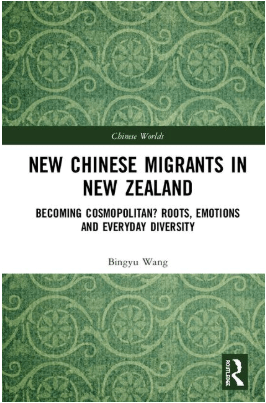
Bingyu Wang is an Associate Professor at the School of Sociology and Anthropology of Sun Yat-sen University, where she was recruited as a member of the ‘100 Top Talents Program’. Her research areas include migration and mobilities, intercultural encounters, and cosmopolitanism, with an empirical focus on highly-skilled migrants and temporary migrants, and a theoretical focus on emotions, time and the everyday. She has published widely in high-ranked international journals and is the author of New Chinese Migrants in New Zealand: Becoming Cosmopolitan? Roots, Emotions and Everyday Diversity (Routledge, 2019). She is currently conducting research projects concerning Global North-South academic mobilities, specifically on returning Chinese scholars, Chinese knowledge diaspora and foreign scholars in China. Bingyu is on the editorial board of Journal of Ethnic and Migration Studies.  She can be reached at wangby29@mail.sysu.edu.cn or via her profile page at Research Gate.

Privileged Daughters? Gendered Mobility among Highly Educated Chinese Female Migrants in the UK

Social Inclusion Volume 8, Issue 2, Pages 68–76

About the article:

Over the past two decades, the number of women from China’s one-child generation studying in the West has surpassed that of their male counterparts. In 2014, when the data-collection for this article took place, women comprised 51 percent of Chinese students in the United States, 55 percent in Canada, and 63 percent in the UK. Famous for its higher education sector, the UK has long been a popular destination for Chinese students, especially for those who want to do a Master’s degree.

Statistics from China’s Ministry of Education showed that in 2018 more than 90 percent of the country’s international students had private resource to fund their study. International students typically rely on middle-class parents for the cost their education and maintenance overseas. Among families that have only one child, there is little evidence to suggest that parents pay attention to their child’s gender when funding their education overseas. The one-child generation daughters born to middle-class Chinese parents enjoy the privilege of concentrated family resources and the opportunity for education overseas.

While we celebrate greater educational mobility for the one-child generation girls from China, we cannot assume that these “privileged daughters” will, therefore, enjoy the same social mobility after the completion of their education. The article focuses on the “privileged daughters” who have studied in the UK for a postgraduate degree and remained overseas as professionals. The British government established very selective work visa policies for foreign graduates, and this article’s cohort has demonstrated the motivation and capacity of successfully securing a place in a competitive British employment market. However, in this relatively “elite” group we discovered various forms of immobility influenced by the traditional Chinese patrilineal gender values passed on to the overseas daughters through their parents.

To elaborate this point, we use three cases of post-student female migrants who are of different ages and at different life stages, we situate their socioeconomic mobility in the context of intergenerational relationships and transnational social space. Dahong is single, Beiyao is just married and has a new-born baby, and Meilin has been married for more than ten years and has a school-age son. Their different life stages reveal the continuities and changes of the significant social factors that shape their life decisions. Each life stage from before, during and after their overseas education, illustrates the shifting gender expectation they experienced, particularly the parental influence throughout the whole process.

Dahong wants to become an entrepreneur, but her “traditionally-minded” father does not believe a “businesswoman” sounds “descent” in marriage market. Dahong has also given herself a “deadline” to get married and have children before she turns 35. Although appearing to be resistant to her father’s opinion, Dahong does not fundamentally challenge the socially expected female life course of marriage and motherhood.

Beiyao holds a PhD and respected job, her life path carries her mother’s dreams and hope to prove to others that it is not a misfortune to give birth to a daughter. Beiyao’s mother experienced gender discrimination herself because of failing to produce a son. This could be interpreted as a coping strategy to regain both the family and individual woman’s dignity in a society that continuously values sons over daughters.

Meilin is the oldest of the three women and had experienced greater conflict between career, marriage and motherhood. Her initial success in education and employment was largely the result of the support from her mother, who later also advised Meilin to compromise her career for her marriage and not become a “stigmatised divorcee”. 

Drawing on further interview data from the same project we argue that, although the “privileged daughters” have achieved geographical mobility and upward social mobility, through education and a career in a Western country, their life choices remain heavily influenced by their parents in China. Such findings highlight the transnationally transferred gendered burden among the relatively “elite” cohort, thus revealing a more nuanced gendered interpretation of transnational socioeconomic mobility.

It is important to note that we do not simply assume China and the UK as the “traditional” and the “modern”, rather, we would like to point out the contrast between pre-graduate educational upward mobility and post-graduate gendered (im)mobility. For these highly educated female migrants in the UK, gendered mobility has two dimensions: on the one hand the intergenerational continuity of gender norms; on the other hand, the ways in which individuals navigate gender expectations in transnational social space. Although the “privileged daughters” have achieved geographical mobility and upward social mobility through educational success and a professional career in a Western country, they are still being “pulled back” by their parents who are “left behind” in China.

Authors’ Bio

Dr Mengwei Tu, East China University of Science and Technology

Mengwei Tu (PhD) is a Lecturer in Sociology at East China University of Science and Technology in Shanghai. She holds a PhD in Sociology from the University of Kent (2016). Her research focuses on global movement of highly educated migrants, including both migrants from China and migrants to China. Her book Education, Migration and Family Relations between China and the UK (Emerald, 2018) took an intergenerational angle in understanding the human complexity behind overseas education and migration.

Dr Kailing Xie, University of Warwick

Kailing Xie (PhD) is Teaching Fellow at the Politics and International Studies, University of Warwick. Her work explores the role of gender in contemporary Chinese governance. Her publications include a monograph Embodying Middle Class Gender Aspirations: Perspectives from China’s Privileged Young Women and the journal article “Premarital Abortion, What is the Harm? The Responsibilisation of Women’s Pregnancy among China’s ‘Privileged’ Daughters” that was awarded the 2017 Early Career Researcher Prize by the British Association for Chinese Studies.

Queer migration across the Sinophone world: queer Chinese Malaysian students’ educational mobility to Taiwan

Dr Ting-Fai Yu, Monash University Malaysia

Research Highlighted:

Yu, T.-F. (2020). Queer migration across the Sinophone world: queer Chinese Malaysian students’ educational mobility to Taiwan. Journal of Ethnic and Migration Studies. https://doi.org/10.1080/1369183X.2020.1750946

Going overseas for higher education has long been an upward mobility strategy of students from the 60 independent Chinese high schools in Malaysia, partly due to their qualifications not being recognised for entry into public universities under Malay-centric policies. Different from most other educational migration patterns previously observed (e.g. from Asia to the West), many of these students have been attending universities in Taiwan rather than established destinations for foreign students such as Australia or the United Kingdom. This is largely due to Taiwan’s welcoming education policy (i.e. low tuition fees), as a Cold War legacy, for Chinese overseas students (qiaosheng) since the 1950s (Wong 2016) and long-established transnational networks of Chinese Malaysian students and graduates. In recent years, more and more of these students have turned to Mainland China, especially metropolitan cities such as Beijing and Shanghai, for university due to its rapid economic development and intensifying global presence. Some major Chinese universities have moreover been active in recruiting Chinese Malaysians; their strategies include organising week-long visits to university campuses and providing scholarships for high-achieving students.

This article draws on recent findings of an ongoing ethnographic study of Chinese Malaysian students’ educational mobility to Taiwan and Mainland China. Most existing studies have approached Chinese language education in Malaysia from historical and policy perspectives (e.g. Lee 2011; Santhiram and Tan 2017; Tan 1997); out of which many focus on examining the functions of independent Chinese schools in safeguarding the continuity of Chinese culture (Chin 2001; Collins 2006; Tan and Teoh 2016). Interestingly, despite most stakeholders (e.g. teachers, school administers) in the Chinese language education community being former students in Taiwan or Mainland China, little is known about the role of student mobility in the (trans)formation of independent Chinese schools as sites where transnational Chinese identities are reproduced, reimagined and reconfigured. My research aims to address this question and, in doing so, develop new understandings of Sinophone Malaysia (i.e. the Chinese-speaking aspect of Malaysian society) amid changing Chinese geopolitics (e.g. the rise of China) in the 21st century.

At the time of writing the article, I had conducted some field research in Malaysia and Taiwan and interviewed current or former students in Taiwan. While the scope of my project was not gender- or sexuality-specific, I could not help but notice the prominent presence of LGBT-identified research participants in the sample. Some, including a few queer activists, were referred to me by queer friends in Taiwan or Malaysia; others whose sexual orientation I only found out when they came out to me in the research process. As I talked to more and more LGBT-identified research participants, I was convinced that the sexually diverse sample was not a coincidence. Rather, it was partly a result of their shared desire to study in and learn from Taiwan where its progressive development as a liberal democracy demonstrated the compatibility between one’s queer and Chinese identities. This is why I decided to write about the queer dimension of this student migration pattern.

One of the central arguments I made in the article highlights that Taiwan has been instrumental to the queer development in Malaysia. For example, many research participants were involved in various activities organised by Taiwan Tongzhi Hotline Association (Hotline hereafter), a prominent LGBT organisation founded in 1998. Some, who were now schoolteachers or queer activists, talked at length about how Hotline had shaped their approaches to LGBT issues in teaching or activism since returning to Malaysia. Their shared, sometimes coinciding experience led me to visit Hotline’s office in Taipei, where I met the staff member who coordinated the internship programme which provided training to quite a number of Malaysians over the years. She told me it was their priority to receive interns from countries that lacked LGBT-related resources, especially Chinese-speaking students from China or Malaysia, in order to equip them with the skills to do advocacy work when they returned to their home countries. To me, this finding is significant: Despite Taiwan being widely regarded as Asia’s gay capital for lifestyle consumption, it has rarely been considered as an exporter of movement tactics that is capable of influencing queer activism globally. This queer, South-South connection between Taiwan and Malaysia charts an atypical trajectory of “globalisation from below”, one that is enabled by a distinctive history of student migration.

I hope this article will not only make a case to argue for the queer potentials of student migration across the Chinese-speaking world, but also more generally initiate discussion towards “queering” research on educational mobility.

References

Chin, James. 2001. “Malaysian Chinese Politics in the 21st Century: Fear, Service, and Marginalization.” Asia Journal of Political Science 9(2): 78-94.

Collins, Alan. 2006. “Chinese Educationalists in Malaysia: Defenders of Chinese Identity.”  Asian Survey 46(2): 298-318.

Lee, Ting Hui. 2011. Chinese Schools in Peninsular Malaysia: The Struggle for Survival. Singapore: Institute of Southeast Asian Studies.

Santhiram, R., and Yao Sua Tan. 2017. “Education of Ethnic Minorities in Malaysia: Contesting Issues in a Multiethnic Society.” In Policy Discourses in Malaysian Education: A Nation in the Making, edited by Suseela Malakolunthu and Nagappan C. Rengasamy, 29-44. New York: Routledge.

Tan, Liok Ee. 1997. The Politics of Chinese Education in Malaya 1945-1961. New York: Oxford University Press.

Tan, Yao Sua, and Hooi See Teoh. 2016. The Chinese Language Movement in Malaysia, 1952-1967: Language, Ethnicity and Nation-Building in a Plural Society. Petaling Jaya: Strategic Information and Research Development Centre.

Wong, Ting-Hong. 2016. “College Admissions, International Competition, and the Cold War in Asia: The Case of Overseas Chinese Students in Taiwan in the 1950s.” History of Education Quarterly 56 (2):331-357.

Author Biography

Dr Ting-Fai Yu is an anthropologist of ethnicity, sexuality and mobility in East and Southeast Asia. Currently, he is a Lecturer in Gender Studies at Monash University Malaysia. Prior to that, he was a Research Fellow at the International Institute for Asian Studies, Leiden University in the Netherlands. His research has explored the transformation of cultural identities across Sinophone communities (Hong Kong, Taiwan, Malaysia) while developing new understandings of how intersectionality (especially between race, class and queerness) operates in Asian contexts.

A New Form of “Elite” Schooling: Preparation for U.S. College Application

In the recent decade, the number of urban Chinese high-school students applying to U.S. universities has rapidly grown. Concomitantly, a growing number of key public high schools (zhongdian gaozhong, 重点高中)—academically elite schools—in Chinese cities have established their international high-school curriculum programs (IHSCPs), which are exclusively designed to prepare privileged urban Chinese students for international college applications. Many students who want to apply to overseas universities, particularly top universities in the United States, have chosen to attend these newly established international programs.

The emerging international curriculum programs created by Chinese elite public high schools are commonly called gaozhong guoji kecheng ban (高中国际课程班), guoji ban (国际班), or guoji bu (国际部). These programs integrated Chinese national high-school curriculum with various imported foreign curricula, such as the General Certificate of Education Advanced Level (A-Level), Advanced Placement (AP), and Global Assessment Certificate (GAC) to prepare students for the international college application process. The international programs are ostensibly public, but students who are able to choose these IHSCPs need to pay high tuition. The tuition usually ranges from about ¥60,000 to ¥120,000 each year, which is far more expensive than that of any state high school as yearly tuition for these institutions is approximately ¥800 to ¥2,000. It is clear that only those Chinese families affluent enough to afford such expensive tuition can send their children to these fee-charging quasi-public international programs.

In contrast to their “local” choosing Chinese counterparts, seniors enrolled in the “public” IHSCPs have released their burdens from the gaokao (China’s National College Entrance Examination), held in June 7 and 8 annually. Rather than waiting for college admission based on gaokao test scores which are announced in late June, these “global” choosing students have received college admissions from prestigious universities overseas in March, April, or even earlier than this. Compared with their counterparts who compete for top universities in China, students enrolled in such emerging international high-school programs gain access to leading universities in the U.S. and look forward to their study abroad experiences.

The pathway from an international program created by elite public high schools in China to prestigious universities in the U.S. not only differentiates socially elite students whose families are able to pay high tuition fees and academically elite students. It also reflects a new development of Chinese elite public high schools and implies a new form of “elite” schooling, leading to prestigious universities in the U.S. However, the “public” IHSCPs are not uncontested. They have important implications for equality of educational opportunity for students to access elite universities and their associated life rewards in changing local, national, and global contexts.

Drawing on critical theory, my research applies sociological and anthropological approaches to the study of the educational practices of such curriculum programs, the burgeoning Chinese upper-middle and upper classes, and socially elite Chinese students, as well as educational policy (nationally and globally). Through analyzing a wide variety of data sources, my research integrates critical curriculum studies with educational policy studies to explore the complexity of socially elite Chinese students’ choices of and subsequent educational experiences with “public” international high-school programs in China. My study points out that the complexity is derived from the involvement and interaction of multiple social actors, as well as internal and external contradictions between and among multiple fields surrounding privileged Chinese students’ choice of and preparation for U.S. college application.

My research highlights that the public IHSCPs were framed as an educational experiment to improve Chinese High School New Curriculum Reform. They were also legitimated as CFCRS (the Chinese-Foreign Cooperation in Running Schools policy) high-school programs. The unique institutional structure of the CFCRS policy brings private education companies into the development of the international programs. My research points out that the interventions of private institutions into Chinese public education reforms are tacit business practices. In addition, the discourses—such as internationalizing Chinese education and cultivating international talent for Chinese economic development and international competitiveness—underscored in the National Guidelines for Medium- and Long-term Educational Reform and Development (2010–2020) further provide Chinese elite public high schools with relative autonomy to create U.S. college-going curriculum and pedagogy for meeting the needs of socially elite Chinese students.

The insertion of international curricula into the Chinese national education system creates an international track in local elite public schools that set privileged students on paths leading to prestigious universities in the U.S. In the curriculum integration process at IHSCPs, it becomes apparent that the acquisition of English language skills and the knowledge of math, the sciences, and American society and literature are valued because these skills and knowledge are measured by the U.S. tests. By contrast, Chinese subjects, particularly Chinese language arts and other humanities, are downgraded to the rhetorical study of Chinese culture. To a large extent, U.S. college entrance tests, such as the TOEFL, the ACT/SAT, and AP exams, replace China’s gaokao, shape the organization of school curriculum, and mold school pedagogic practices. My research reveals the changing power over what counts as official knowledge.

To better prepare Chinese students for the U.S. college application process, IHSCPs have also tended to develop a college counseling and guidance system that focuses on helping students and teachers understand U.S. college admissions criteria. Besides those college entrance test scores, Chinese teachers and students came to understand that U.S. colleges and universities have the scope to consider grade point average (GPA), students’ extracurricular activities, personal statement, and recommendation letters. They realized that U.S. colleges’ autonomous enrollment and multiple admissions criteria are distinctively different from Chinese college admissions that largely depend on a sole criterion—scores on the gaokao. This distinction has led to a U.S. college-going school culture which has had a profound influence on teaching and learning at the emerging public international high-school programs.

To deal with the intricacies of the U.S. college application process, socially elite Chinese students have intensively engaged in extracurricular and after-school educational activities. Their informal schooling often involves taking international trips and experiencing overseas life, attending U.S. university summer schools, traveling to take tests, participating in internships and contests for the accumulation of distinctive extracurricular experiences, taking English test cram classes (such as for the TOEFL and the ACT/SAT), and working with study-abroad consulting companies. My research highlights that the privileged Chinese high-school students overwhelmingly use their families’ capital, particularly economic capital, to buy educational services from English training and study-abroad consulting companies for U.S. college admissions.

My study reveals that under the support of market-based educational reforms in both local and international contexts, upper-middle and upper-class Chinese families utilize various education markets, such as global higher education market, the Chinese education market, and the study-abroad educational consulting market, to mobilize their various types of capital for producing a social advantage that can better position their children in the prestigious universities in the U.S. As my research demonstrates, IHSCPs provide privileged urban Chinese students with fast international tracks in Chinese elite public schools to top universities in the U.S. This reproduction of social advantage through education denotes a new form of elite education that articulates local and global forces for power and privilege.  

Author Bio

Dr Shuning Liu is an Assistant Professor in Curriculum Studies at Teachers College, Ball State University, USA. Her primary research interests are in the areas of critical theory, curriculum theory, critical curriculum studies, curriculum reform, educational policy, globalization and education, comparative and international education, and qualitative inquiry. Her current research projects involve the role of international education in the formation of social elites. She is the author of the book Neoliberalism, Globalization, and “Elite” Education in China: Becoming International (Routledge, 2020).