Making sense of one’s feelings: The emotional labour of Chinese international students in Canadian universities

Research Highlighted

Dr Jean Michel Montsion, York University Canada

Montsion, J. M. (2020). Making sense of one’s feelings: The emotional labour of Chinese international students in Canadian universities. Migration, Mobility, & Displacement, 5, 3-19. doi:10.18357/mmd51202019619

Since the early 2000s, Canadian state authorities have been promoting the economic benefits of international students and Canadian universities, similarly, have steadily increased their focus on recruiting and retaining Chinese international students. The focus of this article is not on how state authorities and universities benefit from these increases but on the international student migrants themselves and the role that emotions play in giving coherence to their study and migration journeys. In light of the work of Sara Ahmed (2004) and Arlie Russell Hochschild (2003), I seek to understand how Chinese international students feel and how they are asked to feel about studying at Canadian universities, which has led me to explore how Chinese student migrants are affected by and contribute to a shared affective atmosphere for their years of study in Canada.

This article is based on qualitative research, conducted with ethnographic sensibilities, in 2008 and in 2015 in the Canadian provinces of British Columbia and Ontario. It is based on 12 semi-structured interviews but the stories of four Chinese international students are highlighted more prominently. Insights from university personnel are used to shed light on the institutional expectations about this student group. This research is heuristic in nature, as it attempts to explore the usefulness of key concepts in the growing interdisciplinary field of emotion studies to highlight under-explored connections and social realities of Chinese international students at Canadian universities.

Framing emotions as an active and productive component of how one navigates one’s participation in society, this paper emphasizes emotional labour, or the ways in which people can support, hinder, or re-orient the feelings of others in ways that incite a desired reaction and state of mind (Hochschild, 2003). The emotional labour performed by some can be helpful to others in providing ‘feeling rules,’ which help individuals know the proper ways to act and feel in given situations, based on various ideological precepts or the prescriptions by authoritative sources.

For student migrants in particular, emotional labour is necessarily performed in ways that give coherence to a mix of positive and uneasy feelings that come with the contradictory stances occurring at the intersection of an international migration experience and one’s studies. How student migrants navigate such situations and related feelings is not only an individual reality – they also learn from and support one another as they are influenced by and actively shape a shared affective atmosphere (Anderson, 2009). The social dimension of this emotional journey connects to Ahmed’s (2004) notion of the ‘skin of the collective,’ as student migrants may have nothing in common other than a similar set of feeling rules and the performance of similar emotional labour in adapting to their new life and study conditions.

The key takeaways from this study are based on the stories of the student participants whose emotional labour contributed to a similar, broadly defined migration narrative of Chinese international students at Canadian universities. While the first-year students shared their anxieties and desires pertaining to their transition to and first months of studying in Canada, the more senior students highlighted how community involvement and leading peer support efforts ended up being key to providing meaning to their journeys.

In their emotional journeys, the definition of a shared sense of home started with these students developing social networks with other students from the People’s Republic of China (PRC). They emphasized a feeling rule of comfort in the cultural proximity they experienced through the various events they participated in or led. Spending time with other Chinese international students from the PRC resulted in associating cultural proximity with emotional closeness, as these students developed similar social boundaries and created a common history.

Through their emotional labour, these students all participated in reproducing with their peers expectations about how to feel as a Chinese international student in Canada, while also showing how their desires and anxieties can be reconciled. These shared expectations have led to the emergence of specific feeling rules. For instance, they all expressed how initial feelings of isolation and confusion had to be replaced by self-reliance, and they made it a point to interpret their own experiences in learning this lesson as a difficult emotional journey. As such, the performance of struggling and engaging with specific feelings becomes key to understanding the contours of the shared affective atmosphere, as students help to identify and interpret key academic, social, and emotional milestones in the student migrant experience and make them productive and meaningful in concrete ways, both for themselves and for others in the same situation.

Finally, it is important to note that various actors in positions of authority, such as university personnel, governments, families, and third-party recruitment agents, also contribute to shaping these feeling rules, including how Chinese international students should feel while studying in Canada. For Canadian universities, their interest is in transforming Chinese international students into mainstream students and into future alumni who contribute to Canadian society by possibly joining the Canadian workforce. As proximate actors, they come into contact in various ways with the skin of the collective and imbue the narrative of what Chinese international students want for themselves with a specific ideological bent. For instance, activities such as improving English language skills are framed as being closely connected to the support provided by the university for a successful post-graduate job search, preferably in Canada.

References

Ahmed, S. (2004). Affective economies. Social Text 79, 22(2), 117-39.

Anderson, B. (2009). Affective atmospheres. Emotion, Space and Society, 2, 77-81.

Hochschild, A.R. (2003). The managed heart: Commercialization of human feeling. Berkeley: University of California Press.

Author Bio

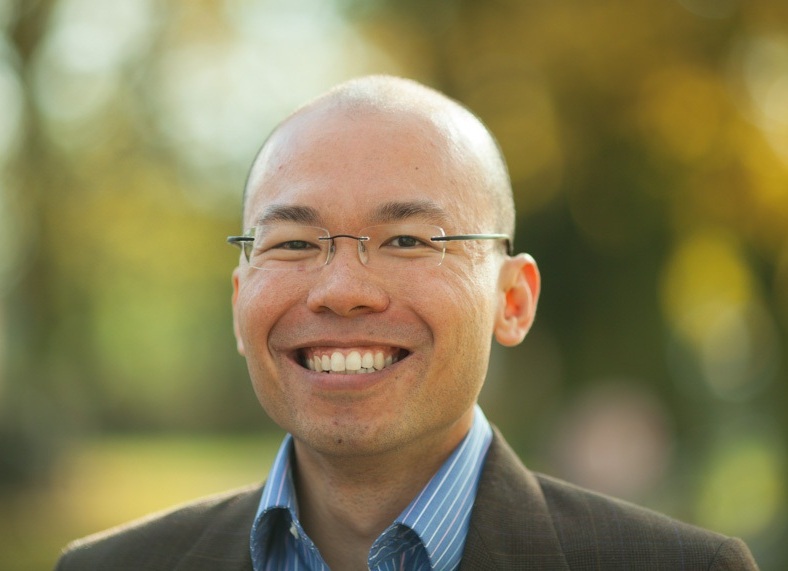
Jean Michel Montsion is an Associate Professor of Canadian Studies at Glendon College, York University, Canada, and the Associate Director of the York Centre for Asian Research (YCAR). His work is found at the intersections of ethnicity, mobility, and urbanity in cities such as Toronto and Vancouver, focusing the experiences of specific social groups linking Canada to Asia. He is currently leading a Canada-wide team looking into the racialization of Chinese, Indian and Korean international students in five Canadian universities. He has published in Asian Ethnicity, Environment and Planning D: Society and Space, Ethnic and Racial Studies, and Geoforum.


Chinese international student recruitment during the COVID-19 crisis: Education agents’ practices and reflections

Research Highlighted:

Report: Chinese international student recruitment during the COVID-19 crisis: education agents’ practices and reflections, 2020, University of Manchester.

The COVID-19 crisis has generated severe challenges for UK universities. One particular challenge is the impact the pandemic has had on the plans for incoming Chinese international students, who make up a significant proportion of UK universities’ annual tuition fee income (HESA, 2020). At present, there is an urgent need to understand the perspectives of current and prospective Chinese international students in regards to their studies in the UK. One method for gauging these perspectives is through the reflections of education agents. While there is no systematically compiled data about how many students in China use education agents, it is clear that the use of agents is widespread (Raimo, Humfrey and Huang, 2014). Moreover, Universities UK (2016) reports education agents have become the most important influence over Chinese students’ choice of postgraduate taught programmes in the UK. Therefore, understanding the practices of education agents during the COVID-19 crisis is essential to support international student recruitment from China for UK higher education institutions. 

In the immediate aftermath of COVID-19 between 1May and 15 May, we conducted the research with the aims to explore the reflections of education agents in China who have been working with applicants, offer holders and enrolled students for overseas programmes about the issues of studying abroad during the COVID-19 crisis. The research methods used included online interviews and open-ended questionnaires, which allowed us to evaluate the in-depth experiences of agents during this period. In doing so, the project illuminates the experiences of agents during this crisis and provide suggestions for UK higher education institutions to develop their plans for post-COVID teaching through the following research questions:

This research also contributes to UK higher education institutions’ further understanding of the role of education agents as well as future students’ needs and concerns during the COVID-19 crisis, thereby building an effective communication channel with students and making practical plans for adjustments.

Education agents are organizations and/or individuals who provide a range of services in exchange for a fee from their service users, which include overseas higher education institutions and/or students who will study or are studying abroad. There are wide variations in China regarding the types of education agencies, services provided by agents, and roles of education agents (See Section 2). The research outlined in this report focuses specifically on what Chinese applicants who use agents to apply for overseas programmes thought about studying abroad during the COVID-19 crisis. The research demonstrates the experiences of agents during this period and provides suggestions for UK higher education institutions to develop their plans for post-COVID teaching and student support. The findings are based on qualitative data collected from 19 agent consultants at 16 different agencies in China. Using a thematic analysis, five key themes were identified: 1) the groups of students who approached agents during COVID-19; 2) agents’ timelines during COVID-19; 3) Chinese applicants’ questions about the UK, 4) agents’ sources of information, and 5) prospective students’ plans. These are enumerated in Section 5.

During the COVID-19 crisis, education agents in China undertook a wide range of activities, including counselling, application preparation, and supporting students who had concerns about studying abroad. Their work focussed on encouraging offer holders to make informed decisions about studying in the UK and transmitting information about changing university policies and practices. Applicants and their parents expressed a range of significant concerns about studying in the UK to their education agents. The UK remains one of the most attractive destinations for Chinese applicants, and they are reluctant to change their decisions, but are anxious about a number of issues. The questions most frequently posed to education agents from Chinese applicants were related to: 1) English language tests, 2) pre-sessional language and academic skills preparation courses, 3) safety in the UK, 4) the format of delivery of courses for the upcoming academic year, 5) Tier 4 student visa applications and 6) tuition fees.

Confronted with a surge in the volume of inquiries, education agents relied on several key sources of information: channels of UK university representatives, their internal working groups, universities’ websites, and official accounts on social media platforms. These enquiries vary, according to which of three groups students belong to: 1) students who are studying in the UK; 2) students who apply for British postgraduate taught programmes commencing in September 2020; and 3) students who apply for the programmes in the spring term 2021. Normally, education agents go through a business cycle with new client consultations peaking in summer, and ongoing processing casework peaking towards the end of the year. However, the COVID-19 pandemic has significantly disrupted this. Education agents served as an intermediary between applicants and UK universities to answer students’ questions. Based on agents’ responses, Chinese student applicants carefully considered certain issues during the COVID-19 crisis, including their intention of studying in the UK, the new policies of UK universities, contacts between prospective students and UK universities as well as the potential of a largely online delivery of their courses.

In summary, based on information from education agents, this report identifies eight points to support developing UK universities’ plans for post-COVID19 teaching, student support and Chinese student recruitment (Section 6).

According to education agents in China, UK Universities are advised to:

  1. Improve communication with education agents and applicants about their subsequent plans.
  2. Update and release an explicit plan for the 2020-2021 academic year as soon as possible.
  3. Defer the opening date of programmes to ensure that international students will be able to take on-campus face-to-face courses in a safe and healthy environment.
  4. Consider offering flexible start options.
  5. Consider reducing tuition fees for courses delivered fully or partially online.
  6. Develop students’ overall experience in addition to learning provision.
  7. Enhance recruitment activities and build up connections with potential applicants in the longer term.
  8. Develop or strengthen connections with education agents in China.

Authors

Ying Yang is a PhD researcher at the Manchester Institute of Education. Her PhD research is looking at the role of education agents in the marketisation of British postgraduate taught programmes in China’s market. Ying also has professional experience working as an education agent and in higher education in China. She can be contacted via ying.yang-3@manchester.ac.uk and Twitter: @YingYan16771006.

Jenna Mittelmeier is Lecturer in International Education in the Manchester Institute of Education at The University of Manchester. Her area of research expertise focuses on international students’ transition experiences and broader aspects of internationalisation in higher education. Jenna has led and contributed to a range of research projects related to internationalisation, including funded projects from the Economic and Social Research Council (ESRC), UK Council for International Student Affairs (UKCISA), British Council, British Academy, Education Commission, and the Society for Research into Higher Education (SRHE). Her work was recently awarded the Paul Webley Award for Innovation in International Education from the UKCISA. In her teaching capacity, she coordinates research methods training for MA students and is the departmental coordinator for PhD researchers in Education. She can be contacted via jenna.mittelmeier@manchester.ac.uk and Twitter: @JLMittelmeier.

Miguel Antonio Lim is Lecturer in Education, Co-Research Coordinator, and Co-Convenor of the Higher Education Research network at the Manchester Institute of Education at the University of Manchester. His research interests include internationalisation of higher education, East Asian and transnational higher education, university rankings and performance metrics. Previously, he was EU-Marie Curie Fellow at Aarhus University, Denmark, and task force leader on migration and higher education at the EU-Marie Curie Alumni Association. He has worked and taught at Sciences Po-Paris, the London School of Economics (LSE), and University College London (UCL). From 2010-2012, he was the Executive Director of the Global Public Policy Network Secretariat. He can be contacted via miguelantonio.lim@manchester.ac.uk and Twitter: @miguel_a_lim.

Sylvie Lomer is Lecturer in Policy and Practice and founding co-convener of the Higher Education Research Network HERE@Manchester in the Institute for Education at the University of Manchester. An established researcher in international higher education studies, and critical higher education policy, her book is entitled Recruiting international students in higher education: Rationales and representations in British policy from Palgrave Macmillan. An HEA Fellow with 10 years of teaching experience with international students in UK higher education, she has published on national branding of UK higher education and policy analysis, and is currently researching pedagogies of internationalisation in higher education, and international postgraduate employability. Read internationalisationinhighereducation.wordpress.com. She can be contacted via ylvie.lomer@manchester.ac.uk and Twitter: @SE_Lomer.

Tackling rural-urban inequalities through educational mobilities: rural-origin Chinese academics from impoverished backgrounds navigating higher education

Research Highlighted:

Xu, C. L. (2020). Tackling rural-urban inequalities through educational mobilities: Rural-origin Chinese academics from impoverished backgrounds navigating higher education. Policy Reviews in Higher Education, 4(2), 179-202. doi:10.1080/23322969.2020.1783697

To watch a lecture given by Dr Xu to undergraduate students at Shantou University, China based on this paper, visit here.

ABSTRACT

Dr Cora Lingling Xu, Durham University, UK

Existing scholarship on marginalised academics is mostly western-based and concerned with inequalities caused by class, gender and/or racial and ethnic differences. This article adds to this literature by highlighting how inequalities caused by the urban-rural divide in China adversely impact on the academic trajectories of rural-origin academics from impoverished backgrounds. To mitigate such inequalities, the 26 interviewed academics drew on their academic capital to achieve institutional and geographic mobilities, both within and beyond China. Such educational mobilities further allowed these scholars to convert into and accumulate economic, social, cultural and symbolic capitals (after Bourdieu). Importantly, their rural-origins and disadvantaged positioning had cultivated in them a productive habitus that is characterised by hard work, perseverance and self-discipline. Such a habitus played a pivotal role in orchestrating their academic ascension and upward social mobility. However, despite these successes, this article also reveals these academics’ perennial financial struggles in lifting their rural-based families out of poverty, and the exclusive nature of educational mobilities, which are manifestations of systemic structural inequalities caused by urban-biased policies.

Background

Extant literature on marginalised or ‘non-traditional’ appointees in academia has been mostly western-based and is primarily understood through the lenses of class, gender, race/ethnicity. Such literature critiques the normalisation of the white male middle-class experiences and perspectives and the marginalisation of those represented by the working-class, the women and the racial and ethnic minorities in the West.

Little, however, is known about how marginalised groups in non-Western contexts struggle against inequalities. In this article, I evoke of the lived experiences of Chinese academics from rural and impoverished backgrounds as an attempt to redress this gap. This is against the background of trenchant rural-urban inequalities within China, as exacerbated by the country’s household registration system called Hukou. This unequal system orchestrates a set of policies that gives preferential treatments to urban populations in quality education, housing and health care, over their rural-origin counterparts. In the higher education sphere, rural-origin students are constantly found to be severely disadvantaged in access to elite higher education institutions (HEIs), due to unfair quota systems and a lack of requisite social, cultural and economic resources to navigate the university choice system. As a result, a disproportionate number of rural-origin students cluster in less-prestigious, second/third-tiered HEIs.

While there is an emerging body of literature that has examined the experiences of rural students who have made it to elite HEIs in China, there is almost no research that has paid attention to the majority of rural students who end up in non-elite institutions. Even less attention has been paid to those rural-origin individuals who have not only survived non-elite undergraduate education, but have gone on to pursue postgraduate studies and successfully become faculty members.

Indeed, rural-origin academics have been severely under-represented in China’s academia. Yan’s (2017) 2011 survey found that only 0.41 per cent of HE academic staff are from families with fathers working as farmers and in poultry cultivation industries. Given that most academics currently working in China were born between the 1960s and 1990s, a period during which China’s rural population accounted for over 70% of its entire population (The World Bank 2018), such an under-representation of academics from rural and impoverished backgrounds demands more explanation and research.

Research Question

In view of the above gaps in literature, I focus on the experiences of 26 rural-origin academics who not only finished their first degrees but excelled in postgraduate studies and managed to get permanent positions in academia. Over two-thirds of these participants entered non-elite Chinese HEIs for undergraduate studies. I will seek to address this research question: What are their academic experiences like as individuals from rural and impoverished backgrounds and what strategies have they used to tackle structural barriers in progressing their career?

Theoretical Framework

Theoretically, building on existing scholarship’s fruitful engagement with Bourdieusian notions of habitus and capital, this article employs habitus to depict how experiences of growing up in impoverished rural environments, which are ‘disfavoured locations’ in China (Liu 1997, 105), has inclined these rural-origin academics to dispositions of hard work, discipline, and perseverance, attributes that were essential to the success of their graduate studies and scholarly work. Such habitus was also characterised by an acute sense of understanding about the unequal and differentiated access to resources and sociocultural advantages across different locations and institutions of China. This had further motivated a strong desire and determination to get out and move up through scholarly ascensions.

As such, this article underlines how the rural-urban divide in China has pre-disposed a perpetually precarious economic position for these rural-origin academics, and how this had instilled in them a desperate desire to not only uplift themselves but also support their rural-based families out of poverty. Otherwise capital-deprived, these rural-origin scholars drew on their self-generated and accumulated academic capital, diligence and stoicism (habitus) to achieve institutional mobilities in tandem with geographic mobilities (including inter-city/provincial and cross-border mobilities). Such education mobilities further enabled them to acquire and convert economic, social, cultural and symbolic capital, which became pivotal in improving their positions in the academic labour market.

Policy implications

Drawing on the major findings of this study, I argue that there are three aspects of implications for policymakers in China. First, as institutional mobilities from undergraduate to postgraduate stages are critical for rural-origin students to achieve upward social mobility and reach academic ascensions, it is advisable for both national and local governments to allocate resources for better supporting rural-origin students’ applications for postgraduate degrees, especially to elite institutions. Such resources could take material forms, such as monetary support for exam preparation and attendance (e.g. joining oral exams and interviews); these resources could also manifest in inter-personal forms, including the setting up of a mentoring system in these students’ home and target HEIs – within this system, potential supervisors and current postgraduate students can provide academic guidance and support to help these rural-origin students navigate the pivotal step of getting accepted into higher-tired HEIs’ postgraduate programmes. Meanwhile, during postgraduate admission processes, elite HEIs could devise positive discrimination policies towards rural-origin students (especially those from lower-tiered undergraduate institutions) to increase their likelihood of accessing prestigious postgraduate programmes.

Secondly, considering the noted nepotist practices during academic hiring and these rural-origin scholars’ detestation of such practices both from the accounts of participants in this study and in the literature (Yan 2017), it might be worth considering the instituting of mechanisms against nepotism during such academic hiring processes. One way is to publicise clear recruitment criteria and establish an independent channel for complaints of and investigations into malpractices during academic hiring.

Thirdly, given that urban areas’ high property prices have placed an exponential economic burden on the shoulders of rural-origin scholars from impoverished backgrounds, it might be worthwhile for national and local governments, as well as HEIs, to provide means-tested staff housing to early-career rural-origin academics. Moreover, considering these rural-origin academics’ need to assist their largely rural-based families, zero-interest loans could be made available to help them deal with contingent economic demands.

These three suggestions are not meant to be exhaustive, but instead, intended as an indication of how more rural-friendly policies could be facilitated to ensure greater equity and social justice for rural-origin individuals from impoverished backgrounds. This can be relevant to non-Western contexts where rural-urban disparity looms large, such as countries in Africa and South America.

Author Bio

Dr Cora Lingling Xu (PhD, Cambridge, FHEA) is Assistant Professor at Durham University, UK. She is an editorial board member of British Journal of Sociology of Education, Cambridge Journal of Education and International Studies in Sociology of Education. In 2017, Cora founded the Network for Research into Chinese Education Mobilities. Cora has published in international peer-reviewed journals, including British Journal of Sociology of Education, The Sociological Review, International Studies in Sociology of Education, Review of Education, European Educational Research Journal and Journal of Current Chinese Affairs. Her research interests include Bourdieu’s theory of practice, sociology of time, rural-urban inequalities, ethnicity, education mobilities and inequalities and China studies. She can be reached at lingling.xu@durham.ac.uk, and via Twitter @CoraLinglingXu. Download her publications here.

How to Retain Global Talent? Economic and Social Integration of Chinese Students in Finland

Research Highlighted:

Li, H. (2020). How to Retain Global Talent? Economic and Social Integration of Chinese Students in Finland. Sustainability, 12, 1-19. doi:10.3390/su12104161

Dr Hanwei Li, University of Manchester

Global talent is the key resource for today’s knowledge-based society and sustainable economic development, and an increasing number of countries are aiming to not only train but also to retain international students as a potential supply of highly skilled labor in innovative fields. This article explores ways to retain international students as global talent through an empirical study on mainland Chinese students’ integration into Finland as an example. Based on data obtained through semi-structured interviews with 30 Chinese students, this research identified a number of individual and societal factors that contribute to their difficulties with economic and social integration.

This research identified three implications for students and other stakeholders: First, is it better for students to invest time and effort in acquiring skills highly valued in the labor market or in learning the local language? There seems to be no definite answer to this question, since the labor market demand is contextual and varies from one field to another. However, the interviews in this research suggest that, as highly skilled migrants, the students’ job-related skills may be their most important asset with which to compete in the local job market.

However, having local language skills besides their mother tongue and being fluent in English will undoubtedly be an advantage in their job seeking processes.

Second, while the students encountered numerous challenges during their integration processes, the current study suggests that the students may need to be more proactive and innovative in their economic integration strategies. This finding is consonant with the research by Cai (2014), which suggests that Chinese students can adopt an entrepreneurial job-seeking approach, that a job-seeker make proposals to potential employers by identifying their needs and utilizing their own special skills and talents to create a position for themselves. Besides possessing the hard skills, the students’ soft skills, such as being confident, honest, and cooperative team players, can also play an important role in enhancing their economic integration.

Third, given the various societal barriers faced by Chinese students during their integration, should HEIs and local employers become more multi-cultural to accommodate and retain the global talent? As the present study suggests, integration should be a bi-directional process entailing migrant and host societies’ mutual adaptation, both as individuals and as groups. The present findings suggest that Chinese students still face a certain degree of exclusion, not only from potential academic opportunities in the host HEIs, but also from the labor market and society more generally. As Finnish society is becoming increasingly aware of the importance of training and retaining international students as global talent, it can be argued that demanding that only the newcomers ‘integrate’ is not enough. The host environment (nation-states and organizations) also need to be more open and multiculturally oriented to enhance these highly skilled individuals’ capacities to integrate and innovate. By creating an institutional or societal environment that is open to hiring and promoting people from diverse ethnic and cultural backgrounds to work together, global talent (such as the Chinese students) will be encouraged to utilize their transnational capital and innovative capacity to make a greater contribution.

The findings of this study also suggest that Chinese students’ economic and social integration are mutually supportive. Those Chinese students willing to reach out from their comfort zone to meet more local people and obtain more professional opportunities may also have better chances of finding job opportunities in the host society after graduation. It is also clear that those students with work experience in the local society also have opportunities to expand their social networks with the host natives. Overall, international students’ economic and social integration is not only a crucial step in their entry into the local society, but also an attractive opportunity for hosting organizations and employers to build multicultural environments that can potentially enhance their productivity and build future sustainable development.

Author Biography:

Hanwei Li is a research associate at the Manchester China Institute, University of Manchester. She holds a Ph.D. in Education from Tampere University, Finland and a Ph.D. in Sociology from Bielefeld University, Germany. She was a Marie Curie doctoral researcher working on a European Commission funded project – Transnational Migration, Citizenship and the Circulation of Rights and Responsibilities (TRANSMIC). Her research interests include: Asia-Europe student mobility, academic integration, socio-cultural integration, internationalization of higher education transnationalism, investment migration and citizenship.

“I think it would be easier for Chinese ethnic minorities to find themselves as a minority if they go abroad”: Chinese Minzu individuals’ identity and the study abroad experience

Research Highlighted

Sude, Yuan, M., Chen, N., & Dervin, F. (2020). “I think it would be easier for Chinese ethnic minorities to find themselves as a minority if they go abroad”: Chinese Minzu individuals’ identity and the study abroad experience. International Journal of Educational Research, 102. doi: https://doi.org/10.1016/j.ijer.2020.101584

This paper is the result of cooperation between scholars from Europe and Mainland China who specialize in intercultural and minority (Minzu) education and who wish to contribute to research on the Chinese international student beyond the usual monolithic mass of undifferentiated individuals. Through our discussions of research on the Chinese international student, we discovered that one particular aspect had been entirely ignored: Mainland China’s Minzu groups (often referred to as ‘ethnic minorities’ in English), which represent around 120 million individuals. These ‘ethnic minorities’ speak at least 130 different languages. In none of the studies on Chinese international students abroad that we consulted did the authors concentrate on the Minzu identity of the students and on the potential influence it might have on the topic they were researching. The Chinese international student always appears to be an undifferentiated monolith, although his/her ethnicity might go beyond the majority Han; he/she might have a first language other than Putonghua (Chinese Mandarin); he/she might have a specific religion/worldview. In this paper we use the case of students and former students from Minzu University of China (MUC) in Beijing. This interdisciplinary university is designated for Chinese Minzus and has students from all the 56 official Minzus of China. Like all universities around the world, MUC sends students abroad every year for exchange. To our knowledge, no previous study has been published on the international mobility of these students. Since MUC is a hyper-diverse university, representing a China microcosm, where students from all parts of China live and study together, we are interested in the way MUC students reflect on identity and interculturality issues after their stays abroad.

Our paper thus calls for taking into account students’ many and varied Chinese ethnic identities in the description of the study abroad experience. Based on interviews with 13 members of different ethnic minorities from Minzu University of China, who spent time abroad as part of their studies, we analyse the way they express and construct different aspects of their identity while reminiscing about their time abroad. The study is based on a poststructuralist approach to identity and interculturality abroad. A form of dialogical discourse analysis is used to examine the respondents’ identity.

What our study shows is that the phenomena related to identity as reported by the participants are not as straightforward as one could imagine. Different Minzus can have different experiences of self and other in another country, depending on the country itself, their relation to it, the languages they can speak (mother tongues other than Putonghua included). Our study confirms that encounters, confrontations with and differentiations from the people the students met abroad make them realize, negate but also reinforce certain aspects of their identity as ‘special’ Chinese. While for some students, study abroad comforted and reinforced this identity, for others it left them indifferent or it allowed them to reinforce their Chinese identity.

The importance of our study lays in the fact that we show that the figure of ‘the Chinese international student’ is a figure that needs to be questioned and revised. It is important for both Chinese and Western scholars to diversify their take on this figure and to take into account the internal diversity of the Chinese Nation in their analyses. We thus suggest that the following aspects become part of bread and butter of research on the Chinese international student in order to make research on study abroad fairer and less generalizing, beyond methodological nationalism:

– Ethnicity

– Identification with Han-ness

– Language

– Experience within China (mobility)

– Religion/worldview.

Although our study has focused mostly on aspects of culture, ethnicity and race, it was clear in some of the excerpts that other facets of identity such as gender, religion and social class also have an influence on identity construction in relation to study abroad. This aspect needs to be explored further in a future study. These could help individualise analyses of study abroad experiences and to broaden analytical frameworks. Work on diversity from the Chinese context is a good example that can be used as an inspiration to examine people from other contexts (‘The American student’, the ‘European student’, etc.). It is only through diversification and fine-grained analyses of the experiences of educational movers that educators, researchers and decision-makers alike could make the study abroad experience more fruitful in terms of interculturality and identity construction.

The authors have also published the followings (which work as companions to this article):

Sude, Yuan, M. & F. Dervin (2020). An Introduction to Ethnic Minority Education in China: Policies and Practices. London: Springer.

Yuan, M., Sude, Wang, T., Zhang, W., Chen, N., Simpson, A. & F. Dervin (2020). Chinese Minzu education in higher education: An inspiration for ‘Western’ diversity education?, British Journal of Educational Studies, DOI: 10.1080/00071005.2020.1712323

Image

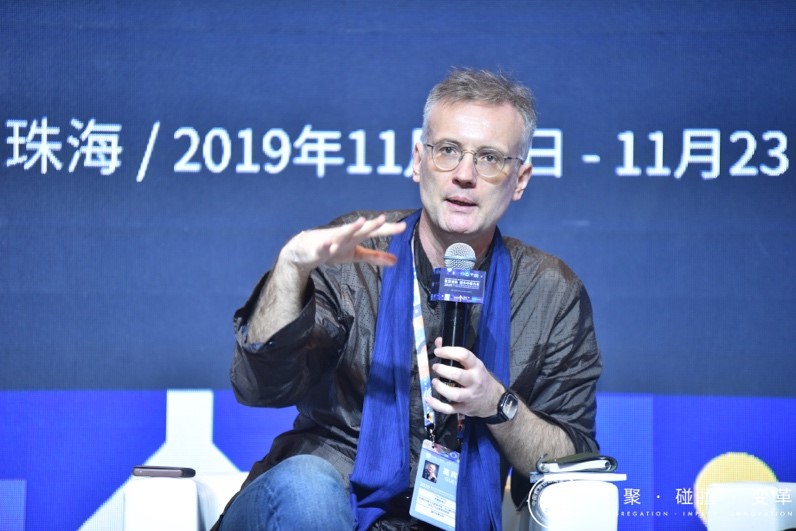
Fred Dervin is Professor of Multicultural Education at the University of Helsinki (Finland) and hold honorary and visiting positions around the world. Prof. Dervin specializes in intercultural education, the sociology of multiculturalism and student and academic mobility. Dervin is one of the most influential scholars and critical voices on intercultural communication education in Europe. More information: https://orcid.org/0000-0001-9371-2717

Image

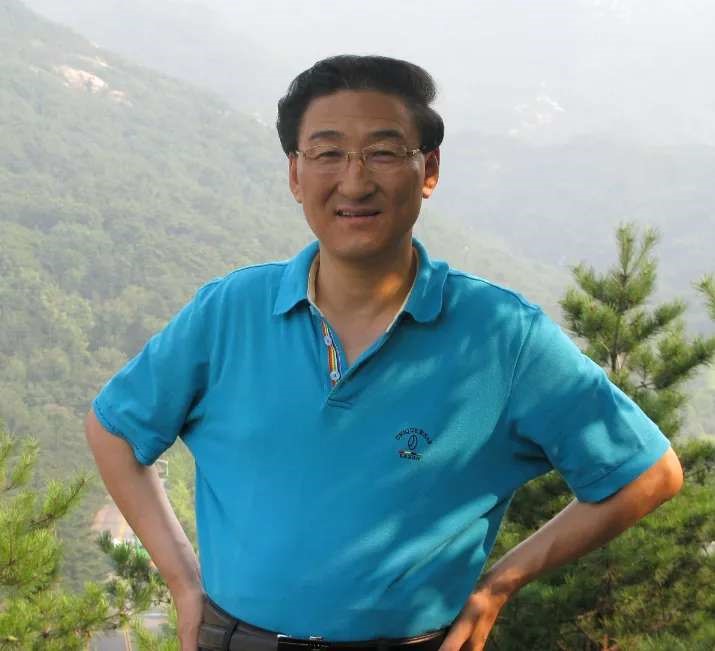
Sude is a Professor at the School of Education, Minzu University of China. He is one of the most influential scholars in the field of Minzu education.

Image

Mei Yuan is an Associate Professor at the School of Education, Minzu University of China. She specializes in Minzu and intercultural education.

Image

Ning Chen is a Lecturer at Tianjin Academy of Fine Arts (China) and a visiting scholar at the University of Helsinki (Finland). His research interests include Minzu education and well-being in higher education. More information: https://orcid.org/0000-0001-6958-2182