Concerted Cultivation from Afar:  Wealthy Chinese Families and Their Children at Swiss International Boarding Schools 

Research Highlighted:
Fei, M. (2024). Concerted cultivation from afar: Wealthy Chinese families and their children at Swiss international boarding schools. Swiss Journal of Sociology, 50(2), 193–208. https://doi.org/10.26034/cm.sjs.2024.6036 

This study examines a rarely explored education and parenting practice among a hard-to-reach population from China––namely, the early study abroad of Chinese children at Swiss international boarding schools (SIBSs) and the “concerted cultivation from afar” practiced by their affluent families. Existing literature primarily focuses on the parenting practices of the middle and working class, often defining class in broad strokes (Sherman, 2017). Additionally, study abroad literature in the case of China typically characterizes it as a middle-class phenomenon, collapsing more economically privileged families into the “middle” category (e.g., Zhou et al., 2019; Wang, 2020). The study expands the scope of existing research on both studying abroad and parenting by highlighting the practices of a highly privileged population. 

Theoretical Framework 

The study adopts Ma and Wright’s (2021) “outsourced concerted cultivation” as its guiding theoretical framework, a new framework built upon Lareau’s (2003) original discussions on concerted cultivation within the context of Chinese parents sending their children abroad for education. While Ma and Wright (2021) focus on how “new rich” Chinese families outsource concerted cultivation to international high schools and educational consultants in China, this study discusses how affluent Chinese families do so with SIBSs while still practicing concerted cultivation from afar. 

Methods 

Seven participants who 1) self-identified as Chinese and 2) had children who were studying or had studied at SIBSs within the past five years were recruited in my social network and through snowballing. While I did not specify any gender preference when recruiting participants, all participants happened to be mothers. I identified the participants as “wealthy” as they could fund their children’s SIBS tuition without financial aid from the schools, which cost from around 70,000 CHF to 150,000 CHF per year. Semi-structured interviews in Mandarin Chinese conducted mostly online in late 2021 due to the COVID-19 pandemic were the primary data collection method. They lasted between 40 and 166 minutes, with a median of 63 minutes.  

At the time of the study, all participants lived in top-tier Chinese cities except for one, who had accompanied her child to Switzerland for one and a half years. Five participants had two children; two had one child. Only one participant sent both her children to SIBSs. The age at which the children started school at a SIBS ranged from 7–15, and they had spent 1.5–5 years at SIBSs at the time of the study. 

Findings 

I identified two main themes from the interviews, which answer the question of how wealthy Chinese families cultivate their children through schooling at SIBSs. The participants were confident that their children would inherit their social class advantages and continue their lifestyles. Therefore, while they valued their children’s education, they did not demonstrate class anxiety and disagreed with the competitive parenting practices that are prevalent among the middle class in China. Their decision to send their children to SIBSs demonstrated what Irwin and Elley (2011) call concerted cultivation in the present, placing value on diverse cultural pursuits and socio-emotional development at school. 

At the same time, participants in this study strived to make up for a lack of direct parental support entailed by the ESA practice. At the very beginning of their children’s ESA journey, they made on-site visits with their children to make informed school choices. After their children enrolled at a SIBS, they traveled to Switzerland frequently, closely monitored their children’s well-being, kept regular contact with the school, and intervened in institutional settings when necessary. Therefore, while it seemed like the participants had outsourced concerted cultivation (Ma & Wright, 2021) to the SIBSs, they still practiced it from afar, made possible by their economic resources, time, and cultural dispositions in some cases. 

Implications 

This study has the following implications. First, it adds to the literature on parenting practices of the wealthy, an area to which existing research pays little attention. Relatedly, the study confirms the finding of Irwin and Elley (2011) and Maxwell and Aggleton (2013) that class anxiety is not necessarily the main drive for concerted cultivation. Additionally, the study foregrounds economic resources in the practice of concerted cultivation, as suggested by Ma and Wright (2021). It also highlights the importance of cultural knowledge, which enabled the participants to be more engaged in their children’s schooling than the parents in Ma and Wright (2021). 

Note: This article is part of the Swiss Journal of Sociology’s special issue titled “Switzerland as a Site of Capital Accumulation: The Case of International Education,” edited by Lillie and Delval (2024). This issue explores how and why foreign families and individuals, as well as local institutions, capitalize on the Swiss private schools’ market. Click here to read more. 

References 

Irwin, S., & Elley, S. (2011). Concerted cultivation? Parenting values, education and class diversity. Sociology, 45(3), 480–495. https://doi.org/10.1177/0038038511399618  

Lareau, A. (2003). Unequal childhoods: Class, race, and family life. University of California Press. 

Lillie, K., & Delval, A. S. (2024). Switzerland as a site of capital accumulation: The case of international education. Swiss Journal of Sociology, 50(2), 127–142. https://doi.org/10.26034/cm.sjs.2024.6033 

Ma, Y., & Wright, E. (2021). Outsourced concerted cultivation: International schooling and educational consulting in China. International Studies in Sociology of Education, 32(3), 799–821. https://doi.org/10.1080/09620214.2021.1878565  

Maxwell, C., & Aggleton, P. (2013). Becoming accomplished: Concerted cultivation among privately educated young women. Pedagogy, Culture & Society, 21(1), 75–93. https://doi.org/10.1080/14681366.2013.764032  

Sherman, R. (2017). Conflicted cultivation: Parenting, privilege, and moral worth in wealthy New York families. American Journal of Cultural Sociology, 5(1), 1–33. https://doi.org/10.1057/s41290-016-0011-3 

Wang, X. (2020). Capital, habitus, and education in contemporary China: Understanding motivations of middle-class families in pursuing studying abroad in the United States. Educational Philosophy and Theory, 52(12), 1314–1328. https://doi.org/10.1080/00131857.2020.1767074 

Zhou, X., Li, J., & Jordan, L. P. (2019). Parental intent for children to study abroad: The role of educational aspiration and children’s characteristics. Cambridge Journal of Education, 49(6), 789–807. https://doi.org/10.1080/0305764X.2019.1590526 

Author bio

Mianmian Fei is a Ph.D. Candidate in Higher Education and Student Affairs at The Ohio State University’s College of Education and Human Ecology in the United States and a Research Associate at the QualLab qualitative research center. Before her Ph.D. studies, she earned a Master’s in Anthropology and Sociology as a Hans Wilsdorf Scholar at the Geneva Graduate Institute in Switzerland and worked for the Science Consulate of Switzerland in Shanghai and the UNESCO International Bureau of Education. Her research interests include international and comparative higher education, qualitative methodology, and the sociological aspects of education. Email: fei.132@buckeyemail.osu.edu

Managing Editor: Xin Fan

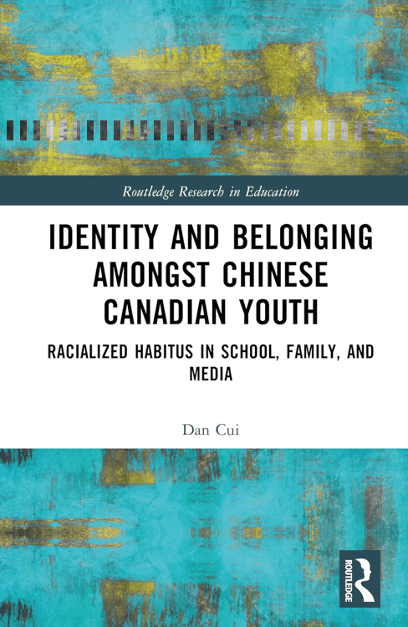
Identity and Belonging among Chinese Canadian Youth 

Research Highlighted:


Cui, D. (2024) Identity and belonging among Chinese Canadian youth: Racialized habitus in school, family and media. Routledge. DOI: 10.4324/9781003054023

Introduction:

This book examines how Chinese immigrant youth navigates their identities as racialized minorities within school, family, and through their interactions with Canadian mainstream media. Drawing on rich interview data, the author unveils how contemporary forms of racism, multiculturalism, immigration, and transnationalism shape the identity construction and sense of belonging among second-generation Chinese immigrant youth in Canada. This book offers a systematic analysis of how these youth and young adults negotiate their lived experiences and perceptions of race, ethnicity and class.

By uniquely extending Bourdieu’s concept of habitus to race and ethnicity, the author traces the impact of racism and “model minority” discourses not only to their systemic and institutional roots but also to their internalization in individual thoughts, behaviors, and identities.

This book will appeal to academics and researchers examining racial inequality and Asian diasporas in Western societies, as well as those seeking new insights into contemporary schooling, media studies, and immigrant family dynamics, with a focus on multicultural education, the sociology of education, and critical theories of race and ethnicity.

Author bio

Dan Cui, Brock University

Dan Cui is an Associate Professor in the Department of Child and Youth Studies at Brock University, Canada. Her research interests include sociology of education, immigration, integration and transnationalism, international and comparative education, social justice and equity studies, Chinese/Asian diasporas, and qualitative research methods. She previously held a SSHRC Postdoctoral Fellowship at the University of California Berkeley. Her work has been widely published across disciplines, appearing in the British Journal of Sociology of Education, Journal of International Migration and Integration, Journal of Youth Studies, and etc.

Managing Editor: Tong Meng

International Education in Transition: Perceptions of Expatriate Leadership at a Chinese School Delivering an Australian Curriculum

Cutri, J., Bunnell, T., & Poole, A. (2024). International education in transition: perceptions of expatriate leadership at a Chinese school delivering an Australian curriculumCompare: A Journal of Comparative and International Education, 1-18.

In recent years, private ‘non-traditional’ English-medium international schooling has grown significantly, particularly in mainland China, which has housed the most international schools since 2019. Most international schools (52%) offer a UK-based curriculum, driven by demand from a ‘new rich’ entrepreneurial class seeking ‘flexible citizenship’ and ‘positional advantages’ in the global higher education and labour market (Young, 2018; Ma & Wright, 2023; Wright, 2024). This shift marks a transition from a Western-led, values-inspired dimension focused on global peace to a globalist approach characterised by international standards and imagined futures in the Global West (Cambridge & Thompson, 2004). However, the dynamics between expatriate and host country cultures within this evolving landscape remain unexplored (Gibson & Bailey, 2023). ISC Research recently highlighted that a third of all international schools are bilingual, offering an English-speaking curriculum alongside a host nation-based curriculum.

In China, the rapid emergence of bilingual international schools catering to local students has led to 32% offering British-based Advanced Level, 15% American-oriented Advanced Placement, and 27% the IB Diploma Programme (Probert, 2022). These schools, constituting 66% of all international schools in China, provide an alternative pathway to international education for local students without overseas passports, though parental motivations remain underexplored (Keeling, 2019; Wright et al., 2022; Wu & Koh, 2023). Unofficially termed ‘Chinese Internationalised Schools’ (CIS), these institutions are reshaping the international school sector in China through local processes (Wu & Koh, 2022).

Set within this context, this article focuses on a Chinese senior school offering an Australian-accredited curriculum, the Victoria Certificate of Education (VCE), to Chinese children, offering a direct pathway to Australian universities. Interviews with the expatriate Australian leadership team based in China demonstrate how a pragmatic model has emerged that offers an alternative, high-quality, branded pathway for Chinese children to enter Higher Education beyond China (mainly in Australia) yet is delivered within the cultural/social/political boundaries that the Chinese state will accept. The arrangement is strictly overseen and regulated and open to sudden, unanticipated changes. We speculate that this might be a model that other nation-states might follow as more local parents/children buy into private ‘non-traditional’ international schooling. Furthermore, the expatriate leadership are crucial in managing and expanding the VCE program in China, ensuring that it aligns with Australian educational standards and Chinese cultural expectations. Our paper extends this metaphor through the example of the VCE program, accredited by the Victorian Curriculum Assessment Authority and delivered in Chinese schools under the supervision of Australian partner schools.

The VCE-in-China program, overseen by Chinese and Australian leadership, allows Chinese students to complete an Australian curriculum and enter foreign universities. This initiative represents China importing international education rather than exporting a foreign model. The Australian school facilitates the operation of its curriculum within a Chinese setting, adhering to Chinese regulations and cultural norms. This model, not widely discussed in international education scholarship, exemplifies ‘Sinicisation’—aligning foreign education with Chinese socialist market models to support economic development (Wang, 2015). The power of the Chinese state in providing alternative pathways for local students is evident, with new regulations introduced in 2021 further shaping this landscape (Wu & Koh, 2023).   

The study delves into the perceptions of expatriate leadership at the Sino-Australian Academy (SAA), a Chinese school delivering the Victorian Certificate of Education (VCE) curriculum. This initiative is set against the backdrop of China’s post-2001 market reforms and the increasing internationalisation of education. The expatriate leadership team faced significant challenges reconciling their leadership norms with the realities of the Chinese educational context. The VCE brand, associated with a prestigious Australian private school, highly appeals to Chinese parents, offering a pathway to higher education in Australia and beyond. This appeal aligns with the trend of non-traditional international schools providing perceived distinction and positional advantage.

The study revealed five major themes: Chinese educational culture, bilateral educational partnership, agency and identity, transnational aspirations, and Australian academic adjustments. This reflexive and interpretative process aimed to preserve participants’ voices and faithfully represent their stories. The study highlights the complexities of leadership dynamics in Sino-foreign educational ventures, emphasising the importance of cultural sensitivity, effective branding, and regulatory compliance.

The research highlights the complexities of operating within the Chinese regulatory framework, emphasising the need for cultural sensitivity. Expatriate leaders must balance upholding educational standards with adhering to local regulations under the oversight of the Chinese Executive Principal (CEP), who ensures compliance with national sovereignty and cultural values. This study is significant in international education as it reveals the unique challenges expatriate leaders face and their influence on students’ educational experiences in a cross-cultural context. It contributes to understanding leadership in international schools, particularly in non-Western settings, and offers insights into the evolution of international education in a globalised world.

The findings suggest that the pragmatic model of international education provides a reliable pathway for Chinese students to access higher education abroad while retaining their national identity.  The study provides valuable insights into the leadership dynamics, regulatory challenges, and cultural adaptations of delivering an Australian curriculum in a Chinese school, emphasising the importance of a localised approach to international education. It highlights the need for a nuanced understanding of how Western educational systems operate in non-Western settings. Hence, the research challenges Western-centric notions, advocating for models that respect international aspirations and local cultural norms and calls for further investigation into the long-term outcomes and adaptability of such educational models in China. This model represents a shift in international education, advocating for models that respect international aspirations and local cultural norms.

References

Cambridge, J., & J. Thompson. (2004). “Internationalism and Globalization as Contexts for International Education.” Compare: A Journal of Comparative and International Education 34 (2): 161–175.

Gibson, M. T., & L. Bailey. (2023). “Constructing International Schools as Postcolonial Sites.” Globalisation, Societies & Education 21 (3): 405–416. https://doi.org/10.1080/14767724.2022. 2045909. 

Liu, S. (2018). “Neoliberal Global Assemblages: The Emergence of ‘Public’ International High-School Curriculum Programs in China.” Curriculum Inquiry 48 (2): 203–219. https://doi.org/10. 1080/03626784.2018.1435977217.

Ma, Y., & E. Wright. (2023). “Expanding Flexible Citizenship: Chinese International School Students and Global Mobilities for Higher Education.” Social Transformations in Chinese Societies 19 (2): 101–114. https://doi.org/10.1108/STICS-05-2022-0010 .

Keeling, A. (2019). “Education in China – A Growing Market.” International Teacher Magazine, April.

Probert, S. (2022). “China: The Under-Researched Nexus of Activity.” Journal of Research in International Education 21 (3): 228–241. https://doi.org/10.1177/14752409221140627 .

Tan, C. (2019). “Neoliberalism as Exception: The New High-Quality School Project in Shanghai.” Discourse: Studies in the Cultural Politics of Education 40 (4): 443–457. https://doi.org/10.1080/ 01596306.2017.1349736 .

Wright, E. (2024). “The Proliferation of International Schools: Implications for Educational Stratification.” Compare A Journal of Comparative and International Education 1–20. https:// doi.org/10.1080/03057925.2024.2322647 .

Wright, E., Y. Ma, & E. Auld. (2022). “Experiments in Being Global: The Cosmopolitan Nationalism of International Schooling in China.” Globalisation, Societies & Education 20 (2): 236–249. https://doi.org/10.1080/14767724.2021.1882293 .

Wang, N. (2015). “Globalisation as Glocalisation in China: A New Perspective.” Third World Quarterly 36 (11): 2059–2071. https://doi.org/10.1080/01436597.2015.1068113 .

Wu, W., and A. Koh. 2022. “Being ‘International’ Differently: A Comparative Study of Transnational Approaches to International Schooling in China.” Educational Review 74 (1): 57–75. https://doi.org/10.1080/00131911.2021.1887819 .

Wu, W., and A. Koh. 2023. “Reigning in the International: How State and Society Localised International Schooling in China.” British Journal of Educational Studies 71 (2): 149–168. https://doi.org/10.1080/00071005.2022.2048630 .

Young, N. A. (2018). “Departing from the Beaten Path: International Schools in China as a Response to Discrimination and Academic Failure in the Chinese Educational System.” Comparative Education 54 (2): 159–180. https://doi.org/10.1080/03050068.2017.1360566 .

Authors’ Bio 

Jennifer Cutri, Swinburne University of Technology, Australia

Jennifer Cutri is a lecturer and researcher at Swinburne University of Technology’s Department of Education. She is the course director for the Bachelor of Education Early Childhood Teaching and Bachelor of Education Studies. Inspired by her international teaching experience in Hong Kong, her doctoral research focused on the Chinese educational context. Jennifer’s current research explores the impact of digital technology in early childhood education and international student mobility within the Asia-Pacific region.

Tristan Bunnell, University of Bath, United Kingdom

Tristan Bunnell is a Senior Lecturer in International Education at the University of Bath. Prior to 2014, he had taught International Baccalaureate Diploma Programme economics for 25 years, including ten years at Copenhagen International School. His current research interests concern trends and developments in English-medium international schooling, particularly the growth and significance of ‘non-traditional’ models involving the exportation of British private school brands into China.

Adam Poole, The Education University of Hong Kong, Hong Kong

Adam is an Assistant Professor in the Department of Education Policy and Leadership, Education University of Hong Kong. His research interests include the internationalisation of private secondary education, professional development for English teachers, and education policy.

Managing Editor: Tong Meng

The influence of the Chinese hukou system in motivating and shaping the geography of Chinese international student mobility

Research Highlighted: 

Kang, E. (2024). The influence of the Chinese hukou system in motivating and shaping the geography of Chinese international student mobility. Population, Space and Place30(1), e2734. https://doi-org.ezphost.dur.ac.uk/10.1002/psp.2734

International student mobility (ISM) refers to the processes of movement of ‘internationally mobile students’, defined as people who leave their country of citizenship primarily for education (UNESCO Institute for Statistics, 2014). Scholars have found that institutional barriers significantly influence the ISM process (Lomer, 2018; Lulle & Buzinska, 2017). However, this understanding usually refers to international migration. There is little knowledge about how institutional barriers to internal migration affect ISM. To fill the important gap, this paper relates to the data from 50 semistructured interviews with returning master’s graduates in Shanghai to examine the effect of the Chinese hukou system on different stages of ISM experience, including pre-departure, upon and after return, among Chinese international students. Specifically, this paper asks whether the hukou restriction of internal migration may motivate some students to study abroad. If so, how does the hukou system affect the ISM experience of middle-class Chinese international students? The main contribution of this paper is the revealing of the thus far underacknowledged relationship between ISM and domestic institutional barriers to mobility. 

The Chinese hukou system is an appropriate starting point for exploring how domestic institutional barriers affects ISM. This is partially because China is one of the largest ISM-sending countries in the world (Wen & Hu, 2019).These students came from different regions of China, but upon their return were concentrated in several developed coastal cities, such as Shanghai and Guangzhou (Chinese Service Center for Scholarly Exchange CSCSE, 2018). In other words, returnees were often internal migrants within China. Additionally, the hukou system is an important social institution to control internal migration in China. The hukou system is a household registration system in China that classifies the population according to two frameworks: hukou type (agricultural or nonagricultural) and place of registration (local or nonlocal) (Song, 2014). The hukou system significantly influence on internal migration in the country (Qian et al., 2020; Song, 2014). On the one hand because individuals’ citizenship rights are connected with their hukou registered regions (Song, 2014). It is difficult for internal migrants to access diverse welfare benefits without local hukou status in their destinations (Chan & Buckingham, 2008; Song, 2014; Zhou & Cheung, 2017; Zhou & Hui, 2022). On the other hand, changes in hukou status are highly regulated and are difficult for individuals to achieve (Qian & Qian, 2017; Zhou & Hui, 2022).  In recent years, hukou reforms have allowed returning international students to access hukou status in developed cities (Brooks & Waters, 2021; Zhai, 2020). These reforms provided enhanced potential opportunities for middle-class students in economically peripheral regions to access hukou status in core cities via ISM. The mechanism of this process is the focus of this paper. 

Based on an analysis of interviews with 50 returning students, this analysis generated three main findings that address important current limitations in understanding the effects of institutional barriers on ISM. First, overcoming restrictions from the hukou system motivates many Chinese students to study abroad. Young people hope to migrate from other parts of China to developed Chinese cities because of the regional inequalities that have occurred in Chinese urbanisation in recent decades (Zhai & Moskal, 2022). Students who belong to the ‘middle-category migration’ participate in ISM to achieve future internal migration. Second, the data demonstrate that students emphasise being away for a short study time, with some choosing specific destinations that are closer to China, lowering the emotional and monetary costs of ISM. This finding indicates that hukou can impact the geographies of ISM destinations because students belonging to the ‘middle category’ of migration could access hukou status by paying less to study internationally in specific destinations. Finally, this paper found that distinctive requirements for accessing hukou status in different areas affect returnees’ decisions regarding internal migration after returning. These findings have two major implications on ISM studies. 

First, this paper highlighted the effect of institutional barriers on the geography of ISM, which shapes the geographies of both ISM destinations and return destinations. Previous studies have focused on institutional barriers in ISM-receiving countries (Tuxen & Robertson, 2019). Only in recent years have some scholars identified the hukou system as an institutional barrier that influences ISM (Brooks & Waters, 2021; Zhai, 2020). However, this is the first study to explicitly demonstrate how the hukou system affects the ISM process. Second, this paper found that the hukou system helps scholars better understand the ISM experience of students from a ‘middle-category migration’ background. International students are usually regarded as a privileged group within ISM research. Students’ diversity in terms of socioeconomic and sociopolitical backgrounds is usually disregarded (Lipura & Collins, 2020). The hukou system provides a tool to distinguish ‘middle-category migration’ international students from the commonly held viewpoint that ISM involves students of a particularly elite class.  

Reference: 

Brooks, R., & Waters, J. (2021). International students and alternative visions of diaspora. British Journal of Educational Studies, 69(5), 557-577. 

Chinese Service Center for Scholarly Exchange (CSCSE) (2018). Zhongguo Liuxue Huiguo Jiuye Lanpishu (Blue Book of China’s returned employment) 2018. Beijing: Zhongguo Yanshi Chubanshe (China Yanshi Press). 

Chan, K. W., & Buckingham, W. (2008). Is China abolishing the hukou system?. The China Quarterly, 195, 582-606. 

Lomer, S. (2018). UK policy discourses and international student mobility: The deterrence and subjectification of international students. Globalisation, Societies and Education, 16(3), 308-324. 

Lipura, S. J., & Collins, F. L. (2020). Towards an integrative understanding of contemporary educational mobilities: A critical agenda for international student mobilities research. Globalisation, Societies and Education, 18(3), 343-359. 

Lulle, A., & Buzinska, L. (2017). Between a ‘student abroad’and ‘being from Latvia’: Inequalities of access, prestige, and foreign-earned cultural capital. Journal of Ethnic and Migration Studies, 43(8), 1362-1378. 

Qian, Z., Cheng, Y., & Qian, Y. (2020). Hukou, marriage, and access to wealth in Shanghai. Journal of Ethnic and Migration Studies, 46(18), 3920-3936. 

Qian, Y., & Qian, Z. (2017). Assortative mating by education and hukou in Shanghai. Chinese Sociological Review, 49(3), 239-262. 

Song, Y. (2014). What should economists know about the current Chinese hukou system?. China Economic Review, 29, 200-212. 

Tuxen, N., & Robertson, S. (2019). Brokering international education and (re) producing class in Mumbai. International Migration, 57(3), 280-294. 

UNESCO. (2014). Higher Education in Asia: Expanding Out, Expanding Up – The Rise of Graduate Education and University Research. Available at: http://uis.unesco.org/sites/default/files/documents/higher-education-in-asia-expanding-out-expanding-up-2014-en.pdf 

Wen, W., & Hu, D. (2019). The emergence of a regional education hub: Rationales of international students’ choice of China as the study destination. Journal of Studies in International Education, 23(3), 303-325. 

Zhou, J., & Hui, E. C. M. (2022). The hukou system and selective internal migration in China. Papers in Regional Science, 101(2), 461-482. 

Zhou, S., & Cheung, M. (2017). Hukou system effects on migrant children’s education in China: Learning from past disparities. International social work, 60(6), 1327-1342. 

Zhai, K. (2020). Social mobility and international graduates in China (Doctoral dissertation, University of Glasgow). 

Zhai, K., & Moskal, M. (2022). The Impact of Place of Origin on International and Domestic Graduates’ Mobility in China. International Migration Review, 56(1), 123-154. 

Authors’ Bio 

Erli is a PhD candidate in Human Geography at the University of St Andrews. Before moving to the UK, he worked as a researcher at Fudan University in China. Erli’s research has been funded by the University of St Andrews, the Government of Shanghai and the Ministry of Education, China. Erli’s research interests include international/internal migration, international higher education and social inequality. He has presented his studies at the 12th International Conference on Population Geographies and the RGS-IBG Annual International Conference and published part of his studies in Population, Space and Place.

Managing Editor: Xin Fan

Understanding Chinese Female Students’ Education Mobility in the West: An Interview with Fran Martin by Lin Song

Research Highlighted:

Martin, F. and Song, L. (2023). Understanding gendered transnational education mobility: Interview with Fran Martin. Communication and the Public 8(4), 257-265.

Despite the growing number of Chinese international students in the West, their lived experiences are often subsumed within grander, and often biased, narratives that treat them as homogeneous neoliberal, political, pedagogical, and racialized subjects (Xu, 2022). Based on Fran Martin’s recent book Dreams of Flight: The Lives of Chinese Women Students in the West (Duke University Press 2022), Fran Martin and Lin Song discuss in this interview how to account for Chinese female students’ experiences through ethnographic research. We start with questions of theory and methodology – more specifically, how the theoretical lens of affect and gender could inform our understanding of transnational education mobility, before discussing some of the key challenges Chinese female students face as they move across physical and cultural borders.

The book is based on a longitudinal ethnographic study that lasted over several years. This method allowed Martin to explore the wide variety of Chinese female students’ experiences in Australia. Although Chinese female students are often portrayed as an undifferentiated mass, they are in fact very different in terms of their family backgrounds, academic aspirations, political orientations, and understandings of gender and feminism.

One key aim of the book is to explore how education mobility feels (Martin, 2022, p. 29). But the book itself does not focus on theoretical discussions of affect. Rather, it uses various narrative and visual tools, such as research participants’ drawing of a map of Melbourne, to convey the participants’ subjective and embodied experiences. Martin explains that it is a conscious choice for the book to move away from dense and abstract discussions of affect, and into slightly less academic writing styles, to let highly affective ethnographic details speak for themselves. Therefore, the book includes stories from the field, screenshots of social media posts, and other pictorial elements. Martin calls these affect methods, which enable us to think about practices of affect in everyday life.

From the very beginning of the project, gender has been conceived as a central optic. Gender is often overlooked in studies of education mobility. But there are several reasons why the gender perspective should feature more centrally. First, in term of figures, Chinese women are more likely to study abroad. This is the same across other Asian countries such as South Korea and Japan, and warrants scholarly attention. Second, gender is also pivotal to how people negotiate their subjectivities through transnational mobility. Young middle-class urban Chinese women often attempt to break out of a certain gendered life script by pursuing education abroad. They are trying to become a self-making subject by negotiating with the neo-traditionalist ideology in China, which encourages women to get married, have children, and focus on the family. In this sense, higher education mobility is always already gendered.

As they become mobile subjects, these Chinese female students face several key challenges, since mobility is always shadowed by immobilization of various kinds along various vectors. Firstly, in Melbourne, Chinese international students are corralled into specific types of residence in the city, and as a result, excluded from local place-based social networks and certain employment opportunities that rely on local social capital. They are shut out in multiple ways while they are in Australia. Secondly, in terms of a macro picture of life trajectories, some of these women could become immobilized again upon returning to China, as class differentials cut across their opportunities for mobility after graduation. For instance, one of the participants from a not-so-wealthy family had to come back to strong family and patriarchal control when returning to China, and required against her will to work in her hometown – a small town – rather than a big city. But overall, studying abroad has been a transformative and culturally inspiring experience for these young women. Even though problems of neoliberalization are evident in Australian universities, neoliberal logics of being self-propelling and self-making market subjects could offer effective resources for negotiation as this generation of Chinese young women are confronted by state-guided gender re-traditionalization.

As the global higher education market recovers from the pandemic, Chinese international students in Australia may still be severely impacted by macro-scale geopolitical tensions, which could lead to micro-scale experiences of xenophobia, anti-Chinese racism, and social exclusion. While the future remains uncertain, we definitely need more sensitivity to the fact that Chinese students are not necessarily highly politicized. They are ordinary students, and we should get to know each other when we have the opportunity.

References:

Martin F. (2020). Chinese international students’ wellbeing in Australia: The road to recovery. The University of Melbourne. http://hdl.handle.net/11343/240399.

Martin F. (2022). Dreams of flight: The lives of Chinese Women students in the West. Duke University Press.

Xu C. L. (2022). Portraying the ‘Chinese international students’: A review of English-language and Chinese-language literature on Chinese international students (2015–2020). Asia Pacific Education Review, 23(1), 151–167. https://doi.org/10.1007/s12564-021-09731-8.

Bios

Fran Martin is professor of cultural studies at the University of Melbourne. Her research focusses on Asia-related cultural studies and sexuality and gender studies in the context of globalization. She recently completed a major research project exploring the subjective experiences of young women from China studying in Australia, whose findings were published in 2022 in Dreams of Flight: The Lives of Chinese Women Students in the West (Duke U.P.).

Lin Song is an assistant professor in communication at Jinan University, Guangzhou, China. He holds a PhD in gender studies from The Chinese University of Hong Kong. He is the author of Queering Chinese Kinship: Queer Public Culture in Globalizing China (Hong Kong UP, 2021). He researches on digital culture and cultural governance in China, particularly in relation to gender, sexuality, and nationalism.

Managing Editor: Tong Meng