Academics’ View on Chinese Students’ Academic Transition into Undergraduate Studies in Britain

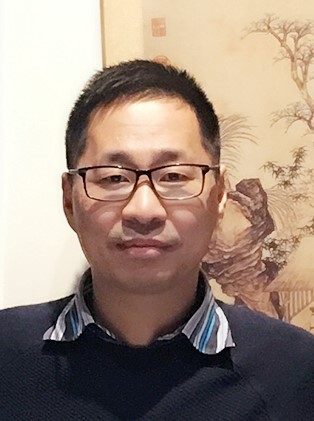
Dr Dongsheng Xu, Beijing Sport University, China

Xu D., Roddy E. (2019) ‘We All Need Cultural Awareness and Cultural Affinity’: The Academics’ View on Chinese Students’ Academic Transition into Undergraduate Studies in Britain. In: Carter J., Rosen C. (Eds) Transnational Higher Education in Computing Courses. Springer. Cham.  https://doi.org/10.1007/978-3-030-28251-6_7

Despite the growing trend in more Chinese students coming to the UK for studies, they still face considerable problems and difficulties in adapting to their academic studies within a different learning environment, due to the cultural and pedagogical differences they may confront. From the academics’ perspectives, this research explores the issues that impact the academic transition of Chinese students taking undergraduate studies in Britain, in order to improve the teaching and learning practice within British Higher Education. It provides a practical framework that incorporates the influential factors and practical suggestions around the Chinese students’ academic transition in relation to the cultural and pedagogical differences. It is contended that the cultural awareness should be initiated and the cultural affinity should be nurtured among the Chinese students, academic staff, and university management authorities, to improve the teaching and learning experience within the British Higher Education context. After all, every university wants each of its students to succeed and maximise the value of their experiences within university campus.

Author Bio

Dr. Dongsheng Xu is a lecturer in Hainan International College, Beijing Sport University, China. He received his PhD in business and management from the University of Salford, UK in 2020. Before that, He was a business development practitioner in Sino-British higher education sector for more than 10 years as the chief representative for a British university in China. His research interests include transnational education management, intercultural studies and acculturation, management communication, business technical innovation and risk management, etc. He can be contacted via d.xu1@edu.salford.ac.uk

The Children of China’s Great Migration

Rachel Murphy (2020) The Children of China’s Great Migration. Cambridge: Cambridge University Press.

Listen to a podcast and watch a video where Rachel speaks about this book.

The Children of China’s Great Migration addresses the phenomenon of children in rural China being separated from their parents because of labour migration. In the 2010s the number of rural Chinese children with at least one parent who had migrated without them exceeded 61 million, equivalent to the population of Great Britain. Nearly half these children had two migrant parents, while the proportions with a migrant father and a migrant mother were approximately one third and 17 per cent respectively. Although the separation of rural families because of labour migration is portrayed in China’s public official and media discourse as a side-effect of development and urbanization, such family separation is integral to rather than incidental to its national strategy of rapid capital accumulation: urban employers and municipal governments fail to pay migrants a family wage or to provide them and their families with access to public services. Instead, most migrants’ children are fed, housed, educated and cared for in the countryside, which depresses employers’ and municipalities’ costs in competitive globalising markets. This book documents how successive generations of individuals with rural origins become trapped in a daily struggle for survival and unreachable dreams, obscuring the inequalities that compel them to ceaseless toil and sacrifice. It especially reveals that children bear the emotional toll.

Drawing on my interviews with 109 children (with a median age of 12 years) from rural schools in two of China’s eastern interior provinces and matching interviews with their caregivers, the book brings children’s voices into the conversation about national strategies for capital accumulation. It focuses on the children’s experiences of the daily routines of care in their families and their daily routines in and around schools when their parents have migrated without them, these being the routines through which family and national strategies for capital accumulation cohere. Through these routines, children are subjected to their families’ and schools’ efforts to inculcate in them a sense of an intergenerational debt that they need to repay through diligence in study and good behaviour. The book chronicles different children’s experiences of these efforts by their age (primary school age or teenage years), gender, academic performance, and place of residence, by their families’ socio-economic circumstances and by who in their family has migrated – both parents, only the father, or only the mother. It also offers a longitudinal perspective on a subset of these children’s experiences, following twenty-five of them and their families over five years (2010-2015), revealing the strains of both parent-child separation and study pressures on the evolution of parent-child relationships and the children’s sentiments and aspirations. 

The stories of these children and their families show how in the early to mid-2010s, imperatives to work, sacrifice, and take responsibility for one’s own success or failure in life were harnessed and animated by and though multi-scalar social, economic and political processes. Specifically, economic production regimes and families’ social reproduction arrangements blended imperceptibly with individuals’ understandings of cherished values around family, gender, motherhood, fatherhood, filial piety, and morality. Pathways to recognition for individuals both within and beyond their families melded such that failure at school, in the labour market or in the marriage market was not just a personal failure but failure as a child, parent or spouse. An emphasis on children’s voices and experiences contributes to a wider social scientific enterprise of rendering visible the mundane material and social practices and power relations through which people order their lives. It reveals the institutionalised inequalities that compel people of all ages to relentless toil and sacrifice, while imperilling children’s access to the material and affective security so essential for their flourishing.

The book invokes a conceptual framework of ‘multi-local family striving teams’, which combines and extends theoretical insights derived from global literatures on (1) co-resident families’ positioning of children as ‘sites of capital accumulation’ and concomitant efforts to invest in their education; (2) the gendered and intergenerational reconfigurations of families through their migration strategies; and (3) the problematization of children’s agency including its relational and contradictory dimensions. The children learned through the aspirations, discipline, permissions, affection and reproach of adults that other people’s happiness depended on their actions, giving substance to their agency.  Simultaneously gendered and intergenerational norms affected the children’s expectations of and relationships with their mothers, fathers and grandparents. For instance, even as a parent-child work-study bargain gave primary school children a way to deal with the daily pain of missing their parents, if their grades had fallen by the time they reached the junior high stage of their education, their resentment against their migrant parents could be intense.  Meanwhile, resentment against migrant mothers could be the most pronounced because mothers were culturally expected to co-reside with their children.

The book additionally examines left behind children’s experiences of cities, showing that boundaries between ‘left behind children’ and ‘migrant children’ are often blurred. Many rural children who visited their migrant parents in the cities during the two-month summer holidays found themselves locked in a small room for hours at a time with a television and homework while their parents worked. The children seldom saw much of the cities. The implications of migrant parents’ deprived circumstances for their children’s summer visits can be extrapolated from findings in Western countries, namely, that school holidays exacerbate class-based educational inequalities because children whose parents have few resources miss out on the enrichment activities and interactions that middle-class children enjoy. The experiences of the children of migrants in China highlight a need for: dedicated holiday activities, greater flexibility in migrants’ employment conditions such that parents can spend time with their children, and approaches to development that enable families to meet their children’s needs for both the material and affective dimensions of care that are so essential for human flourishing.

The research findings draw attention to a need to incorporate children’s voices into policymaking both in China and globally. Children’s voices highlight the harms of processes that separate social reproduction from production and underpin widening socio-economic inequalities. Their voices also illuminate the failings of an education system that is instrumentally oriented towards equipping children to demonstrate their worth in competition rather than nurturing their potential and love of learning. Indeed, the education system – with its lack of plural viable routes for learning – is such that millions of rural children become alienated, written off and destroyed. These voices of children, with their intuitive emphasis on play, human interdependency and affection, if heard, could offer inspiration for alternative values on which to order society.

Listen to a podcast and watch a video where Rachel speaks about this book.

Author Bio:

Rachel Murphy is Professor of Chinese Development and Society at the University of Oxford. She obtained her PhD in Sociology from the University of Cambridge in 1999. The book project reported here was supported by a British Academy Mid-Career Award. Rachel’s recent publications appear in China Quarterly, Population Space and Place, Development and Change, and Population and Development Review and an article on education and repertoires of care in migrant families in rural China is forthcoming in Comparative Education Review. She is President of the British Association for Chinese Studies.

Wasted talents? China’s higher education reforms experienced through its visiting scholars abroad

Research Highlighted:

McKeown, J. S. (2021). Wasted talents? China’s higher education reforms experienced through its visiting scholars abroad. Journal of Contemporary China. https://doi.org/10.1080/10670564.2021.1884961

Abstract

China’s post-1978 modernization plans include an internationally competitive higher education system. Central to this effort are researchers and professors capable of advancing China’s technological capabilities and educating its ambitious, globally-minded youth. National funding for scholars going abroad was designed to infuse the nation with sophisticated knowledge and to improve university quality. Research on 131 Chinese scholars who spent significant time abroad, mostly in the United States, shows little evidence that these funded experiences abroad were used deliberately to improve Chinese universities. Results show that policies supporting scholarly exchange have not produced successful internationalization efforts on Chinese campuses. Scholars in STEM fields and those receiving national funding indicated significantly higher research focus and productivity, however did not indicate putting it to use at their home institutions.

Report

For years, visiting scholars from China to the US and other western countries were typically considered academic research partners collaborating on mutually beneficial international exchange. However, Chinese visiting scholars have recently come under intense scrutiny, particularly in STEM (science, technology, engineering, and math). Hopes of a benign economic win-win scenario between China and more advanced economic powers (particularly with the United States) now seem outdated and naïve. Despite this new attention, little is known or been researched about who these individuals are, now numbering over 45,000 annually in the United States alone, and what experiences they have had. This article seeks to fill the gap in knowledge and contribute to a more complete understanding of what is a complex and enduring relationship between Chinese and other academic communities abroad.

China’s professors, like its students, are highly mobile. It is in this aspect of Chinese university development that this article is situated. The author surveyed 131 recent Chinese visiting scholars, defined as someone on a non-immigrant visa engaged in academic activities and not enrolled as a student. These visiting scholars had spent significant time abroad at foreign institutions, mostly in the United States and other English-speaking countries. Their motivations, funding sources, goals, and experiences abroad, as well as their careers after returning to China, were examined within the context of the growth and competitive aspirations of China’s university sector, within its economic and strategic aspirations overall, in the 21st century. Their anonymous responses reflect a nuanced understanding of their roles in the bigger picture of international academic research cooperation; however, they also reflect an under-utilization of their experiences and skills once back in China. Mostly they show appreciation for the personal and professional benefits resulting from their lengthy experiences overseas, not strategic ones of vital importance to the nation overall or its growing university sector.

Results from this study show comparatively little evidence that visiting scholars play an important role in the internationalization process of their home institutions after returning to China. Lack of formal avenues to put into practice new-found international experience, such as leading new projects or committees, job promotions, or contributing to their home universities’ administrative structures, were typically reported.

In addition, important and statistically significant differences were observed based on the source of funding for the experience and the scholar’s academic discipline that may contribute to understanding the growing scrutiny of, and at times suspicion towards, Chinese scholars abroad. Heightened tensions, changes in academic visa policies, and calls to restrict what had previously been a welcoming and open international academic exchange between China and the West have occurred recently. Specifically, the findings show that those scholars receiving Chinese national government funding (MOE) and those in the STEM fields reported significantly greater focus on their research agendas, less cultural interaction while abroad, and more joint research outcomes with international collaborators. While some of these findings might be expected, they have not been documented and analyzed sufficiently. Furthermore, the findings can, when taken in context of the overall study, help explain potential sources of misunderstanding and suspicion that threaten this important international academic collaboration.

The main reasons Chinese scholars cited for going abroad suggest that they do not see themselves as part of a top-down strategic project of high national priority in which they must participate. Nor do they indicate that they were mentored to see themselves as such. Rather, the findings show that personal motivations reflecting real career interests and desire for language and cultural gain were strongest. Therefore, the broad and long-standing ambitions of the Chinese state to advance its technological and economic power may be understood as matters of articulated national policy and official rhetoric, however the execution of specific policies and implementation at the local and institutional level seem quite different. While the state may articulate its priorities of making Chinese universities more world-class and improving faculty teaching quality, such national goals were not cited as relatively important reasons for having this experience for these visiting scholars, making the purpose of the funding questionable and adding to the evidence that national policy and local / institutional execution in China are not aligned.

These results suggest overall that both the pre-departure motivations and the post-experience expectations on visiting scholars by their institutions or the state were minimal. Far from expecting clear and prioritized objectives related to helping their institutions modernize and internationalize, or to improve teaching performance or grow a research network abroad, these Chinese scholars seemed primarily motivated to advance their own research agendas for their own professional and individual reasons. Rather than being rewarded with job promotions or cash awards upon return, instead these scholars seemed to derive a sense of reward from the intrinsic value of the time abroad, to gain new knowledge and perspectives, and to develop new interests and skills. These are noteworthy and altogether expected outcomes of scholarly engagement abroad, and in all respects embody the spirit of international educational exchange. Yet, that these experiences are occurring within high-level Chinese national policy priority and under increasingly suspicious host country scrutiny makes the lack of strategic fulfillment particularly important to observe. It seems reasonable to conclude that there may be considerable misunderstanding of these scholars’ actions, misalignment with the Chinese policies that brought them abroad, and a misguided suspicion placed on them by some host country authorities.

Taken as a whole, the Chinese visiting scholars’ motivations for undertaking their extended time abroad, and their activities during it, were very much the same as those of all scholars and researchers who go abroad: individual research agendas, professional development, and personal benefit within the constructs of international exchange. Combined with the scant evidence of long-term impact these scholars had after returning to China, despite generous national investment in their development, this article suggests that CCP policy to fund and use these experiences to improve Chinese universities is not being effectively implemented. The study also suggests that concern about these scholars’ true purposes for being abroad, expressed by some host governments, are not being fairly or consistently made. Therefore, the scholars’ own independently made, individually motivated, professionally important, and personally beneficial experiences suggest that neither sending nor receiving country understands fully the normality of this international academic experience, and that it is much more meaningful for the individual visiting scholar’s career, personal and professional development, and life goals beyond any real or implied national objectives. This article seeks to fill in important gaps in our knowledge.

Author Bio

Joshua S. McKeown, Ph.D. is Associate Provost for International Education at SUNY Oswego and International Education Leadership Fellow at the University at Albany (SUNY). He led SUNY Oswego to awards from the Institute of International Education (IIE) and the Chinese Service Center for Scholarly Exchange (CSCSE) among others. McKeown authored The First Time Effect: The Impact of Study Abroad on College Student Intellectual Development (SUNY Press 2009) and numerous book chapters and articles including in the Journal of Contemporary China (2021). He did his Fulbright in India and was a mentor with IIE’s Connecting with the World Myanmar program.

Transnational education, rising nationalism, racialization and spaces of exclusion: Chinese overseas students from Shenzhen to Lakeside, USA

Shanshan Jiang, University of Wisconsin-Madison

Watch a lecture video on these two articles

Research Highlighted

Jiang, S. (2020). Diversity without integration? Racialization and Spaces of Exclusion in International Higher Education. British Journal of Sociology of Education, 1-16. https://doi.org/10.1080/01425692.2020.1847635

Jiang, S. (2021). The Call of the Homeland: Transnational Education and the Rising Nationalism among Chinese Overseas Students. Comparative Education Review65(1). https://www.journals.uchicago.edu/doi/abs/10.1086/712053

These two research articles were developed from a larger transnational study on higher education mobility and the co-constitutiveness of class, race, and urban space. I started this project three years ago, hoping to capture a unique moment of transnational education mobility between China and the US. At that time, President Xi Jinping just abolished his term limit, China’s Belt and Road Initiative is expanding overseas, the US-China trade war escalated under Trump administration, and in the US, federal and state funding for public universities in the US were severely cut. I have intended to examine, how, through educational mobility, the economic, educational, and housing transformations of one city in China influence the uneven class and racial relations of another in the US. To do this, I employed a transnational ethnography to follow Chinese students as they migrate between their hometown Shenzhen and the host city that I called Lakeside. These two sites are uniquely situated within the global student migration, racial relations, and urban transformations. In the late 1970s, China’s Special Economic Zone (SEZ) policy made Shenzhen one of the first cities in the nation to experiment with the market economy. As a result, an emerging urban elite class has benefited significantly from this, to use Aiwha Ong’s language, “exception to socialism”. Lakeside, a medium-sized city in the US Midwest, has a different trajectory to globalization. In the recent decade, constant budget cuts in public education pushed Lakeside University to seek additional revenues outside the state and federal government, and consequently, international student recruitment has become an important source of the new revenue. I conducted participant observation at multiple spaces in both cities, including academic (classrooms, libraries, study rooms), residential (apartments, dorms), and social (tea shops, shopping malls, restaurants, lounges, and others). I also observed weekly meetings at Chinese student organizations, where Shenzhen participants and other Chinese students built close social networks.

In Jiang (2020), the article reveals the persistence of the ideology of whiteness and culture-based exclusion, which not only racialize foreign students of color, but also engage with this student population to perpetuate white supremacy. Chinese students were oftentimes objectified as economic capital and diversity signifier. They were frequently excluded in academic, social, and residential spaces. However, participants in this study interpreted their isolated college experiences as a natural result of living in a white university town, the mentality of which reflects the perpetuation of the whiteness ideology as well as China’s state ideology of racial and ethnic unity. Both whiteness ideology and China’s state discourse on unity aim to consolidate differences to elevate the interests of the dominant groups.

While marginalized, Chinese students also voluntarily isolated themselves from local Black and Asian American communities in the university town. When these students did mingle with Black communities, such as during hip-hop events, their artistic preference of Black cultures does not necessarily translate into the appreciation of Blackness. Rather, it echoes colorblindness in new ways that separate Black characteristics in the cultural form from their roots in the lives of Black communities. To these Chinese students, Americanness is also defined by the lack of Asianness, which echoes the troubling history of the racialization of Asians as the perpetual foreigners in the US.  As a result, these Chinese students are simultaneously validating a global racial hierarchy. Through individual experiences of students, the article calls out the systemic racism in higher education institutions as well as the role of nation-states (such as students’ homelands) in forming international students’ racial understanding in the host society.  

In Jiang (2021), the article investigates how the desire for Western credentials and transnational mobility reconcile with strong nationalist sentiments among Chinese students. I argue that transnational education has become a crucial part of China’s nation-building in the era of intensified globalization. Before studying abroad, these Chinese students were raised in a family culture immersed in patriotic discourses that attribute their family’s wealth to China’s opening-up policies and centralized governance. While living overseas, these students heavily rely on PRC state-affiliated organizations and China-based media to navigate academic and social contexts in a foreign land. Organizations such as Chinese Students and Scholars Association (associated with Chinese Consulates) are important actors in immersing Chinese students with patriotic values. In the US Midwest alone, Chinese consuls are sent to over 100 universities to meet with new Chinese students. For students in Lakeside, the first lecture from these organizations teaches them that America is far from the paradise described by the “American Dream”, an image that these students may have held onto when they decided to study abroad.

In addition to the influence of PRC-affiliated student organizations, Chinese young adults in this study were immersed in pro-PRC ideologies promoted by China-based media when living overseas. The rise of nationalism in the United States since the election of Trump has also been utilized by Chinese media to foster a strong national identity among overseas Chinese. These students have read numerous articles on the “inadequacy of Western democracy” from Chinese media. They have become convinced that while the US is struggling with internal polarization, China seems to be advancing at an accelerated pace. For Shenzhen students, while transnational education is an individual pursuit, the experience of transnational education is structured by Chinese consulates, student organizations and China-based media. The seemingly contradictory existence of the transnational desire for Western education and rising nationalist sentiments work jointly in the neoliberal market economy to build entrepreneurial yet patriotic individuals. This article reveals that the movement, mobility, and fluidity endowed by transnationalism could potentially enhance the migrants’ national identity and political intolerance.

Watch a lecture video on these two articles by Shanshan Jiang

Author Bio

Shanshan Jiang is a PhD candidate in the Department of Educational Policy Studies at University of Wisconsin-Madison (expected graduation May 2021). Her research focuses on the political economy of educational migration, and the transnational construction of class and racial relations through higher education globalization. Shanshan Jiang is also a lecturer in the Department of Educational Policy Studies, teaching both domestic and global education courses, such as School and Society and Globalization and Education. Shanshan graduated from University of International Relations with a B.A. in English Language and Literature and has a M.A degree in Social Sciences and Comparative Education from University of California, Los Angeles. Prior to graduate school, Shanshan worked as a project manager in an educational investment company, and as an English teacher in China. She can be contacted via email: sjiang33@wisc.edu and Twitter @sjiang33.

‘Back to China’: what are barriers to enduring ‘green’ behaviour change among Chinese students returning home from the UK?

Research Highlighted:

Tyers, R. (2020). Barriers to enduring pro-environmental behaviour change among Chinese students returning home from the UK: a social practice perspective. Environmental Sociology, 1-12. doi:10.1080/23251042.2020.1855885

Dr Roger Tyers, University of Nottingham, UK

In 2015, colleagues and I carried out primary focus group research, and found that a period of study in the UK can positively influence the pro-environmental (‘green’) behaviours of Chinese students. Our participants said that while living in the UK they recycled more, reduced littering, and used less domestic energy. This was not because these Chinese students suddenly became heavily engaged with green norms in the UK, but mainly due to a simple but powerful desire to ‘fit in’ with peers and staff in their new ‘communities of practice’: on-campus, in halls, and homestays. Our findings were published in Sociological Research Online (Tyers et al, 2018) and summarised in a separate NRCEM summary here.

Those findings implied follow-up research: if students changed some green behaviours during their stay in the UK, what happened after they returned home? So, in 2019, funded by an ESRC post-doctoral fellowship, I carried out fieldwork in China – using focus groups with Chinese people who had previously studied in the UK – to find out.*

My forty-two participants were located in the cities of Beijing, Shanghai, Hangzhou and Ningbo, and recruited through alumni societies and my own networks. Most now had white-collar jobs in sectors like Finance, IT, Education or Administration.

When asked if their green behaviours and attitudes changed during their time in the UK, participants echoed our previous findings. They said that expectations around energy usage or waste were much stronger in their UK communities in the UK than in those in China, and this influenced them to change too.

“I had a close friend called Nicky; a student from the Czech Republic. I remember she was carrying an empty plastic bottle; she kept it for the whole day because she wanted to put it in the recycle bin. So, I was like, “Why are you still holding this big bottle? Just throw it away in the bin”. She said, “I want to put it in the recycle bin”. So, she kept it for the whole day; you can’t imagine a Chinese person doing that. I do better sorting now because I try to make sure this recycled stuff will be in better use in the future.”

(Female, Hangzhou)

When participants were asked if greener behaviours had endured after they returned to China, responses were far more mixed. While a few participants said they continued to recycle, or to re-use plastic shopping bags after coming home, most said that any green behaviours adopted in the UK were soon lost. The green peer pressure that participants experienced in the UK was suddenly absent in China, where being green often seemed pointless when faced with ‘free-riders’ who didn’t seem to care or understand about, say, sorting their domestic waste correctly.

Perhaps most interesting were the wider barriers to green behaviour in Chinese society which emerged. These, despite my small, unrepresentative sample, might be generalisable beyond these ex-students. Such barriers include the power of ‘mianzi’ and ‘guanxi’, media and government discourses, and an absence of ‘post-materialist’ values.

Mianzi may be translated as ‘face’ – a  desire to maintain favourable self-esteem and project an image of wealth and prestige (Sun et al, 2014). Many participants reported that they and their peers are likely to spend money on luxurious items such as high-performance cars, and noted that the norms around these purchases were quite different in the UK.

 ‘People choose smaller cars in the UK. Here people prefer larger cars . . . I was very surprised in a good way that people, even though they are getting good pay, still go for smaller cars, I think it’s very environmentally friendly. That’s a very good thing for me . . . In China, if you are having more money definitely you’ll get a much bigger car. Sometimes you don’t even need that much size.’

(Female, Shanghai)

Many said that a huge problem in China is one of waste, seen as a consequence of ‘guanxi’. Guanxi literally means ‘interpersonal connections’. Maintaining connections often requires sharing food or giving gifts (Sun et al, 2014). Many participants admitted that such activities are often unnecessarily ostentatious and wasteful but are vital to maintaining friendship bonds or growing professional networks.

‘In China we really have a big get-together, lunch together or dinner, it’s quite lenient that if you can’t finish your food, you can take the leftovers. It’s a shame but people don’t really do it, it means “I’m poor, so give me some food” ’

(Female, Shanghai)

At a broader level, others noted that civil society conditions differed greatly between the UK and China. Two participants, working for a Chinese environmental NGO, observed that NGOs must be cautious about public-facing campaigns, especially since the introduction of a restrictive Foreign NGO Law in 2017 (Standaert, 2017). Instead, many NGOs prefer quiet engagement with government and businesses. This was a topical theme. Just before data collection, the student-led ‘Fridays for the Future’ campaign was active in many western countries, and in Asian cities such as Seoul, Tokyo and Hong Kong. But in mainland China this campaign was practically non-existent.

‘You know the students are doing protesting things, that would never happen in China, like they come out of school and they make a poster and here the parents would never allow this.’

(Female, Ningbo)

In terms of media and government discourses, participants said that the Chinese government is increasingly talking about environmental protection. Several quoted President Xi’s mantra that ‘Green Hills and Clear Waters are Gold & Silver Mountains’. But this discourse is usually about explaining or justifying state policies, rather than emphasising citizens’ individual responsibility – a theme more prevalent in liberal western democracies (Chen and Lees, 2018).

Finally, many participants said that because of the primacy of economic (‘materialist’) concerns, China is not yet ready for rapid moves towards sustainability (a ‘post-materialist’ concern). Individually, many said they were preoccupied with job insecurity or the costs of raising a family, while seeing the government’s main role as raising living standards, not environmental protection. That said, the increasing visibility of problems like air pollution might be changing this, as one participant eloquently discussed:

“Sixty years [ago] we were farmers, so we’ve had a lot of development in the past forty years. Now we’re at a stage where we care more about how much we can spend, not about other things . . . it’s like in the UK in the Industrial Revolution. You guys didn’t care about the environment too . . . But everything takes time, you have to get hurt to change. You have to see the ugliness, the dirty things, to make yourself change.”

(male, Shanghai)

To conclude, this study firstly hints at the power of social norms for quickly changing (green) behaviour in a new country. However, norms can disappear just as quickly as they appear, as seems to have been the case with this group of Chinese graduates following their UK studies.

Secondly, and despite its limited scope, this study suggests some specifically Chinese socio-cultural barriers to greener consumption behaviour: ‘mianzi’ and ‘guanxi’, media and government discourses, and a lack of post-materialist values. Arguably, the responsibility of individuals (and not, say, fossil fuel companies and government infrastructure) towards sustainability has been overstated in western liberal discourses. But it remains the case that changes to individual consumption behaviour – the ways we travel, eat, warm our homes, buy and dispose of products – are vital. It is possible that China may pursue an ‘eco-authoritarian’ approach to this problem, using sanctions and laws rather than ‘soft’ approaches seen so far in liberal democracies. In any case, if and how a country of China’s size and influence fosters more sustainable modes of consumption will be of critical importance in global efforts at decarbonisation and sustainability.

*To reduce the carbon footprint of this fieldwork, I opted to take the train to China, rather than fly. You can read about that decision and its consequences here.

Author Bio

Dr Roger Tyers is a Teaching Associate in Sociology and Social Policy at the University of Nottingham, and a Visiting Fellow at the University of Southampton. His research interests are on behaviour change and public policy, especially regarding sustainability, transport and energy. He can be contacted via R.Tyers@soton.ac.uk or on Twitter @RogerTyersUK

References

Chen, G. C. and Lees, C. (2018) ‘The New, Green, Urbanization in China: Between Authoritarian Environmentalism and Decentralization’, Chinese Political Science Review. Springer Singapore, 3(2), pp. 212–231. doi: 10.1007/s41111-018-0095-1.

Standaert, M. (2017) As It Looks to Go Green, China Keeps a Tight Lid on Dissent, Yale Environment 360. Available at: https://e360.yale.edu/features/as-it-looks-to-go-green-china-keeps-a-tight-lid-on-dissent  (Accessed: 20 August 2019).

Sun, G., D’Alessandro, S. and Johnson, L. (2014) ‘Traditional culture, political ideologies, materialism and luxury consumption in China’, International Journal of Consumer Studies, 38(6), pp. 578–585. doi: 10.1111/ijcs.12117.

Tyers, R. et al. (2018) ‘China-to-UK Student Migration and Pro-environmental Behaviour Change: A Social Practice Perspective’, Sociological Research Online, 42(4), pp. 1–23. doi: 10.1177/1360780418794194.