Navigating transnational mobility: A phenomenological cultural analysis of Chinese students’ journey from Sino-Australian international schooling to Australian higher education

Research highlight:
Cutri, J. (2025). Navigating transnational mobility: A phenomenological cultural analysis of Chinese students’ journey from Sino-Australian international schooling to Australian higher education. In X. Liu (Ed.), Mobility, study, and cultural conflicts of international students [Working title]. IntechOpen. https://doi.org/10.5772/intechopen.1011635

This chapter investigates the lived experiences of Chinese alumni from a Sino-Australian School (SAS) as they transition into Australian higher education (AHE). Framed by Aihwa Ong’s concept of cultural logic (1999) and grounded in a phenomenological cultural approach (van Manen, 1997; Smith & Fieldsend, 2021), the study explores how students educated within Chinese Internationalised Schools (CIS) navigate transnational educational spaces shaped by hybrid curricula and cross-cultural expectations.

The chapter draws on in-depth narratives from three alumni—Kobe, Iris, and Pierre—who reflect on how values such as xiào (孝, filial piety), pedagogical dissonance, and linguistic vulnerability intersect with aspirations for global success. Their stories challenge deficit framings of Chinese international students and instead foreground student agency, cultural negotiation, and identity transformation.

SAS, as a CIS institution delivering the Victorian Certificate of Education (VCE), represents a site of educational hybridity where Western curriculum is localised through Chinese political and cultural logics (Cutri et al., 2024). These institutions have proliferated in China as part of a broader movement by the rising middle class to secure global educational capital (Ball & Nikita, 2014; Bunnell & Poole, 2024). However, the chapter moves beyond institutional analysis to centre student voice, revealing the emotional labour and relational dimensions underpinning international student mobility.

Students’ initial adjustment to AHE reveals tensions between imagined futures and lived realities—what Appadurai (1996) terms “travelling imaginations.” The pedagogical shift from didactic instruction to self-directed learning initially provokes confusion but eventually fosters the emergence of hybrid learning identities. Language is identified as a key site of identity negotiation and symbolic belonging, with students describing their evolving relationship to English as both empowering and exclusionary.

Importantly, the notion of xiào is not abandoned in this transnational context, but reworked. For these students, xiào evolves from passive obedience to an active ethic of responsibility, cultural pride, and self-determination. Their narratives demonstrate how well-being and educational identity are co-constructed through culturally proximate relationships, peer support, and everyday community engagement (Soong & Mu, 2025).

This study contributes to the decolonisation of international education by shifting the analytical gaze away from Eurocentric assumptions and toward culturally situated student perspectives. It shows how Chinese students from internationalised schooling backgrounds do not assimilate into Western academic cultures, but rather craft strategic and affectively rich identities that bridge Confucian values and cosmopolitan aspirations.

By centring phenomenological inquiry and cultural logic, the chapter offers a nuanced account of how international schooling prepares students not merely to succeed in global higher education but to reimagine what success, belonging, and identity mean on their own terms. It underscores the need for inclusive pedagogical practices that support students’ affective transitions and recognises international education as a space of cultural reweaving rather than cultural erasure.

References

Appadurai, A. (1996). Modernity at Large: Cultural Dimensions of Globalization. Minneapolis: University of Minnesota Press.

Ball, S. J., & Nikita, D. P. (2014). The global middle class and school choice: A cosmopolitan sociology. Zeitschrift für Erziehungswissenschaft, 17(S3), 81–93

Bunnell, T., & Poole, A. (2024). International Education and the Global Middle Class. London: Routledge

Cutri, J., Bunnell, T., & Poole, A. (2024). International education in transition: Perceptions of expatriate leadership at a Chinese school delivering an Australian curriculum. Compare, 1–18.

Ong, A. (1999). Flexible Citizenship: The Cultural Logics of Transnationality. Durham: Duke University Press.

Smith, J. A., & Fieldsend, M. (2021). Interpretative phenomenological analysis. In Camic, P. M. (Ed.), Qualitative Research in Psychology: Expanding Perspectives in Methodology and Design (2nd ed., pp. 147–166). Washington, DC: APA.

Soong, H., & Mu, G. M. (2025). International student wellbeing and everyday community engagement experiences: An Australian study. Studies in Higher Education.

van Manen, M. (1997). Researching Lived Experience: Human Science for an Action Sensitive Pedagogy (2nd ed.). London: Routledge.

Authors’ Bio 

Jennifer Cutri, Swinburne University of Technology, Australia

Jennifer Cutri is a lecturer and researcher at Swinburne University of Technology’s Department of Education. She is the course director for the Bachelor of Education (Early Childhood Teaching) and the Bachelor of Education Studies. Inspired by her international teaching experience in Hong Kong, her doctoral research focused on the Chinese educational context. Jennifer’s current research examines the impact of digital technology on early childhood education and international student mobility in the Asia-Pacific region.

Managing Editor: Tong Meng
Reshaping Agency and International Teacher Identity: Supporting EAL VCE Students via a Bilingual Immersion Model at a Sino-Australian Senior School in China


Research Highlighted:
 

Cutri, J. (2025). In Veliz, L., Nguyen, M.H., Slaughter, Y., & Bonar, G. (Eds.), Language Teacher Agency: Navigating Complex and Diverse Educational Contexts (pp. 129–146). Bloomsbury Academic.

This chapter explores the delivery of the Victorian Certificate of Education (VCE), an Australian senior secondary curriculum, within a Chinese Internationalised School (CIS) serving local students. Reflecting broader shifts in educational access and regulation, CIS institutions have proliferated in China, particularly among middle-class families seeking global credentials through bilingual education (Cutri, 2022). This study focuses on the agency of both local and foreign VCE teachers as they navigate identity, pedagogy, and institutional constraints in a transnational context. Framed by an ecological model of teacher agency (Biesta & Tedder, 2007; Priestley et al., 2015), the chapter examines how educators respond to the complex interplay of national policy, cultural expectations, and imported curricular demands within Chinese internationalised schooling.

This study examines the experiences of three VCE teachers: an expatriate and two local Chinese educators—as they support English as an Additional Language (EAL) learners in a bilingual Chinese Internationalised School (CIS). Their narratives reveal the complexities of cross-cultural adjustment, the development of culturally responsive pedagogy, and the emergence of a bilingual immersion model tailored to local needs.

CIS institutions differ from traditional international schools in that they serve Chinese nationals and blend local and international curricula under strict regulation (Poole, 2020; Wu & Koh, 2023). Within this context, the VCE program is delivered through partnerships between Chinese host schools and Australian accrediting bodies such as the VCAA. Rather than a straightforward export of Western curriculum, the VCE-in-China model represents a form of “educational import,” shaped by Chinese socio-political norms and regulatory frameworks. The experiences of VCE teachers thus offer a unique lens into how international education is localised through negotiation and adaptation.

The Director of the VCE in China reflects on recalibrating expectations around students’ English proficiency and socio-emotional readiness. His account necessitates a pedagogical shift from Western norms to approaches more attuned to local cultural realities. Narratives provided by local teachers, who are trained in both Chinese and Australian systems, exemplify pedagogical hybridity. Their ability to navigate between didactic and inquiry-based traditions is central to the program’s success. They report that students, particularly in Year 10, struggle to transition from exam-driven learning to the student-centred model characteristic of the VCE. In response, the teaching team developed a bilingual immersion model grounded in Vygotskian theory and scaffolded instruction, utilising strategies such as translanguaging, peer support, and the “I do, We do, You do” framework to build both language and content knowledge progressively.

English language proficiency remains a key challenge for students undertaking the VCE. In response, the teaching team developed a bilingual immersion model that incorporates translanguaging, peer scaffolding, and code-switching between pǔtōnghuà and English to support both content mastery and learner confidence. The chapter highlights how pedagogical adaptation is sustained through collaborative professional practices. Informal learning communities enable teachers to refine culturally responsive strategies and affirm their roles as transnational educators, defined not by nationality but by their capacity to navigate intercultural complexity.

The phased bilingual model developed within the Sino-Australian VCE program marks a significant pedagogical innovation in Chinese internationalised schooling. By allowing students to build foundational knowledge in pǔtōnghuà before transitioning to English, the model enhances academic confidence and engagement. It integrates explicit language support with culturally responsive teaching, demonstrating how bilingual instruction can effectively scaffold both linguistic and conceptual development.

This research also challenges deficit narratives surrounding Chinese students and educators. Rather than viewing local teachers as constrained by tradition, the study foregrounds their role as cultural brokers who mediate between national expectations and global aspirations. This co-construction of “cultural other-awareness” contributes to more nuanced and respectful educational practice, aligning with calls to decolonise international education (Wang & Chen, 2022).

These findings have broader implications for understanding Chinese education mobilities, highlighting the importance of localising international curricula to align with students’ linguistic and cultural contexts, rather than relying on wholesale curriculum export. The success of the bilingual model underscores the value of pedagogical hybridity—where global frameworks are adapted through culturally grounded practices.

This research contributes to the discourse on international education by offering an empirically grounded account of curriculum adaptation in a non-Western setting. It affirms that meaningful internationalisation requires not only the movement of educational programs across borders, but also the transformation of pedagogy through intercultural negotiation. As Chinese education mobilities continue to diversify, models like the VCE bilingual program offer valuable insights into how global and local educational logics can be reconciled to support equitable and effective learning.

References

Biesta, G., & M. Tedder. (2007). “Agency and Learning in the Life Course: Towards an Ecological Perspective.” Studies in the Education of Adults 39 (2): 132–149.

Cutri, J. (2022). The Localisation of Australian Elite Education Within China: A Case-Study of Various Social Actors’ Experiences at a Sino-Australian Senior School. Doctoral thesis, Monash University.

Poole, A. (2020). “Decoupling Chinese Internationalised Schools From Normative Constructions of the International School.” Compare: A Journal of Comparative and International Education 50 (3): 447–454.

Priestley, M., G. J. J. Biesta, & S. Robinson. (2015). “Teacher Agency: What It Is and Why It Matters.” In Flip the System: Changing Education From the Ground Up, edited by J. Evers and R. Kneyber, 134–148. London: Routledge.

Wang, L., & Y. Chen. (2022). “English Language Teacher Agency in Response to Curriculum Reform in China: An Ecological Approach.” Frontiers in Psychology 13: 935038.

Wu, X., & A. Koh. (2023). “Chinese Internationalised Schooling: Insights From Local Practices.” Comparative Education Review 67 (1): 1–26.

Author’s Bio 

Jennifer Cutri, Swinburne University of Technology, Australia

Jennifer Cutri is a lecturer and researcher at Swinburne University of Technology’s Department of Education. She is the course director for the Bachelor of Education (Early Childhood Teaching) and the Bachelor of Education Studies. Inspired by her international teaching experience in Hong Kong, her doctoral research focused on the Chinese educational context. Jennifer’s current research examines the impact of digital technology on early childhood education and international student mobility in the Asia-Pacific region.

Managing Editor: Tong Meng
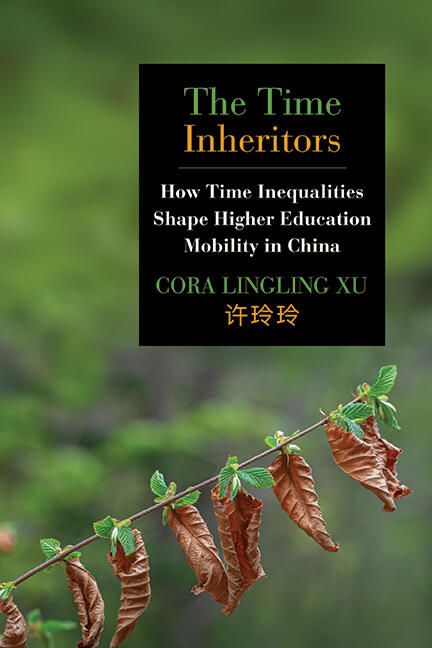
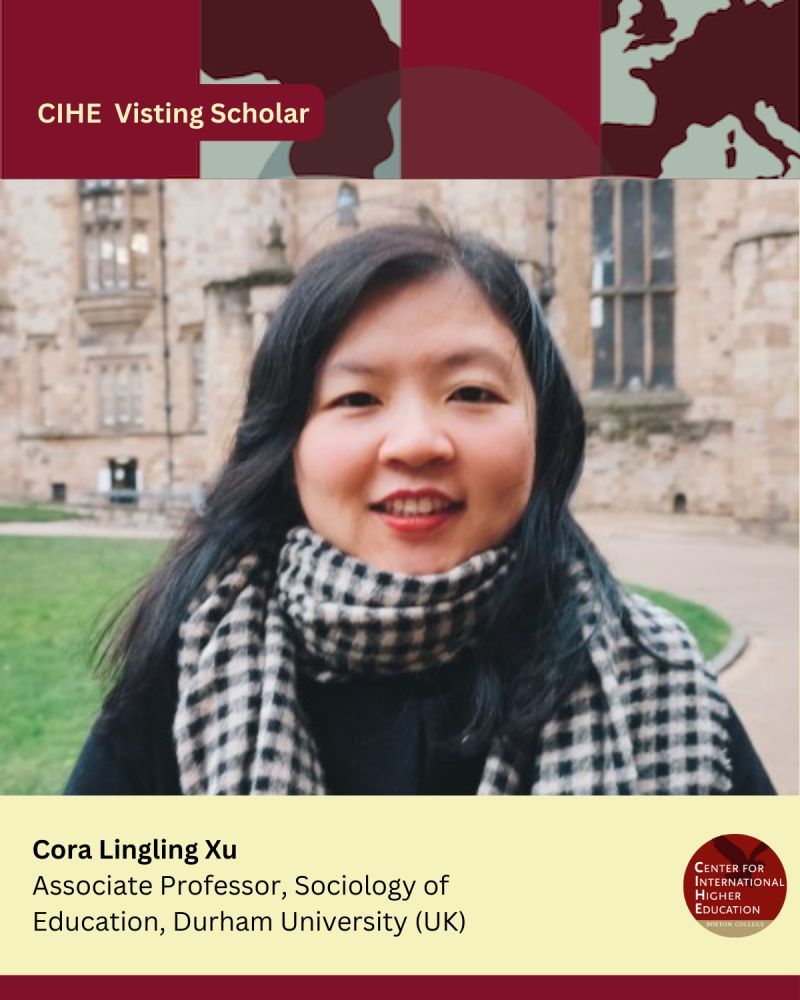
‘The Time Inheritors: How Time Inequalities Shape Higher Education Mobility in China’ by Cora Lingling Xu

We are delighted to share the publication of a new book by our director Dr Cora Lingling Xu. Read this profile (in Chinese) with People Magazine 《人物》杂志 and blog post to learn about the personal stories behind this book.

Please find an abstract of ‘The Time Inheritors‘ and critical reviews below.

If you wish to order this book, you can use SNWS25 to get 30% off when you order from the SUNY Press website.

To learn more about the book talks and interviews visit this page. Listen to the New Books Network’s interview with Cora. 听’时差In-Betweenness’与Cora的对话小宇宙链接). Check out this page for frequently asked questions (e.g. what you should do if you wish to write a book review) about this book. Share your stories of ‘time inheritance’. If you wish to contact Cora about arranging book talks and interviews, complete this contact form.

Abstract

Can a student inherit time? What difference does time make to their educational journeys and outcomes? The Time Inheritors draws on nearly a decade of field research with more than one hundred youth in China to argue that intergenerational transfers of privilege or deprivation are manifested in and through time. Comparing experiences of rural-to-urban, cross-border, and transnational education, Cora Lingling Xu shows how inequalities in time inheritance help drive deeply unequal mobility. With its unique focus on time, nuanced comparative analysis, and sensitive ethnographic engagement, The Time Inheritors opens new avenues for understanding the social mechanisms shaping the future of China and the world.

Critical reviews

“Xu’s conceptually sophisticated monograph reveals how intersectional inequalities are constructed, experienced, and transmitted temporally, with special reference to education. Through the vivid stories of students in mainland China and Hong Kong, and Chinese international students, Xu brings to life different individuals’ ‘time inheritances,’ demonstrating the exciting possibilities time offers as a lens for innovative thinking about inequality. A must-read for sociologists and anthropologists of education, China, and time.” — Rachel Murphy, author of The Children of China’s Great Migration

“Innovative and ambitious, The Time Inheritors proposes a time-centric framework that brings together analyses of social structure, history, individual behavior, and affect. We often feel we are fighting for time. But, as Cora Xu argues in this important study of Chinese students, the scarcity of time is not a given or universal. Different experiences of time result in part from the varying amounts of time we inherit from the previous generation. Time inheritance is therefore critical to the reproduction of social inequality.” — Biao Xiang, coauthor of Self as Method: Thinking through China and the World

“Cora Lingling Xu offers a groundbreaking analysis of educational inequality and social mobility in contemporary China. Xu centers the voices of marginalized students throughout, providing poignant insights into their lived experiences of rural poverty, urban precarity, and educational alienation. At the same time, Xu’s comparative scope reveals how even seemingly privileged groups can be constrained by the temporal logics of social reproduction. The Time Inheritors is a must-read for scholars, educators, and policymakers concerned with educational equity and social justice. Xu’s lucid prose and engaging case studies make the book accessible to a wide audience while her cutting-edge theoretical framework and methodological rigor set a new standard for research on education and inequality.” — Chris R. Glass, coeditor of Critical Perspectives on Equity and Social Mobility in Study Abroad: Interrogating Issues of Unequal Access and Outcomes

“By centering the temporal dimension of who is advantaged or disadvantaged, how, why, and with what consequences, The Time Inheritors takes a unique and powerful approach. Not only does the book contribute theoretically and empirically to our understanding of class inequalities but it also resonates deeply. The inclusion of Chinese translations and characters will give Chinese readers a rich, nuanced cultural appreciation of her findings.” — Dan Cui, author of Identity and Belonging among Chinese Canadian Youth: Racialized Habitus in School, Family, and Media

“An extremely well-written, theoretically informed, and compelling volume that represents a major contribution to the study of education, migration, and social inequality in China and beyond. The Time Inheritors proposes a bold and innovative framework—that of time inheritance—to open the black box of social inequality’s temporal dimension. Whereas the relatively privileged classes inherit temporal wealth and strategies that enable them to bank and save time, facilitating their mobility, the time poor lack this inheritance, forcing them into a vicious cycle of wasting time and paying back temporal debts. Drawing from a rich palette of vivid and intimate longitudinal case studies, The Time Inheritors unpacks the complex intersections between familial, national, and global time inequalities.” — Zachary M. Howlett, author of Meritocracy and Its Discontents: Anxiety and the National College Entrance Exam in China

Release Dates

Hardcover: 1st April 2025

Paperback: 1st October 2025

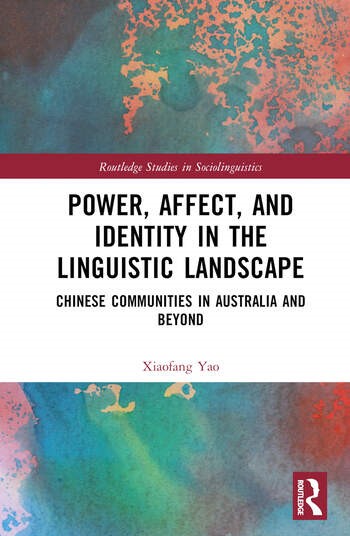
Power, Affect, and Identity in the Linguistic Landscape: Chinese Communities in Australia and Beyond

Research Highlighted: 
Yao, X. (2024). Power, Affect, and Identity in the Linguistic Landscape: Chinese Communities in Australia and Beyond (1st ed.). Routledge. https://doi.org/10.4324/9781003320593  

Introduction: 

Uncovering the complexity of linguistic diversity and semiotic creativity, this book examines the issues of power, affect, and identity in both physical and digital linguistic landscapes. 

Based on fieldwork with various Chinese communities in Australia, the book offers unique insights into the uses of languages, semiotic resources, and material objects in public spaces, and discusses the motives and ideologies that underline these linguistic and semiotic practices. Each chapter frames the sociolinguistic issue emerging from the linguistic landscape under investigation and shows readers how the personal trajectories of individuals, the availability of semiotic resources, and the historicity of spaces collectively shape the meanings of publicly displayed language items in offline and online spaces. Supported by a wealth of interviews, media, and archival data, the book not only advances readers’ understanding of how linguistic landscape is structured by various historical, political, and sociocultural factors, but also enables them to reimagine the linguistic landscape through the lens of emerging digital methods. 

Ideal Audience: This book is an ideal resource for researchers, advanced undergraduates, and graduate students of applied linguistics and sociolinguistics who are interested in the latest advances in linguistic landscape research within virtual and material contexts. 

Chapter Highlights: 

1. Situating Power, Affect, and Identity in the Linguistic Landscape: This introductory chapter sets the stage by explaining the concept of the linguistic landscape and the latest theoretical developments in the field. It focuses on three key sociolinguistic constructs—power, affect, and identity—and explores how a linguistic landscape approach, with its distinctive visual, spatial, and material lens, can offer new insights into these issues. The chapter also provides a brief overview of Chinese communities in Australia to establish the social, cultural, historical, and political contexts for the case studies presented in the book. 

2. Theoretical perspectives on the linguistic landscape: Geosemiotics, sociolinguistics of globalisation, and metrolingualism: Linguistic landscape studies often draw on theoretical perspectives and methodological approaches from various disciplines. This chapter addresses the challenge of framing, scoping, and operationalizing a linguistic landscape study by redefining the field’s ever-expanding scope. It reviews seminal works by scholars such as Ron Scollon, Suzie Wong Scollon, Jan Blommaert, and Alastair Pennycook to provide a robust theoretical framework. This framework integrates geosemiotics, the sociolinguistics of globalization, and metrolingualism, emphasizing the importance of material objects and the materiality of language in constructing meaning. The chapter underscores the posthumanist approach in uncovering critical issues related to language, culture, and society. 

3. Affect in the linguistic landscape: Conviviality and nostalgia in urban and rural ethnic restaurants: This chapter delves into the emerging field of visceral linguistic landscapes, which investigates the evocative potential of space and how linguistic landscapes can regulate human emotions. It presents a case study of two Chinese restaurants—one in a rural area and the other in an urban setting—to explore how material objects in these spaces evoke feelings of nostalgia and conviviality. By examining elements such as paintings, menus, emblems, and decorations, the chapter reveals how spaces are social and historical constructs that reflect the memories of Chinese migrants and their connections to an imagined community. It also shows how these spaces are agentive, shaping and curating affective experiences. 

4. Power in the linguistic landscape: Tourism and commodification as revitalisation of cultural heritage: Power dynamics are a central theme in linguistic landscape research, often studied through the lenses of language policy and ideologies. This chapter goes further by exploring the agency of language, space, and material conditions in shaping, confronting, and resisting power. It examines the interactions between local authorities and the Chinese community in a diasporic context, focusing on the commodification of language and the revitalization of cultural heritage. Through narrated stories, semiotic artifacts, and cultural rituals, the chapter uncovers the tensions between ethnic identity pride and the commercial interests of ethnic tourism, highlighting the motivations and attitudes of stakeholders in the linguistic landscape. 

5. Identity in the linguistic landscape: Metrolingualism at the online-offline nexus: The rise of social media has prompted linguistic landscape researchers to consider digital spaces alongside physical environments. This chapter adapts the theory of metrolingualism to analyse how the Chinese diaspora constructs identity on platforms like WeChat. It examines the linguistic and semiotic resources used for self-presentation and identity performances, revealing the ideologies and aspirations behind these practices. The study highlights how hybrid identities challenge traditional notions of ethnicity and showcase the fluidity of identity in the online-offline nexus, where social conventions from offline spaces influence online interactions. 

6. Artificial Intelligence (AI) in the linguistic landscape: An agenda for critical digital literacy: Artificial intelligence is transforming the broader field of applied linguistics, including linguistic landscape research. This chapter explores the potential of AI tools, such as ChatGPT, in conducting linguistic landscape studies. It reviews current computational approaches and discusses the levels of critical digital literacy required for researchers in an AI-driven future. By experimenting with AI models, the chapter illustrates how AI can serve as both a tool and a collaborator, assisting with literature reviews and qualitative coding of photographic data. It emphasizes the need for linguistic landscape researchers to understand and critically engage with AI technologies to enhance their work. 

7. Transcending boundaries in the linguistic landscape: Towards collaborative, participatory, and empowering research: This concluding chapter synthesizes insights to develop frameworks for understanding power, affect, and identity in the linguistic landscape. It emphasizes transcending boundaries between communities, spaces, and languages, challenging the notion of ethnic enclaves, and recognizing community fluidity. The chapter advocates for research with a stronger temporal and spatial focus, examining interactions between physical and digital linguistic landscapes. It calls for collaborative, participatory, and empowering research approaches to ensure community goals, values, and voices are incorporated, highlighting the importance of community engagement and the transformative potential of inclusive research methodologies. 

Author bio 

Xiaofang Yao, The University of Hong Kong 

Xiaofang Yao is Assistant Professor in the School of Chinese, The University of Hong Kong. Her research areas include linguistic landscapes, multilingualism, social semiotics, and sociolinguistics. She is particularly interested in the intersection of language, culture, and space as they relate to the Chinese diaspora and ethnic minorities. Her current projects explore the representation of Chinese languages and semiotics in diasporic contexts, as well as the negotiation between standard language norms and creative or transgressive language practices among ethnic minority communities in Hong Kong and Southwest China. 

Managing Editor: Xin Fan

Queering the Asian Diaspora: East and Southeast Asian Sexuality, Identity and Cultural Politics


Bao H (2024) Queering the Asian Diaspora: East and Southeast Asian Sexuality, Identity and Cultural Politics. SAGE Publications.

The COVID pandemic has exacerbated global geopolitical tensions and exposed Sinophobia and anti-Asian racism. Meanwhile, a nascent Asian diasporic consciousness has been emerging worldwide, celebrating Asian identity and cultural heritage. In the space between anti-Asian racism and Asian Pride, queer people’s voices have been largely missing.

This book draws on a range of contemporary case studies including art, fashion, performance, film, and political activism. It articulates an intersectional cultural politics that is anti-nationalist, anti-racist, decolonial, feminist and queer.

It is part of the Social Science for Social Justice series: where academics, journalists, and activists of colour respond to pressing social issues.

Managing Editor: Tong Meng