A Case of Double Socialisation in the Social Sciences: The Experience of Chinese Researchers Trained in France

Guiheux, Gilles; Simeng, Wang and Hall, Jonathan*. A case of double socialisation in the social sciences: The experience of Chinese researchers trained in France [online].China Perspectives, No. 4, Dec 2018: 21-30.

*Translator

Gilles

Professor Gilles Guiheux, Université de Paris, France
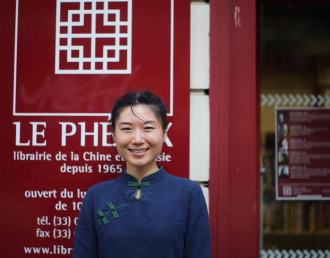
Simeng Wang

Dr Simeng Wang, The French National Center for Scientific Research (CNRS), France

ABSTRACT: This article discusses the epistemological issues raised by the internationalisation of the social sciences as they affect the case of students from the People’s Republic of China who are trained in social sciences in France and return to pursue their career in higher education and research in China. The aim is to assess whether the epistemological differences between the two academic worlds may give rise to any professional difficulties in this many-sided scientific socialisation. However, although our qualitative enquiry has revealed a number of differences, the problem of the availability of professional opportunities does not seem to have a distinctively epistemological dimension.

KEYWORDS: internationalisation, social sciences, Chinese students, France, China, epistemology, higher education, research.


SUMMARY: This article discusses the epistemological issues in the internationalisation of the social sciences as attested by the case of students from the People’s Republic of China who undergo their training in social sciences in France and return to pursue their career in higher education and research in China. The question of the epistemological differences between Chinese and French social sciences is posed when one considers the paths taken by Chinese students coming to gain their PhD in France and then returning to take up a university position in China. What is at issue here is the double scientific socialization undergone by individuals who have been trained according to the norms of French and Chinese institutions or, as Alain Coulon (1997) put it, who have acquired a double “affiliation”. The paper deals with the conditions of appropriation and re-appropriation of knowledge and new scientific practices, that is, in the apprenticeship modalities specific to France on the one hand, and the conditions for entry into the Chinese scientific labour market on the other. Its aim is to investigate the gaps between the two academic worlds and the existence or non-existence of difficulties caused by this multiple form of scientific socialization: to what extent does a young researcher trained in France find himself on returning to China in a state of tension due to a scientific environment different from his previously acquired knowledge, commitments or skills?

Following some exploratory interviews, an open questionnaire was sent to 29 PhD students and graduates, half of whom have since gone on to take up a university position in China. They spent an average of seven years in France, a large number of them having come to France for a Master’s degree. These residential study periods all took place after the year 2000; and 40 per cent after 2010. A large majority, 22 out of 29, received financial support for their doctoral studies. The questionnaires were circulated through our acquaintanceship network, which explains that nearly half (13 out of 29) are sociologists, but all the human and social science disciplines are nonetheless represented.

Relying on the data from this enquiry, the first part of our article sets out in detail the specific gains from their university training in France. The questions put to our interviewees allow us to identify the specific gains from university training in France, in terms of learning about methods and concepts, the demand for intellectual freedom, and for the assimilation of new categories of thought. The answers reveal the epistemological differences produced by their stay in France in comparison with what they had already learnt in China. The enquiry shows a number of differences due to the academic training abroad and resocialization in migration, in terms of both the place of training and epistemological issues. In France, the interviewees experienced scientific practices quite different from those which they had known in China, opening a lot of room for individual autonomy, and for a fuller acquaintance with intellectual traditions, while at the same time assimilating concepts forged in the European context which for some of them were not directly applicable to the Chinese context. From that point of view, international mobility between the different areas of science is a salutary experience, since it ensures the defamiliarisation of the categories of thought and reminds us that all intellectual production must be seen in its context.

The second section goes back to consider the question of “value” in terms of the Chinese academic job market. Our enquiry has provided us with some aspects of the conditions faced by our interviewees on returning to China and their professional integration. This may well be considered the moment when the value of their abilities acquired in France was put to the test. It throws light on the advantages and the disadvantages of their French university training. The testing demands which these interviewees faced in their professional integration do not seem to have had any specifically epistemological dimension. What they showed was their greater or lesser mastery of the requisite know-how and professional strategies. In sum, the major Chinese universities – although there is no doubt more to be said on the diversity of appointments in relation to the establishments concerned – have aligned their patterns for recruitment, assessment, and promotions with those of the English-speaking world, which gave rise to considerable debate in the early 2000s.

Authors Bio

Professor Gilles Guiheux is Professor at the Université de Paris since 2006. He specializes in economic sociology of contemporary China. He has recently published La République populaire de Chine (Paris, Les Belles Lettres, 2018) and co-edited a special issue of the Asian journal of German and European Studies on ‘Labor market formation during high-growth period in China and Japan’ (https://www.springeropen.com/collections/Laborgrowthchinajapan). He has also published numerous articles and contributions in French and English on enterprises and entrepreneurs. He received his Ph.D. from the Ecole des Hautes Etudes en Sciences Sociales (Paris).

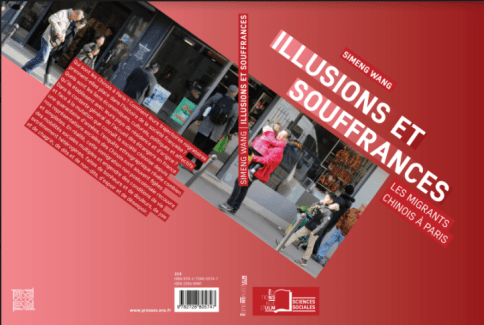
Dr Simeng Wang is a permanent Research Fellow at The French National Center for Scientific Research (CNRS). She specializes in Chinese immigration in France and earned her PhD from the École Normale Supérieure in Paris. She has recently published Illusions et souffrances. Les migrants chinois à Paris (Paris, Éditions rue d’Ulm, 2017) and co-edited two special issues “Participating in the Chinese world: a youth connected” (in Participations, 2017) and “Chinese Migrations and Generations” (in Hommes & Migrations, 2016). She is co-leading a granted research program “Chinese of France: identifications and identities in transition” (2018-20). She is also an elected member of the executive committee of the French Sociology Association since 2017. For more publications of Simeng, please refer here. Couverture_IllusionsetSouffrances


Mobile Study, Mobile Selves: A 5-year study of female Chinese international students in Australia

A/Prof Fran Martin (Reader in Cultural Studies at The University of Melbourne) is working on a 5-year study of female Chinese international students in Australia, funded by the Australian Research Council as a Future Fellowship (FT 140100222, 2015 – 2020). Mobile Study Mobile Selves

 Australia is among the world’s top destinations for international students, with around 1 in 5 undergraduate students enrolling in Australian universities now being international. China is by far Australia’s largest source of international students, and over half of these students are women.

 A/Prof Martin is conducting in-depth ethnographic research with a core group of 50 female students from China who are studying or have studied in universities in Melbourne, Canberra and Sydney. From before their departure from China through to their postgraduate destinations, the study is building a picture of how these young women’s time in Australia affects both their gendered and their national-cultural identity.

 Who are these women when they arrive in Australia – and who do they become?

 The current wave of female educational migration from China reflects both young Chinese women’s mobile, transnational orientation and the increased individualization of their life projects: a sense of “living for oneself” as much as living for others. Motivated by much more than just the pursuit of degrees, these young women are engaged in projects of individualized self-making through their educational journeys. Full of hopes for personal autonomy and cosmopolitan experience, they are as yet unconstrained by the gendered demands of married life while also geographically removed from everyday obligations to natal family. The hypothesis that this project seeks to test through in-depth, longitudinal research is that young Chinese women’s experiences while studying abroad significantly affect their negotiation of the tensions between familial versus individual and national versus transnational identity: two sets of contradictions that centrally define the current generation of Chinese urban women’s sense of identity.

Read, watch and listen to more about A/Prof Martin’s research and publications here: https://mobileselves.org/publications/


Author Bio

Fran Martin

Associate Professor Fran Martin is Reader in Cultural Studies at the University of Melbourne, Australia. Fran’s best known research focuses on television, film, literature and other forms of cultural production in contemporary transnational China (The People’s Republic of China, Taiwan, and Hong Kong), with a specialization in transnational flows and representations and cultures of gender and sexuality. She is currently working on a 5-year ARC Future Fellowship project that uses longitudinal ethnography to research the social and subjective experiences of young women from China studying and living in Australia (http://www.mobileselves.org). Fran received both her BA (hons) and her PhD from Melbourne University.

Fran is fluent in Mandarin, having begun learning the language in primary school in Australia. She later spent two years studying Chinese language and literature at Beijing Second Foreign Languages Institute and East China Normal University (1989 – 1991). She then spent a further two years researching in Taiwan, including at National Taiwan Central University’s Center for the Study of Sexualities. Prior to joining Cultural Studies at the University of Melbourne, Fran lectured in the Cinema Studies program at La Trobe University (2000-2003).

Intimate attitudes, practices and knowledges: Chinese-speaking international students in Australia

In May 2019, The Burnet Institute  and the University of Melbourne in Australia published this report based on their recent survey. The authors of this report are Fran Martin, Can Qin, Caitlin Douglass, Megan Lim and Carol El-Hayek.
An Executive Summary (pp. 4-5) of this report can be found below. To access the report, please click here.

In 2018, University of Melbourne and Burnet Institute conducted the survey Intimate attitudes, practices and knowledges: Chinese-speaking international students in Australia. This study aimed to generate data on Chinese international students’ sexual experiences in order to inform sexual health service provision in Australia. We provide this summary report as a resource and reference for future work in this area.
The survey was open for nine weeks and completed by 723 Chinese-speaking international students. Participants were aged 16 years and over, self-identified as Chinese-speaking international students, and were studying across Australia in high schools, universities, language schools, foundation studies courses, and the Vocational Education and Training (VET) and Technical and Further Education (TAFE) sectors. The majority (96%) of participants were from the mainland of the People’s Republic of China, and almost half (47%) had been in Australia for less than a year. The median age of participants was 22 years and most identified as female (69%).
Sexual attitudes
• Respondents had broadly liberal sexual attitudes, with high acceptance of premarital sex and living together outside marriage.
• Most male participants hold females to a more conservative sexual standard than themselves, especially in relation to multiple sexual partners and casual sex.
• A majority of respondents perceived that males and females bringing condoms on dates was acceptable (74% for women bringing condoms and 72% for women bringing condoms%).
Sexual experiences and behaviours
• Over half of respondents had engaged in genital touching and/or other forms of sexual activity in their lifetime (56%).
• On average, participants were 19 years old the first time they had vaginal or anal intercourse.
• The largest proportion of sexually active respondents reported one sexual partner in their lifetime (50% for vaginal intercourse).
• A majority of respondents reported no sexual partners in Australia (74%).
• Of those who did have sexual partners in Australia, a majority were of the same ethnicity and nationality as the respondents themselves (74%).
• A large minority of respondents reported a change in their sexual and dating behaviours since arriving in Australia (20%), especially increases in sexual activity and engaging in sexual behaviours for the first time.
• Rates of consistent condom use with regular and casual partners were high (59% reported always using condoms with a regular partner, and and 58% with casual partners).
• During participants’ most recent experience of vaginal intercourse, the most common forms of contraception were condoms (79%) and withdrawal (23%).
• 8% of females and 3% of males reported experiencing forced or pressured sexual activity.
• A small percentage of males reported they had paid for sexual services in Australia (9%).
Sex education, knowledge, and health
• Approximately one in three respondents had not received any sex education in high school (31%).
• Content of sex education varied based on location. Human reproduction and HIV/ AIDS were emphasised more in sex education participants had received overseas; while how to use a condom, preventing sexually transmissible infections (STIs), sexual consent and sexual harrassment were emphasised more in Australia.
• On average, participants obtained low scores on our STI knowledge quiz; for example, only 6% knew that many STIs can be easily treated with antibiotics.
• Almost half of participants had visited a doctor or other health service in Australia (47%); however, very few of these had discussed sexual health with an Australian health professional (21%).
• The majority of participants stated that they would use Chinese-language internet sources for general information on sex and relationships (81%); however, over 75% would seek information from an Australian health provider if they thought they had contracted an STI or experienced an unplanned pregnancy.
• Among participants who had ever had penetrative sex, most reported they had never had an STI test in Australia (13%).
• Half of particpants thought they would benefit from more tailored information for international students about sexual health, and 61% thought they would benefit from more tailored information about the Australian healthcare system.
Attitudes toward gender and sexual violence
• In general, respondents disagreed with sexist statements; however, there was a gendered divide in opinions.
• A greater proportion of female than male respondents disagreeed with sexist statements in most instances.
Internet and online pornography use
• Chinese-language online platforms were used far more frequently than English-language platforms.
• A majority of respondents had viewed online pornography, though a higher proportion of males (84%) than females (66%) had done so.
• Participants first saw online pornography by accident at a median age of 13 years and intentionally at 15 years.
• Males first saw online pornography at a younger age than females (12 years compared to 14 years), and viewed it more regularly and frequently.
• Participants most commonly preferred pornography featuring Japanese porn actors (54%).
• Most participants had never sent or received a sexually explicit image of themselves or another person (77%).


CfP: AAS 2020 Panel on ‘China’s Recent Strategic Inroads in Reshaping Higher Education and Research across Asia’

Call for Abstracts for the 2020 AAS (Association for Asian Studies) Annual Meeting (Boston, March 19-22)
China’s Recent Strategic Inroads in Reshaping Higher Education and Research across Asia
For next year’s AAS Annual Meeting I am putting together a proposal for a panel focusing on “China’s Recent Strategic Inroads in Reshaping Higher Education and Research across Asia.” Although much research is currently being carried out on China’s extensive Belt and Road Initiative’s related economic, trade, and infrastructure projects across Asia, thus far little attention has been paid to China’s related soft-power initiatives focusing on higher education and the establishment of regional specialized research centers. Over the past few years enrollment of foreign students in China has skyrocketed to 500,000. There are now more Indian students studying in China than in the U.K. China is also developing branch campuses across the region and establishing research centers (environmental, public health, agricultural, etc.) that focus on local needs.
By combining educational initiatives and research initiatives with a wide range of connective infrastructure projects it is developing across Asia, China has been able to address many of the region’s immediate, short-term, and long-term development goals and challenges as well as lay the groundwork for close ties and networks that will last for decades.
If you are interested in taking part, please send a 250-word abstract and one page CV to: armijo@gmail.com by Monday, July 22.
Additionally, please feel free to email me if you have any questions.
Jackie Armijo
Associate Professor of the Humanities
Asian University for Women, Chittagong, Bangladesh

CfP: Childhood in China’s Borderlands for AAS 2020 in Boston

We are seeking additional participants for a session at the AAS 2020 in Boston, “Childhood in China’s Borderlands.” Below is the draft panel abstract. Potential participants should send an abstract of 250 words by July 15 to shannon.ward@ubc.ca.  Thank you!
Shannon Ward
Childhood in China’s Borderlands
Since the 20th century, China’s large-scale and ongoing political and economic changes have shifted the subjectivities of its citizens (Yan 2009). In particular, globalization and economic liberalization have intersected with traditional beliefs about childhood, leading to wider public recognition of the significance of childhood as a time of social, psychological, and moral development (Kuan 2015, Naftali 2010, Xu 2017). Less examined, however, are the lives of minority (C. 少数民族) children in ethnically and linguistically diverse communities from China’s borderlands. In these communities, the rapid growth of consumer capitalism, assimilation, and the decrease in ethnolinguistic diversity challenge traditional childrearing practices. Local communities have responded by adapting their beliefs about children and childhood, profoundly shaping children’s developmental processes. As a result, children’s acquisition of language, cultural practices, and social relationships both reflect and respond to larger scale social changes that often involve constraints on traditional expressions of ethnolinguistic belonging.
This panel brings together scholars working across the disciplines of anthropology, linguistics, education, and history in order to critically investigate minority childhoods amidst rapid social change in China’s borderlands. Our panelists take a multi-dimensional approach to analyzing children’s everyday lives, situating our studies in families, schools, and children’s peer groups. Through case studies of Tibetan, Uyghur, Monguor (Tuzu), and other children, we emphasize the diversity in ways of growing up in China. In so doing, our panel also aims to highlight the role of young children as active agents of cultural change.
Works cited:
Kuan, Teresa. 2015. Love’s Uncertainty: The Politics and Ethics of Childrearing in Contemporary China. Berkeley: University of California Press.
Naftali, Orna. 2010. Recovering Childhood: Play, Pedagogy, and the Rise of Psychological Knowledge in Contemporary Urban China. Modern China 36(6): 589-616.
Xu, Jing. 2017.  The Good Child: Moral Development in a Chinese Preschool. Stanford: Stanford University Press.
Yan, Yunxiang. 2009. The Individualization of Chinese Society. New York: Berg.