CFP: Re-Worlding Chinese Transnationalisms: An International Symposium

The University of Melbourne, June 2 – June 4, 2020
Co-convened by A/Prof Fran Martin (Cultural Studies, University of Melbourne) and Prof Wanning Sun (Media and Communication Studies, University of Technology Sydney)
Project officer: Ms Nonie May (University of Melbourne)

Keynote speakers:
Aihwa Ong, Professor and Robert H. Lowie Distinguished Chair in Anthropology, and Chair of the Center for Southeast Asian Studies, U.C. Berkeley;
Pál Nyíri, Professor of Global History from an Anthropological Perspective, Vrije Universiteit Amsterdam

Confirmed participants:
Julie Y. Chu, Associate Professor of Anthropology and Social Sciences, University of Chicago
Ari N. (Larissa) Heinrich, Professor of Modern Chinese Literature, Comparative Literature, and Cultural Studies, U.C. San Diego
Michael Keane, Professor of Media, Creative Arts and Social Enquiry, Curtin University
Dallas Rogers, Senior Lecturer in Architecture, Design and Planning, University of Sydney
Alexandra Wong, Engaged Research Fellow, Institute for Culture and Society, Western Sydney University
Brian Yecies, Associate Professor of Arts, English and Media, University of Wollongong
Haiqing Yu, Associate Professor and Vice-Chancellor’s Principal Research Fellow in Media and Communication, RMIT University
Weiyu Zhang, Associate Professor of Communication and New Media, National University of Singapore

Event outline and call for papers:
In the final decade of the twentieth century, along with intensifying cross-border movements of capital, people, and media attendant on the rise of the Asia-Pacific regional economy, Chinese transnationalism became a focus of study across a range of disciplines. Researchers addressed evolving phenomena including the geographies and politics of Chinese migration and diasporas; the transnationalization of Chinese families, religions, business, and education; the rise of Chinese Internet worlds; the histories of transnational Chinese cinema and transnational imaginaries in contemporary Chinese-language media; and the characteristics of a transnational Sinophone cultural sphere that was understood as both peripheral to and divergent from the type of Chinese identity promoted by the PRC state.

Twenty-five years after the emergence of the conceptual rubric of Chinese transnationalism, the human and cultural mobilities that inspired it have both intensified and transformed as the economic, political, and military “rise of China” decisively reshapes global geopolitics. The time is ripe to revisit the cultural politics of Chinese transnationalisms. What forms do transnational movements of Chinese media, people and culture take in today’s world? How are these mobilities transformed by the growing global power of the PRC? What does it mean to think, live, feel, and imagine Chinese transnationalisms in the context of President Xi’s promotion of the “Chinese dream,” economists’ recognition of the present time as the “Chinese century,” and unease about “Chinese influence” on the part of western governments, security agencies, and media? Re-Worlding Chinese Transnationalisms will address these questions.

We are particularly interested in ethnographic, affective and representational studies by scholars working in the humanities and social sciences, especially cultural studies, anthropology, media studies, cultural geography, and sociology. The central topic may be approached with reference to a number of subthemes, which could include:

– Modern histories of Chinese transnationalism
– Migration, diaspora, and flexible citizenship
– Transnational Chinese-language media
– “Minor” Chineseness: Sinophone worlds today
– Human mobility, place, and translocality
– Transforming practices of family, gender, and sexuality
– Discourses of race and formations of racism
– Transnational movements affecting labour and workplace cultures
– Transnational traffics in religion, art, creative industries and education.

The symposium will run over two full days in a single stream. It will take the form of a small, focussed, highly interactive research workshop rather than a conventional conference, with discussants assigned and papers pre-circulated to attendants.

Submission procedure and timeline
To apply to present at the symposium, please send a paper abstract (200-300 words) and bio (150 words) to Nonie May (nonie.may[at]unimelb.edu.au) by November 10, 2019. Applicants will be advised of whether their papers have been accepted by December 10, 2019.

Financial subsidy to offset travel costs will be available by competitive application to a limited number of postgraduate students and early-career researchers (within 5 years of PhD award) from Australia and overseas. To apply for the subsidy, please include with your application a statement of your current postgraduate student status or the date on which your PhD was conferred, together with a basic budget outlining your projected travel expenses to attend the symposium (airfares and accommodation costs).

For those accepted, full papers (5,000––7,000 words) will need to be submitted for pre-circulation to attendants by April 30, 2020.

This event is supported by funding from the Australian Research Council and the University of Melbourne, with additional support from the University of Technology Sydney.

For more details, refer here.

Migration experiences and career formation among European academics in China


Daniel Nehring

Dr Daniel Nehring, East China University of Science and Technology, China

This study explores experiences of transnational migration and career formation among European academics at Chinese universities. On the one hand, it adds to a growing literature on academic mobilities and the consequences of transnational mobility for academic career paths. On the other hand, it contributes to incipient debates on China as a migration destination. In these contexts, it focuses on the experiences of European nationals, educated to PhD level, who are directly employed at universities in mainland China. The study considers these academics’ motivations for coming to work in China, their experiences of academic labour at universities in the country, including both Chinese public and international universities, the ways in which they form networks and collaborate with colleagues both in China and abroad, and their decision-making regarding possible long-term permanence in China. Moreover, it looks at the ways in which foreign academics’ experiences of personal life in China and of the Chinese migration infrastructure, including issues such as visas and residence permits, banking and finance, and access to health insurance and social welfare systems, influence their migration decisions.

This study is currently in an early stage. It involves qualitative multi-methods research, drawing on Adele Clarke’s Situational Analysis (Clarke, Friese and Washburn, 2018). Specifically, it comprises in-depth interviews with European academics employed at Chinese universities, expert interviews with representatives of relevant European organisations in China, and the analysis of Chinese migration and higher education policy, as relevant to foreign scholars. The main stage of fieldwork will begin in September 2019.

For further information about this project, I can be reached via e-mail at dfnehring@hotmail.co.uk. For more on my research profile, please see https://www.researchgate.net/profile/Daniel_Nehring.

Author Bio

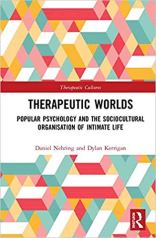
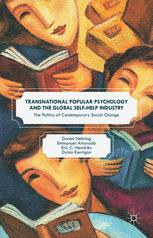
Daniel book 1Dr Daniel book 2Daniel Nehring is Associate Professor of Sociology at East China University of Science and Technology in Shanghai. His research concerns transformations of personal life under conditions of globalisation and rapid social change. In this context, he pursues two lines of research. One is concerned with experiences of transnationalism among the highly mobile highly skilled. In this context, he has conducted research on Chinese-Western transnational families in China and in the UK, and he is currently in the very early stages of a new project on Western academics of migration and career formation in China. Second, his work is concerned with the transnational production, circulation and consumption of psychotherapeutically informed discourses and practices of personal life. He is a founder and convenor of the international academic network Popular Psychology, Self-Help Culture and the Happiness Industry, and he is currently working on the Handbook of Global Therapeutic Cultures (Routledge, 2020) and a research project on the commodification of mindfulness medication. He is the author of five books, including Therapeutic Worlds (Routledge, 2019) and Transnational Popular Psychology and the Global Self-Help Industry (Palgrave Macmillan, 2016), and his work has been published in international journals such as Consumption Markets & Culture, Modern China, and Sexualities.

Navigating the educational pathway: Lifelong learning, Citizenship, Intergenerational dynamics and transcultural negotiations of immigrant Chinese in Luxembourg

Wu, Jinting. (2019). Transnational strategies and lifelong learning in the shadow of citizenship: Chinese migrants in the Grand Duchy of Luxembourg. International Journal of Lifelong Education, 38(1), 88-102.

Wu, Jinting. (2019, online first). Navigating the educational pathway: Intergenerational dynamics and transcultural negotiations of immigrant Chinese in Luxembourg. Diaspora, Indigenous, and Minority Education.

jintingw

Dr Jinting Wu, University at Buffalo, The State University of New York

These two articles are based on nine months of ethnographic study I carried out in 2012-2013 on schooling, community, and transnational strategies of Chinese immigrants in Luxembourg. The larger study examines the contested roles of education/learning in the family strategies and intergenerational dynamics of Chinese migrants, and highlights their pragmatic struggles and creative agency in navigating a Eurocentric citizenship regime.

In an article recently published in the International Journal of Lifelong Education, I draw from theoretical concepts on citizenship, coloniality, and lifelong learning to examine different modalities of learning and transnational strategies among three groups of Chinese migrants – temporary workers, visa overstayers, and restaurant owners. In analyzing their pragmatic struggles, creative agency, and unending hopes for better lives, the paper illustrates how they engage in what Aihwa Ong (1996) calls the dual process of self-making and being made, vis-à-vis the Eurocentric citizenship regime, knowledge hierarchies, and exclusionary labour market.

The first group “temporary workers” refers to those who entered the country without legal permission and live in precarious conditions. The second group “visa overstayers” refers to those who due to various circumstances stayed past the expiry of their visa permits. Compared to these two highly invisible and illegalized groups, the third group “restaurant owners” are successful business entrepreneurs who have gained financial stability and settled down as naturalized European citizens. The three groups represent the various modes of learning and transnational practices by which Chinese migrants negotiate the global cycle of coloniality and inequality.

In Luxembourg, there has been a shift from a permissive immigration policy motivated by the need for industrial labour, to a more restrictive policy to protect social and economic wellbeing of Luxembourgian citizens. Despite the country’s high immigrant ratio, a restrictionist citizenship regime persists to favor high-skill white Europeans (Valentova & Berzosa, 2012). In the context of transnational migration, the normative agenda of lifelong learning tacitly frames immigrants’ dilemmas in terms of deficit and lack, as remediable through continual learning. It, however, ignores the new forms of vulnerabilities associated with the move to a new country and the needs for social protection against linguistic, education, employment, and legal challenges (Guo, 2010, p.159). In addition, immigrants’ prior learning and experience are often devalued or undervalued such that the prospect of a better life is often reduced to downward social mobility (Wagner and Childs, 2006).

The article highlights how Chinese migrants’ efforts at language learning, skill improvement, and possible integration were rendered invisible, impossible, and even punishable in the ethno-cultural and linguistic hierarchies that delegitimize migrants’ multiple ways of being and knowing. Nevertheless, Chinese immigrants crafted their own transnational life with hope, creativity, and resilience: at times they transacted with “snakeheads,” overstayed visas, borrowed IDs to wire money or register for language classes, or contemplated a foreign marriage, with the hope of perhaps eventually settling down and feeling at home. Their modes of learning are driven by practical needs for getting by, obtaining legal recognition, managing trying circumstances, and making a home away from home. The paper argues that lifelong learning needs to be understood anthropologically as continuous cultural, social, and legal encounters. Until these embodied forms of learning and being are fully comprehended, the Eurocentric citizenship regime will continue to produce racial, cultural, epistemological divides and perpetuate the global cycle of inequality.

The second article, recently published by Diaspora, Indigenous, and Minority Education, examines a central question: what roles does schooling play in the intergenerational dynamics and transcultural negotiations among immigrant Chinese in the Grand Duchy of Luxembourg? Drawing upon Bourdieu’s (1984,1986) theorization of capital, I offer an ethnographic account of how immigrant Chinese exhibited particular cultural orientations and social ties – alternative forms of cultural and social capital— that helped them gain collective wellbeing yet also produced intergenerational and cross-cultural tensions in childrearing and schooling.

Nicknamed “the heart of Europe,” Luxembourg has witnessed a lengthy historical influx of immigrants, guest workers, and asylum seekers as a center of global mobility, offering an effective lens for examining the complex landscape of immigrant education. With foreign-born inhabitants approaching half of its total population, Luxembourgish society faces a major challenge of social integration and equity. Understanding Chinese educational adaptation and school-family relations becomes a pressing issue for educators, policymakers, and researchers.

In this paper, I use “immigrant Chinese” specifically to refer to those in catering businesses or owning small shops, who constituted the overwhelming majority of the Chinese population in Luxembourg at the time of the research. My sample consists of restaurant workers originally from Qingtian, a county in Zhejiang Province of China known for its rich emigration history, as well as their children born in Luxembourg and enrolled in secondary schools at the time of the study. Qingtian people are known for their entrepreneurship in specialized, small-scale family businesses and transnational kinship network which, through a “chain migration,” allows established immigrants to help newcomers with employment and social support. This migratory pattern reinforces strong kinship ties and delayed gratification, obliging even children to shoulder family responsibilities at early ages.

As I illustrate in this paper, the widespread criticism of the “restaurant problem and pressure problem” – that Chinese children contributed labour to family restaurants and were under parental pressure to achieve academic success – is in fact part of immigrants’ social and cultural resources in response to the challenges and deprivation of the host country. On the one hand, Chinese parents were keen on transmitting the value of discipline and hard work as imperative for immigrant survival. They blamed complacent teachers and their pleasure-seeking children for falling short of their sacrifice and expectations. On the other hands, second-generation youth were aware of the importance of education as the anchor of Chinese overseas wealth, yet anxious of their own marginalization in constantly juggling academic double standards and multiple achievement ideologies. Both generations faced a unique set of challenges, including an early sorting system of the schools, a complex linguistic landscape, a time-consuming catering life, and negative stereotypes held by the society.

As this study demonstrates, immigrant-specific social and cultural resources – as reflected in familism and high academic aspirations (even pressures) –are both a source of empowerment (alternative forms of capital allowing Chinese immigrants to compensate for lack of support and recognition in the host country) and a source of constraint (when not sufficiently understood by the schooling system and when producing stereotypes and intergenerational conflicts). Enhancing educational equality requires a more nuanced understanding of alternative types of social and cultural capital among immigrant families, as well as a strength-based, rather than deficit-oriented, view of culture in relation to teaching and learning (Ngo & Lee, 2007). On the other hand, it is important not to romanticize ethnicity and culture as rooted and unchanging, but take into account dynamic negotiations through intergenerational and cross-cultural encounters. This paper calls for culturally responsive schooling in order to better understand immigrants’ multi-pronged challenges, resources, and aspirations in negotiating educational inequalities.

Author Bio

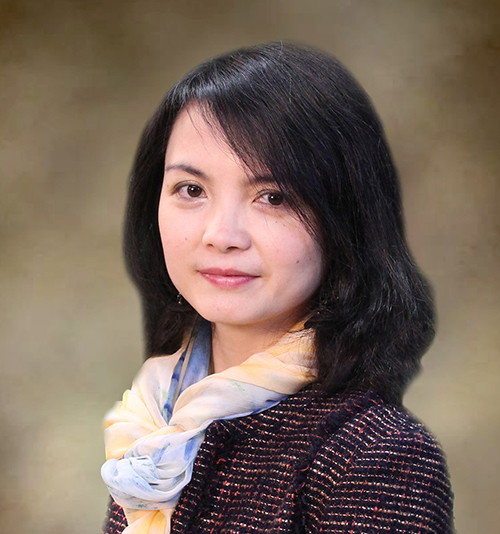
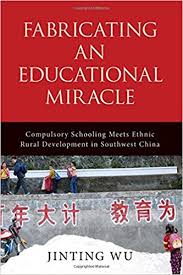
Book coverDr Jinting Wu is Assistant Professor of Educational Culture, Policy and Society. She is an educational anthropologist with an interest in philosophy and cultural studies. Her research often deploys ethnographic field methods to critically investigate relationships among schooling, society, and culture; it also examines educational policy shifts both as lived experiences and as reflecting the larger spheres of cultural ideation, social (re)production, nation building and globalization. Recent projects have involved study of rural minority education, child disabilities and special education, immigrant youth and families, and educational meritocracy on the global stage. Prior to joining the GSE faculty, she worked as Assistant Professor at the University of Macau (SAR, China) and was a postdoctoral fellow of educational sciences at the University of Luxembourg. Jinting is author of Fabricating an Educational Miracle (SUNY Press, 2017 AERA Division B Outstanding Book Recognition Award; The Society of Professors of Education Outstanding Book Award).


Confucius stands on the London eye- an auto-ethnographic study

Jinjin Lu (2019) Confucius stands on the London eye- an auto-ethnographic
study, Ethnography and Education, 14:1, 51-64, DOI: 10.1080/17457823.2017.1387067

Helen Jinjin Lu

Dr Jinjin Lu, China University of Geosciences, Wuhan, China

In my recent paper (2019), I used an auto-ethnographic study to see how Confucianism has had a profound influence on Chinese learners’ academic achievements, moral education and education for citizenship. The paper is based on a BBC documentary that leads me to reflect on Chinese education. The documentary sought to investigate what would occur when Western learners undertake Chinese Confucian-based learning. In this article, my personal reflections on the content and messages of the documentary are interwoven with reflections of the teachers and others involved in the documentary. I begin this auto-ethnographic account by reflecting on my cultural upbringing in China and the influence that Confucianism had on my own early learning experiences. Selected diary entries show my identities within a unique Confucian cultural framework.

Chinese learners’ learning styles, motivation and self-regulation have been significantly discussed in relation to Confucianism. More specifically, in a large number of previous studies, the research findings revealed that Chinese learners followed a rote learning process with heavy memorization. For example, Chan (1999) claimed that Chinese students’ learning styles were still very much influenced by Confucianism, which is dominated by rote learning. Similarly, Kennedy (2002) explored Chinese students’ learning styles and found that they were accustomed to learning passively and mechanically because they lack the confidence to participate in the delivery of different learning modes. The lack of motivation remains a common problem in Chinese students’ knowledge transition (Dörnyei and Ryan 2015). Recently, Li and Chang (2015) noted that there was a positive effect on Chinese learners via learning English by adopting a rote learning method, and they argued that the Confucian influence appears to be the only explanation for the students’ rote learning in China. In terms of Chinese learners’ development of self-discipline and self-regulation, Heng (2015) used an auto-ethnographical approach to find a ‘hybridofnuancedculturalmeaningsunderneaththeself-regulatedlearningexperiences in the Chinese context’ (132). Heng’s (2015) research indicates that Confucianism has had a significant influence on the development of her self-regulation in the learning process in her junior high school years.

From a psychological perspective, the ‘educational stress’ phenomenon has been common in the Chinese context. It results in a high risk of mental disorders and may influence students’ peer and family relationships (Sun 2012). Stewart (2014) used surveys and pictures to illustrate how busy Chinese secondary school students were in Shanghai. He expressed concern about Chinese students’ health and wellbeing. In recent years, with the increased number of Chinese students in Western universities, an increasing number of researchers are paying attention to international students’ academic stress, language deficiency and mental health status. In a more recent study, Chen et al. (2015) and his colleagues found that cultural mismatch may lead to many problems among Chinese international students. In this case, investigating the unique culture of Chinese Confucianism is essential because it provides opportunities for Westerners to enhance their understanding of Chinese learners’ characteristics and cultural heritage (Nuyen 2002; Wang 2006; Gutierrez and Dyson 2009; Woods and Lamond 2011; Dennehy 2015). Confucianism has a close relationship with Chinese culture in traditional education. Confucianism refers to the ‘teachings of Confucius and his disciples’ (Lin 2010, 71). The core value of the Chinese cultural system is derived from Confucian ideas (Chan 1986), which have had a significant influence on teaching and learning for many years in China. Students are taught to maintain harmonious relationships with others, adhere to hierarchical structures and focus on hard work (Lin 2010). It is generally believed that ‘Confucian teaching emphasized personal morality, correctness of social behavior and harmony of interpersonal relationships’ (Lin 2010, 307). Because Confucianism, Chinese culture, and Confucian ideas are linked, some scholars (Luan 1994; Yu2008) have even stated, ‘Confucianism does represent Chinese culture, Confucian moral tradition represents Chinese moral tradition and education in Chinese tradition necessarily means education in the Confucian tradition’ (122).

In this research, I used auto-ethnography as a research method to show how my early learning process was influenced by Confucianism. By using this method, both readers and I will obtain a deeper understanding of the unique Chinese culture and its long-term influence in school and at home. Also, I used a range of forms of data to analyzing personal experience (Ellis, Adams, and Bochner 2011; Creswell 2013). This research method has also been used in my other recent articles (2018, 2019). Compared with other research methods, auto-ethnography provides an opportunity for researchers who could be engaged in the field. This does not mean that the stories told are similar to fiction. For me, it is just the opposite because ‘The categorization of the auto-ethnographer’s personal accounts into general themes and by-themes provides an easy, clear, and concise way of grouping the qualitative personal data into intelligible categories and making sense of them’ (Philaretou and Allen 2006, 68).

My auto-ethnographic essays are not only for assisting myself to improve my cultural identity but also to show my experiences enacted though my auto-ethnographic writing that stimulates my audience to reflect upon their educational experiences and the connected underlying cultural meanings, utterances and life experiences in a comparative context.

References

Chan, Wing-tsit. 1986. Neo-Confucian Terms Explained. New York: Columbia University Press.

Chan, S. 1999. “The Chinese Learner-A Question of Style.” Education and Training 46: 294–304.

Chen, Justin A, Lusha Liu, Xudong Zhao, and Albert S. Yeung. 2015. “Chinese International Students: An Emerging Mental Health Crisis.” Journal of the American Academy of Child & Adolescent Psychiatry 54: 879–880.

Creswell, J. 2013. Qualitative Inquiry Research Design. 3rd ed. London: Sage.

Dennehy, Edward. 2015. “Learning Approaches and Cultural Influences: A Comparative Study of Confucian and Western-Heritage Students.” Journal of Further and Higher Education 39: 818– 838.

Dörnyei, Z., and S. Ryan. 2015. The Psychology of the Language Learner Revisited. New York: Routledge.

Ellis, C., T. E. Adams, and A. P. Bochner. 2011. “Autoethnography: An Overview.” Forum: Qualitative Social Research 12: 1–18.

Gutierrez, F., and L. E. Dyson. 2009. “Confucian or Fusion?: Perceptions of Confucian Heritage Students with Respect to Their University Studies in Australia.” The International Journal of Learning 16: 373–384.

Heng, Jiang. 2015. “A Chinese Learner and Her Self-regulated Learning: An Autoethnography.” Frontiers of Education in China 10: 132–152.

Kennedy, Peter. 2002. “Learning Cultures and Learning Styles: Myth-understandings About Adult (Hong Kong) Chinese Learners.” International Journal of Lifelong Education 21: 430–445.

Li, Xiuping, and Shiyi Chang.2015. “A Positive Cultural Perspective on Rote Learning in China: An Analysis of Views from 100 Chinese Learners of English.” BALEAP: the global forum for EAP professionals. https://www.baleap.org/baleap/conference-events/pims/pim-reports/focuschinese-learners/opening-plenary-session/xiuping-li-handout.

Lin, Canchu. 2010. “Studying Chinese Culture and Conflict: A Research Agenda.” International Journal of Conflict Management 21: 70–93.

Lu, J. 2018)Of Roses and Jasmine–Auto-ethnographic reflections on my early bilingual life through China’s Open-Door Policy”. Reflective Practice, 19:690-706

Lu, J. and Janik, T (2019 in press) Experience in International Research Cooperation: Opportunities and Challenges in Central Europe.

Luan, C. 1994. “A Collection of Papers on the Study of Education in Chinese Traditional Virtues.” In The Construction of Goals and Objectives of Chinese Traditional Virtues, edited by J. Chen, C. Luan, and W. Zhan, 35–46. Changchun: Jilin Culture and History Press.

Nuyen, A. T. 2002. “Confucianism and the Idea of Citizenship.” Asian Philosophy 12: 127–139.

Philaretou, Andreas G., and Katherine R. Allen. 2006. “Researching Sensitive Topics Through Autoethnographic Means.” The Journal of Men’s Studies 14: 65–78.

Wang, Ting. 2006. “Understanding Chinese Culture and Learning.” Paper presented at the AARE annual conference, Adelaide, November 27–30.

Woods, Peter R., and David A. Lamond. 2011. “What Would Confucius Do? – Confucian Ethics and Self-regulation in Management.” Journal of Business Ethics 102: 669–683.

Yu, Tianlong. 2008. “The Revival of Confucianism in Chinese Schools: A Historical-Political Review.” Asia Pacific Journal of Education 28: 113–129.

Author Bio

Dr Jinjin Lu completed her PhD in the Faculty of Education at the University of Tasmania in Australia. She was a full-time research fellow in Charles Sturt University between 2015–2017 in Australia. Currently, she is an Associate Professor in the School of Foreign Languages at China University of Geosciences (Wuhan), China. Her research interests are in language education, digital technology and cultural studies. She can be contacted at helen820919@sina.com.

English-speaking Science Teacher Wanted in Shanghai, China

Employer: A private-science educational company with over 30-year history.
If you want to be part of an international team and a multinational company, if you are a person who is willing to be part of a unique experience and to have the opportunity to grow personally and professionally, then this job opportunity is for you. Contact WeChat account EmmaCTR for more details.
Requirements
1.Teaching experience with basic knowledge in science or engineering will be a plus
2.Have the necessary documents (bachelor or above diploma and its notary, non-criminal record and its notary, 2-year working experience) to apply for a work visa in China or are already in possession of a work visa
3.  Enjoy being with kids; passionate, responsible; outgoing, abundant teaching methods.
Benefits:
Enjoy Chinese legal holiday and annual holiday;
Provide working visa and insurance ;
Team building and activities;
Attractive salary ranging from 19k to 25k (RMB) on average