“Your skin is like crocodile’s”: A case study of an African wài guó student in China

Xu, W., & Stahl, G. (2023). “‘Your skin is like crocodile’s’: a case study of an African wài guó student in China“. Globalisation, Societies and Education, 1-12.

In China, racialised ‘Othering’ can be traced back to the Spring and Autumn period (770-403 B.C.). The ethnic differences between ‘civilised Han Chinese’ and the ‘barbarian others’ were essentialised, with the geographic location and skin colour being used as determinants of foreignness (Wyatt, 2010). Han people, who possessed a lighter skin complexion and conformed to the Confucius moral codes, were perceived to be superior to other populations. This ideology of Han ethnocentrism appears to resonate with various forms of racism in the West, whereby differing skin colours, phenotypes, ‘ethnicities’ and ‘cultural backgrounds’ are employed as institutional and representational tools to categorise humans, so as to reinforce white supremacist ideologies (Ellefsen, Banafsheh, & Sandberg, 2022). In contemporary China, racially coded languages and derogatory labels such as ‘threat’, ‘violent blacks’, ‘black devils’ (hēi guǐ), or even ‘significant sources of risk’ are often used when referring to the Black communities (Bodomo, 2020; Daniels, 2014). These racial ideologies circulating in public spaces further consolidate the racial boundaries between ‘the Chinese Self’ and ‘the African Other’ (Lan, 2016; Liang & Le Billon, 2020).

Although much of the current research focuses on the patterns of the racialisation processes (see, for example, Carling & Haugen, 2021; Ho, 2017; Lan, 2016; Liang & Le Billon, 2020), there remains surprisingly little scholarship addressing how African international students exercise agency to reduce inter-group prejudices against all the odds and ‘bridge’ racial divides in China (Bodomo, 2010, 2012). In the paper ‘Your skin is like crocodile’s’: A case study of an African wài guó student in China published in Globalisation, Societies & Education (doi: 10.1080/14767724.2023.2193317), we presented a case study of a 25-year-old Burundian young man named Alex’s as he travelled on public transport to China’s rural areas. We were interested in both the dialogue (Freire, 2000) he established with village elders and his own self-dialogue concerning race relations. 

Informed by Freire’s (2000) conceptualisation, our findings indicated that dialogic practices assisted both Alex and the Chinese to recognise cultural differences, develop autonomy and courage. Dialogues became a conscientização process, where the Chinese Alex encountered may have critically realised that they lived in a world where stereotypes, colour prejudice and dominant beliefs oppressed their free expression and action, as well as imaginaries of other racial and ethnic group(s). Freire (2005, p. 83) would describe Alex’s adventure in China as a journey as ‘from reading to word to reading the world’. 

The data also suggested that Alex’s consciousness of himself and others was enhanced which could work to break down stereotypes, ignorance or racism which impedes intercultural interaction (Freire, 2005). The multi-way dialogue arguably liberated Alex’s voices to speak directly to the Chinese in Chinese, but also enabled him to critically read the Chinese society/culture departing from the positionalities of the Chinese. Therefore, Alex’s dialogic practices in China could be framed as ‘intercultural action for freedom’, where both his identity and the Chinese villagers’ identities are (re)shaped collectively through dialogue. 

Our finding are congruent with Flores (2021) who asserts that ‘Preparing students of color to navigate a racist world is not anti-racist unless it is coupled with providing them with tools to challenge (not just accommodate) racism’. Dialogue, in conjunction with the Chinese language, appears to be such a tool, fostering opportunities to awaken consciousness, and closing down the lure of stereotypes that leading to racism (see Li, 2021).

We advocate that the spotlight can be shed on fundamental public pedagogy concerning critical consciousness achievement among both Chinese and African communities in China. The opposition to racism ‘from below’ and in naturally occurring interactions might be expanded into social movements, contributing to reclaimed dignity and leading to collective actions that trigger socio-structural change. 

References

Bodomo, A. (2010). The African trading community in Guangzhou: An emerging bridge for Africa–China relations. The China Quarterly, 203, 693-707. 

Bodomo, A. (2012). Africans in China: A sociocultural study and its implications on Africa-China. Amherst: Cambria Press.

Bodomo, A. (2020). Historical and contemporary perspectives on inequalities and well-being of Africans in China. Asian Ethnicity, 21(4), 526-541. doi:10.1080/14631369.2020.1761246

Carling, J., & Haugen, H. Ø. (2021). Circumstantial migration: how Gambian journeys to China enrich migration theory. Journal of Ethnic and Migration Studies, 47(12), 2778-2795. doi:10.1080/1369183X.2020.1739385

Daniels, T. P. (2014). African international students in Klang Valley: colonial legacies, postcolonial racialization, and sub-citizenship. Citizenship Studies, 18(8), 855-870. doi:10.1080/13621025.2014.964548

Ellefsen, R., Banafsheh, A., & Sandberg, S. (2022). Resisting racism in everyday life: from ignoring to confrontation and protest. Ethnic and Racial Studies, 45(16), 435-457. doi:10.1080/01419870.2022.2094716

Flores, N. (2021). Twitter.  Retrieved from https://twitter.com/nelsonlflores

Freire, P. (2000). Pedagogy of the oppressed. New York, USA: Continuum.

Freire, P. (2005). Teachers as cultural workers: Letters to those who dare to teach (D. Macedo, D. Koike, & A. Oliveira, Trans. Expanded ed.). Abingdon: Westview Press.

Ho, E. L.-E. (2017). The geo-social and global geographies of power: Urban aspirations of ‘worlding’ African students in China. Geopolitics, 22(1), 15-33. doi:10.1080/14650045.2016.1149697

Lan, S. (2016). The shifting meanings of race in China: A case study of the African diaspora communities in Guangzhou. City & Society, 28(3), 298-318. 

Li, W. (2021). TESOL educators can contribute to the fight-back against racial discrimination and hatred: A personal view from Britain. TESOL Journal, 12(3), 1-4. doi:10.1002/tesj.618

Liang, K., & Le Billon, P. (2020). African migrants in China: space, race and embodied encounters in Guangzhou, China. Social & Cultural Geography, 21(5), 602-628. doi:10.1080/14649365.2018.1514647

Wyatt, D. J. (2010). The blacks of premodern China. PA: University of Pennsylvania Press.

Authors’ bio:

Dr Wen Xu, East China Normal University, China

Dr. Wen Xu is a post-doc research fellow at East China Normal University, China. Her research interests focus on language(s) education and society, socio-cultural studies of education, learner identities, and equity/inequality. Considering the worldwide growing upheaval and scepticism around Chinese language education, she writes extensively on how Chinese literacy can be theorised as a pathway towards equity and upward social mobility for Australian students, especially those from underprivileged backgrounds. She can be contacted via email: xuwen0826@gmail.com.

Dr. Garth Stahl, University of Queensland, Australia

Dr. Garth Stahl is an associate professor in the School of Education at the University of Queensland, Australia. His research interests focus on the relationship between education and society, socio-cultural studies of education, student identities, equity/inequality, and social change. Currently, his research projects and publications encompass theoretical and empirical studies of youth, sociology of schooling in a neoliberal age, gendered subjectivities, equity and difference as well as educational reform.

Managing editor: Lisa (Zhiyun Bian)

Expanding flexible citizenship: Chinese international school students and global mobilities for higher education

Ma, Y. and Wright, E. (2022), “Expanding flexible citizenship: Chinese international school students and global mobilities for higher education“, Social Transformations in Chinese Societies, Vol. ahead-of-print No. ahead-of-print. https://doi.org/10.1108/STICS-05-2022-0010

There is a rich literature on the mobilities of international students for higher education (e.g., Brooks and Waters, 2022). Previous research, however, has focused almost exclusively on students already abroad. It has tended to overlook a significant development in education systems worldwide: the expansion of international schools that serve as a pipeline to overseas higher education for a local base of middle-class families (Bunnell, 2022; Wright et al., 2022). In China, the number of international schools boomed from 22 in 2000 to 1,103 in 2022, with an enrolment of around 406,037 students (ISC Research, 2022). Although international schooling has been historically associated with mobile expatriates, 87 percent of international schools in China cater exclusively or primarily to Chinese citizens (NewSchool Insight, 2019). In this article, we report on interviews with final-year high-school students (n=60) and parents (n=16) from eight international schools in Shenzhen, covering their motivations for overseas higher education, experience with international schooling, self-perceived identities, and imagined futures.

In so doing, we interrogate and expanded on the flexible citizenship framework by illuminating the emergent identities and imagined future mobilities of students from China’s international schools. Flexible citizenship, defined as ‘cultural logics of capitalist accumulation, travel, and displacement that induce subjects to respond fluidly and opportunistically to changing political-economic conditions’ under globalisation (Ong, 1999, p. 6), has been widely applied to understand the identities of Chinese international students (e.g., Fong, 2011, Wu and Tarc, 2021; 2022). From this perspective, Chinese students and their families are mainly portrayed as instrumentalist, investing in Western education to obtain cultural symbols of academic credentials that are convertible to enhanced prospects for imagined futures overseas.

By contrast, we found that the participants chose to pursue not only the symbolic capital of degrees but also a high-quality, open, diverse, critical, and character-building education, i.e., embodied cultural capital cultivation for a globalised world. By aspiring for elite universities in Anglophone societies, they demonstrated a complex understanding of elite degrees as positional goods in a global higher education landscape hegemonised by the West (Marginson, 2008) as well as the core of international education as building intercultural competencies and cosmopolitan dispositions (e.g., Weenink, 2008). Unlike the Chinese international students in previous literature who have been represented as ill-prepared for Western education (e.g., Fong, 2011), international schooling experience appears to have helped our participants feel confidently ready for overseas studies through English proficiency, international curricula, and extracurricular exposures.

International schooling appears to have instilled authentically globally-oriented values in the students. The students in our study regarded themselves as knowledgeable and critical about global issues, respectful of cultural diversity, and responsible for global betterment, thus self-perceived ‘global citizens’. Similar global-oriented logics were missing in the flexible citizenship framework, with its narrow focus on instrumental considerations (Fong, 2011; Ong, 1999). Our participants maintained a strong Chinese identity, which they considered compatible with being ‘global citizens’. On the surface, their Chinese roots may resemble the emotional, cultural, and social attachments’ flexible citizens’ had toward home (Ong, 1999). However, our participants’ confidence in China as a rising global power and willingness to build careers in China set them apart from flexible citizens, whose primary goal was to escape a ‘backward’ China and pursue livelihoods in the developed world. We argue that, even though instrumental thinking and flexibility were at play in our participants’ choice of overseas higher education and imagined futures, the students were becoming global citizens with Chinese roots.

Expanding on our findings, we discusss the changing desire among Chinese families for overseas higher education across three generations: before the Reforms and Opening-up in 1978, from the 1980s to the early 21st century, and in the first two decades of the 21st century. First, before the Reforms and Opening-up in 1978, socialist and patriotic discourses dominated China. People typically formed strong political, social, and emotional bonds to the socialist rule and felt hostile toward the ‘capitalist West’. Under a strict state-planning economy, the urban population were distributed in ‘work units’ that offered accommodation, medical care, children’s education, and other essential life assurances (Bian, 1994). For a vast majority of the population, education played a relatively insignificant role in determining life chances. In this context, overseas education was unwelcome and unnecessary.

Second, from the 1980s to the early 21st century, economic reforms disrupted socialist public institutions such as housing, healthcare, and education and placed Chinese families under increasing social insecurities and self-accountability. An individualised, success-driving ethic began to dominate (Yan, 2013). Education gradually became a vital means to climb the social ladder. Free compulsory education was universalised in the 1980s, and the 1990s witnessed expansions of high school and postsecondary education. The One-Child policy further motivated urban parents to invest in the education of their ‘only hope’. Moreover, as cultural inputs from the outside world (e.g., TV shows, music, literature, food) and developing-versus-developed-world discourses were popularised, many found it hard to shake off the idea of a ‘backward’ China or uncertainty about its future (Fong, 2011, pp. 70-71). A growing desire for ‘the developed world’ motivated families from diverse backgrounds to desire overseas education despite the high costs, especially when they saw little chance to succeed in the national education system. This was the period when both Ong (1999) and Fong (2011) conducted their research that generated and popularised the flexible citizenship framework.

Third, in the first two decades of the 21st century, when our student participants were born and raised, individualisation and competition intensified in Chinese cities. With individual responsibility for educational success and future prosperity, aspirations and anxieties merged to characterise urban Chinese families (Kipnis, 2011). The mass expansion of higher education in China began to be criticised for exacerbating inequalities in access to elite universities, graduate unemployment, and credential inflation (e.g., Mok, 2016). As an alternative, more affluent families demanded overseas education, which contributed to responsive policy relaxations, including international schools’ expansion to cater to local students.

Additionally, the young generation in China has grown up as learners of the English language, active users of the Internet, and consumers of global brands and cultural products. Their global awareness and cultural readiness for overseas studies, therefore, tends to be more developed than previous generations. On the global stage, China increasingly presented itself as a rising power, not only in economic terms, but also through ‘soft power’ initiatives such as ‘One-Belt-and-One-Road’, foreign aid, peace-making missions, contributions to Sustainability Goals, and so on (e.g., Jiang, 2021). Meanwhile, the image of developed countries suffered, for example, through the financial crisis in 2008, political scandals, campus shootings, and, most recently, the perceived mishandling of Covid-19. The prestige of overseas education, especially the elite Western universities, still firmly stands. Nonetheless, overall, we argue that the events of the past twenty years contributed to the international school students’ emergent identities that deviate from traditional accounts of flexible citizenship by combining authentically globally-oriented values with self-confidence regarding their China and their Chinese roots.

References

Bian, Y. (1994), Work and Inequality in Urban China, State University of New York Press, Albany.

Brooks, R., & Waters, J. (2022). Partial, hierarchical and stratified space? Understanding ‘the international’ in studies of international student mobility. Oxford Review of Education, 1-18.

Bunnell, T. (2022). “The crypto-growth of “International Schooling”: Emergent issues and implications”. Educational Review, Vol 74 No 1, pp. 39-56.

Fong, V. (2011), Paradise Redefined: Transnational Chinese Students and the Quest for Flexible Citizenship in the Developed World, Stanford University Press, Stanford.

ISC Research (2022), Data on international schools, available at: https://iscresearch.com/data/

Jiang, X. (2021), “Moving the agenda forward”, China Daily, 16 July, available at: https://www.chinadaily.com.cn/a/202107/16/WS60f0cc51a310efa1bd6623be.html

Kipnis, A. B. (2011), Governing Educational Desire, University of Chicago Press, Chicago.

Mok, K. H. (2016), “Massification of higher education, graduate employment and social mobility in the Greater China region”, British Journal of Sociology of Education, Vol. 37 No. 1, pp.51-71.

NewSchool Insight (2019), 2019 Annual Report of International Schools in China: Policy and Market Research (in Chinese), NewSchool Insight, Beijing.

Ong, A. (1999), Flexible Citizenship: The Cultural Logics of Transnationality, Duke University Press, Durham.

Weenink, D. (2008), “Cosmopolitanism as a form of capital: parents preparing their children for a globalising world”, Sociology, Vol. 42 No. 6, pp.1089–1106.

Wu, X. and Tarc, P. (2021), “Chinese international students in a Canadian private secondary school: becoming flexible citizens?”, Compare: A Journal of Comparative and International Education, Vol 51 No 6, pp. 901-919.

Wright, E., Ma, Y., & Auld, E. (2022). Experiments in being global: The cosmopolitan nationalism of international schooling in China. Globalisation, Societies and Education, Vol 20 No 2, pp. 236-249.

Authors’ bio:

Ewan Wright, Education University of Hong Kong (EdUHK)

Ewan Wright is an Assistant Professor in the Department of Education Policy and Leadership at the Education University of Hong Kong (EdUHK). He is also a Research Fellow at the Joseph Lau Luen Hung Charitable Trust Asia Pacific Centre for Leadership and Change. At EdUHK, he is the Programme Leader of the Executive Master of Arts in International Educational Leadership and Change. He is currently conducting a University Grants Committee of Hong Kong-funded project on the proliferation of international schooling in China’s Greater Bay Area. His work has been published in well-regarded journals such as British Educational Research JournalBritish Journal of Sociology of EducationDiscourseGlobalisation, Societies and Education, and Higher Education.

Ying Ma, Fudan University

Ying Ma is an Associate Research Professor at the Institute of Higher Education, Fudan University. She received her PhD from the University of Hong Kong. Her main research interests include student experience of higher education, graduate employment, and international education (schooling). She has published in well-regarded English- and Chinese-language academic journals such as Globalisation, Societies and Education and Tsinghua Journal of Education.

Managing editor: Tong Meng

How does language matter in mainland Chinese university students’ social integration in multilingual Hong Kong?

Dr. Matthew Sung discusses the role of language in influencing mainland Chinese students’ social integration in multilingual Hong Kong.

Hong Kong universities are becoming increasingly international. Between 1998 and 2018, the number of international students in Hong Kong universities grew from under 2,000 to over 40,000. The proportion of international students has also increased from 2% to 17% within the same period. Notably, 71% of international students were from mainland China. They are drawn to Hong Kong because it is perceived as a bridge between the domestic and international. But in what ways do mainland Chinese students experience Hong Kong as a bridge to the international during their time here?

While others have examined how these students handle cultural adjustment, my research sheds light on their experiences in the realm of language. In the multilingual context of Hong Kong, English is the official medium of instruction in universities, Cantonese is the most commonly-used language in everyday interactions, and most local students have at least basic proficiency in Mandarin. How do mainland Chinese students interact with these circumstances? For instance, how and why do they acquire Cantonese? What is their experience of studying in universities where English is the instructional medium? When and where can they use Putonghua?

My research study recruited 22 mainland Chinese students from a Hong Kong university and conducted three rounds of semi-structured interviews to learn more about their language learning experiences and usage. For the most part, this qualitative study revealed many obstacles for social integration through language.

The mainland Chinese students understood Cantonese as the language for integration into the social circles of local students. Consequently, a number of interviewees took the initiative to learn Cantonese. However, they found that ‘authentic’ Cantonese appeared to be a symbol of Hong Kong identity whereas accented Cantonese would be viewed as ‘unauthentic’. Since these students were unable to speak with a ‘standard’ accent, they struggled to gain meaningful interactional opportunities despite attempts to engage in Cantonese-mediated interactions. They did not find an atmosphere of tolerance towards Cantonese learners.

It was not uncommon for them to encounter resistance from locals when using Cantonese. Such resistance was met in everyday encounters. One interviewee was humiliated at a restaurant. She recalls: “I ordered in Cantonese. But the waiter looked at me with contempt and said, “Miss, why don’t you speak Putonghua?” I just had a weird feeling. I wanted to integrate into the community, so I’ve learnt Cantonese. Perhaps my pronunciation wasn’t accurate. But you can’t make me feel embarrassed or uncomfortable, to be honest.”

Interviewees encountered similar struggles within the university setting. For example, one interviewee told her group mates that they could speak Cantonese to her. However, the request fell on deaf ears as her fellow students continued using Putonghua when speaking with her. Another interviewee would attempt to speak Cantonese during group projects, but found that the rest of the group would simply reply in Putonghua. This damaged their self-esteem.

Difficulties in the use of Cantonese ran in parallel with unprecedented challenges in the use of Putonghua. Many interviewees recounted being affected by the negative cultural stereotyping of mainland Chinese among Hong Kong people. One interviewee puts it this way: “When you speak Putonghua, Hong Kong people will think of those stereotypes… If you don’t speak Cantonese, you are from the mainland.” Another interviewee recalls using Putonghua to speak with fellow mainland Chinese friends on the subway, but simply because they used Putonghua, they would receive glares from bystanders. Some went so far as to refrain from using Putonghua altogether in order to avoid being identified as a ‘mainland’ student on campus.

Curiously, mainland Chinese students also discovered a stronger sense of their ‘mainland’ identity through language. Some interviewees reported that whenever they would spend time with other mainland Chinese students, Putonghua would be their medium of communication while they connected over shared concerns such as taking the gaokao (national examination for secondary school) or arranging for transport to their hometown during the Lunar New Year. In effect, the reconfigured use of Putonghua within the context of multilingual Hong Kong simultaneously hindered their social integration and reinforced their sense of connection with other mainland Chinese students.

As for English, most mainland Chinese students were required to take the course, ‘English for Academic Purposes’, in the first two years of their study programmes. Most interviewees agreed that English was a commodity worth investing in because they regarded it as the language used in academia as well as the leading world language. Learning English would open up opportunities for finding work after graduation. Yet, using English with a mainland Chinese accent could sometimes lead to being ostracized by local students. Moreover, many interviewees felt that their English proficiency was not improving even after interacting with exchange students who were native speakers of English.

The aforementioned issues are just the tip of the iceberg. My study has highlighted the nuances of language in higher education beyond a few courses here and there, or rudimentary mentions of it in university policy. Based on the experiences of the interviewees, language is an issue with much wider ramifications for social integration both within and without the university setting. For the most part, mainland Chinese students encounter difficulties when entering both Cantonese-mediated and English-mediated environments. Moreover, mainland Chinese students entering a multilingual setting unexpectedly discover Putonghua as a marker of identity.

These findings invite further research to determine how universities can shape language policy that supports students as much as possible. What would it take to enable mainland Chinese students to learn Cantonese in suitable learning environments? How can English-medium universities enable English learning for non-native speakers both inside and outside the classroom? What is the place of Putonghua in universities? Should efforts be focused on university policy at the top, or encouraging more open-minded attitudes from the bottom? Ultimately, resolving these questions of language will help pave the way for Hong Kong universities to become the bridge between domestic and international, something which both mainland Chinese students and the universities themselves hope for.

Further reading

Sung, C. C. M. (2020). Mainland Chinese students’ multilingual experiences during cross-border studies in a Hong Kong university: From a language ideological perspective. Journal of Multilingual and Multicultural Development. Advance online publication. https://doi.org/10.1080/01434632.2020.1767632

Sung, C. C. M. (2020). Investing in English-mediated practices in the EMI university: The case of cross-border mainland Chinese students in Hong Kong. Lingua, 243, Article 102919. https://doi.org/10.1016/j.lingua.2020.102919

Sung, C. C. M. (2020). Cantonese learning, investments, and identities: Mainland Chinese university students’ experiences during cross-border studies in Hong Kong. Learning, Culture and Social Interaction, 26, Article 100415. https://doi.org/10.1016/j.lcsi.2020.100415

Author’s Bio

Dr. SUNG Chit Cheung Matthew (宋哲彰), CityU

Dr. Matthew Sung is an Assistant Professor in the Department of English at City University of Hong Kong. He holds a doctoral degree from Lancaster University, UK. He previously taught at the University of Hong Kong and Lingnan University. His current research focuses on the role of language in students’ experiences in international higher education.

https://scholars.cityu.edu.hk/en/persons/chit-cheung-matthew-sung(2c88ebd8-73c4-49d6-9d75-8d076155ad10).html

Managing Editor: Tong Meng

Call for Papers: Online Seminar “Chinese Educational Mobilities in Europe and Beyond”

Organizers: Sofia Gaspar (CIES-Iscte, Portugal), Fanni Beck (CEU, Hungary)
Date: 3rd February 2023 (Friday) 
Format: Online

Abstract: International student migration has been of scholarly interest for decades. However, most attention has been given to tertiary education, and educational mobility in the pre-university stage (between 5 and 16 years) has been neglected, despite its importance. Primary and secondary educational mobilities differ qualitatively from international student migration in two important regards: first, in these cases, it is (more obviously) the parent, who makes the decision to migrate, decides where to migrate and until when. And secondly, in the vast majority of cases at least one parent accompanies the child on the migratory journey, coupling the educational rationale with other concerns like his or her own employment and or investment opportunities. In the past decade, educational migration of middle-class Chinese families is becoming increasingly visible in Europe, an emerging destination following other more established educational locations in Asia (Singapore and Hong Kong), and the Anglophone world (US, UK, Canada, Australia). This results in important educational, social, economic, and political ramifications in sending and receiving states facilitating and facilitated by policies and mobility regimes across countries. Recent research has highlighted that motivations to move for primary and secondary education are related to a better quality of lifestyle, an escape from pollution and the rat-race of Chinese mega cities, and the desire for a less competitive and less commodified educational and social environment for children as well as for freedom.

The Seminar “Chinese Educational Mobilities in Europe and Beyond”, on the scope of WG5 Chinese migration of CHERN Cost Action, intends to explore and analyse this topic, with the contribution of several scholars who have been dedicated to understanding this phenomenon. As such, we invite scholars to send their proposal on one of the following topics (but not limited to):

I. China

– Chinese educational system and the desire for overseas education
– Preparing for overseas studies in China: transnational educational industry at home

– “Happy education”: defining childhood happiness, successful childhood, and the articulation of their reconciliation

II. Comparative analysis of educational destinations: motivations, regimes, and integration

– Socio-historical dynamics of Chinese educational migration to Europe and beyond – New trends in Chinese educational migration to Europe and beyond

– Comparative analysis of educational migration destinations across countries and continents

– Migration agencies and education migration to Europe and beyond
– Complexity of educational mobility regimes between China and Europe

III. Family

– Chinese families’ motivations to move abroad

– The role of migrant parents in children’s education

– Types of family arrangements in educational migration

– Educational integration of Chinese students and their parents in European schools

– Negotiating “childhood happiness” and success in the migratory environment, anticipating the future

***

Proposals should be sent until 20th November 2022 to the organizers (Sofia Gaspar, sofia.gaspar@iscte-iul.pt and Fanni Beck, Beck_Fanni@phd.ceu.edu ), and they need to include a title, abstract (250 words), and 4 keywords.

The papers will be included as part of a Special Issue to be published on a leading English peer-reviewed a journal.

Managing editor: Lisa (Zhiyun Bian)

Everyday heritaging: Sino-Muslim literacy adaptation and alienation

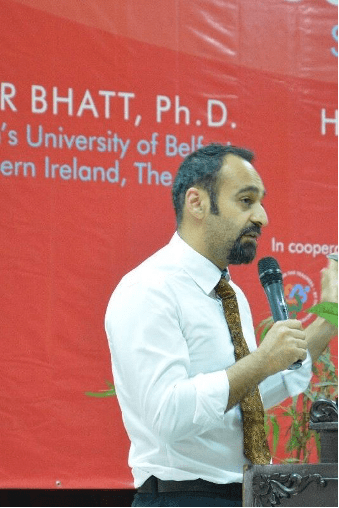
Ibrar Bhatt[1] and Heng Wang

School of Social Sciences, Education & Social Work, Queen’s University Belfast, Belfast, Northern Ireland (United Kingdom)

To be cited as: Bhatt, I. & Wang, H. (2022) ‘Everyday heritaging: Sino-Muslim literacy adaptation and alienation’, International Journal of the Sociology of Language, DOI: 10.1515/ijsl-2022-0058

Acknowledgement: This research is being supported by a grant from the Leverhulme Trust

Introduction

What we in this article describe and discuss as practices of ‘Sino-Muslim heritage literacy’ have existed in China for as long as there have been Muslims in the region – since the 7th century according to the best evidence. The community’s religious and heritage literacy practices can incorporate, for example, a systematic Arabic representation of Chinese, systems of Chinese characters representing Arabic pronunciation, as well as more contemporary and novel digitalised manifestations of heritage literacy in everyday life.

Our study uses a social practice approach to literacy to examine the multiple forms of Sino-Muslim heritage literacy in modern China, including how heritage literacy practices are maintained, relinquished, and/or adapted in current times. In this paper published in the International Journal of the Sociology of Language, we draw from the first round of our data collection to offer a critical examination of heritage literacy maintenance and adaptation in the everyday lives of two Sino-Muslim families based in Xi’an (Shaanxi Province, China): the ‘Wang’ family, and the ‘Chen’ family. We explore how their religiously expressive heritage literacy practices occur at the interface between an authoritarian state which confines religious practice entirely through minority ethnic identity (shaoshu minzu; 少数民族) and its Muslim minority who have inherited and adapted literacy practices that are situated in heritage-related activities and inherently translingual and transmodal in nature.

Theoretical framework

The theoretical framework for this study brings the ideas of heritage literacy in the historical Sino-Muslim context together with a social practice approach to literacy. In our study, therefore, Sino-Muslim heritage practices are considered to inherently involve values, materiality and social relationships, and be mediated by sacred or religiously themed texts and events. Conceptualising heritage literacy through a social practice framing in this way means acknowledging that heritage identities change over time and are given shape by the values people hold. This frames our ethnographic commitment in the study.

Methodological approach

The research is being conducted by a team of researchers located across China and the UK, including the two authors of this paper. Xi’an is chosen as one of the focal sites of the research and the context discussed within the paper due to its historical connections with the historical Silk Roads, its localised development of historical Sino-Muslim ‘scripture hall’ (经堂教育) literacy, and its more contemporary BRI-related cultural shifts. Consistent with our context-sensitive and interpretive approach to literacy, we adopt a range of methods to capture the diversity and richness of the heritage literacy practices of the two families reported on in the article. These methods include inter-generational interviewing, document collection, and observations of key heritage events.

The Wang family: Letting go of heritage literacy

In the Wang family extract, we are given a glimpse into their heritage literacy story spanning three generations: Xiaoming (85 years old; ‘grandma’), her daughter Yanyan, and granddaughter Shuhan who is in her late twenties. We are able to see how much of Xiaoming’s heritage literacy learning took place within, and was contingent upon, the religious and self-help systems of Xiaoming’s early community. These resources included the mosque, the family, and community elders all of whom practiced forms of formal and informal religious education that included reading scripture with Chinese characters as well as with Perso-Arabic script.

While Xiaoming harnessed heritage literacy for spiritual, relational, and moral purposes in the community, she was unable to pass on much to Yanyan except her insistence on observing Eid and fasting. She now directs food-related activities during Eid and Ramadan, placing her as the sole ‘sponsor’ of heritage literacy in the family. The Wang family extract shows us how heritage literacy practices are distributed across networks of people, locations and artefacts, and not disassociated from social upheaval such as migration, divorce and forced cultural change.

The Chen family: Coming back to heritage literacy

As with the Wang family, multiple interviews were also undertaken with two generations of the Chen family: Jizhi and his son Lei (in his 30s). Jizhi’s account shows how his heritage literacy practices were confined to practices of liturgy which were reliant entirely on ‘hanjing’, a self-made system to transliterate Arabic scripture with Chinese characters. Jizhi’s very limited engagement with heritage literacy through hanjing, was not insignificant. It impacted his son Lei in many ways, including in two particular ways that are important for our analysis: heritage literacy as a form of ‘nurturing’, as Lei went on to undertake a more sustained religious education; and metalinguistic awareness and attachment, as Lei went on to study Arabic more deeply and complete a PhD in Arabic Language.

Heritage literacy education in this context could be described of as an active process of consciousness raising, and not just simply about doing things with culture and passing them on to the next generation. Lei’s scripture hall education was designed to orient the student to an ‘Islamic’ life grounded in a traditional moral and epistemological framework. And to cultivate in mosque students and the general congregation a sense of membership within an Islamo-Arabic “metalinguistic community”.

Our data show that Lei and Jizhi, and to some extent Xiaoming, maintained a metalinguistic attachment to Arabic even though it was through the medium of hanjing or scripture hall education, rather than a desire to be communicatively competent. They were both taught to valorise Arabic as ‘jing’ (lit. scripture) but in different ways. While Arabic was a vehicle for religious knowledge and etiquette taught in his formative years, by the time Lei applied for university entrance he thought that being an Arabic interpreter would earn him better money. In mosque, Arabic was central to status and can lead one to becoming an ‘ahong’ (阿訇; Imam), but Lei never made it that far. His alternative route took him to study Arabic all the way to PhD and to conduct field work in the Middle East, thereby making a living as an academic in the Arabic language, and also retaining a respect within the Hui community as a person who is connected to jing. Though in a manner that is far removed from the Quranic Arabic of his youth.

While mosques were the organisational base of communities and served as incubators for Sino-Muslim culture, we found that heritage literacies were not confined to them. Multipurpose sponsors of literacy in Xiaoming’s case eventually became fragmented, but in Lei’s case become sought out in other places to promote persistence through adaptation.

Concluding remarks

We conclude by arguing that it is crucial to situate Sino-Muslim heritage literacy in spaces beyond rigid and state-defined ethnic and religious discourses which tend to confine the identity of Sino-Muslims into officially designated categories. Doing so, we contend, has useful theoretical and methodological import, and can shed light on inquiry about heritage literacy in other minority settings.


[1] Contact: Dr Ibrar Bhatt [巴 亿博] (i.bhatt@qub.ac.uk), School of Social Sciences, Education & Social Work, 20 College Green, Queen’s University Belfast BT7 1LN (UK).

Authors’ Bio

Dr Ibrar Bhatt, Queen’s University Belfast

Dr Ibrar Bhatt [巴 亿博] is Senior Lecturer at the School of Social Sciences, Education & Social Work at Queen’s University Belfast. He has research interests in literacy studies, education, and digital epistemologies. He is currently a recipient of a Leverhulme Research Fellowship for a study on heritage literacy in China. He recently featured as guest editor for two journal special issues: ‘Critical Perspectives on Teaching in the Multilingual University’ for Teaching in Higher Education; and ‘Lies, Bullshit & Fake News’ for Postdigital Science & Education. He is a member of the Governing Council of the Society for Research into Higher Education and an Executive Editor for the journal Teaching in Higher Education: Critical Perspectives. He can be contacted via email: i.bhatt@qub.ac.uk. His co-managed WeChat Official Account is: https://mp.weixin.qq.com/s/xHfZ5_sYOx9UCvuP_CM8mw

Ms Wang Heng, Queen’s University Belfast

Ms Wang Heng [王恒] is currently a PhD student in education at Queen’s University Belfast. She is originally from Jilin Province in China, and works with Ibrar on the Leverhulme project assisting with data collection, analysis, access, translation and fieldwork. Her prior work is in educational contexts in China and South Africa.

Managing editor: Tong Meng