
Research highlighted
Title: Cultivating Global Scholars in international mobility: integration experiences from Chinese doctoral students at Finnish universities
Zheng, G., Cai, Y. & Zuo, B. Cultivating Global Scholars: Delving into Chinese Doctoral Students’ Integration Experiences at Finnish Universities Through an Institutional Logics Lens. Journal of Knowledge Economy (2023). doi.org/10.1007/s13132-023-01420-8
International mobility of doctoral students contributes substantially to the global knowledge production across borders. This requires international doctoral students have the intercultural competency in adapting to the incremental changes of cultural background in global mobility and integrate into the local academic environment. However, international doctoral students often face various challenges in integrating into the host academic system when they mobile from one country to another. Through interviews with ten Chinese doctoral students and four Finnish supervisors, this study examines the integration of Chinese international doctoral students at Finnish universities and unveils the reasons behind the challenges from an institutional logics’ perspective. Institutional logics refer to “the socially constructed, historical pattern of material practices, assumptions, values, beliefs, and rules by which individuals produce and reproduce their material subsistence, organize time and space, and provide meaning to their social reality” (Thornton & Ocasio, 1999, p. 804).
Multiple logics underlying Chinese doctoral students’ expectations.
The study shows at the beginning of the integration process, the Chinese international doctoral students’ expectations of doctoral studies was marked by a constellation of logics of profession, bureaucratic state, and family. Influenced by a profession logic, most interviewed doctoral students chose their future supervisors based on supervisors’ research interest and academic merits, and had high academic expectations on their supervisors. Moreover, Chinese doctoral students expected to receive some kind of “mentorship in life” from their supervisors and to join a “research family” during their doctoral study. This reflects the concept of academic parents and children in keeping with family logic in Chinese society. They also expected greater regulations on the processes and outputs of doctoral education, which reflects a bureaucratic state logic.
Multiple logics in the context of Finnish universities
The study shows the Finnish universities offered another important input to the institutional environment for Chinese international students’ integration: the dominant institutional logics of profession, democratic state, and corporation. Underlined by profession logic, doctoral supervisors in Finnish universities expected doctoral students to act as independent researchers. Finnish universities also expected the relations between doctoral supervisors and students to be formal and professional, reflecting a profession logic, as well as being equal, in related to a democratic state logic. In Finnish universities, doctoral students with and without contractual relations were expected to be managed under different tracks, which indicates a corporation logic.
Conflicting logics contributing to challenges in integration
As shown above, the two inputs of multiple logics are not fully compatible, which provided conflicting sense-making frames to the Chinese international students, contributing to the mismatches between Chinese doctoral students’ expectation and the reality in Finnish universities.
A first mismatch was rooted in the expected role of doctoral students. Influenced by the family logic, most interviewed Chinese doctoral students considered themselves the “academic children” of their supervisors and placed themselves in a lower position. However, Finnish supervisors expected doctoral students to be independent (following profession logic) and develop a more equal and professional supervisor–supervisee relation (underlined by the democratic state logic and the profession logic). This mismatch and the conflicting logics underlying it were a source of confusion for the Chinese students at the beginning of the integration process.
A second mismatch was reflected in the differences between Chinese doctoral students’ expectations of a regulated, monitored doctoral learning process—behind which is the bureaucratic state logic that governed their experiences in the Chinese educational system—and the advocated autonomy, endorsed by the logic of profession in the Finnish universities. Especially at the beginning of their integration process, some Chinese doctoral students did not realize that they should manage their doctoral studies autonomously.
A third mismatch lies in the varied interpretations of roles of universities universities. Influenced by profession logic, Chinese students expected universities to act solely as academic hubs for knowledge provision and transmission by researchers. However, along with the reform of new public management in higher education, the impacts of the corporation logic in the Finnish system become prevailing, which views universities as employers to manage researchers. In the beginning of integration, interviewed doctoral students were not used to the management system in Finnish universities. Even being informed, they felt it went against their professional values.
Nevertheless, throughout the integration process, these multiple logics continued to interact and reconcile, and they finally aligned with the underlying logics in the Finnish universities. This implies that the interviewed Chinese doctoral students were eventually integrated into the local context to a large extent, despite the challenges in the process.
Implications of the study
First, for international doctoral students, they should learn about the practices in the host doctoral education system in advance which can help them better align their expectations and adapt to the local environment. For the instance of Chinese doctoral students in Finnish universities, they should strengthen their professional identity as early career researchers (strengthening the underlying profession logic), lower their expectations of familial relations with supervisors and institutions (weakening the underlying family logic), and familiarize themselves with the corporate management style of Finnish universities (strengthening the underlying corporation logic).
Second, for host universities and supervisors, they should be aware of the potential mismatches between international doctoral students’ expectations about doctoral education and the social realities of the host universities. Finnish universities can provide more guidance to both doctoral students and their supervisors, such as an orientation course tailored to international doctoral students that introduces the regulations, academic norms, values, and culture of host universities along with other useful toolkits.
Third, the study also found the differences between Chinese doctoral students’ expectations and Finnish social reality can promote organizational innovation in host universities. One Finnish supervisor changed her supervision practices by learning from her Chinese doctoral students and adopted innovative supervision practices within her research group. Bidirectional learning between the international supervisors and doctoral students is the key to turning integration challenges into opportunities for change. In line with this thinking, if one wants to enable global and local cultures to inform each other in the development of global scholarship, bidirectional learning between actors on both sides may also be key.
References
Thornton, P. H., & Ocasio, W. (1999). Institutional Logics and the Historical Contingency of Power in Organizations: Executive Succession in the Higher Education Publishing Industry, 1958–1990. American Journal of Sociology, 105(3), 801-843. https://doi.org/10.1086/210361
Bio-notes of authors
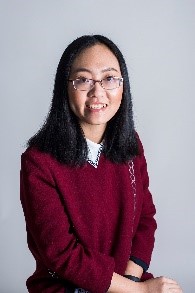
Dr Gaoming Zheng is an assistant professor at Institute of Higher Education, Tongji University, China and an affiliated researcher at Higher Education Group, Faculty of Management and Business, Tampere University, Finland. Her research interest of higher education covers internationalization of higher education, Europe-China higher education cooperation, doctoral education, academic profession, quality assurance and institutional logics.
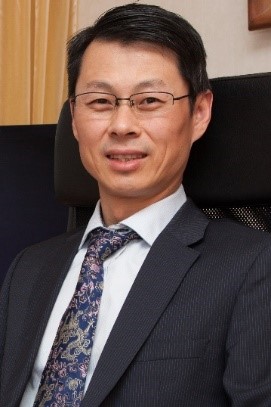
Dr Yuzhuo Cai is Senior Lecturer and Adjunct Professor at the Higher Education Group, Faculty of Management and Business, Tampere University, Finland. He is the Director of Sino-Finnish Education Research Centre, JoLii, and Deputy Director of Research Centre on Transnationalism and Transformation at Tampere University. He is also Co-Editor-in-Chief of Triple Helix: A Journal of University-Industry-Government Innovation and Entrepreneurship and Co-Editor of Journal of Studies in International Education. He has 150 academic publications in the fields of higher education research and innovation studies. yuzhuo.cai@tuni.fi
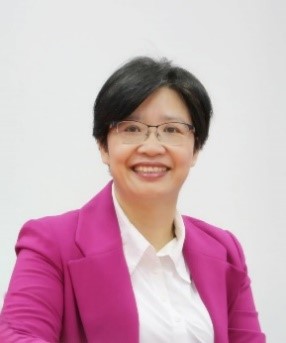
Prof Bing Zuo is a professor at Faculty of Education, Lingnan Normal University, Zhanjiang, China. Her research interests include higher education management, university organizational culture and teacher education. She was a visiting scholar at the Ontario Institute for Studies in Education at University of Toronto in Canada, and at University of Tampere in Finland. She held a national project of Education of the National Social Science Foundation “Influence of Overseas study experience on Teachers’ Beliefs and Behavior in Chinese Regional Colleges and Universities”.
 Network for Research into Chinese Education Mobilities (NRCEM)