
The Centre for Research in Educational and Social Inclusion invites you to attend ‘Capitalising on the intellectual bequest of Pierre Bourdieu for social and educational equity’
This seminar will present three papers, each from an established Bourdieusian scholar. More information about schedule for the day below.
10am-10.15am Acknowledgements and Welcome
10.15am -11.15am Paper 1 and Q&A
Culture or structure? A Bourdieusian take on the curriculum of formal education
This theoretical paper presents a Bourdieusian framing of formal curriculum that was developed for a study of shadow education or private tutoring. Neo-institutionalism has been the dominant sociological theory in shadow education research. It understands shadow education in terms of a world culture of education and a schooled society. The world culture of education is thought to constitute the schooled society; and by the same logic, to motivate institutionalisation of shadow education. In contrast, it is structure that is socially constitutive in Bourdieusian theory. Bourdieu looked to the evolution of the structures of fields, including that of education, to explain modernity with its capitalist ethos. In these terms, shadow education is an investment in the cultural capital and symbolic power of the curriculum institutionalized in mass formal education. This theorisation is useful for understanding curriculum-making struggles in institutional, programmatic and instructional domains.

Karen Dooley is a Professor in the Faculty of Creative Industries, Education and Social Justice, Queensland University of Technology. Karen’s research focuses on curriculum in conditions of economic disparity and linguistic and cultural difference. She works with classic theories from the sociology of education, including those of Pierre Bourdieu and Basil Bernstein. Karen is currently completing one Australian Research Council Discovery project on shadow education, and is partway through another about home-school connections in times of digitalisation. Karen has taught from early childhood to university in Australia and as a English as a middle school foreign language teacher in China.
11.15am-12.15pm Paper 2 and Q&A
Bourdieu and Sayad’s contributions to knowledge via multi-language modes of research: Postmonolingual theorising as a method of thinking critically
This study makes an original contribution to methodological knowledge by establishing grounds for postmonolingual theorising as a method of thinking critically. A familiar research practice for making an original contribution to knowledge entails applying, critiquing, and/or extending the signature conceptual products of internationally renowned scholars such as Bourdieu. In contrast, this study argues that efforts to make an original contribution to knowledge also benefit from the problematisation of such taken-for-granted research practices. This study identifies the place of multiple languages in Bourdieu and Sayad’s (1964/2020) mode of research practice employed in their Franco-Algerian field study, albeit practices of theorising that they do not explicitly address. Arguably, multi-language practices of theorising are worth considering for evaluating their use for making an original contribution to knowledge, for challenging monolingual research practices, and for capitalising on researchers’ multi-language capabilities, including those theorists who only speak (multilingual) English.
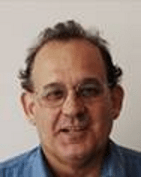
Michael Singh is a Professor at Western Sydney University. He investigates possibilities for, and constraints on collective counter-agency through research that does not conform to dominant expectations or norms (hysteresis). Focusing on continuing historical struggles over languages in research-informed, education policy practices, Singh explores postmonolingual theorising as a research method for mounting critiques of the logic and practices of domination. Singh works with Higher Degree Researchers to capitalise on misrecognised intellectual cultures, using divergent funds of theoretical knowledge in their repertoire of languages for making original contributions to knowledge. Recently, Professor Singh co-authored Localising Chinese: Educating Teachers through Service-Learning with Dr Nhung Nguyễn, and Postmonolingual Critical Thinking: Internationalising Higher Education through Students’ Languages and Knowledge with Dr Lù Sī Yì (陆思逸).
12.15-14.30 Lunch 14.30-15.30 Paper 3 and Q&A
Social problematics and the role of philosophical anthropologies: Evaluating Bourdieu’s framework
Philosophical anthropologies (PAs) – ontological assumptions about human species-nature – have been controversial in sociological research since Foucault rejected all need for them. Bourdieu resisted this post-PA tide. Agreeing with Bourdieu that PAs are unavoidably assumed in explaining social problematics, I explore his conceptual framework for necessary PAs and how they interact with his worthy analytic concepts for sociological research: e.g. ‘habitus’, ‘field’, ‘forms of capital’. Yet I question Bourdieu’s assumed PA of a ‘libidinal’ need for recognition that drives competitive power-games in social fields. I argue further that a PA is needed-but-missing in Bourdieu’s framework to explain how field participants enact agency to challenge power-games in pursuit of social-ethical purposes for their labours. Drawing on survey data in which Australian education academics comment on how workforce restructures affect their labours, I find the needed PA in Karl Marx’s ‘use-value’ and ‘alienation’ concepts. I thus advocate a ‘Marxification’ of Bourdieu’s framework.
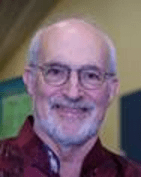
Lew Zipin is a Senior Research Fellow at UniSA; an Honorary Fellow at Victoria University, Melbourne; and an Extraordinary (adjunct) Professor at Stellenbosch University, South Africa. His research, scholarship and practice draw on Bourdieu for sociological analysis of how mainstream school curriculum selectively (re)produces unjust power inequalities. At the same time, he takes up the Funds of Knowledge (FoK) approach to socially-just curricular use of knowledges which have asset-value in lifeworlds of students from marginalised social positions, but which school-worlds too-typically treat as ‘deficits’. Lew thus combines Bourdieuian analysis with FoK praxis in ways that reciprocally fill gaps in combining strengths of each.
The seminar will be delivered synchronously face-to-face and online.
| Date Monday 25th September 2023 | Time 10am – 3:30pm (ACST) please convert to your local time | Venue UniSA Mawson Lakes Campus GP2.39 or via Zoom |
For further information, contact Associate Professor Michael Mu
 Network for Research into Chinese Education Mobilities (NRCEM)