
Research Highlighted:
Yang, Y., & MacCallum, J. (2022). A three-dimensional multi-world framework for examining cross-cultural experiences of international doctoral students. Studies in Continuing Education, 44(3), 493-509. https://doi.org/10.1080/0158037X.2021.1890569
Introduction
International doctoral students encounter constant and varied challenges, old and new, while studying abroad. To gain insight into the nature of experiences of doing a PhD abroad, this paper presents a three-dimensional multi-world conceptual framework, illustrated with an in-depth case study. The study is based on a broader narrative inquiry that aimed to understand influences that facilitate or constrain students’ positive and timely completion of a PhD abroad.
The literature
There are three main lines of research on doing a PhD and doing it abroad: (a) doctoral supervision in research; (b) student factors in achieving a PhD abroad; and (c) the social aspect of international doctoral students in the host community. Studies highlight the inherent challenge of achieving a PhD and achieving it in a cross-cultural context. We recognise three areas need further research: (a) the evolving nature of students’ experiences; (b) the situated nature when interpreting an individual student experiences; and (c) the interactive nature of international doctoral study. In short, we know certain factors influencing doing a PhD abroad; we are yet to know how these factors in combination affect student experiences.
Constructing a three-dimensional multi-world framework
Acknowledging previous conceptualisations and their limitations, the conceptual framework (Fig. 1) comprises a multi-world (Research-Personal-Social worlds) model, a dynamic mechanism that highlights transitions across borders, and a three-dimensional CIS (Continuity-Interaction-Situation) space that contains the multi-worlds and the transitions.

Fig 1. The three-dimensional multi-world framework
Component I: The multi-world model
From the literature and our data analysis, we conceptualised research, personal, and social as indicative of three ‘worlds’ – meaning cultural spaces for individual and communal beings and doings in this study – that encompassed doctoral experiences. These worlds are all interconnected and intertwined, partly contingent upon and partly independent of each other.
Component II: Transitions across and borders in-between
In the three-dimensional multi-world framework, there are overlapping areas as experiential interfaces where transitions occur and lines in-between as borders, or boundaries, to cross. Hypothetically, harmonious/congruent interrelationships, or smooth transitions, between the worlds enable multilateral growth and sustainability, whereas incongruent relationships may cause negative impacts in the multi-worlds.
- Component III: The three-dimensional CIS space
The framework also sets a three-dimensional Continuity-Interaction-Situation space to contain a student’s multi-worlds and transitions across over time. The framework conceptualises experiences in an educational setting: continuity and interaction, which underline the co-existence and the interplay of the person and contexts. As experiences occur in specific spaces and sequences of spaces, Situation is drawn as a third dimension to formulate the three-dimensional inquiry space.
Method
Yuyan (pseudonym), a female student from China was chosen for this study to illuminate the affordances of the framework. Her experience represents both typical and atypical features of participants in the overall project with Chinese international STEM PhD students.
Results
Before presenting findings from the perspective of the three-dimensional multi-world framework, we developed a cameo to preserve the fidelity and coherence of Yuyan’s experience before, during, and after the PhD abroad. With this as background, we presented the framework-underpinned analysis and incorporated discussion in the subtitles below.
Research, personal, and social worlds of doing a PhD abroad
- Research world: Support, opportunities, and recognition count
A research world has its expectations for the attainment of a PhD, engaging both perceptible and imperceptible factors to facilitate or constrain achievement. In Yuyan’s case, the perceptible aspects include supervisors, peers, institutional support, research facilities, and external connections; whereas the imperceptible aspects involve collaboration, facilitation, communication, and time.
- Personal world: Philosophy and perseverance count
In the personal world, an international student exercises agency traversing from the personal world to other worlds to attain the PhD abroad. A personal world involves what a student brings from pre-PhD into the PhD, e.g., values, beliefs, motivations, and expectations; it also encompasses how the transformation occurs in the process of the PhD, e.g., in Yuyan’s case, growing into an independent researcher with a vision to embrace multiculturalism.
- Social world: Connection and integration count
For an international doctoral student, the social world is not only about music, games, romance, and social events; it is also about, even more importantly, two-way communication and accommodation of different cultures, customs, and perspectives in both academic and social settings. While doing the PhD abroad, Yuyan’s social world was mainly shaped by a collective social space from both of her academic and social networks.
Transitions across borders between the multi-worlds
- Transitions across research and personal worlds: ‘A swaying journey’
With a dramatic change from an undergraduate to a PhD, Yuyan’s transitions across the research world had been extremely difficult, particularly at the initial stage. She recounted she had been through ‘a swaying journey’, struggling between a frequent change of feeling confident and lacking in confidence, all depending on the progress of research.
- Transitions across personal and social worlds: ‘Chou Tong Chun Yi’
Yuyan exercised strong agency to achieve transitions between her personal and social worlds in the host community. She conceded it was easy to stay in the comfort zone with her conational networks, but to create harmonious relationships with the host community, Yuyan attended and even proactively organised social activities with her peers and staff members.
- Congruence relieves emotional ‘down’ moments
While Yuyan had to manage linguistic, academic, sociocultural, socio-economic, and gender challenges while doing the PhD abroad in a male-dominated engineering field, the congruence with doctoral colleagues appeared to have helped her further crossing socio-emotional and psychosocial borders between the multi-worlds.
Continuous, interactive, and situated features of PhD abroad experiences
- Continuity: Change and transformation
This dimension accentuates change and transformation over time, which are embedded in an evolving process of pursuing the education, enculturation, and socialisation. From China to Australia, from an undergraduate to a PhD, Yuyan’s experience exhibited how Yuyan, her supervisors, and many others modified the process to enable change and growth out of the PhD.
- Interaction: Congruence and relationships
The dimension of interaction highlights the continual interplay of the research, personal, and social worlds, which provides opportunities for international doctoral students to develop interculturality and necessitate identity change through everyday engagement within the PhD community. Yuyan stressed that she had to interact with various others to progress her research because ‘it’s never a one-person’s battle’.
- Situated experiences: Self-sufficiency, innovation, and enjoyment
This dimension underlines striking characteristics of situated experiences in terms of motivations, relationships, experiences, and time. With enhanced confidence, passion, and vision in research, Yuyan pursued after a higher goal to initiate an additional cutting-edge experiment towards the end of her PhD.
Conclusion
This paper contributed a three-dimensional multi-world conceptual framework to understand the complexity of achieving a PhD abroad in a holistic approach. The framework is expected to provide a conceptual foundation for future research and practical work engaged with international doctoral students. For research, the framework can be applied to examine the experiences of international students in different fields and at different levels, making comparisons of differences and congruence between the multi-worlds to identify commonalities and classify patterns from the uniqueness of each individual case. For educational practice, this framework provides supervisors and institutions with a way of thinking of international doctoral students from a more comprehensive perspective and in a continuous, interactive, and situative approach.
Authors’ Bio
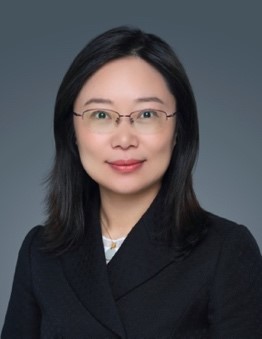
Yibo Yang, Associate Professor, PhD, Deputy Dean for the International Organizations and Global Governance, School of International Studies, Harbin Institute of Technology, China. Her current research interests focus on internationalisation in higher education, international organizations, research methodologies, and academic writing.

Judith MacCallum, Professor Emerita, PhD, College of Health and Education, Murdoch University, Australia. Her research and teaching interests focus on social interaction for learning and development, with emphasis on motivation, mentoring and professional learning.
Managing Editor: Xin Fan
 Network for Research into Chinese Education Mobilities (NRCEM)