
Research highlighted
Zhao, K. (2023). Does higher education expansion close the rural-urban gap in college enrolment in China? New evidence from a cross-provincial assessment. Compare: A Journal of Comparative and International Education, 53(5), 802-819.
The expansion of higher education on a global scale has led to the development of High Participation Systems, prompting researchers to examine the equity implications of increased opportunities for higher education (Breen et al. 2009; Wu et al., 2020). Their primary query is whether educational expansion has decreased the inequality in educational opportunities. This paper seeks to investigate this question in the context of Chinese higher education.
China has undergone a rapid expansion of higher education, a trend that is consistent with global patterns. However, the country’s higher education expansion has unique characteristics that may cause variations in the impacts on access to higher education. Firstly, unlike many other countries, the expansion of college enrolment in China is more driven by the supply side than the demand side, with state policies playing a central role in the expansion (Marginson 2016; Wu et al., 2020). Secondly, China’s higher education enrolment has increased rapidly within a short period, and its scale and speed are unprecedented (Wu et al., 2020). Thirdly, the supply of higher education varies greatly across provinces due to the decentralisation reform in educational administration and finance since the 1980s, coupled with rising inter-provincial economic disparities (Hannum & Wang 2006; Zhang & Kanbur 2005).
Furthermore, compared to western countries, structural factors, such as hukou status and province of residence, play a more significant role in educational stratification in China than family background (Lyu et al., 2019). Against this backdrop, this study adopts a cross-provincial assessment approach and uses representative data from five provinces of China Family Panel Studies (CFPS) to explore the relationship between higher education expansion and rural-urban inequality in college enrolment.
The findings of this study reveal that despite the expansion policy, the rural-urban gap in college enrolment remained in all five provinces (Liaoning, Shanghai, Henan, Guangdong, and Gansu). The size of this gap varied significantly across the provinces, with Shanghai having the smallest gap, while Gansu had the largest. These results underscore the importance of including provinces in research on educational inequalities in Chinese higher education. For instance, in the post-expansion cohort (1981–1986), rural hukou holders in Shanghai had higher predicted probabilities than urban hukou holders in many other provinces.
Furthermore, this study highlights the increasing disparities in college enrolment among students from different provinces. The decentralisation reforms since the 1980s have led to the provincial government playing a more significant role in higher education administration and finance (Li, 2017). Consequently, economically developed provinces, such as Guangdong and Shanghai, are better equipped to build new institutions and increase enrolment, leading to growing differences in the supply of higher education across provinces. Given the provincial quota system that largely favours local students, this study finds that residents in Shanghai and Guangdong benefit more from the expansion than those in Liaoning and Henan, contributing to the increasing inter-provincial disparities in college enrolment.
The results of this study confirm the relevance of the Maximally Maintained Inequality (MMI) approach in the Chinese context to some extent. Before the expansion policy, the participation rate of higher education in China was very low (Yeung, 2013), which was far from the saturation point predicted by MMI. Therefore, it was not expected that there would be a decrease in inequality along with the expansion. However, it is worth noting that the past two decades have witnessed a continuing expansion in higher education enrolment, and the gross tertiary education rate in China reached about 54.4% in 2020, a point that might be close to or even surpass the saturation point. Moreover, in response to the growing rural-urban inequality in access to college, the central government has launched admission programs specifically targeting high-achieving students in poor rural areas (Niu, 2017). Given all these changes that have occurred after 2003, future research can use more recent data to capture the latest status of inequality of opportunity in higher education.
References:
Breen, R., R. Luijkx, W. Müller, and R. Pollak. 2009. “Nonpersistent Inequality in Educational Attainment: Evidence from Eight European Countries.” American Journal of Sociology 114 (5): 1475–1521. doi:10.1086/595951.
Hannum, E., and M. Wang. 2006. “Geography and Educational Inequality in China.” China Economic Review 17 (3): 253–265. doi:10.1016/j.chieco.2006.04.003.
Li, T. 2017. “Financial Decentralization and Geographical Stratification of Access to Higher Education in China: The Case of Shanghai.” Chinese Sociological Review 49 (3): 212–238. doi:10.1080/21620555.2016.1271701.
Lyu, M., W. Li, and Y. Xie. 2019. “The Influences of Family Background and Structural Factors on Children’s Academic Performances: A Cross-country Comparative Study.” Chinese Journal of Sociology 5 (2): 173–192. doi:10.1177/2057150X19837908.
Marginson, S. 2016. “High Participation Systems of Higher Education.” The Journal of Higher Education 87 (2): 243–271. doi:10.1353/jhe.2016.0007.
Niu, X. 2017. “Early Academic Performance of Rural Students under Special Admission Policies: Evidence from an Elite University.” Fudan Education Forum 15(4): 52–61. [In Chinese.]
Wu, L., K. Yan, and Y. Zhang. 2020. “Higher Education Expansion and Inequality in Educational Opportunities in China.” Higher Education 80 (3): 549–570. doi:10.1007/s10734-020-00498-2.
Yeung, W.-J. J. 2013. “Higher Education Expansion and Social Stratification in China.” Chinese Sociological Review 45 (4): 54–80. doi:10.2753/CSA2162-0555450403.
Zhang, X., and R. Kanbur. 2005. “Spatial Inequality in Education and Health Care in China.” China Economic Review 16 (2): 189–204. doi:10.1016/j.chieco.2005.02.002.
Authors’ Bio
Lingnan University
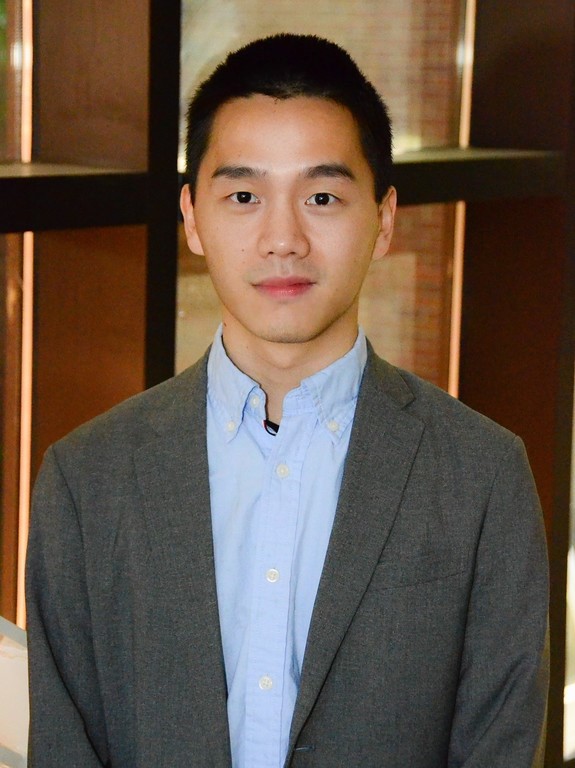
Dr. Kai Zhao is a research assistant professor at the School of Graduate Studies of Lingnan University, Hong Kong. He earned his Ph.D. in Higher Education and Student Affairs from the Ohio State University. Before joining Lingnan, he worked as research faculty at Centre for Postsecondary Success within Florida State University. Dr. Zhao’s research interests broadly focus higher education policy and internationalisation of higher education.
Managing editor: Xin Fan
 Network for Research into Chinese Education Mobilities (NRCEM)